
Why Most Lawyers Struggle to Get Clients — and What Actually Works
The best way for lawyers to advertise in 2026 is a smart combination of digital channels — not a single silver bullet. Here’s a quick-reference breakdown of what works:
| Strategy | Best For | Time to Results |
|---|---|---|
| Google Local Services Ads | Immediate local leads | 1-2 weeks |
| Google PPC (Search Ads) | High-intent prospects | 4-8 weeks |
| Local SEO + Google Business Profile | Long-term organic growth | 3-6 months |
| Online Reviews & Reputation | Trust and conversions | Ongoing |
| Content Marketing & Blogging | Authority building | 6-12 months |
| Facebook/Social Ads | Awareness and retargeting | 1-4 weeks |
| Referral Systems | High-value cases | Ongoing |
The legal industry is one of the most competitive advertising markets in the United States. More than $8.4 billion was spent on legal services local advertising in 2024 alone. Yet despite that massive spend, only 40% of law firms even answer their phone calls — down from 56% in 2019.
That’s the real problem. Most firms focus entirely on getting more traffic, while losing clients through the back door.
Here’s what the data actually shows:
- 96% of people searching for legal help start with a search engine
- Organic search drives 66% of call conversions in the legal industry
- Firms that respond to inquiries within 5 minutes see a 400% higher conversion rate
- High-growth law firms outpace average firms by a factor of 5.2x — and they use multi-channel marketing systems, not single tactics
The gap between firms that grow and firms that stagnate almost always comes down to having a system — not spending more money on ads.
This guide covers 16 proven advertising ideas across paid, organic, social, content, and referral channels — all designed to help you build a predictable client pipeline.
I’m Ronnie Katz, founder of BullsEye Internet Marketing, and since 2006 I’ve spent over 20 years helping law firms find the best way for lawyers to advertise across SEO, PPC, local search, and beyond. The 16 strategies in this guide are drawn directly from what we’ve seen drive real, measurable results for legal practices in competitive markets.
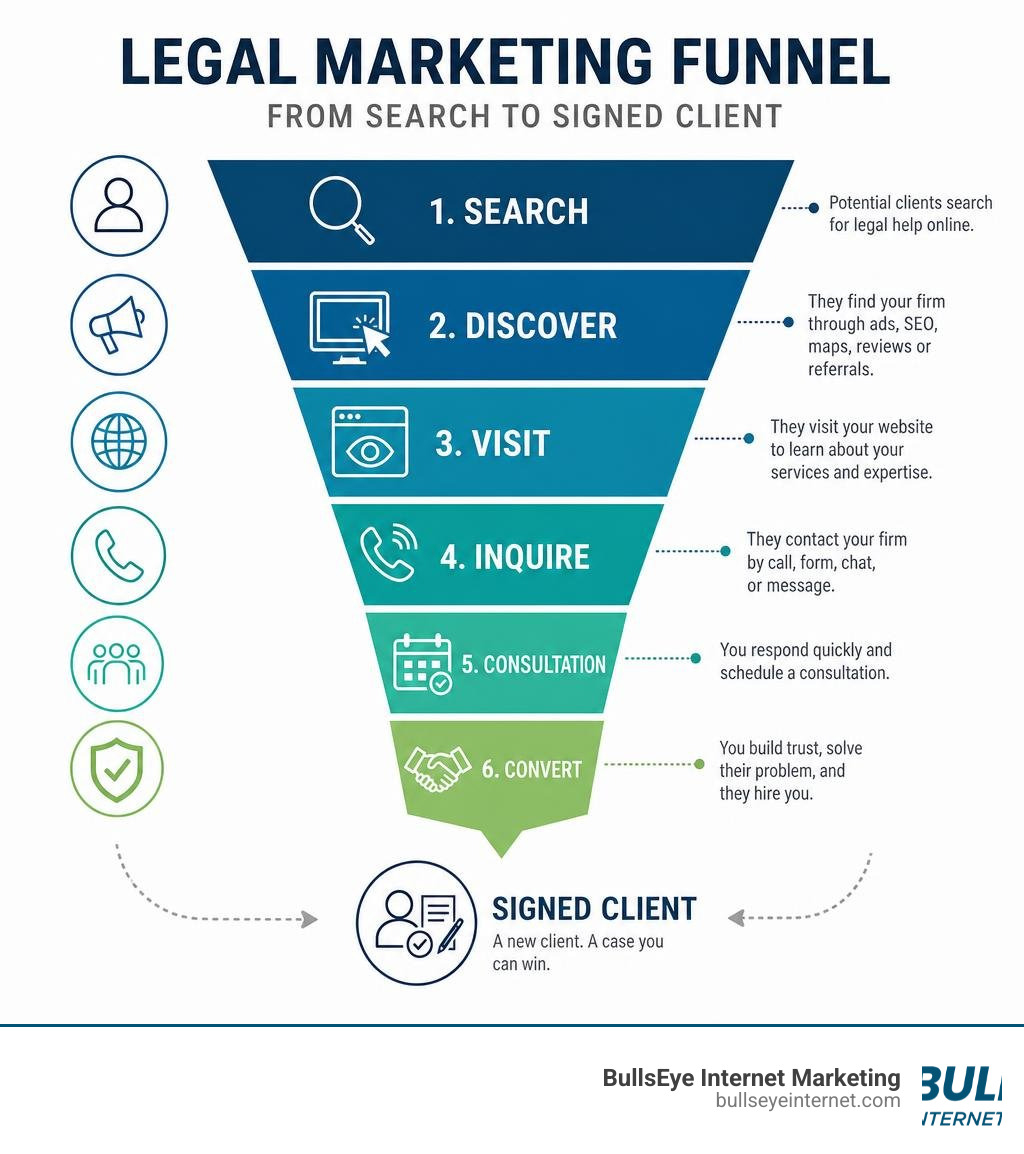
Terms related to best way for lawyers to advertise:
Why Digital Channels Offer the Best Way for Lawyers to Advertise
Relying purely on golf course handshakes and country club lunches is no longer a viable growth model. While personal relationships remain incredibly valuable, the digital arena is where modern legal consumers make their final hiring decisions.
Whether you are a personal injury attorney in Miami or a family law practitioner in West Palm Beach, digital marketing is the most efficient engine for generating high-value cases. According to Law firm marketing statistics for 2026: A comprehensive analysis, the three-year ROI for an average law firm investing in search engine optimization (SEO) is approximately 526%.
Digital channels allow you to put your firm directly in front of prospects at the exact moment they need your help. We dive deep into how these channels interact to build a recession-proof practice in our resource, An Essential Guide to Advertising for Lawyers.
The Shift from Traditional to Digital Legal Ads
The evolution of legal marketing is a fascinating story of deregulation and technological disruption. For decades, lawyer advertising was heavily restricted. It wasn’t until the landmark 1977 Supreme Court ruling in Bates v. State Bar of Arizona (detailed in the Legal advertising in the United States – Wikipedia entry) that attorneys gained the constitutional right to advertise their services.
Following that ruling, legal marketing was dominated by late-night television commercials, highway billboards, and heavy Yellow Pages directories. As noted by the American Tort Reform Association in Legal Services Advertising in the United States – 2020-2024, billions of dollars have historically poured into mass media advertising.
While traditional TV and billboards still build broad brand awareness for massive regional personal injury firms, they are incredibly expensive and highly inefficient for solo practitioners and small-to-mid-sized firms. Digital channels allow you to target specific zip codes, demographics, and active search queries, ensuring you do not waste your hard-earned budget showing criminal defense ads to people who just need a simple contract reviewed.
Paid vs. Organic: Balancing Your Marketing Portfolio
The most successful law firms do not rely on just one marketing channel. Instead, they treat their marketing budget like a balanced financial portfolio, combining short-term paid strategies with long-term organic assets.
| Marketing Metric | Paid Search (PPC / LSAs) | Organic Search (SEO) |
|---|---|---|
| Time to First Lead | Immediate (within days) | 3 to 6 months |
| Average Conversion Rate | ~2.2% | ~7.5% |
| Cost Structure | Pay-per-click or pay-per-lead | Upfront content & optimization investment |
| Long-Term Asset Value | Zero (leads stop when budget stops) | High (ranks continue to drive traffic over time) |
| Cost Per Click (CPC) | High ($50 – $200+ for competitive terms) | $0 (organic clicks are free) |
Paid advertising acts as a faucet: turn it on, and leads flow instantly; turn it off, and the pipeline dries up immediately. Organic SEO acts as a snowball: it takes time and effort to build momentum, but once it starts rolling, it compounds and generates highly qualified leads at a fraction of the cost of paid ads.
Paid and Social Media Advertising Ideas for Law Firms
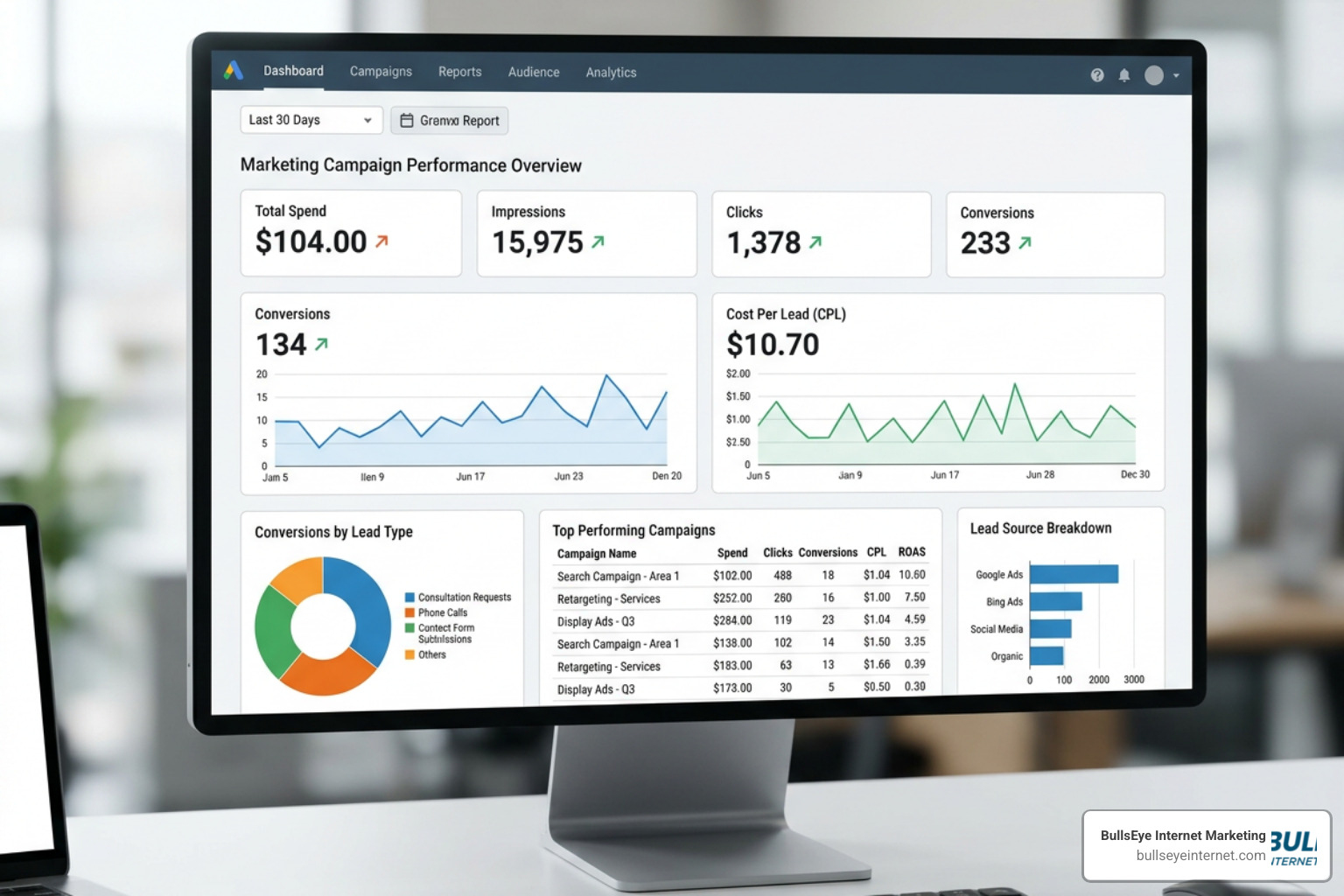
Paid campaigns are the fastest way to generate immediate client consultations. However, because legal keywords are among the most expensive in digital advertising, you must execute paid campaigns with razor-sharp precision to avoid burning through your budget.
1. Dominate Search with Google Local Services Ads
If you want to appear at the absolute top of Google search results, Google Local Services Ads (LSAs) are your best option. These ads appear above traditional paid PPC ads and organic map packs. They feature the coveted “Google Screened” green badge, which immediately builds trust with potential clients.
The best part about LSAs? They operate on a pay-per-lead model rather than pay-per-click. This means you only pay when a prospect actually calls your firm or sends a message, rather than paying for accidental clicks on your website.
To maximize your ROI, we highly recommend reading our guide on Google Local Services Ads for Lawyers to understand how to set up your profile and manage your leads effectively.
2. Target High-Intent Keywords with Google PPC
Traditional pay-per-click (PPC) advertising on Google is highly effective because it captures active search intent. When someone searches for a “car accident lawyer in Fort Lauderdale,” they are not browsing for fun—they have an urgent legal need.
To keep your cost per signed case low, you must target high-intent, long-tail keywords (e.g., “motorcycle accident attorney near Hollywood FL”) rather than broad terms like “lawyer.” Additionally, you must build a robust list of negative keywords (such as “free,” “pro bono,” “jobs,” and “salary”) to prevent your ads from showing up on irrelevant searches.
For a complete blueprint on conquering paid search, check out our Lawyer PPC Advertising Ultimate Guide.
3. Capture Social Leads with Facebook Lead Gen Ads
While Google captures active search intent, Facebook is a fantastic platform for passive market creation. With over 2 billion daily active users, Facebook allows you to target users based on highly specific demographics, life events, and geographic locations.
For example, a family law attorney in Coral Gables can target users going through major life transitions, while an estate planning attorney in Boca Raton can target older demographics with educational content about living trusts. By utilizing Facebook’s native Lead Gen Ads, prospects can request a consultation through a pre-filled form directly within the app, dramatically reducing conversion friction.
4. Build B2B Referral Networks on LinkedIn
If your practice area focuses on corporate law, commercial real estate, intellectual property, or employment defense, LinkedIn is your primary social channel. Rather than chasing consumer leads, use LinkedIn to build professional authority and establish a robust attorney-to-attorney referral network.
Publish thoughtful articles analyzing recent regulatory changes, share case studies of successful corporate litigation, and engage with the posts of in-house counsel and business owners throughout South Florida. Establishing yourself as a thought leader on LinkedIn keeps your firm top-of-mind when other professionals need to refer a case outside their specialty.
5. Deploy Geo-Fencing Near High-Traffic Locations
Geo-fencing is a highly targeted form of mobile advertising that allows you to draw a virtual boundary around specific physical locations. When a mobile user enters this zone, they are added to an advertising audience and begin seeing your display ads on their phones.
For example, a personal injury lawyer might geo-fence local hospitals or busy towing yards in Broward County. An employment lawyer might geo-fence a major corporate campus during a highly publicized round of layoffs. While this strategy requires careful ethical handling, it is an incredibly powerful way to reach highly specific, localized audiences.
Local SEO and Reputation Management Strategies
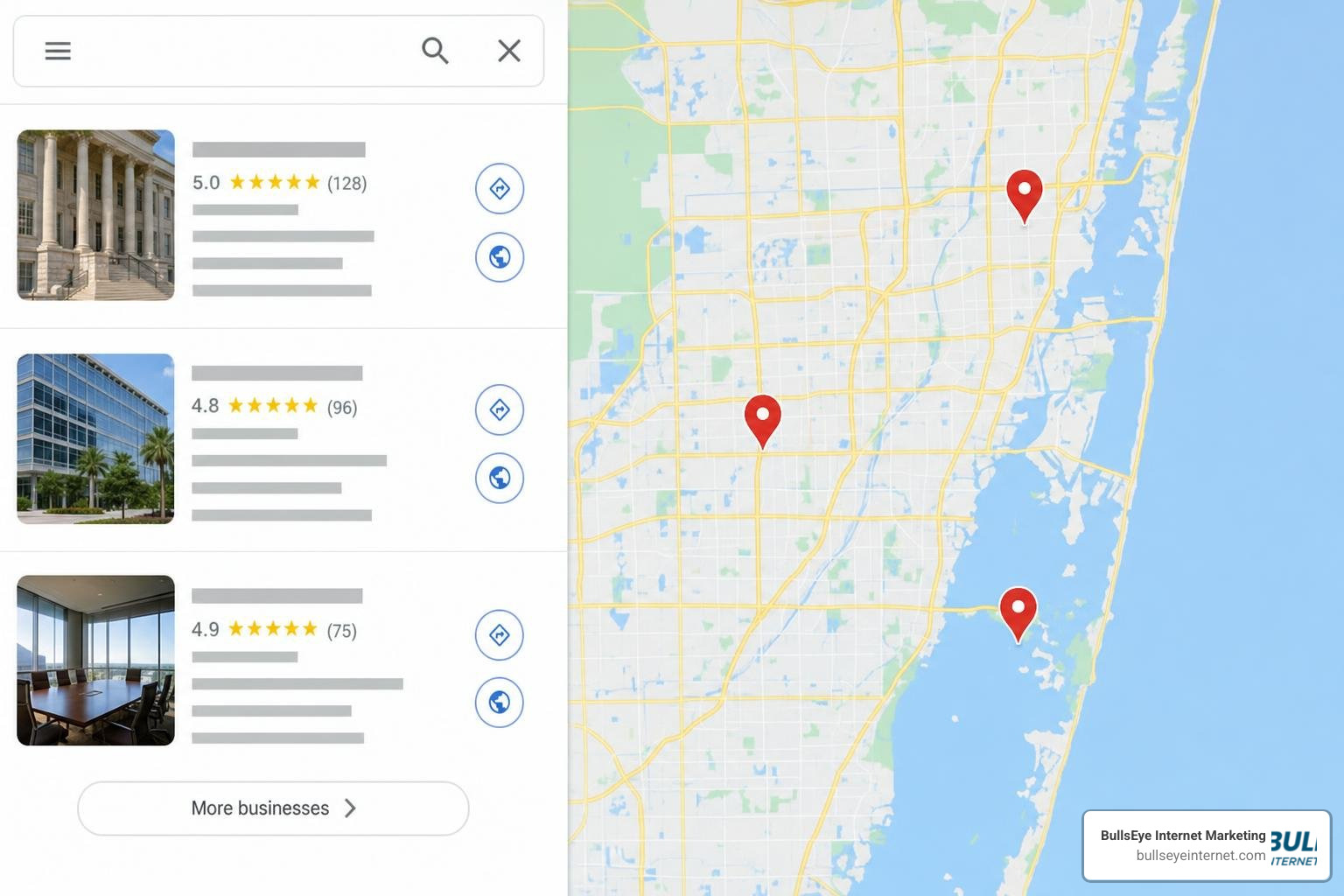
When local consumers need a lawyer, they want someone close by who understands their community. This is why local search engine optimization (SEO) is often the single most cost-effective marketing channel for law firms.
Local SEO: The Best Way for Lawyers to Advertise Locally
Local SEO is the process of optimizing your online presence so your firm appears in Google’s “Local Map Pack” (the map and three business listings that appear at the top of local searches).
To win at local SEO, you must maintain absolute Name, Address, and Phone number (NAP) consistency across every directory on the web. We break down this process step-by-step in our Step-by-Step Guide to Local Attorney SEO.
If you are looking to partner with local experts who understand the unique dynamics of the Sunshine State, read An Honest Review of Local SEO Services South Florida to see what to look for in an agency.
6. Optimize Your Google Business Profile
Your Google Business Profile (GBP) is the cornerstone of your local SEO strategy. Google Business Profiles drive an estimated 40% to 60% of all calls for small law firms.
To optimize your profile:
- Select the correct primary category (e.g., “Personal Injury Attorney” rather than just “Attorney”)
- Write a detailed, keyword-rich business description highlighting your services and the local areas you serve, such as Pembroke Pines or Delray Beach
- Upload high-quality, professional photos of your office, staff, and community involvement
- Regularly publish updates and answer common questions using the built-in Q&A feature
For more local advertising resources and bar-approved guidelines, you can also consult the Florida Bar’s Local Advertising | LegalFuel portal.
7. Implement an Ethical Review Generation System
Online reviews are the ultimate form of social proof. In fact, 88% of consumers trust online reviews as much as personal recommendations. Google also uses the volume, velocity, and sentiment of your reviews as a major ranking factor in the Local Map Pack.
Develop a systematic, ethical process for requesting reviews from every satisfied client at the conclusion of their case. Send a personalized email with a direct link to your Google Business Profile, making it as easy as possible for them to share their experience. Never incentivize reviews with gifts or discounts, as this violates both FTC guidelines and state bar advertising rules.
8. Claim and Complete Free Legal Directory Profiles
Before spending a single dollar on paid ads, make sure you have claimed and fully optimized your free profiles on major legal directories like Avvo, Justia, and Yelp. These directories have massive domain authority, meaning their search results often rank higher on Google than your individual law firm website.
A complete profile with detailed practice area descriptions, professional photos, peer endorsements, and client reviews helps you capture traffic from consumers who prefer to search within these trusted directories. For example, local directory pages like Best Lawyers in Martin County, NC – Justia show how detailed directory profiles help individual attorneys stand out in specific geographic locations.
Content, Video, and Advanced Conversion Systems
Attracting visitors to your website is only half the battle. To turn those visitors into paying clients, you must demonstrate authority and build a seamless intake system that converts interest into signed retainers.
Content Marketing: The Best Way for Lawyers to Advertise Expertise
Google’s search algorithms heavily prioritize websites that demonstrate high levels of E-E-A-T (Experience, Expertise, Authoritativeness, and Trustworthiness). Content marketing is the vehicle you use to prove this expertise to both Google and your potential clients.
By writing high-quality, educational content that addresses the real questions your clients are asking, you build trust before ever speaking to them. To learn how to structure your overall content approach, explore our Digital Marketing for Law Complete Guide.
9. Publish Educational Blog Posts Answering Client FAQs
Stop writing dry, academic blog posts about obscure legal theories. Instead, write about the practical questions your clients ask during initial consultations.
If you are a family law attorney in Fort Lauderdale, write about topics like “How is child support calculated in Florida?” or “What happens to our house in a Florida divorce?” We discuss how to structure these high-intent content pieces in our guide on SEO for Family Law Attorneys.
Similarly, if you specialize in financial restructuring, you can find tailored content ideas in our resource on Bankruptcy Lawyer Marketing Strategies That Actually Generate Leads.
10. Produce Short-Form Video Q&As for Social Media
Video marketing is an incredibly powerful way to humanize your brand and build immediate trust. Only 31% of law firms produce video content, giving early adopters a massive competitive advantage.
Create simple, 60-second video clips answering common legal questions and post them natively on platforms like TikTok, YouTube Shorts, and Instagram Reels. You don’t need a Hollywood production crew—a modern smartphone, a lapel microphone, and clean lighting are all you need to start connecting with your local community.
11. Launch a Niche Legal Podcast
Launching a podcast is a highly effective way to build a referral network and establish authority. Instead of hosting a generic show about “the law,” focus on a highly specific niche that appeals to your target referral sources or ideal clients.
For example, a business attorney might host a podcast interviewing local entrepreneurs in Miami-Dade County about the legal challenges of scaling a business. This not only positions you as the go-to legal expert for those business owners, but also provides you with endless content to repurpose across your blog and social channels.
12. Write Guest Blogs for Hyper-Local Websites
Backlinks (links from other reputable websites to your own) are one of Google’s top ranking signals. A fantastic way to earn high-quality, local backlinks is by writing guest articles for hyper-local blogs, community newsletters, and business associations.
An estate planning lawyer could write a guest post for a local South Florida senior living blog explaining the importance of updating a will. This positions you directly in front of your target audience while earning a valuable local backlink that boosts your overall website rankings.
13. Integrate AI Voice Agents for Instant Intake
Shocking statistic? Only 40% of law firms answer their phone calls. If a prospect calls your firm and gets sent to voicemail, they will immediately hang up and call your competitor.
By integrating AI voice agents and automated intake forms, you can ensure your firm is reachable 24/7/365. AI agents can answer basic questions, pre-qualify leads, and book consultations directly onto your calendar in real-time. To learn how to build this kind of automated growth system, read our guide on How to Build a Client Acquisition Machine for Your Law Practice.
14. Build a Systematized Attorney Referral Network
While digital marketing is highly scalable, professional referrals will always be a cornerstone of a healthy law firm. However, you shouldn’t just wait around and hope referrals happen. You need to build a system.
Identify attorneys in complementary practice areas (for example, a criminal defense lawyer and a family law attorney often share clients) and establish formal, reciprocal referral relationships. Schedule regular quarterly check-ins, send thank-you notes for every referred client, and track the lifetime value of your referral sources to ensure your networking efforts are driving real business.
15. Use Retargeting Ads to Re-Engage Website Visitors
Most people who visit your law firm website will not contact you on their first visit. They might get distracted, want to do more research, or simply aren’t ready to make a decision yet.
By installing a retargeting pixel (from Google or Facebook) on your website, you can show targeted display ads to these past visitors as they browse other sites online. This keeps your firm top-of-mind, reminding them of your expertise and encouraging them to return to your site to book their consultation when they are ready.
16. Host Educational Webinars and Community Seminars
Hosting free educational webinars and local community seminars is an exceptional way to build trust and give back to your local community.
An elder law attorney could host a free seminar at a local community center in Jupiter or Boynton Beach to explain Medicaid planning. A business attorney could host a webinar for the local chamber of commerce on protecting intellectual property. These events position you as an approachable, helpful authority, making you the natural choice when attendees eventually need to hire an attorney.
Navigating State Bar Advertising Rules and Compliance
As you build out your marketing systems, you must remember that lawyer advertising is highly regulated. A single compliance mistake can lead to bar grievances, fines, or public reprimands.
Ethical Boundaries in Modern Legal Marketing
Each state bar has its own strict set of rules governing attorney advertising, and the Florida Bar is historically one of the most stringent in the country. In general, you must avoid making any misleading claims, promising specific outcomes, or referring to yourself as an “expert” or “specialist” unless you hold an official board certification.
To ensure your campaigns remain completely compliant, we recommend reading our detailed guide on Lawyer Advertising Rules & Solutions for Modern Firms. You can also find additional context on ethical marketing boundaries in What You Need To Know About Lawyer Advertising.
Key Disclaimers and Record Retention Best Practices
To stay compliant with bar rules, always include required disclaimers on your website, landing pages, and social media ads. For example, standard disclaimers like “Prior results do not guarantee a similar outcome” or “The hiring of a lawyer is an important decision…” are essential for managing consumer expectations.
Additionally, many state bars require you to retain copies of all advertisements, along with records of when and where they were distributed, for at least two to three years. Always double-check your local state bar guidelines before launching any new campaign.
Frequently Asked Questions about Legal Advertising
What is the average cost per signed case for law firms?
Across competitive paid channels like Google PPC, acquiring a single signed case typically costs between $2,500 and $3,000. However, this benchmark varies wildly by practice area. Mass tort and personal injury cases generally have a much higher cost per signed case due to extreme competition, while estate planning, bankruptcy, and family law cases are significantly less expensive to acquire.
How much of our gross revenue should we spend on marketing?
The standard benchmark for law firm marketing is to allocate 2% to 10% of your gross revenue to marketing and advertising. Newly established firms or practices looking to scale rapidly often invest 15% to 20% of their revenue to build market share, while mature, referral-heavy practices may stay on the lower end of the spectrum.
Can solo practitioners compete with large firms in digital advertising?
Absolutely. While solo practitioners cannot match the multi-million-dollar TV and billboard budgets of massive regional firms, they can easily outmaneuver them in the digital space. By focusing on hyper-local SEO, targeting long-tail high-intent keywords, and dominating specific geographic niches (like Coral Springs or Homestead), solo attorneys can attract highly qualified cases at a fraction of the cost.
Conclusion
Finding the best way for lawyers to advertise does not require a massive budget or a confusing web of marketing agencies. It requires a commitment to building a consistent, multi-channel system that attracts high-intent leads and converts them into signed clients through exceptional responsiveness.
At BullsEye Internet Marketing, we have spent two decades building these exact client acquisition machines for law firms. We do things differently: we offer no long-term contracts, and we work with only one client per industry per geographic area, giving you an exclusive, unfair competitive advantage over your local competitors.
Ready to stop chasing clients and start attracting them? Let’s build your predictable client pipeline today.
Get Your Free Competitive Analysis from BullsEye Internet Marketing
