
Why AI Search Analytics Matters for Your Visibility
AI search analytics shows how often your brand, content, and competitors appear in AI-generated answers from platforms such as ChatGPT, Google AI Overviews, Gemini, Claude, and Perplexity. Unlike a standard rank tracker, it measures prompt-level visibility, brand mentions, source citations, sentiment, and AI-driven referral traffic.
For a practical starting point:
- Track 10 to 15 high-intent questions your customers ask before buying.
- Compare whether AI engines mention your brand, cite your pages, or recommend competitors.
- Prioritize pages that have lost citations or are missing from important answers.
- Connect AI visibility changes to referral traffic, leads, calls, and sales.
This matters because search is no longer always a list of blue links. AI answers often satisfy the question without a click, while Google AI Overviews have been associated with lower organic click-through rates on affected queries. If your business is not included in the answer or cited as a source, strong traditional rankings may not tell the whole story.
AI search analytics does not replace SEO reporting. It adds the answer-engine layer: what customers see, which sources influence that answer, and where your marketing can earn more qualified visibility.
I am Ronnie Katz, founder and Principal CEO of BullsEye Internet Marketing, with more than 20 years of experience helping businesses improve online visibility, traffic, and conversions. My work in SEO, AEO, GEO, and AI search analytics focuses on transparent measurement and practical actions that help turn discovery into calls and sales.
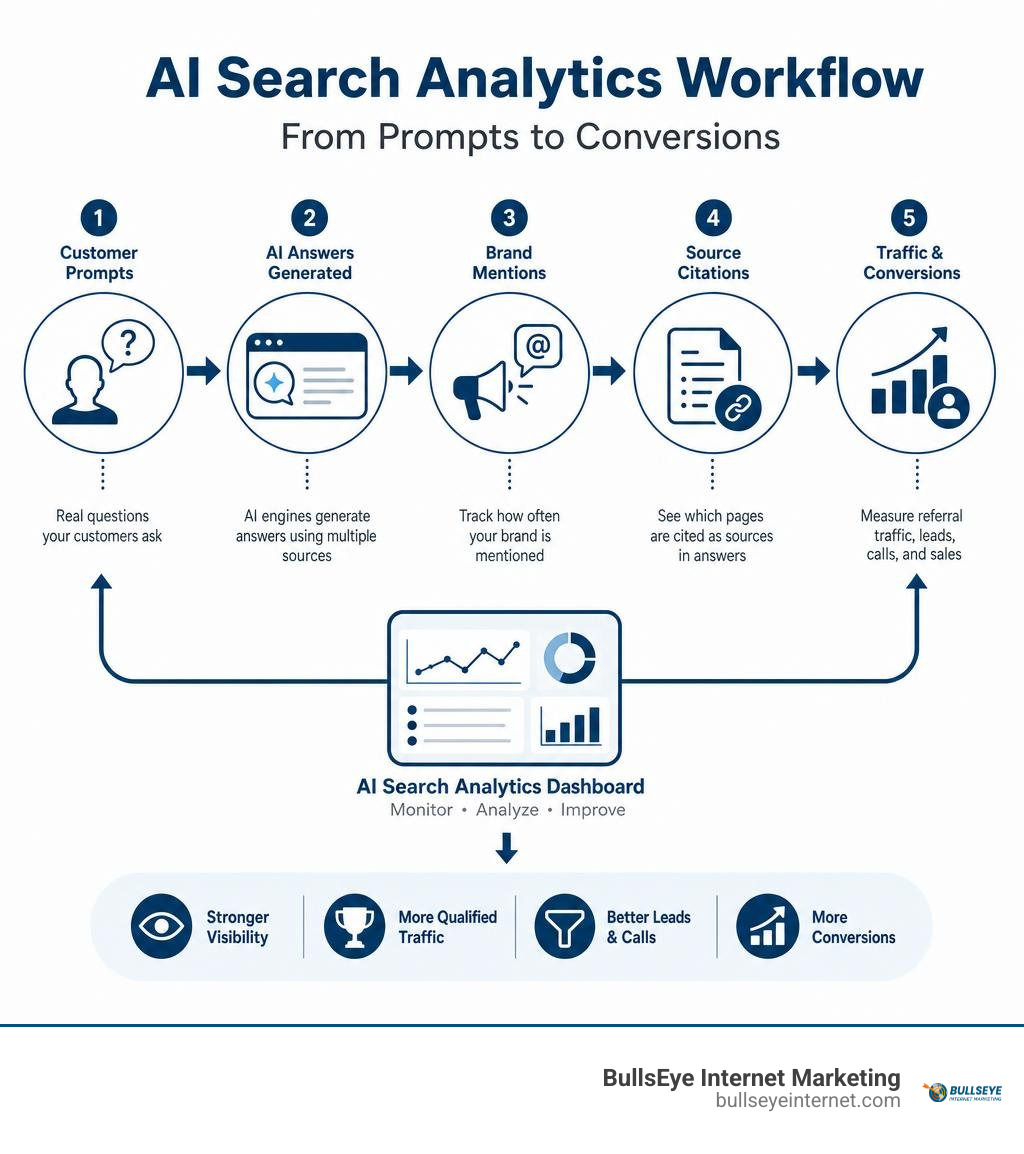
Simple guide to AI search analytics terms:
Understanding AI Search Analytics vs Traditional Rank Tracking
Over 100 million people search with AI every day, and roughly half of surveyed consumers already use AI-powered tools as a primary input in their buying decisions. Traditional rank tracking measures whether your page sits in position 1, 4, or 10 on a search engine results page (SERP). However, as search engines evolve into conversational answer engines, synthesized responses now occupy the primary screen real estate.
Research from Seer Interactive documented materially lower organic click-through rates on queries where Google AI Overviews appear. When an AI answer synthesizes information from multiple websites, the traditional 10 blue links are pushed far down the page or ignored entirely. This shift creates a zero-click discovery ecosystem where being listed on page one does not guarantee that searchers will see or click your link.
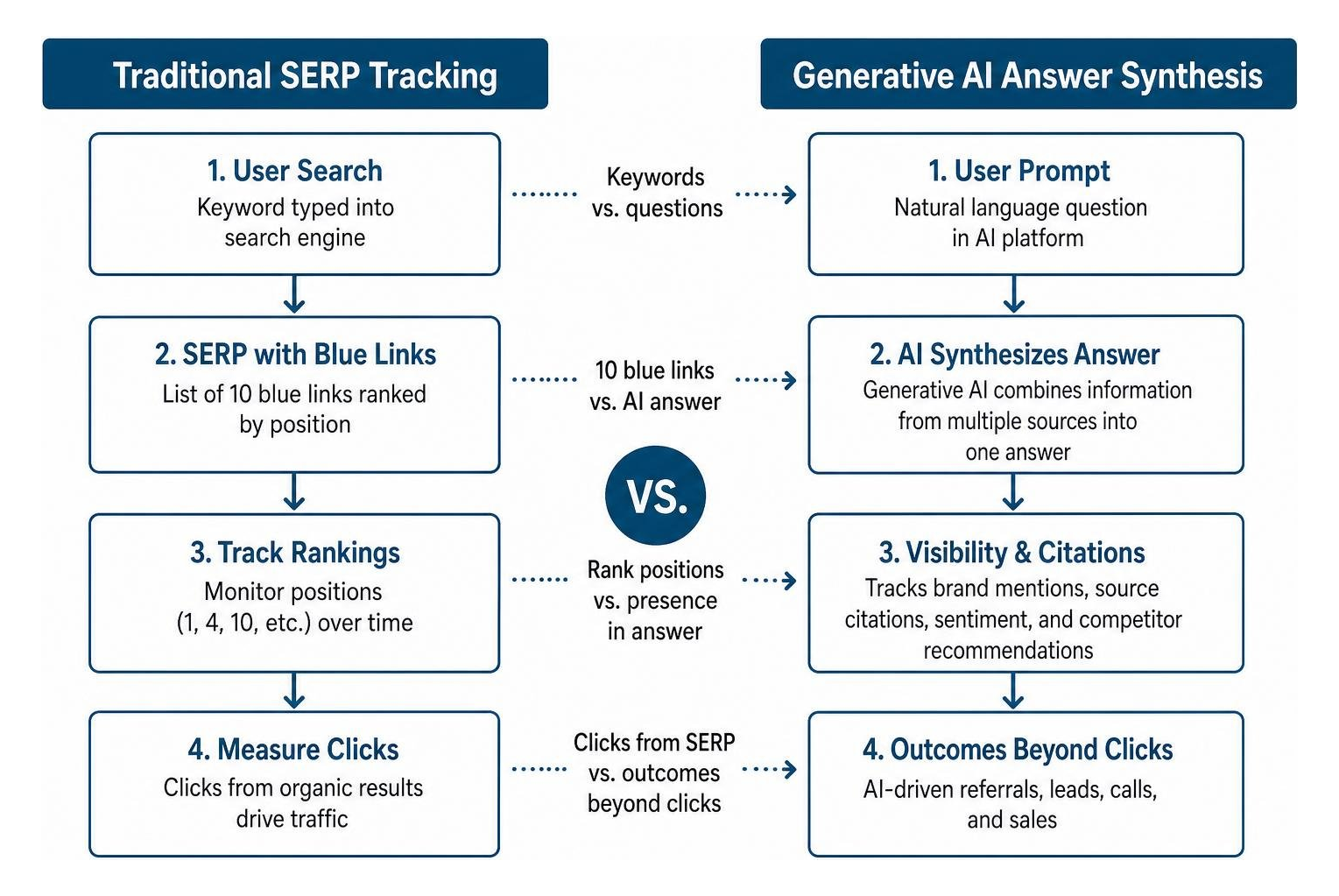
To adapt, modern marketing strategies rely on understanding generative engine optimization and AI search visibility. Major search platforms have even adapted their webmaster tools to reflect this landscape, as highlighted in Google’s documentation on generative AI performance reporting. Rather than tracking static keywords, analytics platforms must now measure conversational prompt variations, synthesized recommendations, and competitive presence across various large language models (LLMs).
Core Capabilities of AI Search Analytics Platforms
Modern AI intelligence platforms evaluate multiple dimensions of visibility across answer engines:
- Share of Voice (SoV): The percentage of AI-generated answers within a specific topical category that include your brand versus your competitors.
- Prompt Volume Tracking: The estimated demand and frequency of specific conversational queries across conversational engines.
- Sentiment Scoring: Evaluating whether AI models recommend your product enthusiastically, neutrally, or with caution regarding limitations.
- Model Variance Analysis: Comparing how visibility differs between engines. Industry data indicates substantial variation; for instance, brand mention rates can reach 68% in ChatGPT, 57% in Perplexity, and 44% in Gemini for identical topic categories.
- Signal Correlation: Advanced platforms evaluate hundreds of data points, with systems like SearchAnalytics.ai processing over 300 SEO and generative signals to pinpoint why specific answers win prominence.
Mention Tracking vs Citation Tracking in Answer Engines
Understanding the difference between a brand mention and a source citation is essential for actionable optimization.
- Brand Mentions: Occur when an AI model names your company, product, or service directly within its prose response (e.g., “Top choices include Brand X and Brand Y”). A mention builds awareness and sentiment, but it does not always provide a clickable path to your website.
- Source Citations: Occur when an AI engine grounds its response in your content and links back to your specific URL as authoritative proof.
Citations represent the true transactional engine of generative search. Research indicates large differences between engines in how many links they cite per answer. Earning citations requires robust structured data, clear semantic answers, and indexable comparison tables, as outlined in our comprehensive AI search optimization guide.
Key Architectural Features and Technical Data Signals
AI answer engines do not discover content by magic. They rely on specialized web bots that crawl, index, and retrieve data in real time. Analyzing server logs and integrating with web analytics services allows marketing teams to monitor three distinct types of AI bot activity:
- Training Crawlers: Bots like GPTBot or Google-Extended scraping public data to train future foundational weights.
- Indexing Crawlers: Automated systems indexing fresh web updates for generative search repositories.
- Real-Time Retrieval Agents: Bots querying live URLs to ground an immediate user prompt with up-to-the-minute facts.
Government and commercial organizations alike are recognizing the rapid impact of these technologies, from statewide digital initiatives to local developments such as public sector AI search initiatives.
Monitoring-Only vs Execution-Driven Platforms
When evaluating the market for analytics tools, solutions generally fall into two categories:
| Feature / Dimension | Monitoring-Only Platforms | Execution-Driven Platforms |
|---|---|---|
| Primary Function | Tracks mentions, citations, sentiment, and prompt rankings over time. | Combines tracking with automated brief generation, content updates, and schema fixes. |
| Data Retention | Standard dashboards retain data from the last 180 days (typical default 30-day views). | Retains historical benchmarks with automated triggers for content decay. |
| Workflow Integration | Exports data via CSV, APIs, or Looker Studio connectors. | In-app remediation engines assign tasks directly to content and technical teams. |
| Best Fit For | Market researchers, PR teams, and enterprise reporting divisions. | Growth marketing teams, SEO agencies, and fast-moving content operations. |
Essential Data Integration and Crawler Analytics
To convert visibility metrics into revenue, analytics platforms must integrate directly with website telemetry.

Connecting crawler logs to tools like Google Analytics 4 allows you to attribute direct referral sessions from platforms like Perplexity, Claude, and ChatGPT to downstream lead generation. By isolating bot latency (measured in milliseconds) and tracking self-solved queries where searchers find answers without visiting, teams can identify technical crawl blocks and optimize content freshness.
How to Choose the Right Intelligence Stack by Team Type
Choosing software depends on your operational capacity. A large enterprise managing hundreds of regional pages requires governance, whereas a local agency focuses on client ROI and competitive isolation. Conducting an enterprise SEO audit helps identify where generative visibility gaps exist across large web footprints.
Selecting AI Search Analytics Software for Your Team Structure
- B2B SaaS Teams: Benefit from execution-driven platforms that detect citation drops across high-intent comparison queries and automatically trigger content refreshes.
- Agencies & Multi-Client Teams: Need centralized dashboards, multi-tenant reporting, white-label exports, and strict prompt grouping. At BullsEye Internet Marketing, we emphasize competitive exclusivity by working with only one client per industry per geographic area across Florida and the entire United States, ensuring our clients never compete with each other for AI share of voice.
- Lean Growth Teams & Startups: Prioritize platforms offering pre-built prompt libraries, low overhead, and clear competitive benchmarking. Reviewing established AI search best practices helps lean teams deploy resources effectively.
Pricing Models, Credit Systems, and Cost Factors in 2026
In 2026, pricing for generative search intelligence tools varies based on operational scale:
- Starter / Single-Brand Plans: Typically range from $29 to $99 per month for tracking 50 to 150 prompt queries across major models.
- Mid-Market & Pro Tiers: Range from $299 to $599 per month, supporting hundreds of daily prompt runs, API access, and crawler attribution.
- Enterprise Platforms: Custom contracts ranging from $999 to several thousand dollars monthly, incorporating custom proxy egress, private MCP connections, and dedicated historical data storage.
Key cost factors include credit consumption per extraction run, frequency of prompt refreshes, and the number of active AI models being monitored simultaneously.
Implementation Framework and Evaluation Mistakes to Avoid
When setting up your analytics dashboard, avoiding common evaluation traps ensures reliable data:
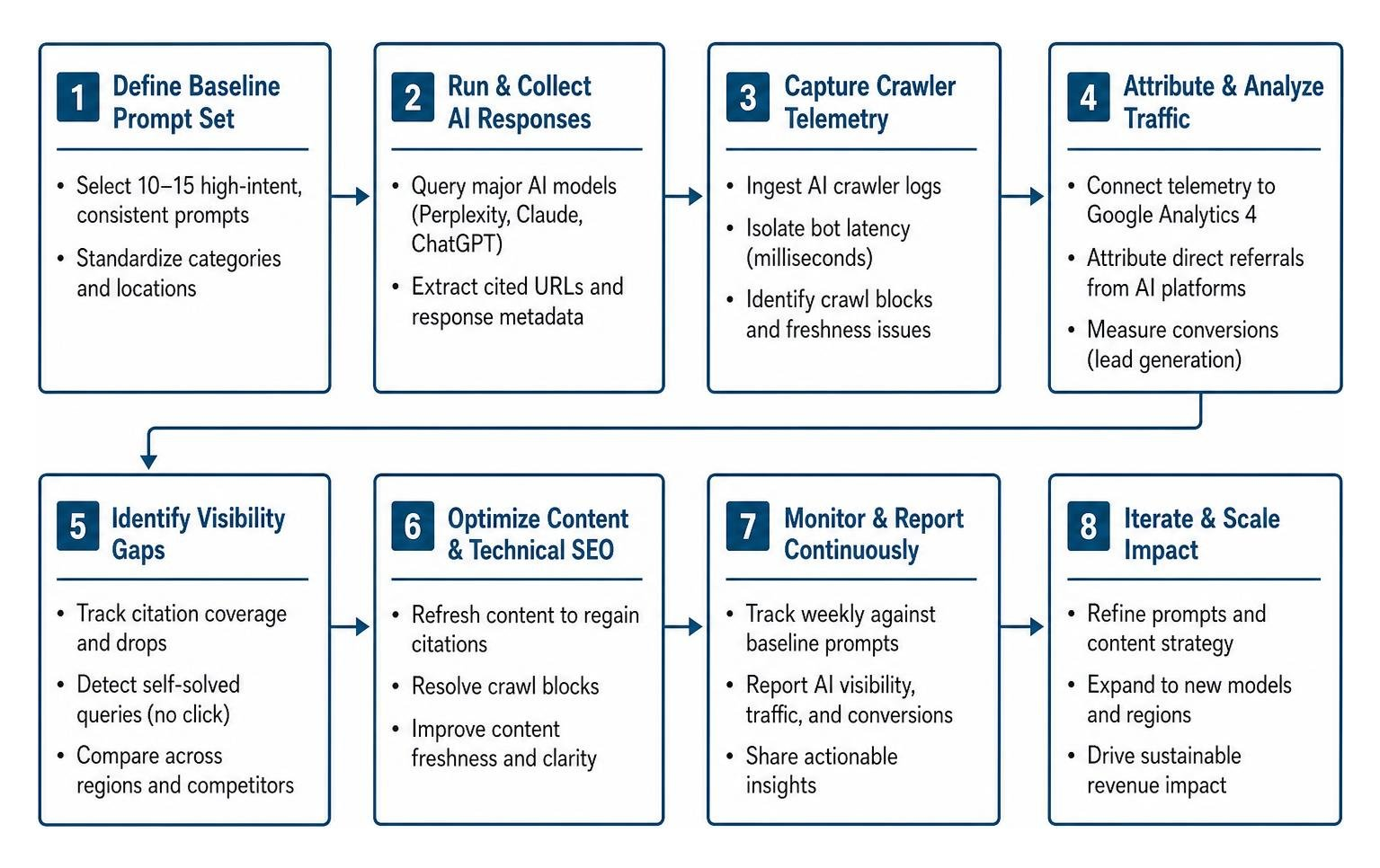
- Avoid Over-Reliance on Vanity Mentions: Tracking brand mentions without measuring source citations leads to inflated visibility metrics that generate zero phone calls or form fills.
- Standardize Your Baseline Prompts: Do not constantly alter your primary prompt set. Establish 10 to 15 high-intent, consistent prompts and track them weekly to maintain statistical significance against prompt variance.
- Verify URL Citation Grounding: Ensure your tool extracts the exact destination URLs cited in the response, rather than merely confirming that an answer was returned.
- Account for Regional Context: Generative search engines personalize answers based on location. Ensure your tools simulate queries from targeted regional markets, whether in Miami-Dade County, Palm Beach County, or across the country.
Frequently Asked Questions About Answer Engine Intelligence
Do I need dedicated AI tracking if I already have standard SEO rank trackers?
Yes. Traditional SEO rank trackers scrape static SERP links. They cannot parse multi-source synthesis, conversational follow-up suggestions, or citation attribution within conversational LLM windows.
How often should marketing teams track and refresh prompt data?
A weekly tracking cadence provides a stable, reliable trendline for most business categories. For active product launches or competitive campaigns, daily tracking helps capture rapid algorithmic shifts without being skewed by hourly prompt variance.
What metrics matter most when reporting AI visibility to stakeholders?
Focus on Citation Share of Voice (how often your URLs back up the engine’s answers), Brand Recommendation Rate across high-intent purchase prompts, and AI Referral Conversion Rate in your web analytics.
Conclusion
The shift toward answer engines represents the biggest transformation in organic search discovery in over two decades. Winning sustainable visibility requires more than traditional keyword rankings—it demands transparent data on how generative engines perceive, cite, and recommend your brand.
At BullsEye Internet Marketing, we combine cutting-edge analytics with transparent, results-focused execution. We operate with no long-term contracts, delivering value every month through Pay Per Lead, advanced SEO, PPC, Google Business Profile optimization, and conversion enhancement. By pairing this performance-first model with our single-client exclusivity per industry and market, we ensure your business maintains an unrivaled competitive advantage.
Ready to dominate the generative search landscape and turn visibility into qualified calls and sales? Explore our comprehensive approach to answer engine optimization and generative search strategy today.
