
Why It’s So Hard to Attract More Customers (And What Actually Works in 2026)
Attract more customers — that’s the goal behind almost every marketing decision a business owner makes. But knowing where to start is the hard part.
Here are 10 proven ways to grow your customer base in 2026:
- Optimize your digital presence — local SEO, Google Business Profile, mobile-ready website
- Run targeted paid ads — Google Ads, Pay Per Lead models that reduce risk
- Build social proof — reviews, testimonials, and video case studies
- Launch referral programs — reward both the referrer and the new customer
- Create loyalty programs — repeat buyers spend more and cost less to keep
- Form strategic partnerships — cross-promote with complementary local businesses
- Use influencer and affiliate marketing — micro-influencers drive real conversions
- Re-engage past customers — email and SMS win-back campaigns work
- Publish value-first content — answer questions your competitors refuse to answer
- Track everything — measure acquisition cost, conversion rate, and ROI monthly
The challenge is real. According to a recent survey, 36% of store owners say finding customers is their single biggest obstacle in their first year. And in 2026, with 59% of websites seeing a traffic decline, the old playbook just doesn’t cut it anymore.
The businesses winning right now aren’t necessarily the biggest. They’re the ones using smarter systems — combining organic growth with paid strategies, and turning happy customers into their best salespeople.
I’m Ronnie Katz, founder of BullsEye Internet Marketing, and since 2006 I’ve helped businesses across competitive industries attract more customers by building marketing systems that drive real, measurable results. In the guide below, I’ll walk you through the 10 most effective strategies we’ve seen work — so you can stop guessing and start growing.
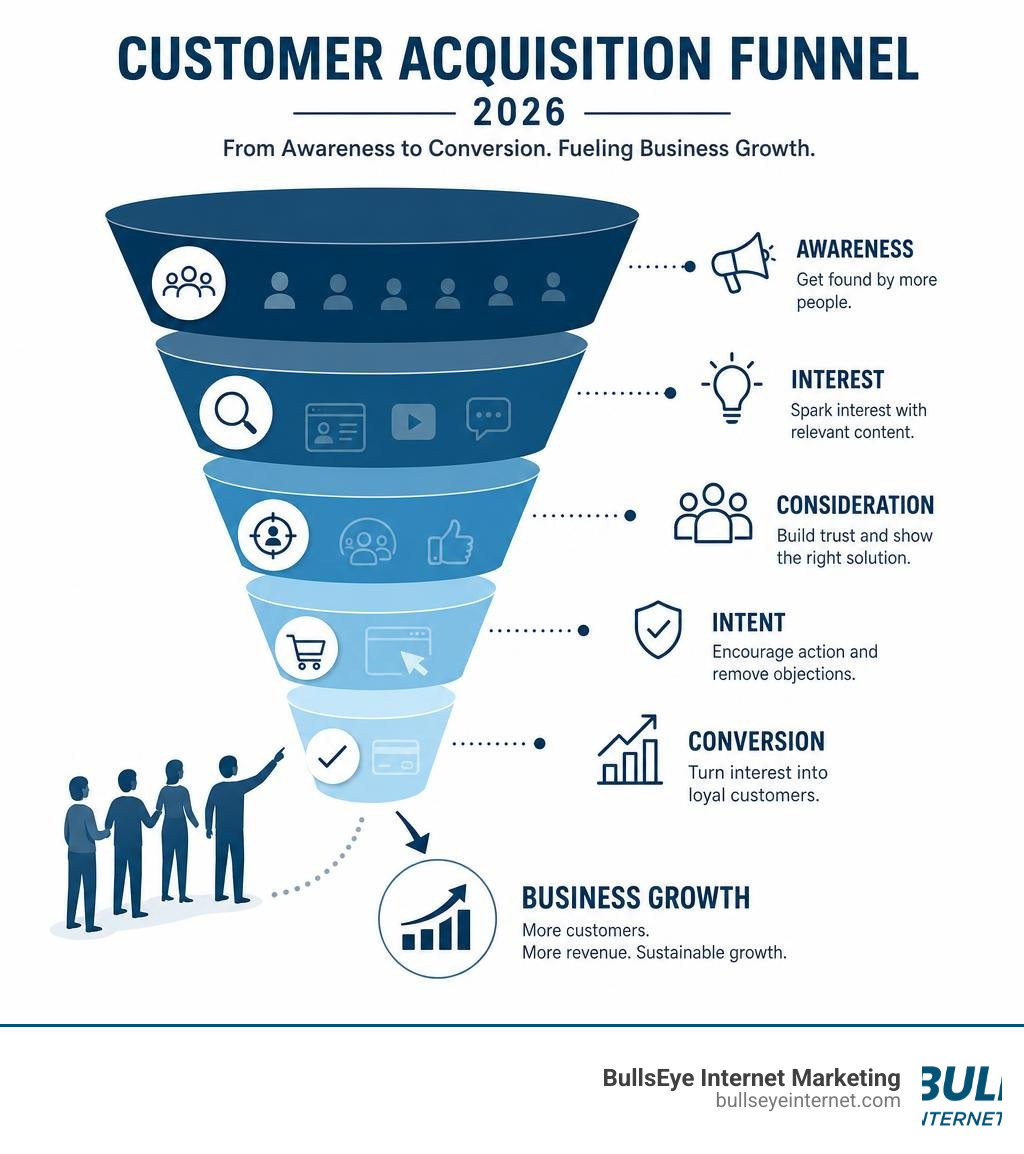
Relevant articles related to Attract more customers:
1. Optimize Your Digital Presence to Attract More Customers
Before anyone can buy from you, they have to be able to find you. In 2026, the search landscape has shifted dramatically. AI-referred traffic has grown by a staggering 632% year over year, meaning search engines are no longer just delivering lists of links—they are answering questions directly.
To ensure your business is the answer those search engines provide, you must build a robust, multi-channel organic presence. If you want to know how to drive traffic to your website (2026) – Shopify, the secret lies in balancing traditional search engine optimization (SEO) with newer generative engine optimization (GEO) tactics.
This is especially critical for service providers who rely on local clientele. To build a foundation that consistently feeds your sales pipeline, check out our local lead generation services complete guide to see how local search visibility translates directly into incoming calls.
Master Local SEO and Google Business Profile
For local businesses in South Florida—whether you operate in Miami-Dade County, Broward County, or Palm Beach County—local SEO is your most powerful tool. Over 97% of consumers search online to find local businesses before making a purchase decision, and more than 63% of those searches happen on mobile devices.
The absolute centerpiece of your local search strategy is a fully optimized Google Business Profile (GBP). It is entirely free, and the data shows that businesses with complete profiles receive 7 times more clicks than those with incomplete listings.
To maximize your local search visibility:
- Fill Out Every Single Field: Do not skip anything. Ensure your business hours are accurate and updated for holidays.
- Maintain NAP Consistency: Your Name, Address, and Phone number (NAP) must be identical across your website, GBP, and all local directories like Yelp, Bing Places, and Apple Maps. Consistent NAP data builds trust with Google’s algorithm.
- Incorporate Local Resources: Highlight your local ties. For instance, businesses operating in the Miami area can leverage tools and listings from the Business Resources – Miami-Dade County page to establish regional authority.
- Upload High-Quality Photos: Add at least 10 to 20 photos showing your office interior, exterior, your team in action, and your completed work. Listings with photos receive significantly more requests for directions and phone calls.
Build a High-Converting Website to Attract More Customers
Driving traffic to your website is only half the battle; your site must be engineered to convert those visitors into paying customers. A beautiful website that doesn’t convert is just an expensive digital business card.
First, focus on page speed. A 1-second delay in page load time can reduce your conversion rate by 7%. If your site takes more than three seconds to load, potential customers will bounce back to the search results and click on a competitor.
Second, optimize for mobile responsiveness. Because the majority of local searches occur on smartphones, your site must look and function flawlessly on smaller screens. Make sure your phone number is prominently displayed in the header and is “click-to-call” enabled.
Finally, place clear, compelling Calls-to-Action (CTAs) above the fold (the area of the screen visible before scrolling). Don’t make visitors hunt for a way to contact you. Use high-contrast buttons with action-oriented text like “Get a Free Quote” or “Book Your Consultation Now.”
2. Leverage Paid Advertising and Pay Per Lead Models
Organic SEO is a long-term play that typically takes three to six months to show significant momentum. When you need to attract more customers immediately, paid advertising is the fastest route. By utilizing targeted pay-per-click (PPC) campaigns, you can place your business at the very top of Google Search results within hours of launching.
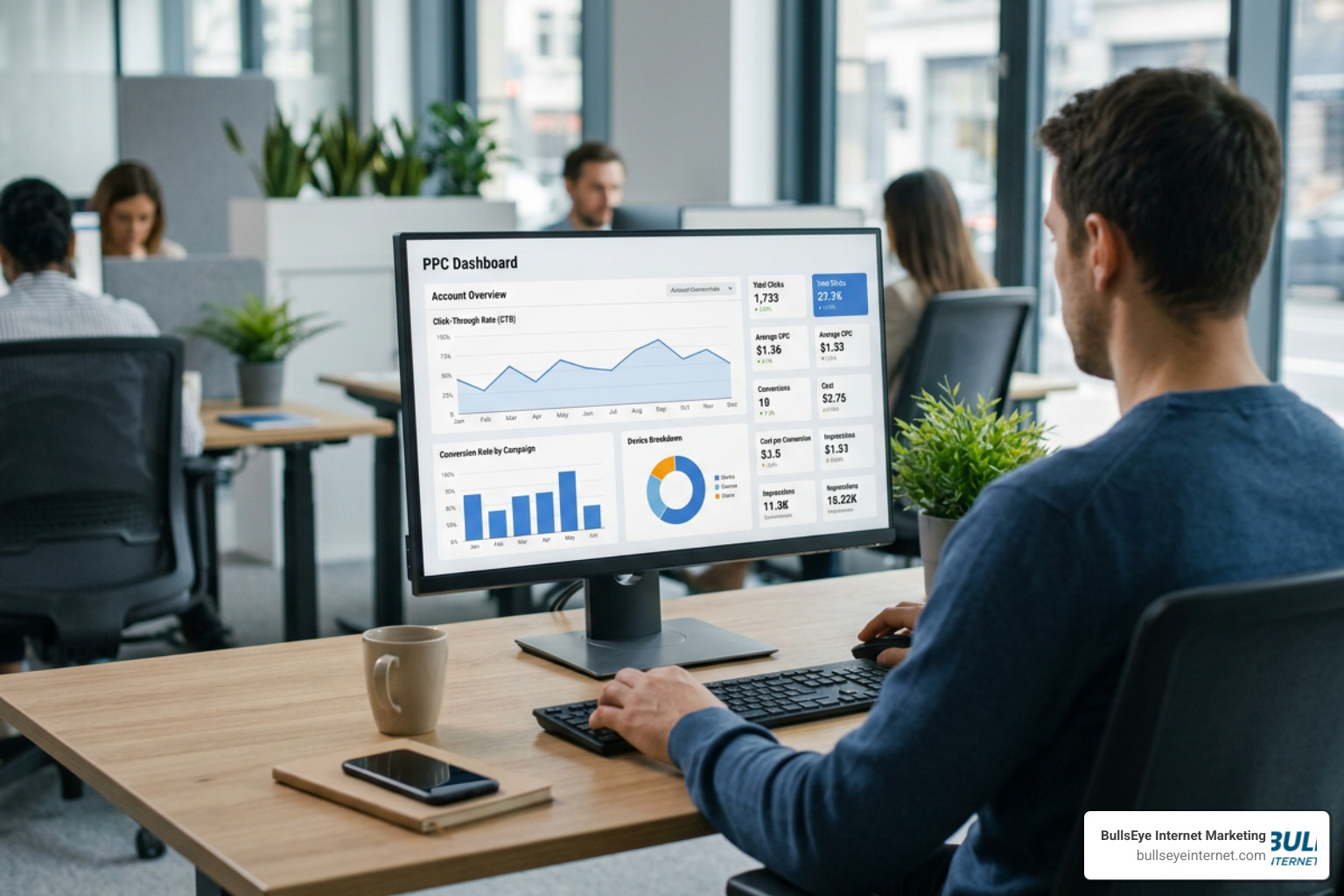
To make paid advertising work without draining your marketing budget, you need a highly structured approach. We specialize in helping businesses transition from risky, unoptimized ad spend to high-efficiency models. Discover how to align your paid campaigns with your growth goals by reading about how to transform your lead generation strategy with pay per lead marketing and explore our guide on from clicks to customers: mastering PPC for lead generation.
Maximize ROI with Targeted Search Ads
Many small business owners try running Google Ads themselves, only to burn through hundreds of dollars with zero leads to show for it. The mistake is almost always a lack of targeting.
To maximize your ROI on Google Ads:
- Use Negative Keywords: This is the single most important step to save your budget. If you are a high-end plumbing service, add negative keywords like “cheap,” “free,” “jobs,” and “DIY” to prevent your ads from showing when people search for low-value terms.
- Send Traffic to Dedicated Landing Pages: Never send paid traffic to your homepage. If your ad promises “Emergency AC Repair in Fort Lauderdale,” the user should land on a page dedicated exclusively to emergency AC repair, complete with a simple contact form and a click-to-call button.
- Start Small and Scale: Start with a modest budget of $300 to $500 per month. Test different ad copy variations, identify which keywords generate actual phone calls, and only increase your budget once you have a proven, profitable conversion rate.
For a deeper dive into making search ads work for your specific business, read our article from clicks to customers: making Google ads work for your business.
Shift Risk with Pay Per Lead Marketing
If the thought of paying for clicks that might not convert makes you nervous, you are not alone. That’s why many smart business owners are shifting to a Pay Per Lead (PPL) model.
In a traditional PPC campaign, you pay Google every time someone clicks your ad, regardless of whether they call you, fill out a form, or immediately leave your site. With Pay Per Lead marketing, the risk shifts back to the marketing agency. You only pay for actual, qualified leads—such as a live phone call from a local customer looking for your exact service.
This model ensures that every dollar of your marketing budget is tied directly to a tangible business opportunity. To understand how this performance-based model can revolutionize your customer acquisition efforts, read about how pay per lead marketing drives real results.
3. Harness the Power of Social Proof and Reviews
Consumers in 2026 are highly skeptical of self-promotion. They don’t want to hear how great you say you are; they want to hear what your actual customers think. This is where social proof becomes your ultimate conversion tool.
Over 93% of consumers state that online reviews influence their purchasing decisions. Having a steady stream of positive, recent reviews removes the psychological risk of spending money with a new business. In fact, social proof bridges the gap between getting someone’s attention and getting their credit card. To learn how to turn social attention into tangible business inquiries, explore our guide from likes to leads: measuring the real impact of social media marketing.
Cultivate Google and Yelp Reviews
The best way to build social proof is to make review collection a standard part of your post-sale process. Don’t just wait for customers to leave reviews on their own—satisfied customers are often happy to write a review, but they need a quick, friction-free path to do so.
- Create Direct Review Links: Generate a direct Google review link from your GBP dashboard.
- Send Follow-Up Texts: Send a polite text message immediately after completing a job or service: “Hi [Name], thanks for choosing us today! If you’re happy with our work, could you take 30 seconds to leave us a quick review? It helps our local business tremendously! [Link]”
- Use QR Codes: If you run a physical location or service business in Broward or Palm Beach County, print QR codes on your business cards, invoices, or counter signs that link directly to your review page.
- Manage Negative Reviews Professionally: Never ignore a bad review. Respond within 24 hours. Keep your response polite, acknowledge the issue, apologize for the poor experience, and offer to resolve the matter offline. Prospective customers are highly influenced by how a business handles complaints.
Showcase Case Studies and Video Testimonials
While short star-rating reviews are excellent for local search rankings, in-depth case studies and video testimonials are what close high-value deals.
When a prospective client sees a video of a real person explaining how your business solved a major pain point, it builds instant credibility. You don’t need a professional camera crew to do this; simple, authentic smartphone videos shot on-site often perform better because they feel genuine.
Consider the power of transparent content. When pool company owner Marcus Sheridan faced bankruptcy during the 2008 recession, he saved his business by writing transparent blog posts answering every single question his customers had, including pricing. That single blog post generated over $3.5 million in attributed revenue. Similarly, Sara Blakely grew Spanx into a billion-dollar brand by demonstrating her product live and relying entirely on word-of-mouth rather than traditional paid advertising for 16 years. Honest, transparent proof always wins.
4. Implement Referral and Loyalty Programs
Acquiring a new customer is five to twenty-five times more expensive than retaining an existing one. By building systematic referral and loyalty programs, you can leverage your current customer base to attract more customers organically while simultaneously boosting your customer lifetime value (CLV).
According to the 10 ways to get new customers | U.S. Small Business Administration, actively asking for referrals rather than waiting for them to happen passively is one of the most reliable ways to grow a local business.
| Feature | Referral Program | Loyalty Program |
|---|---|---|
| Primary Goal | Acquire brand-new customers | Increase repeat purchase frequency |
| Target Audience | Friends & family of existing customers | Your current active customer base |
| Incentive Structure | Dual-reward (both parties receive a discount) | Tiered points, cash back, or exclusive perks |
| Growth Impact | Rapid expansion of customer database | Compound growth of customer lifetime value |
Design Dual-Reward Referral Systems
The most successful referral programs use a dual-reward structure. If you only reward the person sending the referral, it can feel self-serving. But if you reward both the referrer and the referee, you create a win-win scenario that people are excited to share.
For example, a residential cleaning service in West Palm Beach can offer a “$20 off your next clean” voucher to an existing customer, while giving “$20 off their first service” to the friend they refer.
To manage this efficiently, use referral tracking software like ReferralHero or simply generate unique referral codes for your top clients. This turns your best customers into an active, motivated sales force.
Build Tiered Loyalty Programs to Attract More Customers
A well-structured loyalty program encourages repeat business by rewarding customers for their ongoing engagement. Instead of a simple “buy 10, get 1 free” punch card, consider a tiered point system.
Tiered programs create a gamified experience where customers earn higher status (e.g., Bronze, Silver, Gold) as they spend more. Each tier unlocks exclusive perks, early access to new products, or special discounts. This psychological incentive keeps your brand top-of-mind and prevents customers from straying to local competitors.
5. Form Strategic Partnerships and Cross-Promotions
You don’t have to build an audience from scratch when you can partner with someone who has already built one. Strategic alliances with non-competitive, complementary businesses allow you to tap into an established pool of warm prospects.
As highlighted in how to attract customers: 15 strategies for 2026 | QuickBooks, cross-promotion is one of the fastest ways to expand your local footprint with minimal upfront costs.
Collaborate with Non-Competitive Local Brands
Look for businesses that serve the exact same target demographic as you, but offer completely different services.
- A wedding photographer in Fort Lauderdale can partner with a local florist and a bridal boutique.
- A personal trainer in Boca Raton can cross-promote with a nutritionist or a healthy meal prep service.
- A commercial real estate agent can partner with an office design firm or a business accountant.
You can co-host educational webinars, exchange guest blog posts, or offer exclusive package deals. For instance, as corporate expansion surges in South Florida, local businesses can align with regional growth initiatives to spot B2B partnership opportunities. To see how corporate growth drives local B2B opportunities, read about how Palm Beach County attracts corporate growth and global companies.
Leverage Micro-Influencers and Affiliates
Influencer marketing is no longer just for massive global brands. In fact, local businesses often see much higher conversion rates by working with “micro-influencers”—creators with 1,000 to 10,000 highly engaged local followers.
Find local South Florida creators who align with your brand values. Instead of paying massive flat fees, offer them free products or services in exchange for honest social media coverage.
Alternatively, set up an affiliate program where you pay them a percentage commission on every sale they generate. This keeps your marketing costs directly tied to actual performance. Think of Casper, the mattress company: by placing host-read ads on popular, trusted niche podcasts, they achieved a massive 20% increase in sales through authentic, third-party recommendations.
6. Re-Engage Past Customers and Dormant Leads
Many businesses spend all their energy chasing new leads while sitting on a goldmine of past customers and dormant prospects. Re-engaging people who have already bought from you—or who previously expressed interest—is one of the most cost-effective ways to increase revenue.
A simple 5% increase in customer retention can boost business profits by 25% to 95%.
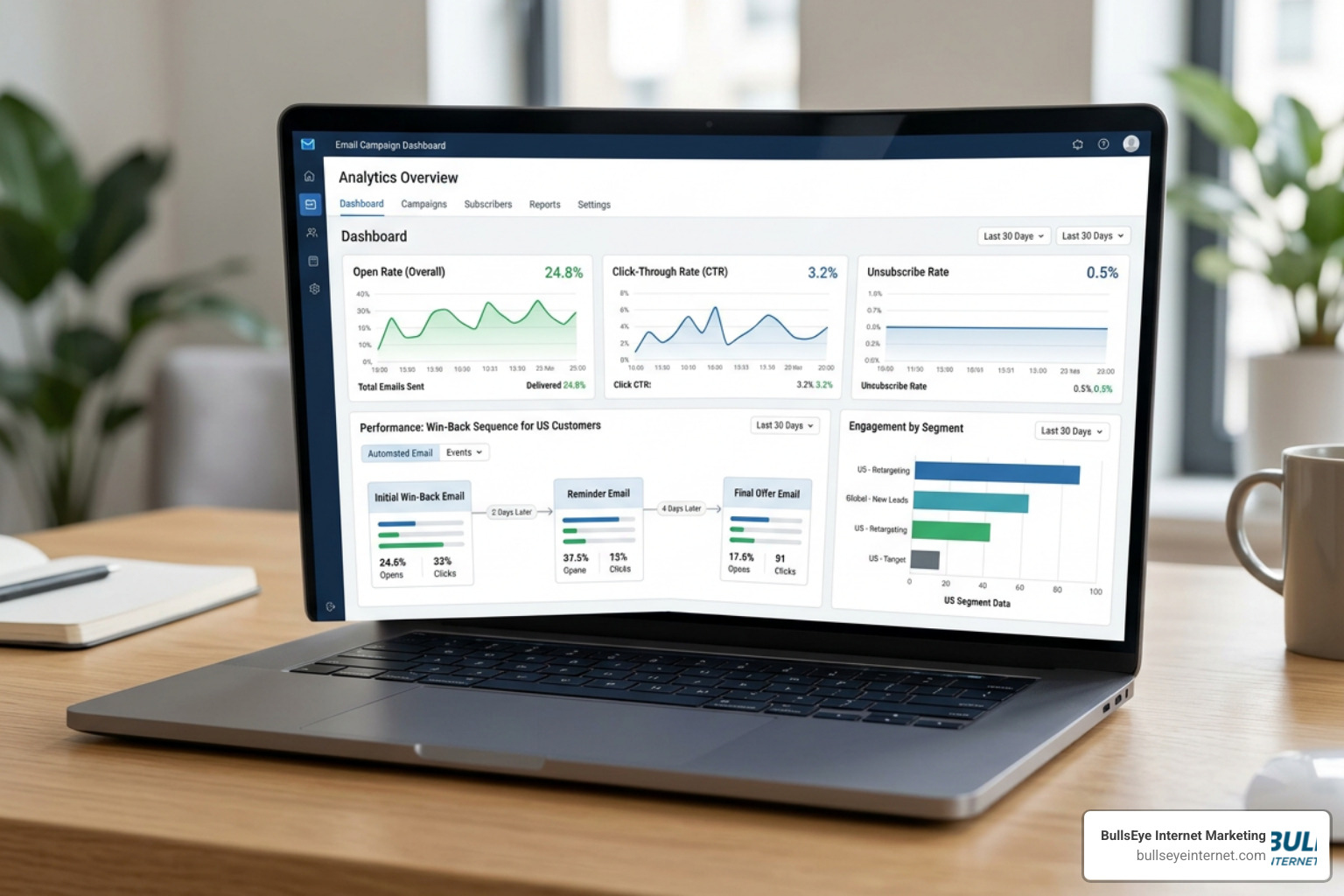
Launch Targeted Email Win-Back Campaigns
The average online shopping cart abandonment rate sits at 69%. Whether you run an e-commerce store or a local service business, people get distracted and leave before completing a purchase.
To win them back, segment your email list based on behavior:
- Dormant Customers: Customers who haven’t made a purchase in 6 to 12 months. Send a personalized “We Miss You” email offering an exclusive discount or a free upgrade on their next order.
- Abandoned Carts: Send an automated 3-part email sequence. The first email should go out within an hour of abandonment (asking if they had technical issues), the second 24 hours later (highlighting product benefits or reviews), and the third 48 hours later (offering a limited-time discount or free shipping).
- Value-First Newsletters: Don’t just send sales pitches. Send helpful, educational content. A local landscaping company in Jupiter can send a monthly newsletter with seasonal lawn care tips, keeping their brand top-of-mind when the homeowner eventually needs professional help.
Use SMS Marketing for Instant Engagement
While email marketing is highly effective (delivering an average ROI of $36 for every $1 spent), SMS marketing offers unmatched speed and visibility. Text messages have an astonishing open rate of nearly 98%, with most messages read within three minutes of delivery.
SMS is perfect for time-sensitive, local promotions:
- A restaurant in Delray Beach can send a text at 11:30 AM: “Hungry? Show this text for a free drink with any lunch order today only!”
- A local salon can fill last-minute calendar gaps: “We have 2 openings left this afternoon! Reply to this text to book and get 15% off your service.”
Crucial Rule: Always obtain explicit opt-in consent before texting customers, keep messages under 160 characters, and make it incredibly easy to opt-out by replying “STOP.”
Frequently Asked Questions about Customer Acquisition
What is the fastest way to attract new customers in 2026?
The fastest way to attract new customers is through highly targeted Google Search Ads combined with a dedicated, high-converting landing page. Because search ads target users who are actively searching for your specific service at that exact moment, they generate high-intent leads within 48 to 72 hours of launch. For businesses looking to eliminate budget risk entirely, a Pay Per Lead model is the fastest way to secure guaranteed customer phone calls.
How can small businesses attract customers for free?
Small businesses can attract customers for free by fully optimizing their Google Business Profile, consistently collecting and responding to Google reviews, and posting valuable, educational content on social media platforms like Instagram, TikTok, or LinkedIn. Additionally, networking within local business groups and actively asking satisfied customers for word-of-mouth referrals costs nothing but time and yields some of the highest-converting leads possible.
How do you measure the success of customer acquisition efforts?
The success of your customer acquisition efforts should be measured using three key metrics:
- Customer Acquisition Cost (CAC): The total marketing and sales spend divided by the number of new customers acquired.
- Conversion Rate: The percentage of website visitors who take a desired action (like calling or filling out a form).
- Customer Lifetime Value (CLV): The total revenue a single customer generates for your business over their entire relationship with you.
Use tools like Google Analytics 4 and Google Search Console to track these metrics monthly.
Conclusion
To consistently attract more customers in 2026, you cannot rely on a single marketing channel. The most successful businesses combine a highly visible, local digital presence with fast-acting paid advertising, strong social proof, and active customer retention systems.
But as a business owner, you have a company to run. You shouldn’t have to spend your nights mastering search engine algorithms, setting up complex tracking codes, or managing risky ad budgets.
That’s where we come in. At BullsEye Internet Marketing, we do things differently to give our clients a true competitive advantage:
- No Long-Term Contracts: We earn your business month after month based on real, measurable performance.
- Strict Exclusivity: We work with only one client per industry per geographic area. When you partner with us, we focus entirely on helping you dominate your local market, not your competitors.
- Performance-Driven Models: We specialize in Pay Per Lead, local SEO, Google Business Profile optimization, and high-ROI PPC campaigns.
If you are ready to stop chasing leads and start building a predictable system that brings customers directly to you, let’s talk.
