
Why Ad Campaign Management is the Difference Between Wasted Spend and Profitable Growth
Ad campaign management is the process of planning, executing, tracking, and optimizing your advertising efforts across multiple channels to achieve measurable business results. Here’s what effective campaign management includes:
- Strategic Planning: Setting clear goals, defining target audiences, and allocating budgets
- Campaign Execution: Choosing the right channels (search, display, video, social) and creating compelling ad creatives
- Performance Tracking: Monitoring key metrics like click-through rates, conversion rates, and ROI
- Continuous Optimization: Making data-driven adjustments to improve results and reduce wasted spend
- Technology Integration: Using platforms like Google Ads Manager, analytics tools, and AI-powered optimization
Marketing is downright exhausting. One day you’re running a single Google Ads campaign. The next, you’re juggling ten of those, multiple Facebook campaigns, email sequences, and a content strategy—all while wondering if any of it is actually working.
Here’s the reality: Success in 2025 isn’t just about creativity—it’s about data-driven decisions. The transition from a list of business goals to a successful multifaceted, multichannel campaign requires careful supervision over every aspect. Marketers who plan projects proactively are 356% more likely to report success. That’s not a small difference. That’s the gap between businesses that grow and businesses that waste their advertising budgets.
The shift is clear. We’ve moved from ad hoc promotions to structured campaign management. From guessing what works to knowing what works. From hoping for conversions to engineering them.
But effective campaign management is complex. It requires coordinating multiple stakeholders, managing tight budgets, tracking performance across channels, and adapting quickly when market conditions change. Without proper structure, campaigns become chaotic. Messaging gets inconsistent. Budgets get wasted. Teams lose accountability.
The good news? There’s a proven process that works.
I’m Ronnie Katz, founder and Principal CEO of BullsEye Internet Marketing, where I’ve spent nearly two decades helping businesses master ad campaign management to turn clicks into actual revenue. My approach combines strategic planning with cutting-edge tools to ensure every advertising dollar works harder for your business.
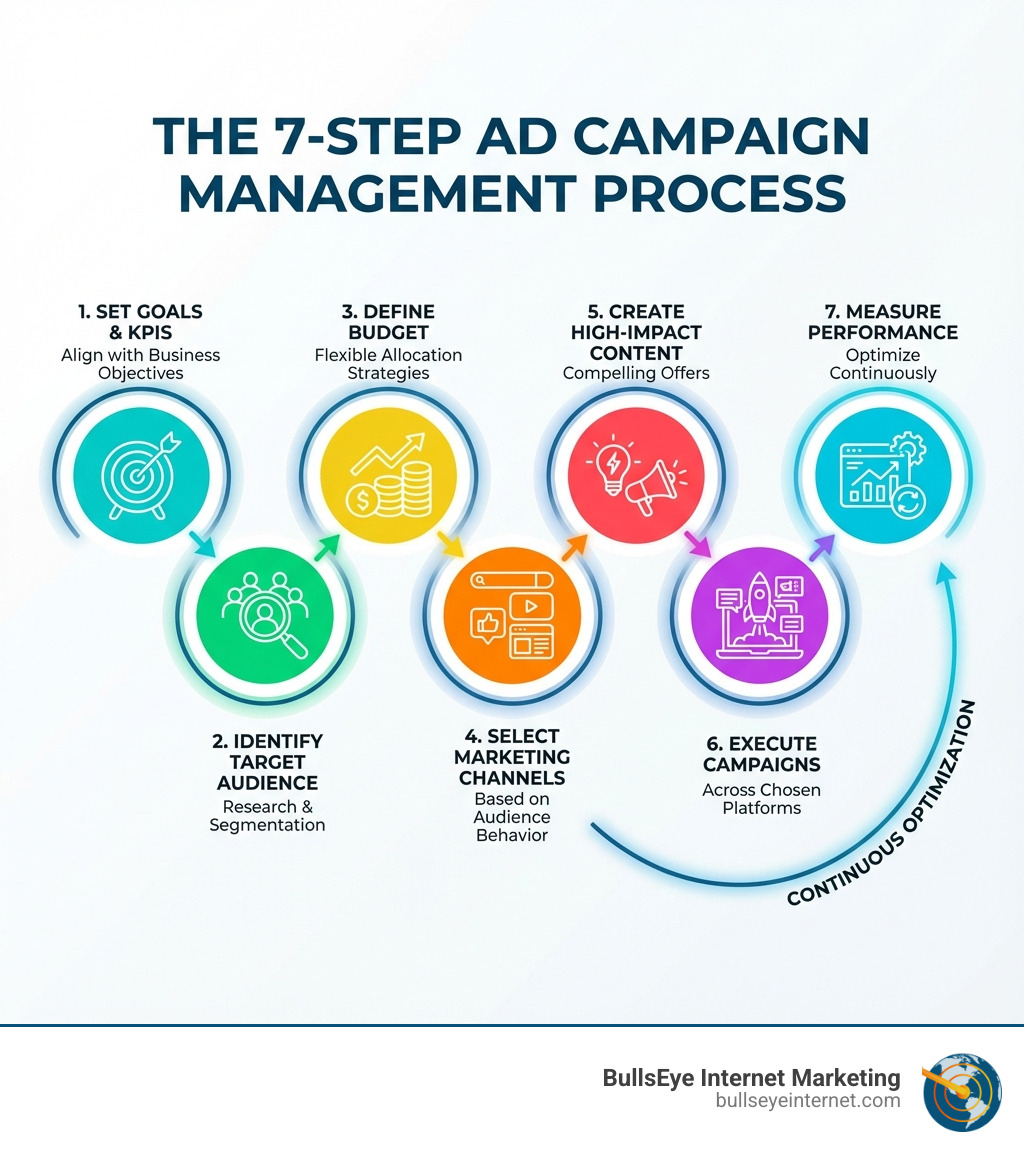
Ad campaign management terms you need:
Laying the Groundwork: Strategy, Goals, and Budgeting
Before we even think about ads, we need a solid foundation. Think of ad campaign management as building a house: you wouldn’t start hammering nails before you have blueprints, right? Proactive planning isn’t just a good idea; it’s essential. As we mentioned, marketers and campaign managers who plan projects proactively are 356% more likely to report success. This isn’t just a statistic; it’s a testament to the power of foresight. Effective campaign management transforms a mere list of business goals into a vibrant, multi-channel campaign.
Our first step is always to understand why we’re advertising. What business problem are we solving? What opportunity are we seizing? This initial strategic deep dive ensures that every dollar we spend is purposeful, every ad we create is targeted, and every campaign we launch is aligned with your overarching business objectives.
Defining Your Target Audience
Who are we talking to? This isn’t a trick question; it’s the most important one. We dig deep into understanding your potential customers, moving beyond simple demographics. We create detailed customer personas that capture their motivations, behavioral patterns, psychographics, and even their daily routines. For example, a tech company launching a new smartphone wouldn’t just think “young people”; they’d define personas like “young professionals looking for productivity features.”
This precise customer segmentation isn’t just about being polite; it drives campaign efficiency, improves customer experiences, and significantly increases conversions. Think of it this way: trying to sell a surfboard to someone in Tallahassee is much harder than selling it to a surfer in Miami Beach. Why? Because we’ve defined our audience. Real-time customer data is vital for precise segmentation, ensuring our messages resonate with the right people at the right time.
Setting Clear Objectives and KPIs
Once we know who we’re talking to, we define what we want them to do. Our campaign goals aren’t vague aspirations; they are SMART: Specific, Measurable, Achievable, Relevant, and Time-bound. These objectives are always directly linked to your broader business goals.
Are we aiming for brand awareness in South Florida, lead generation in Broward County, or increasing conversion rates in Palm Beach County? Each objective requires different Key Performance Indicators (KPIs). For instance, a global tech company launching a new smartphone might set KPIs like website visits, pre-orders, and social engagement. We track metrics like Click-Through Rate (CTR), Conversion Rate, Return on Investment (ROI), Customer Acquisition Cost (CAC), and Customer Lifetime Value (LTV) to ensure we’re not just getting clicks, but driving profitable growth.
Allocating Your Budget Effectively
Budgeting can feel like trying to solve a Rubik’s Cube blindfolded, but it doesn’t have to be. Effective budget allocation is a cornerstone of successful ad campaign management. We carefully plan and allocate resources, ensuring every dollar works as hard as possible. Think of FIFA planning the 2022 World Cup with a $220 billion budget, covering everything from infrastructure to marketing. While our budgets might not reach billions, the principle is the same: careful planning, down to the last penny.
We advocate for flexible budgets that can adapt to campaign performance. If an ad campaign in Fort Lauderdale is crushing it, we want to reallocate more spend there. If one in West Palm Beach is underperforming, we pull back. Modern ad campaign management leverages AI-powered allocation, which can dynamically shift budgets to high-performing channels in real-time, maximizing your return.
Campaign Architecture: Channels, Creatives, and Setup
Once our strategy is rock-solid, we move into the exciting phase of building the campaign. This involves selecting the right marketing channels, crafting compelling messages, and ensuring everything is set up for success. It’s our marketing mix, a delicious blend of content and channels designed to grab attention and drive action.
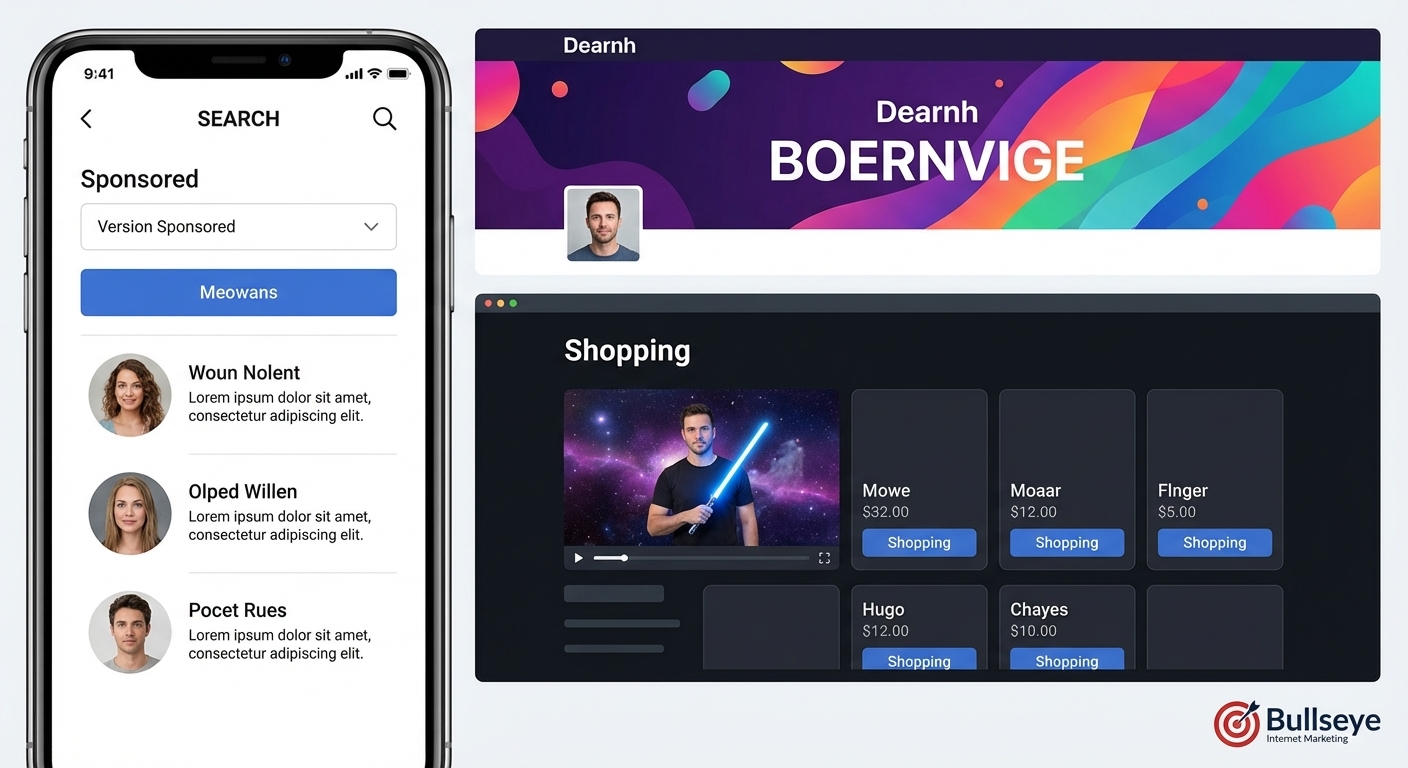
Types of Ad Campaigns
The digital landscape offers a buffet of ad campaign types, each with its unique flavor and purpose:
- Search Ads: These are the ads you see at the top of Google search results when you’re actively looking for something. They’re fantastic for capturing high-intent leads in places like Miami, where people are searching for specific services.
- Display Ads: These visual ads appear across millions of websites, news sites, blogs, and even Google properties like Gmail and YouTube. They’re great for brand awareness and remarketing, showcasing your brand to a broader audience across Florida.
- Video Ads: Engaging and immersive, video ads can tell a story on platforms like YouTube. They’re perfect for showcasing products or services in a dynamic way, generating interest and driving engagement.
- Shopping Ads: For e-commerce businesses, these ads display your products directly in search results, complete with images, prices, and store names. If you’re selling products, say in Coconut Creek or Delray Beach, these are a must-have.
- Social Media Ads: Platforms like Facebook, Instagram, and LinkedIn offer powerful targeting options, allowing us to reach specific demographics and interests. Vuori, for example, tested reallocating ad spend to Facebook and Instagram Reels, reducing its cost per purchase by 17%.
- Performance Max: These are Google’s automated campaigns that run across all Google networks (Search, Display, YouTube, Gmail, Find) to find conversions. It’s like having a self-driving car for your ads, optimizing for results across the board.
Crafting High-Impact Creatives
An ad is only as good as its creative. This is where we weave compelling narratives, write irresistible ad copy, design eye-catching visuals, and include clear Calls-to-Action (CTAs). Remember McDonald’s Grimace birthday campaign? It merged nostalgia with modern marketing, offering a limited-edition purple shake. The campaign went viral, trending on Twitter for eight days and ranking among TikTok’s top hashtags. That’s the power of high-impact creative.
We don’t just guess what works; we test it. A/B testing different variations of ad creatives helps us understand what resonates most with your audience, whether it’s a specific headline, image, or video. This data-driven approach ensures our ads are not just pretty, but powerful.
Setting Up Your Campaigns
Setting up campaigns correctly is crucial to avoid headaches later. For Google Ads, especially when managing multiple accounts for clients in different cities like Miami, Fort Lauderdale, and West Palm Beach, we leverage Google Ads Manager Accounts. This tool is a lifesaver for agencies like ours, offering a single sign-in to manage all client accounts efficiently.
To create a Google Ads manager account, you’ll sign in with your email, name the account, select your country and time zone, and choose whether you’ll manage your own accounts or others’. Then, you can easily link existing Google Ads accounts to your Manager Account via “Sub-account settings.” This central hub streamlines everything from billing to reporting and allows us to keep a close eye on all campaigns across your various markets.
The Core of Ad Campaign Management: Optimization and Best Practices
Once campaigns are live, the real fun begins: optimization. This isn’t a “set it and forget it” game. Effective ad campaign management demands continuous monitoring and real-time adjustments. A marketing agency, for example, achieved a 30% increase in conversion rates for a client within a month by consistently analyzing data and making timely adjustments. That’s the power of active management.
Strategies for Maximum Results
To squeeze every drop of potential from your campaigns, we employ several key strategies:
- A/B Testing: We constantly test different ad elements—headlines, images, CTAs—to see what performs best. A global entertainment company optimized its Snapchat advertising strategy by A/B testing different ad optimization windows, achieving a 29% reduction in cost per signup and a 19% decrease in cost per purchase in just four weeks.
- Bid Management: We regularly assess bid performance and adjust bids based on how well keywords or placements are converting. Automated bidding options can also be incredibly useful here.
- Ad Scheduling: Do your customers in Miami Dade County convert more on Tuesdays? Do those in Martin County prefer weekends? We use ad scheduling to run campaigns during peak engagement times, maximizing impact.
- Ad Extensions: For Search Ads, extensions like Sitelinks, Callouts, and Location Extensions provide more information and clickable areas, improving visibility and performance.
- Remarketing Strategies: Ever noticed ads following you around the internet? That’s remarketing! It’s a powerful way to re-engage potential customers who’ve previously interacted with your website.
Leveraging Data-Driven Insights for Ad Campaign Management
Data is our superpower. We carefully track performance metrics like CTR, CPC, and conversion rates to understand what’s working and what’s not. Analyzing this data provides an undeniable advantage in ad campaign management. It allows us to make informed decisions, quickly pivot underperforming ads, and scale up successful ones. Tools like Google Analytics are invaluable here, giving us insights into customer behavior, traffic sources, and conversion paths.
Best Practices for Ongoing Success
Here are some of our tried-and-true best practices:
- Continuously Monitor and Adjust: Regularly review ad performance metrics and make real-time adjustments to bids, targeting, and content.
- Stay Updated on Platform Changes: Ad platforms evolve constantly. We stay informed about algorithm changes, policy revisions, and new ad formats to keep your campaigns cutting-edge.
- Refine Targeting: Based on performance data, we continually refine audience targeting, ensuring our ads reach the most relevant individuals.
- Optimize Landing Pages: A great ad needs a great landing page. We ensure your landing pages are relevant, fast-loading, and optimized for conversions.
- Ensure Mobile Optimization: With increasing mobile traffic, your ads and landing pages must be responsive and fast on mobile devices. Don’t let a clunky mobile experience kill your conversions!
The Modern Toolkit: Technology, Data, and Integration
Modern ad campaign management is inseparable from technology. Tools like Ad Servers and AI are no longer luxuries; they’re necessities. They empower us to manage, measure, and optimize campaigns with unprecedented precision and scale.
The Role of AI and Automation in Ad Campaign Management
AI is rapidly changing ad campaign management. It’s like having an incredibly intelligent, tireless assistant working 24/7.
- AI-powered Optimization: AI can analyze vast amounts of data to identify patterns, optimize targeting, and predict performance trends. This leads to smarter bidding and more efficient ad spend.
- Generative AI for Creatives: Imagine AI creating personalized ad creatives that resonate with different consumer segments. Coca-Cola used generative AI to craft campaigns that resonated across global markets, analyzing interactions and preferences to generate custom video ads and social content.
- Automated Bidding: AI-driven algorithms can automatically adjust bids in real-time, ensuring your ads are always competitively placed without human intervention.
Centralizing Efforts with Ad Servers and Platforms
An Ad Server is a platform used for managing and optimizing online advertising campaigns. It provides tools for creating, targeting, and monitoring ads across various digital channels. For us, platforms like Google Campaign Manager 360 are central to our operations.
Google Campaign Manager 360 is a web-based ad management system for advertisers and agencies. It offers centralized cross-channel ad management, allowing us to manage, measure, and optimize campaigns across websites, apps, YouTube, and connected TV. This means we get a complete view of all your digital media campaigns, streamlined workflows, and built-in attribution. For example, it integrates seamlessly with Display & Video 360 for faster ad setup and reporting. It allows us to manage, measure, optimize your campaigns with confidence.
Ensuring Cross-Platform Consistency
In today’s omnichannel world, customers interact with brands across numerous platforms. Ensuring a unified brand message and integrated strategy is paramount. If your ad on Facebook says one thing, but your website says another, you’ve got a problem. This is why we establish a cohesive advertising strategy across all platforms—Google, Meta, LinkedIn, and more—with a unified brand message.
This consistency also extends to the alignment between sales and marketing. As the research shows, misalignment between sales and marketing is the number one reason why a company’s revenue stream slows down and/or declines. By integrating our campaign activities, we ensure that your marketing efforts directly support your sales team, creating a seamless customer journey from initial click to final conversion.
Frequently Asked Questions about Ad Campaign Management
Let’s address some common questions we hear about ad campaign management.
What are the core components of managing an ad campaign?
At BullsEye Internet Marketing, we break down the core components into a straightforward process:
- Strategy and Planning: Defining clear goals, understanding your audience, and outlining the campaign’s purpose.
- Budgeting and Resource Allocation: Deciding how much to spend and where, ensuring flexibility.
- Execution and Deployment: Launching ads across chosen channels with compelling creatives.
- Performance Tracking: Monitoring key metrics in real-time.
- Optimization: Making continuous adjustments based on data to improve results.
This holistic approach ensures agility, data-driven decisions, and cross-functional alignment within our team and with yours.
How do you measure the success of an ad campaign?
Measuring success goes beyond just clicks. We look at a range of key metrics to get a comprehensive picture:
- Return on Investment (ROI): The ultimate measure of profitability.
- Conversion Rate: The percentage of people who complete a desired action (e.g., a purchase, a phone call, a form submission).
- Customer Acquisition Cost (CAC): How much it costs to gain one new customer through advertising.
- Engagement Rate: How much people interact with your ads (likes, shares, comments).
- Lifetime Value (LTV): The total revenue a customer is expected to generate over their relationship with your business.
Campaign analytics provide the objective data needed to justify decisions and adjustments, revealing what’s truly working and what needs tweaking.
What are the most common mistakes to avoid?
Even the most seasoned marketers can stumble. Here are some common pitfalls we help our clients in Florida avoid:
- Poor Audience Targeting: Trying to reach everyone means reaching no one. We ensure your target audience’s demographics, behaviors, and preferences are precisely defined.
- Irrelevant Ad Content: Ads that don’t speak directly to the audience’s needs or interests are ignored. We craft messages that are clear, relevant, and compelling.
- Neglecting Mobile Optimization: A clunky mobile experience is a conversion killer. We ensure all ads and landing pages are responsive and fast on mobile devices.
- Ignoring Data: Making decisions based on gut feelings instead of performance metrics is a recipe for wasted ad spend. We live and breathe data.
- Inconsistent Messaging: A fractured brand message across platforms confuses customers and dilutes your impact. We ensure a unified voice everywhere.
Conclusion: Mastering the Art for Sustainable Growth
From the busy streets of Miami to the serene coasts of St. Lucie County, effective ad campaign management is no longer optional—it’s the engine of sustainable business growth. We’ve journeyed through the critical stages, from laying a solid strategic groundwork and defining your target audience to crafting compelling ads across diverse channels. We’ve seen how continuous optimization, powered by data-driven insights, is the heartbeat of a successful campaign, and how technology like AI and Ad Servers are changing the landscape.
At BullsEye Internet Marketing, we understand the nuances of the Florida market, from Broward County to Indian River County, and specialize in generating calls and sales. We believe in transparency and performance, which is why we offer no long-term contracts and work with only one client per industry per geographic area. This competitive advantage means your success is our singular focus.
Mastering ad campaign management means embracing agility, leveraging data, and continuously adapting. It means turning every click into a meaningful conversion and every advertising dollar into profitable growth for your business.
Are you ready to transform your advertising from a cost center to a profit center? Let’s achieve your professional service advertising goals and drive real results. Achieve your professional service advertising goals.
