
Introduction
Quickstart Guide to Plastic Surgeon Ads BullsEye Internet Marketing
Advertising for plastic surgeons has become competitive. Today’s patients are savvy researchers who vet surgeons online long before scheduling a consultation. To capture their attention, a practice must blend strict ethical guidelines with a mastery of digital marketing to build trust and showcase exceptional results.
Key strategies include:
- Ethical Compliance: Adhering to all ASPS, ABFPRS, and state advertising regulations.
- Digital Foundation: Building an optimized website with strong local SEO and a complete Google Business Profile.
- Paid Advertising: Using Google Ads and remarketing to reach high-intent searchers.
- Social Media: Leveraging platforms like Instagram and Facebook to engage different demographics.
- Reputation Management: Showcasing real results and actively managing patient reviews.
- Lead Nurturing & ROI: Converting prospects with email marketing and tracking key metrics to ensure profitability.
The plastic surgery industry continues to grow, with a 5% rise in procedures in 2023. With 92% of surgeons using their website for marketing and social media heavily influencing patient choices, a strategic advertising approach is no longer optional.
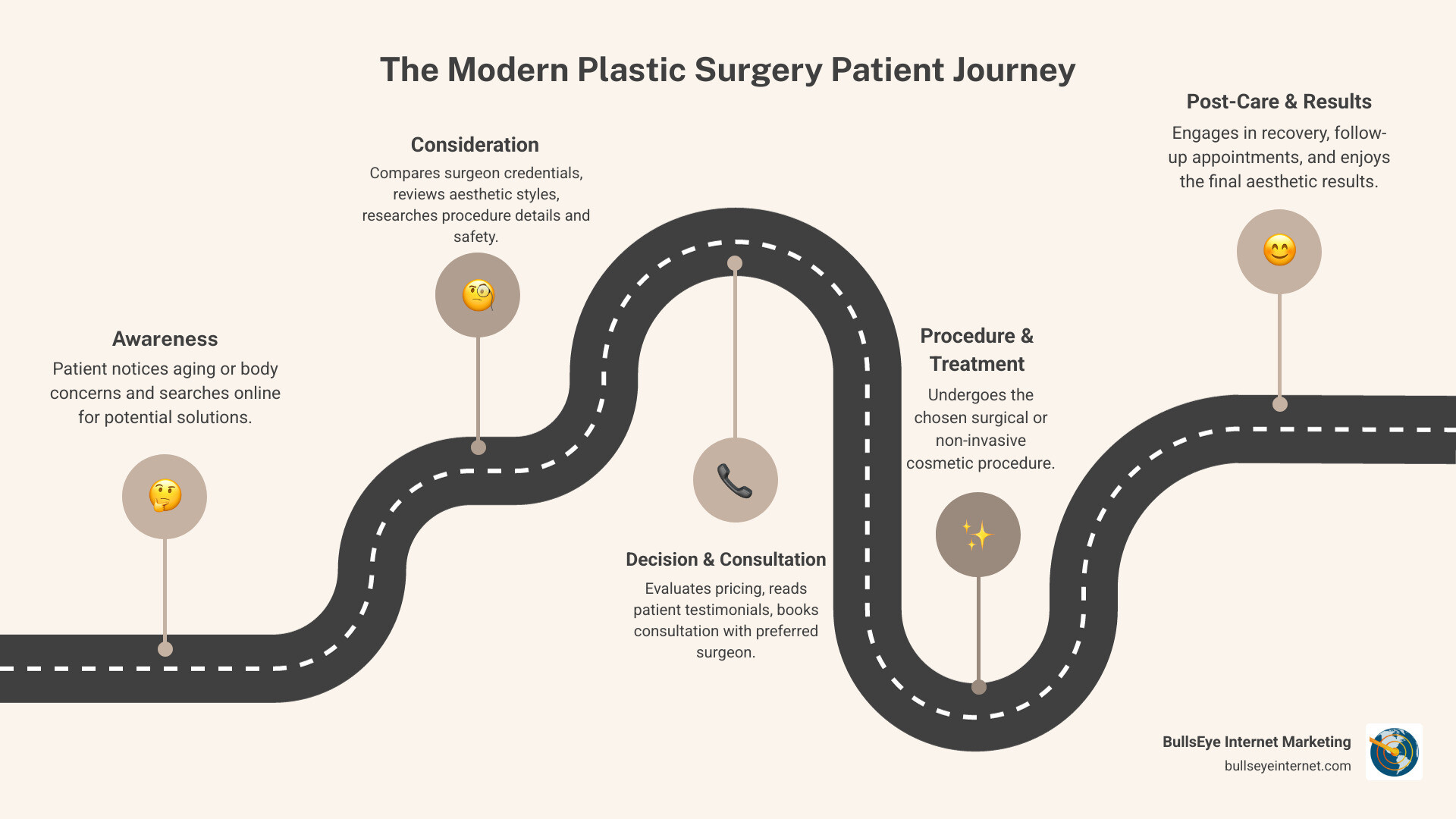
The modern patient journey is digital. They search for solutions, compare surgeons, and evaluate results online. Your advertising must meet them at every stage of this journey.
I’m Ronnie Katz, founder of BullsEye Internet Marketing. For over 20 years, I’ve helped healthcare practices grow through ethical, results-driven advertising for plastic surgeons. My focus is on delivering measurable results that get your phone ringing with qualified leads.
Navigating the Ethical and Regulatory Landscape
In plastic surgery, advertising is built on a foundation of trust. Because these procedures are so personal, upholding professional integrity and adhering to ethical guidelines is paramount. Organizations like the American Society of Plastic Surgeons (ASPS) and the American Board of Facial Plastic and Reconstructive Surgery (ABFPRS) provide clear rules for advertising for plastic surgeons to protect patients from deceptive practices. Misleading claims can damage a practice’s reputation and lead to serious legal consequences.
The core principle of ethical advertising is truthfulness. Advertisements must not contain false claims or misrepresent facts. All objective claims, such as statistics or clinical results, must be substantiated with qualified research. It’s also crucial that advertisements are clearly identifiable as such and do not mimic editorial content. Beyond professional guidelines, you must also comply with state and federal laws, which govern everything from how you mention FDA-approved devices to how you display board certifications.
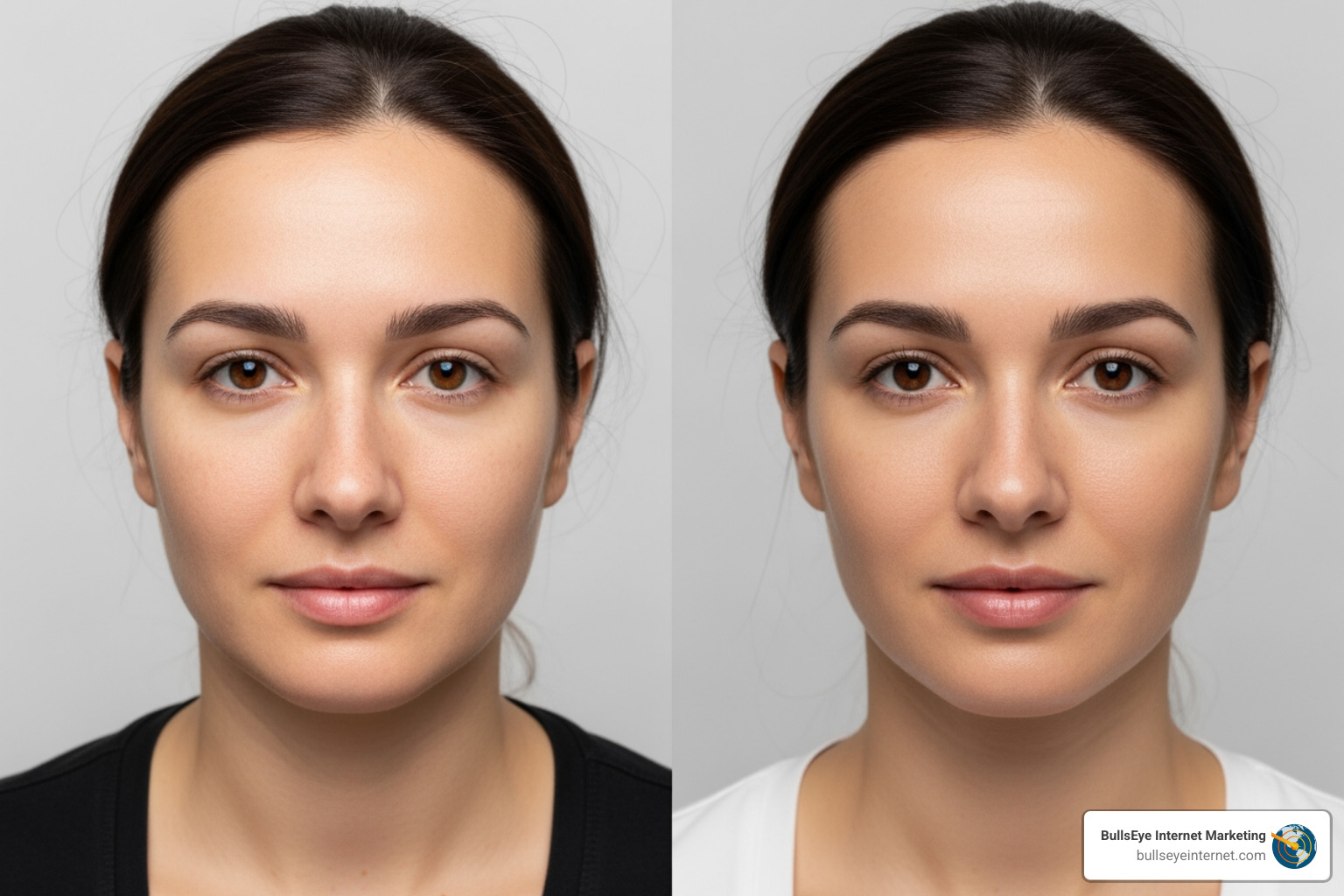
Crafting compliant and effective ad content requires balancing attraction with honesty. Before-and-after photos are powerful tools, but they come with strict rules:
- Patient Consent: Always obtain explicit, written consent before using patient photos, which is a critical HIPAA consideration.
- Realistic Outcomes: Photos must represent typical results, not “miracle claims.” Avoid any manipulation and use consistent lighting and poses to accurately document outcomes.
- Disclaimers: Include disclaimers stating that individual results may vary.
Patient testimonials are another cornerstone of trust. They must be from actual patients, represent a typical experience, and be used only with written consent. Any claims about quality, safety, or recovery must be factually supportable. Finally, display board certifications correctly—they must be from a recognized body and relevant to the services advertised. By following these guidelines, you create compelling advertising that attracts patients while reinforcing your commitment to ethical care.
Dominating Digital: A Guide to Online Advertising for Plastic Surgeons
The digital world is where patients find their plastic surgeon. A strong online presence is the foundation of successful advertising for plastic surgeons. Your website is your virtual storefront and primary conversion tool. It must be mobile-friendly, load quickly (under 3 seconds), and provide clear, jargon-free information about your services. Since almost all patients planning to undergo aesthetic plastic surgery use the internet before their first consultation, your website’s performance is critical.
For surgeons in specific areas like South Florida, local SEO is paramount. Optimizing your Google Business Profile (GBP) and creating location-specific content for areas like Miami-Dade, Broward, and Palm Beach Counties ensures you appear in searches like “rhinoplasty Miami.” Google rewards this hyper-focused approach with higher rankings.

Leveraging Google Ads and Remarketing
Google Ads offer a fast track to reaching patients actively searching for your services. PPC (Pay-Per-Click) advertising allows us to target high-intent keywords like “best mini-facelift surgeon near me.” We craft compelling ad copy that highlights your unique value, whether it’s your board certification or natural-looking results. While a typical starting budget for paid ads is $3,000–$6,000/month, this can be higher in competitive markets. Results can appear within weeks, but campaigns are optimized over 30–90 days for the strongest performance.
Remarketing is a powerful tool to re-engage potential patients who visited your site but didn’t convert. Since patients often research multiple doctors, we can show targeted ads to these warm leads across other platforms, reminding them of your practice and guiding them back to book a consultation.
The Role of Social Media in Advertising for Plastic Surgeons
Social media is a critical platform for patient engagement and education. Different platforms serve different demographics:
- Instagram: A visual powerhouse, it generates the highest engagement among users under 35. It’s ideal for showcasing results for procedures like breast augmentation, with over 2 million #PlasticSurgery posts.
- Facebook: As the most used platform across all age groups, Facebook is crucial for reaching a broader audience, including patients over 35 interested in procedures like liposuction or facelifts.
- YouTube and TikTok: These video platforms are excellent for educational content (YouTube) and short, engaging clips that build trust and influence younger audiences (TikTok).
Social media strongly influences up to 40% of patients when choosing a surgeon. Your content should be authentic, educational, and professional. Share before-and-after stories (with consent), educational videos from the surgeon, and behind-the-scenes content to humanize your practice. A strategic social media presence will significantly boost your visibility and connect you with patients where they spend their time.
Building Trust and Showcasing Results Online
In the elective world of plastic surgery, trust is the ultimate currency. Advertising for plastic surgeons must prioritize authenticity and social proof to convert interest into consultations. As a study on patient’s preferred social media networks revealed, patients actively seek visual proof and peer experiences, emphasizing the need for high-quality, trustworthy content.
Best Practices for Before-and-After Galleries
Before-and-after galleries are your most impactful marketing tool. To be effective and ethical, they should be:
- User-Friendly: Organize galleries by procedure so patients can easily find relevant examples.
- High-Quality: Use professional, consistent photography that shows realistic results without heavy filtering.
- Engaging: Incorporate video testimonials where patients (with consent) share their stories. Interactive sliders that let users compare before and after images are also highly effective.
- Transparent: Always include disclaimers stating that results may vary.
The goal is to tell a “progress story” that showcases your aesthetic style and builds confidence in potential patients.
Managing Your Online Reputation and Patient Reviews
Your online reputation is a priceless asset. With 84% of people trusting online reviews as much as personal recommendations, active reputation management is critical.
Our strategy involves:
- Encouraging Reviews: We implement programs to make it easy for satisfied patients to leave reviews on key platforms like Google, Yelp, and RealSelf.
- Responding to Feedback: Promptly and professionally respond to all reviews, both positive and negative. This shows you are committed to patient satisfaction.
- Leveraging Reviews: Showcase positive testimonials on your website and in marketing materials (with consent) to provide powerful social proof.
A strong review profile not only builds trust but also boosts your local SEO, making your practice more visible in search results.
Nurturing Leads and Measuring Your Advertising ROI
Attracting a potential patient is just the first step. A thoughtful lead nurturing process is essential to guide prospects from initial interest to a booked surgery. We focus on building relationships and carefully measuring the return on your advertising investment to ensure every dollar is working for your practice.
Utilizing Email Marketing for High Returns
Email marketing is a highly effective channel, delivering an average ROI of $43 for every $1 spent. It’s an indispensable tool for nurturing leads in a competitive market like Florida.
Our email strategy focuses on:
- List Building & Segmentation: We capture emails from interested prospects and segment them based on their procedural interests for personalized communication.
- Nurturing Sequences: Automated emails provide valuable information, address common concerns, and showcase patient success stories to build confidence and overcome hesitation.
- Patient Retention: We use email to share follow-up care instructions and announce new services, encouraging repeat business and referrals.
Email marketing maintains a consistent, expert dialogue with your audience, positioning your practice as a trusted authority.
Measuring the ROI of Advertising for Plastic Surgeons
We track key performance indicators (KPIs) to understand how advertising translates into practice growth. This data-driven approach allows for continuous optimization.
Essential KPIs we monitor include:
- Cost Per Lead (CPL): The cost to generate one inquiry.
- Cost Per Acquisition (CPA): The ultimate metric—the cost to acquire one new patient.
- Conversion Rates: The percentage of visitors who take a desired action (e.g., book a consultation).
- Lead Quality & Show-Up Rate: Ensuring we attract qualified individuals who are serious about moving forward.
- Return on Investment (ROI): Tracking the revenue directly generated from campaigns to calculate true profitability.
By focusing on these metrics, we ensure your advertising for plastic surgeons is always delivering measurable results.
Frequently Asked Questions about Advertising for Plastic Surgeons
How much should a plastic surgeon spend on advertising?
Your advertising budget depends on your practice goals, market competitiveness, and location. For example, advertising in a competitive market like Miami-Dade will require a larger budget than in a less saturated area.
Industry data suggests a starting range of $3,000–$6,000/month for paid advertising, but for practices with aggressive growth goals in competitive markets, this could be $5,000 to $15,000 per month or more. The key is to start with a budget that allows for effective testing and then scale based on ROI.
What is the most effective social media platform for plastic surgeons?
The “best” platform depends on your target patient. A strategic mix is most effective:
- Instagram: A visual powerhouse for reaching users under 35 interested in procedures like breast augmentation.
- Facebook: With the broadest reach across all age groups, it’s excellent for engaging patients considering procedures like facelifts or liposuction.
- YouTube/TikTok: These are great for educational videos and building a personal connection with your audience.
We recommend a multi-platform strategy custom to your ideal patient profile and the procedures you specialize in.
Can I use patient photos in my ads without their permission?
Absolutely not. Using patient photos or testimonials in advertising for plastic surgeons without their explicit, written consent is a major ethical and legal violation.
This is critical for several reasons:
- Patient Privacy: It’s a fundamental breach of trust and privacy.
- Legal Compliance: Strict privacy laws like HIPAA govern the use of patient information, and violations carry severe penalties.
- Building Trust: Respecting patient privacy is essential for building the trust necessary to attract new patients.
Always ensure you have a robust written consent process in place before publishing any patient-related content.
Conclusion
The landscape of advertising for plastic surgeons is competitive and digital-first. Success requires a multi-faceted strategy that blends ethical conduct, digital dominance, and trust-building. From navigating regulatory guidelines and optimizing your website to leveraging social media and measuring ROI, every element must work together to attract today’s informed patient.
At BullsEye Internet Marketing, we understand the unique challenges of advertising for plastic surgeons, especially in competitive markets like Florida. We are experts in generating calls and sales through targeted Pay Per Lead, Google Business Profile Optimization, SEO, PPC, and conversion optimization. Our commitment is to work with only one client per industry per geographic area, giving you a competitive advantage with no long-term contracts. We believe in ethical, transparent, and results-driven marketing that gets your phone ringing.
Ready to sculpt a stronger online presence and attract more ideal patients?
