
The Competitive Landscape of Plastic Surgery Marketing
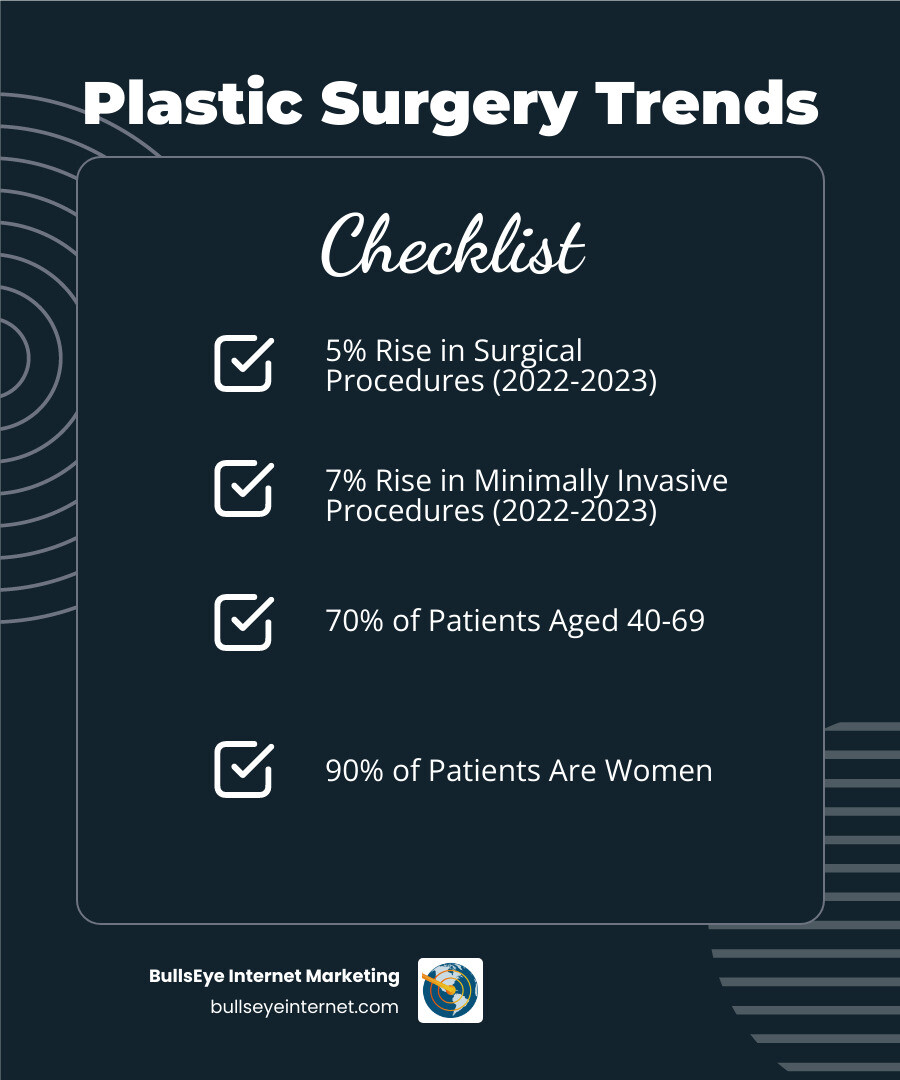
Advertising for plastic surgeons is critical as the industry grows. The American Society of Plastic Surgeons (ASPS) reports a 5% rise in plastic surgeries and a 7% rise in minimally invasive procedures in 2023 over the previous year. This surge increases competition and the pressure to market your practice effectively.
Key Advertising Strategies for Plastic Surgeons:
- Ethical Compliance – Follow ASPS guidelines and avoid misleading claims
- Website Optimization – Mobile-friendly, fast-loading site with clear calls-to-action
- Local SEO – Claim your Google Business Profile and optimize for “near me” searches
- Content Marketing – Before/after galleries, patient testimonials, and educational videos
- Paid Advertising – Google Ads and social media campaigns targeting specific procedures
- Reputation Management – Actively collect and respond to patient reviews
- Email Marketing – Nurture leads with an average ROI of $43 for every $1 spent
The challenge? Plastic surgery marketing balances strict regulations, digital strategies, and personal patient decisions. Patients research extensively online, with over half using Google and provider websites for final decisions. Your marketing must build trust, show expertise, and simplify booking, all while adhering to ethical codes.
I’m Ronnie Katz, founder of BullsEye Internet Marketing. With over 20 years of experience, I help medical practices steer digital marketing, including ethical advertising for plastic surgeons. This guide covers everything from compliance to advanced ad strategies to fill your calendar with qualified leads.
Advertising for plastic surgeons terms to know:
The Foundation: Ethical and Regulatory Guidelines for Plastic Surgery Advertising
This section covers the essential rules and best practices for ethical and compliant marketing in the plastic surgery field. When it comes to advertising for plastic surgeons, trust and integrity are paramount.
Understanding Professional Advertising Standards
Effective advertising for plastic surgeons starts with understanding professional standards. Organizations like the American Society of Plastic Surgeons (ASPS) provide clear guidelines to uphold professional integrity. The mission is to promote optimal patient care, and all advertising must align with this, strictly avoiding deceptive or misleading claims that conflict with the ASPS Code of Ethics. Ads cannot show bias and must not blur the lines between education and promotion, such as promoting a product during a sponsored scientific presentation.
For acceptable advertising, testimonials require written consent to ensure authenticity and privacy. Comparative advertising is reviewed strictly to prevent misleading the public or unfairly attacking competitors. Finally, all ads must be clearly distinguishable from editorial content.
Navigating Legal and Regulatory Requirements
Beyond professional ethics, advertising for plastic surgeons is subject to legal and regulatory requirements. Claims must be truthful, substantiated, and compliant with laws, including FDA regulations for drugs and devices. The FDA regulatory status of any advertised product must be disclosed in the ad. Statistical claims or clinical studies must cite studies by qualified individuals, and supporting data may be required for review.
Ads for insurance coverage must be complete, truthful, and disclose all limitations. Avoid portraying surgery as “safe,” “easy,” or “risk-free,” as all procedures have risks. Additionally, ethical guidelines and, in some jurisdictions, legal restrictions prohibit targeting cosmetic interventions at individuals under 18.
Procedural and Technical Ad Requirements
Professional publications have specific procedural and technical ad requirements. For ASPS publications, submit written ad requests with product literature for first-time advertisers and an official representative’s name. Ads must be clearly identifiable and not resemble editorial content. Display ad orders are accepted via email per the current rate card, requiring a signed insertion order and final art by the closing date; a 15% agency commission is standard.
Classified ads in publications like Plastic Surgery News (PSN) have specific procedures and are accepted from various professional groups. For surgeon recruitment or other classifieds, you can use industry job boards.
Posting classified ads in relevant industry job boards is a great way to reach specific audiences.
Regarding accounting, maintain good financial standing with publishers. Unpaid invoices may lead to collections or prepayment requirements. Ad copy is not taken over the phone, and publishers may edit it. Classified ad cancellations are not accepted after the closing date. These details are crucial for a smooth professional relationship.
Building Your Digital Presence: Core Strategies for Patient Acquisition
Your online presence is your virtual front door. A strong digital foundation is no longer optional; it’s non-negotiable for plastic surgeons aiming to attract and convert prospective patients.
Optimizing Your Website and Mastering SEO

Your website is often a potential patient’s first impression. Since most patients research online before a consultation, an optimized site is your most powerful tool for advertising for plastic surgeons.
Here’s what makes a website truly shine:
- Mobile Responsiveness: Google prioritizes mobile-friendly sites. With 61% of patients leaving non-mobile-friendly sites, and South Florida patients constantly on their phones, your site must be flawless on any device.
- Fast Loading Times: Quick load times are favored by search engines and reduce bounce rates. Patients won’t wait for a slow site.
- Clear Navigation: Intuitive navigation and clear calls-to-action (CTAs) guide patients to procedure information, galleries, and contact details.
Beyond design, Search Engine Optimization (SEO) is critical for appearing in local searches and connecting with patients in Florida. We help clinics in Miami, Fort Lauderdale, and West Palm Beach rank for searches like “breast augmentation near me.”
- Keyword Research: Understand and use the exact terms patients search for, like “tummy tuck after c section,” to answer their questions directly.
- On-Page SEO: Optimize your site’s content, meta descriptions, and image alt text with relevant keywords.
- Local SEO Importance: This is paramount for competing in your area. Optimizing your Google Business Profile is a game-changer for appearing in map results. We also ensure your clinic is listed in relevant directories like the American Society of Plastic Surgeons and Surgeon Network.
Content Marketing: Educating and Engaging Prospective Patients
Content marketing educates, engages, and builds trust by providing valuable information to help patients make informed decisions.
- Blog Posts: Regularly publishing keyword-rich blog posts that answer patient questions establishes your authority. Topics could range from “What to Expect During Facelift Recovery” to “Understanding Different Breast Augmentation Options.”
- Patient Success Stories: Authentic patient stories are incredibly powerful.
- The Power of Before-and-After Galleries: These are one of the most compelling marketing tools. Nearly two-thirds of people believe social media before-and-after pictures influence cosmetic procedure trends. We recommend high-quality, tasteful images with recovery times and disclaimers, focusing on realistic outcomes.
- Consistent Video Content: Video conveys personality and expertise. While time-consuming, services like CaptureMD can streamline producing branded videos and testimonials.
- Aesthetic vs. Scientific Content: Patients engage more with aesthetic content than scientific explanations. Focus on visual appeal and emotional benefits while ensuring accuracy.
- Building Trust Through Education: Build trust by publishing honest, high-quality content. Reference credible sources like PubMed, show your real work, and showcase your surgeons’ expertise. Addressing patient fears is also valuable.
Advanced Digital Advertising for Plastic Surgeons
Once your digital foundation is solid, we can lift your advertising for plastic surgeons with advanced strategies designed to generate high-quality patient leads and build a thriving online community across South Florida.
Leveraging Paid Advertising for Immediate Results
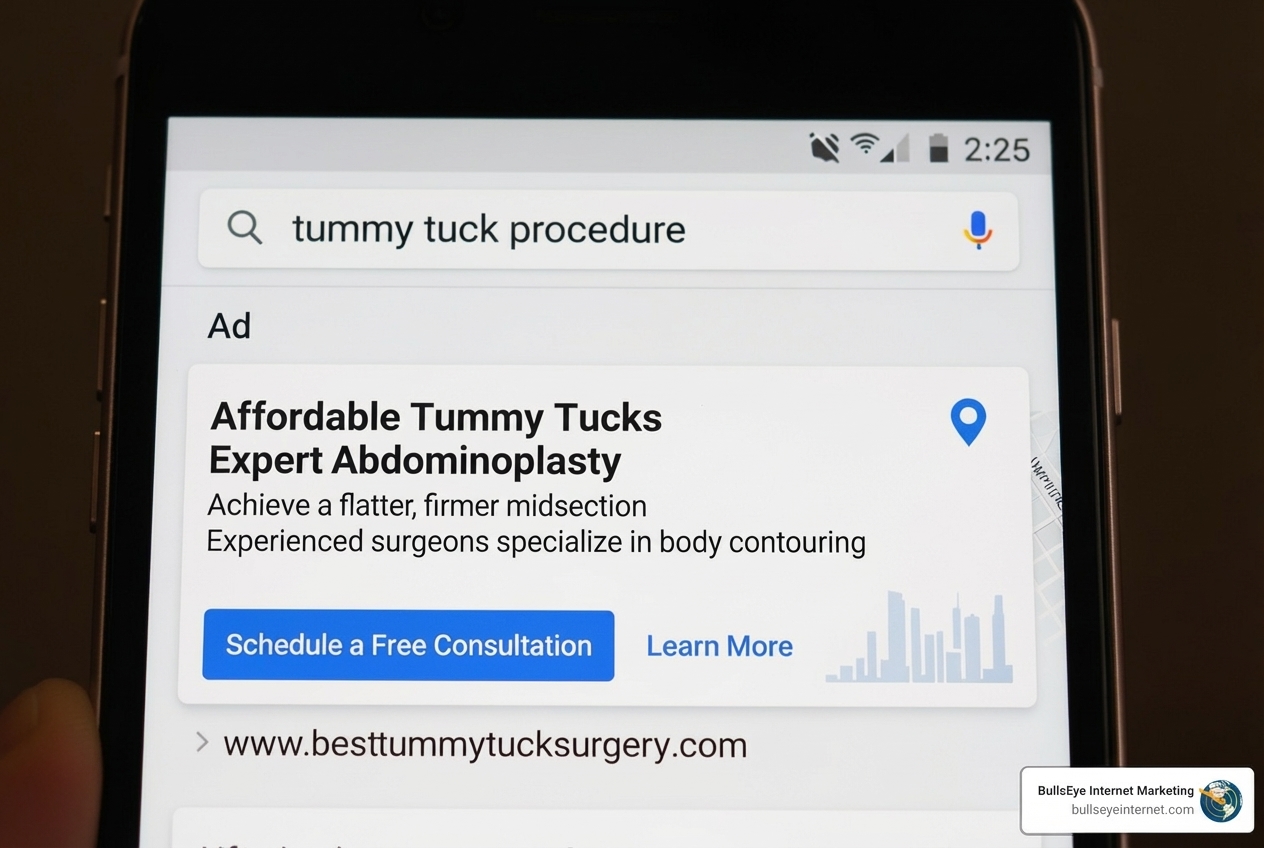
While SEO is a long-term play, paid advertising offers immediate, targeted results.
- Google Ads for Plastic Surgeons: Pay-per-click (PPC) campaigns place your practice at the top of search results for keywords like “tummy tuck Miami.” We can geo-target areas like Broward County to reach the right local audience.
- Remarketing Campaigns: Show ads to previous website visitors, keeping your practice top-of-mind as they research and decide.
- Hyper-Targeting by Demographics and Interests: Google Ads and social media allow precise targeting by age, income, location, and interests, ensuring your ads reach the most relevant audience.
- Ad Budget Considerations: Your monthly ad budget depends on your goals and market. A typical starting range for cosmetic clinics is $3,000–$6,000/month, which can yield significant returns with strategic management.
- Compelling Ad Copy: Ads require compelling copy, quality visuals, and clear CTAs. We use advanced AI for dynamic, responsive ads that optimize performance based on user data.
- Video Advertising (OTT & C-TV): Video ads on Over-the-Top (OTT) and Connected TV (C-TV) platforms like Hulu, Roku, and YouTube TV are a powerful way to hyper-target potential patients on their streaming devices.
Social Media and Reputation Management
Social media is a critical advertising tool for advertising for plastic surgeons, facilitating patient engagement, education, and outreach where trust and communities are built.
- Social Media Engagement: Engaging on social media builds trust, establishes authority, and drives website traffic. A survey found 62% of plastic surgeons see its benefit.
- Platform Selection: Choose platforms based on demographics. Younger audiences prefer Instagram and TikTok, while older ones use Facebook and YouTube. Instagram drives high engagement, but Facebook has the largest patient base. Live video on Facebook is ideal for aesthetic patients.
- Content Strategies for Different Demographics: Tailor content to the platform. Use TikTok and Instagram to show aesthetic results to younger audiences, and use Facebook and YouTube for educational content for older patients. Use positive language like “cosmetic,” “aesthetic,” and “reconstruction.”
- Reputation Management: This is essential. Your online reputation impacts rankings and trust, as 84% of people consider reviews. We help generate and respond to reviews on Google Business Profile. With only 4% of related social media posts linked to board-certified plastic surgeons, there’s a huge opportunity for our Florida-based practices to stand out.
Nurturing Leads with High-ROI Email Marketing
Email marketing is a powerful tool for nurturing leads, retaining patients, and promoting services—a core component of effective advertising for plastic surgeons.
- Email List Building: Collect leads via website forms and consultations, using specialized forms to gather data and filter potential patients.
- Lead Nurturing and Patient Retention: Your email list is a valuable asset for sending personalized content and offers. Automated sequences can welcome subscribers, follow up post-consultation, and re-engage leads.
- Promoting Services via Email: Use email to announce new procedures, seasonal offers, or special events.
- High ROI of Email Marketing: Email marketing has an incredible average ROI of $43 for every $1 spent, making it a highly cost-effective growth strategy.
Understanding Your Target Patient to Maximize Marketing ROI
Effective advertising for plastic surgeons speaks directly to the needs and desires of your ideal patient. This section breaks down the demographics and motivations driving the plastic surgery market, helping us tailor our approach for the diverse communities of Florida.
Key Demographics and Psychographics of Today’s Patients
Effective marketing requires understanding your patients: who they are, what they want, and why.
- Age Demographics: The most common age group is 40-54, but patients span a wide range from teens (4% of procedures) to those 55+.
- Gender Trends: Historically, women account for 90% of procedures, with Caucasian females being the majority, but the landscape is shifting.
- Income Levels: Cosmetic surgery isn’t just for the wealthy; only 13% of those considering it have incomes over $90,000. Marketing should appeal to a broad economic spectrum.
- Patient Motivations: Patients have personal reasons for surgery, like enhancing self-esteem. They seek honesty and quality, which your marketing should reflect.
- Most Sought-After Procedures: Top procedures include breast augmentation, eyelid surgery (blepharoplasty), facelifts, and liposuction. Knowing these trends helps focus advertising.
Here’s a snapshot of how procedures might break down by age:
| Age Group | Common Procedures | Primary Motivations |
|---|---|---|
| Teens | Rhinoplasty, Otoplasty, Breast Reduction | Correcting perceived flaws, health, self-consciousness |
| 20-39 | Breast Augmentation, Liposuction, Rhinoplasty, Botox | Improvement, preventative aging, body contouring |
| 40-54 | Facelifts, Eyelid Surgery, Liposuction, Breast Lift | Anti-aging, restoring youthful appearance, confidence |
| 55+ | Facelifts, Eyelid Surgery, Neck Lifts, Body Contouring | Significant anti-aging, rejuvenation, self-image |
Tailoring Your Message for Different Patient Segments
A one-size-fits-all approach to advertising for plastic surgeons doesn’t work. We tailor messages to resonate with specific segments in locations like Miami, Doral, or Boynton Beach.
- Marketing to Women: Since women account for 90% of procedures, much of our marketing focuses on their motivations, emphasizing confidence and rejuvenation.
- The Rise of Male Plastic Surgery: Male plastic surgery is rising, with a 106% increase in procedures from 1997 to 2012. Campaigns can be segmented for male-specific concerns like gynecomastia, using visuals and language that appeal to men.
- Reaching Younger Demographics: Target younger demographics with content on non-invasive or preventative treatments, focusing on long-term benefits.
- Targeting by Specific Procedure Interest: Segment campaigns by procedure and demographic. A rhinoplasty ad differs from a post-pregnancy body contouring campaign. For example, a Kendall surgeon specializing in breast reduction can target women seeking comfort.
- Addressing Diverse Income Levels: Since many patients have incomes under $90,000, clearly communicate payment options like financing to make procedures more accessible.
Frequently Asked Questions
Quick answers to the most common questions about marketing a plastic surgery practice.
What are the most common mistakes in plastic surgery advertising?
Common mistakes in advertising for plastic surgeons include:
- Violating ethical guidelines: Deceptive ads, conflicts with ethical codes, or disparaging competitors can damage your reputation and lead to penalties.
- Making unsubstantiated claims: Avoid promising “miracle results” or being the “best” without proof. All claims must be based on cited, qualified research.
- Using low-quality visuals: Poor-quality photos or stock images undermine credibility in a visual field.
- Ignoring mobile users: A non-mobile-friendly website is a major flaw, as up to 61% of patients will leave a site not optimized for mobile.
- Having a confusing call-to-action: Guide patients with clear next steps like “Book a Consultation,” or they will leave.
- Not understanding the target audience: Marketing to everyone is marketing to no one. Not knowing your audience’s motivations and fears leads to wasted effort.
How much should a plastic surgery practice spend on advertising?
Your advertising budget for advertising for plastic surgeons depends on your goals, location, and market competitiveness. For a South Florida clinic, a typical starting range for paid ads is $3,000–$6,000 per month, though competitive markets may require $5,000 to $15,000 per month.
The key is to focus on ROI, not just spend. A mix of long-term SEO and immediate paid strategies is often most effective. Track performance metrics like cost per lead to ensure your investment in patient acquisition is working.
How can I ethically use patient photos and testimonials in my ads?
Ethical use of patient photos and testimonials is non-negotiable for advertising for plastic surgeons. Here’s how to ensure compliance and build trust:
- Obtain Explicit, Written, HIPAA-Compliant Consent: Always get clear, written, HIPAA-compliant consent from patients, detailing how and where their information will be used.
- Ensure Photos Are Not Misleadingly Altered: Photos must be authentic and represent typical results. Avoid filters or digital alterations that create unrealistic expectations. Real patient photos are essential for authenticity.
- Use Disclaimers Stating Results May Vary: Include a disclaimer that individual results may vary to set realistic expectations and protect your practice.
- Adhere to Professional Policies on Testimonials: Testimonials must be genuine and have written consent. They should focus on the patient’s experience, not unsubstantiated claims. Since 84% of people trust online reviews, authentic testimonials are powerful trust-builders.
Conclusion: Partnering for Sustainable Growth
Effective advertising for plastic surgeons requires a sophisticated blend of ethical compliance, strategic digital marketing, and a deep understanding of the patient journey. By building a strong online presence through an optimized website, compelling content, and targeted ads, you can stand out in a competitive market. We’ve seen how crucial it is to understand your target audience, from the rising number of male patients to the income diversity across Florida, and tailor your message accordingly.
From navigating ASPS policies and FDA regulations to leveraging the power of Google Ads, social media, and high-ROI email marketing, the path to sustainable growth is multifaceted. Your practice in South Florida—be it in Coconut Grove, Coral Gables, or Jupiter—deserves a marketing strategy as precise and professional as your surgical skills.
To steer this complex landscape and achieve sustainable growth without the burden of long-term contracts, BullsEye Internet Marketing provides expert guidance to ensure your practice attracts high-quality patient leads ethically and effectively. We work with only one client per industry per geographic area, giving you an undeniable competitive advantage in your local market.
