
Why Advertising for Lawyers Matters More Than Ever
Advertising for Lawyers has become essential for client acquisition in today’s digital-first legal market. Here’s what you need to know:
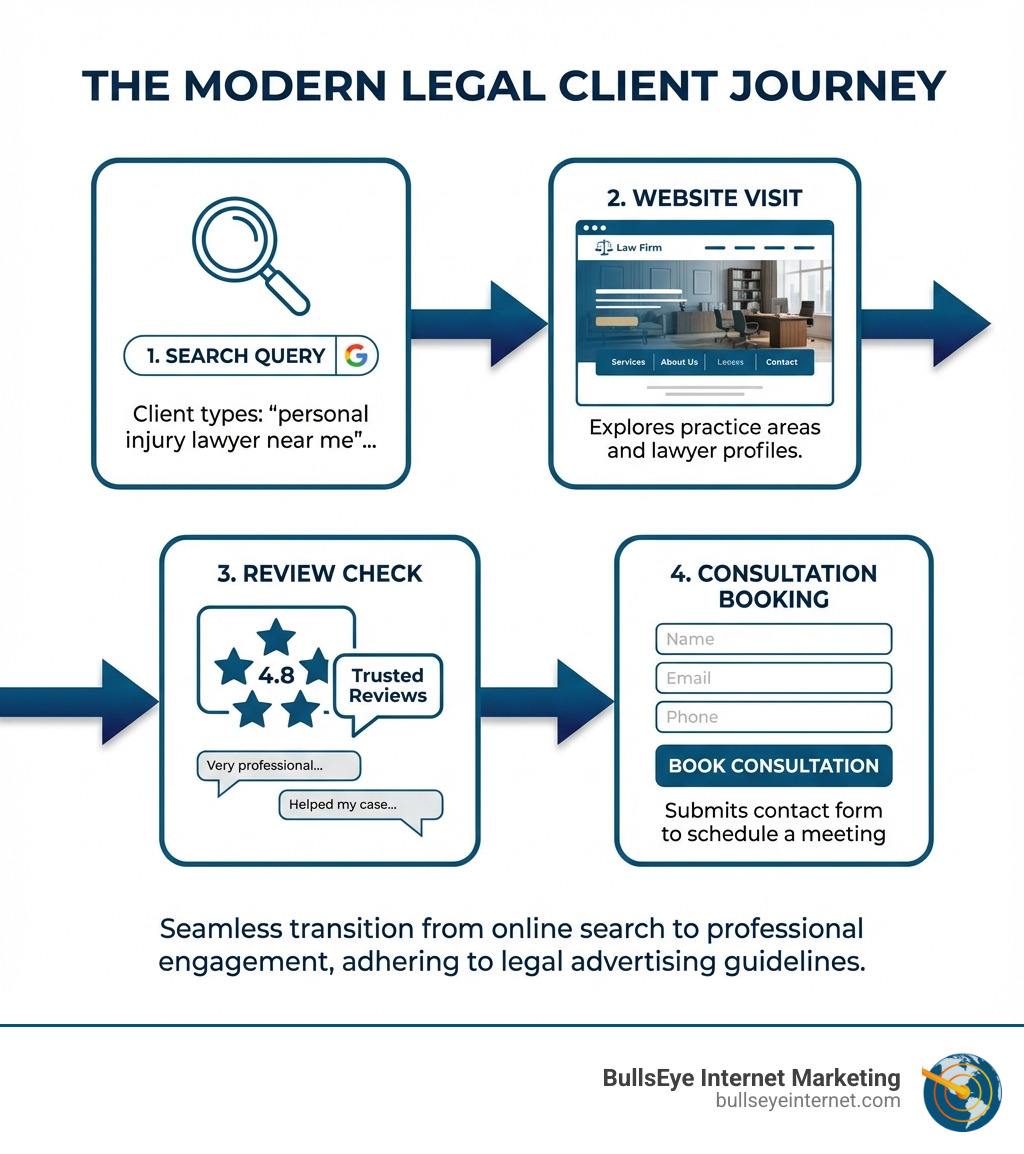
- 96% of people seeking legal advice use a search engine to find representation
- Legal advertising must balance effective marketing with strict ethical rules set by provincial law societies
- Digital platforms like Google Ads, Facebook, and Instagram each have unique policies for legal services
- Successful campaigns require compliance with Canadian advertising regulations while generating measurable ROI
- The shift from traditional methods (billboards, TV) to digital strategies offers better targeting and tracking
The legal profession faces a unique challenge. While 74% of law firms plan to invest more in digital marketing, many lawyers remain hesitant—caught between the need to attract clients and concerns about maintaining professional integrity. The reality is stark: only 17% of solo practitioners allocate dedicated marketing budgets, leaving them at a significant disadvantage against competitors who accept strategic advertising.
This isn’t just about placing ads. It’s about navigating a complex landscape where a single misstep—like claiming to be a “specialist” without proper certification, or inadvertently creating a client-lawyer relationship through social media—can result in disciplinary action. Yet firms that get it right consistently outperform their peers, turning their investment into a steady stream of qualified leads.
The stakes are high. Over 80% of consumers use search to find local businesses, including law firms. If your firm isn’t visible when potential clients are actively searching for help, you’re losing cases to competitors who are. But visibility alone isn’t enough—your advertising must be truthful, professional, and compliant with regulations from bodies like the Law Society of Ontario or the Law Society of British Columbia.
I’m Ronnie Katz, and for over 20 years I’ve helped law firms steer the complexities of Advertising for Lawyers through compliant, results-driven digital marketing strategies. At BullsEye Internet Marketing, we’ve generated thousands of qualified leads for legal practices while maintaining strict adherence to professional conduct rules.
Advertising for Lawyers vocabulary:
Navigating the Ethical Maze: Canadian Lawyer Advertising Rules
When it comes to Advertising for Lawyers, the ethical landscape is paramount. While our focus at BullsEye Internet Marketing is on helping law firms in Florida and the surrounding counties, understanding the foundational ethical principles set by various legal bodies, including those in Canada, provides a robust framework for compliant marketing everywhere. The core principles of integrity, professionalism, and maintaining public confidence are universal. Professional bodies, such as those that follow The Federation of Law Societies of Canada’s Model Code, regulate legal advertising to protect the public’s interests and uphold the reputation of the legal profession.
These regulations ensure that all marketing efforts are demonstrably true, accurate, and verifiable, avoiding anything misleading, confusing, or deceptive. This commitment to truthfulness is not just a suggestion; it’s a foundational ethical obligation. For instance, the Law Society of Ontario Rules and the Law Society of British Columbia Code emphasize that advertising must reflect favorably on the legal profession and inspire public trust. This means avoiding any practices that could bring the profession into disrepute or take advantage of vulnerable individuals. Our strategies at BullsEye Internet Marketing are always designed to align with these high ethical standards, ensuring your firm’s growth never compromises its integrity.
Specialist and Expert Claims
A common area of concern in Advertising for Lawyers is the use of terms like “specialist” or “expert.” While it’s natural to want to highlight your firm’s particular strengths, many jurisdictions, including those in the United States, have strict rules about such claims. For example, the American Bar Association (ABA) Rule 7.2 advises lawyers not to imply they are specialists unless formally certified or accredited. In Florida, specific guidelines dictate how attorneys can represent their areas of practice.
The key here is to avoid misleading the public. While you can certainly state that your firm “focuses” on a certain area of law, such as family law or personal injury, or that it is your “preferred area of practice,” labeling yourself an “expert” or “specialist” often requires official certification from the relevant provincial or state law society. Without this, such claims can be seen as deceptive. We advise our clients to clearly articulate their experience and focus areas without using terms that imply a certification they may not possess, ensuring transparency and compliance.
Advertising Fees and Contingency Agreements
Transparency is crucial when advertising fees and pricing structures, especially for contingent fees. Potential clients need clear, unambiguous information about what they can expect to pay. Advertising contingent fees is generally permissible in many US states, provided the advertisement is truthful and not misleading. However, these are typically prohibited in criminal defense and family law cases.
When advertising fees, it’s essential to:
- Clearly state the basis or rate of the fee.
- Avoid any “bait-and-switch” tactics that could confuse or mislead potential clients.
- Disclose any additional costs, such as disbursements, court fees, or other expenses, that the client may be responsible for, even if the case is taken on a contingency basis.
- Ensure all pricing information is easily accessible and understandable.
The Florida Bar has specific advertising rules that govern how fees are communicated. Our approach is to help you present your fee structures clearly and ethically, building trust with potential clients from the outset.
Testimonials and Endorsements
Testimonials and endorsements can be powerful tools in Advertising for Lawyers, but they come with their own set of potential pitfalls. The primary concern is that they might create unjustified expectations or mislead the public about potential outcomes. For instance, the State Bar of California’s Comment to Rule 7.1 specifies that testimonials cannot make potential clients expect the same results.
Many jurisdictions also prohibit or heavily restrict the use of emotional appeals in testimonials. It’s crucial to include disclaimers stating that past results do not guarantee future outcomes, as every case is unique. Furthermore, ABA Rule 7.2(b) advises against compensating anyone for recommending legal services. This ensures that any endorsement is genuine and not a paid promotion. We guide our clients in obtaining and presenting testimonials ethically, focusing on genuine client experiences that highlight service quality rather than promising specific results.
Mastering Digital Advertising for Lawyers: Platforms and Policies
The digital field offers unprecedented opportunities for Advertising for Lawyers, and firms are increasingly recognizing its power. A striking 74% of law firms intend to invest more in digital marketing strategies over the next year. This shift is driven by the ability to reach specific audiences and measure campaign effectiveness with precision. In the US, for example, social media platforms alone provide access to billions of users, offering a vast pool of potential clients.

However, navigating these platforms requires a deep understanding of their specific advertising policies, which often intersect with legal ethical guidelines. What works on Google might not be permissible on Meta (Facebook/Instagram), and TikTok has its own unique content expectations. Our expertise at BullsEye Internet Marketing ensures your digital campaigns are not only effective but also fully compliant with both platform rules and legal ethics, helping your firm stand out in competitive markets like Florida.
Google Ads and Local Services Ads
Google remains the dominant force in online search, handling over 90% of worldwide searches. This makes Google Ads an indispensable tool for Advertising for Lawyers. However, Google Ads policies for industries like legal services include several vital guidelines. Law firms often need to complete a business verification process to run ads, ensuring legitimacy and trust. Ads must be factual, avoid exaggerated claims, and refrain from targeting vulnerable populations or using fear-based messaging.
For firms seeking local clients in Florida, Google Local Services Ads for Lawyers are a game-changer. These ads appear prominently at the top of search results and often feature a Google Screened badge, providing potential clients with added peace of mind that the firm has been thoroughly vetted. The beauty of Local Services Ads is their pay-per-lead model; your firm is only charged when a potential client contacts you directly through the ad, making it highly cost-effective compared to traditional pay-per-click (PPC) campaigns. This minimizes wasted ad spend and maximizes your return on investment. If you’re looking to capture high-intent local leads, exploring Google Ads for Lawyers and Local Services Ads is essential.
Social Media Advertising: Meta and TikTok
Social media platforms like Meta (Facebook/Instagram) and TikTok offer immense reach and unique targeting capabilities for Advertising for Lawyers. With billions of users, these platforms provide an opportunity to build brand awareness and engage with potential clients.
Meta’s policies for legal advertising are constantly evolving. As of January 2024, Facebook updated its advertising policies for law firms, impacting campaign duplication and targeting options. Firms must ensure ads are grounded in verifiable facts and avoid targeting sensitive legal issues (like bankruptcy or personal injury) through specific retargeting methods. The focus should be on creating compelling content that resonates with clients in the consideration phase of their journey.
TikTok, a rapidly growing platform, favors educational and engaging content over direct solicitation. When considering TikTok’s advertising guidelines, law firms should think about informative videos that explain legal concepts or offer helpful tips, rather than sensational or fear-based messaging. Some legal ads on TikTok may even require manual review before approval. The goal is to build firm identity and foster ethical engagement, positioning your firm as a helpful resource. While 63% of the U.S. population uses Facebook, making it a powerful advertising channel, the professional networking aspect of platforms like LinkedIn can also be highly effective for B2B legal services.
The Role of SEO and Content Marketing
Beyond paid advertising, the strategic use of Search Engine Optimization (SEO) and content marketing is vital for Advertising for Lawyers. Over 96% of people seeking legal advice use a search engine, making organic visibility non-negotiable. SEO involves optimizing your website and its content to rank higher in search engine results for relevant keywords. For law firms in Florida, this means focusing on local SEO, optimizing for searches like “personal injury lawyer Miami” or “family law attorney Fort Lauderdale.”
Content marketing, through blogs and articles, allows law firms to build credibility ethically. By answering common legal questions and providing valuable information, your firm can establish itself as a trusted authority. For example, a blog discussing “what to do after a car accident in South Florida” can attract individuals actively seeking legal guidance. This approach positions your firm as helpful and knowledgeable, rather than simply promotional. Content like this must avoid giving specific legal advice, instead encouraging readers to seek personalized consultation. At BullsEye Internet Marketing, we specialize in SEO for Family Law Attorneys and other practice areas, helping firms create content that attracts clients while adhering to ethical boundaries. Blogging regularly can significantly increase customer acquisition, with some businesses seeing a 66% increase.
Best Practices: The Dos and Don’ts of Legal Advertising
Balancing the need for effective marketing with the duty to uphold professional integrity is at the heart of Advertising for Lawyers. We understand that growing your firm is essential, but it must always be done ethically. This section outlines the critical “dos” and “don’ts” that guide our strategies at BullsEye Internet Marketing, ensuring your firm’s advertising is both impactful and compliant.

The “Do’s” of Ethical Advertising for Lawyers
To steer the complexities of legal advertising successfully, consider these best practices:
- Be Factual and Verifiable: All claims made in your advertisements must be demonstrably true, accurate, and verifiable. Avoid hyperbole or vague statements.
- Maintain a Professional Tone: Your advertising should always reflect the dignity and seriousness of the legal profession. A professional tone builds trust and credibility.
- Clearly State Services Offered: Be explicit about the nature and scope of the legal services your firm provides. This helps potential clients understand if your firm is the right fit for their needs.
- Use Disclaimers for Results: If you mention past results or achievements, always include clear disclaimers that state: “Past results do not guarantee future outcomes,” and “The outcome will vary according to the facts of individual cases.” This prevents the creation of unjustified expectations.
- Ensure Website Accessibility: Your firm’s website, a cornerstone of digital advertising, should be accessible to people with disabilities. This is not only good practice but also a legal requirement in many areas.
- Keep Records of Advertisements: Many jurisdictions require law firms to retain copies of all advertisements for a specific period (e.g., three years in New York). This ensures accountability and compliance.
- Include Identifying Details: Ensure your advertisements include the name of at least one lawyer or the firm name, and a real office location, as required by rules like those from The Florida Bar.
The “Don’ts” of Legal Advertising
Equally important are the practices to avoid to ensure your Advertising for Lawyers remains ethical and compliant:
| What to Do (Do’s) | What to Avoid (Don’ts) |
|---|---|
| Be factual and verifiable. | Guarantee specific outcomes or promise success. |
| Maintain a professional tone. | Make unsubstantiated comparisons to other law firms or lawyers (e.g., “best,” “super,” “#1”). |
| Clearly state services offered. | Use a misleading trade name or practice under a name that isn’t the actual firm name (check state-specific rules). |
| Use disclaimers for past results. | Directly solicit clients unethically, especially in-person or through coercive means (ABA Rule 7.3). |
| Ensure website accessibility. | Use “bait and switch” fee advertising or imply free services that are not truly free. |
| Keep records of advertisements. | Disclose confidential client information without explicit written consent. |
| Include identifying details. | Use testimonials that rely on emotional appeals or create unjustified expectations without clear disclaimers. |
| State your focus or preferred area of practice. | Call yourself an “expert” or “specialist” unless officially certified by your state’s bar association. |
| Provide transparent fee structures. | Take advantage of vulnerable individuals or groups through your advertising. |
Mitigating Risks and Measuring Success
While the digital landscape offers incredible opportunities for Advertising for Lawyers, it also introduces unique risks. Proactive risk management and data-driven decision-making are crucial for demonstrating a positive return on investment (ROI) while maintaining ethical compliance. At BullsEye Internet Marketing, we help our clients in Florida steer these waters, ensuring their marketing efforts are both effective and secure.
Key Risks in Digital Advertising for Lawyers
Digital marketing, if not handled carefully, can unintentionally create legal and ethical dilemmas for law firms:
- Unintentional Client-Lawyer Relationships: Online interactions, especially on social media or through Q&A forums, can inadvertently create the appearance of a client-lawyer relationship. A lawyer answering specific questions through their platforms can be seen as providing legal advice. To mitigate this, ensure all digital communications, website content, and social media posts come with clear disclaimers stating that the information provided is for general purposes only and does not constitute legal advice or form a client-lawyer relationship.
- Protecting Client Confidentiality: The duty of confidentiality extends to your digital presence. Publishing case studies, testimonials, or even general anecdotes can risk disclosing confidential client information, even if names are changed. Always obtain explicit, written consent from clients before sharing any details related to their case. Even stating that you were “retained by a person about a particular matter” can be an unnecessary disclosure.
- Blurring Personal and Professional Lines: Social media, in particular, can blur the lines between a lawyer’s personal and professional life. Spontaneous posts, comments on trending topics, or even liking/following potential clients can create impressions or expose professional conflicts. Maintain a clear distinction and exercise sound judgment in all online interactions.
- Compliance with Anti-Spam Legislation: When engaging in electronic marketing, such as email newsletters, law firms must comply with anti-spam legislation. In the US, this falls under the CAN-SPAM Act. This means all commercial electronic messages must contain specific information, including the sender’s name and contact information, and a clear, functional unsubscribe option. Our email marketing strategies are designed to meet these requirements, ensuring your campaigns are compliant.
How to Measure Your Marketing Success
Effective Advertising for Lawyers isn’t just about spending money; it’s about getting measurable results. Tracking key performance indicators (KPIs) allows us to demonstrate ROI and continuously optimize your campaigns.
- Cost Per Acquisition (CPA): This is a critical metric for understanding the efficiency of your advertising spend. It tells you how much it costs to acquire a new client through a specific marketing channel. By tracking CPA for different campaigns (e.g., Google Ads, social media ads), you can allocate your budget more effectively.
- Website Traffic and Visitor Sources: Monitoring the number of visitors to your website and where they come from (e.g., organic search, paid ads, social media, direct) provides insights into the effectiveness of your different channels. Tools like Google Analytics can break down traffic by geographic location, helping us understand if your Florida-specific campaigns are reaching the right audience.
- Conversion Rates (Calls, Form Fills): The ultimate goal of most legal advertising is to generate leads. Tracking how many website visitors complete a contact form, make a phone call, or schedule a consultation tells you how effectively your ads and website are converting interest into action.
- Social Media Engagement: For social media campaigns, metrics like likes, shares, comments, and reach indicate how well your content resonates with your audience and builds brand awareness.
- Tracking Lead Quality: Beyond just the number of leads, it’s crucial to assess their quality. Are they within your practice area? Are they in your service area (e.g., Miami-Dade, Broward, Palm Beach counties)? Are they qualified to become clients? This helps refine targeting and messaging for future campaigns.
By carefully tracking these metrics, BullsEye Internet Marketing provides transparent reporting, allowing your firm to see the tangible impact of its advertising investment.
Traditional vs. Digital: Choosing Your Strategy
The landscape of Advertising for Lawyers has evolved dramatically. While traditional methods once dominated, digital advertising has emerged as the more effective and efficient path to client acquisition.
Historically, law firms relied on billboards, radio, and print advertising. Billboards, for example, can offer broad visibility, especially for personal injury or criminal defense firms along busy highways in Florida. American drivers spend an average of more than 17,600 minutes behind the wheel each year, making billboards a consistent presence. Radio and TV ads also reached a wide audience, building brand awareness through frequency and memorable jingles. Print ads in local newspapers or magazines offered a degree of targeting for specific demographics.
However, these traditional methods often fall short in today’s market:
- Measurability: It’s notoriously difficult to track the direct ROI of a billboard or a radio spot. How many calls did that ad specifically generate?
- Targeting Capabilities: Traditional ads are broad. You can’t target a billboard only to individuals recently involved in an accident or specifically searching for a family law attorney in Broward County.
- Cost-Effectiveness: While TV and radio can build brand awareness, they are often expensive, especially for smaller firms, and lack the precise targeting of digital ads.
Digital advertising, conversely, offers unparalleled advantages:
- Precise Targeting: We can target potential clients based on their specific searches, demographics, location (down to a specific city like Miami or Fort Lauderdale), and even interests. A family law attorney can target ads toward individuals who have recently updated their relationship status.
- Measurability: Every click, impression, and conversion can be tracked, providing clear data on campaign performance and ROI.
- Cost-Effectiveness: With platforms like Google Ads and Meta Ads, you can start with relatively small daily budgets ($1-5 for Facebook Ads) and scale as you see results. You only pay for clicks or impressions, not for broad exposure to an uninterested audience.
- Audience Engagement: Digital platforms allow for two-way communication, fostering engagement and building community around your brand.
The data supports this shift: consumers now spend more time viewing digital media than traditional media. While traditional methods can still play a role in a comprehensive strategy, especially for broad brand building, digital marketing provides the precision and measurability needed for sustainable growth in Advertising for Lawyers.
Ethical Lawyer Advertising for Success – BullsEye Internet Marketing
Advertising for Lawyers is no longer a choice but a necessity in the competitive legal market. As we’ve explored, success hinges on a strategic blend of effective marketing techniques and unwavering adherence to ethical guidelines. From the foundational principles of integrity and truthfulness demanded by law societies to the intricate policies of digital platforms like Google, Meta, and TikTok, every aspect of your advertising must be carefully considered.
The firms that thrive are those that accept digital change, leveraging SEO, content marketing, and targeted paid ads to connect with potential clients who are actively seeking legal help. They understand the importance of transparent fee structures, ethical testimonial use, and careful risk mitigation to avoid unintentional client-lawyer relationships or confidentiality breaches.
At BullsEye Internet Marketing, we pride ourselves on helping law firms in Florida and surrounding counties steer this complex landscape. Our expertise in Pay Per Lead, Google Business Profile Optimization, SEO, PPC, and conversion optimization ensures your firm not only attracts high-quality leads but does so in a compliant and ethical manner. We work with only one client per industry per geographic area, giving you a distinct competitive advantage.
Don’t let the complexities of legal advertising hold your firm back. To build a compliant and high-performing advertising strategy, explore our Google Local Services Ads for Lawyers solutions. Let us help you balance growth with your professional duty, ensuring your firm’s success for years to come.
