
Why Most Law Firms Struggle to Attract Clients Online
Attorney marketing solutions are the strategies, tools, and services law firms use to attract new clients, generate leads, and grow their practice online and offline.
Quick answer — the most effective attorney marketing solutions in 2026:
- Local SEO + Google Business Profile — show up when nearby clients search for help
- Google Ads / Pay-Per-Click — capture high-intent searches immediately
- Legal directory listings (Justia, FindLaw) — reach clients who are 3x more likely to call than Google referrals
- Content marketing + blogging — build trust and rank for practice-area keywords
- Conversion optimization + intake automation — turn existing traffic into signed cases
- Reputation management + reviews — 87% of clients read reviews before choosing a firm
- Social media advertising — cost-effective reach and remarketing
Here’s a number that should stop any attorney cold: 81% of consumers research legal services online before contacting a single firm. Yet a striking number of law firms still rely on referrals and word-of-mouth alone — or invest in marketing that never delivers a measurable return.
The problem isn’t a lack of effort. It’s a lack of the right system.
Most firms don’t have a marketing problem. They have a visibility and conversion problem. Potential clients are searching online right now for exactly what you offer — and if your firm doesn’t appear, a competitor gets that case.
I’m Ronnie Katz, founder of BullsEye Internet Marketing, and since 2006 I’ve helped law firms cut through the noise with proven attorney marketing solutions — from local SEO and pay-per-lead to Google Ads and conversion optimization. In this guide, I’ll show you exactly what works, what doesn’t, and how to build a client-attraction system that runs without chasing anyone.
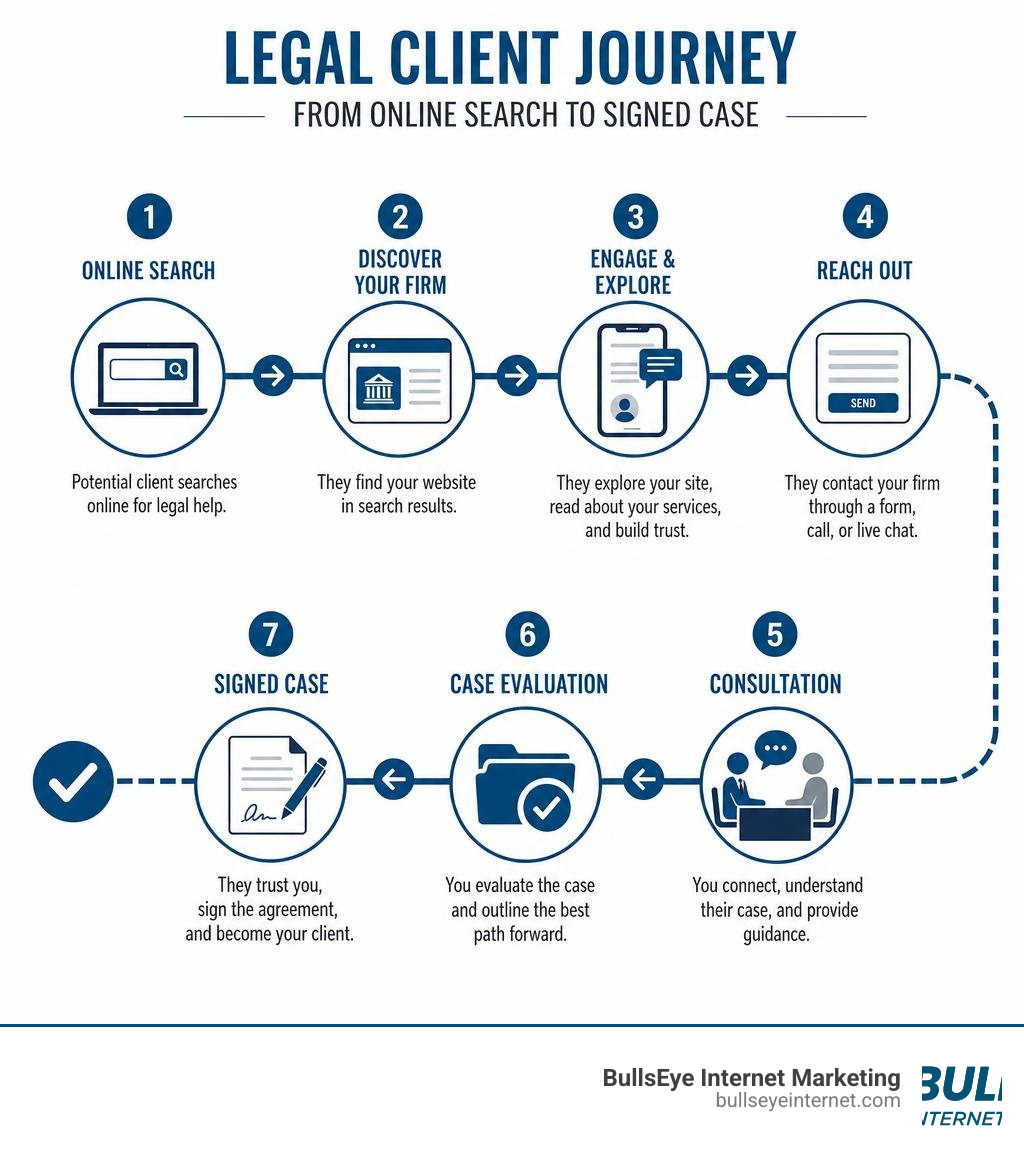
Attorney marketing solutions word list:
The Evolution of Attorney Marketing Solutions: Traditional vs. Digital
For decades, law firm marketing was a relatively simple, albeit expensive, game. You bought a full-page ad in the Yellow Pages, leased a prominent billboard along the highway, or aired late-night television commercials. If you had a massive budget, you won. If you were a solo practitioner or a boutique firm, you survived on country club handshakes and local referrals.
But times have changed. Today, the consumer journey has completely migrated online. When someone is injured in a car accident or facing a complex divorce, they do not flip through a phone book. They pull out their smartphone and search.
This shift in consumer behavior means that traditional marketing channels are no longer sufficient to sustain a growing practice. In fact, relying solely on traditional methods or word-of-mouth leaves your firm highly vulnerable to competitors who are actively capturing the digital market. To understand how to position your firm for success, we must examine the fundamental differences between these two approaches. To explore this transition further, see our guide on Beyond Word of Mouth: Modern Marketing for Legal Services.
Why Modern Firms Require Digital Attorney Marketing Solutions
Modern digital marketing is not just a replacement for traditional advertising; it is a vastly superior way to build a sustainable business. Here is why:
- Inbound vs. Outbound: Traditional advertising is “outbound.” It interrupts people who may not need a lawyer right now (like a billboard on a highway). Digital marketing is “inbound.” It captures people at the exact moment they are actively seeking legal help.
- Precise Targeting: Instead of paying to show your criminal defense ad to hundreds of thousands of people who will never need your services, digital channels allow you to target specific demographics, geographic locations, and search intents.
- Cost Efficiency: Because digital targeting is so precise, the cost per acquisition is often significantly lower than traditional media. For example, while competitive Google Ads can be expensive, platforms like Facebook offer highly targeted remarketing options with an average cost per click of around $2.15, compared to the massive upfront costs of TV or billboard campaigns.
- Measurability: Unlike a billboard, where it is nearly impossible to tell exactly how many signed cases it generated, digital campaigns allow us to track the exact journey from the first click to the signed retainer.
Key Components of High-ROI Attorney Marketing Solutions
To build a digital marketing engine that consistently generates high-value cases, we must focus on three core pillars:
- Brand Awareness: Establishing your firm as a highly visible, trusted authority in your local market before a client even needs you.
- Lead Generation: Driving high-intent traffic to your digital assets through search engine optimization (SEO), pay-per-click (PPC) advertising, and targeted social media campaigns.
- Conversion Focus: Designing your online presence so that when a qualified lead lands on your website or directory profile, they are immediately compelled to contact you.
Without all three components working in harmony, your marketing efforts will fail to provide a discernible return on investment.
High-Intent Search Channels: SEO, Local SEO, and Google Ads
When a person needs a lawyer, they are usually experiencing a high-stress event. They want answers, and they want them immediately. This makes search engines the single most valuable source of high-intent leads for any law practice.
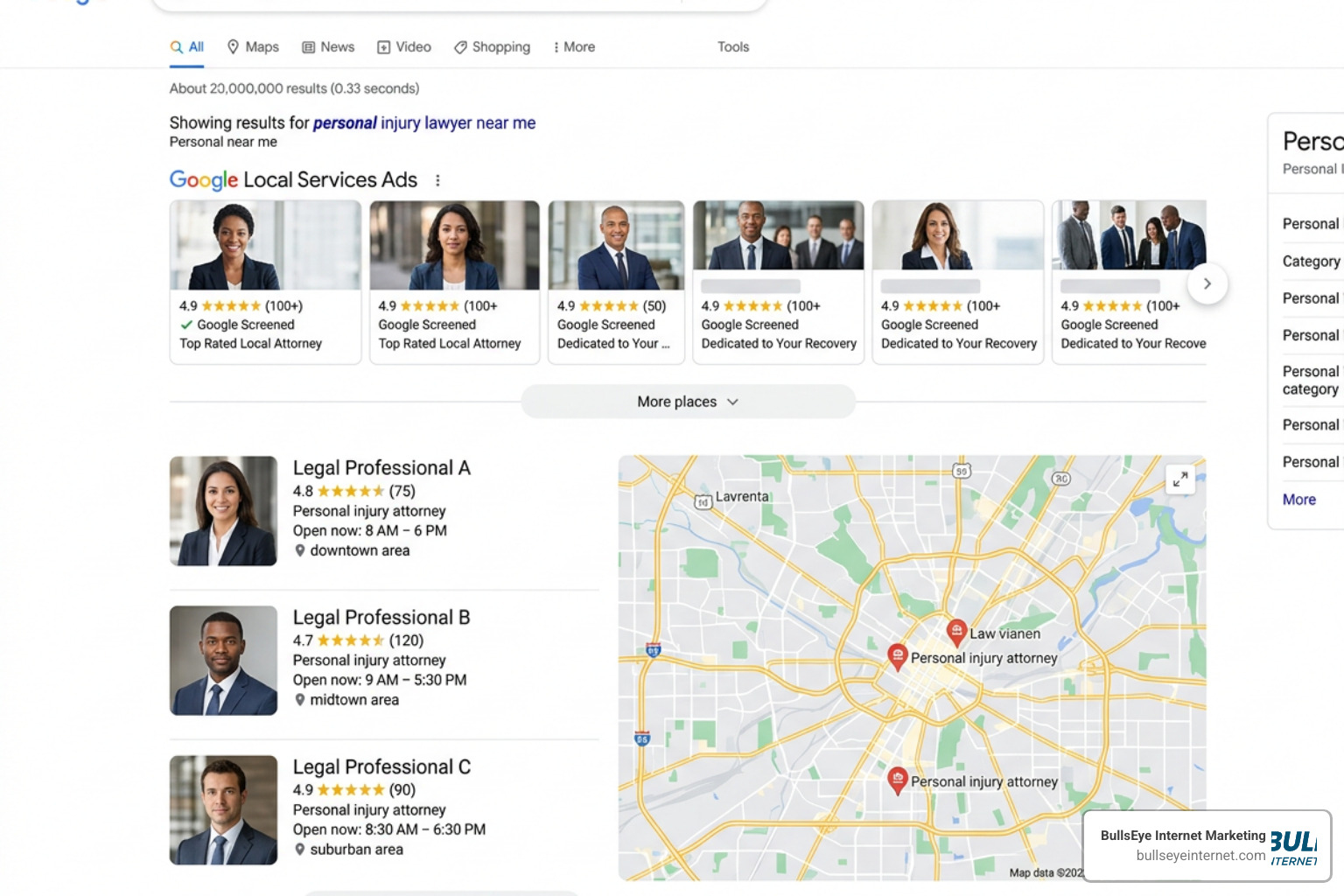
To capture these prospects, your firm must dominate both organic and paid search channels. Navigating these channels requires a strategic combination of search engine optimization and targeted advertising. For a detailed roadmap on organic search, check out our Step-by-Step Guide to Local Attorney SEO. To understand how paid search fits into this ecosystem, refer to our breakdown of Google Local Services Ads for Lawyers.
Dominating Local Search with Google Business Profile
For local law firms, organic search dominance begins and ends with the “Local Map Pack.” When a user searches for “personal injury lawyer near me” or “divorce attorney in Fort Lauderdale,” Google displays a map featuring the top three local business listings.
Securing a spot in this local map pack requires rigorous Local SEO optimization:
- Google Business Profile (GBP) Optimization: Your GBP must be completely filled out, accurate, and regularly updated. This includes selecting the correct primary and secondary categories, writing a compelling business description, and uploading high-quality photos of your team and office.
- NAP Consistency: Your Name, Address, and Phone number (NAP) must be identical across every single directory, social profile, and website page on the internet. Even tiny discrepancies (like “Suite 100” vs. “#100”) can confuse search engine algorithms and hurt your rankings.
- Online Reviews: Reviews are the lifeblood of local trust. A whopping 87% of clients read online reviews before choosing a local law firm. We recommend implementing an automated system that asks happy clients for a Google review immediately after their case is successfully resolved.
If you want to amplify your local map visibility even further, combining organic Local SEO with paid local ads is highly effective. To learn why, read our article on Why Every Lawyer Should Invest in Google Local Ads.
Paid Search and Pay-Per-Click Strategies
While SEO is a powerful long-term strategy, it takes time to build authority and rank organically. If you need cases immediately, Pay-Per-Click (PPC) advertising through Google Ads is the ultimate solution.
Google Ads allows your firm to bid on specific, high-intent keywords like “car accident lawyer Miami” or “probate attorney West Palm Beach.” When someone searches for those terms, your ad appears at the very top of the page, above the organic results.
However, legal keywords are among the most competitive and expensive in the world, with some highly competitive personal injury terms exceeding $100 per click. To avoid wasting your budget, your campaigns must be meticulously managed:
- Negative Keywords: You must actively exclude searches that are irrelevant to your business (e.g., “free legal advice” or “law school jobs”).
- Landing Page Alignment: Your ad must send users to a highly specific, conversion-optimized landing page, not your generic homepage.
- Continuous Optimization: Ad copy, bidding strategies, and search term reports must be analyzed weekly to lower your cost per lead.
For a comprehensive deep dive into building profitable campaigns, explore our Lawyer PPC Advertising Ultimate Guide.
Maximizing Conversion: Turning Clicks into Signed Cases
Driving traffic to your website is only half the battle. If your site is slow, confusing, or lacks a clear call to action, those visitors will leave and click on a competitor’s listing. This is where Conversion Rate Optimization (CRO) becomes critical.
Too many law firms treat their website like a digital brochure, filling it with dense legal jargon and generic stock photos of gavels and scales. To turn cold clicks into signed cases, you must design your digital presence like a conversion funnel.
| Feature | Standard Law Firm Homepage | High-Converting Landing Page |
|---|---|---|
| Primary Goal | Informational (covers history, practice areas, news) | Conversational (encourages immediate contact) |
| Navigation | Multiple links, drop-down menus, external links | Minimal or no navigation (keeps user focused) |
| Call to Action (CTA) | Hard to find, generic (“Contact Us”) | Highly visible, prominent form, click-to-call buttons |
| Visuals | Stock photos of scales, heavy text blocks | Real photos of attorneys, client video testimonials |
| Follow-up | Manual email response within 24-48 hours | Automated SMS, instant click-to-call, or live chat |
The Critical Role of Website Design and Speed
Your website is often the first impression a potential client has of your firm. If it takes more than three seconds to load, or if it is difficult to navigate on a mobile device, you have already lost them.
- Mobile Optimization: Over 60% of legal searches are conducted on mobile devices. Your site must feature a responsive design that looks and functions flawlessly on any screen size.
- Loading Speed: Google utilizes page speed as a direct ranking factor. Compress your images, clean up your website code, and utilize fast hosting to ensure your pages load instantly.
- Clear Calls to Action (CTAs): Do not make users search for your contact information. Place a prominent, click-to-call phone number and a simple contact form above the fold on every single page.
To ensure your digital foundation is built to win, read our expert insights on How to Market a Law Practice Like a Pro.
Speed-to-Lead and Automated Intake Funnels
Once a lead submits a form on your website, the clock is ticking. Research shows that you are 100x more likely to convert a lead if you follow up within 5 minutes compared to 30 minutes.
If you take hours—or days—to respond to an inquiry, that prospect has already called three other firms. To solve this, modern firms utilize automated intake funnels:
- Instant SMS Autoresponders: The moment a lead submits a form, an automated text message should be sent to acknowledge their inquiry and set expectations for a call.
- Live Chat Integration: 24/7 live chat on your website allows you to capture leads and qualify them in real-time, even in the middle of the night.
- AI-Powered Intake: Implementing automated booking tools allows highly qualified prospects to schedule a consultation directly on your calendar, removing all friction from the intake process.
Ethical Compliance and Advertising Regulations in Legal Marketing
Unlike traditional businesses, law firms operate under strict ethical guidelines. Every state bar association has specific rules governing attorney advertising, often influenced by the American Bar Association guidelines, and violating these rules can lead to severe disciplinary action.
As digital marketing strategies become more sophisticated, maintaining compliance requires constant vigilance. To understand the baseline rules, refer to our comprehensive guide on Lawyer Advertising Rules: Solutions for Modern Firms.
Navigating State Bar Guidelines Safely
While specific regulations vary by state, there are several universal principles that every attorney must follow when implementing marketing solutions:
- No Misleading Claims: You cannot make false or misleading statements about your services, experience, or past results.
- Avoid “Specialist” or “Expert” Labels: In many jurisdictions, you cannot refer to yourself as a “specialist” or “expert” unless you hold a formal board certification recognized by your state bar.
- Clear Disclaimers: Your website and advertising materials must feature clear disclaimers stating that past results do not guarantee future outcomes, and that contacting the firm does not establish an attorney-client relationship.
- Ethical Review of Testimonials: Client reviews and testimonials must be real, verifiable, and accompanied by appropriate disclaimers.
To make sure your campaigns remain fully compliant while still driving exceptional results, check out An Essential Guide to Advertising for Lawyers.
Leveraging Legal Directories and Local Citations for Authority
In addition to your own website, appearing on high-authority legal directories is a vital component of any robust search strategy. Directories not only drive direct referral traffic, but they also provide highly valuable backlinks that boost your website’s organic SEO authority.
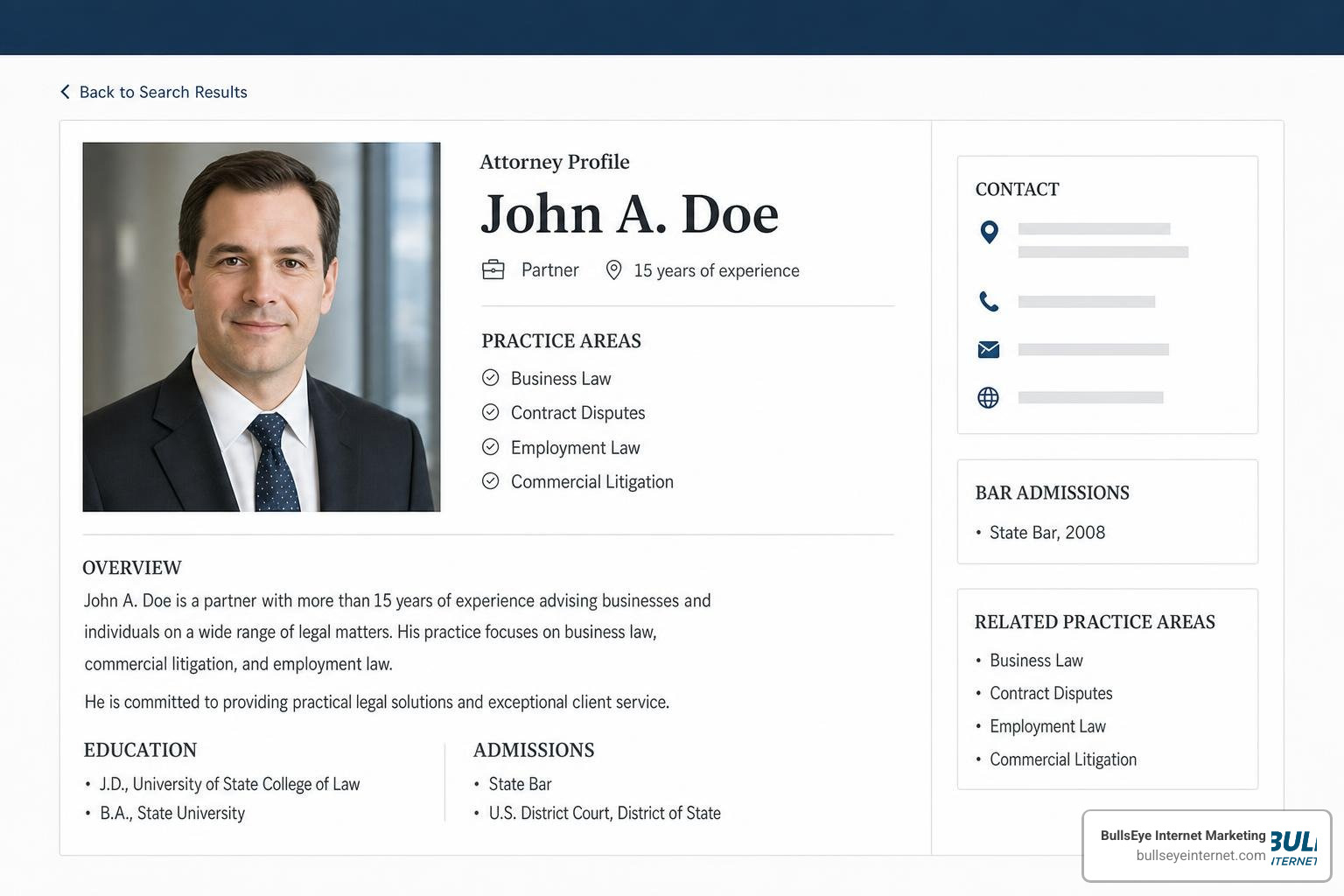
For firms operating in competitive markets like Florida, building local authority through directories and citations is essential. To understand how this fits into a broader state-wide strategy, read The Sunshine State of Search: Boosting Your Florida Law Firm’s Online Visibility.
The Power of Verified Directory Listings
Major legal directories like Justia and FindLaw attract millions of highly motivated visitors every single month. In fact, Justia’s directory alone sees over one million visitors monthly, and data shows that directory visitors are 3x more likely to contact a firm than visitors referred by general Google searches.
To maximize your return from these platforms, you must fully optimize your profiles:
- Claim Your Free Profiles: Ensure your profiles on Justia, Avvo, FindLaw, and Super Lawyers are claimed, accurate, and completely filled out.
- Gather Reviews on Directories: While Google reviews are critical for local search, directory-specific reviews build deep trust with prospects who are comparing multiple attorneys side-by-side.
- Leverage Premium Placements: In highly competitive markets, investing in premium directory placements can give you priority positioning and remove competitor ads from your profile pages.
Frequently Asked Questions about Legal Marketing
How do law firms measure ROI from marketing campaigns?
To accurately measure ROI, you must track the entire client journey from the initial touchpoint to the final signed case. This requires integrating your website analytics, call tracking software, and CRM (Customer Relationship Management) system. Key metrics to monitor include:
- Cost Per Lead (CPL): Total marketing spend divided by the number of inquiries generated.
- Cost Per Signed Case (CPSC): Total marketing spend divided by the number of actual clients acquired.
- Client Lifetime Value (LTV): The total revenue generated by a single client over time.
By comparing your CPSC against your average case fee, you can easily calculate your exact return on investment.
What role does AI play in modern legal marketing?
Artificial Intelligence is transforming how law firms attract and convert clients. Modern AI marketing systems are used to:
- Optimize Ad Campaigns: AI algorithms analyze performance data in real-time to automatically shift budgets to the highest-performing keywords and audiences.
- Enhance Search Engine Visibility: AI-driven tools help structure website content so it is easily read, summarized, and cited by modern search engines and AI answer engines.
- Automate Intake: AI voice agents and chatbots can contact web leads within minutes, qualifying prospects and booking consultations automatically.
However, human oversight remains critical. Every piece of AI-generated content or automated communication must be reviewed by experienced legal marketing professionals to ensure strict compliance with state bar rules.
How much should a law firm spend on digital advertising?
Your ideal marketing budget depends heavily on your practice area, geographic location, and growth goals. Highly competitive fields like personal injury or class-action litigation in major metropolitan areas require a larger investment to break through the noise compared to estate planning or family law in smaller suburban markets.
As a general rule of thumb, most growing law firms allocate between 7% and 15% of their gross revenue to marketing. We recommend starting with a focused, highly optimized campaign, tracking the results, and scaling your budget as you prove a positive return on investment.
Building a Sustainable Growth Engine with BullsEye Internet Marketing
Building a successful law practice in 2026 requires moving away from inconsistent, word-of-mouth growth and embracing modern, data-driven attorney marketing solutions. By dominating high-intent search channels, optimizing your website for conversions, responding to leads instantly, and maintaining strict ethical compliance, you can stop chasing clients and build a system that attracts them to you on autopilot.
At BullsEye Internet Marketing, we specialize in helping law firms across the United States generate high-value calls and signed cases through tailored digital marketing systems. We do things differently:
- No Long-Term Contracts: We believe in earning your business every single month based on real, measurable results.
- Strict Geographic Exclusivity: We work with only one client per practice area per geographic location, giving your firm a massive, undivided competitive advantage in your local market.
Are you ready to transform your law firm’s online visibility and start attracting your ideal clients? Contact us today for a free consultation and let’s build your custom growth engine.
