
Why Advanced SEO Services Matter in 2026
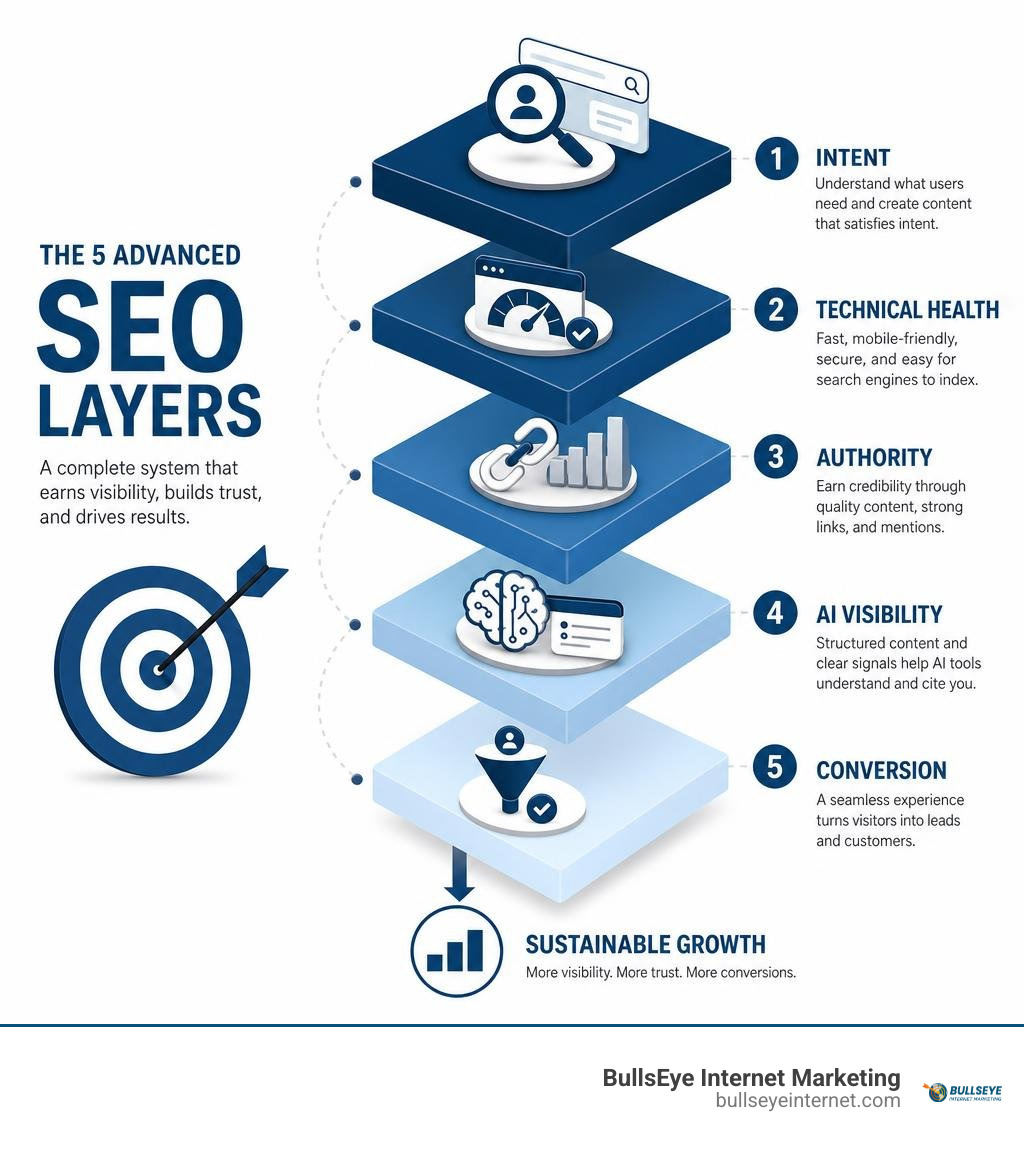
Advanced SEO services help businesses earn visibility where customers now search: traditional results, featured snippets, Google AI Overviews, and AI answers from tools like ChatGPT and Gemini. The practical approach is to combine intent-led content, fast mobile pages, clean technical indexing, structured data, strong internal links, and credible third-party mentions – then measure which efforts produce calls, leads, and sales.
Basic SEO can help a page rank for a keyword. Advanced SEO connects the whole system: how search engines crawl the site, how clearly they understand the brand and its services, whether AI tools can cite the content, and whether visitors convert after arriving.
That matters because first-page visibility is still decisive: 75% of searchers never move beyond page one. At the same time, more searches end without a website click, so being included in the answer is becoming as important as winning a blue-link ranking.
I am Ronnie Katz, founder and Principal CEO of BullsEye Internet Marketing. Since 2006, I have helped businesses use advanced SEO services, local search, paid media, and conversion-focused web strategy to turn online visibility into measurable opportunities.
Discover more about advanced seo services:
What Are Advanced SEO Services and How Do They Differ from Basic SEO?
Traditional search engine optimization used to be straightforward. You conducted basic keyword research, dropped target terms into your title tags and headers, wrote a 500-word blog post, and waited for results.
Today, that entry-level approach barely scratches the surface. Search engines have evolved from simple keyword-matching algorithms into sophisticated semantic discovery engines powered by artificial intelligence, neural matching, and vast knowledge graphs.
| SEO Dimension | Basic SEO Tactics | Advanced SEO Services |
|---|---|---|
| Primary Focus | Exact-match keyword density and static metadata | Entity-based optimization, topic clusters, and semantic search |
| Technical Scope | Basic sitemap submission and automated plugin audits | Crawl budget engineering, log analysis, and Core Web Vitals optimization |
| Content Strategy | Standalone blog articles targeting isolated keywords | Deep topical authority networks, answer architecture, and citable data assets |
| Search Surfaces | Standard 10 blue links on desktop search engines | Multi-platform discovery: AI Overviews, Gemini, ChatGPT, Perplexity, and Featured Snippets |
| Architecture | Flat site structure with arbitrary internal links | Tiered page hierarchy, strategic PageRank sculpting, and rich Schema.org integration |
| Business Outcome | Vanity impressions and untargeted organic traffic | Qualified lead generation, pipeline acceleration, and high conversion synergy |
To dive deeper into the foundational differences of modern search, review our Search Engine Optimization Expert Guide.
Foundations vs. Scaled Execution: Defining Advanced SEO Services
At BullsEye Internet Marketing, we see basic SEO as setting up the storefront, while advanced SEO is orchestrating the entire supply chain, logistics, and customer experience.
Advanced SEO services focus on scale, efficiency, and deep architectural precision. Rather than simply fixing broken links, advanced practitioners perform deep server log analysis to understand how search engine bots expend resources across your web properties.
If you want to understand how to improve website SEO at a systemic level, you must treat your crawl budget like valuable currency. Crawling millions of URLs or thousands of dynamic filter pages wastes server resources on thin content.
Advanced execution eliminates crawl waste, establishes seamless indexing directives, layers nested JSON-LD structured data across every template, and aligns every piece of content directly with conversion optimization to generate tangible phone calls and qualified sales.
The Shift from Keyword Density to Semantic Search and Entities
Search engines no longer view the web as collections of raw text strings. Instead, they understand entities—distinct, well-defined people, places, organizations, concepts, and things connected within a global knowledge graph.
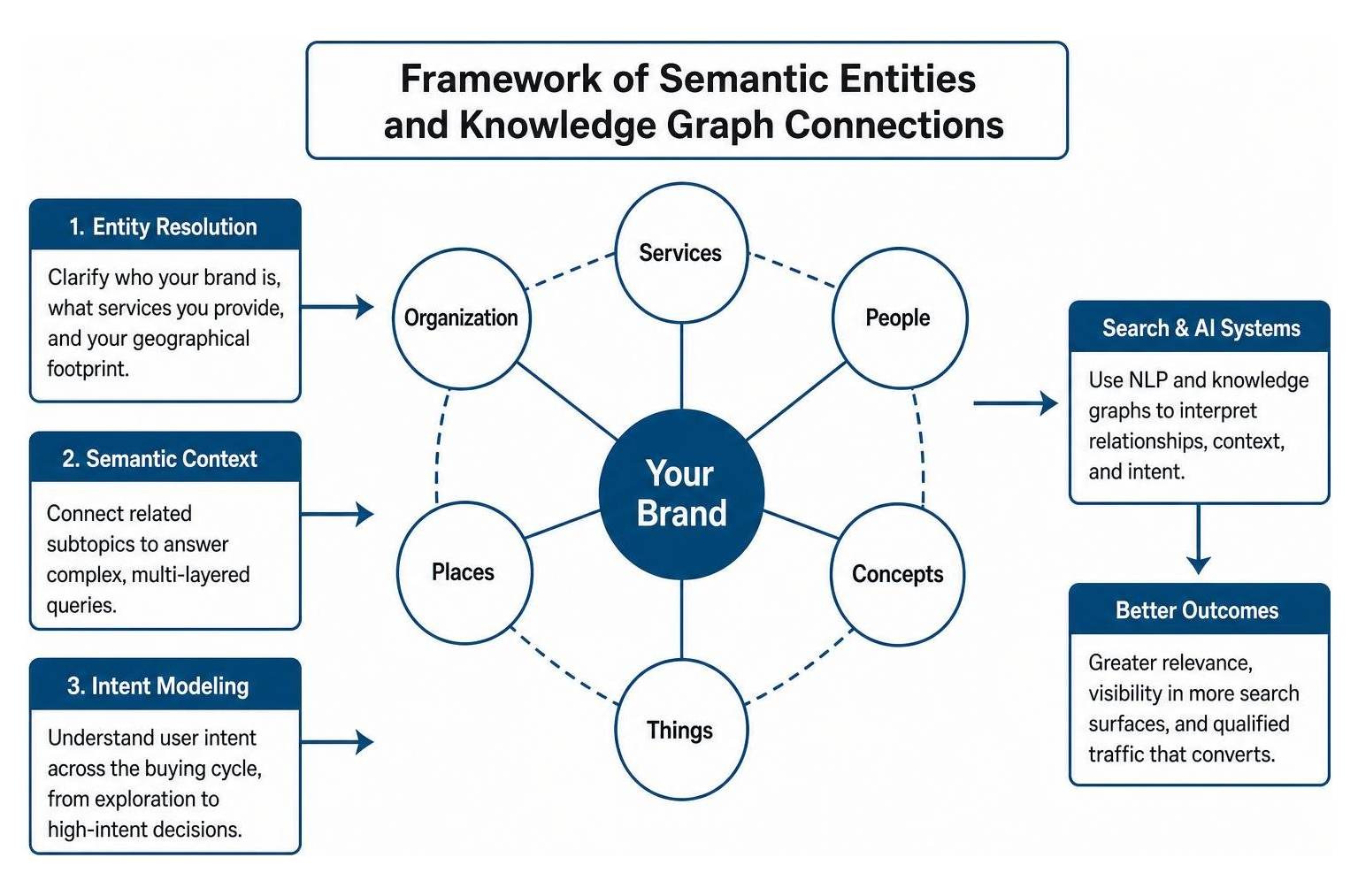
When Google or modern AI models analyze your website, they use Natural Language Processing (NLP) to evaluate topical relationships:
- Entity Resolution: Clarifying exactly who your brand is, what services you provide, and your geographical footprint.
- Semantic Context: Answering complex, multi-layered queries by connecting related subtopics without repeating awkward exact-match keywords.
- Intent Modeling: Understanding user intent at every phase of the buying cycle, from informational exploration to high-intent commercial decision-making.
For a comprehensive breakdown of entity optimization, explore our Semantic SEO Services Complete Guide.
Generative Engine Optimization: Dominating AI Overviews and LLM Search
The search landscape has undergone a massive structural shift. Over 1 billion users now see Google AI Overviews directly at the top of their search results. Furthermore, 65% of searches end without a traditional click because AI engines answer complex questions immediately.

With an estimated 700% increase in 8+ word conversational queries, relying solely on traditional page-one organic rankings leaves your business vulnerable to a 30% drop in organic click-through rates. To thrive, brands must implement Generative Engine Optimization (GEO). Learn the underlying mechanics in our Generative Engine Optimization Services 101 guide.
Optimizing for Featured Snippets, ChatGPT, and Gemini Citations
Featured snippets capture more than 10% of clicks anytime they appear on a SERP. Securing this “zero position” requires an intentional answer architecture:
- Answer-First Structure: Place direct, 40-to-60-word definitions or step-by-step solutions immediately underneath your target H2 or H3 headers.
- Self-Contained Data Modules: Provide structured tables, concise bulleted lists, and clear definitions that algorithms can easily extract without needing surrounding context.
- Structured Extraction Markup: Pair on-page definitions with corresponding Schema.org types (such as
FAQPage,HowTo, andDataset) to help search bots parse your key facts effortlessly.
Integrating LLM SEO into Modern Advanced SEO Services
Beyond traditional search engines, 50% of buyers now use conversational AI tools to research vendors, products, and services before ever visiting a company website. This makes LLM search optimization a crucial pillar of modern search visibility.
When pairing standard technical optimization with specialized AI search strategies, your content is structured so large language models can parse and cite your brand as an authoritative industry reference.
For an actionable roadmap on capitalizing on these platforms, check out our AI Search Optimization Guide 2026.
Technical Infrastructure, Crawl Efficiency, and Site Performance
Technical SEO provides the foundation for all search visibility. Even the most thoroughly researched content will fail if search engine crawlers encounter rendering roadblocks or sluggish server responses.

To scale organic visibility across competitive verticals, forward-thinking brands implement Next-Gen SEO Strategies that prioritize technical health.
Crawl Budget Optimization, JavaScript SEO, and Indexation Control
Google’s crawl budget is like a pizza slice—you want to serve it to your best-tasting pages rather than wasting it on empty crusts. For large sites, managing how search bots spend their crawling resources is critical.
- Robots.txt Directives: Use robots.txt strictly to prevent server overload and block low-value utility paths (such as internal search result pages or checkout carts), not as your primary mechanism for indexation control.
- Noindex vs. Robots Disallow: Always use
or HTTP response headers to remove low-quality URLs from search indexes. - Canonicalization: Maintain self-referential canonical tags on unique content and configure proper cross-domain canonicals to prevent content duplication across syndicated networks.
- JavaScript Hydration: Ensure client-side rendered JavaScript content serves pre-rendered HTML snapshots or clean server-side rendering (SSR) so bots don’t encounter rendering timeouts.
- Pagination and Dynamic Paths: Avoid infinite scroll setups that lack crawlable fallback links. Use clean, paginated URL structures with distinct anchor tags.
Core Web Vitals, Mobile-First Indexing, and Schema Architecture
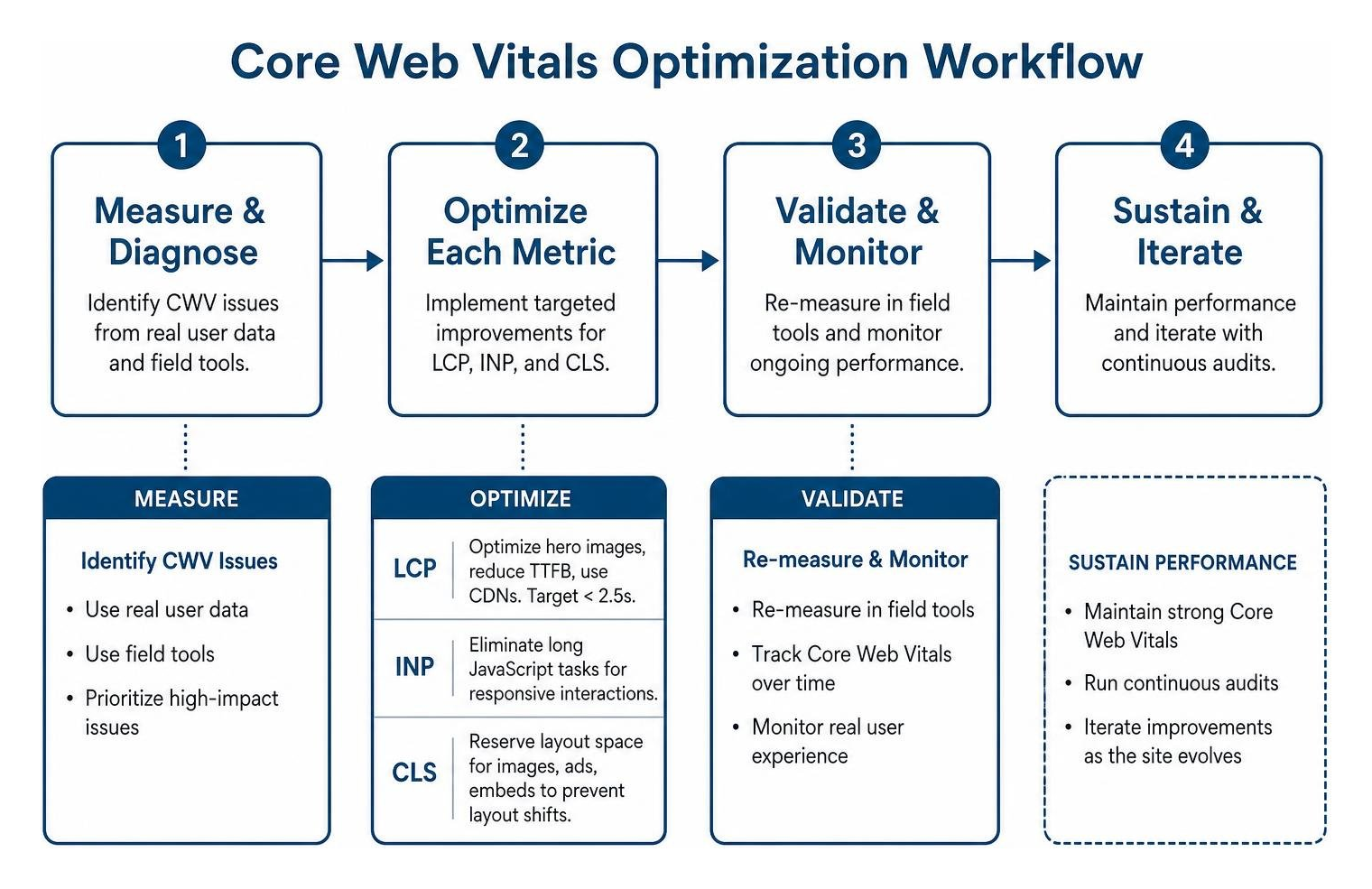
With more than half of all organic traffic originating from mobile devices, Google evaluates websites exclusively through its mobile-first crawler. Modern technical hygiene requires passing all Core Web Vitals metrics:
- Largest Contentful Paint (LCP): Optimize hero images, reduce server response times (TTFB), and leverage modern CDNs to ensure main content renders in under 2.5 seconds.
- Interaction to Next Paint (INP): Eliminate long JavaScript tasks to guarantee responsive user interactions.
- Cumulative Layout Shift (CLS): Reserve explicit layout dimensions for images, dynamic ads, and embeds to avoid jarring page shifts during page load.
Complement your page performance with comprehensive Schema.org JSON-LD markup. Tag your organization, key team authors, physical service locations, and service offerings to turn standard search results into visual, high-converting rich snippets.
Authority Engineering: Topic Clusters, Internal Linking, and Strategic Backlinks
High search rankings require verified authority. Search algorithms assess your website’s authority by measuring how thoroughly you cover a given subject and how other trusted websites reference your brand. Learn how to systematically claim your market by studying our strategies for building topical authority.
Building Topical Authority via Clustered Architecture
A topic cluster consists of three main components:
- A Pillar Page: An exhaustive, high-level guide addressing a broad core topic.
- Supporting Sub-Topic Pages: In-depth articles answering specific, long-tail queries connected to the core theme.
- Strategic Internal Linking: Descriptive, contextual anchor text connecting every supporting cluster page back to the main pillar asset.
This interconnected structure routes PageRank across your entire domain and signals to search engines that your site possesses deep, authoritative expertise across the entire subject matter.
High-Impact Backlink Profiles and Paid Search Synergy
Earning top-tier links requires shifting away from low-quality link directories toward digital PR, data-driven original research, and broken-link outreach. By identifying outdated, 404-error resources on high-authority industry publications, you can present your fresh, comprehensive assets as ideal replacements.
Furthermore, paid advertising (PPC) works hand-in-hand with advanced organic optimization. Running targeted Google Ads campaigns allows you to test conversion rates on target keywords before committing months to organic content production.
Paid search data uncovers high-intent queries, while organic search captures long-term market share without ongoing per-click costs.
Comprehensive SEO Audits and Competitor Intelligence Frameworks
Sustainable organic growth relies on continuous technical health audits and deep competitive intelligence.
A superficial audit identifies missing meta tags; an advanced audit uncovers architectural bottlenecks and missed market opportunities. See our complete framework in the Complete Guide to SEO Audits.
Technical and Semantic Gap Auditing
- Crawl Log Audits: Analyze your raw access logs to discover crawler frequency, orphan pages, and high-latency templates.
- Keyword and Semantic Gap Analysis: Cross-reference competitor topic coverage to identify content gaps where your site lacks relevant landing pages.
- Content Cannibalization Audits: Identify and merge overlapping pages competing for identical search intents to unify your organic authority.
If you are evaluating outside partners to help you execute these sophisticated technical reviews, consult our best SEO consultants guide.
Data-Driven Monitoring and Continuous Iteration
Advanced SEO is not a one-time project. It requires continuous monitoring across multiple channels:
- Rank Tracking: Track ranking movements across desktop, mobile, and localized map-pack results.
- AI Engine Monitoring: Monitor citation frequency across ChatGPT, Perplexity, and Google AI Overviews.
- Conversion and Lead Attribution: Ensure your organic search growth translates directly into inbound phone calls, form completions, and revenue.
To learn how top-tier agencies manage these ongoing campaigns, read our guide to the best search engine optimisation companies.
Frequently Asked Questions About Advanced SEO Services
How quickly do advanced SEO strategies yield measurable traffic gains?
While simple technical fixes (like resolving indexing blocks or correcting broken redirects) can yield improvements within several weeks, comprehensive authority building and topic cluster maturation typically take three to six months. In generative search environments, early AI citations often begin appearing within 60 to 90 days as AI models refresh their citation datasets.
Can traditional SEO coexist with generative engine optimization?
Yes. Generative Engine Optimization (GEO) does not replace traditional technical SEO; it builds directly on top of it. Large language models and AI engines rely on Google’s index, clean site architecture, Schema.org markup, and verified backlink authority to evaluate whether your brand is credible enough to cite in AI-generated answers.
What tools are essential for conducting advanced SEO competitor audits?
Advanced practitioners use enterprise crawl emulators (like Screaming Frog and Sitebulb), log file analysis tools, enterprise rank trackers, NLP content optimization platforms, and Schema markup validation tools to evaluate technical health and entity footprint.
Conclusion: Partner with BullsEye Internet Marketing
Navigating modern search requires more than chasing basic keywords. It demands an integrated strategy combining technical performance, deep semantic topical authority, and generative engine optimization.
At BullsEye Internet Marketing, we help businesses dominate search results through comprehensive, revenue-driven marketing campaigns. We specialize in generating inbound phone calls and qualified sales through Pay Per Lead, Google Business Profile Optimization, Advanced SEO, PPC, and conversion rate optimization.
Our unique advantage protects your business growth:
- No Long-Term Contracts: We earn your business every month based on transparent results and clear lead attribution.
- Market Exclusivity: We work with only one client per industry per geographic market, giving you an exclusive, dedicated competitive advantage over your local competitors.
Ready to capture market share and scale your organic inbound pipeline? Explore our tailored Miami SEO services to speak directly with our senior growth strategists today.
