
Stop PPC Ad Waste with Audit Template BullsEye Internet Marketing
A ppc audit report template is a structured framework that guides you through analyzing your paid advertising campaigns to identify waste, fix errors, and maximize return on investment. Here’s what you need to know:
Quick Answer: What a PPC Audit Report Template Should Include:
- Executive Summary – High-level findings and ROI impact
- Account Structure Analysis – Campaign organization and settings review
- Keyword Performance – Search terms, match types, and negatives
- Ad Copy & Creative – Messaging effectiveness and A/B test results
- Landing Page Evaluation – Conversion optimization and user experience
- Bidding & Budget Review – Spend allocation and strategy assessment
- Conversion Tracking – Technical setup and accuracy verification
- Actionable Recommendations – Prioritized next steps with expected impact
Running pay-per-click campaigns without regular audits is like lighting money on fire. The numbers tell a stark story: advertisers are projected to spend $190.5 billion on search advertising globally in 2024, yet approximately 97% of Google Ads fail to draw audience attention because of poor engagement.
That’s a lot of wasted opportunity.
A PPC audit helps you spot the leaks in your advertising bucket before they drain your entire budget. It’s not just about finding what’s broken—it’s about finding what’s working so you can do more of it. Companies that conduct regular PPC audits can increase conversions by up to 25% just by streamlining their approach.
But here’s the problem: most business owners don’t know where to start. They’re drowning in data from Google Ads, Bing, Facebook, and LinkedIn, trying to figure out which metrics actually matter. They’re frustrated by high costs, low conversions, and the nagging feeling that their ad spend isn’t working as hard as it should.
That’s where a structured audit template comes in.
Think of it as your roadmap through the chaos. A good template doesn’t just help you organize information—it ensures you don’t miss critical issues that could be costing you thousands every month. It transforms overwhelming data into clear, actionable insights that directly impact your bottom line.
I’m Ronnie Katz, founder of BullsEye Internet Marketing, and I’ve been helping businesses optimize their PPC campaigns since 2006. Over the past 20 years, I’ve developed and refined ppc audit report templates that consistently uncover profit-draining issues and turn struggling campaigns into revenue generators.
In this guide, I’ll walk you through exactly how to conduct a winning PPC audit using a proven template structure. You’ll learn what to look for, how to document your findings, and most importantly—how to turn those findings into results that make your phone ring.
The Anatomy of a Comprehensive PPC Audit
Why do we bother with PPC audits? Because in the dynamic world of digital advertising, simply launching campaigns isn’t enough; continuous optimization is key. A PPC audit provides a systematic approach to analyzing your ad strategies, ensuring they deliver optimal results and align with your business objectives. Without regular reviews, campaigns can suffer from wasted ad spend, poor targeting, or inaccurate conversion tracking.
A comprehensive PPC audit goes beyond surface-level metrics. It dives deep to identify inefficiencies, missed opportunities, and technical glitches that might be silently draining your budget. It helps us achieve better budget allocation by identifying high-performing keywords and eliminating underperforming ones, realigning our messaging to ensure paid media aligns with business goals, and staying relevant by refining copy and targeting new audience segments.
Common pitfalls we often uncover during an audit include:
- Poor targeting, where ads reach the wrong audience.
- Wasted spend on irrelevant keywords.
- Weak or non-compelling ad copy.
- Misaligned landing pages that don’t match ad messaging.
- Incorrect conversion tracking, leading to unreliable data.
- Neglected negative keyword lists that allow irrelevant searches.
By tackling these issues head-on, we can significantly boost your campaign’s performance and maximize ROI.
Setting the Stage: Goals, KPIs, and Preparation
Before we even open an ad account, the most crucial step is to understand your business objectives. Are you a SaaS company looking to double demo calls? An e-commerce business aiming to increase sales? Or a law firm seeking more client cases? Without a clear understanding of your specific goals and financial metrics (like net profit margin, average order value, and customer lifetime value), it’s impossible to define PPC success or run a world-class PPC account.
Next, we define Key Performance Indicators (KPIs) that will measure your progress toward those goals. These are the ultimate metrics that tell us if our campaigns are effective and efficient. Some essential KPIs include:
- Click-Through Rate (CTR): The percentage of people who see your ad and click it. A high CTR often indicates relevant ad copy.
- Cost Per Acquisition (CPA): How much it costs to acquire a customer or lead through your ads. Lower is generally better.
- Return on Ad Spend (ROAS): The revenue generated for every dollar spent on advertising. This is calculated as (Ad Spend Revenue / Ad Spend) and is often a more critical metric than just conversion rate when evaluating profitability. We typically aim for a ROAS of at least 2.87:1 to 5:1, or 25-50% ROI, depending on the industry.
- Conversion Rate: The percentage of clicks that result in a desired action (e.g., a purchase, a form submission).
To prepare for an audit, we’ll need comprehensive data from all platforms where PPC campaigns are active, including Google Ads, Bing Ads, Facebook Ads Manager, and LinkedIn Campaign Manager. Crucially, we also need access to your analytics tools like Google Analytics and Google Tag Manager to provide insights into user behavior and ensure accurate conversion tracking.
Account & Campaign Structure Review
A well-organized account structure is the foundation for successful PPC ads. Our audit begins by assessing how your campaigns are set up.
- Account Structure Best Practices: Campaigns should be logically organized, often mirroring your website’s structure (e.g., by product lines, services, or distinct marketing objectives). This allows for targeted messaging and budget control. We avoid running Search Display Expansion campaigns that can dilute performance.
- Campaign Naming Conventions: Consistency is key. Clear, descriptive names for campaigns and ad groups make the account easier to steer and manage, especially when multiple people are making changes.
- Campaign Settings: We scrutinize settings like device preferences, ad rotation (should be set to ‘Optimize’), and whether Search Partners performance warrants them being enabled.
- Geotargeting: It’s vital that your ads are targeting the right locations. We ensure geotargeting is set to “Presence: People in or regularly in your targeted locations” to avoid showing ads to people merely interested in your areas, which can lead to wasted spend. For our local clients in Florida (Broward County, Miami Dade County, Palm Beach County, Martin County, St Lucie County, Indian River County, etc.), precise geotargeting is paramount.
- Ad Scheduling: We analyze if your ads are running at optimal times. If your audience is more active on Friday evenings than Monday mornings, we adjust accordingly.
- Device Targeting: If, for example, mobile users convert at a significantly higher rate, we reallocate more funding to mobile-specific ads and optimize landing pages for mobile to capitalize on this trend.
- Budget Allocation: We check if campaign budgets are appropriate and not “limited by budget,” which indicates missed opportunities. We also review if shared budgets are being used effectively or if they’re causing automation to neglect top-of-funnel campaigns. Campaigns should ideally have budgets set to capture at least 10 clicks per day to generate meaningful data.
- Ad Groups: We ensure ad groups are tightly themed, containing a maximum of 15-20 highly relevant keywords. We generally avoid Single Keyword Ad Groups (SKAGs) as they’ve become largely obsolete with Google’s advancements in close variants and automation.
Performance Deep Dive: Keywords, Ads, and Landing Pages
This is where the rubber meets the road—examining the core elements that directly impact user engagement and conversions.
- Keyword Analysis: We evaluate keyword relevance, match types (broad, phrase, exact), and the effectiveness of negative keywords. A low Quality Score (below 7) on high-spend keywords is a red flag, indicating a mismatch between the keyword, ad, and landing page. We also look for long-tail queries, which often bring highly relevant traffic.
- Search Intent: Do your keywords truly match what users are looking for? We analyze this to ensure we’re capturing high-intent searches.
- Negative Keywords: This is a crucial area. We ensure comprehensive negative keyword lists are in place, especially for broad match keywords, to prevent ads from showing for irrelevant searches and wasting budget.
- Search Terms Report: This report is a goldmine. We dive into it to identify new negative keywords, potential new high-performing keywords, and search queries that are driving conversions.
- Ad Copy Assessment: We review your ad copy for compelling CTAs, grammar, spelling, and adherence to character limits and ad extensions. We look for unique value propositions and ensure ads are goal-specific. Remember Bill Bernbach’s wisdom: “Nobody counts the number of ads you run; they just remember the impression you make.” We also ensure your ads comply with
[Google's ad policies](https://support.google.com/adspolicy/answer/6008942?hl=en). - A/B Testing: We check if you’re actively A/B testing different ad variations. Without testing, you’re missing opportunities to identify what resonates most with your audience. We aim for at least two distinct ads per ad group.
- Ad Extensions: These provide more information and expand your ad’s real estate on the SERP. We ensure you’re using all relevant extensions (sitelinks, callouts, structured snippets, images, call extensions, location extensions for our local Florida clients, etc.) and that they are custom to top-performing ad groups.
- Landing Page Experience: This is critical. A great landing page leads to high conversions, while a poor one leads to abysmal results, regardless of PPC expertise. We assess relevance to the ad copy, load speed, mobile-friendliness, clear CTAs, and the presence of social proof. We ensure the keyword is in the H1 and that the page provides a seamless user journey. Tools like Unbounce or Optimizely can be used for A/B testing landing pages.
- Mobile-Friendliness & Page Speed: Given Google’s mobile-first indexing, optimizing for mobile is paramount. Slow loading pages or those with poor user experience will hurt your Quality Score and conversions.
- Core Web Vitals: We examine your landing pages’ performance on
[Core Web Vitals](https://support.google.com/webmasters/answer/10218333?hl=en), which measure loading (Largest Contentful Paint), interactivity (First Input Delay), and visual stability (Cumulative Layout Shift). Poor scores here indicate a bad user experience that Google penalizes. You can check these in Google Search Console’s[Page Experience Report](https://support.google.com/webmasters/answer/10218333?hl=en)or using[Lighthouse](https://developer.chrome.com/docs/lighthouse/overview/). - Competitor Ad Analysis: We leverage tools like SEMrush or the
[Google Ads Transparency Center](https://adstransparency.google.com/)to see what your competitors are bidding on, how their ads look, and what landing pages they’re using. This can uncover missed keyword opportunities or inspire new ad copy angles.
Your Step-by-Step Guide to Conducting a PPC Audit
Conducting a thorough PPC audit might sound daunting, but with a structured ppc audit report template and a step-by-step approach, it becomes a clear path to improved performance. Think of it as a health check-up for your advertising budget.
Step 1: Technical Health Check – Tracking and Quality Score
The first step is to ensure your tracking is robust and your account’s fundamental health metrics are strong.
- Conversion Tracking Verification: This is non-negotiable. Without accurate conversion tracking, all other optimizations are shots in the dark. We verify that all desired actions (purchases, form fills, calls, etc.) are being tracked correctly, that conversion values are accurate, and that there are no “inactive” or “unverified” statuses. We use
[Google’s Tag Assistant](https://support.google.com/tagassistant/answer/10039345#zippy=%2Cin-this-article)to debug any tracking issues. We also ensure that conversion goals make sense (macro and micro conversions) and that conversion values are being pulled through from your CRM where applicable. - Quality Score Analysis (1-10): Google provides a Quality Score for each keyword, indicating how relevant your ad, keyword, and landing page are to a user’s search. Higher Quality Scores (7 or above) lead to lower costs-per-click and better ad positions. We investigate any high-spend keywords with a Quality Score below 7. This involves assessing:
- Ad Relevance: Does your ad copy directly relate to the keyword?
- Expected CTR: Is your ad compelling enough to encourage clicks?
- Landing Page Experience: Is your landing page relevant, fast, and easy to steer?
Step 2: Strategic Analysis – Bidding, Budget, and ROAS
Once the technical foundation is solid, we move to the strategic heart of your campaigns: how you’re spending and making money.
- Bidding Strategies: We review whether your chosen bidding strategies (manual, Target CPA, Target ROAS, Maximize Conversions, etc.) align with your campaign goals. While manual bidding offers granular control, automated (smart) bidding often outperforms it, especially if you have sufficient conversion data (typically 30-50+ conversions per month). We check if smart bidding targets are realistic; unrealistic targets can lead to underperformance.
- Budget Allocation Review: We assess how your budget is distributed across campaigns. Are important campaigns being limited by budget? Is too much being spent on underperforming campaigns? We aim to reallocate funds to maximize ROI. We also analyze if any campaigns are “eating lots of ad spend with minimal results.”
- Wasted Spend Identification: This comes from a combination of poor keyword targeting (irrelevant searches), ineffective ad copy, and misaligned landing pages. Our audit pinpoints where budget is being unnecessarily consumed.
- ROAS Calculation and Profitability Analysis: We dive deep into your ROAS to understand the true profitability of your campaigns. We look beyond just conversions and consider the actual revenue generated. If your ROAS is below 100%, you’re spending more than you’re earning – a clear sign for immediate action.
Step 3: Creative and Audience Review
Finally, we ensure your message is compelling and reaching the right people.
- Ad Copy Review: We check for proper formatting, grammar, spelling, and character limits. We ensure your ads are goal-specific, feature compelling CTAs, and clearly communicate your Unique Value Proposition. Running at least two distinct ads per ad group with variations is a best practice to facilitate continuous testing.
- Ad Creative Assessment: For display and video campaigns, we evaluate the relevance and engagement of images and videos. Are they visually appealing? Do they accurately reflect your products or services? Do they adhere to
[Google's ad policies](https://support.google.com/adspolicy/answer/6008942?hl=en)? - Audience Segmentation: We review your targeting settings, including demographics, geographic locations, and audience lists. Are you reaching your ideal customer? For our Florida-based clients, hyper-local targeting in areas like Miami, Fort Lauderdale, or West Palm Beach is often crucial.
- Remarketing Lists: We verify that Remarketing Lists for Search Ads (RLSA) are being used and that high-intent audiences are targeted within remarketing lists. Ads custom for previous visitors often yield higher conversion rates.
How to Use a PPC Audit Report Template for Maximum Impact
A ppc audit report template isn’t just about finding problems; it’s about documenting those findings in a clear, actionable way that drives results. It transforms raw data into a strategic roadmap.
Structuring Your Findings with a PPC Audit Report Template
Our ppc audit report template provides a structured format for organizing and documenting your findings.
- Executive Summary: This is a high-level overview for busy executives, focusing on the most critical findings, their potential impact on ROI, and key recommendations.
- Section-by-Section Documentation: Each audited area (Account Structure, Keywords, Ad Copy, etc.) gets its own section. Here, we detail:
- Findings: What exactly did we find? (e.g., “Broad match keywords are generating irrelevant clicks.”)
- Recommendations: What specific actions should be taken? (e.g., “Add these 15 search terms to the negative keyword list.”)
- Prioritizing Actions: Not all recommendations have equal impact or effort. We use an impact-vs-effort matrix to prioritize actions, identifying “quick wins” that can deliver immediate results with minimal effort, alongside larger, more strategic initiatives.
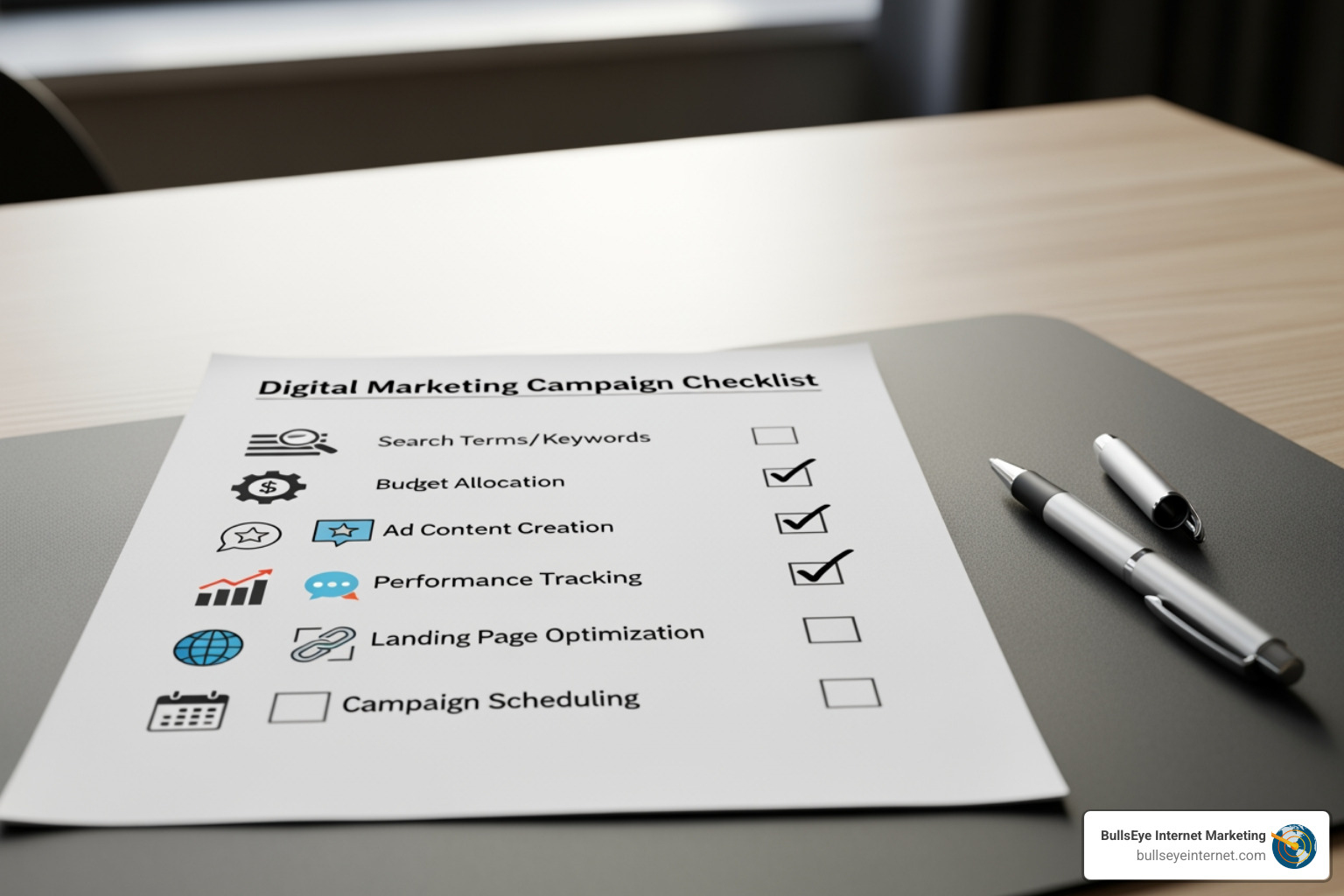
- Using a Spreadsheet or Dashboard: A well-designed ppc audit report template can be a simple spreadsheet or an integrated dashboard. Our templates are designed for ease of use, making it simple to mark “Yes” or “No” to checklist items and add detailed notes.
From Audit to Action: Implementing Your Findings
An audit is only valuable if its findings lead to action. This is where the rubber meets the road.
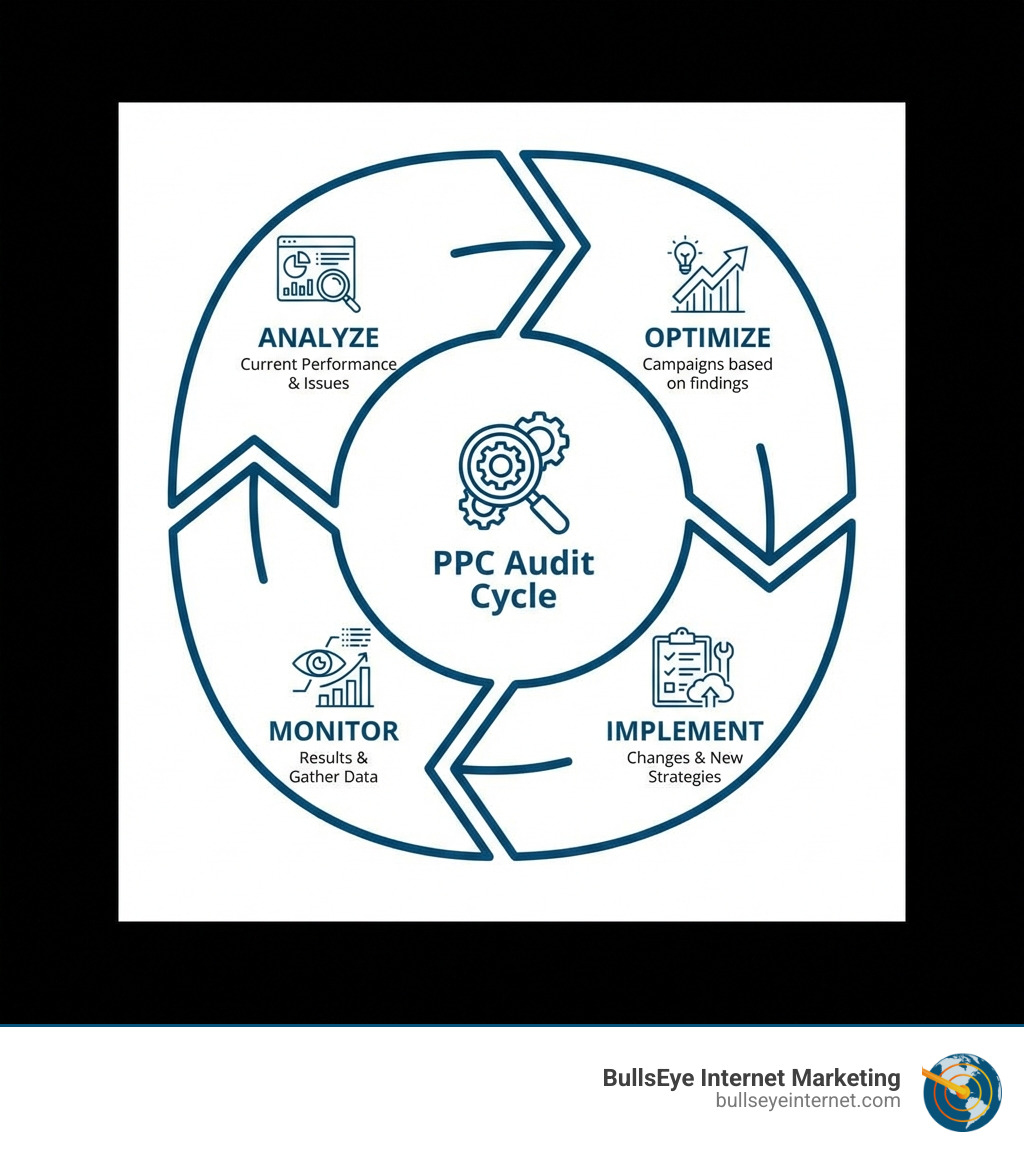
- Post-Audit Action Plan: We create a detailed action plan, assigning tasks to specific team members, setting clear timelines, and defining expected outcomes.
- Monitoring Performance Changes: After implementing changes, we rigorously monitor key performance indicators (KPIs) to evaluate their impact. Did the negative keywords reduce wasted spend? Did the new ad copy increase CTR?
- Iterative Improvements: PPC optimization is an ongoing process, not a one-time fix. We continuously test, learn, and refine our strategies based on new data and insights.
- A/B Testing Recommendations: The audit might reveal areas ripe for A/B testing, such as new ad headlines, different landing page layouts, or alternative bidding strategies.
The Power of Dashboards for Continuous Monitoring
For ongoing optimization, nothing beats a robust PPC audit dashboard.
- PPC Audit Dashboards: These provide real-time data access in a visualized format, making it easier to analyze trends, spot anomalies, and make swift adjustments.
- Automated Reporting: Dashboards automate the reporting process, saving time and ensuring you always have access to the latest metrics without manual data gathering.
- Visualized Data Analysis: As the saying goes, a picture is worth a thousand words. Visualized data helps us quickly identify patterns and insights that might be hidden in spreadsheets. You can explore various
[Paid search dashboard examples](https://www.coupler.io/dashboard-examples/paid-search-dashboard)to see how they can transform your reporting. This continuous monitoring is key to staying agile and ensuring continuous optimization.
Maintaining Peak Performance: Audit Frequency and Professional Help
PPC campaigns are living entities that require ongoing care. To ensure they’re always performing at their peak, regular audits are essential.
How Often Should You Conduct a PPC Audit?
The frequency of your PPC audits depends on several factors, but generally:
- Quarterly Audits: A quarterly audit is a good starting point for most businesses. It provides enough time for significant data to accumulate and for changes to show their impact, without letting issues fester for too long.
- Biannual Audits: For very stable accounts with minimal changes, biannual audits might suffice.
- Factors Influencing Frequency:
- Account Age: Newer accounts or those undergoing significant changes might benefit from more frequent checks.
- Budget Size: High-spending accounts warrant more frequent scrutiny to prevent wasted ad spend.
- Team Size: If multiple people are making changes to the account, more frequent audits can catch inconsistencies.
- Platform Updates: Google Ads and other platforms frequently roll out new features and policy changes. Regular audits ensure your campaigns remain compliant and leverage the latest tools.
A PPC audit isn’t a one-and-done task. It’s a long-term investment that brings the most noticeable results over time.
In-House vs. Professional PPC Audit Services
When it comes to conducting a PPC audit, businesses often weigh the pros and cons of doing it in-house versus hiring professionals.
| In-House PPC Audit | Professional PPC Audit Services |
|---|---|
| Benefits: Offers deep business familiarity and lower direct costs, with full control over the account. | Benefits: Provides an unbiased perspective, specialized expertise, access to advanced tools, and experience from multiple industries to uncover missed opportunities. |
| Drawbacks: Can suffer from bias or “tunnel vision,” and may be limited by the internal team’s expertise and time. | Drawbacks: Incurs higher direct costs (agency fees) and requires an initial onboarding period for knowledge transfer. |
