
Why Marketing for Legal Services Has Never Been More Important
Marketing for legal services has changed dramatically — and most law firms haven’t kept up.
Here’s a quick snapshot of what works in 2026:
| Channel | Best For | Time to Results |
|---|---|---|
| Local SEO | Long-term organic leads | 3–6 months |
| Google Local Services Ads | Immediate high-intent leads | Days |
| Google Ads (PPC) | Fast visibility, any practice area | Immediate |
| Content Marketing | Authority building, long-tail traffic | 3–12 months |
| Email Marketing | Retention and referrals | Weeks |
| Social Media | Brand trust, referral validation | Ongoing |
Not long ago, a strong reputation and a few referrals were enough to keep a law firm busy. That world is gone.
Today, 96% of people seeking legal help start with a search engine. They Google “divorce attorney near me” or “personal injury lawyer [city]” — and they hire from the first page. If your firm isn’t visible there, those cases go to a competitor.
The stakes are real. U.S. legal services advertising topped $2.5 billion in 2024, and competition is only getting fiercer. Yet many firms still rely on outdated tactics, underinvest in digital channels, or spend money without tracking what actually works.
This guide cuts through the noise. It covers every major marketing channel, what each one costs, what it returns, and how to build a strategy that actually brings in signed cases.
My name is Ronnie Katz, and since 2006 I’ve helped law firms and other businesses grow through data-driven marketing for legal services — including SEO, local search, PPC, and lead generation strategies that are built around measurable ROI. Over the past 20 years, I’ve seen every trend come and go, and I’ll share only what genuinely moves the needle for firms like yours.
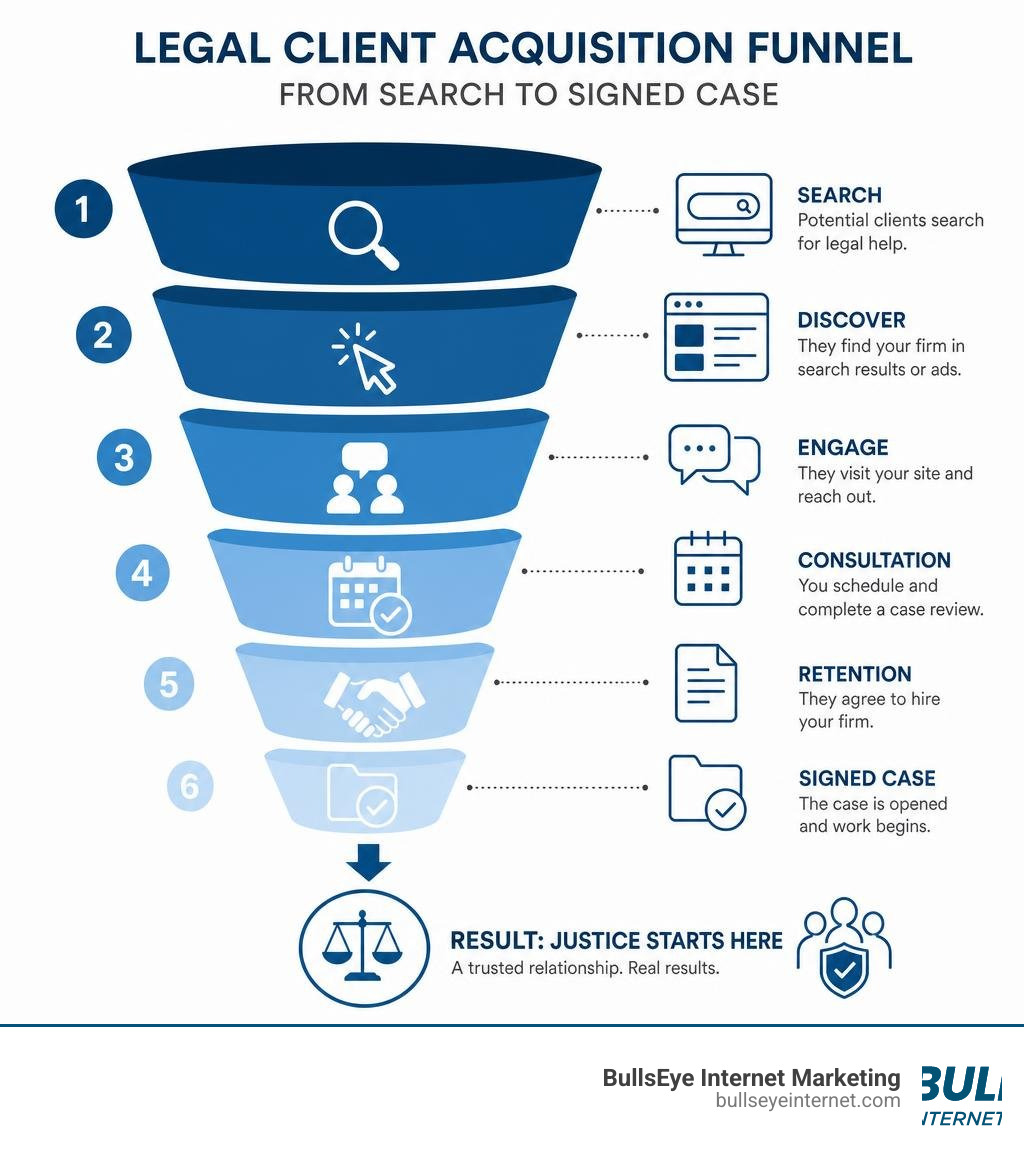
Marketing for legal services terms made easy:
The Economics of Marketing for Legal Services in 2026

To succeed in the current landscape, you have to understand the financial realities of modern legal advertising. Legal marketing is no longer a passive administrative expense; it is a high-stakes, competitive arena.
According to data compiled in a comprehensive Law firm marketing statistics for 2026: A comprehensive analysis, the financial pressure on firms has never been higher. Across the United States, legal services businesses spent a staggering $8.4 billion in local advertising in 2024 alone.
Furthermore, a deep-dive report on Legal Services Advertising in the United States – 2020-2024 reveals that while total industry ad spend rose by 39% over those four years, the actual volume of ads displayed fell by 4%. This tells us one critical thing: the cost per impression is rising rapidly. You cannot afford to throw money at unmeasured campaigns when every single click and view costs more than ever before.
Budget Allocation Across Firm Sizes
How much should your firm be spending, and where should those dollars go?
Historically, many firms have chronically underinvested in their marketing. In fact, statistical benchmarks show that only 47% of law firms maintain a structured, annual marketing budget. For those that do, the allocation typically depends heavily on firm size and growth goals:
- Small and Solo Firms: Small practices often face tight cash flow constraints. However, to achieve sustainable growth, healthy firms typically allocate 7% to 8% of their gross revenue to digital marketing. If you are trying to scale rapidly, that number should rise to 10% to 15%. To learn how to make the most of a smaller budget, check out our guide on How to Market a Law Practice Like a Pro.
- Mid-Sized Firms: Firms with 10 to 50 attorneys generally allocate 10% to 15% of gross revenue to marketing. They often employ a mix of in-house marketing managers and specialized external agencies to handle complex campaigns.
- Enterprise and High-Growth Firms: The nation’s largest personal injury practices operate on a completely different scale. The largest personal injury firm in the country spent an estimated $218 million on advertising in 2024, accounting for roughly 8% of all legal ads nationwide. High-growth firms, on average, allocate 15% to 20% of gross annual revenue to marketing, which helps them achieve an average growth rate of 41.7%—outpacing average firms by a factor of 5.2.
Traditional vs. Digital Channels
Should you buy a billboard on I-95 in South Florida, or should you put those dollars into Google? To build a truly dominant brand, many large firms use an omnichannel strategy that combines both. However, for most firms looking for a direct, measurable return on investment, digital channels win hands down.
| Marketing Channel | Typical Upfront Cost | Measurable ROI? | Intent Level | Long-Term Asset Value |
|---|---|---|---|---|
| Traditional (TV, Radio, Billboards) | High ($5,000 – $50,000+/mo) | Difficult to track | Low (Passive) | None (Stops when payment stops) |
| Search Engine Optimization (SEO) | Medium ($3,000 – $10,000/mo) | High (Excellent tracking) | Extremely High | High (Compounding equity) |
| Pay-Per-Click (PPC) Ads | Variable (Ad spend dependent) | High (Instant tracking) | Extremely High | None (Stops when budget runs out) |
| Local Services Ads (LSAs) | Pay-per-lead | High (Direct call tracking) | Maximum | None |
While traditional billboards and public transportation ads are great for building broad brand awareness over several years, they suffer from a lack of attribution.
In contrast, digital channels capture users at the exact moment they are looking for help. When someone sits down and searches for a lawyer, they have “high commercial intent.” They need help now. By focusing your budget on search-driven digital channels, you ensure you are spending money to reach active buyers, not passive commuters. For a deeper look at balancing these channels, read through the Law Firm Marketing Basics: The Ultimate Guide for 2026.
Search Engine Dominance: SEO and Local Search
If you want to secure a steady stream of cases without paying a toll to Google for every single click, you must dominate organic search.
Organic search is the absolute bedrock of a successful digital campaign. In fact, organic search drives as much as 66% of all call conversions in the legal industry. To capture this traffic, your website must be optimized to rank highly and satisfy Google’s strict search algorithms. For a complete roadmap on building this framework, refer to our Digital Marketing for Law Complete Guide.
Crucially, because legal services fall under Google’s “Your Money or Your Life” (YMYL) category, your content must demonstrate elite levels of E-E-A-T (Experience, Expertise, Authoritativeness, and Trustworthiness). This means your site must feature real attorney profiles, verified client reviews, and deeply researched content rather than generic, AI-spun articles.
Organic Search: The Foundation of Marketing for Legal Services
Many lawyers look at the upfront cost of SEO and hesitate. However, when you look at the long-term numbers, organic search is the most cost-effective channel available. The 3-year ROI for an average law firm investing in SEO is approximately 526%.
Furthermore, SEO generates an average 7.5% conversion rate, which is more than three times higher than PPC’s average conversion rate of 2.2%. Why? Because consumers inherently trust organic search results more than paid advertisements.
To build a high-converting SEO engine, you need a strategy focused on high-intent keywords and comprehensive practice area “power pages.” For example, if you practice family law, a generic 300-word page about “divorce” won’t rank. You need a detailed, 2,000-word guide that covers specific local regulations, filing processes, and common FAQs. To see how this works in practice, explore our guide on SEO for Family Law Attorneys.
For firms operating in competitive coastal markets, optimizing for your specific region is vital. If you are trying to stand out in South Florida, you need to understand local search dynamics. Learn how to capture this highly competitive audience in our specialized article, The Sunshine State of Search: Boosting Your Florida Law Firm’s Online Visibility.
Local SEO and Google Business Profile Optimization
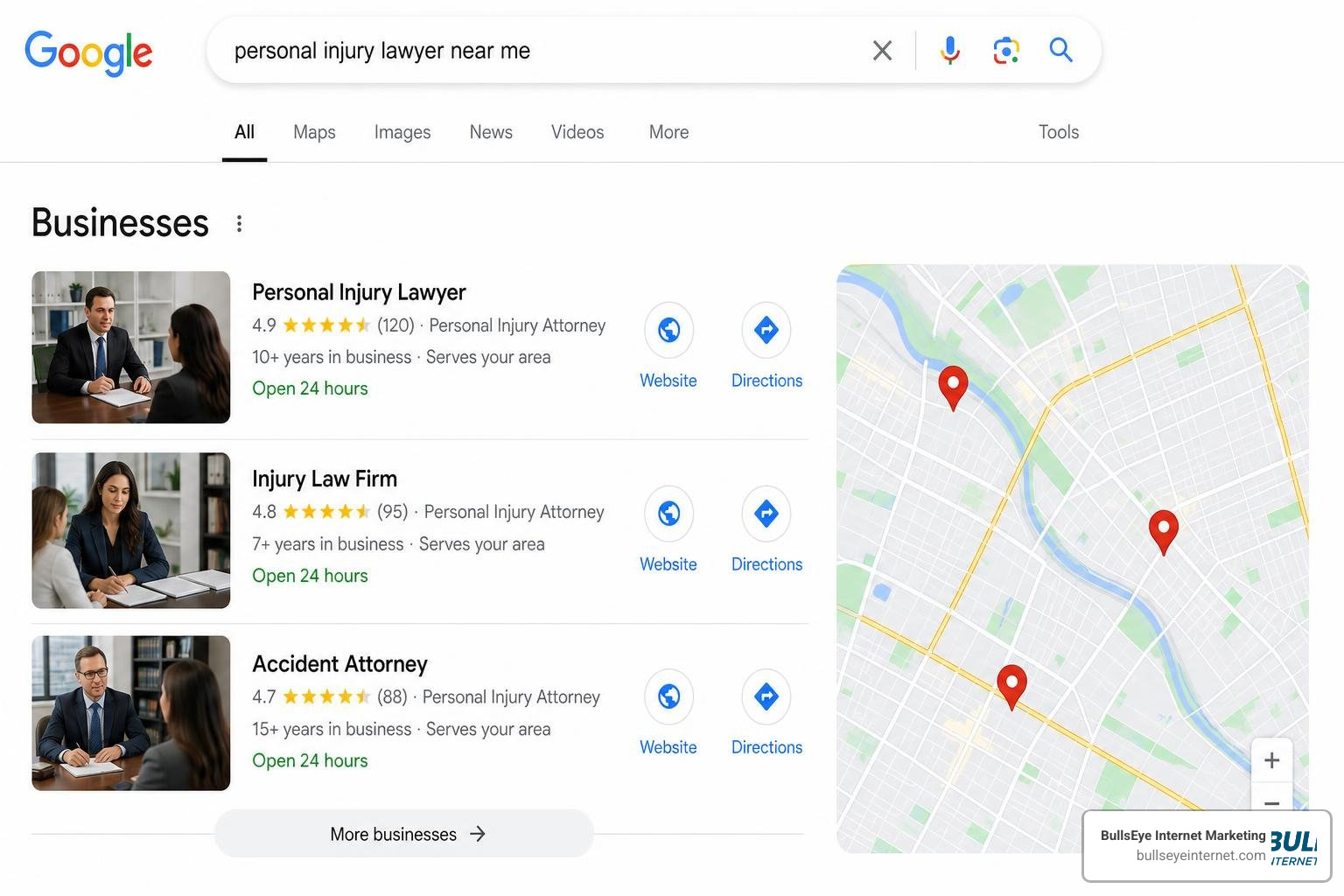
For local practices, general SEO is only half the battle. The real goldmine is the Google Local Map Pack—the box of three local business listings that appears at the top of Google search results for queries like “probate lawyer near me.”
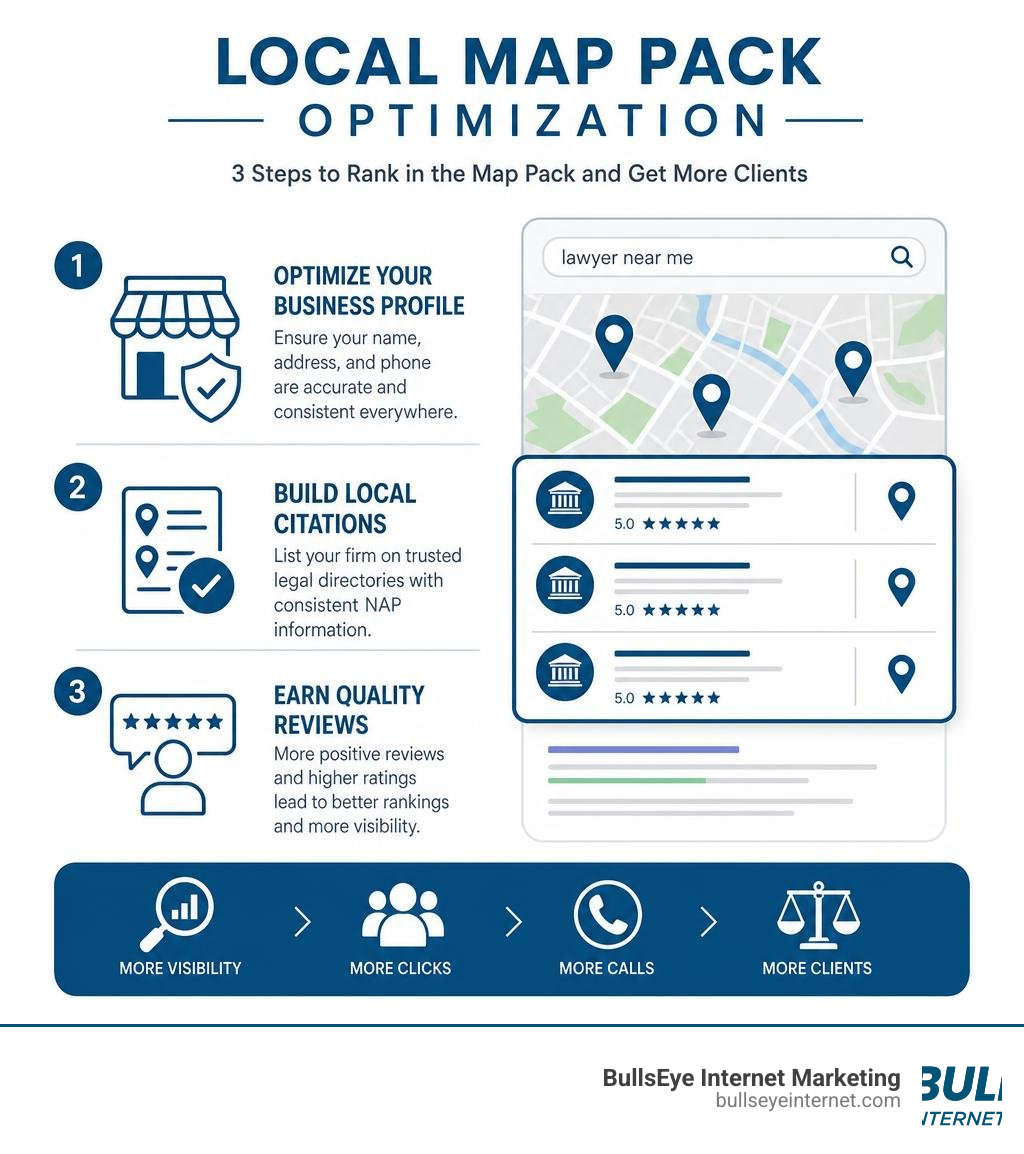
To rank in the Map Pack, you must execute a flawless local SEO strategy:
- Claim and Optimize Your Google Business Profile (GBP): Ensure your firm’s name, address, and phone number (NAP) are exactly identical to what is listed on your website and other legal directories.
- Build Local Citations: Register your firm on highly trusted legal directories such as Avvo, Justia, FindLaw, and Yelp. Consistent NAP data across these platforms signals trust to Google’s ranking algorithm.
- Aggressively Gather Reviews: Reviews are a primary ranking factor for local search. Practices with a 4.4-star rating or higher receive significantly more clicks than those with lower ratings or no reviews at all.
If you want to know how to optimize your map presence to outrank local competitors, read our step-by-step guide on How to Increase Your Law Firm’s Online Presence with Local SEO.
To see how local search targeting varies across different South Florida counties, you can also review these location-specific marketing guides:
- Miami-Dade County Law Firm Marketing – MileMark Media
- Broward County Law Firm Marketing – MileMark Media
- Palm Beach County Law Firm Marketing
Paid Advertising and Lead Generation Strategies
While SEO is the ultimate long-term play, it takes time to build momentum. If you need cases immediately, paid advertising is your fastest route to visibility. However, paid search in the legal industry is highly competitive, with some personal injury keywords exceeding $400 per click in major metro areas. To avoid wasting your budget, you must understand the mechanics of PPC. Learn the basics in our guide to PPC Advertising for Law Firms.
Google Ads and Local Services Ads (LSAs)
Law firms generally utilize two distinct paid platforms on Google: traditional Google Search Ads (PPC) and Google Local Services Ads (LSAs).
- Google Search Ads (PPC): These are traditional text ads that appear at the very top of search results. They operate on a pay-per-click model. Because legal terms are among the most expensive keywords on the internet, successful PPC campaigns require highly optimized, dedicated landing pages that convert traffic at a high rate.
- Google Local Services Ads (LSAs): LSAs appear at the absolute top of the search results page, even above traditional PPC ads. They feature the “Google Screened” badge, attorney headshots, star ratings, and phone numbers. Crucially, LSAs operate on a pay-per-lead model rather than pay-per-click—meaning you only pay when a prospect actually calls or messages your firm directly through the ad.
Because LSAs build immediate trust through the “Google Screened” verification process, they convert at a 25% higher rate than traditional PPC ads. For a detailed breakdown of why these ads are so effective, see Why Every Lawyer Should Invest in Google Local Ads.
To get the most out of your paid search budget, we recommend combining both platforms strategically. You can find advanced tactics for maximizing your paid campaigns in our Pay Per Click Advertising for Lawyers Guide and our Detailed Guide to Google Ads for Lawyers.
Why Exclusive Lead Generation Beats Pay-Per-Lead Services
Many law firms rely on third-party legal directories or massive lead brokers to buy leads. However, traditional pay-per-lead models have a major flaw: shared leads. Often, these brokers sell the exact same lead to three or four competing law firms simultaneously. This turns client acquisition into an exhausting race to see who can call the prospect back first.
Furthermore, acquiring a single signed case through paid channels typically costs between $2,500 and $3,000. When you buy shared, low-quality leads, your cost per signed case skyrockets because you end up paying for contacts that have already hired another attorney.
The alternative is exclusive lead generation. By building your own digital marketing assets—such as your own optimized website, Google Business Profile, and targeted ad campaigns—you generate exclusive leads that go directly to your firm and nobody else. This builds long-term search equity for your practice rather than renting space on a broker’s directory.
To understand the economics of lead acquisition, read our analysis of Pay Per Lead for Lawyers and learn how to secure Exclusive Attorney Leads That Actually Convert.
Content Marketing, Website Optimization, and Emerging Search Technologies
Generating traffic to your website is only half the battle. Once a prospect lands on your page, your site must act as your “digital closer.”
Currently, 87% of law firms report having a website, yet only 35% have actually gained a client directly through it. This gap exists because many legal websites are difficult to navigate, load slowly, or fail to provide clear calls-to-action (CTAs).
Furthermore, search technology is shifting. In 2026, Generative Engine Optimization (GEO) has emerged alongside traditional SEO. As search engines increasingly use AI to answer user queries directly on the search results page, your content must be structured with clear definitions, bulleted lists, and detailed FAQs so that AI models cite your firm as the trusted source.
Developing a Winning Strategy for Marketing for Legal Services
An effective content strategy focuses on answering the real, emotional questions your clients are asking. Instead of writing stuffy, academic articles filled with complex legalese, write clear, helpful guides that address their immediate concerns.
For example, a personal injury firm shouldn’t just write about “negligence law.” They should write about “What to do immediately after a car accident on I-95.”
To expand your reach, consider these powerful content formats:
- Educational Blogging: Regularly publishing articles targeting long-tail informational searches builds trust and keeps your site fresh in Google’s eyes.
- Video Marketing: Websites featuring high-quality video are 53 times more likely to rank on Google’s first page. Yet, only 24% of law firms currently utilize video. Short FAQ videos or client testimonial clips are incredibly effective at humanizing your firm.
- Email Newsletters: For every $1 spent on email marketing, businesses see an average return of $36. Regular newsletters are a virtually free way to stay top-of-mind with past clients and referral sources.
To stay updated on industry standards and connect with other professionals, you can explore resources from the Legal Marketing Association (LMA) | Home. For niche practices, you can also read our A Comprehensive Guide to Family Law Marketing.
Maximizing Lead Conversion and Intake Efficiency
You can have the best marketing campaign in the world, but if your intake process is broken, you are throwing money away.
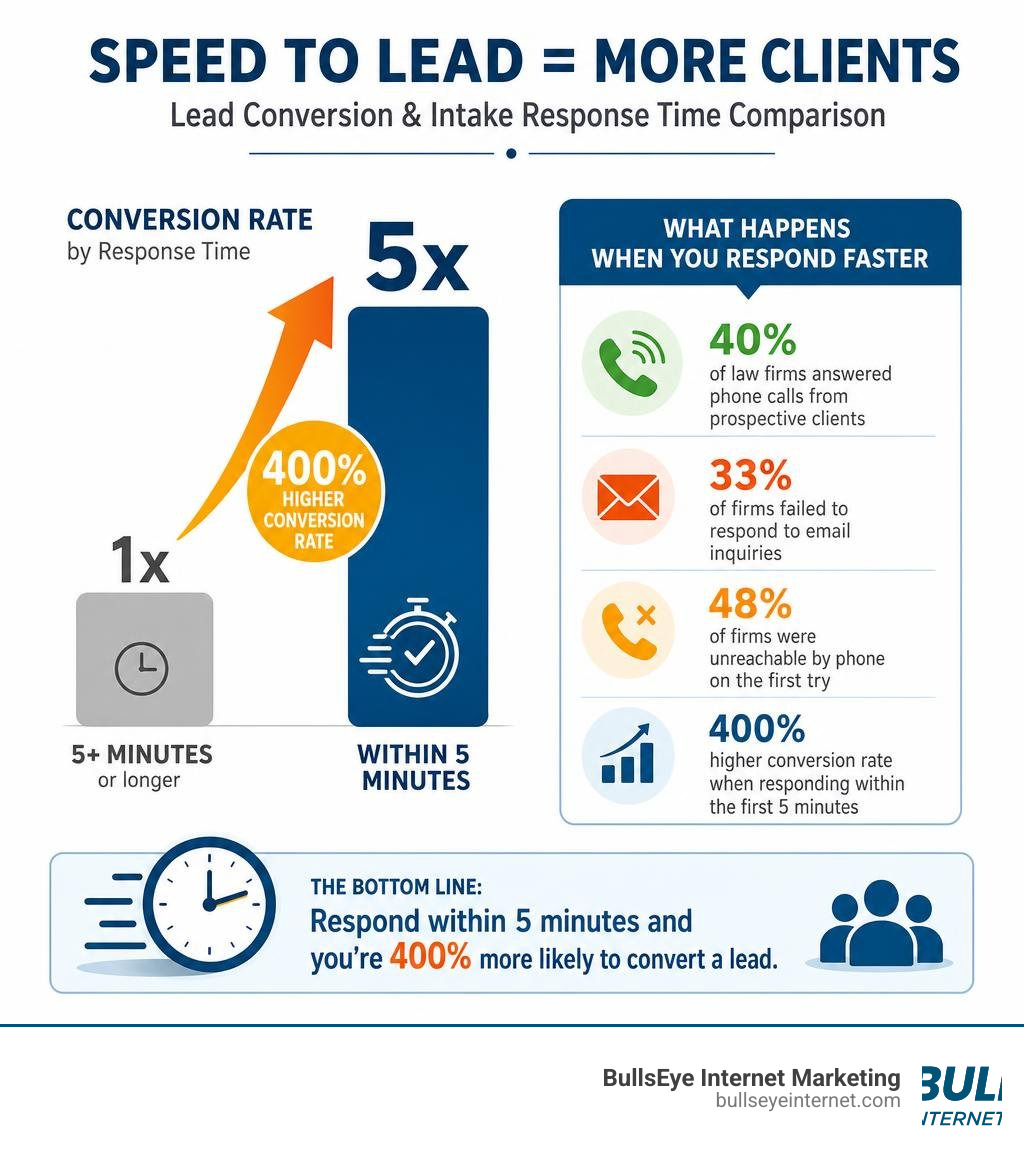
A secret shopper study revealed a shocking truth about the legal industry: only 40% of law firms answered phone calls from prospective clients, a steep decline from 56% in 2019. Furthermore, 48% of firms were unreachable by phone on the first try, and 33% failed to respond to email inquiries. This is a massive revenue leak.
In legal marketing, speed to lead is everything. Law firms that respond to an inquiry within the first five minutes see a 400% higher conversion rate than those that wait longer.
To close this gap, high-growth firms are rapidly adopting automated intake technology. In fact, AI adoption among legal professionals jumped from 19% in 2023 to 79% in 2024. Firms are using AI-powered intake forms, live chat widgets, and automated scheduling tools to capture leads 24/7. Implementing a simple live chat feature on your website can increase your total lead volume by an average of 30% overnight.
To learn how to turn your web traffic into signed retainers, read our guide on generating Exclusive Attorney Leads That Actually Convert and our Step-by-Step Guide to Generating Family Law Leads.
Frequently Asked Questions about Legal Marketing
How much should a law firm spend on marketing?
Most healthy law firms allocate 7% to 8% of their gross annual revenue to marketing to maintain their current client volume. High-growth firms looking to scale rapidly and capture market share typically invest 15% to 20% of gross revenue. If you are a solo practitioner or a small firm, starting with a focused budget of 10% dedicated strictly to high-ROI digital channels (like Local SEO and LSAs) is a highly effective way to grow.
How long does it take to see results from legal SEO?
While paid campaigns (like Google Ads) can generate leads immediately, organic SEO is a long-term investment. Most law firms begin to see measurable improvements in search rankings and organic traffic within 3 to 6 months. Significant, consistent lead generation and compounding ROI typically start to manifest between months 6 and 12. However, because organic search leads convert at a much higher rate and cost 40% less to acquire over time than PPC, the wait is well worth it.
What is the most effective marketing channel for personal injury lawyers?
For personal injury practices, Google Local Services Ads (LSAs) combined with a dominant Local SEO (Map Pack) strategy represent the gold standard. Because personal injury keywords are incredibly expensive on traditional PPC, LSAs protect your budget by charging you only per qualified lead rather than per click. Meanwhile, a strong Local SEO campaign ensures you capture the 66% of consumers who bypass ads entirely to click on highly-rated local organic listings.
Optimizing Legal Website Conversions with BullsEye Internet Marketing
Building a modern, highly effective engine for marketing for legal services requires a strategic blend of long-term search equity and immediate, high-intent paid lead generation. From dominating the local Google Map Pack to optimizing your intake process for under-five-minute response times, every piece of the puzzle directly impacts your bottom line.
At BullsEye Internet Marketing, we specialize in helping law firms across the United States—and specifically throughout South Florida, including Miami-Dade, Broward, and Palm Beach counties—generate exclusive calls and signed cases.
We do things differently than traditional agencies:
- No Long-Term Contracts: We earn your business month-over-month through real, measurable results.
- Geographic Exclusivity: We work with only one client per industry per geographic area. When you partner with us, we focus 100% of our energy on helping you dominate your local competitors—we never play both sides of the fence.
Ready to stop wasting your marketing budget and start securing exclusive cases? Read our An Essential Guide to Advertising for Lawyers and contact us today to build a marketing strategy that hits the bullseye.
