
Why CRO Best Practices Are the Smartest Investment You Can Make in 2026
CRO best practices are the proven methods that turn more of your existing website visitors into paying customers — without spending more on ads.
Here are the core practices to implement right now:
- Understand your visitors — use heatmaps, session recordings, and surveys to find where people drop off
- Fix technical performance — every 100ms delay in load time can cut conversions by up to 7%
- Optimize your CTAs — use action-oriented, benefit-driven copy and high-contrast buttons
- Streamline checkout — reduce form fields, offer guest checkout, and show security badges
- Add social proof — place testimonials and reviews near decision points
- Run A/B tests properly — wait for 95% statistical significance before calling a winner
- Build a testing roadmap — prioritize by Potential, Importance, and Ease (the PIE framework)
- Measure micro-conversions — track add-to-carts, signups, and scroll depth, not just final sales
Most businesses pour money into driving traffic, then watch the majority of visitors leave without taking action. In fact, the average website converts only about 1.7% of visitors across all industries. That means roughly 98 out of every 100 people you’re paying to attract simply walk away.
That’s a massive leak in your revenue bucket.
CRO plugs that leak. Instead of chasing more traffic, you focus on getting more value from the visitors you already have. And the returns compound — a modest improvement today pays off with every single visitor who comes to your site from this point forward.
“CRO is typically 5–10x more cost-effective than traffic acquisition.”
The brands winning in 2026 aren’t just the ones with the biggest ad budgets. They’re the ones who’ve built systems to understand their visitors, remove friction, and continuously test what works.
I’m Ronnie Katz, founder of BullsEye Internet Marketing, and since 2006 I’ve helped businesses increase their visibility, traffic, and conversions through data-driven strategies — including CRO best practices that have directly moved the needle for clients in highly competitive industries. In this guide, I’ll walk you through exactly what works, what doesn’t, and how to build a CRO program that compounds results over time.
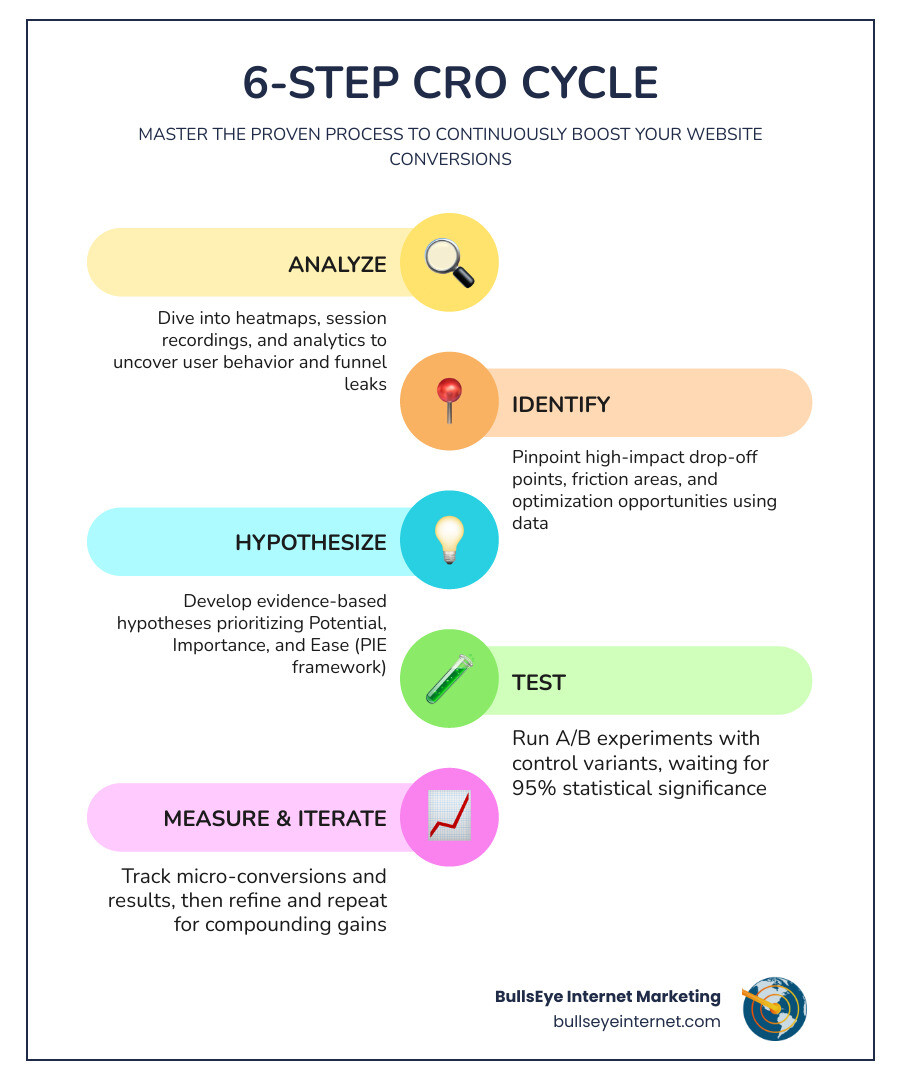
CRO best practices terms made easy:
- search engine optimisation companies
- search engine optimization consultants
- search engine optimization expert
Foundational CRO Best Practices for 2026
To master Website Visitor Conversion, we have to stop guessing. Many business owners look at their website and think, “I don’t like that blue button,” or “I think the logo should be bigger.” In CRO best practices, your opinion (and ours!) takes a backseat to user behavior data.
In 2026, the shift toward first-party data is non-negotiable. With privacy regulations tightening, the most valuable insights come directly from how people interact with your specific pages. We use tools like Microsoft Clarity to bridge the gap between numbers and human behavior.
Quantitative data tells you what is happening (e.g., your bounce rate is 70%), but qualitative data tells you why. By watching session recordings, we might see that users are trying to click an image that isn’t a link, or they are getting frustrated by a popup that blocks the “Buy” button on mobile. According to 10 CRO Best Practices for 2025 | MicroEstimates, documenting these learnings is vital. Every “failed” test is actually a win because it prevents you from making a permanent, negative change to your site.
Identifying Funnel Leaks with Data
Before you can fix the leaks, you have to find them. Our Web Analytics Services focus on identifying high-intent pages where users are dropping off. We look for:
- High Exit Pages: If 80% of people leave your site after hitting the “Shipping Info” page, you likely have a friction point there (perhaps high costs or long delivery times).
- Bounce Rates: A high bounce rate on a landing page often suggests a “message mismatch”—the ad promised one thing, but the page delivered another.
- Rage Clicks: Behavioral analytics show us where users are clicking repeatedly in frustration.
By using Boost Conversions and Sales with Data-Driven Web Analytics Services, we can visualize the entire funnel. If you see a massive drop between “Add to Cart” and “Checkout,” you know exactly where to focus your energy.
Prioritizing Your CRO Best Practices Roadmap
You can’t test everything at once. To stay organized, we follow the PIE framework, a staple in any Conversion rate optimization (CRO) strategy for 2026. We score every potential experiment based on three factors:
- Potential: How much improvement can be made on this page? (e.g., your worst-performing high-traffic page has huge potential).
- Importance: How valuable is the traffic on this page? (e.g., your pricing page is more important than your “About Us” page).
- Ease: How difficult is it to implement this change? (e.g., changing a headline is easier than redesigning the entire checkout flow).
This ensures we aren’t just running “random acts of testing.” Instead, we develop a well-defined hypothesis: “Based on session recordings, we believe removing the navigation menu on the landing page will increase signups because it reduces distractions.”
Technical Performance and Mobile Optimization
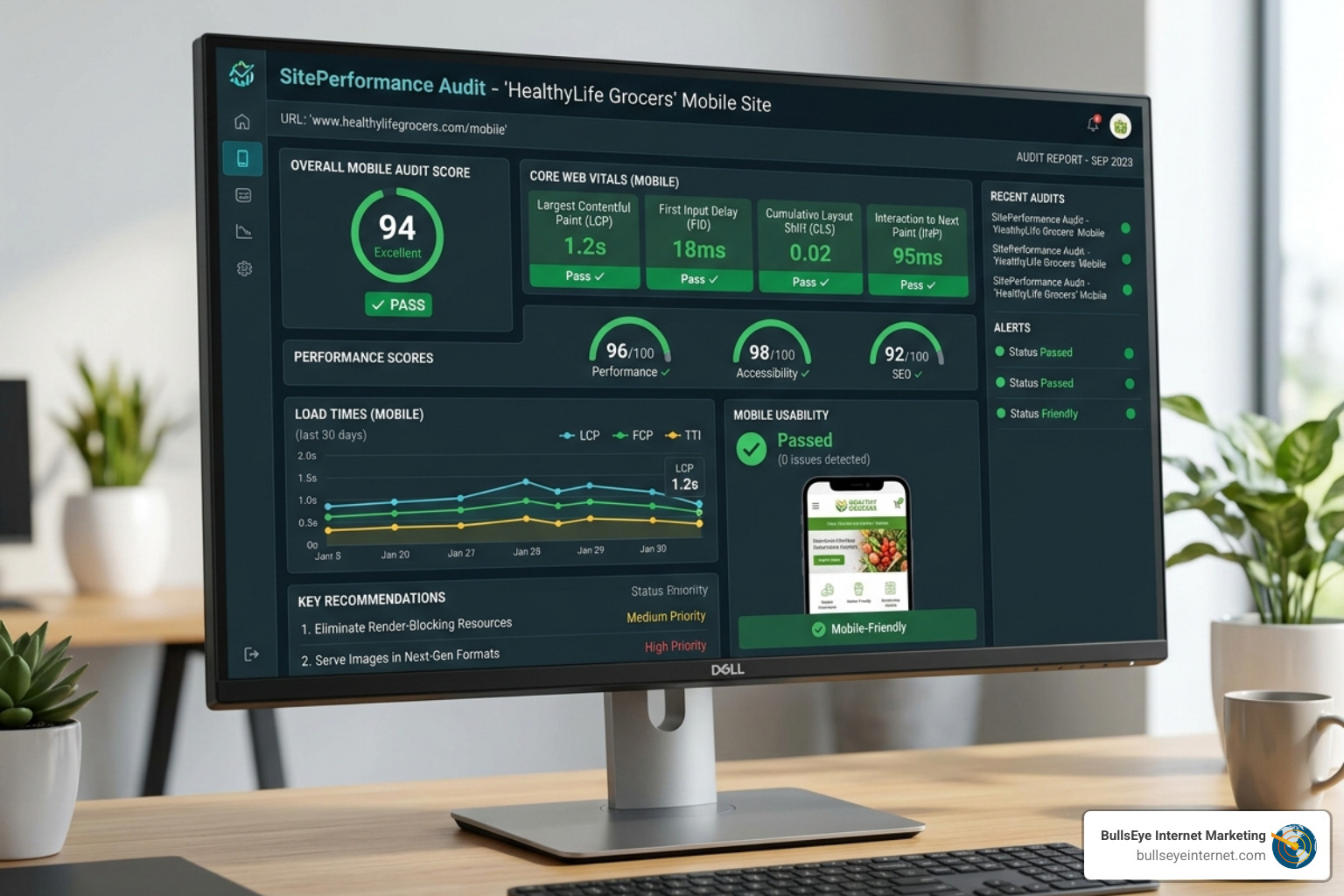
Technical performance is no longer just an IT issue; it is a core pillar of CRO best practices. You can have the most persuasive copy in the world, but if your page takes six seconds to load, your visitors are gone before they read a single word.
Research shows that a mere 100ms delay in load time can reduce conversion rates by up to 7%. Furthermore, if a page takes longer than 3 seconds to load, 53% of mobile users will abandon it. This is why we emphasize Why Broken Links and Slow Load Times are Killing Your Conversions. We focus on Core Web Vitals, image compression, and script minification to ensure your site is “advertising-ready.” If you are paying for clicks, a slow site is literally throwing money away.
Mobile-First CRO Best Practices
In 2026, over 60% of web traffic comes from mobile devices, yet mobile conversion rates often lag behind desktop. This “mobile gap” is usually caused by poor UX. When we implement UX Design WordPress strategies, we design for “thumb effort.”
Key mobile CRO best practices include:
- Touch Targets: Ensure buttons are at least 44×44 pixels so they are easy to tap without hitting something else.
- Sticky CTAs: Keep the “Call” or “Buy” button visible as the user scrolls.
- Simplified Navigation: Use a “hamburger” menu and limit it to 5-7 essential items.
- Font Size: Use at least 16px font to ensure readability without zooming.
As noted in 10 Conversion Rate Optimization Best Practices for 2026, mobile users have a different context. They are often on the go and have shorter attention spans, so clarity and speed are paramount.
Streamlining the Checkout Experience
The checkout is where the most painful revenue leaks occur. The average cart abandonment rate is around 70%, representing billions in lost sales. To combat this, How a Website Redesign Can Boost Your Sales and Conversions should focus on radical simplification.
- Guest Checkout: 26% of users will abandon a purchase if they are forced to create an account. Let them buy first; ask for the account later.
- Form Field Reduction: Do you really need their middle name or how they heard about you? Every extra field increases friction. Reducing fields from 11 to 4 has been shown to increase conversions by 120%.
- Address Validators: 47% of sites lack these, leading to shipping errors and frustrated customers.
- Trust Signals: Place security badges and “Money Back Guarantees” right next to the final “Place Order” button.
High-Impact On-Page Elements and Psychology
Conversion is as much about psychology as it is about design. We need to answer the visitor’s subconscious question: “What’s in it for me?”
| Element | Feature-Driven (Weak) | Benefit-Driven (Strong) |
|---|---|---|
| Headline | Advanced Analytics Platform | See What’s Actually Happening on Your Site |
| CTA Button | Submit | Get My Free Audit |
| Social Proof | We have many happy clients. | “BullsEye increased our leads by 40% in two months.” |
Our Landing Page Designer approach focuses on the “Clarity Principle.” If a stranger looks at your page for five seconds, they should know exactly what you offer and what they need to do next.
Optimizing CTAs and Navigation
Your Call to Action (CTA) is the most important element on the page. To Improve Your User Experience and Conversion Rates, we use high-contrast colors (like an orange button on a blue background) to make the CTA “pop.”
Avoid “decision paralysis” by limiting the number of choices. If a landing page has five different CTAs, the user often chooses none of them. This is known as the “Paradox of Choice.” Use white space to draw the eye toward the primary goal and keep your navigation simple. In fact, for dedicated landing pages, we often recommend removing the navigation entirely to keep the user focused on the conversion.
Measuring Micro-Conversions for Long-Term Growth
Not every visitor is ready to buy on their first visit. This is where Conversion Rate Optimization looks at the bigger picture. If you only track the final sale, you are missing 98% of the data.
We track “micro-conversions” to see if we are moving people in the right direction:
- Newsletter Signups: Capturing an email allows for long-term nurturing.
- Add-to-Cart: Even if they don’t buy, this shows high intent.
- Scroll Depth: Are people actually reading your content, or are they leaving at the top?
- Video Views: Does watching your demo video lead to a higher likelihood of purchase?
By measuring these, we can optimize the early stages of the journey, which eventually leads to more macro-conversions (sales).
Mastering A/B Testing and Experimentation

A/B testing is the “gold standard” of CRO best practices. It involves showing two versions of a page to similar visitors at the same time and seeing which one performs better. However, many businesses do this incorrectly.
To get valid results, we must reach statistical significance—usually 95% confidence. This means there is only a 5% chance the result was due to random luck. We typically run tests for 2 to 4 full weeks. Why? Because user behavior changes depending on the day of the week. Someone browsing on a Sunday afternoon has a different mindset than someone searching on a Tuesday morning.
Avoiding Common Testing Mistakes
The biggest “cardinal sin” in CRO is peeking at a test after two days and stopping it because one version looks like it’s winning. This leads to “false positives.” Other mistakes include:
- Testing Too Many Variables: If you change the headline, the image, and the button color all at once, you won’t know which change caused the result.
- Ignoring Mobile: A test might win on desktop but fail miserably on mobile. Always segment your data.
- Template Fixation: Just because a “best practice” template worked for another company doesn’t mean it will work for your unique audience.
For more on how to interpret these results, check out our Web Analytics Services.
Building a Culture of Experimentation
The most successful companies don’t treat CRO as a one-time project; they build a “culture of curiosity.” This means moving away from the “HiPPO” (Highest Paid Person’s Opinion) and toward data-driven decisions.
In 2026, we are seeing the rise of AI-driven testing and “agentic URLs”—pages that can autonomously adapt based on visitor signals. While these tools are powerful, they still require a human strategy to ensure they align with your brand’s goals. CRO is a marathon, not a sprint. Small, 1% improvements made every month compound exponentially, leading to massive gains over a year.
Frequently Asked Questions about CRO
What is a good conversion rate in 2026?
While it varies by industry, the global average is around 1.7%. E-commerce usually hovers between 2% and 4%, while high-performing B2B SaaS landing pages can reach 10% or more. However, the “best” conversion rate is one that is better than yours was last month. Focus on your own historical data rather than generic benchmarks.
How long should I run an A/B test for statistical significance?
Most tests should run for at least 2 to 4 weeks. This ensures you capture a full business cycle and have enough data (usually a minimum of 1,000–2,000 users per variant) to be confident in the results.
Why is mobile optimization critical for CRO best practices?
Because mobile traffic now dominates the web, but mobile users are more likely to bounce due to slow speeds or difficult navigation. If your mobile experience is frustrating, you are likely losing more than half of your potential customers before they even see your value proposition.
Conclusion
At BullsEye Internet Marketing, we believe that your website should be your hardest-working salesperson. By implementing these CRO best practices, you stop gambling on “gut feelings” and start building a scientific engine for growth. Whether you are in Miami, West Palm Beach, or anywhere across the US, the principles remain the same: understand your user, remove friction, and never stop testing.
Ready to plug the leaks in your funnel? Boost your sales with professional SEO services and conversion strategies that turn traffic into revenue. Let’s make your marketing spend a multiplier, not a drain.
