
Why Your Digital Storefront Matters
Business listing optimization is the process of creating, managing, and enhancing your business’s presence across online directories and search platforms to maximize visibility, attract more customers, and drive sales. Here’s what you need to know:
Key Steps to Optimize Your Business Listings:
- Claim and verify your Google Business Profile.
- Ensure NAP consistency (Name, Address, Phone) across all platforms.
- Complete every section with accurate, detailed information.
- Add high-quality photos and videos regularly.
- Collect and respond to customer reviews.
- Post updates weekly using Google Posts.
- Monitor and maintain listings across multiple directories.
If you have wondered why your phone is not ringing despite having a website, consider this: 76% of consumers check out a business’s online listing before physically visiting. Even more striking, 62% of consumers refuse to try a business if they cannot find the company’s information on the web.
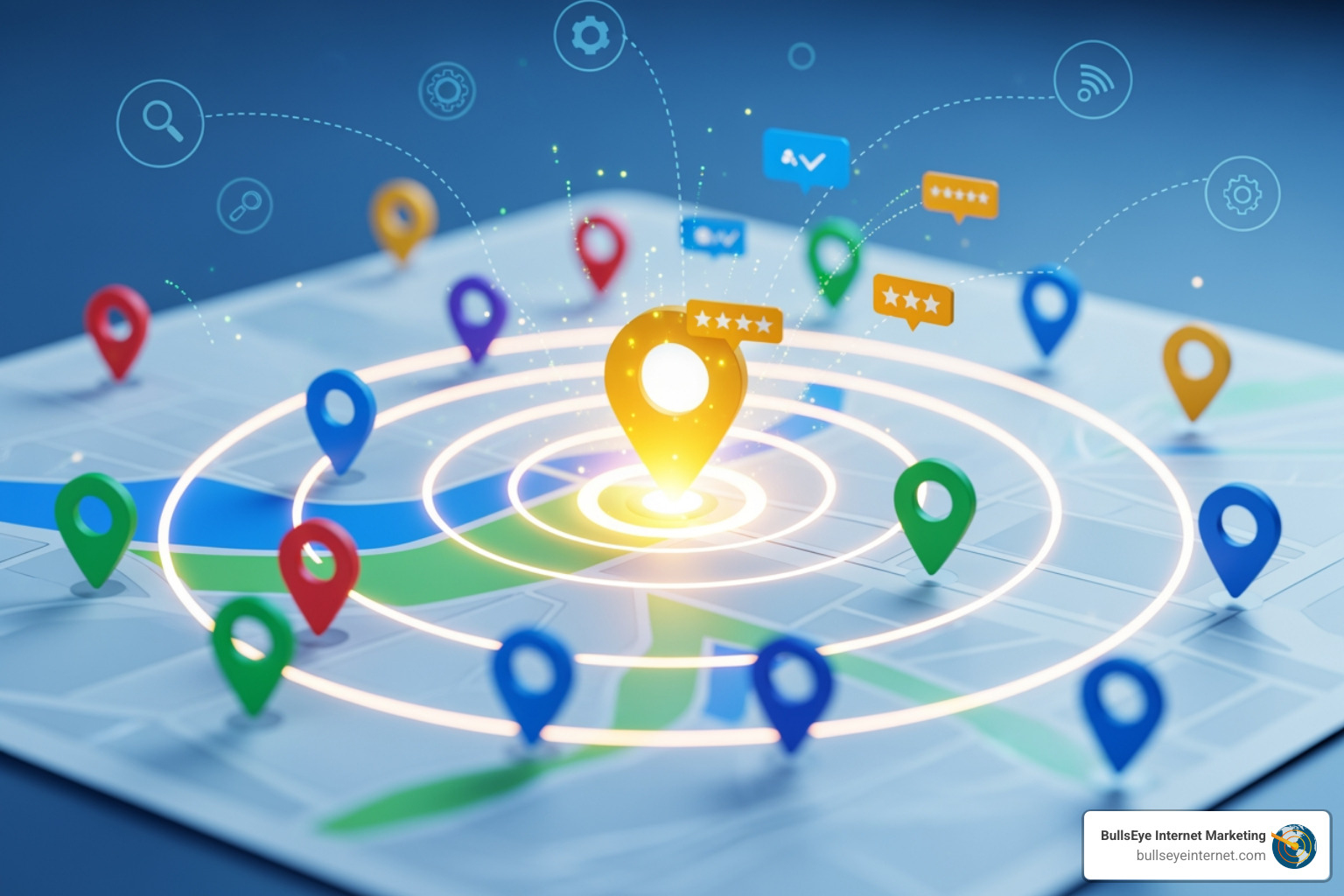
Think of your business listings as your digital storefront. Just like you would not leave your physical store with broken windows and faded signs, you cannot afford to have incomplete, inaccurate, or outdated information online. When potential customers search for businesses like yours, Google and other search engines decide which businesses to show based on three key factors: relevance (how well you match what they are searching for), distance (how close you are to them), and prominence (how well-known and trusted your business is).
The stakes are high. Businesses with complete Google Business Profiles are 70% more likely to get a location visit and 50% more likely to generate a purchase. Meanwhile, 63% of consumers say inaccurate information on local listings would discourage them from choosing a business entirely.
The good news is that most businesses neglect their listings, which creates a massive opportunity for those who get it right. With the right approach, you can dominate local search results, outrank competitors that have been around longer, and turn your online presence into a consistent source of new customers.
I am Ronnie Katz, and since 2006, I have helped hundreds of businesses master business listing optimization through BullsEye Internet Marketing, changing their local visibility and driving measurable results through strategic Google Business Profile management and citation building. What follows is the exact process we use to take businesses from invisible to dominant in their local markets.
The Foundation: Mastering Your Google Business Profile
When a customer searches for a business or place near their location – whether they are in Miami-Dade County looking for an Italian restaurant or in Palm Beach County searching for a plumber – they will find local results on Google Maps and Search. This is where your Google Business Profile (GBP), formerly Google My Business, becomes your most powerful ally. It is Google’s version of an online business listing, displaying your contact information, hours, services, and more. An optimized GBP helps local customers find you faster, gives you more control over your online narrative, and significantly contributes to your local search rankings.
Google uses three primary factors to determine local search rankings:
- Relevance: How well your business matches what the searcher is looking for. If someone searches for “nail salon in Fort Lauderdale,” Google will prioritize businesses categorized as nail salons in that area.
- Distance: How far your business is from the searcher’s location. Optimized listings may appear first, even above businesses physically closer to the customer, if Google considers them more relevant or prominent.
- Prominence: How well-known your business is. This is influenced by factors like the number and quality of reviews, backlinks to your website, articles mentioning your business, and overall online reputation.
Claiming and verifying your GBP is the crucial first step. Google often creates profiles for existing businesses, so you might just need to claim one that already exists. Otherwise, you can easily create your own. Verification typically involves a phone call to your listed number or a postcard sent to your physical address, ensuring you are authorized to represent the business. This verification signals to Google that your information is legitimate, increasing your visibility. For a deeper look into improving your local ranking, Google provides helpful tips on how to improve your local ranking on Google. We also have a comprehensive guide: BullsEye Internet Marketing’s Complete Guide to Google Business Profile.
The Core Components of Business Listing Optimization
To truly master your GBP, you need to be meticulous with every detail. Think of it as painting a complete and accurate picture of your business for Google and your potential customers.
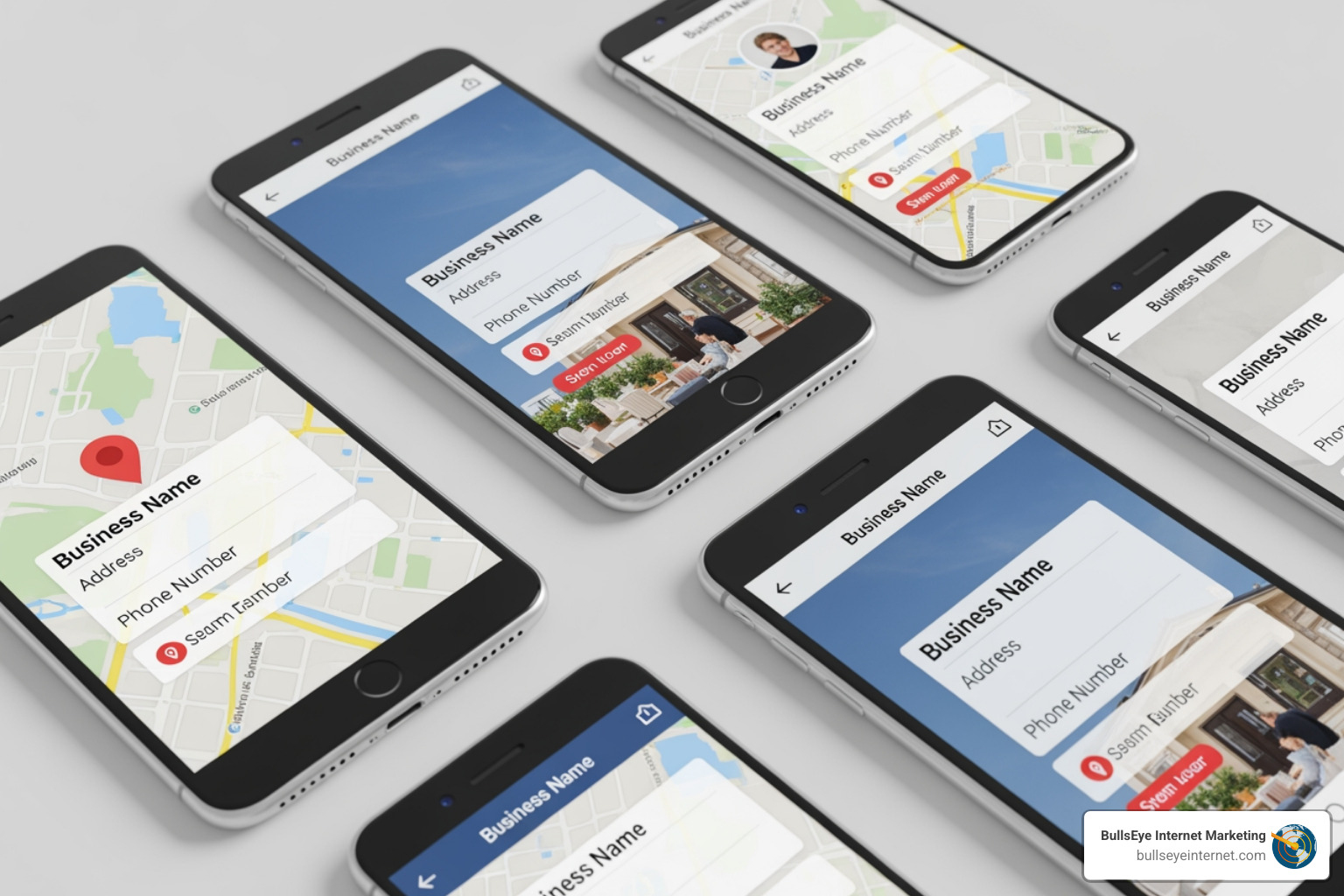
- NAP (Name, Address, Phone): This is the bedrock of your local listing. Your business name should exactly match how it appears on your storefront, website, and stationery. Avoid adding extra keywords or locations to your name, as this can be seen as spammy by Google. Your address must be your real-world physical location (no P.O. boxes or unstaffed virtual offices) and consistently formatted across all platforms. For phone numbers, always use your local working number; toll-free numbers can be used as additional contacts, but a local number helps Google match your location.
- Business Categories: Choosing the right categories is essential for relevance. Select the most specific primary category that defines your core business (for example, “Italian Restaurant” instead of just “Restaurant”). Then, add 3-5 relevant secondary categories. Google has thousands of categories, so take your time to find the best fit.
- Business Description: Use all 750 available characters to describe your business. Focus on your unique selling points, what you offer, and why customers should choose you. Incorporate relevant keywords naturally, but write for humans, not just search engines.
- Services and Products: Detail your offerings with descriptions, prices, and high-quality images. This is especially important as new search features like Search Generative Experience (SGE) may pull descriptive text from these sections. Populating these areas helps Google understand your business more deeply and match it to specific search queries.
- Attributes: These are specific details that highlight key features, services, and amenities. Think “wheelchair accessible,” “Wi-Fi available,” “outdoor seating,” or “women-owned.” Attributes appear on your profile and can help your business stand out when customers search for specific features.
- Accurate Business Hours: Keep your regular hours, special hours (for holidays), and any additional hours (for example, for takeout or delivery) carefully updated. Google regularly crawls websites for information, and inconsistencies can lead to customer frustration: 63% of consumers are discouraged by inaccurate information.
For a detailed guide on ensuring every component of your GBP is optimized, see our GBP Optimization Checklist by BullsEye Internet Marketing.
Leveraging GBP Features for Maximum Impact
Beyond the core information, several dynamic features within GBP can significantly boost your visibility and engagement:
- Google Posts: Think of Google Posts as mini-blog posts or social media updates directly on your Google Business Profile. You can share news, promote offers, announce events, or highlight new products. Engaging posts can attract new customers as they appear in search results.
- Q&A Section: This section allows customers to ask questions about your business, and anyone can answer them. We recommend proactively managing this by seeding it with frequently asked questions and providing accurate, concise answers. Monitor this section regularly to ensure accuracy and address any customer queries promptly.
- Messaging Feature: Enabling the messaging feature allows customers to send you text messages directly from your GBP. With 82% of smartphone shoppers (and 92% of millennials) using their devices for local search, this provides a direct and convenient communication channel.
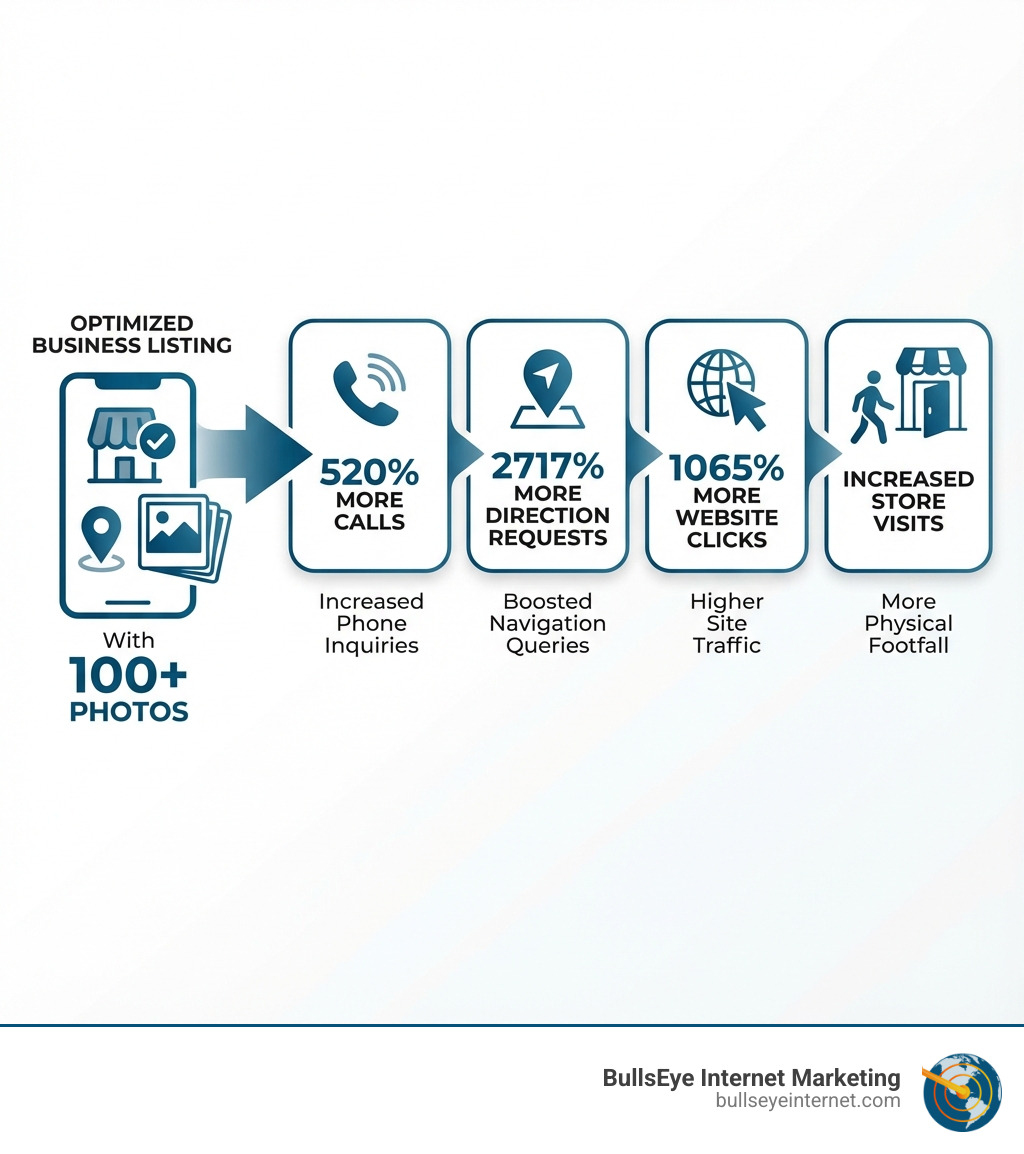
- Adding High-Quality Photos and Videos: Visuals are incredibly powerful. Businesses with more than 100 photos get 520% more calls, 2,717% more direction requests, and 1,065% more website clicks than the average business. Customers are also 42% more likely to request driving directions and 35% more likely to click through to your website if your profile has photos. Include a compelling cover photo, a professional profile photo, your logo, interior and exterior shots, and photos of your team and happy customers. For businesses that rely on ambiance, like a restaurant in Coral Gables or a hotel in South Florida, consider adding a virtual tour.
For more creative ways to make your profile stand out, read our Tips to Make Your Google Business Profile Stand Out from the Crowd.
Beyond Google: Building a Consistent Citation Profile
While Google Business Profile is king, it is not the only listing that matters. Business listing optimization also extends to building a robust and consistent citation profile across the web. A local citation is any online mention of your business’s Name, Address, and Phone number (NAP). These can appear on local directories, social media platforms, industry-specific websites, and more.
Every consistent mention of your NAP across the internet acts as a vote of confidence for Google, signaling that your business is legitimate and trustworthy. Inconsistent or inaccurate NAP data, however, can confuse both search engines and potential customers. Imagine a customer in Broward County finding different phone numbers for your business on Yelp and Google; frustration, lost trust, and a lost sale are likely outcomes.
Managing these listings can feel like a never-ending task, but it is essential for your overall local SEO strategy. For a comprehensive understanding of this critical aspect, explore The Essential Guide to Local Citations by BullsEye Internet Marketing.
Why NAP Consistency is Crucial for Business Listing Optimization
The importance of NAP consistency cannot be overstated. It is a foundational element of local SEO for businesses throughout Florida, from Miami to Jacksonville.
- Search Engine Trust: Google’s algorithms rely on consistent information to verify your business’s existence and legitimacy. When your NAP is identical across multiple reputable sources, it builds trust with search engines, which can lead to higher local search rankings.
- Avoiding Customer Confusion: Inaccurate information is a reliable way to lose customers. Studies show that 63% of consumers would be discouraged from choosing a business if they found inaccurate information on its local listings. This includes incorrect hours, phone numbers, or addresses. Keeping business hours up-to-date is particularly important; if a customer in Palm Beach County drives to your store only to find it closed, they will likely go to a competitor.
- Impact on Local SEO: Consistent NAP data is a key ranking signal. It helps search engines confidently associate your business with its physical location and category, improving your visibility in the local pack and map results.
We believe that accurate business listings directly impact customer trust and sales, which is why we have created resources like How Accurate Business Listings Can Improve Customer Trust and Boost Sales.
Key Platforms for Your Business Listings
While Google Business Profile is undeniably the most impactful, a holistic business listing optimization strategy involves a broader reach. We advise our clients in Florida and across the USA to focus on a tiered approach:
- Major Search Engines & Maps: Beyond Google, ensure your presence on Bing Places for Business and Apple Business Connect. These platforms serve a significant user base, and their map services are crucial for navigation.
- Local Directories: Platforms like Yelp, Yellow Pages, Facebook, and others are vital. These are often used by consumers specifically looking for local businesses and can provide additional review opportunities and customer engagement.
- Industry-Specific Directories: Depending on your business, there might be niche directories that are highly relevant. For example, a restaurant should be on OpenTable, a law firm on Avvo, or a healthcare provider on Zocdoc. Hand-selecting these platforms ensures you are reaching your specific target audience.
The process of creating and maintaining these listings can be tedious, which is why many businesses turn to services like our BullsEye Internet Marketing Directory Submission Service to streamline the effort and ensure accuracy.
Advanced Business Listing Optimization Strategies
Once the foundation is solid, you can dig into advanced strategies that truly differentiate your business. This involves actively engaging with customers, leveraging dynamic content, and staying ahead of evolving search trends, including the impact of AI.
The Power of Customer Reviews and Reputation Management
Customer reviews are the lifeblood of local businesses, especially in competitive markets like South Florida. They are a major influence on consumer buying decisions, with 88% of consumers trusting online reviews as much as personal recommendations.
- Encouraging Reviews: Ask for them in a clear and simple way. 62% of customers will write a review if asked. Make it easy by creating a direct review shortcut link and sharing it via email, text, or in person. Remind customers that their feedback helps others make informed decisions.
- Responding to Reviews: This is critical. 88% of customers are more likely to use a company that interacts with feedback. Respond to all reviews, positive and negative, promptly and professionally. Thank customers for positive feedback, and for negative reviews, acknowledge their frustration, offer to resolve the issue, and explain your side kindly without being defensive. Responding to reviews not only builds trust but also supports your local SEO.
- Building Trust: The more authentic, positive reviews you have, the more credible and prominent your business appears to both potential customers and Google.
For an in-depth look at managing your online reputation, review our Google My Business Reputation Management Guide by BullsEye Internet Marketing, and see how consumer trust is influenced by reviews in the Brightlocal Consumer Review Survey.
Here are some best practices for review responses:
- Be prompt: Aim to respond within 24-48 hours.
- Be personal: Address the reviewer by name and mention specifics from their review.
- Be professional: Maintain a polite and helpful tone, even for negative feedback.
- Thank them: Always express gratitude for their time and feedback.
- Offer solutions (for negative reviews): Provide contact information or suggest a way to resolve the issue offline.
Using Tools and Services to Streamline Management
The dynamic nature of business listing optimization and reputation management means it is not a one-time task; it is an ongoing commitment. For businesses with multiple locations across Florida or a high volume of customer interactions, managing everything manually can be overwhelming. This is where specialized tools and services become invaluable.
We at BullsEye Internet Marketing offer comprehensive listing management solutions designed to streamline this process for our clients. These services can help you:
- Ensure Accuracy and Consistency: Automatically distribute and update your NAP across hundreds of directories, ensuring your information is always correct and consistent.
- Monitor Reviews: Keep track of all incoming reviews across various platforms, allowing for timely responses and proactive reputation management.
- Streamline Responses: Some tools offer features like AI-powered reply generators or templated responses, which can reduce the time spent on managing customer feedback.
- Track Performance: Gain valuable insights into your GBP and other listing performance. Track metrics such as search queries, unique profile visits, direction requests, calls, and website clicks. This data helps identify what is working and where to refine your strategy.
- Integrate Analytics: Link your GBP with Google Analytics to get a clearer picture of how your local listings are contributing to your overall web traffic and conversions.
Leveraging our expertise and tools helps ensure your business listing optimization efforts are efficient and effective, allowing you to focus on running your business. Learn more about how we can help with your Google Business Profile management through our BullsEye Internet Marketing GMB Agency Services.
Frequently Asked Questions about Business Listing Optimization
How do I improve my local ranking on Google?
To improve your local ranking on Google, focus on three key pillars: relevance, distance, and prominence. Ensure your Google Business Profile is 100% complete and accurate, including your business name, address, phone number, website, hours, and categories. Verify your business with Google, consistently update your hours (especially for holidays), and actively respond to all customer reviews. Add high-quality photos and videos regularly to showcase your business. The more detailed and accurate your information, the better Google can match your business to relevant local searches.
How important are customer reviews for local business listings?
Customer reviews are critically important for local business listings. They strongly influence consumer buying decisions, with 88% of consumers trusting online reviews as much as personal recommendations. Reviews significantly affect your business’s prominence, which is a key local search ranking factor. A high volume of positive reviews and prompt, professional responses from the business owner signal trustworthiness and engagement to both potential customers and Google’s algorithms.
What is the difference between a business listing and a local citation?
A business listing is a comprehensive online profile of your business found on platforms like Google Business Profile, Yelp, or Facebook. It typically includes your Name, Address, Phone number (NAP), website, hours, photos, services, and reviews. A local citation, on the other hand, is any online mention of your business’s Name, Address, and Phone number (NAP), even if it is just a partial mention without a full profile. All business listings contain citations, but not all citations are full business listings. Citations can appear on blogs, social media posts, or less detailed directories, and they all contribute to your business’s online presence and local SEO.
Take Control of Your Local Presence
Mastering business listing optimization is not merely a task; it is a continuous strategy that is crucial for any local business aiming to thrive in today’s digital landscape. From ensuring the accuracy of your NAP across all platforms to actively engaging with customer reviews and leveraging dynamic GBP features, each step contributes to a stronger, more visible online presence.
We have seen how a well-optimized business listing can transform a company’s customer acquisition efforts. It is an ongoing process that requires attention, consistency, and a keen eye on evolving search trends. As experts in this field, we understand the nuances of local SEO and how to apply them effectively across various industries and geographic areas, including the diverse markets of Florida, from the busy cities of Miami and Fort Lauderdale to the growing communities in Martin and St. Lucie Counties.
At BullsEye Internet Marketing, we pride ourselves on offering no long-term contracts and working with only one client per industry per geographic area. This ensures you receive our undivided attention and a competitive advantage in your local market. Do not let your digital storefront gather dust. Take control of your local presence and start turning those online searches into real-world customers.
Ready to see how a professional business listing optimization strategy can lift your business? Take your business to the next level with our Business Listings services.
