
Why Google Ads for Marketing Matters for Your Business
Google Ads for marketing is Google’s online advertising platform where businesses pay to display ads to potential customers on Google, YouTube, Google Maps, and other websites. It runs on a pay-per-click (PPC) model, so you only pay when someone interacts with your ad.
Here is why it matters for your business:
Core Benefits:
- Pay only for results – You’re charged when someone clicks your ad (pay-per-click model).
- Massive reach – Access to billions of daily Google searches worldwide.
- Precise targeting – Show ads to people actively searching for what you offer.
- Full budget control – Set your own spending limits, with no minimum required.
- Fast results – Start driving traffic immediately after launching campaigns.
- Measurable ROI – Track every dollar spent and every conversion earned.
Does it really work? When executed strategically, yes. Businesses regularly report substantial improvements in return on ad spend (ROAS) and overall marketing performance. The key is understanding the platform and continuously optimizing based on data instead of guesswork.
If you’re frustrated by high customer acquisition costs or inconsistent lead flow, Google Ads offers a transparent, performance-based alternative. You control the spend, track everything, and only pay when potential customers take action.
I’m Ronnie Katz, founder of BullsEye Internet Marketing. Since 2006, I’ve helped businesses in South Florida and across the United States drive measurable results with Google Ads for marketing. As a Google-certified expert, I’ve seen how the right strategy transforms struggling campaigns into profit engines, especially for local service businesses that rely on calls and leads.
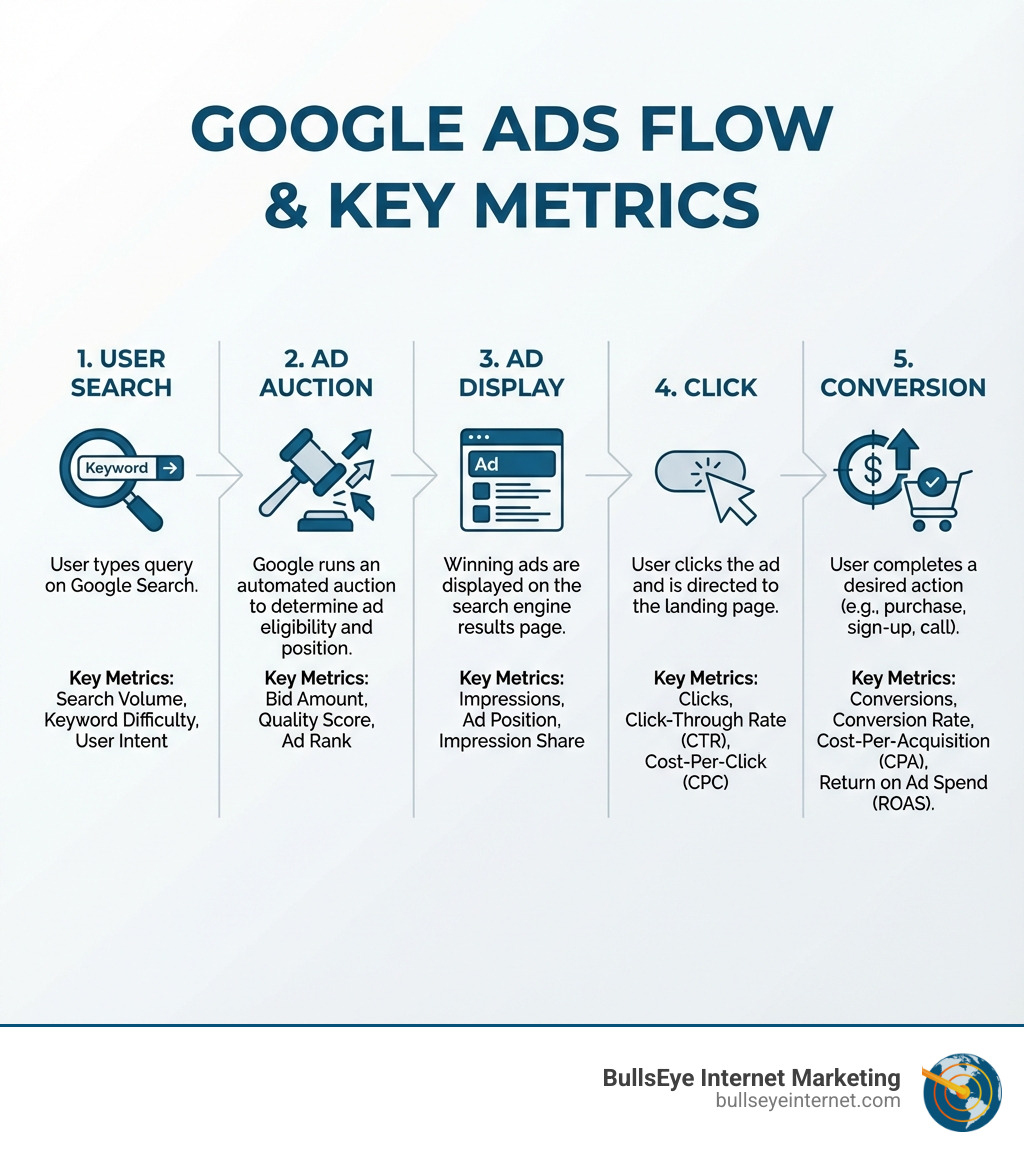
Think of the platform like this:
- A user searches on Google.
- Google runs a lightning-fast ad auction.
- The most relevant, high-quality ads appear.
- The user clicks your ad.
- The user calls, fills out a form, or buys from you.
Google Ads for marketing glossary:
Understanding the Engine: How the Google Ads Auction Works
At the heart of Google Ads for marketing is a fast ad auction that determines which ads are shown and in what order. It is not a traditional auction where the highest bidder always wins; Google’s system is designed to provide users with the most relevant and useful ads while still being fair to advertisers.
When a user searches, Google Ads identifies all relevant advertisers and calculates an “Ad Rank” for each eligible ad. Ad Rank determines your ad’s position and is primarily based on your bid and your ad’s Quality Score. We set a maximum bid, but under the cost-per-click (CPC) model, we often pay less—just enough to outrank the advertiser below us. You can learn more in Google’s documentation on how Google ranks ads.
Key Factors Influencing Ad Rank and Quality Score
Ad Rank is not just about money; it is also about quality. Google’s “Quality Score” is an estimate of the quality and relevance of your ads, keywords, and landing pages. A higher Quality Score can lead to lower costs and better ad positions.
The three main components that influence your Quality Score are:
- Expected Click-Through Rate (CTR): Google’s prediction of how likely people are to click your ad. Compelling and relevant ad text improves this.
- Ad Relevance: This measures how closely your ad matches the user’s search intent. If someone searches for “emergency plumbing Miami,” an ad for “emergency plumbing Miami Dade County” is highly relevant.
- Landing Page Experience: This assesses how relevant and easy-to-steer your landing page is. A good landing page should load quickly, provide the information the user was looking for, and have a clear call to action such as calling your business or filling out a form.
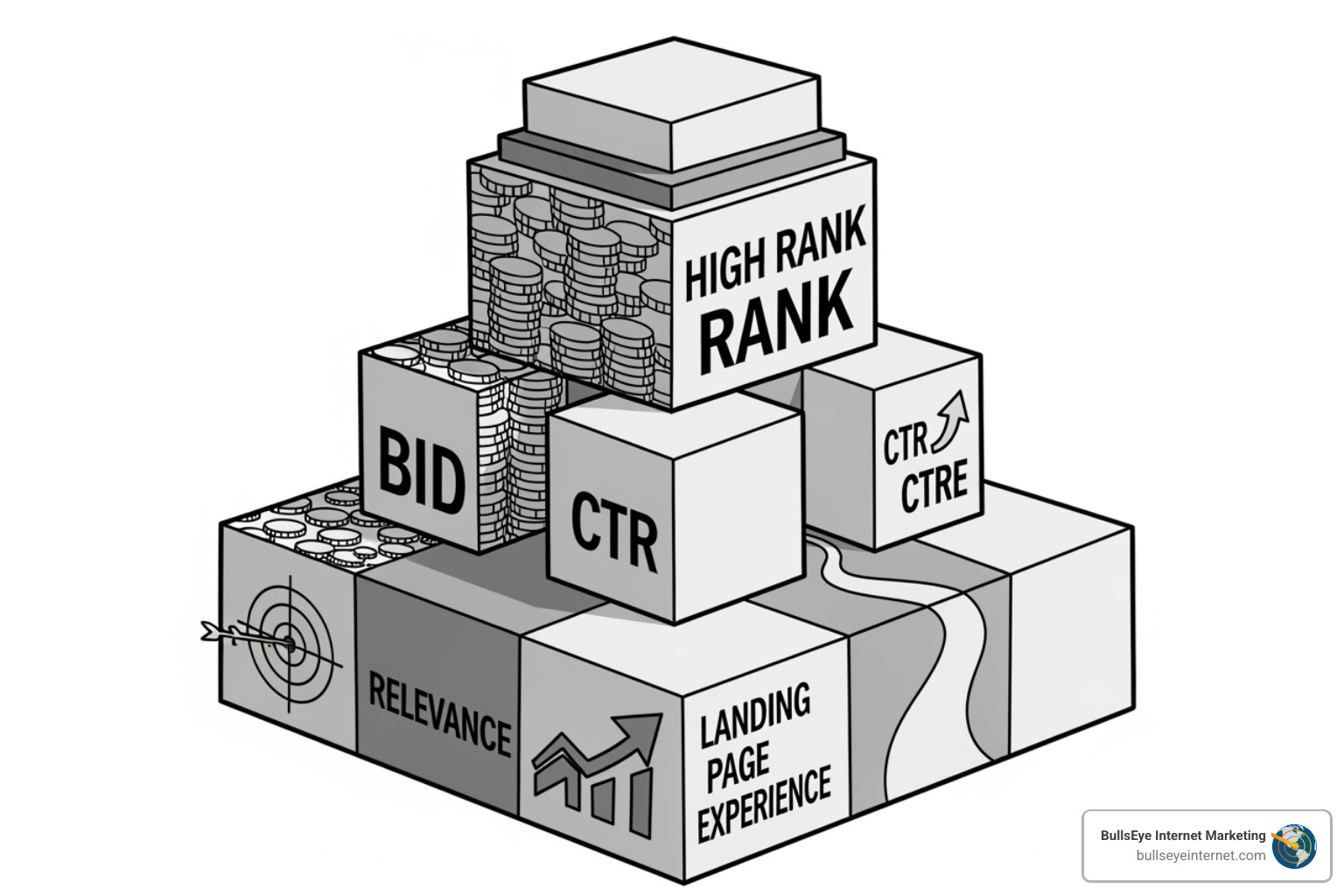
A high Quality Score signals to Google that your ad is a good match for users. This can result in your ad appearing higher on the search results page at a lower cost per click. It is a win-win: users get better ads, and you get more efficient campaigns. The Search Quality signals that power Google’s organic search are guided by similar principles of relevance and usefulness.
The Strategic Advantage of Google Ads for Marketing
Why should businesses in Florida, from Miami to Martin County, choose Google Ads for marketing? It offers a strategic advantage that traditional advertising simply can’t match.
First, the ROI potential is incredible. Optimized campaigns can achieve a high digital marketing ROI, with some companies seeing a 267% increase in Return on Ad Spend (ROAS).
Second, it’s flexible for all business sizes. A small bakery in Delray Beach can compete effectively with larger companies without overspending, reaching people who are actively looking for what they offer.
Third, you can tap into massive, high-quality traffic sources. We’re reaching people with high purchase intent–they’re actively searching for products or services like yours right now. This precise targeting puts your message in front of the right people at the right time.
Finally, Google Ads offers unparalleled measurability. We can track every click, conversion, and dollar spent. This transparency allows us to learn about our market and continuously refine campaigns for better results, making it far superior to traditional advertising where tracking engagement is often a guess.
Benefits for Businesses of All Sizes
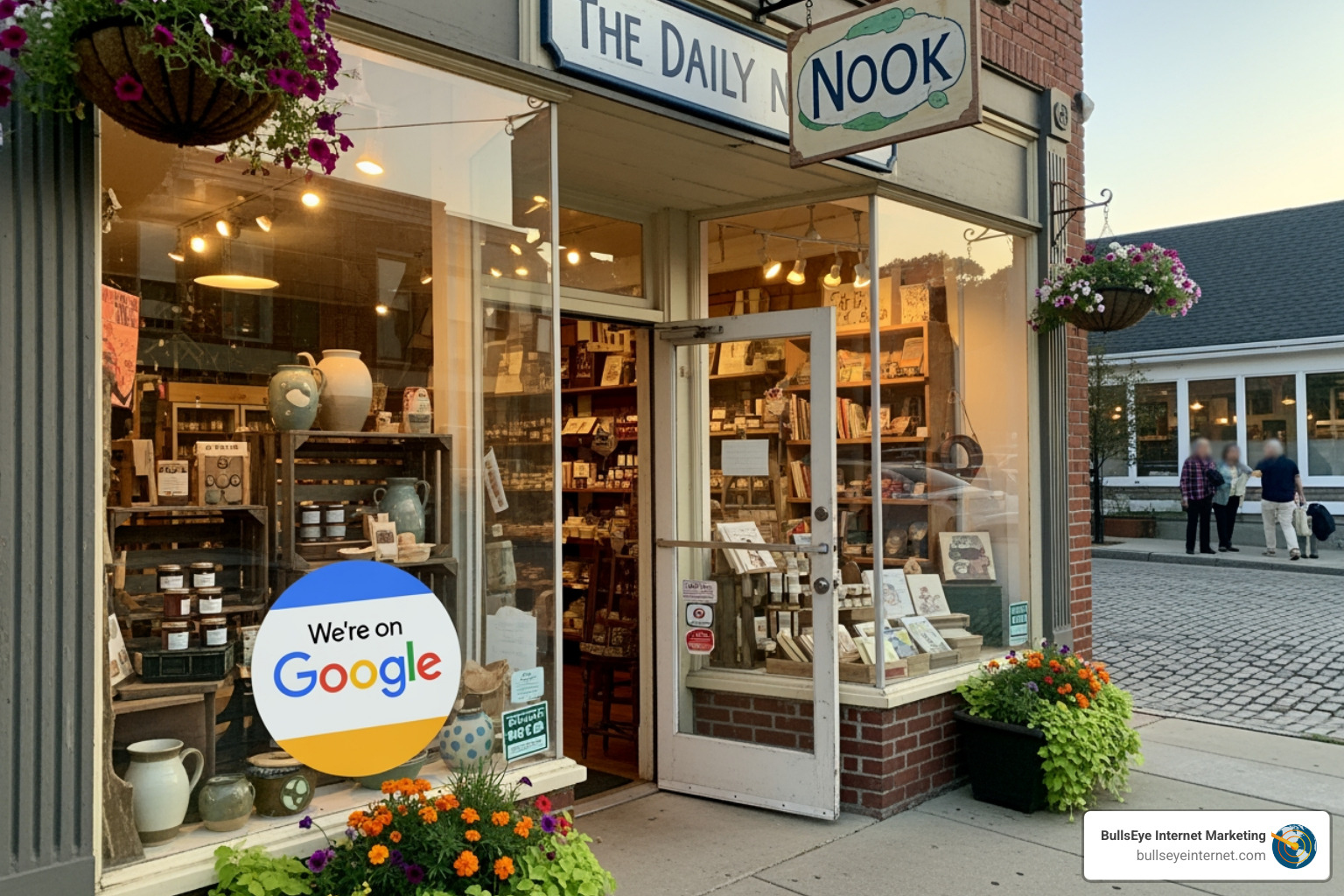
One of the most powerful aspects of Google Ads for marketing is its ability to level the playing field. Small businesses in places like Coconut Creek or Coral Gables can effectively compete with larger corporations. Here’s how:
- Reach Customers with High Purchase Intent: When someone in Kendall West searches for “AC repair near me,” our Google Ads ensure your business appears at that critical moment.
- Boosting Brand Visibility: Even if a potential customer doesn’t click, seeing your ad builds brand recognition, which is vital in competitive markets like Miami.
- Generating Leads and Sales: Google Ads is one of the best tools for generating sales leads, driving phone calls, website inquiries, and direct purchases.
- Full Budget Control: You decide how much to spend, and Google Ads will never exceed your set budget. This allows you to start small, test what works, and scale up confidently.
- Measurable Results: Online advertising allows us to track who is engaging with your ads and show your ad to the right people at the right time. This allows us to make data-driven decisions, ensuring every dollar is working hard for your business. For more details, check out the Benefits of online advertising help page.
A Guide to Google Ads Campaign Types
Google Ads is not a one-size-fits-all solution. It offers a diverse range of campaign types, each designed to achieve specific marketing objectives, whether that is increasing sales, driving traffic, generating leads, or building brand awareness.
Here is a quick overview of the main campaign types we use in Google Ads for marketing:
| Campaign Type | Primary Goal(s) | Ad Format | Best Use Case |
|---|---|---|---|
| Search | Drive traffic, leads, sales | Text-based | Capturing existing demand, high-intent users |
| Display | Awareness, retargeting | Image, GIF, HTML5 | Broad reach, visual branding, remarketing |
| Shopping | Product sales | Product listing with image | eCommerce, promoting specific products |
| Video | Awareness, engagement | Video | Storytelling, brand building on YouTube |
| Demand Gen | Create demand, leads | Visuals, video, carousels | Visual storytelling on YouTube, Find, Gmail |
| Performance Max | Maximize conversions | All formats, cross-channel | Driving sales/leads across all Google channels |
| App | App installs, engagement | Text, image, video | Promoting mobile applications |
Search Ads
Search ads are the most common type of Google Ads for marketing. These text-based ads appear on Google’s search results pages (SERPs). When someone in West Palm Beach searches for “plumber in Fort Lauderdale,” search ads are designed to capture that immediate user intent. By choosing specific keywords, we reach people precisely when they are looking for what you offer, making them highly effective for driving qualified leads and sales.
Display & Demand Gen Ads
While search ads capture existing demand, Display ads are fantastic for creating it. These visual ads appear across the Google Display Network, which includes millions of websites and apps. They are perfect for broad reach, brand awareness, and retargeting—showing ads to people who have previously visited your website or interacted with your business.
Demand Gen campaigns are Google’s newer solution for visual storytelling on platforms like YouTube, Find, and Gmail. They use high-quality visuals to engage users who might not be actively searching but show interest through their browsing behavior and past interactions.
Shopping & Performance Max (PMax) Ads
For e-commerce clients, Shopping ads are a game-changer. They showcase your products directly in Google’s search results with an image, price, and store name. They provide immediate visual appeal to shoppers and help connect search intent with the right product.
Performance Max (PMax) campaigns are Google’s most advanced, AI-driven campaign type. PMax leverages AI to optimize your ads across all Google channels—Search, Display, YouTube, Gmail, and Maps—from a single campaign to find your highest-value customers and generate more conversions.
Video & App Ads
Video ads primarily appear on YouTube, an incredible platform for brand messaging. From compelling brand stories to product demonstrations, video ads are fantastic for building connections and driving engagement, especially when combined with remarketing.
Finally, App ads are specifically designed to promote your mobile application, driving installs and engagement across Google’s network without needing to create separate campaigns for each placement.
Your Blueprint for a Profitable Campaign
Launching a successful Google Ads for marketing campaign requires a clear strategy, starting with well-defined objectives. Before we begin, we need to know what “success” looks like for your business. Are we aiming to increase online sales, generate leads for your Palm Beach real estate business, or drive phone calls to your Hollywood plumbing service? This clarity guides every decision we make, from keyword selection to bidding strategy. You can learn more about the initial setup in Google’s guide on how to set up your first Google Ads campaign.
How to Set a Budget and Manage Spending
One of the greatest advantages of Google Ads for marketing is budget control. You decide how much to spend, with no minimum requirements. We set an average daily budget, and your monthly charges will never exceed your average daily budget multiplied by 30.4. This provides predictability and prevents overspending.
Bidding strategies depend on your goals. Cost-Per-Click (CPC) is common for sales and leads, where you only pay when someone clicks your ad. Cost-Per-Thousand Impressions (CPM) is used for brand awareness campaigns. More advanced automated bid strategies, such as Target CPA or Target ROAS, use Google’s machine learning to optimize bids toward your specific performance targets. You can learn more about managing your budget on the Budgets overview help page.
Best Practices for Keyword Research
Effective keyword research is the foundation of a successful campaign. Here is our approach:
- Start with Your Customer: Think like your ideal customer. What would they type into Google when they are ready to call or buy?
- Use Google Keyword Planner: This free tool helps us find new keywords and see their estimated search volume and costs.
- Understand Match Types: We use a mix of Broad Match (wide reach), Phrase Match (more focused), and Exact Match (most precise) to control who sees your ads.
- Focus on Long-Tail Keywords: Longer, more specific phrases (for example, “emergency plumber for burst pipe in Miami Lakes”) often indicate higher intent and lead to better conversion rates.
- Do Not Forget Negative Keywords: This is critical. Negative keywords tell Google when not to show your ad, preventing wasted money on irrelevant clicks and protecting your budget.
Key Metrics for Measuring Google Ads for marketing Success
To know if our efforts are working, we track key performance indicators (KPIs):
- Return on Ad Spend (ROAS): Measures the revenue generated for every dollar spent on advertising.
- Click-Through Rate (CTR): The percentage of people who see your ad and click on it. A high CTR indicates your ad is relevant.
- Cost-Per-Click (CPC): The actual amount you pay each time someone clicks your ad.
- Conversion Rate: The percentage of people who click your ad and then complete a desired action (for example, make a purchase or call your business).
- Cost-Per-Acquisition (CPA): Measures how much it costs to acquire a single customer or lead.
How Attribution Models Impact Analysis
Attribution models determine how credit for a conversion is assigned to different ad interactions. The default last-click model gives 100% of the credit to the final ad a customer clicked, which can be misleading as it ignores earlier touchpoints.
We often explore multi-touch attribution models, which distribute credit across various touchpoints in the customer journey. These include:
- First-Click Attribution
- Linear Attribution
- Time Decay Attribution
- Position-Based Attribution
Using more sophisticated models gives us a fuller picture of which ads truly contribute to a sale or a lead, allowing us to optimize your budget more effectively. For a deeper dive, check out more on attribution models.
Advanced Tactics & Common Mistakes
The world of Google Ads for marketing is constantly evolving, with Artificial Intelligence (AI) playing a key role. AI-powered solutions like Smart Bidding and Responsive Search Ads help us find new customers and accelerate growth by automating complex tasks such as bid adjustments and ad testing. This automation frees us to focus on strategy, creativity, and insights. You can learn more about demystifying AI-powered ad solutions.
How Small Businesses Can Leverage Google Ads Effectively
For small businesses in Miami, Fort Lauderdale, West Palm Beach, or any of the surrounding areas, Google Ads for marketing is a powerful growth tool.
- Local Targeting is Your Superpower: We can precisely target customers within specific cities, ZIP codes, or even a radius around your business location.
- Smart Campaigns for Simplicity: If you are short on time, Smart campaigns can manage many parts of your online ads automatically while still giving you control over budget and goals.
- Focus on a Niche: Instead of trying to be everything to everyone, we focus on what makes your business unique, targeting specific keywords to attract highly qualified traffic that is more likely to convert.
Common Mistakes to Avoid When Using Google Ads for marketing
It is easy to make mistakes that drain your budget. Here are common ones to avoid:
- Poor Keyword Selection: Bidding on overly broad or irrelevant keywords is a common money pit.
- Neglecting Negative Keywords: This is crucial for preventing wasted spend on irrelevant searches.
- Weak Ad Copy: Your ad text is your first impression. Generic ads get ignored; clear benefits and strong calls to action perform far better.
- Not Optimizing Landing Pages: A slow or confusing landing page will hurt your Quality Score and conversion rate.
- Ignoring Campaign Data: Failing to regularly review performance data means you are missing opportunities to optimize and improve results.
How to Use Google Ads for Account-Based Marketing (ABM)
For B2B businesses, Google Ads for marketing can be an effective tool for Account-Based Marketing (ABM)—a strategy focused on targeting specific, high-value companies. Industry research shows that a large majority of marketers who track ROI report that ABM yields higher returns than many other marketing approaches.
Here is how we integrate Google Ads into an ABM strategy:
- Identify Your Target Accounts: We identify specific companies we want as clients.
- Leverage Google Ads for Targeting: We use search ads for relevant terms and then use remarketing lists to show personalized display and video ads to individuals from those companies. Customer Match allows targeting specific individuals via their email addresses when that data has been collected and used in line with Google’s policies.
- Personalize Ad Copy: The key to ABM is personalization. We tailor ad copy to the target company’s needs and pain points.
By combining Google Ads with ABM, we can craft highly targeted campaigns that resonate with specific, high-value clients and support your sales team.
Frequently Asked Questions about Google Ads
What is the difference between Google Ads and Google AdSense?
This is a common question! Think of it this way:
- Google Ads is for advertisers. Businesses like yours use Google Ads to pay for ad placement on Google’s network.
- Google AdSense is for publishers. Website owners and bloggers use AdSense to monetize their content by displaying ads from Google Ads advertisers, earning money when users click or view them.
How much does it cost to use Google Ads?
The beauty of Google Ads for marketing is its flexibility. There’s no fixed cost or minimum spending requirement. You decide your budget. Since it operates on a pay-per-click (PPC) model, you only pay when someone clicks on your ad. The actual cost per click varies widely depending on your industry, keywords, and competition. We work with you to set a budget that aligns with your business goals.
How quickly will I see results from Google Ads?
One of the significant advantages of Google Ads for marketing is its speed. You can start driving traffic to your website almost immediately after launching a campaign. However, while traffic can begin instantly, achieving consistent, profitable sales and leads takes time. The initial weeks and months are crucial for testing and optimization. We continuously monitor performance and refine campaigns to maximize your return on ad spend.
How Google Ads Drive Sales and Growth – BullsEye Internet Marketing
So, does Google Ads for marketing really work? Our answer is yes—especially when managed with expertise and a strategic approach. It is a powerful, transparent, and highly measurable tool that can drive significant sales and leads for businesses of all sizes, from a local shop in St. Lucie County to a service provider across South Florida and the rest of the United States.
We have seen how its massive reach, precise targeting, and unparalleled measurability offer a distinct advantage. By understanding the ad auction, leveraging the right campaign types, and carefully managing budgets, businesses can open up incredible growth opportunities. The key lies in continuous optimization and avoiding common pitfalls.
At BullsEye Internet Marketing, we specialize in helping businesses like yours leverage Google Ads for marketing to generate calls and sales. Our approach is designed to give you a competitive advantage: no long-term contracts, and we work with only one client per industry per geographic area. That means if you are a plumber in Miami Dade County, we will not also work with your direct competitor.
If you are ready to transform your marketing efforts and drive measurable results, we are here to help. Get a competitive advantage with our Google Ads services, or you can also start now if you are eager to dive in and set up your own campaign.
