
Why Advanced Google Ads Strategies Separate Profitable Campaigns from Money Pits
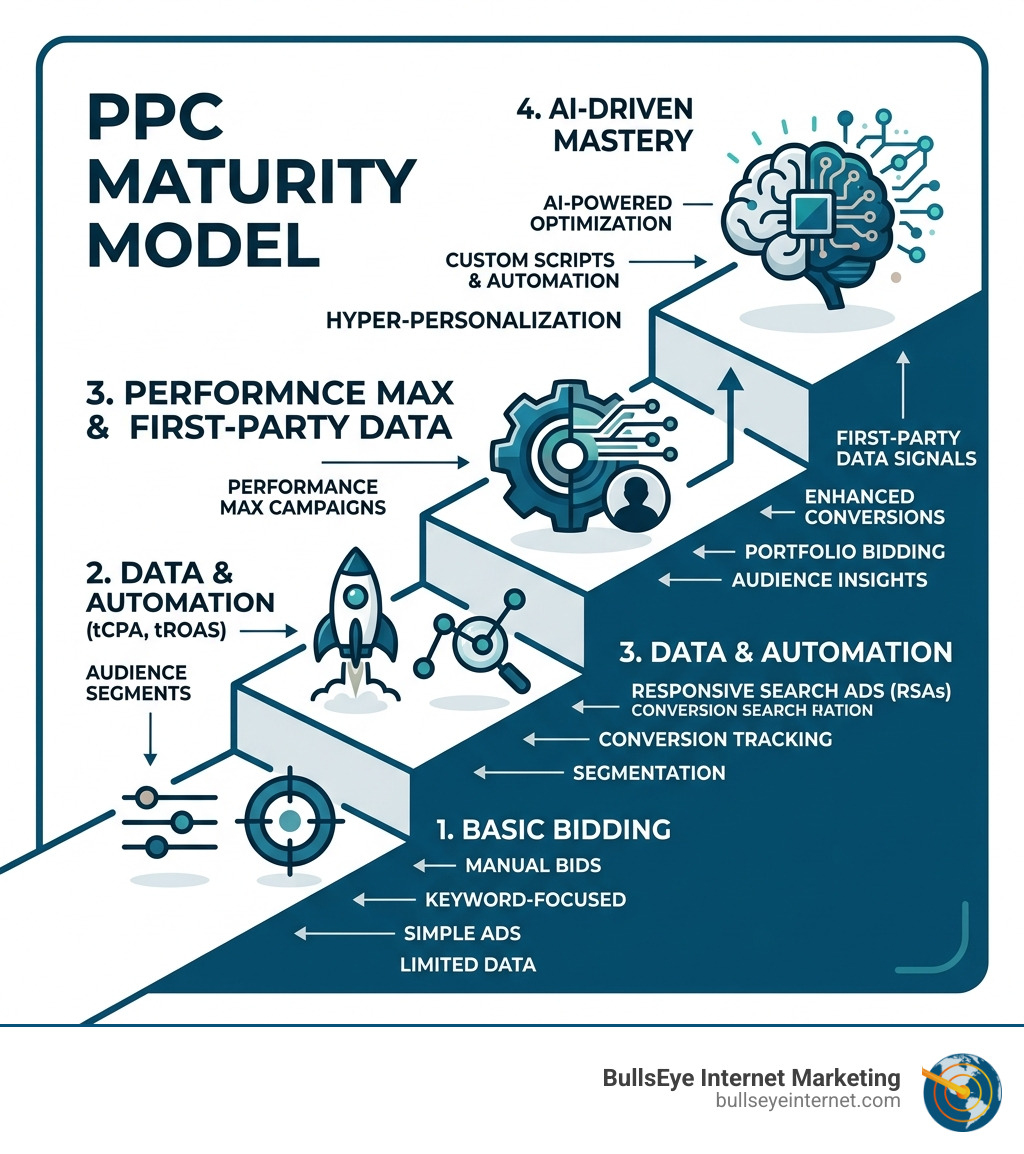
Advanced Google Ads strategies are the difference between burning through your budget and actually growing your business. If your campaigns feel like a black hole for cash, you’re likely stuck at the basic level — and in 2026, that gap is more costly than ever.
Here’s a quick breakdown of what advanced Google Ads strategies include:
| Strategy Area | What It Means |
|---|---|
| Smart Bidding & AI | Target CPA, Target ROAS, Portfolio bidding |
| Audience Targeting | In-market, custom segments, life events, remarketing |
| Campaign Structure | Consolidated AI-friendly setups, broad match + negatives |
| Shopping Domination | Multiple campaigns, product feed hygiene, GTIN optimization |
| Technical Automation | Scripts, seasonality adjustments, CRM integration |
| Data & Attribution | Enhanced conversions, first-party data, offline imports |
| Creative Strategy | RSAs, Performance Max assets, A/B testing |
The stakes are real. One e-commerce brand went from $8,000 to $34,000 in sales within days — simply by rethinking how their Shopping campaigns were structured. That’s not luck. That’s strategy.
The Google Ads platform has shifted dramatically. It’s no longer about picking keywords and setting a bid. It’s about feeding a machine the right signals, creative assets, and data — then knowing when to let it run and when to pull the reins.
If your strategy still looks like it did in 2019, you’re already losing ground to competitors who’ve adapted.
I’m Ronnie Katz, founder of BullsEye Internet Marketing, and since 2006 I’ve helped businesses in competitive industries implement advanced Google Ads strategies that drive real, measurable growth — not just clicks. With over 20 years of hands-on PPC experience and Google certifications, I’ll walk you through exactly what’s working right now in 2026.
The Skyscraper Principle: Why Foundations Matter Before Advancing
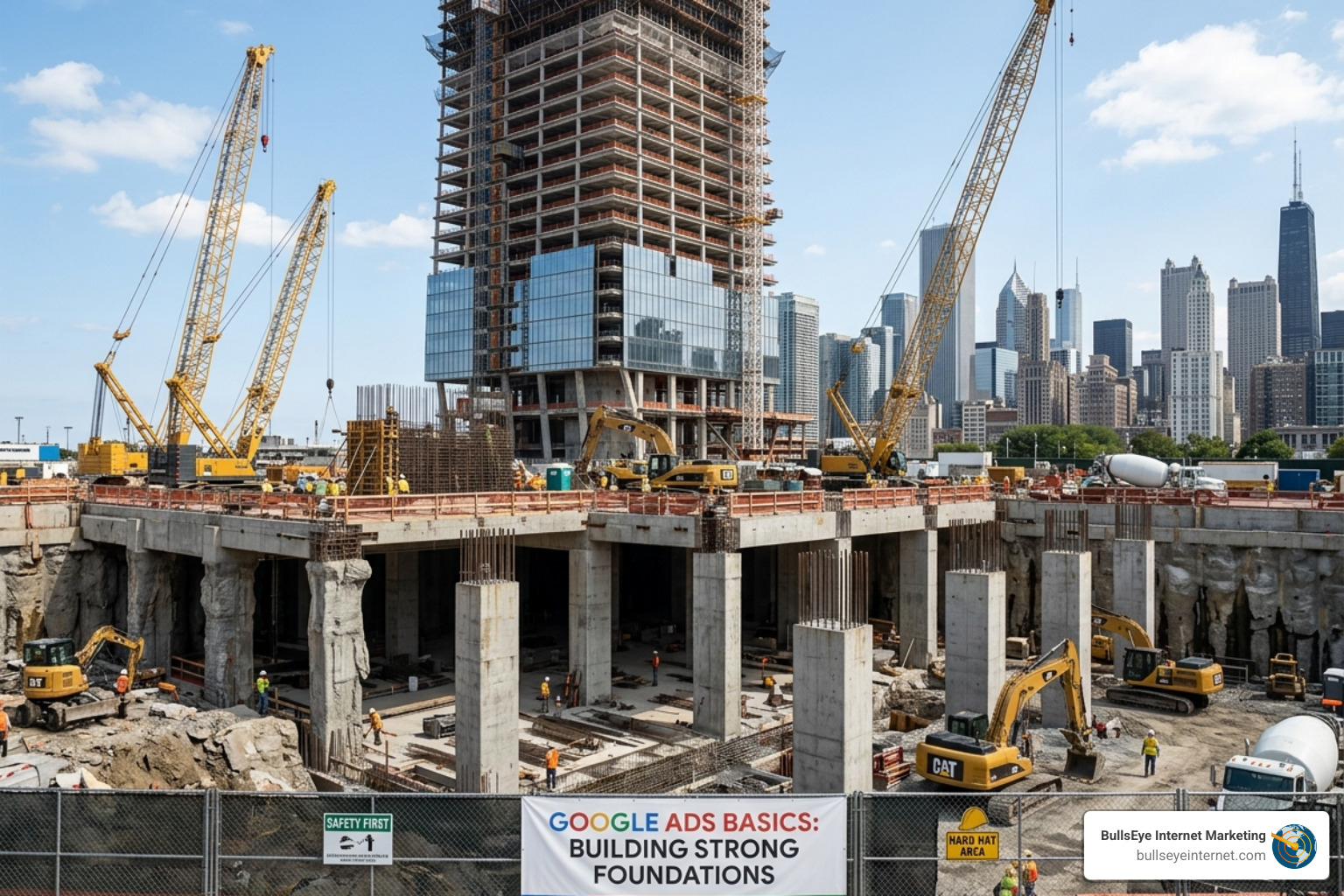
Before we dive into the high-level tactics, we have to talk about your foundation. We often use the “skyscraper analogy”: you can’t build a 100-story masterpiece on a foundation made of sand. In PPC, Advanced Google Ads strategies will fail if your basics are broken.
At BullsEye Internet Marketing, we take a business-first approach. This means before we even touch a bidding slider, we need to understand your Unique Value Proposition (UVP) and your “search intent temperature.” Are your customers looking for an emergency fix (hot intent) or just researching options for next year (cold intent)?
The Core Pillars
- Keyword Research: It’s not just about volume anymore; it’s about intent. We look for “layman’s terms” that real people use, rather than just industry jargon.
- Ad Copy: Your ads must bridge the gap between the search query and the solution.
- Landing Page Experience: This is where the magic (or the heartbreak) happens. If your page takes more than three seconds to load, you’re throwing money away.
- Conversion Tracking: Without this, Google’s AI is flying blind.
For a deeper dive into these essentials, check out The Ultimate Guide to Google Ads Success. Mastering these basics ensures that when we apply advanced tactics, they actually have a platform to stand on.
Leveraging AI and Advanced Google Ads strategies
By May 2026, AI isn’t just a “feature”—it’s the engine. The role of a modern advertiser has shifted from manual button-pushing to “intelligent constraint-setting.” We provide the high-quality signals, and the AI handles the 40,000 auctions happening every second.
According to the Google Ads Guide 2026: Smart Planning for Higher ROI, success now depends on managing inputs (data and assets) rather than just outputs (bids).
Smart Bidding and Performance Max
- Performance Max (PMax): This acts as an all-in-one solution, placing ads across Search, YouTube, Maps, and Display. However, it can be a “budget-burning machine” if you don’t provide high-quality creative assets. We recommend a library of 8–12 videos and 20–30 images to keep the algorithm fed.
- Portfolio Bid Strategies: Instead of letting every campaign fight for itself, we group them. This allows the algorithm to learn across a larger dataset, which is vital for accounts with lower individual campaign volumes.
- Value-Based Bidding: We don’t just want any conversion; we want the profitable ones. By assigning different values to different leads, we tell Google to hunt for the big fish.
Before making these shifts, we always perform a PPC Audit Methodology 101 to ensure there are no “ghost” conversions or tracking errors skewing the data.
Scaling ROI with Advanced Google Ads strategies
Scaling isn’t as simple as doubling the budget. If you increase your spend by more than 20% in a week, you risk resetting the “learning phase,” causing your CPA to spike.
| Feature | Manual CPC | Smart Bidding (tCPA/tROAS) |
|---|---|---|
| Control | Absolute manual control | Strategic guardrails |
| Data Usage | Human observation | Real-time signals (device, time, intent) |
| Scaling | Slow and tedious | Fast (once data threshold is met) |
| Ideal For | New accounts/Low volume | Accounts with 30-50+ conversions/month |
To truly scale, we leverage first-party data. By uploading your customer lists (Customer Match), we create a “competitive moat” that other bidders can’t replicate.
Dominating the SERP with Audience Segmentation and Shopping Tactics
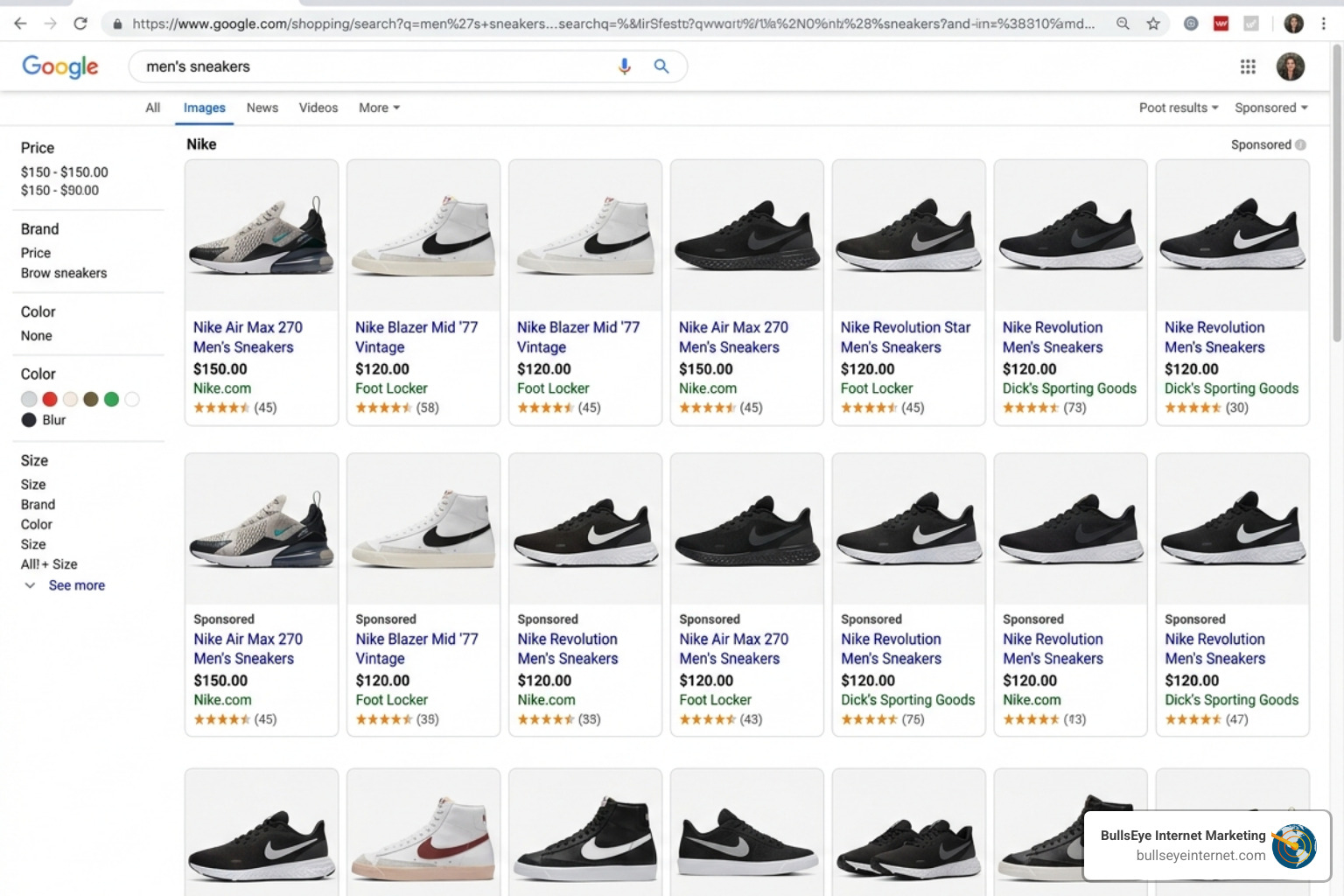
If you’re in e-commerce, Advanced Google Ads strategies for Shopping are your best friend. One of our favorite tactics is using multiple standard shopping campaigns for the same products to occupy more real estate on the first page. By optimizing product feeds with accurate GTINs (Global Trade Item Numbers), you ensure Google knows exactly what you’re selling.
Advanced Audience Segmentation
We no longer just target “people interested in shoes.” We use:
- In-Market Audiences: Targeting users actively researching your specific product.
- Life Events: Reaching people during major transitions like moving, graduating, or getting married.
- Custom Segments: Building audiences based on the specific websites they visit (like your competitors!) or the apps they use.
- Competitor Conquesting: Using ad extensions to highlight your superior value right next to a competitor’s name.
Combining these with Retargeting with Google and Facebook Ads allows us to follow a prospect through their entire journey, from “just looking” to “shut up and take my money.” For more on this, see the Advanced Google Ads Strategies Guide for 2026.
Technical Optimization: Scripts, Hidden Features, and Data Integrity
The “hidden” side of Google Ads is where the real pros play. We use Google Ads Scripts (written in JavaScript) to automate the boring stuff. For example, we can use a script to automatically pause ads if your website goes down or adjust bids based on the weather in Miami or West Palm Beach.
Precision Targeting
- Income-Level Targeting: Why waste budget on people who can’t afford your luxury service? We can target the top 10% of earners in specific Broward or Miami-Dade zip codes.
- Seasonality Adjustments: If you have a 3-day flash sale, we “warn” the Smart Bidding algorithm so it doesn’t get confused by the sudden spike in conversions.
- Data Exclusions: If your tracking breaks for a day, we tell Google to ignore that data so it doesn’t “learn” the wrong lessons.
Integrating these technical pieces often requires Maximize Ad Performance with GTM Integration to ensure every click is accounted for. Furthermore, for service businesses, Call Tracking for Google Ads ROI is non-negotiable. If you don’t know which keyword triggered the phone call, you’re only seeing half the picture.
Hidden Features and Advanced Google Ads strategies for 2026
Don’t ignore the Auction Insights report. It tells you your “outranking share”—how often you’re beating your rivals. We also utilize Enhanced Conversions, which uses hashed first-party data to recover conversion data that might be lost due to privacy settings or cookie blocking.
To keep everything running smoothly, we recommend a regular Keep Your Campaigns Thriving: A Google Ads Health Checkup.
Measuring Success: ROI Benchmarks and Quality Score Mastery
What is a “good” ROI? While a 3-5x Return on Ad Spend (ROAS) is a common benchmark, we believe in looking deeper at Customer Lifetime Value (CLV). A lead that costs $50 but stays with you for three years is worth much more than a $10 lead that cancels after a month.
Quality Score: The Silent Killer
Your Quality Score (1-10) determines how much you pay per click. A score of 7 or higher can significantly lower your costs. We improve this through:
- Ad Relevance: Does the ad match the keyword?
- Expected CTR: Is the ad enticing?
- Landing Page Experience: Is the page helpful and fast?
We use Conversion Rate Optimization to turn more of those clicks into customers. We also use the Google Ads Editor for bulk changes, allowing us to update 500 ads in seconds to test new offers. For a complete overview of these management techniques, our Ultimate Google PPC Management Guide is an excellent resource.
Frequently Asked Questions about Advanced PPC
What distinguishes basic Google Ads strategies from advanced ones?
Basic strategies are usually “set and forget.” They rely on manual bidding, a handful of keywords, and generic ad copy. Advanced Google Ads strategies involve a “signal-first” mindset. This includes AI integration, deep audience segmentation (like life events and in-market data), technical automation via scripts, and a focus on business-level metrics like profit margins rather than just clicks.
What is the impact of pausing and restarting Google Ads campaigns?
Pausing is often a mistake for modern campaigns. It disrupts the machine learning process and can reset your Quality Score. When you restart, you’ll often see higher CPCs and lower conversion rates as the algorithm “re-learns” your market. Instead of pausing, we recommend using automated rules to lower budgets or using dayparting to run ads only during your most profitable hours.
What is a good ROI benchmark for Google Ads in 2026?
Generally, a 3-5x ROAS is considered strong. However, this varies by industry. For a high-ticket service in South Florida, a 10% conversion rate and a specific Target CPA (Cost Per Acquisition) might be the goal. The best benchmark is one that aligns with your specific profit margins and long-term business goals.
Advanced Google Ads Strategies by BullsEye Internet Marketing
At BullsEye Internet Marketing, we don’t believe in “basic.” We provide Advanced Google Ads strategies tailored to your specific industry and location, whether you’re in Miami, Boynton Beach, or anywhere across the 50 states. Our USP is simple: we offer no long-term contracts and work with only one client per industry per geographic area. This gives you a massive competitive advantage—we aren’t bidding against ourselves with your competitors.
Ready to stop being a basic bidder? Master your growth with Advanced Google Ads strategies and let us help you dominate your market.
