
Why Enterprise PPC Management is Critical for Large-Scale Growth
Enterprise PPC management is the specialized practice of running large-scale, high-budget pay-per-click advertising campaigns for national and multinational organizations. Here’s what makes it different:
Key Characteristics of Enterprise PPC Management:
- Scale: Manages dozens of campaigns across multiple platforms, regions, and product lines simultaneously
- Budget: Handles monthly ad spends ranging from tens of thousands to hundreds of thousands of dollars
- Complexity: Requires sophisticated targeting, cross-departmental coordination, and advanced analytics
- Focus: Emphasizes quality lead generation, brand consistency, and measurable ROI across all channels
- Strategy: Uses data-driven optimization, automation tools, and full-funnel attribution models
If you’re managing a large organization with multiple products, services, or locations, standard PPC tactics won’t deliver the results you need. Enterprise-level companies face unique challenges that small business PPC simply doesn’t address—like coordinating across marketing, sales, and product teams, justifying substantial budgets to leadership, and maintaining brand consistency across dozens of campaigns.
The stakes are higher too. With millions of dollars potentially on the line, there’s no room for guesswork. According to industry data, PPC ad spending is projected to grow to over $190 billion, and businesses that get it right make an average of $2 in revenue for every $1 spent on Google ads alone.
The complexity multiplies when you’re managing campaigns across different regions, languages, time zones, and customer segments. You need layered account structures that can scale, sophisticated attribution models that show the full customer journey, and automation that doesn’t sacrifice control. Most importantly, you need a strategy that translates channel activity into clear business outcomes—the kind leadership understands and approves.
I’m Ronnie Katz, and since founding BullsEye Internet Marketing in 2006, I’ve helped businesses steer the complexities of large-scale digital advertising through strategic enterprise PPC management. Over two decades, I’ve seen how the right approach to enterprise-level campaigns transforms ad spend into predictable, scalable revenue growth.
The Unique Challenges of Enterprise PPC
Managing enterprise PPC management campaigns is a different beast altogether compared to smaller businesses. The sheer scale and complexity introduce a unique set of problems. We’re talking about dozens of campaigns running simultaneously across multiple platforms, regions, and product lines, all while trying to maintain a cohesive brand message. This means the ramifications of errors are significantly increased, and budget issues can quickly cascade into major problems.
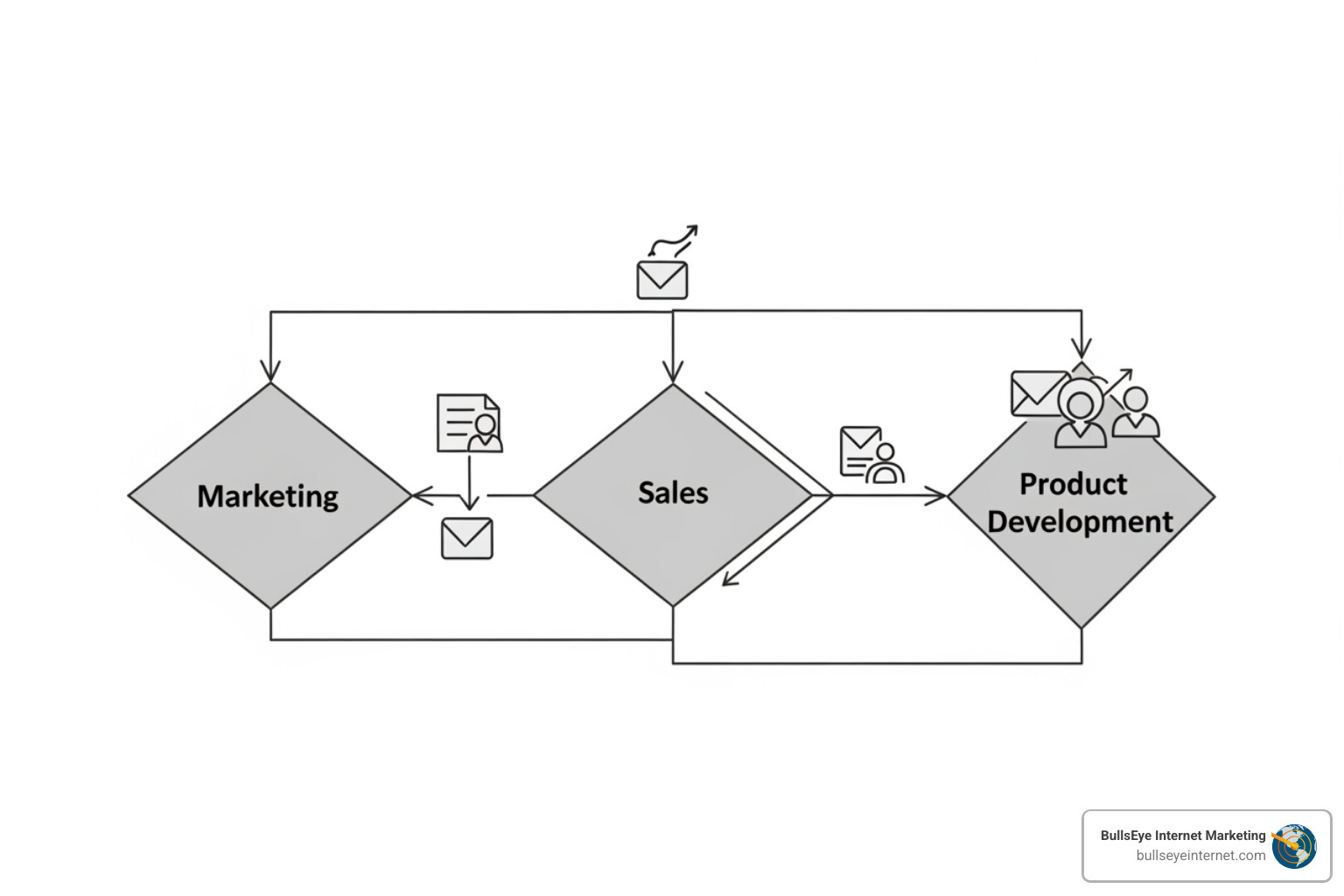
Long buying cycles are also common in the enterprise space, making immediate ROI harder to track and requiring a more strategic, long-term view of campaign performance. Furthermore, effective enterprise PPC management demands coordination across various departments—marketing, sales, product, and even legal—to ensure alignment and maximize impact.
Differentiating from Small Business PPC
What truly sets enterprise PPC management apart from its small business counterpart? It’s all about scope and sophistication. While a local business in Miami might focus on driving foot traffic to a single brick-and-mortar location, an enterprise operating across the United States, Canada, and the UK, and even specific Florida locations like Boynton Beach or Delray Beach, has far broader objectives.
For us, it’s about a comprehensive approach. We’re often aiming for quality lead generation, enhancing brand awareness across vast audiences, and selling products or services online at scale. This typically involves significantly higher ad spend and far more intricate campaign structures that cater to diverse markets and customer segments. The goal shifts from simple transactions to building long-term customer relationships and market dominance.
Navigating Large Budget Allocation
With substantial budgets, efficient allocation becomes an art form. We can’t just set it and forget it; dynamic budget models are crucial. This means continuously monitoring performance in real-time and reallocating funds to the highest-performing campaigns and channels. The aim is to maximize efficiency and, crucially, avoid wasted spend. Every dollar must work hard.
Justifying this spend to leadership is another key aspect. A report full of clicks and impressions isn’t enough when leadership asks about ROI. We need to translate channel activity into a clear revenue narrative, demonstrating pipeline growth, marketing-sourced revenue, and cost per opportunity. Google estimates that businesses make an average of $2 in revenue for every $1 spent on Google ads. Our job is to ensure our clients consistently achieve and exceed that benchmark, proving the value of every investment.
Core Components of a Winning Enterprise PPC Management Strategy
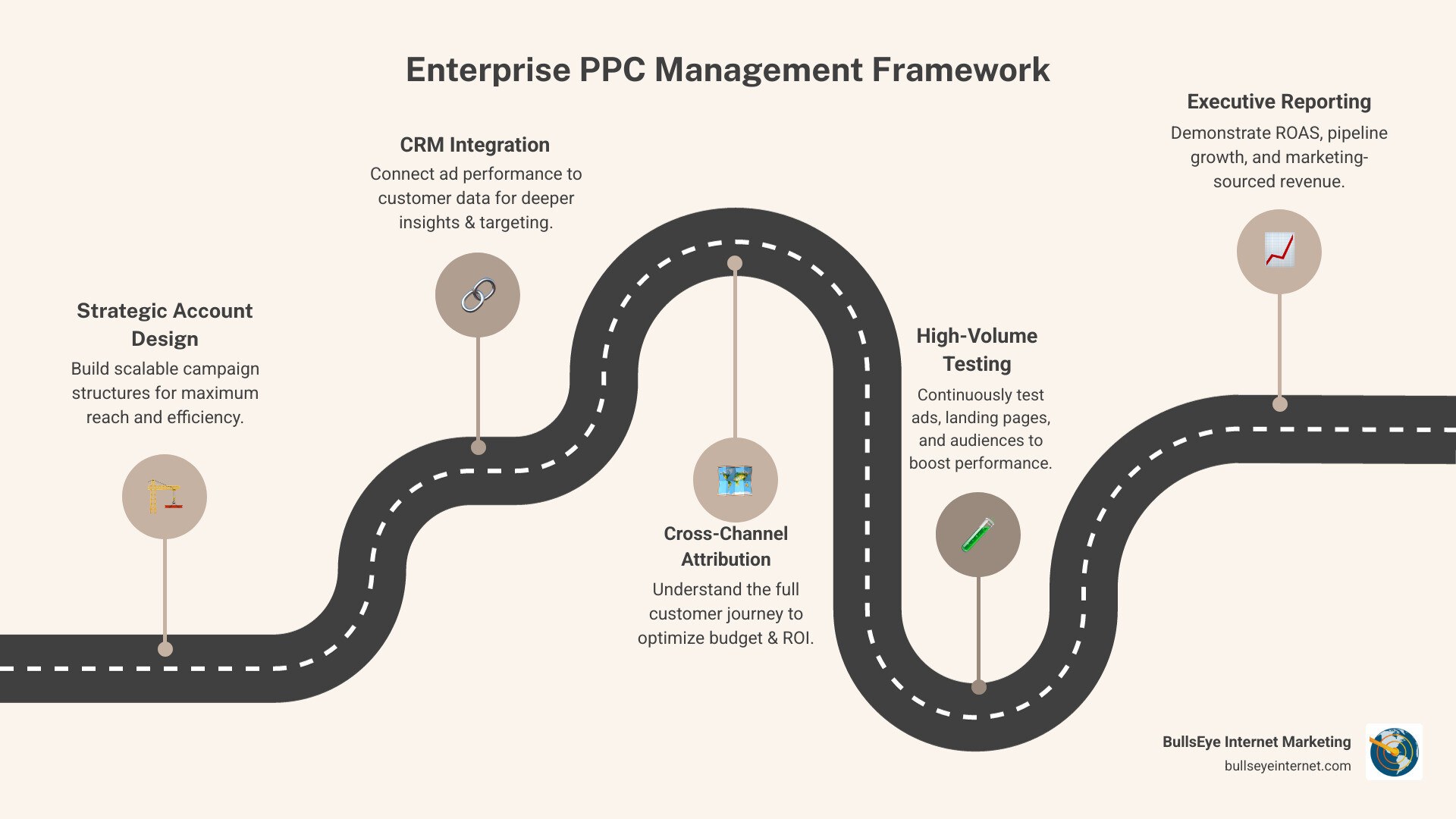
A successful enterprise PPC management strategy is built on a foundation of data-driven decision-making, strategic account design, cohesive campaign management, and relentless, continuous optimization. It’s a holistic approach that ensures every campaign contributes to the overarching business goals.
Structuring Campaigns for Scale and Complexity
For us, structuring campaigns for enterprise clients means creating a framework that can handle immense scale without sacrificing precision. This begins with meticulous campaign segmentation—breaking down efforts by product line, location (think specific Florida cities like Coral Gables or Fort Lauderdale), or audience type. Within these segments, we develop tightly-themed ad groups, ensuring that every ad is highly relevant to the keywords and user intent.
Geographic and audience targeting are critical, allowing us to pinpoint ideal prospects whether they’re in Miami-Dade County or across the UK. Consistent naming conventions across campaigns and ad groups are essential for clarity and manageability. Most importantly, we focus on ensuring brand consistency and cohesive messaging across all these varied campaigns, maintaining a unified voice that resonates with diverse audiences.
The Role of Data Analysis and Advanced Analytics
Data is the lifeblood of effective enterprise PPC management. We leverage advanced analytics tools like Google Analytics to gain deeper insights into customer behavior. This isn’t just about clicks and conversions; it’s about understanding the entire customer journey.
Integrating our PPC efforts with CRM data is a game-changer. This allows us to use first-party data to build highly targeted custom segments and audiences, tailoring our messaging based on a user’s stage in the sales funnel. We also focus on tracking customer lifetime value (CLV) and implementing full-funnel attribution models, which provide a unified view of how all channels work together. By identifying patterns and insights from this rich data, we can make informed decisions that optimize ad spend and creative strategies, driving better results.
Leveraging Automation and Technology for ROI
Automation and technology are indispensable tools for streamlining enterprise PPC management and improving ROI. They free up our team from repetitive tasks, allowing us to focus on strategic thinking and creative execution. Automated bidding strategies, for instance, dynamically adjust bids in real-time to maximize performance, whether we’re aiming for clicks, conversions, or target ROAS.
We also use scripts for custom tasks, enabling us to automate more complex actions beyond built-in platform features. AI-driven targeting ensures our ads reach the most promising prospects by dynamically adjusting audience segments based on real-time conversion data. Performance monitoring tools provide continuous oversight, helping us identify issues and opportunities instantly. This combination significantly reduces manual management hours, allowing us to manage 40% more ad spend and spend 56% fewer hours on account management with automated rules, ultimately lowering cost per acquisition by 25%.
Here are some PPC campaign elements we can automate:
- Bidding strategies (e.g., Maximize Conversions, Target ROAS)
- Creative testing (e.g., rotating ad variations, pausing underperforming ads)
- Campaign management (e.g., budget adjustments, pausing keywords based on performance)
- Audience targeting (e.g., dynamic audience segmentation based on behavior)
- Reporting (e.g., scheduled delivery of performance reports)
- Keyword finding and exclusion (e.g., finding new opportunities, identifying expensive or irrelevant terms)
- Responsive Search Ad creation and optimization
- Exclusion of non-converting display placements or mobile apps
Executing at Scale: Platforms, Testing, and Optimization
Executing enterprise PPC management at scale means navigating a multi-channel landscape with precision. This involves meticulous ad copy and creative development, coupled with rigorous landing page optimization to ensure every click counts. With over 58% of website traffic generated from mobile phones, designing mobile-first landing pages that load quickly and are easy to steer is not just a best practice—it’s crucial for increasing conversions.
Most Effective PPC Platforms and Ad Types
For enterprise clients, we cast a wide net across the most effective PPC platforms:
- Google Ads: As the top digital ad revenue share platform, Google Ads is a cornerstone. It offers unparalleled reach through Search Ads, Display Ads, Video Ads (YouTube), and Shopping Ads, ideal for businesses in any of our service locations from Boynton Beach to Broward County.
- Microsoft Ads (Bing & Yahoo): Often overlooked, Microsoft Ads can deliver strong ROI, especially for cost-effective lead generation, extending reach to audiences that might not be as active on Google.
- Social Media Platforms:
- Meta (Facebook, Instagram): With 69% of online shoppers making purchases after seeing personalized ad content on these channels, Meta is vital for brand awareness, engagement, and direct-response campaigns.
- LinkedIn Ads: For B2B enterprise companies, LinkedIn generates 2-5x higher return on ad spend than other social media platforms, making it indispensable for lead generation and professional networking.
- Amazon Ads: For e-commerce brands, Amazon is a powerhouse, with its global ad revenue reaching $38 billion in 2022. It’s perfect for product visibility and sales directly on the platform.
Each platform offers unique ad types, from text-based search ads and visually rich display ads to engaging video ads and product-focused shopping ads. Leveraging the right mix for the right audience is key to a successful multi-channel strategy.
Implementing A/B Testing and Continuous Optimization
In enterprise PPC management, A/B testing isn’t just an option; it’s a continuous, core practice. We carefully test everything: different ad copy variations, diverse creative assets, and various landing page layouts. This allows us to identify what resonates most with specific audience segments and what drives the highest conversion rates. For example, strategic A/B testing can lead to significant improvements, such as increasing conversion rates by 20%.
The insights gained from these tests directly inform our strategy, allowing us to continuously optimize campaigns for better performance. This iterative process ensures that our clients’ ad spend is always directed towards the most effective elements, maximizing ROI and driving measurable growth.
Ensuring Brand Consistency Across Campaigns
Maintaining brand consistency across multiple regions and product lines is paramount for enterprise businesses. Inconsistent messaging can dilute brand identity and confuse customers, especially in diverse markets like Florida’s various communities or across different countries.
Our approach involves establishing centralized messaging guidelines and utilizing shared asset libraries to ensure all creatives and copy align with the brand’s voice and visual identity. Regular cross-team audits help us catch any deviations and ensure compliance. While localizing content is important to resonate with specific audiences—for example, tailoring messaging for residents of Hialeah versus those in Wellington—we ensure it’s done without losing the core brand voice. The goal is to provide a consistent, high-quality user experience, regardless of where or how a customer encounters our client’s ads.
Measuring Success and Choosing Your Management Path
Measuring success in enterprise PPC management goes beyond simple metrics. For us, it’s about demonstrating real business outcomes: pipeline growth, marketing-sourced revenue, and ultimately, a healthy return on investment. This requires custom reporting and executive-focused dashboards that translate complex data into clear, actionable insights that leadership can understand and act upon.
Key KPIs for Enterprise PPC Campaigns
To effectively gauge the performance of our enterprise PPC efforts, we carefully track a range of Key Performance Indicators (KPIs):
- Return on Ad Spend (ROAS): This is often the most critical metric for enterprises, showing the revenue generated for every dollar spent on advertising. Our clients have seen significant ROAS increases, with some achieving almost 6x their ROAS over three years.
- Cost Per Acquisition (CPA): Understanding how much it costs to acquire a new customer or lead is vital for budget efficiency.
- Conversion Rate: The percentage of ad clicks that result in a desired action (e.g., a purchase, a form submission, a call).
- Click-Through Rate (CTR): The ratio of users who click on an ad to the total number of users who see it.
- Impression Share: The percentage of times our ads were shown compared to the total number of times they could have been shown, indicating market presence.
- Quality Score: Google’s rating of the quality and relevance of keywords, ads, and landing pages, which impacts ad rank and cost.
These KPIs, combined with deeper insights from data analysis, allow us to constantly refine and optimize our strategies for maximum impact.
In-House Team vs. Enterprise PPC Agency
Deciding whether to manage enterprise PPC management in-house or partner with an agency is a significant decision. Here’s a comparison to help illustrate the pros and cons:
| Feature/Aspect | In-House Team | Enterprise PPC Agency |
|---|---|---|
| Expertise & Experience | Deep product/brand knowledge, but limited PPC scope | Broad cross-industry experience, specialized PPC skills |
| Cost-Effectiveness | Fixed salaries, benefits, tool costs | Variable fees, access to premium tools, potentially higher ROI |
| Scalability | Can be slow to scale with business growth | Rapidly scales with business needs and budget |
| Access to Tools | May invest in some tools, but often not enterprise-grade | Access to advanced, proprietary, and expensive tools |
| Focus | Can get distracted by internal tasks | Dedicated focus solely on PPC performance |
| Time Savings | Significant time spent on manual management | Frees up internal team for core business tasks |
| Innovation | May lag on new trends/features | Stays ahead of trends, implements cutting-edge strategies |
| Objectivity | Potential for internal bias | Provides objective, data-driven recommendations |
For many enterprise clients, partnering with an agency like BullsEye Internet Marketing offers access to specialized expertise, advanced technology, and the scalability needed to steer complex, high-budget campaigns. It allows internal teams to focus on their core competencies while we handle the intricacies of paid media, driving predictable and measurable growth.
Frequently Asked Questions about Enterprise PPC
What are the key differences between local PPC and enterprise PPC strategies?
The key differences between local PPC and enterprise PPC management strategies lie in their scope, objectives, and complexity. The main goal of local PPC is often to drive foot traffic to a physical, brick-and-mortar location, such as a restaurant in Coconut Grove or a service provider in Lake Worth. Campaigns are typically simpler, geographically-focused, and aim for immediate, localized conversions.
Enterprise PPC, on the other hand, is much broader. It focuses on generating quality leads, enhancing brand awareness, and selling products and services online across multiple regions, product lines, and even countries. This requires a more complex, data-intensive strategy, larger ad spend, and sophisticated targeting methods. For instance, an enterprise might be targeting B2B clients in Canada, e-commerce customers in the UK, and specific consumer segments across Florida, all simultaneously.
How can enterprises leverage CRM and first-party data for targeted PPC?
Enterprises can powerfully leverage CRM data and other first-party data for more targeted PPC campaigns. By integrating CRM systems with ad platforms, we can create highly targeted custom audiences based on existing customer segments, past purchases, or specific lead stages. This allows for precise retargeting with custom messages.
Furthermore, this data enables us to build “lookalike audiences”—new prospects who share similar characteristics with our best customers, expanding reach with high-potential leads. We can also personalize ad messaging based on a user’s stage in the sales funnel, ensuring that someone who has already shown interest receives a different ad than a cold prospect. This direct use of proprietary data leads to more personalized, efficient, and effective campaigns, ultimately boosting ROI.
How does pricing for enterprise PPC services typically work?
The cost of enterprise PPC management services can vary widely, ranging from a few thousand dollars per month to tens of thousands or more. This wide range depends on several factors:
- Total Ad Spend: Larger ad budgets naturally incur higher management fees, as they require more intensive management, optimization, and risk mitigation.
- Account Complexity: The number of campaigns, ad groups, keywords, and creative assets, as well as the diversity of target regions (e.g., managing campaigns across all of Florida, plus the entire US, Canada, and UK), directly impacts the effort required.
- Number of Platforms Managed: Managing campaigns across Google Ads, Microsoft Ads, Meta, LinkedIn, and Amazon Ads is more complex than focusing on just one or two platforms.
- Scope of Services: This includes everything from initial audits and strategy development to ongoing optimization, A/B testing, custom reporting, and integration with other marketing efforts.
At BullsEye Internet Marketing, we tailor our pricing to the specific needs and goals of each enterprise client, ensuring transparency and alignment with their objectives.
Enterprise PPC: Your Growth Imperative – BullsEye Internet Marketing
In the dynamic world of digital marketing, effective enterprise PPC management is no longer a luxury—it’s a strategic imperative for large organizations seeking measurable growth and market leadership. From navigating immense scale and complexity to orchestrating cross-departmental efforts and optimizing substantial budgets, the challenges are unique, but so are the opportunities.
By embracing data-driven strategies, leveraging advanced automation and analytics, and carefully optimizing across diverse platforms, enterprises can transform their ad spend into predictable, scalable revenue. We’ve seen how a well-executed enterprise PPC strategy can deliver significant ROAS increases, improve brand consistency, and drive operational efficiency for businesses operating across the United States, Canada, and the UK, including specific regions like Florida, Miami-Dade County, and many more.
The future of large-scale advertising belongs to those who can master its intricacies. At BullsEye Internet Marketing, we pride ourselves on being that trusted partner, providing the expertise and dedication required to turn your complex PPC challenges into triumphs. For a comprehensive strategy custom to your enterprise goals, explore our PPC management services.
