
From Clicks to Customers: Mastering PPC for Lead Generation
What Is PPC for Lead Generation (And Why It Works)
PPC for lead generation is a paid advertising strategy where businesses bid on keywords to show ads to people actively searching for their services — and pay only when someone clicks.
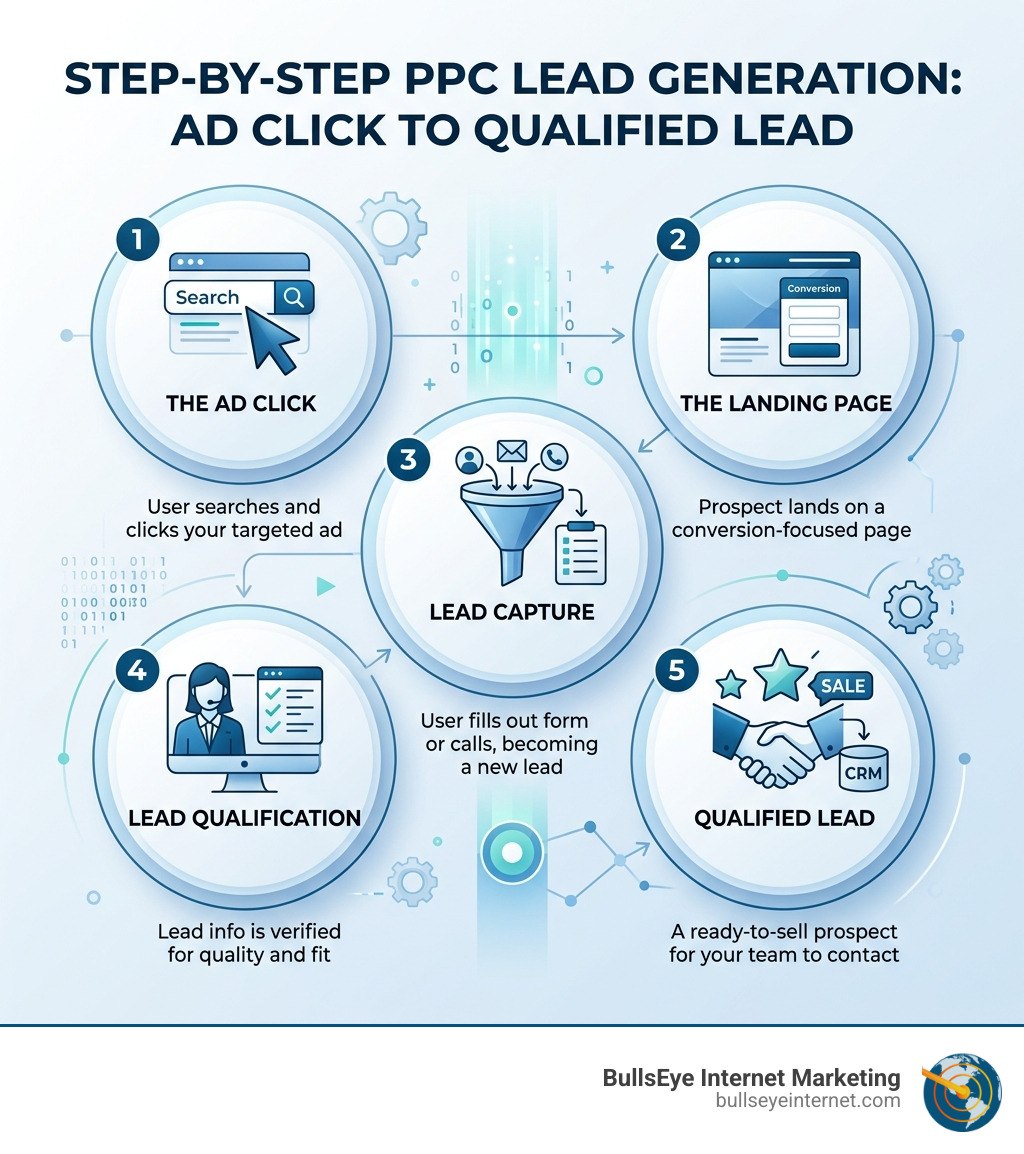
Here’s the quick version of how it works:
- You create an ad targeting high-intent keywords (e.g., “emergency plumber near me”)
- Your ad appears on page one of Google instantly — no waiting months for SEO
- A prospect clicks and lands on a dedicated page designed to capture their info
- They fill out a form or call — becoming a lead in your pipeline
- You follow up and convert that lead into a paying customer
Unlike e-commerce PPC, where the goal is an immediate purchase, lead generation PPC is about starting a conversation. The sale comes later — after a quote, consultation, or demo.
Ask any business owner what they need most and the answer is almost always the same: more customers. The challenge isn’t just getting clicks — it’s turning those clicks into real, qualified leads that your sales team can actually close. That’s where most businesses get stuck. They run ads, spend money, and end up with traffic that never converts — or leads that go nowhere.
PPC done right changes that. With roughly 85% of search clicks going to page-one results, and PPC traffic converting 50% better than organic traffic, paid search puts you directly in front of buyers who are already looking for what you offer — right now, not six months from now.
I’m Ronnie Katz, founder of BullsEye Internet Marketing, and I’ve been helping businesses generate leads through PPC for lead generation and other paid channels since 2006. In this guide, I’ll walk you through everything you need to build campaigns that fill your pipeline with quality leads — not just clicks.
PPC for lead generation terms you need:
Understanding PPC for Lead Generation vs. E-commerce
To master PPC for lead generation, you first have to understand that it is a completely different beast than e-commerce. In e-commerce, the goal is a “one-and-done” transaction. A customer sees a pair of shoes, clicks, and buys. The “conversion” is the sale itself.
In lead generation, we aren’t selling a product; we are facilitating an information exchange. We are looking for prospects who need a quote, a consultation, or a service call. Because the price point is often higher and the service more complex, the customer isn’t ready to swipe a credit card after one click. They need to be qualified.
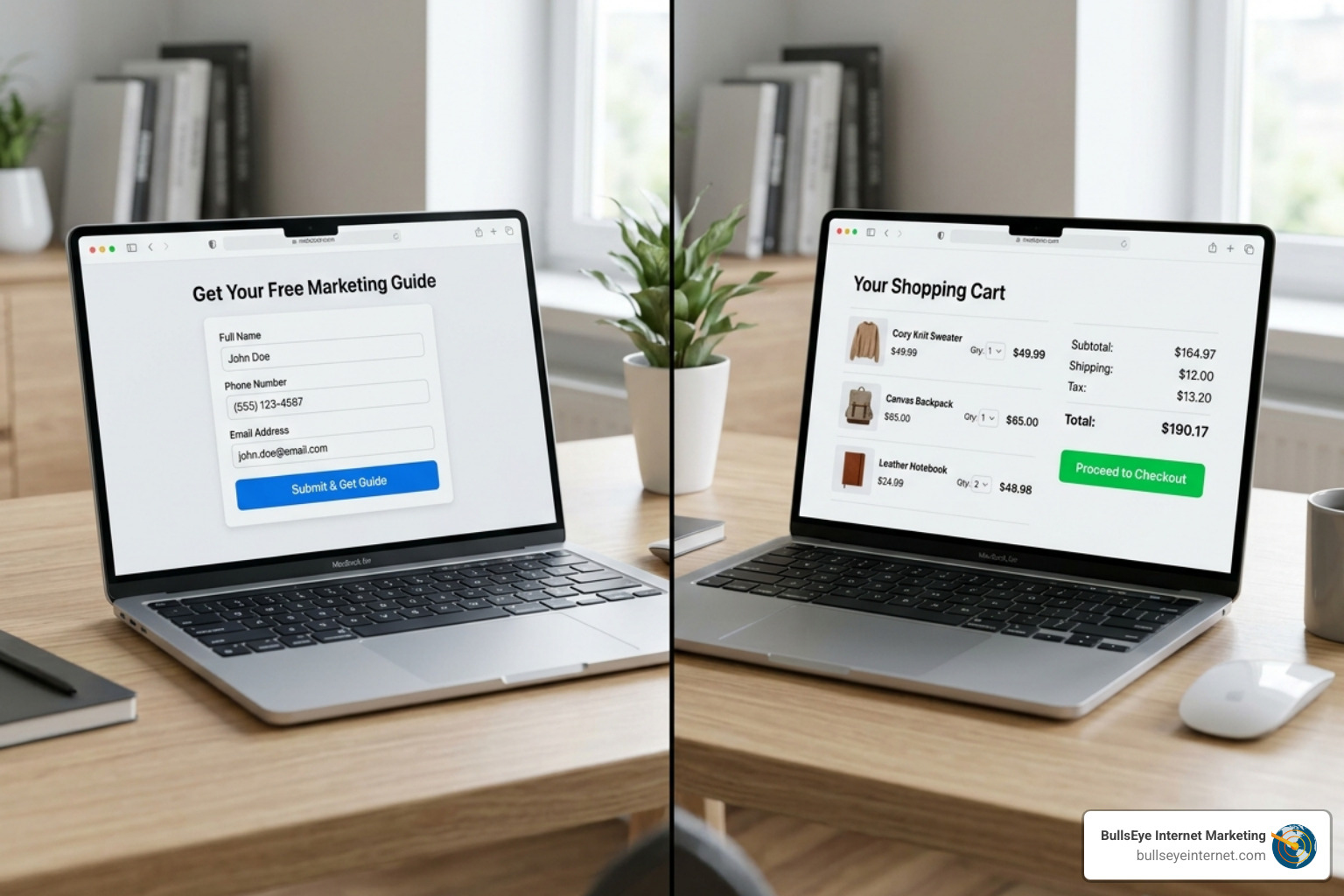
| Feature | Lead Generation PPC | E-commerce PPC |
|---|---|---|
| Primary Goal | Capture contact info (Phone/Form) | Immediate online sale |
| Sales Cycle | Long (Weeks to Months) | Short (Minutes to Days) |
| Ad Copy Focus | Solutions, Trust, & Benefits | Price, Shipping, & Discounts |
| Landing Page | Minimalist with a focus on friction-free forms | Product catalogs with “Add to Cart” |
| Key Metric | Cost Per Lead (CPL) | Return on Ad Spend (ROAS) |
For many businesses in Florida—from HVAC companies in Fort Lauderdale to law firms in Miami—this distinction is vital. You aren’t just looking for visitors; you’re looking for pay per lead opportunities where a real person is raising their hand for help.
Why PPC for Lead Generation Outperforms Other Channels
We often get asked: “Why should I pay for clicks when I can do SEO or post on social media?” While we love a holistic approach, PPC for lead generation offers advantages that “free” channels simply can’t match:
- Instant Visibility: SEO is a marathon. It can take 6 to 12 months to see results in competitive South Florida markets. PPC puts you on page one of Google in 24 to 48 hours.
- High-Intent Buyers: Someone scrolling through Instagram might be interested in your service, but someone typing “water damage restoration West Palm Beach” into Google has a problem that needs solving right now. How Pay Per Lead Marketing Drives Real Results is by capturing that “now” intent.
- Control Over Messaging: Unlike organic listings where Google decides what text to show, PPC allows us to control every word the prospect sees, ensuring it aligns perfectly with your current offer.
- Predictability: Once a campaign is optimized, it becomes a lever. If you need more leads next month, you can often increase your budget to scale your results predictably.
Who Benefits Most from Paid Lead Capture?
While almost any business can use ads, PPC for lead generation is the “secret sauce” for specific industries where the lifetime value of a customer is high. We’ve seen incredible success for:
- Service-Based Businesses: Plumbers, electricians, and roofers who need local calls.
- Professional Services: Accountants and Pay Per Lead For Lawyers where a single case can be worth thousands.
- B2B Software & SaaS: Companies that need to book demos or trials.
- Financial Services: Insurance agents and mortgage brokers who need to qualify prospects before providing quotes.
Building a High-Intent Keyword and Targeting Strategy
The foundation of every successful campaign is the keyword list. If you target the wrong words, you’ll get the wrong clicks—and your budget will vanish into thin air. At BullsEye Internet Marketing, we focus on “commercial intent.” This means we aren’t just looking for people searching for information; we’re looking for people ready to hire.
Selecting High-Intent Keywords for Lead Generation
Not all keywords are created equal. We categorize them into three buckets:
- Problem-Aware: “Why is my AC leaking?” (Low intent, informational)
- Solution-Focused: “AC repair services” (Medium intent, considering options)
- High-Intent/Transactional: “Emergency AC repair Boca Raton” (High intent, ready to book)
For a profitable campaign, you want to put the bulk of your budget into high-intent terms. You can also target “competitor terms”—bidding on the names of other companies in your area—to capture prospects who are already looking for a solution but haven’t committed yet. For example, a pest control company might find success with Pest Control Pay Per Lead strategies that target users looking for specific local competitors.
Using a Pay Per Click Management Expert Guide approach involves moving beyond broad match keywords. Broad match is a trap; it allows Google to show your ad for “related” terms that might be completely irrelevant. We prefer “Exact Match” or “Phrase Match” combined with a robust Negative Keyword list. Negative keywords tell Google: “Do NOT show my ad if the search includes these words” (e.g., “free,” “jobs,” “training,” or “DIY”).
The Role of Remarketing and Audience Exclusions
Did you know that only about 2% of web traffic converts on the first visit? Remarketing allows us to follow the other 98% around the web with “gentle reminders.” If a prospect visited your site in Boynton Beach but didn’t call, we can show them a targeted ad on Facebook or a news site to bring them back.
Crucially, we also use Audience Exclusions. Once someone becomes a lead, we stop showing them ads. There’s no sense in paying for a click from someone who has already filled out your form! We also use “Lookalike Audiences” to find people whose browsing behavior matches your current best customers.
Optimizing the Post-Click Experience for Maximum Conversions
Getting the click is only half the battle. If you send high-quality traffic to a messy, confusing homepage, you are wasting money. The “Post-Click Experience” is where the actual money is made.
Crafting Ad Copy that Qualifies Leads
Your ad copy shouldn’t just be “click-bait.” It should act as a filter. By using qualifying language, you ensure that the people who click are the people you actually want to talk to.
- Unique Selling Propositions (USP): Mention “24/7 Service,” “Family Owned Since 1990,” or “Licensed & Insured.”
- Qualifying Language: If you only handle commercial projects, say “Commercial Only” in the ad. If your services start at a certain price, mention it. This scares off the “tire kickers.”
- Action-Oriented CTAs: Use “Get Your Free Quote,” “Call Now for Immediate Help,” or “Book Your Consultation.”
- Ad Extensions: Use call extensions, location extensions, and sitelinks to make your ad larger and more informative. For a roofer, this might mean linking directly to a Roofing Pay Per Lead 101 resource or a gallery of past work.
Designing Landing Pages Optimized for PPC for Lead Generation
A landing page has one job: get the lead. It shouldn’t have a navigation menu, a “Meet the Team” page, or links to your social media. Those are just exits that let prospects leave without converting.
Essential landing page elements include:
- Message Match: The headline of your page must match the text of your ad. If the ad says “Free Water Damage Inspection,” the page headline should say “Get Your Free Water Damage Inspection.”
- Minimal Fields: Every extra field on a form reduces conversion rates by 5-10%. Only ask for what you absolutely need (usually Name, Email, and Phone).
- Mobile Responsiveness: Over 60% of searches happen on mobile. Your page must load in under 2 seconds and look perfect on a smartphone.
- Trust Signals: Include logos of trade associations, Better Business Bureau badges, and real customer testimonials. This is especially important for home services, as seen in our Hvac Pay Per Lead Guide.
Measuring Success: Tracking, CPL, and ROI
If you can’t measure it, you can’t manage it. One of the biggest mistakes businesses make is looking at “vanity metrics” like impressions or clicks. Clicks don’t pay the bills—customers do.
To truly understand your PPC for lead generation performance, you need a closed-loop tracking system. This includes:
- Conversion Tracking: Setting up “tags” that fire when a form is submitted.
- Dynamic Number Insertion (DNI): This technology swaps the phone number on your site based on which keyword the user searched. This tells us exactly which ad triggered a phone call.
- CRM Integration: Connecting Google Ads to tools like HubSpot or Salesforce so you can see which leads actually turned into revenue.
Working with Pay Per Click Management Companies Florida allows you to see the full journey from the first click to the final handshake.
Calculating and Optimizing Your Cost Per Lead
The most important metric for your business is Cost Per Lead (CPL).
The Formula: Total Ad Spend / Total Number of Leads = CPL.
For example, if you spend $1,000 and get 20 leads, your CPL is $50. Whether that is “good” depends entirely on your industry and your “Lead-to-Sale” closing rate. If a single customer is worth $5,000 to you, a $50 lead is a bargain!
To lower your CPL, we focus on improving your Quality Score. Google gives every keyword a score from 1 to 10 based on ad relevance and landing page experience. A higher Quality Score means you pay less per click than your competitors for the same position. We also use AI-powered bidding strategies like “Target CPA” (Cost Per Acquisition) to let Google’s machine learning find the users most likely to convert. For a deeper dive, check out our Lead Generation Experts Complete Guide.
Frequently Asked Questions about PPC for Lead Generation
How long does it take to see results from a PPC lead gen campaign?
One of the best things about PPC is that it is nearly immediate. You can start seeing traffic and phone calls within 24 to 48 hours of launching a campaign. However, “optimization” takes longer. We typically recommend a 30 to 90-day window to gather enough data to refine your keywords, test ad copy, and drive down your CPL. Consistency is key, as outlined in our Pay Per Click Management Service Complete Guide.
What is a good budget for starting with PPC lead generation?
There is no “magic number,” but you need enough budget to generate statistically significant data. In many Florida service industries, a starting budget of $1,000 to $5,000 per month is common. We recommend starting with a “test budget” to identify winning keywords and then scaling once you see a positive ROI. Our Pay Per Click Management Agency Complete Guide covers more on budget allocation.
Why am I getting leads that aren’t qualified?
This is usually caused by one of four things:
- Broad Match Keywords: You’re bidding on terms that are too vague.
- Vague Ad Copy: You aren’t using qualifying language to filter out the wrong people.
- Negative Keyword Gaps: You haven’t excluded terms like “cheap” or “DIY.”
- Landing Page Friction: Your form is too easy to fill out, attracting spam or low-intent users.
Conclusion
Mastering PPC for lead generation isn’t about spending the most money; it’s about spending your money the smartest way possible. By targeting high-intent keywords, qualifying prospects through your ad copy, and providing a frictionless landing page experience, you can turn Google into a predictable lead-generation machine for your business.
At BullsEye Internet Marketing, we’ve spent nearly two decades perfecting this process for businesses across South Florida, from Miami-Dade to Indian River County. We believe in providing a true competitive advantage, which is why we offer no long-term contracts and work with only one client per industry per geographic area. When you work with us, we aren’t helping your competitors—we’re helping you beat them.
Ready to stop chasing clicks and start closing customers? Power up your business with our Pay Per Call Agency for Google Local Services Ads and let’s build a pipeline that grows your bottom line.
Learn more about our local expertise:
