
Why Beauty Clinic Marketing Is Harder Than Most Businesses Think
Beauty clinic marketing is the practice of attracting, converting, and retaining clients for aesthetic and cosmetic treatments — using channels like SEO, paid ads, social media, email, and referrals.
Here’s a quick overview of what actually works:
| Strategy | What It Does | Best For |
|---|---|---|
| Local SEO | Gets you found in “near me” searches | Long-term organic growth |
| Google Ads (PPC) | Captures high-intent searchers | Fast, measurable bookings |
| Social Media | Builds trust through visual proof | Awareness and brand authority |
| Email & SMS | Keeps existing clients coming back | Retention and rebooking |
| Referral Programs | Turns happy clients into ambassadors | High-converting new leads |
| Website CRO | Converts visitors into booked appointments | Improving ROI on all channels |
Running a beauty clinic is demanding. You’re delivering results that directly affect how people feel about themselves. But if potential clients can’t find you online — or they find you and don’t trust what they see — that expertise goes to waste.
The stakes are high. 84% of patients check online reviews before choosing a provider, and over half read at least six reviews before deciding. One bad review or a poorly designed website can cost you dozens of bookings.
What makes this space especially tough is the combination of challenges clinics face:
- Strict advertising regulations around cosmetic and medical treatments
- A crowded local market where many clinics compete on price
- Patients who research extensively before ever picking up the phone
- Ad platforms that restrict before-and-after imagery and treatment claims
Most clinics respond by throwing money at ads or posting more on Instagram. The result? Lots of activity, few actual bookings.
The clinics that grow consistently do something different. They build a system — one that earns trust, captures local demand, and turns website visitors into paying clients.
I’m Ronnie Katz, founder of BullsEye Internet Marketing, and with over 20 years of experience in online marketing — including working directly with aesthetic and cosmetic practices on beauty clinic marketing — I’ve seen what separates clinics that grow from those that stall. This guide breaks down exactly what works, what doesn’t, and how to build a marketing engine that keeps your calendar full.
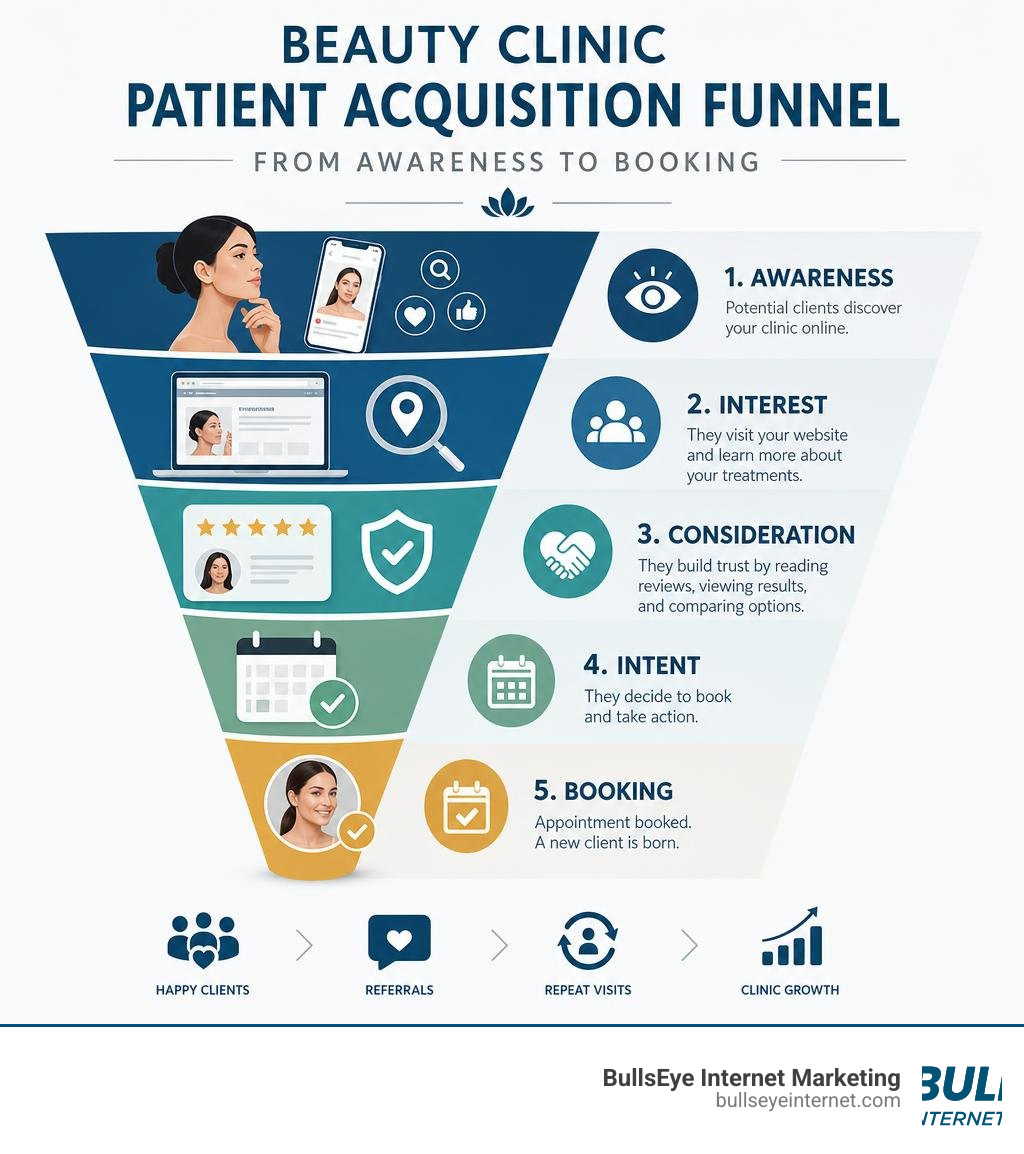
Simple guide to Beauty clinic marketing:
What is Beauty Clinic Marketing and Why is it Unique?
Marketing a beauty clinic isn’t like marketing a local restaurant or a retail boutique. When someone decides to undergo an aesthetic procedure—even a non-surgical one like Botox, dermal fillers, or laser skin resurfacing—they aren’t just buying a service. They are investing in their self-confidence, their appearance, and their physical well-being.
Because these procedures carry physical risks and high emotional weight, the patient’s decision-making process is highly considered, deeply personal, and heavily reliant on clinical trust.
Defining the Core of Beauty Clinic Marketing
At its heart, aesthetic marketing is about communicating safety, clinical authority, and predictable, natural-looking results. Unlike general medical marketing, which often focuses on treating illnesses or managing chronic conditions, beauty clinic marketing operates in the elective space. This means we must tap into different psychological triggers: self-care, confidence, and personal transformation.
To succeed, your marketing must establish your lead practitioners as trusted experts. We achieve this by focusing on Aesthetic Clinic Marketing strategies that highlight clinical credentials, professional affiliations, and educational content.
Furthermore, search engines like Google hold beauty and medical websites to an incredibly high standard. Google classifies cosmetic procedure content under the YMYL (Your Money or Your Life) category. This means search algorithms strictly evaluate your website under E-E-A-T (Experience, Expertise, Authoritativeness, and Trustworthiness) guidelines. To rank well organically, your content cannot be superficial; it must be medically accurate, thoroughly researched, and ideally authored or reviewed by qualified clinical professionals.
The Unique Challenges of Promoting Aesthetic Services
If you have ever tried to run a simple ad campaign for a med spa or cosmetic surgery center, you already know how difficult the digital landscape can be. Beauty clinics face a minefield of unique obstacles:
- Strict Advertising Restrictions: Major platforms like Google and Meta have stringent policies regarding medical procedures. Directly referencing prescription medications (such as Botox or Dysport) in your ad copy can lead to immediate ad disapproval or account suspension. Additionally, before-and-after photos are closely monitored to prevent unrealistic expectations or body-shaming.
- The Impact of Online Reviews: Reputation is everything. Statistics show that 61% of patients say even a personal recommendation wouldn’t sway them if they found negative reviews online. A single unaddressed negative review on Google can derail months of hard work.
- Market Saturation: From South Beach in Miami to the bustling neighborhoods of Fort Lauderdale and West Palm Beach, the local landscape is highly competitive. Many clinics fall into the trap of competing on price, which devalues their brand and attracts low-loyalty “bargain hunters.”
- Navigating Compliance: In the United States, healthcare marketing must comply with HIPAA regulations regarding patient privacy. You cannot use a patient’s before-and-after photos or share their testimonial without explicit, documented, and legally compliant consent.
To navigate these challenges successfully, clinic owners need a comprehensive roadmap. For a deeper dive into navigating these industry shifts, read the Aesthetic & MedSpa Clinics Marketing Guide 2026.
High-Impact Channels for Beauty Clinic Marketing
To build a marketing strategy that doesn’t collapse when a social media algorithm changes, you need an omnichannel approach. Relying solely on Instagram is a risky gamble. Instead, you want to meet your potential patients at every stage of their decision-making journey.
Local SEO and Google Business Profile Optimization
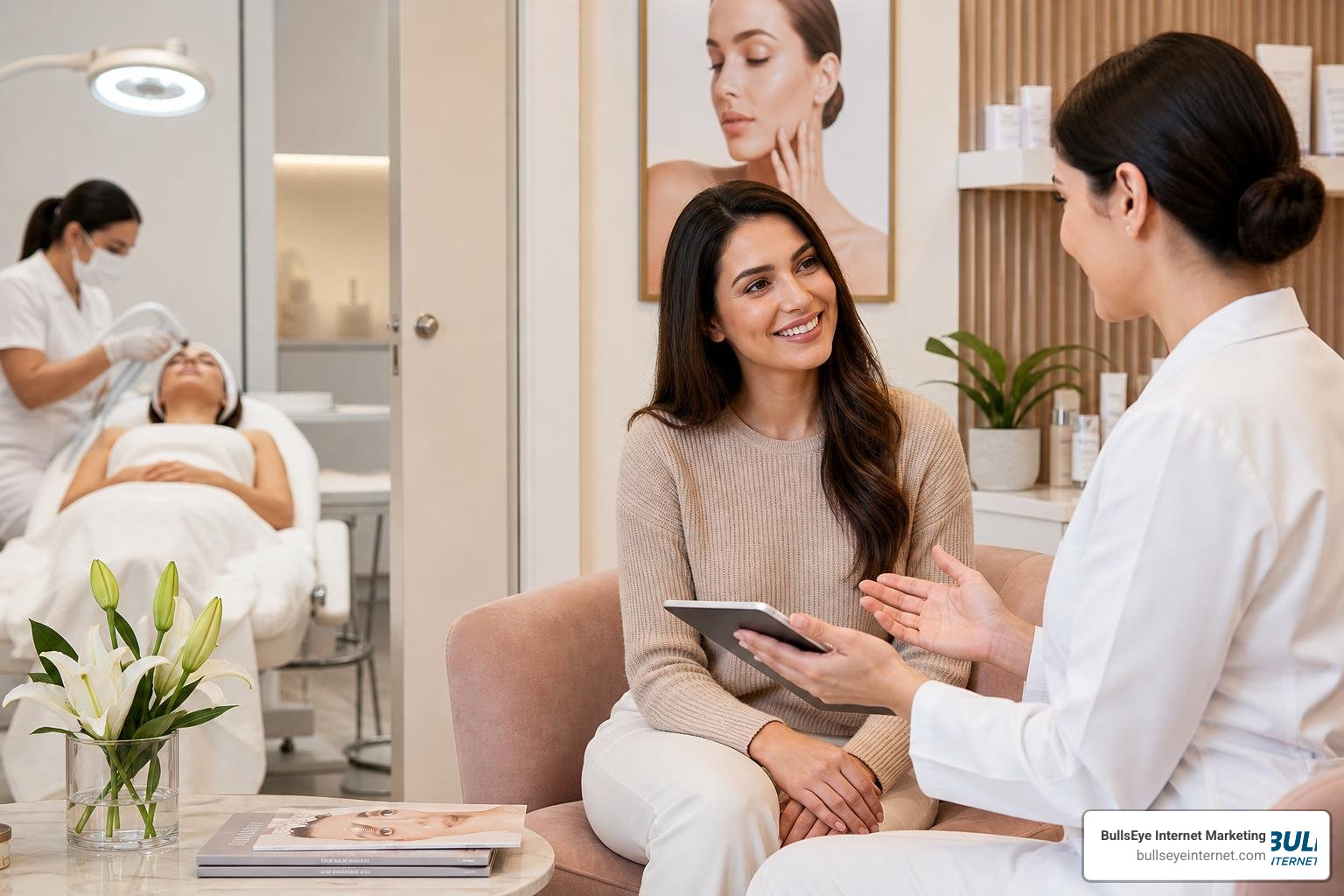
Local search is the lifeblood of any brick-and-mortar beauty clinic. When someone in Boca Raton or Coral Gables searches for “coolsculpting near me” or “best lip filler,” they have high intent—they are ready to book. If you aren’t appearing in the “Local 3-Pack” (the map section at the top of Google search results), you are losing valuable patients to your competitors. 75% of people never scroll past the first page of search results.
To dominate local search, you must implement robust Local SEO for Small Businesses tactics:
- Claim and Optimize Your Google Business Profile (GBP): Ensure your Name, Address, and Phone number (NAP) are 100% consistent across your website, social profiles, and online directories.
- Select Precise Categories: Choose highly specific primary and secondary categories (e.g., “Medical Spa,” “Skin Care Clinic,” “Cosmetic Surgeon”).
- Build Out Treatment-Specific Pages: Instead of having a single “Services” page, create dedicated landing pages for every treatment you offer (e.g., “Botox in West Palm Beach” or “Microneedling in Fort Lauderdale”). This allows you to target specific local search terms and address treatment-specific questions.
- Systematic Review Generation: Since reviews are a direct ranking signal for local search, build a repeatable system to request Google reviews immediately after a patient’s visit.
Paid Advertising and Google Local Services Ads
While SEO builds a compounding asset for long-term growth, paid advertising delivers immediate visibility. However, running standard Google Search Ads can be expensive if your campaigns aren’t optimized.
To maximize your return on ad spend (ROAS), we highly recommend leveraging Google Local Services Ads for Health Care Services. These ads appear at the very top of Google search results, even above traditional PPC ads. They operate on a pay-per-lead model rather than pay-per-click, meaning you only pay when a qualified prospect actually calls your clinic or submits a booking request through the ad.
For traditional PPC campaigns, keep in mind that the average conversion rate for PPC sits at around 2.35%. To beat this benchmark, your ads must direct users to highly optimized, treatment-specific landing pages rather than your homepage. Your ad copy should focus on the benefits of the treatment (e.g., “Restore Youthful Radiance”) rather than using restricted clinical terms that might trigger ad rejections.
Social Media and Video Marketing Services
Social media is your clinic’s modern digital storefront. It is where prospective patients go to validate your work, evaluate your clinic’s environment, and get a feel for your practitioners’ personalities.
To stand out in a crowded social media landscape, focus heavily on video. Our Video Marketing Services emphasize short-form vertical video (TikTok and Instagram Reels) as the ultimate tool for building trust.
Your social media content strategy should rotate around four key pillars:
- Educational Content: Explain how treatments work, who is an ideal candidate, and what to expect during recovery.
- Before-and-After Showcases: Share high-quality, ethically sourced visual proof of your results (always with explicit patient consent).
- Behind-the-Scenes & Practitioner Spotlights: Show the faces of your clinicians to build human-to-human connection.
- Debunking Myths: Address common misconceptions about popular treatments to position your clinic as an honest, transparent authority.
For a comprehensive approach to managing these platforms, explore our dedicated guide on Social Media Marketing.
Building a Trustworthy Brand and Converting Leads into Bookings
Getting people to visit your website or follow your social media page is only half the battle. The real magic happens when you convert that attention into actual, paid consultations.
Turning Website Visitors into Patient Bookings
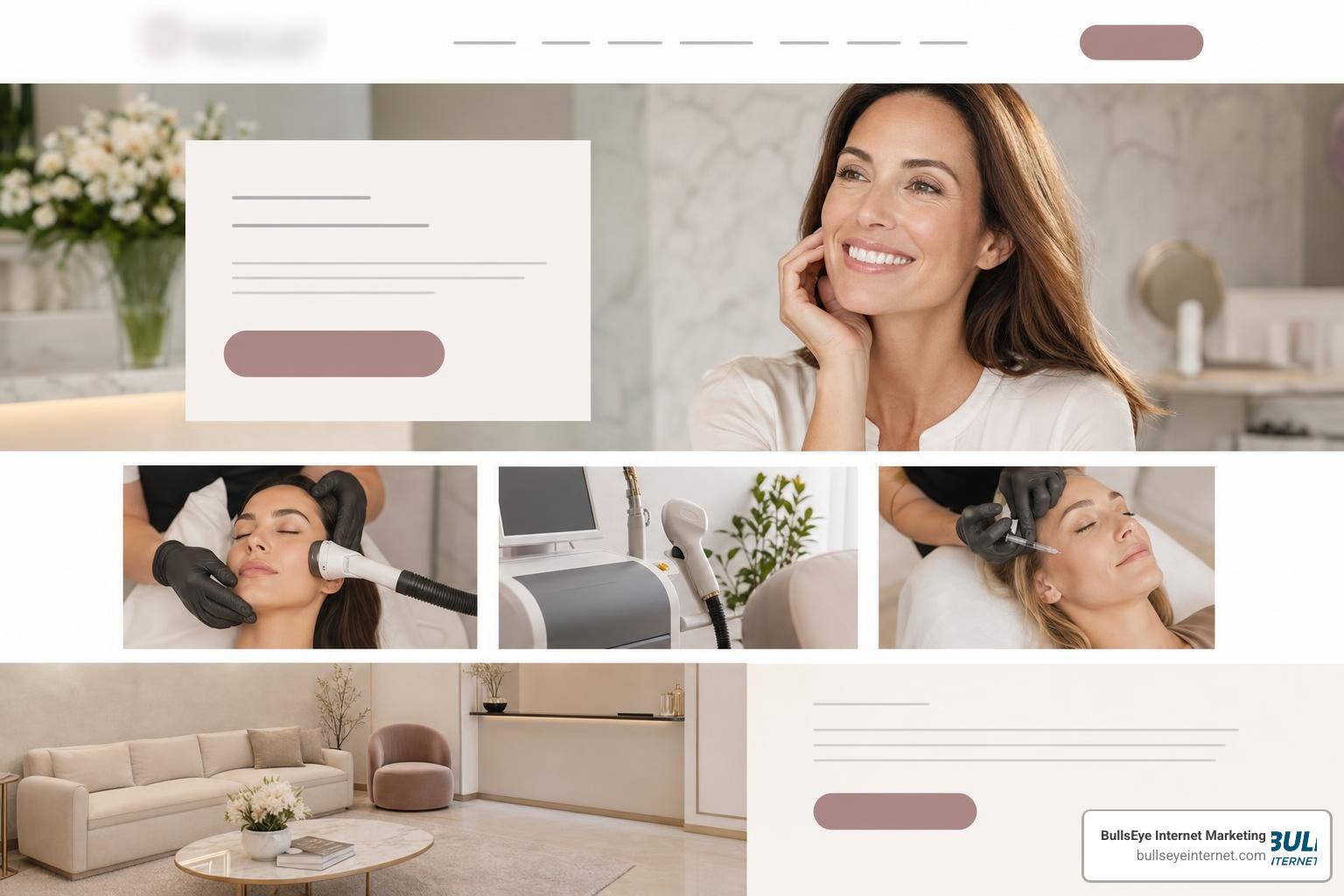
Your website should not function as a passive online brochure; it must be a high-performing booking engine. To turn casual browsers into committed patients, you need to reduce friction at every touchpoint.
- Clear Value Proposition Above the Fold: Within three seconds of landing on your site, visitors should know exactly what you specialize in, where you are located, and how to book an appointment.
- Sticky Call-to-Action (CTA): Keep a “Book Consultation” button visible at all times, whether the user is on a desktop or scrolling on a mobile phone.
- Trust Signals: Feature real patient reviews, clinical credentials, and links to your before-and-after galleries prominently on your primary pages.
- Frictionless Scheduling: Implement an instant online scheduling tool that allows patients to select their preferred date, time, and practitioner without having to make a phone call.
For clinics focusing on specialized procedures, your conversion strategies must be tailored to the patient’s mindset. Learn more about capturing high-value leads in our specialized guides on Cosmetic Surgery Lead Generation and Cosmetic Dermatology Marketing.
Nurturing Leads with Automation and Email Marketing
Acquiring a new customer can cost anywhere from 5 to 25 times more than retaining an existing one. Yet, many clinics neglect their existing database of patients. An increase in customer retention of just 5% can boost your clinic’s profits by 25% to 95% over time.
To unlock this hidden revenue, implement three automated email and SMS nurture sequences:
- The New Lead Welcome Sequence: When someone downloads a guide or requests information, send a series of 3-5 educational emails introducing your practitioners, sharing patient success stories, and offering a seamless way to book a consultation.
- Post-Treatment Check-Ins: Send automated, personalized text messages 24 hours, 7 days, and 30 days after a treatment. This shows exceptional patient care and provides an organic opportunity to request a Google review.
- The Recall Cadence: Many treatments (like Botox or chemical peels) require regular maintenance. Set up automated reminders to trigger 12 to 16 weeks after a patient’s last treatment, prompting them to book their next session before they fall out of their routine.
By automating these touchpoints, you build a sustainable patient pipeline that doesn’t rely on continuous ad spend. For insights on building organic patient acquisition systems, read How to attract more cosmetic clinic patients without ads.
Measuring Success and Building Repeatable Growth Systems
You cannot manage what you do not measure. To ensure your beauty clinic marketing budget—which typically averages about 7.7% of overall company revenue—is actually driving business growth, you must track the metrics that matter.
| Metric | What It Measures | Target Benchmark |
|---|---|---|
| Cost Per Lead (CPL) | The advertising spend required to generate one inquiry | Varies by treatment value |
| Consultation Conversion Rate | The percentage of consultations that turn into paid treatments | 50% to 70% |
| Client Lifetime Value (CLV) | The total revenue a single patient generates over their lifetime | Aim for at least 3x acquisition cost |
| Rebooking / Retention Rate | The percentage of patients who return for a second treatment | 70% or higher |
| Return on Ad Spend (ROAS) | The revenue generated for every dollar spent on ads | 5:1 or higher |
Essential Metrics for Beauty Clinic Marketing
To truly understand your marketing performance, look past “vanity metrics” like Instagram likes, followers, or website page views. Instead, focus on these critical indicators:
- Cost Per Booking: How much advertising budget does it take to get a patient physically in your chair?
- Treatment Conversion Rate: If your staff is booking consultations but failing to convert them into paid treatments, you may have a sales training issue or a mismatch in patient expectations. Aim for a 50% to 70% conversion rate from consult to treatment.
- Client Lifetime Value (CLV): A patient who comes in for a $300 facial but returns every month for a year is worth far more than a one-time $1,000 syringe of dermal filler. Track your CLV to understand how much you can afford to spend to acquire a new patient.
Creating a Resilient and Future-Proof Marketing Strategy
A successful marketing strategy is dynamic, not static. To ensure your beauty clinic remains resilient against shifting economic climates and emerging local competitors, conduct a thorough SWOT (Strengths, Weaknesses, Opportunities, Threats) analysis annually.
Rather than focusing solely on internal factors, use your SWOT analysis to identify unserved market gaps in South Florida. For instance, is there an underserved demographic in Coral Springs or Boynton Beach looking for advanced, non-surgical body contouring? Can you introduce a tiered membership model that provides predictable recurring monthly revenue? Review your marketing data quarterly, map your patient journey carefully, and adapt your tactics to keep your appointment book full year-round.
Frequently Asked Questions about Beauty Clinic Marketing
How do beauty clinics stay compliant with advertising regulations?
To stay compliant with US healthcare standards (including HIPAA and FDA guidelines), beauty clinics must focus their marketing messages on patient benefits, safety protocols, and realistic outcomes rather than making absolute claims.
Never use a patient’s before-and-after photos, testimonials, or clinical details without securing explicit, written, and dated consent. When running paid ads, avoid using restricted clinical terminology or referencing prescription-strength S4 medications directly in the ad copy; instead, direct users to educational landing pages that explain the treatment process thoroughly.
Why is organic patient acquisition more sustainable than paid ads?
Paid advertising is like a faucet—the moment you stop paying, the leads dry up immediately. Organic patient acquisition (built on long-term SEO, local search optimization, content marketing, and referral networks) acts as a compounding business asset.
Once your clinic ranks at the top of the Google Local Pack for high-intent keywords, you will continue to attract premium, ready-to-book patients month after month without paying for every click. Furthermore, referred patients and organic searchers typically have a higher lifetime value and are less price-sensitive than those acquired through discount-heavy ad campaigns.
What is the average conversion rate for beauty clinic PPC campaigns?
The industry average conversion rate for standard PPC campaigns is around 2.35%. However, clinics can significantly beat this benchmark by directing their paid traffic to highly optimized, treatment-specific landing pages rather than a generic website homepage.
By utilizing clear CTAs, displaying prominent trust signals, streamlining the booking process, and targeting high-intent local search queries, a well-optimized campaign can achieve conversion rates well above the industry average.
Conclusion
Building a thriving beauty clinic in today’s digital landscape requires more than just clinical expertise—it requires a predictable, repeatable marketing system that consistently turns local searchers into loyal patients.
At BullsEye Internet Marketing, we specialize in helping aesthetic clinics across South Florida—from Miami and Fort Lauderdale to West Palm Beach and the Treasure Coast—dominate their local markets. As a specialized Pay Per Lead Marketing Agency, we focus on what actually matters: generating exclusive, high-quality calls and booked appointments for your clinic.
We do things differently to give you a true competitive advantage:
- No Long-Term Contracts: We earn your business month after month based on real, measurable results.
- Strict Geographic Exclusivity: We work with only one client per industry in any given geographic area. When you partner with us, we focus entirely on helping you dominate your local competitors.
Ready to scale your clinic’s revenue and keep your treatment rooms booked year-round? Grow your clinic with expert advertising for plastic surgeons and aesthetic specialists today. Contact us to schedule your free strategy call.
