
Why Answer Box Optimization Is the Most Valuable Real Estate in Search Today
Answer box optimization is the practice of structuring your content so Google and AI-powered answer engines select it as the direct response to a user’s question — placing your brand at the very top of search results, above every other organic listing.
Here’s how to get featured in answer boxes:
- Write a direct 40-60 word answer immediately below a question-formatted heading (H2 or H3)
- Use FAQPage, HowTo, or Article schema (JSON-LD format) to help AI systems parse your content
- Target question-based, long-tail queries using words like who, what, how, when, where, why
- Build domain authority with quality backlinks — 81% of featured snippet winners have 1,000+ referring domains
- Keep pages under 2,000 words and ensure fast load times on mobile
- Strengthen E-E-A-T signals with author bios, citations, and regularly updated content
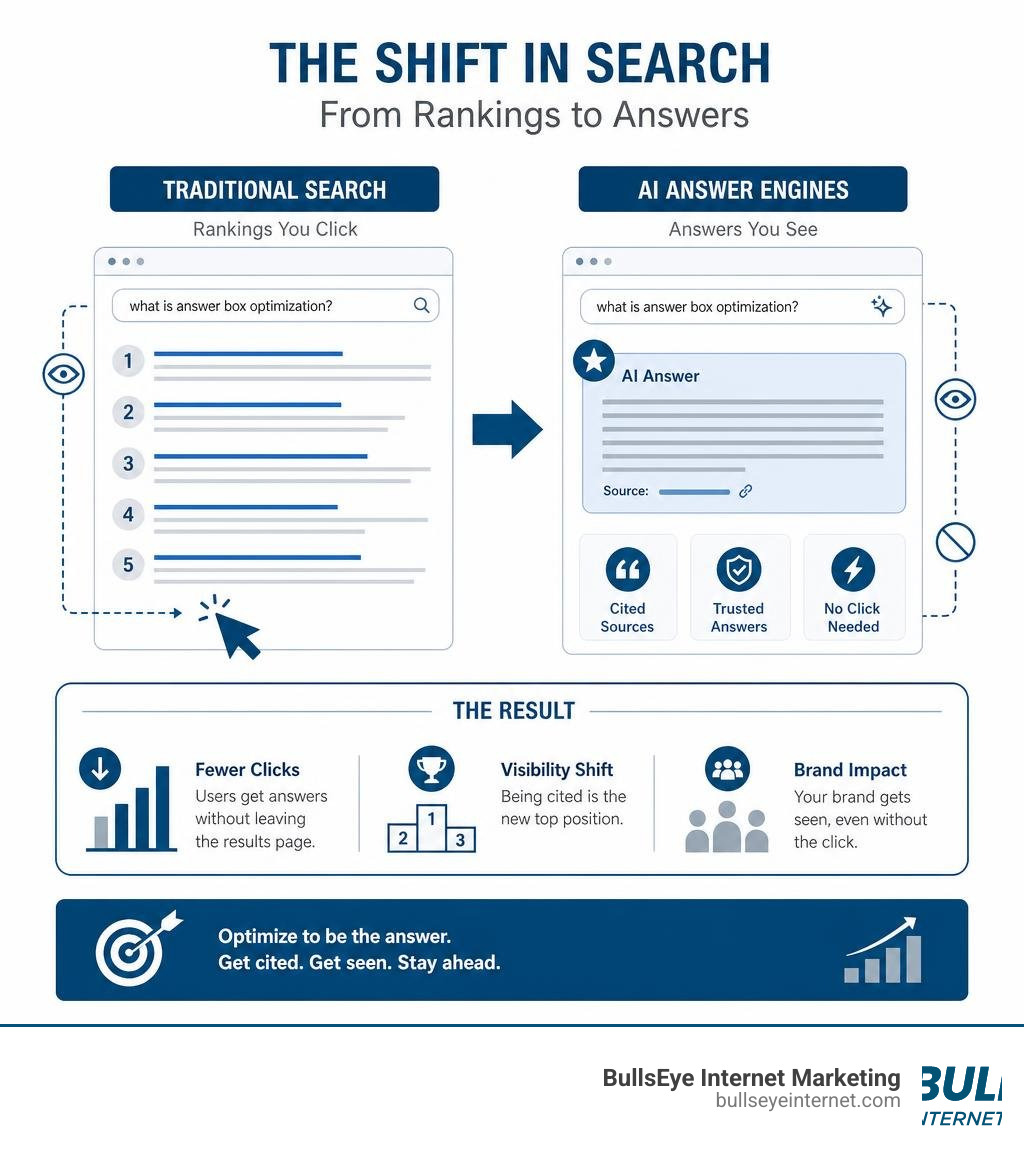
Here’s a number that should get your attention: around 60% of searches now end without a single click. Users get their answer straight from the search results page — and if that answer isn’t yours, your competitor’s brand is the one getting the recognition.
This is the new reality of search. Google’s AI Overviews now appear on roughly 48% of all tracked queries, and that number is projected to hit 70-80% by the end of 2026. Voice assistants, ChatGPT, and Perplexity are all pulling from the same pool of well-structured, authoritative content. If your pages aren’t built to be extracted and cited, you’re invisible to a growing share of your potential customers.
The good news? This is a winnable game — even for smaller businesses competing against industry giants.
I’m Ronnie Katz, founder of BullsEye Internet Marketing, and with over 20 years of experience in online marketing — including hands-on work with answer box optimization and AI-driven search visibility — I’ve seen how the right content structure transforms a brand’s presence in search. In this guide, I’ll walk you through exactly what works in 2026.
Answer box optimization terms to know:
Understanding the Shift: Search Engines vs. Answer Engines
To win the “Position Zero” spot, we first need to understand how the landscape under our feet has shifted. The era of traditional search engines simply matching keywords to a list of blue links is giving way to generative answer engines.
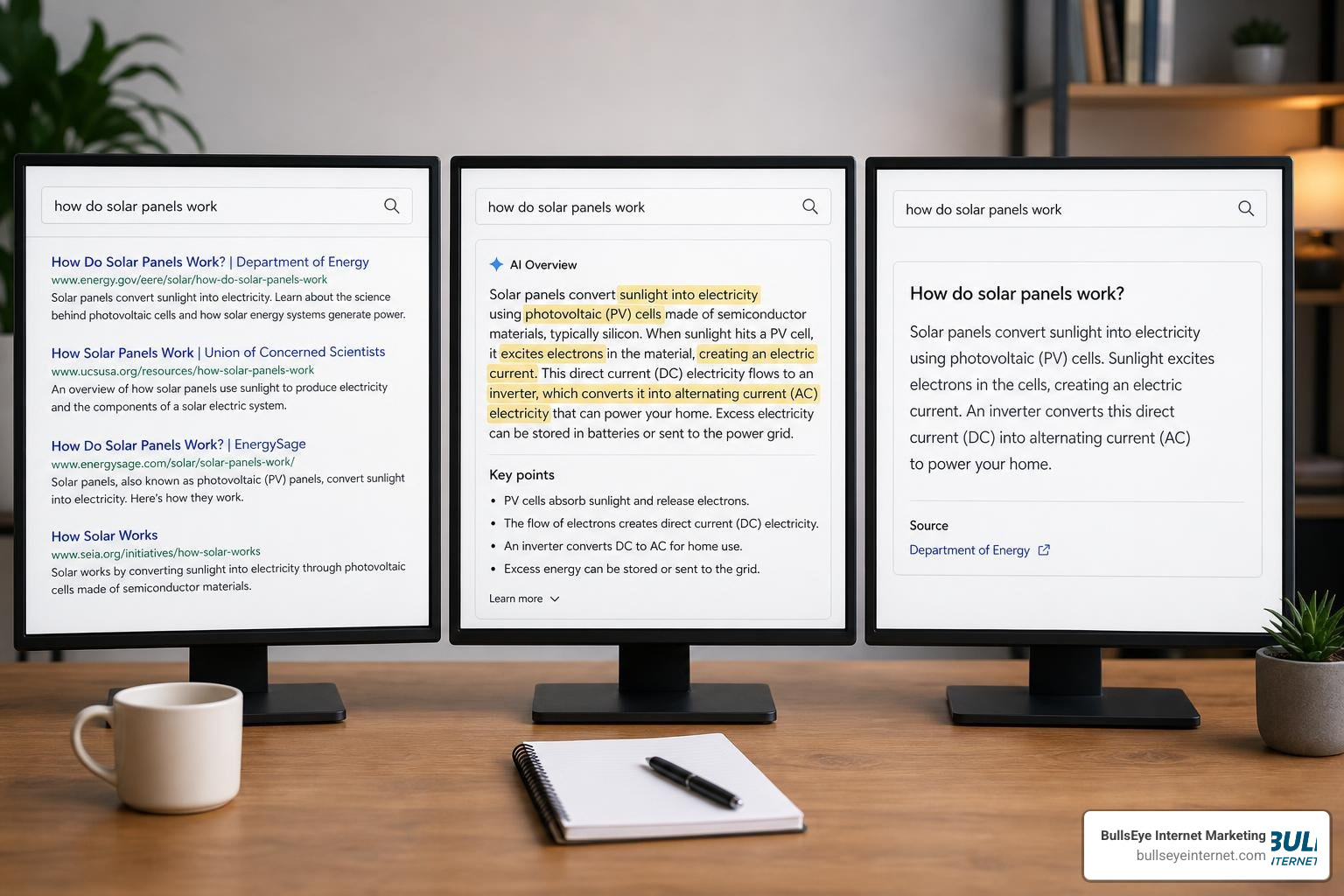
Traditional SEO focuses on driving clicks by ranking pages high in search results. Answer Engine Optimization (AEO), on the other hand, targets direct-answer formats. AEO is sometimes discussed under labels like Generative Engine Optimization (GEO), AI Optimization (AIO), or Chat-Engine Optimization (CEO). While traditional SEO aims to bring users to your site to browse, AEO assumes the user wants the answer immediately.
Why does this matter? Gartner predicted that 25% of organic traffic would shift to AI chatbots and virtual agents by 2026. This shift is already here. Google AI Overviews now reach over 2 billion monthly users, ChatGPT processes over 2.5 billion daily prompts, and Perplexity handles more than 1.2 billion monthly queries.
To see how these platforms differ, let’s look at the mechanics:
| Feature | Traditional Search Engines | Generative Answer Engines / AI Mode |
|---|---|---|
| Primary Output | List of indexed web links | Synthesized, natural-language answers |
| User Intent | Browsing, comparing, and researching | Quick, direct, actionable answers |
| Primary Metric | Click-Through Rate (CTR) and keyword rankings | Citation frequency, brand mentions, and trust |
| Search Style | Short keyword phrases (e.g., “Miami AC repair”) | Conversational questions (e.g., “How do I fix a leaking AC unit in South Florida?”) |
| Target Location | Page 1 organic results | “Position Zero” featured snippets & AI citations |
For a deep dive into what this means for your business, read our guide on What is AEO?.
Whether an answer engine is powered by Google’s Knowledge Graph, Large Language Models (LLMs), or Retrieval-Augmented Generation (RAG) systems, they all rely on extraction pipelines. They scan the web for clear, unambiguous facts. If your content is buried in a wall of dense text, these systems will skip your site and cite a competitor instead.
To learn more about how Google selects these featured highlights, check out Google’s Featured Snippets Guide. You can also learn how to balance these two worlds in the AEO Answer Engine Optimisation Guide 2026 | Involve Digital and see how strategies compare in Answer Engine Optimization: AEO Strategies vs. Traditional SEO .
Strategic Frameworks for Answer Box Optimization
So, how do we make our content irresistible to these extraction engines? We use a structured, highly intentional framework built around the BLUF (Bottom Line Up Front) model and the Citation Block Pattern.
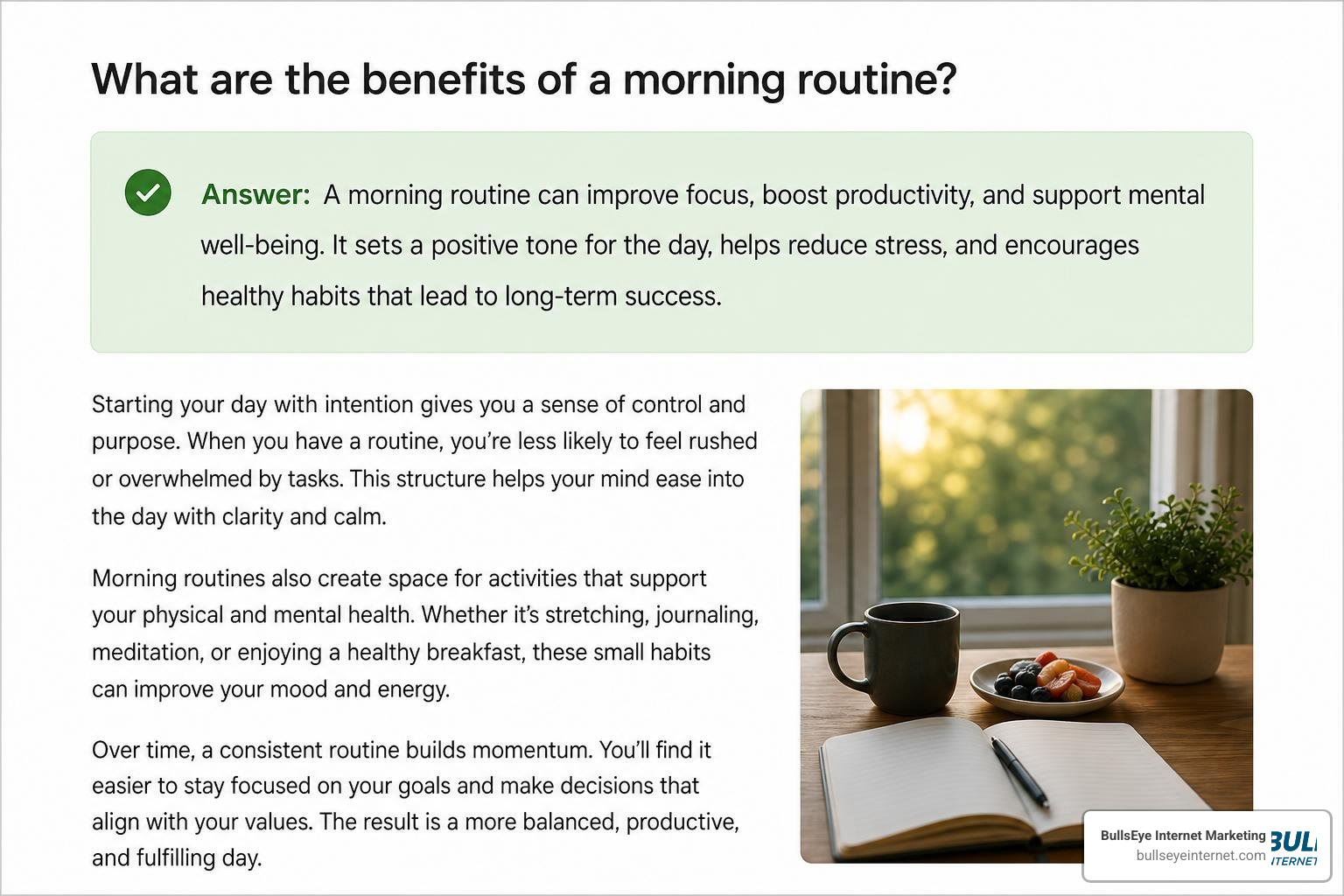
AI models and search crawlers process information in discrete text spans rather than reading entire pages. To win citations, we must structure our pages so that the answer is impossible to miss. We do this by implementing the following pattern:
- The Question Heading: Use an H2 or H3 heading phrased exactly like a user’s question (e.g., “How much does a commercial roof repair cost in Fort Lauderdale?”).
- The Citation Block: Place a concise, 40-to-60 word direct answer immediately below the heading. This block must be self-contained, fact-filled, and free of promotional fluff.
- The Supporting Context: Follow the citation block with your detailed analysis, lists, tables, images, and deeper explanations.
Why is the 40-to-60 word window so critical? Research shows that Google’s paragraph-style featured snippets average about 40 to 50 words (roughly 200 to 320 characters). This length is short enough to fit inside a single AI citation token without truncation, yet long enough to provide a complete, helpful answer.
To see this in action, compare these two approaches:
- Verbose (Incorrect): “When you are thinking about your home’s air conditioning system in South Florida, there are many factors to consider. We have been in business for years and always tell our customers that maintenance is key. If you are wondering how often to service your unit, it really depends, but generally speaking…”
- Concise Citation Block (Correct): “You should service your South Florida air conditioning system at least twice per year. Regular bi-annual maintenance prevents mold growth, improves energy efficiency, and extends the lifespan of your system in humid climates.”
By putting the bottom line up front, you give the AI crawler exactly what it wants to extract. For a step-by-step breakdown of this formatting technique, read The Citation Block Pattern: How to Format AEO Answers That AI Systems Actually Extract – Tygart Media .
To build a comprehensive strategy around this, explore our AEO Best Practices Ultimate Guide and our breakdown of Answer Engine Optimization AEO GEO LLM SEO. For a foundational overview of optimizing for these snippets, refer to Optimizing Content for Google’s Answer Box: The Definitive Guide [2026] | AI Search Rankings .
Keyword Research and Intent Mapping for Answer Box Optimization
Traditional keyword research focuses on search volume and broad terms. Answer box optimization requires a shift toward conversational, long-tail queries and semantic intent.
Over 65% of queries that display answer boxes contain between 3 and 5 words, and nearly a quarter of them include question-specific words such as who, what, where, when, why, and how.
To identify these high-opportunity questions:
- Analyze “People Also Ask” (PAA) Boxes: Look at the accordion questions Google displays for your target terms. These are pre-validated questions Google already associates with the topic.
- Mine Customer Touchpoints: Look at your own customer support emails, contact forms, and sales call transcripts. What specific questions do your clients in Miami, Fort Lauderdale, or West Palm Beach ask before hiring you?
- Use Semantic Clustering: Group related questions into topical hubs. Instead of writing ten separate thin pages, create one comprehensive resource that answers 5 to 7 closely related questions using clear, dedicated H3 headings.
For advanced tactics on identifying these opportunities, see Advanced Keyword Research for Google Answer Box Opportunities | AI Search Rankings and read our Answer Engine Marketing Complete Guide.
Technical Schema and Structured Data for Answer Box Optimization
While formatting your visible text is vital, structured data acts as the translator that helps search engines and AI models parse your pages with 100% accuracy. Pages with properly implemented schema markup are cited significantly more often in AI Overviews and featured snippets.
We recommend a multi-layered “Semantic Mesh” strategy using JSON-LD format:
- FAQPage Schema: This maps your question-and-answer pairs directly into the page code. The text in your schema must match your visible on-page text exactly (the WYSIWYG principle).
- HowTo Schema: Ideal for step-by-step guides, lists, and tutorials.
- Article Schema with Author Attribution: Connects your content to verified author entities, boosting your trust signals.
Here is a simplified example of FAQPage JSON-LD schema for a local service page:
{
  "@context": "https://schema.org",
  "@type": "FAQPage",
  "mainEntity": [{
 "@type": "Question",
 "name": "How often should you service your AC in South Florida?",
 "acceptedAnswer": {
 "@type": "Answer",
 "text": "You should service your South Florida air conditioning system at least twice per year. Regular bi-annual maintenance prevents mold growth, improves energy efficiency, and extends the lifespan of your system in humid climates."
 }
  }]
}
To learn more about implementing these technical assets, read Structured Data for Google Answer Box: Elite AEO Guide 2024 | AI Search Rankings . You can also consult Google’s Structured Data Guide and learn how to earn these visual search enhancements in our guide on What Are Google Rich Results and How to Get Them?.
Key Ranking Factors and E-E-A-T in the AI Era
Earning the top spot in search results isn’t just about formatting; it’s about trust. Google and generative AI engines prioritize sources that demonstrate high levels of E-E-A-T (Experience, Expertise, Authoritativeness, and Trustworthiness).
When an AI engine synthesizes a response, it evaluates the credibility of the source. Several factors determine whether your content is selected:
- Domain Authority and Backlinks: Trust is still anchored in links. An estimated 81% of sites that win a Google Quick Answer have a minimum of 1,000 referring domains.
- Content Length Sweet Spot: While long-form content is great for ranking, direct answers favor concise pages. An estimated 70% of sites with Quick Answers have less than 2,000 words on the target page. The ideal length is often around 1,500 words of highly focused, fluff-free information.
- Entity Disambiguation: Use clear, unambiguous nouns instead of vague pronouns. For example, write “BullsEye Internet Marketing provides SEO in Palm Beach County” instead of “We offer digital services there.” This helps AI models map your brand as a verified entity.
- Source Credibility: Include detailed author bios, links to professional social profiles (like LinkedIn), and clear references to original data or local industry standards.
By aligning your on-page structure with strong domain authority, you make it easy for AI crawlers to trust and cite your brand. For a breakdown of these trust metrics, see Google Answer Box: What Is It & How To Optimize | Lead-Craft and our article on AI Search Ranking Factors. You can also explore how to build these signals in our overview of Generative Engine Optimization Services 101.
Frequently Asked Questions about Answer Box Optimization
How does voice search relate to answer box optimization?
Voice search and answer box optimization are two sides of the same coin. Over 50% of all searches are now voice-based, and virtual assistants like Siri, Alexa, and Google Assistant pull their spoken answers directly from featured snippets and AI summaries.
Because spoken queries are naturally longer and more conversational, optimizing for voice search requires targeting natural speech patterns. By structuring your content around conversational question headings and providing direct, 40-60 word answers, you make it simple for voice assistants to read your content aloud to users.
What are the biggest mistakes brands make with AEO?
The most common mistake is failing to provide a direct answer quickly. Many brands write long, introductory paragraphs before getting to the point, which prevents AI crawlers from extracting the answer.
Other common pitfalls include:
- Blocking AI Crawlers: Accidentally blocking bots like GPTBot, ClaudeBot, or PerplexityBot in your robots.txt file.
- Overly Verbose Answers: Writing answers that exceed the 60-word sweet spot, causing AI systems to truncate or ignore them.
- Missing Schema Markup: Relying solely on text formatting without providing the backend JSON-LD schema that validates your content structure.
How do you measure the success of answer engine optimization?
As traditional click-through rates shift due to zero-click searches, measuring AEO success requires tracking new, modern metrics:
- AI Citations & Brand Mentions: Track how often your business is cited as a source in Google AI Overviews, ChatGPT, and Perplexity.
- Organic Search Impressions: An increase in impressions in Google Search Console often indicates that your content is appearing in featured snippets, even if users don’t click through immediately.
- AI Referral Traffic: Monitor the high-intent traffic coming directly to your site from links within AI summaries. Visitors referred by AI tools convert at significantly higher rates because they have already received answers to their preliminary questions.
- Local Conversion Metrics: For businesses in South Florida, tracking direct actions like phone calls and form submissions is the ultimate measure of success.
Dominating Search with BullsEye Internet Marketing
The search landscape in 2026 is clear: if your brand isn’t the direct answer, you’re missing out on a massive share of your market. Winning the featured snippet and appearing in AI summaries isn’t about luck; it’s about structuring your website so search engines and AI models can easily find, trust, and extract your information.
At BullsEye Internet Marketing, we specialize in helping businesses navigate this shift. Based in South Florida, we serve clients across Broward, Miami-Dade, Palm Beach, Martin, St. Lucie, and Indian River Counties — from Fort Lauderdale and Miami to West Palm Beach and Boynton Beach.
We do digital marketing differently:
- No Long-Term Contracts: We earn your business month after month based on real performance.
- Exclusivity: We work with only one client per industry per geographic area, giving you a true competitive advantage over your local competitors.
- Focus on Results: We design customized campaigns focused on generating actual calls, leads, and sales through Pay Per Lead, Google Business Profile Optimization, SEO, PPC, and conversion optimization.
Ready to claim your spot at the top of search? Let us help you become the definitive answer in your market. Master Answer Engine Optimization with BullsEye Internet Marketing and let’s start driving more calls to your business today.
