
Turn Google Ads Clicks Into Chiropractic Appointments
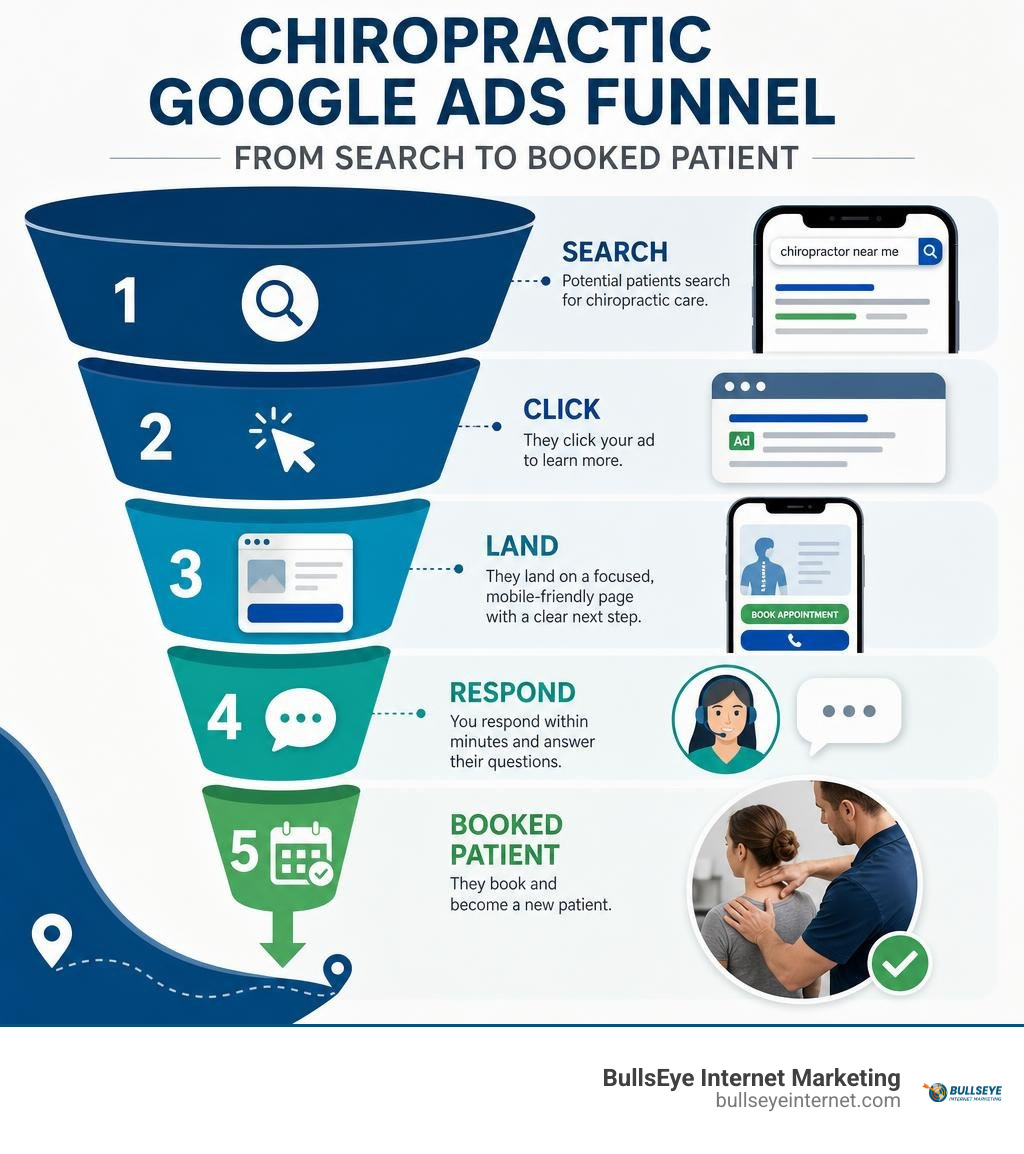
Google Ads for chiropractors works best when you target people actively searching for care, send them to a focused booking page, and respond to every lead within minutes. Start with high-intent local keywords, exclude irrelevant searches, track calls and booked appointments, and use your budget to improve the cost per actual patient, not just the cost per click.
A simple starting plan:
- Target searches such as “chiropractor near me,” “[service] chiropractor,” and urgent pain-related terms in your service area.
- Use separate campaigns for branded searches, core chiropractic services, and condition-based searches.
- Add negative keywords for jobs, schools, DIY advice, and free-seeking searches before launch.
- Send visitors to a mobile-first page with a clear call button and online booking option.
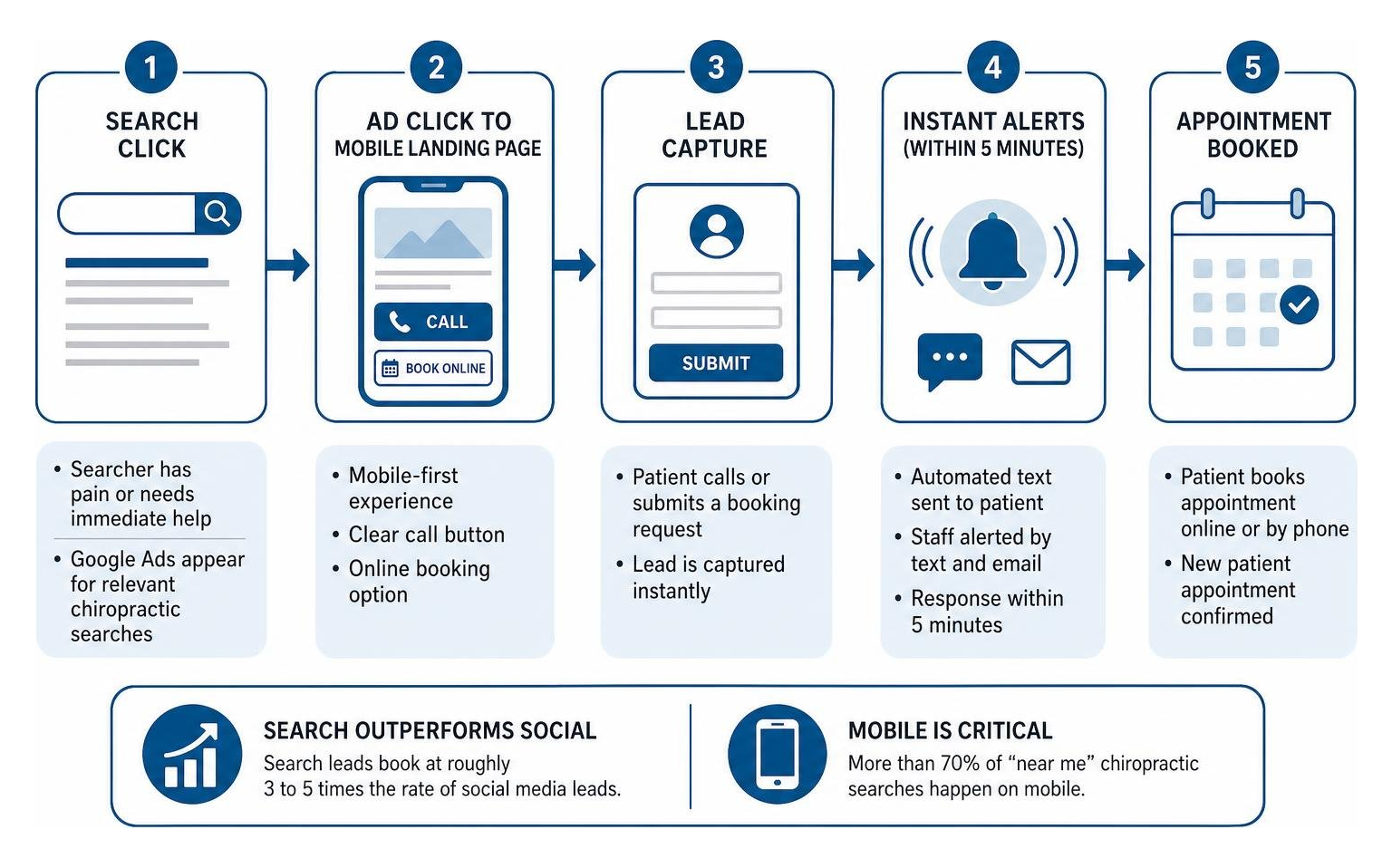
- Automate text and staff alerts so a new lead receives a response within five minutes.
This approach matters because search captures people who already want help. For medical practices, search leads can book at roughly three to five times the rate of social media leads. And with more than 70% of “near me” chiropractic searches happening on mobile, a fast, easy booking experience is not optional.
I am Ronnie Katz, founder and Principal CEO of BullsEye Internet Marketing, with more than 20 years of experience helping businesses improve visibility, calls, and conversions through paid search and local marketing. In this guide, I will break down Google Ads for chiropractors into practical steps you can use to build a more measurable patient-acquisition system.
Key terms for Google Ads for chiropractors:
Why Google Ads for Chiropractors Outperforms Social Media
When a prospective patient pinches a nerve or wakes up with severe neck pain, they do not open a social feed hoping an algorithmic video helps them feel better. They open a search engine and look for immediate clinical relief. This fundamental difference in commercial intent explains why paid search captures high-value new patients more consistently than interruption channels.
Search Intent vs Interruption Marketing
Social media advertising relies on interruption marketing. It puts an ad in front of a user who is browsing entertainment, reading updates, or passing time. Search advertising captures active pain searches directly at the exact moment a patient needs immediate help.
Because search users exhibit high commercial and clinical intent, search leads convert to booked appointments at 3 to 5 times the rate of social media leads for medical practices. Furthermore, over 70% of “near me” chiropractic searches occur on mobile devices, meaning prospective patients are looking for direct click-to-call actions or fast mobile scheduling. Exploring the ultimate guide to medical practice advertising and PPC highlights why capturing active intent generates a lower overall patient acquisition cost than cold interruption campaigns.
Google Local Services Ads and Paid Search Synergy
To dominate local search results, combining standard Google Search Ads with Google Local Services Ads (LSAs) creates powerful digital synergy. LSAs sit at the absolute top of the search engine results page, showcasing your Google Guaranteed badge, review score, and practice phone number.
While traditional search ads allow you to target specific symptoms and custom landing pages, LSAs operate on a direct pay-per-lead model. When paired together, your clinic occupies multiple spots in the search engine results and local map packs. To dive deeper into setup and bidding for these top-of-page placements, consult our Google Local Services Ads complete guide.
Campaign Structure and Keyword Targeting Blueprint
An organized account structure prevents wasted ad spend, raises Quality Scores, and lowers overall cost per click (CPC). Rather than dumping every keyword into a single ad group, we structure accounts into segmented themes based on patient intent and care requirements.
Our recommended structure separates traffic into:
- Branded Search: Captures searches for your clinic name and specific doctors.
- Service-Based Search: Targets general terms like “chiropractic clinic” or “spinal adjustment.”
- Condition-Based Search: Targets specific ailments like sciatica, pinched nerves, or herniated discs.
- Local Services Ads: Runs top-of-page pay-per-lead ads for local direct calls.
- Remarketing: Re-engages previous website visitors who did not schedule during their initial visit (strictly utilizing display for warm audiences, avoiding cold display placements).
High-Intent Keyword Strategy for Google Ads for Chiropractors
Keywords should be grouped into tightly matched themes with clear intent. For comprehensive platform insights, check out our Google Ads complete guide.
| Keyword Category | Example Keywords | Intent Level | Avg. CPC Range (US Metro) |
|---|---|---|---|
| Direct Service | chiropractor near me, best chiropractor [city] | High | $8.00 – $25.00 |
| Condition-Specific | sciatica treatment, pinched nerve relief | High | $7.00 – $20.00 |
| Urgent Care / Pain | emergency chiropractor, walk in chiropractor | Extreme | $10.00 – $30.00+ |
| Specialty Care | prenatal chiropractor, sports injury clinic | Medium-High | $6.00 – $18.00 |
Negative Keyword Lists to Protect Your Budget
Without proactive negative keyword management, 30% to 40% of your PPC budget can easily be wasted on irrelevant search terms. Clinics routinely pay for clicks from people seeking employment, medical degrees, or DIY cracking tutorials.
Add the following negative keyword categories before launching any campaign:
- Employment & Careers: jobs, hiring, salary, resume, assistant openings, career.
- Education & Training: school, classes, college, degree, accreditation, license requirements.
- DIY & Home Remedies: how to crack own back, foam roller exercises, youtube video, home adjustment.
- Discount & Low-Cost Seekers: free, cheap, pro bono, groupon, low income.
- Irrelevant Healthcare: chiropodist, veterinary chiropractor, dog chiropractor, physical therapy school.
Geographic Variations Across International Markets
Keyword competition and cost per click fluctuate significantly depending on location and healthcare landscape:
- US Major Metros: Direct service terms typically range from $8 to $25 per click. In hyper-competitive metro areas like Miami, New York, or Los Angeles, highly competitive urgent search clicks can exceed $30.
- United Kingdom: Search behavior leans heavily toward condition-first queries (such as “sciatica pain relief”). CPCs in the UK are typically 30% to 40% lower than comparable US markets.
- Canada and Australia: Search volume is concentrated in primary urban hubs, with CPC benchmarks generally 40% to 50% less than equivalent terms in competitive US markets.
- United Arab Emirates (Dubai/Abu Dhabi): Search trends feature mixed English and Arabic search patterns, with private healthcare clinics experiencing strong appointment conversion rates amid lower bid saturation.
High-Converting Ad Copy and Landing Page Optimization
Earning the click is only half the battle. If your ad messaging does not closely align with the target landing page, prospective patients will bounce back to the search results.
Ad Copy Formulas and Asset Extensions
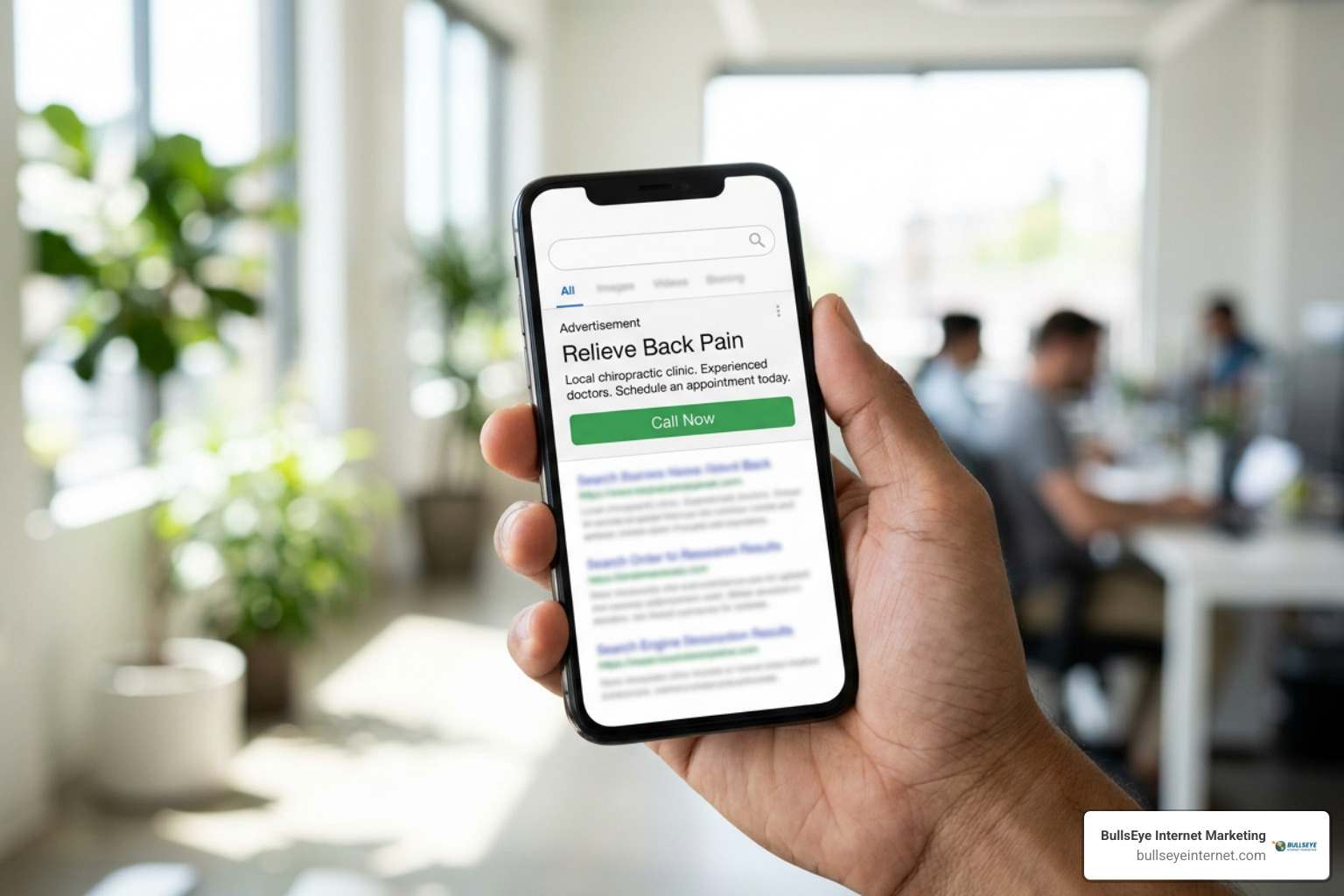
High-performing ad copy combines immediate empathy, clinical authority, and clear calls to action (CTAs).
- Headline Formula 1 (Pain Relief + Location): Relieve Sciatica Pain | Top-Rated Chiropractor in [City]
- Headline Formula 2 (Urgency + Trust): Same-Day Appointments | 5-Star Rated Chiropractic Care
- Headline Formula 3 (Direct Offer + Outcome): Gentle Back Pain Relief | Book Your Initial Exam Today
Always implement every relevant ad asset (formerly extensions). Properly configured extensions improve click-through rates (CTR) by 10% to 20% without altering your base bids:
- Call Assets: Enables one-click mobile calling for patients experiencing acute pain.
- Location Assets: Syncs your Google Business Profile to show physical proximity and star ratings.
- Sitelink Assets: Directs searchers to specific pages like New Patient Special, Conditions We Treat, Meet the Doctors, and Online Scheduling.
- Callout Assets: Highlights key value propositions like Same-Day Relief, Digital X-Rays On-Site, and Gentle Non-Invasive Care.
Essential Landing Page Conversion Elements
Never send paid search traffic to your homepage. Homepages contain multiple distracting links, navigation bars, and competing messages. Send visitors to dedicated landing pages designed specifically for patient acquisition. You can read more about conversion-centered architecture in from clicks to customers mastering PPC for lead generation.
A landing page achieving an 8% to 15% conversion rate requires:
- Clear Headline Above the Fold: Mirroring the specific search query and ad copy.
- Immediate Booking and Calling Options: A visible click-to-call button and simple calendar booking form above the fold.
- Social Proof: Real patient video reviews, Google review aggregate badges, and written testimonials.
- Doctor Credentials & Clinic Tour: Photos of the clinic and lead chiropractors to build rapport and trust.
- Clean Mobile Design: Fast loading speeds under 2.5 seconds with effortless mobile form inputs.
Speed-to-Lead and Automated Follow-Up Workflows
A lead who fills out a form is actively seeking relief right now. If your front desk takes hours to reach out, that patient has likely already called another clinic down the street.
Research shows that responding to an inbound lead within 5 minutes makes your team 21 times more likely to qualify and schedule that lead compared to waiting 30 minutes.
Integrating an automated CRM workflow ensures every form inquiry instantly triggers:
- An automated SMS confirmation to the patient offering immediate booking options.
- An instant internal notification to the clinic front desk via phone or dashboard to initiate a follow-up call.
To explore how automated communication transforms conversion rates, read how to fill your waiting room using modern lead generation.
Budgets, Bidding Strategies, and Conversion Tracking
Executing a profitable chiropractic advertising strategy requires active management of bid types, budget allocations, and conversion tracking milestones.
Managing Bids in Google Ads for Chiropractors
Automated bidding strategies require historical data to function properly. Avoid launching a brand-new account on Smart Bidding strategies like Target CPA (Cost Per Acquisition).
- New Campaigns (0–30 Conversions): Start with Manual CPC or Maximize Clicks with a Bid Cap. This controls early spending, gathers search query data, and prevents the algorithm from overbidding on broad search terms.
- Mature Campaigns (30+ Monthly Conversions): Once the campaign consistently generates 15 to 30 conversions per month, transition to Maximize Conversions or Target CPA to allow Google’s machine learning to optimize bids for users most likely to schedule.
Monthly Budget Expectations and Realistic ROI
For a single-location clinic operating in a competitive metro, a monthly budget of $2,000 to $5,000 provides sufficient click volume to generate 15 to 40 qualified leads per month.
Key benchmark KPIs include:
- Cost Per Lead (CPL): $20 – $80 (depending on metro competition).
- Cost Per Booked Appointment: $40 – $150.
- Landing Page Conversion Rate: 5% – 15%.
- Search Click-Through Rate (CTR): 4% – 8%.
With average patient lifetime value (LTV) across an adjustment or wellness plan ranging from $500 to $3,000+, booking just 10 to 15 new long-term patients per month yields a strong return on advertising investment. Learn more about measuring medical marketing returns in the ultimate blueprint for new patient marketing success.
Setting Up Robust Conversion Tracking
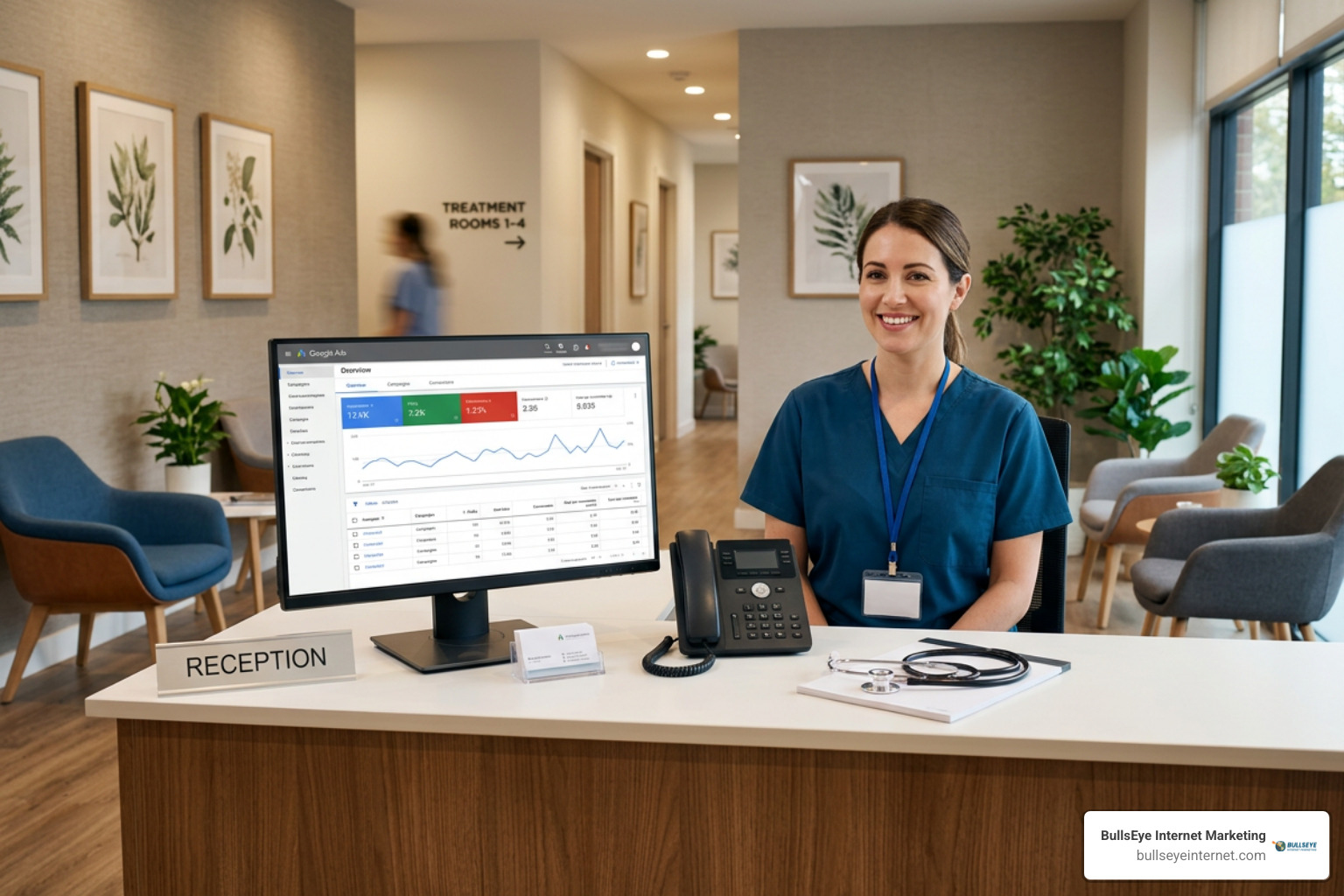
Without clean conversion tracking, optimizing ad spend is pure guesswork. Track the following specific conversion actions:
- Phone Calls from Ads: Tracked via Google call forwarding.
- Phone Calls from the Landing Page: Dynamic number insertion tracking calls lasting over 60 seconds (filtering out short administrative inquiries).
- Online Form Submissions: Fired upon reaching the scheduling confirmation or thank-you page.
- Direct Online Calendar Bookings: Integrating scheduling software with Google Ads conversion tags.
- Enhanced Conversions & Privacy: Ensure all tracking adheres to HIPAA regulations and healthcare privacy standards, avoiding transmitting sensitive personal health information into unencrypted tracking pixels.
Frequently Asked Questions About Chiropractic Google Ads
How much should a chiropractor spend monthly on Google Ads?
A realistic monthly budget for a single-location chiropractic clinic in a standard US metro is between $2,000 and $5,000. This budget accommodates direct service terms and urgent symptom keywords ($8 to $25 CPC), generating roughly 15 to 40 qualified patient leads per month.
Should chiropractors manage campaigns in-house or hire a specialist?
While a clinic owner can learn the basics of PPC, running advanced healthcare campaigns requires weekly search term audits, negative keyword expansion, landing page split testing, bid adjustments, and tracking maintenance. Hiring a specialized agency eliminates wasted ad spend and delivers a better cost per acquisition. Discover what to look for when choosing a partner in our local Google Ads agency guide.
What are the most common Google Ads mistakes chiropractors make?
The most common mistakes include sending paid traffic to an unoptimized homepage, failing to upload negative keyword lists, using Smart Bidding without conversion history, and failing to track inbound phone calls longer than 60 seconds.
Conclusion
A well-structured Google Ads campaign is one of the most reliable systems for acquiring high-intent chiropractic patients. By targeting active pain searches, directing clicks to conversion-focused landing pages, implementing negative keyword lists, and responding to leads in under five minutes, your practice can consistently turn searches into booked consultations.
At BullsEye Internet Marketing, we help practices scale with clarity and confidence. We provide full-funnel campaign management with no long-term contracts, and we maintain an exclusive policy of working with only one client per industry per geographic area to ensure your practice holds a decisive local competitive advantage.
Ready to build a reliable patient acquisition pipeline? Explore our high-converting professional service ads solutions or contact our team today to schedule your complimentary campaign audit.
