
The $90 Billion Reason Weight Loss Marketing Is So Hard to Get Right
Weight loss marketing is one of the most competitive — and most regulated — niches in digital advertising today.
Here’s a quick snapshot of what actually works in 2026:
| Strategy | Why It Works |
|---|---|
| Local SEO + Google Business Profile | Captures high-intent “near me” searches |
| Content marketing (blogs, video) | Builds trust and drives 6x more ROI at 62% less cost |
| Google Ads with negative keywords | Cuts wasted spend and lowers cost per lead |
| Authentic patient testimonials | Converts skeptical prospects into booked consultations |
| HIPAA-compliant website design | Protects patient data and builds credibility |
| Patient financing (e.g., CareCredit) | Removes price barriers and increases conversions |
The U.S. weight loss industry has grown to $90 billion, fueled in large part by explosive demand for GLP-1 medications like semaglutide. That growth sounds like good news for clinics. But it also means more competition, stricter ad platform rules, and patients who are increasingly skeptical after years of being bombarded with false promises and miracle-pill ads.
Getting this wrong is expensive. Getting it right means a steady stream of qualified patients who are ready to commit.
I’m Ronnie Katz, founder of BullsEye Internet Marketing, and since 2006 I’ve helped health and wellness businesses cut through the noise with transparent, results-driven weight loss marketing strategies that actually move the needle. In this guide, I’ll walk you through exactly what’s working right now — no fluff, no magic pills.
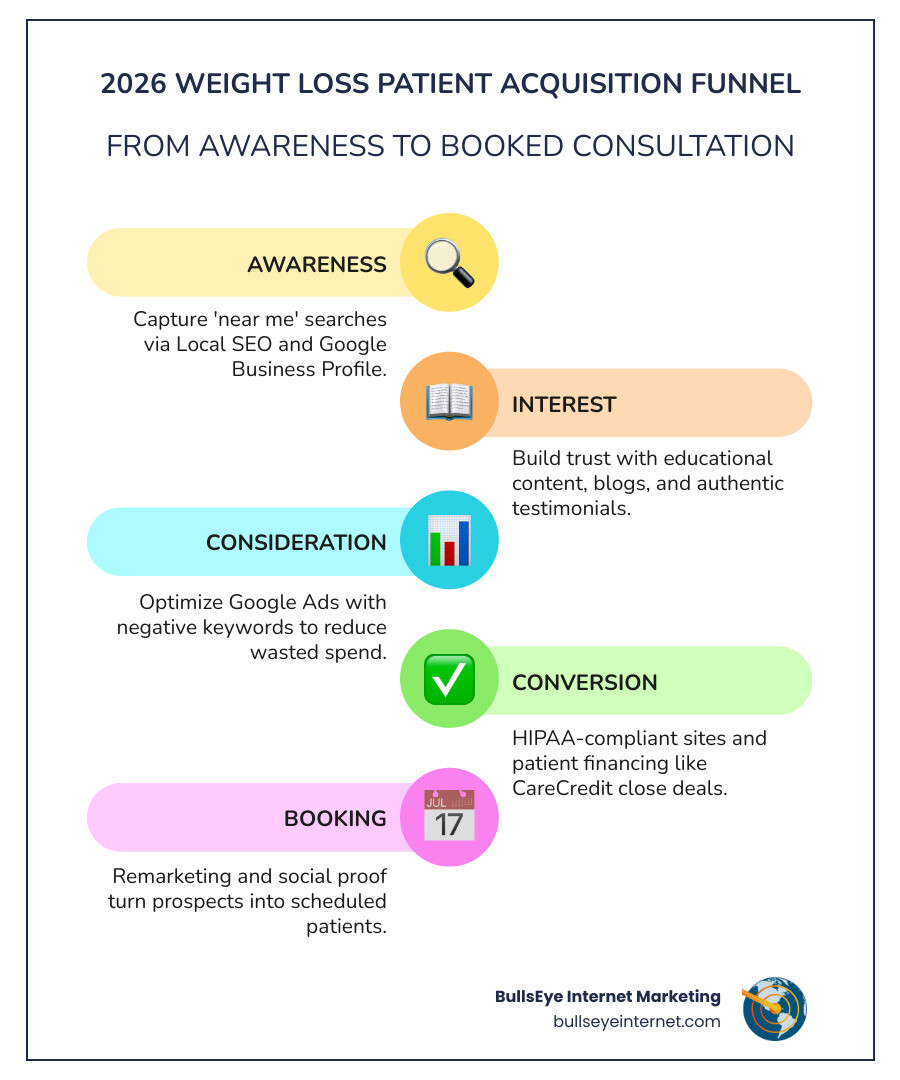
Weight loss marketing terms to remember:
The Foundations of Weight Loss Marketing in 2026
In 2026, the digital landscape for weight loss clinics is more sophisticated than ever. We’ve moved beyond flashy banners and “miracle” claims. Today, your foundation must be built on a professional, high-performing digital presence that prioritizes the user experience and legal compliance.
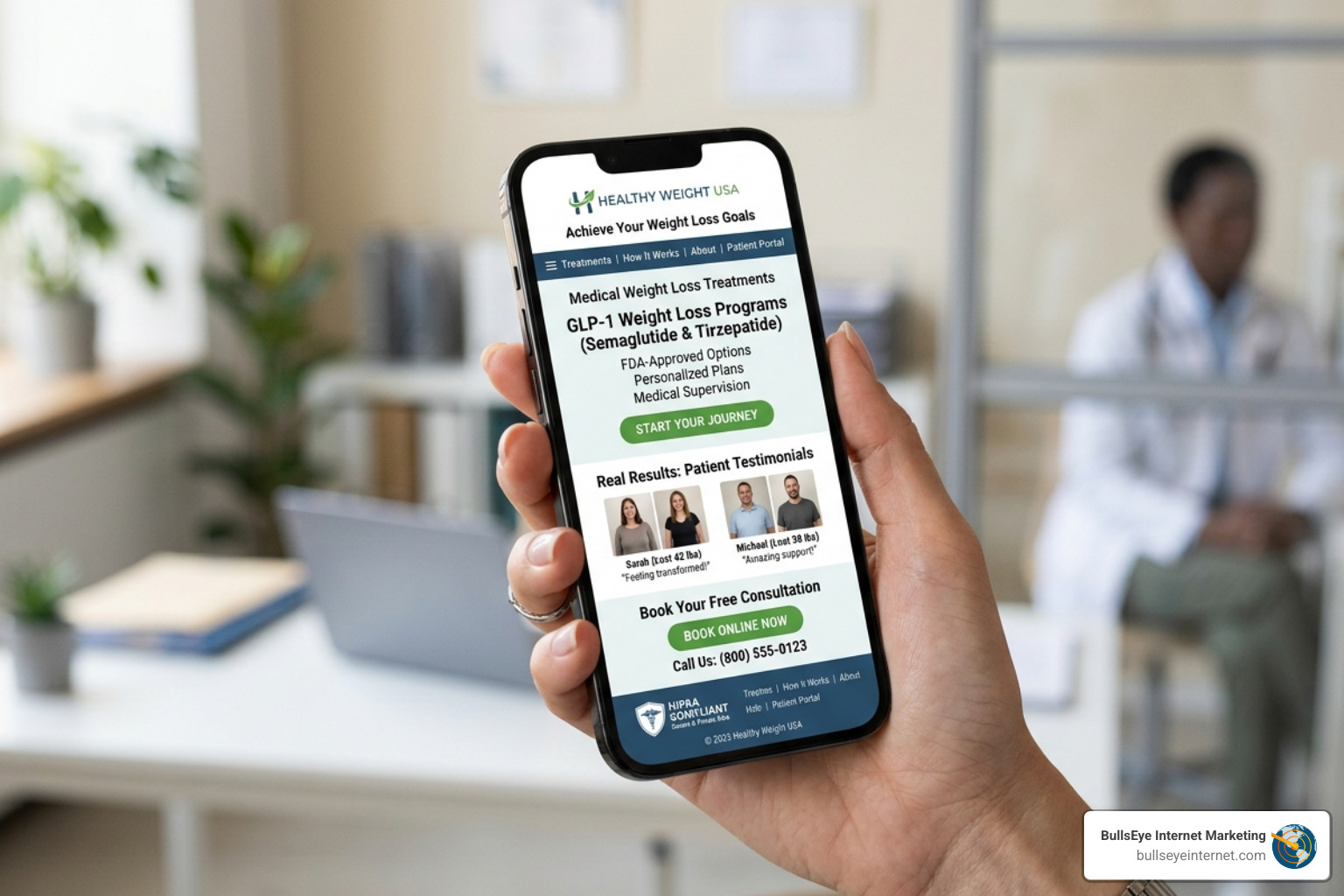
HIPAA Compliance and Secure Design
If your website isn’t HIPAA-compliant, you’re not just risking fines; you’re losing trust. Patients are sharing sensitive health data, from their current weight to their medical history. A HIPAA-compliant design ensures that all contact forms, patient portals, and data storage systems meet federal standards for safeguarding information. This is a critical component of Best Practices for Weight Loss Advertising – Top Strategies for 2026.
Mobile Optimization: The 60% Rule
Over 60% of all web traffic now originates from smartphones. If your site takes more than three seconds to load or has buttons that are too small for a thumb to click, you are effectively turning away more than half of your potential leads. We focus on “user-centric” design—meaning the site is easy to navigate for someone who might be feeling anxious or overwhelmed about starting a weight loss journey.
For clinics looking to scale quickly, a Ppl For Weight Loss (Pay Per Lead) model can be a game-changer. Instead of worrying about the technical minutiae of website management, you focus on receiving high-quality, pre-vetted inquiries from people ready to start a program.
Building Authority with Content Marketing
Content marketing isn’t just about writing a few “how-to” tips; it’s about establishing your clinic as the definitive expert in your area. Research shows that content marketing drives 6x more ROI than traditional advertising while costing 62% less.
By creating educational blogs on topics like “The Science of Semaglutide” or “How to Maintain Muscle Mass During Weight Loss,” you create long-term assets that live on your site forever. Unlike a paid ad that stops working the second you stop paying, a well-optimized blog post continues to attract traffic for years. This is a core reason How Pay Per Lead Marketing Drives Real Results—it builds a foundation of authority that makes every other lead generation effort more effective.
Leveraging Video and Social Proof
In May 2026, video is no longer optional. 91% of marketers now report that video is an essential part of their campaigns. For weight loss clinics, this means:
- Educational Snippets: Short 60-second clips explaining how specific medications work.
- Authentic Testimonials: Moving away from static “before and after” photos (which can sometimes be flagged by ad platforms) and toward video stories where patients discuss their health improvements, not just their dress size.
- TikTok Spark Ads: These allow you to boost organic content that is already performing well, reaching a younger, highly engaged demographic.
When using social proof, ethics are paramount. While dramatic transformations are inspiring, they must be realistic. This is a key insight from Weight Loss Ads: What’s Working in 2026 (Data + Strategies). Avoid “miracle” language and focus on the health benefits of medically supervised programs.
High-Performance Digital Advertising Strategies
If your Google Ads account feels like it’s burning money, you’re not alone. Audits show that up to 76% of ad spend in typical accounts is wasted on keywords that never convert.

Cutting the Fat from Google Ads
To make weight loss marketing profitable, you have to be aggressive with negative keywords. If you are a high-end medical weight loss clinic in Miami, you don’t want to pay for clicks from people searching for “free diet plans” or “cheap weight loss pills.” By filtering out these low-intent searches, you can drop your cost-per-sale by 25% to 65%.
We often recommend a Pay Per Lead approach for clinics that want to avoid the headache of managing complex ad accounts. This shifts the risk from the clinic to the agency—you only pay when a real prospect reaches out.
Remarketing: The Fortune is in the Follow-Up
Most people won’t book a consultation the first time they see your site. They need to think about it. Remarketing pixels allow you to show gentle reminders to these visitors as they browse other sites or social media. Case studies show that remarketing can increase sales volume by as much as 126% by keeping your clinic top-of-mind during the decision-making process.
Navigating the GLP-1 Weight Loss Marketing Landscape
The “Ozempic Era” has changed everything. The GLP-1 drug market is projected to reach over $100 billion by 2029, growing at a staggering rate of 27.1%. However, marketing these medications requires a strict adherence to “Fair Balance.”
FDA regulations require that if you mention the benefits of a prescription drug, you must also present the risks with equal prominence. To sidestep some of these onerous requirements, many successful clinics focus their top-of-funnel ads on the program (e.g., “Medically Supervised Metabolic Reset”) rather than the specific drug name. This is a smart way to Transform Your Lead Generation Strategy With Pay Per Lead Marketing without running afoul of pharmaceutical advertising laws.
Local SEO and Reputation Management
For a clinic in Palm Beach or Fort Lauderdale, local SEO is your bread and butter. When someone searches for “weight loss clinic near me,” you need to appear in the “Map Pack” (the top three Google Business Profile listings).
- Google Business Profile: Ensure your category is set correctly to “Weight Loss Service” and that your address and phone number are consistent across the web.
- Review Monitoring: 90% of patients read reviews before choosing a provider. You must respond to every review—even the negative ones—professionally and without violating HIPAA.
- Geo-Targeting: Use Google Ads to target specific zip codes in your service area to ensure you aren’t paying for clicks from people who live too far away to visit your office.
Working with a specialized Pay Per Lead Marketing Agency can ensure your local presence is optimized to dominate your specific geographic territory.
Ethical Standards and Compliance
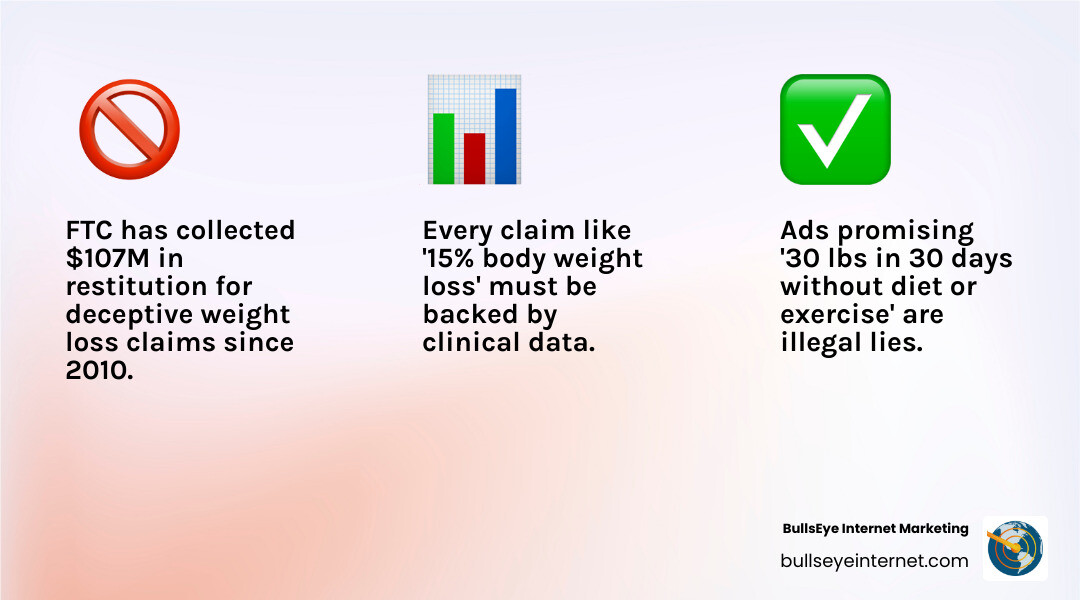
The FTC does not play around when it comes to weight loss marketing. Since 2010, they have collected nearly $107 million in restitution for deceptive claims. As a reputable clinic, your goal is to distance yourself from the “scammers” by being a beacon of transparency.
Avoiding the “Miracle” Trap
According to The Truth Behind Weight Loss Ads | Consumer Advice, any ad that promises you can “lose 30 pounds in 30 days without dieting or exercise” is a lie. Period. To stay compliant and build long-term patient trust:
- Substantiate Every Claim: If you say patients lose an average of 15% of their body weight, you must have the clinical data to back it up.
- Avoid “Permanent” Promises: Weight loss is a journey, not a one-time event. Avoid claiming that results are “permanent” without lifestyle changes.
- Disclose Everything: If a patient was compensated for a testimonial, or if the “before and after” photos aren’t typical, you must say so clearly.
Understanding these nuances is a key part of how we help clinics Unlock Your Potential Understanding Pay Per Lead Marketing Agencies. We handle the compliance hurdles so you can focus on patient care.
Avoiding Common Scams in Weight Loss Marketing
The market is currently flooded with “natural Ozempic” alternatives and “miracle patches.” A study of women’s health magazines found that while editorial content often promotes healthy habits, nearly 46% of the advertisements are for questionable weight loss pills.
By positioning your clinic as the “anti-scam” option—offering transparent pricing, medical supervision, and science-backed protocols—you differentiate yourself from the noise. This is where Pay Per Lead Generation Companies can help by filtering out prospects looking for “magic pills” and delivering those who want a legitimate medical solution.
Innovative Tools to Differentiate Your Practice
In a crowded market, you need a “hook” that makes your clinic unique. In 2026, technology is that hook.
AI Body Scanning and Wearables
Instead of just a traditional scale, many leading clinics are using AI-powered 3D body scanning. This provides a visual representation of fat loss and muscle gain that a simple number on a scale can’t show. Integrating data from wearables like Oura rings or Apple Watches allows for a “data-driven” personalized plan that patients love.
Making Care Accessible
Cost is the #1 barrier to medical weight loss. Offering financing options like CareCredit or PatientFi can significantly increase your conversion rates. When a patient hears that a $4,000 program can be broken down into manageable monthly payments, the “yes” becomes much easier.
Medical vs. Natural: A Marketing Comparison
| Feature | Medical Weight Loss Marketing | Natural/Lifestyle Marketing |
|---|---|---|
| Primary Hook | Rapid results, GLP-1 medications | Sustainable habits, “No-pill” approach |
| Compliance | FDA “Fair Balance,” HIPAA | FTC “Truth in Advertising” |
| Target Audience | Chronic obesity, “failed” dieters | Fitness enthusiasts, wellness-focused |
| Content Focus | Clinical data, metabolic health | Recipes, workouts, mindset |
| Average CPL | $30 – $60 | $15 – $40 |
Frequently Asked Questions about Weight Loss Marketing
How can I promote financing for weight loss services?
The best way is to integrate it into every stage of the funnel. Mention “monthly payment options available” on your landing pages, include the CareCredit logo in your footer, and have your staff bring up financing during the initial consultation. You can even use specific ads targeting “affordable weight loss programs” to attract price-sensitive patients.
What are the most effective social media platforms for clinics?
In 2026, TikTok and Instagram are the leaders for visual storytelling and Spark Ads. However, Facebook remains essential for reaching the 35-65 demographic, which typically has the highest disposable income for medical programs. YouTube is the gold standard for long-form educational content that builds deep authority.
How do I ensure my weight loss ads are HIPAA-compliant?
HIPAA compliance in advertising mostly relates to how you handle the data after the click. Your landing page must use encrypted forms, and you should never use a patient’s protected health information (PHI) in an ad without their explicit, written consent. Avoid using “lookalike audiences” based on sensitive patient lists, as this can sometimes cross the line into privacy violations.
Conclusion: Scaling Your Practice with BullsEye Internet Marketing
The weight loss industry isn’t getting any less crowded, but it is getting more profitable for those who know how to navigate it. At BullsEye Internet Marketing, we don’t believe in locking you into long-term contracts. We believe in earning your business every single month through transparent reporting and real-world results.
We offer a unique competitive advantage: we only work with one client per industry per geographic area. If you partner with us in Miami or West Palm Beach, we won’t work with your competitor down the street. We focus on generating calls and sales through a mix of SEO, Google Business Profile optimization, and high-converting PPC campaigns.
Ready to stop wasting your ad spend and start growing your patient base? Scale your practice today with a partner who understands the high stakes of weight loss marketing. Let’s build a system that brings you the right patients so you can focus on what you do best: changing lives.
