
Why Every Local Business Needs to Master Local Directory Submission
Local directory submission is the process of adding your business’s name, address, phone number, and website to online directories so customers — and search engines — can find you.
If you just want the quick answer, here’s what you need to know:
What is local directory submission?
- You submit your business details (Name, Address, Phone — called NAP) to online directories like Yelp, Google Business Profile, Bing Places, and hundreds of others.
- Search engines use those listings to verify your business is real and trustworthy.
- Consistent listings across directories improve your chances of ranking in local search results and Google’s Local Pack.
- Data aggregators like Data Axle, Foursquare, and Localeze then broadcast your information to thousands of smaller directories automatically.
- The more consistent and accurate your listings, the more Google — and AI search engines like ChatGPT and Perplexity — trust your business.
Here’s the uncomfortable truth: 62% of consumers say they would avoid a business if they found incorrect information online. And wrong information shows up in local search results 20% of the time.
That means one in five local searches could be sending your potential customers to the wrong address, the wrong phone number, or a competitor’s door.
It’s not just about Google anymore, either. In 2026, AI assistants like ChatGPT, Gemini, and Siri are pulling local business recommendations directly from structured directory data. If your listings are missing, inconsistent, or wrong, you’re invisible to an entire generation of searchers who never type a keyword into a search bar.
Managing all of this can feel overwhelming — especially when you’re running a business at the same time.
I’m Ronnie Katz, founder of BullsEye Internet Marketing, and I’ve been helping local businesses build and maintain accurate local directory submission strategies since 2006. In this guide, I’ll walk you through exactly how to do it right, without wasting money or losing your mind.
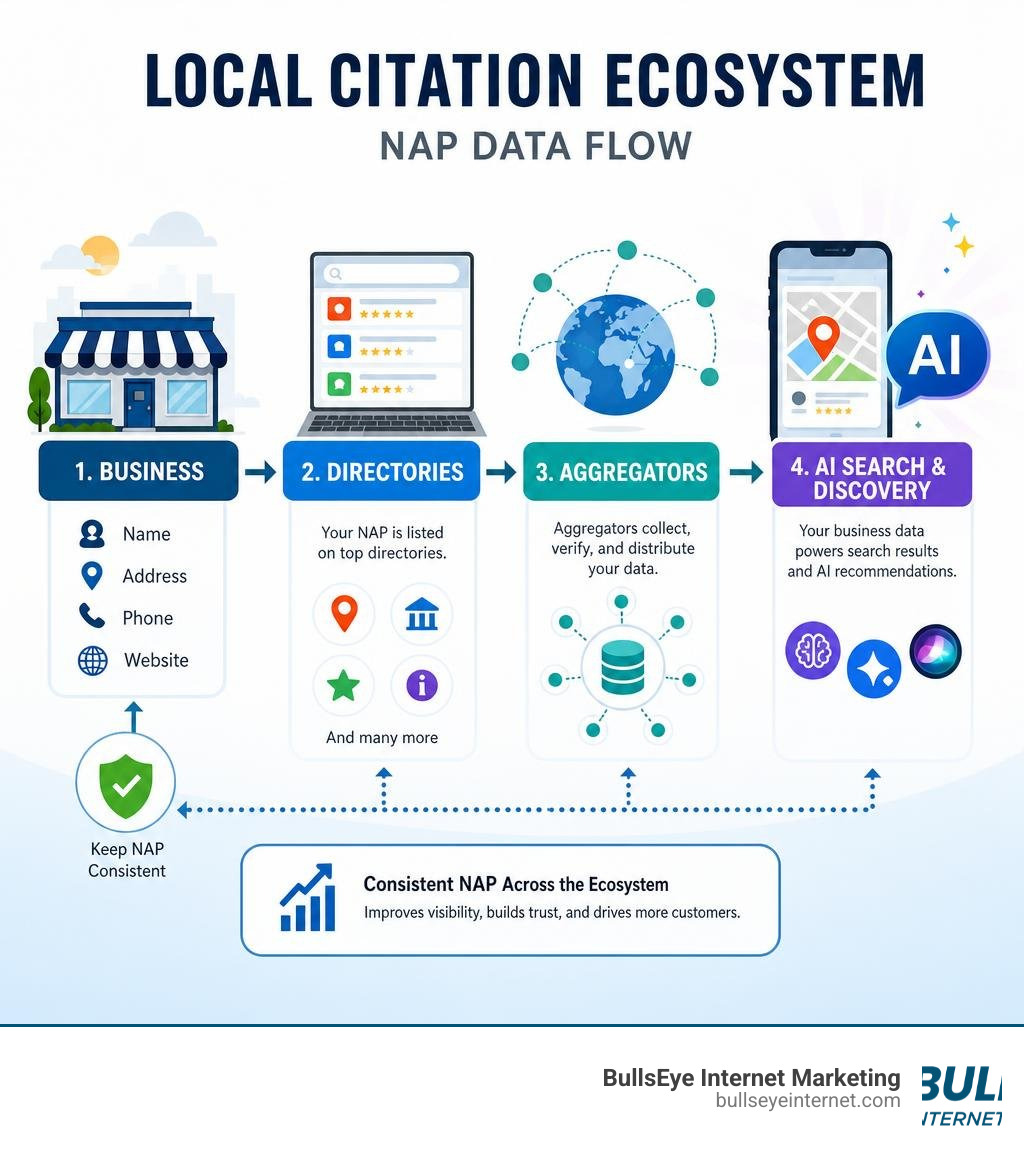
Quick look at local directory submission:
Why Local Directory Submission is Critical in 2026
The local search landscape has evolved dramatically. Today, search engines do not simply rely on your website to determine your business’s location and legitimacy. Instead, they cross-reference data from hundreds of third-party platforms to build a profile of your brand.
By executing a strategic local directory submission campaign, we feed search crawlers the structured data they crave. This consistent profile directly influences your visibility in the Google Local Pack (or “3-Pack”) and organic results. When your NAP (Name, Address, Phone Number) details are perfectly synchronized across the web, search engine algorithms gain the confidence required to display your business for high-intent local queries.
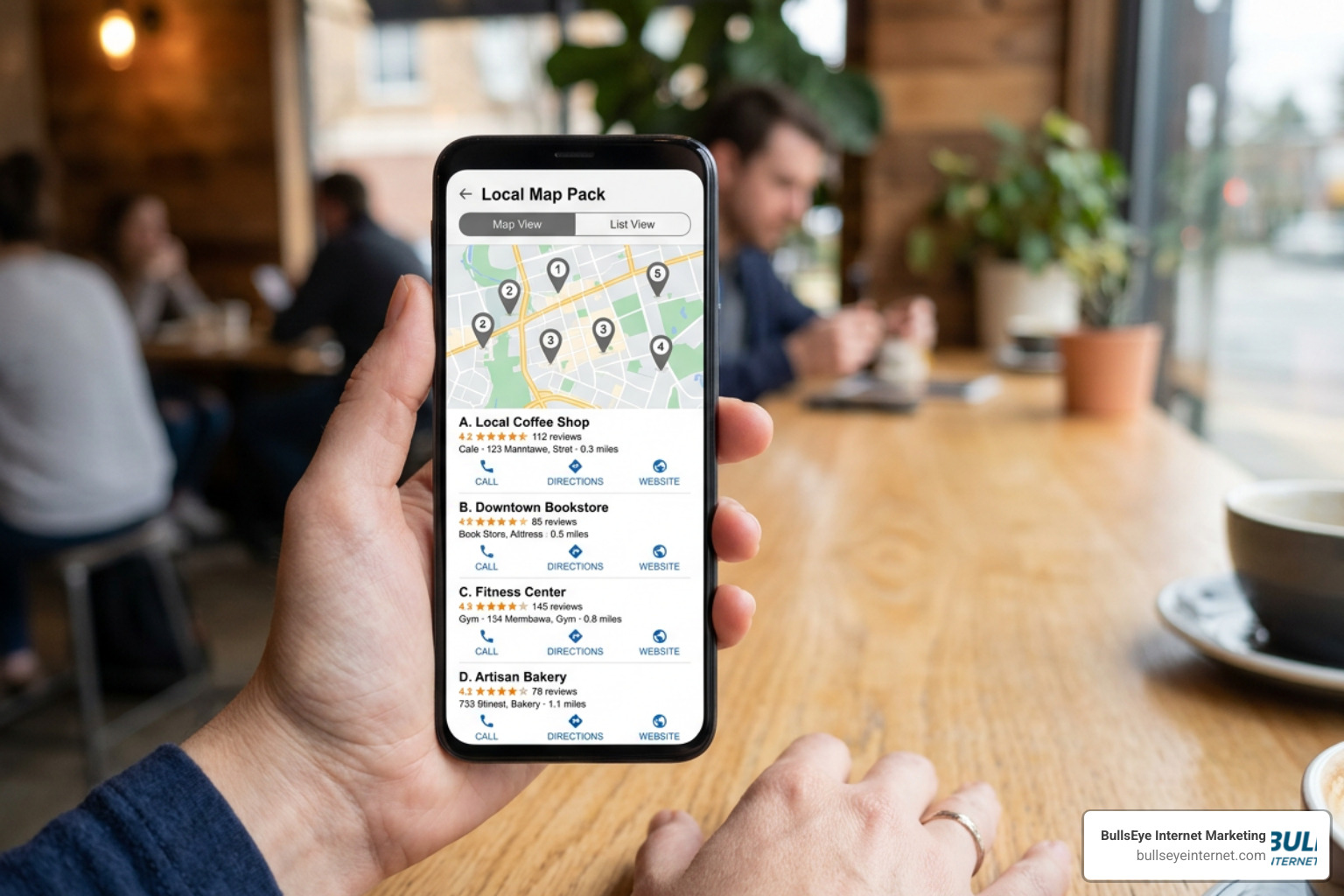
This consistency is even more crucial when we look at how AI search engines operate in 2026. Tools like ChatGPT Search, Gemini, Claude, and Perplexity do not just scan your home page. They crawl authoritative local directories to verify that your business is active, highly rated, and physically located where you claim it is. If you want these AI models to recommend your services when someone asks, “Who is the best plumber in Fort Lauderdale?”, your structured data must be flawless. To understand how these listings establish your digital authority, read The SEO Power of Citations: How Business Listings Build Authority.
Furthermore, maintaining accurate listings has a direct, measurable impact on customer acquisition. Research shows that:
- 61% of consumers use business information sites (like Google, Yelp, and Tripadvisor) to find information about a local business.
- 47% of consumers will actively look for a nearby competitor if they find a business listed as closed when it is actually open.
- 6% of business listings change every single month due to businesses opening, closing, moving, or modifying their operating hours.
If you ignore your listings, they will naturally decay over time, leading to lost revenue and damaged consumer trust. You can learn more about how clean listings prevent these issues in How Accurate Business Listings Can Improve Customer Trust and Boost Sales.
Niche-Specific vs. General Directories
When planning your citation strategy, it is easy to focus solely on the massive general directories like Yelp, YellowPages, and Bing. While these high-authority general directories provide a strong foundation of domain authority, they are only half of the equation.
Niche-specific and hyper-local directories are highly valuable for local SEO. If you operate a contracting business in West Palm Beach, a backlink or listing from a specialized home services directory carries far more contextual relevance than a generic directory listing. Search engines recognize that niche directories have strict categorization, which helps them understand exactly what services you offer.
Hyper-local directories, such as those managed by local chambers of commerce or regional government agencies, are equally powerful. For example, if you are a certified business operating in South Florida, getting listed on local portals like the Doing Business with Broward Certified Firm Directories, the Office of Small Business Development Vendor Directory in Palm Beach County, or regional business lists on the Business | Martin County Florida portal can provide unbeatable regional trust signals. These local listings tell search engines that you are a deeply rooted, verified member of the local business community. For an in-depth breakdown of how to balance these platforms, refer to The Essential Guide to Local Citations.
Handling Service-Area Businesses Without a Storefront
One of the most common questions we hear is: “How do I handle directory submissions if I run a service-area business (SAB) from my home and don’t have a physical storefront?”
If you are a plumber in Coral Springs, a mobile detailer in Miami, or an emergency locksmith in Boca Raton, you likely do not want your home address displayed publicly on the web. Fortunately, major directories and search engines have built-in solutions for service-area businesses.
When submitting your business to platforms like Google Business Profile, Bing Places, or high-quality directories like EZlocal, you can submit your physical address for verification purposes (which is required so the platform knows you are real) but choose to hide your physical address from public view. Instead of showing a pin on a map, your listing will display a shaded “service radius” or list the specific cities and ZIP codes you serve.
To maximize your local visibility as an SAB:
- Always use a real physical address for verification. Never use a PO Box or a virtual UPS address, as search engines easily detect these and will suspend your listings.
- Clearly define your service area during the setup process. Do not overreach; only list areas where you can realistically deliver services.
- Optimize your directory profiles with geo-targeted content, such as lists of neighborhoods you serve, to help search engines connect your business to those specific local queries.
Manual vs. Automated Local Directory Submission
When it comes to executing your local directory submission strategy, you generally have three paths to choose from: manual submissions, automated API-based services, or a hybrid approach that leverages data aggregators.
To help you visualize the differences, let’s look at how these methods compare:

Let’s break down these options in detail:
- Manual Submission: This involves physically visiting each directory, creating an account, verifying your ownership, and entering your business details by hand. While time-consuming, it gives you 100% control over the listings. You own the accounts, there are no recurring subscription fees, and you can customize your profiles with rich media, unique descriptions, and industry-specific fields.
- Automated API Services: Platforms like Yext use direct API connections to push your business data to a network of directories instantly. The downside? It operates on a “rental” model. If you stop paying their steep annual fees, the API connection is severed, and your listings can revert to their old, unverified, or incorrect states.
- Data Aggregators: These are massive data collection agencies (such as Data Axle, Foursquare, and Localeze) that supply business data to thousands of smaller directories, in-car GPS navigation systems (like Garmin and TomTom), and voice assistants (like Siri and Alexa). Submitting your data to these aggregators acts as a force multiplier, distributing your NAP information far and wide.
For most small to medium-sized businesses, a hybrid approach is the most effective. We recommend manually claiming and optimizing your top-tier profiles (like Google, Bing, Apple Maps, and Yelp) to ensure maximum accuracy and permanent ownership, while utilizing data aggregators to build broad, long-tail citation coverage across the web. To determine which method is right for your current situation, it is wise to start with a complete audit of your existing listings. You can read more about this in Why a Citation Audit Is the Key to Local SEO Success.
Free vs. Paid Directory Submissions
As you build out your directory list, you will encounter both free listing options and paid directory submissions. Understanding the difference is key to spending your marketing budget wisely.
Free directory listings are the backbone of local SEO. Platforms like Google Business Profile, Yelp, Bing Places, and EZlocal offer robust free tiers that allow you to list your business, upload photos, and collect reviews. For many businesses, these free listings provide 90% of the SEO value.
Paid directory submissions typically fall into two categories: high-authority directories that charge an annual review fee (such as the Better Business Bureau) and smaller directories that charge a one-time fee for “instant approval” or guaranteed “do-follow” backlinks.
- Our recommendation: Only pay for directory listings if the platform has exceptionally high Domain Authority (DA), drives real referral traffic, or carries significant industry trust (like a local Chamber of Commerce or a certified trade association). Avoid paying low-tier, spammy directories that promise hundreds of backlinks for a cheap price; search engines easily recognize these link schemes and may penalize your website.
What Happens When You Stop Paying?
If you choose to use an automated, subscription-based listing service to manage your citations, you must understand the concept of “data lock-in.”
When you pay a monthly or annual fee to an API-based listing provider, they hold a digital lock on your listings. If you decide to cancel your subscription, several things can happen:
- The API link is broken: The directory profiles are no longer actively managed by the service.
- Data reversion: Because the verified data stream stops, directories may revert your listings to whatever historical, unverified data they have in their legacy databases. This can cause your phone number, address, or hours to suddenly change back to outdated versions.
- Loss of enhanced content: Rich features like menus, promotional banners, and custom call-to-action buttons are often stripped away immediately upon cancellation.
This is why we strongly advocate for manual citation building or pay-as-you-go services that provide you with the direct login credentials for every single listing. When you own the accounts, your listings are permanent, and they will never disappear or revert just because you stopped paying a monthly fee.
Step-by-Step Guide to Submitting Your Business
Ready to take control of your online footprint? Follow this structured, step-by-step process to clean up your existing listings and build a rock-solid citation foundation.

Before you submit to a single directory, you need to prepare your “Single Source of Truth.” This is a master document containing your exact business details formatted exactly as they should appear online. This prevents human error and ensures absolute consistency. Your master document should include:
- Business Name: Your legal business name (do not stuff keywords into your name, as this violates Google’s guidelines).
- Physical Address: Your exact street address, including suite or unit numbers (e.g., “123 Main St, Suite 100, Miami, FL 33131”).
- Phone Number: Your local business phone number (avoid using generic toll-free numbers for local listings, as local area codes signal regional relevance).
- Website URL: The exact landing page link (use the secure
https://version and decide whether you want to use thewwwor non-wwwversion). - Business Description: A unique, well-written description of at least 250 characters highlighting your services, history, and service areas.
- Media Assets: High-resolution copies of your business logo, team photos, and images of your physical location or service vehicles.
To streamline this preparation stage, check out our guide on How to Submit to Online Directories.
How to Choose the Best Platforms for Local Directory Submission
With thousands of directories on the web, you should not waste your time submitting to every single one. Instead, prioritize platforms based on their Domain Authority, traffic, and relevance.
To get started, we recommend targeting the absolute highest-authority platforms in the United States. You can find a comprehensive list of these top-tier platforms by reviewing the Top USA Business Directories resource. These are the foundational sites (like Apple Maps, Bing, and Yelp) that search engines trust implicitly.
Once you have secured those major profiles, you can expand your reach by utilizing curated lists of free directories, such as this guide to 100+ Free usa online local business directory(ies) listing sites 2026. By focusing your efforts on these high-DA platforms, you ensure that every citation you build passes maximum “link juice” and authority back to your main website.
The Step-by-Step Process for Manual Local Directory Submission
Once your data is prepared and you have selected your target directories, it’s time to begin the submission process. Here is how to do it efficiently:
- Search Before You Create: Always search the directory using your business name and phone number before creating a new listing. There is a high chance an unverified, auto-generated listing already exists. If it does, follow the “Claim Listing” prompt instead of creating a duplicate.
- Create Your Account: Use a dedicated, professional email address (ideally a domain-based email like
in**@**********ss.com) to register on the directory. Many directories, such as EZlocal, offer simplified verification if they detect a domain-matching email. You can claim your profile directly on the Free Business Listing – EZlocal portal. - Complete the Verification Process: Most directories will require you to verify ownership of the business. This is typically done via an automated phone call, an SMS text message containing a verification code, or a verification link sent to your email.
- Fill Out Your Profile 100%: Do not just enter your NAP and leave. Fill out every available field. Add your operating hours, select the most accurate business categories, upload your logo and photos, and paste your unique business description.
- Track Your Submissions: Keep a detailed spreadsheet containing the directory name, the URL of your live listing, the email address used, and the login credentials. This makes it incredibly easy to update your information in the future if your hours or phone number change.
If you don’t have the time to manually submit to dozens of platforms, or if you want to ensure the job is done professionally without the headache, you can outsource this task to a trusted partner. Learn more about our professional Directory Submission Service to see how we handle this entire process for you. For additional strategies on boosting your submission impact, check out Boost Your Local Directory Submissions | Local SEO Thrive.
Common Mistakes to Avoid in Local Directory Submission
While building citations is relatively straightforward, a few common mistakes can completely derail your local SEO efforts and actively damage your search engine rankings.
Keep an eye out for these frequent pitfalls:
- Inconsistent NAP Data: This is the number-one mistake local businesses make. If your business is listed as “BullsEye Internet Marketing” on one site, “BullsEye Marketing LLC” on another, and “BullsEye Digital” on a third, search engines will get confused. They may treat these as separate businesses or lose confidence in the accuracy of your location data, resulting in lower search rankings. Ensure your spelling, abbreviations (e.g., “St.” vs “Street”), and phone formatting are identical everywhere.
- Creating Duplicate Listings: Having multiple listings for the same business on a single directory confuses search engines and frustrates customers who might see different phone numbers or hours. Always audit and clean up existing duplicates before building new citations.
- Using PO Boxes or Virtual Addresses: Search engines are incredibly smart. They cross-reference addresses with postal databases and satellite imagery. If you use a UPS Store address or a PO Box, your listing will eventually be flagged and suspended. Always use a real, physical street address.
- Keyword Stuffing Your Business Name: It can be tempting to name your business “Best Fort Lauderdale Plumber – ABC Plumbing” on directories to try and rank higher. However, search engines and directories have strict policies against this. Doing this can lead to your listings being permanently banned. Stick to your real, legal business name.
- Using Automated Spam Software: Avoid cheap services that promise to submit your business to “1,000 directories overnight” using automated bots. Search engines recognize these low-quality, spammy networks and will ignore or penalize the links, wasting your time and money.
For a deeper dive into how cleaning up these errors can dramatically improve your overall search performance, read our guide on How Accurate Local Citations Improve Your SEO Audit Results.
Frequently Asked Questions About Local Directory Submission
How long does it take for directory submissions to go live and affect rankings?
The timeline for directory submissions depends entirely on the platform and the submission method.
- Top-tier directories (like Google Business Profile, Bing, and Yelp) usually go live within minutes to a few days once verified.
- Smaller directories and data aggregators can take anywhere from 4 to 12 weeks to fully process, index, and display your information.
Once your listings are live, search engine crawlers must discover, index, and trust the new data. Typically, you will start seeing a positive impact on your local search rankings and organic visibility within 2 to 3 months of starting a consistent citation-building campaign.
Can I hide my physical address if I run a home-based service business?
Yes, absolutely. If you operate a home-based business or a mobile service (like a mobile pet groomer in West Palm Beach or an electrician in Fort Lauderdale), you can use your home address to verify your listing on major platforms but select the option to hide your address from the public. Your profile will show a service area map instead of a specific street address, keeping your privacy protected while still allowing you to rank for local searches.
What is the difference between structured and unstructured citations?
- Structured Citations: These are listings on formal business directories (like Yelp, YellowPages, or EZlocal) where your business data is presented in a structured, dedicated format (Name, Address, Phone, Website).
- Unstructured Citations: These are mentions of your business name and contact info on non-directory sites, such as local blogs, newspaper articles, press releases, or social media posts. Both types of citations are highly valuable; structured citations build your foundational authority, while unstructured citations provide powerful contextual trust signals to search engines.
Conclusion
Mastering local directory submission is not about submitting your business to hundreds of random websites and hoping for the best. It is about building a clean, highly consistent, and verified digital footprint across the platforms that search engines and AI models trust most.
By taking the time to audit your existing citations, clean up inconsistencies, and strategically submit your business to high-authority general and niche directories, you build a powerful foundation for your local SEO strategy.
At BullsEye Internet Marketing, we specialize in helping local businesses in South Florida — from Miami and Broward County up to Palm Beach and Martin County — dominate local search, generate high-quality calls, and win more customers. We do this with no long-term contracts and a strict policy of working with only one client per industry in each geographic area, giving you an unbeatable competitive advantage.
Ready to take the hassle out of citation building and get your business on the map? Get started with professional business listings today, or get a quick health check of your current online presence with our Free Local Business Listing Scan. We are here to help you grow!
