
Why Online Marketing for Dermatologists Is Harder Than It Looks
Online marketing for dermatologists is not like marketing a restaurant or a retail store. You are running two businesses at once — a medical practice driven by insurance, referrals, and clinical trust, and a cosmetic service competing head-to-head with med spas on Instagram.
Here is a quick answer to what actually works:
The most effective online marketing strategies for dermatologists:
- Local SEO and Google Business Profile — captures high-intent patients searching “dermatologist near me”
- Google Ads (PPC) — targets patients already looking for specific conditions or treatments
- Meta Ads (Facebook/Instagram) — generates demand for cosmetic procedures with visual content
- Review management — 70% of patients check reviews before choosing a practice
- Email and recall automation — retains existing patients at a fraction of new patient acquisition cost
- Physician-led content — builds clinical credibility that med spas cannot match
The numbers make the urgency clear. 82.8% of patients use search engines to find a healthcare provider. And 85–90% of those searchers never scroll past the first page of results. If your practice is not showing up there, you are invisible to most of your potential patients.
The frustrating part? Many practices pour money into ads before fixing the foundation — a slow website, no online booking, weak reviews — and wonder why nothing converts.
I’m Ronnie Katz, founder of BullsEye Internet Marketing, and since 2006 I’ve helped practices across competitive markets master online marketing for dermatologists by focusing on what actually drives calls and booked appointments. In this guide, I’ll walk you through the exact framework we use — from technical SEO to paid ads to patient retention — so you can grow without wasting budget.
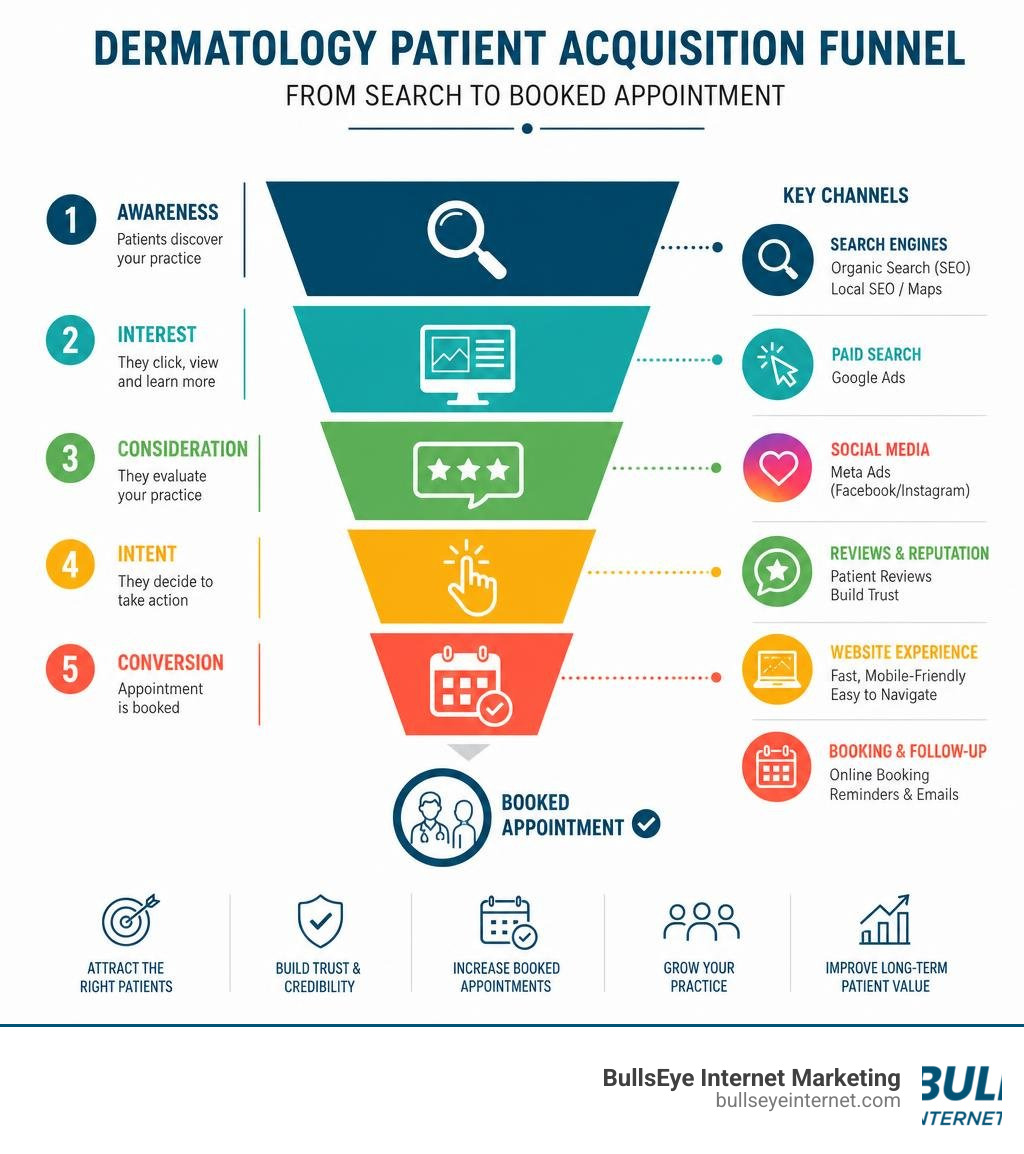
Online marketing for dermatologists basics:
The Dual-Engine Framework: Medical vs. Cosmetic Dermatology
To build a profitable marketing program in June 2026, you must recognize that a dermatology clinic operates on two completely different business models under one roof. Treating them as a single marketing problem is the most common reason campaigns fail.
The Medical Engine (Insurance-Driven & Referral-Based)
Medical dermatology focuses on treating clinical conditions like acne, eczema, psoriasis, rosacea, and performing skin cancer screenings.
- The Patient Journey: Highly analytical, symptom-driven, and urgent. Patients search for solutions to physical discomfort or health concerns.
- Primary Channels: Local SEO, Google Business Profile, condition-based Google Ads, and primary care physician (PCP) referrals.
- Decision Criteria: “Does this doctor accept my insurance? Are they nearby? Can I get an appointment quickly? Are they highly rated?”
The Cosmetic Engine (Cash-Pay & Direct-to-Consumer)
Cosmetic dermatology focuses on elective, cash-pay procedures such as Botox, dermal fillers, laser resurfacing, chemical peels, and body contouring.
- The Patient Journey: Aspirational, visual, and research-heavy. Patients look to address self-image concerns and often browse for months before booking.
- Primary Channels: Instagram, TikTok, Meta Ads, and visual procedure-specific landing pages.
- Decision Criteria: “What do their before-and-after photos look like? What is the physician’s aesthetic philosophy? Do I trust them with my face?”
| Marketing Element | Medical Dermatology | Cosmetic Dermatology |
|---|---|---|
| Primary Goal | High-volume patient acquisition, annual skin checks, and clinical care. | High-margin cash-pay procedures and aesthetic treatments. |
| Search Intent | Symptom/condition-based (e.g., “how to treat painful cystic acne”). | Treatment/brand-based (e.g., “Botox injections near me”). |
| Primary Platform | Google Search (SEO & PPC), Local Map Pack, PCP referrals. | Meta Ads (Instagram/Facebook), visual social media, video content. |
| Conversion Action | Direct online booking, insurance verification, or phone calls. | Consultation booking, before-and-after gallery views. |
| Target Audience | Broad demographics (all ages, gender-neutral, local radius). | Highly targeted (typically age 25–55, higher disposable income). |
By separating these two engines, you avoid the trap of letting high-CPC cosmetic keywords (which can cost $25–$45 per click) drain the budget meant for medical leads (which typically convert at $8–$15 per click).
Website Optimization, Technical SEO, and Local Search Dominance
Before you spend a single dollar on paid advertising, your website must be optimized to convert traffic into booked appointments. If your website is slow, confusing, or lacks a clear call to action (CTA), you are paying to send prospective patients to a dead end.
The Critical Conversion Infrastructure
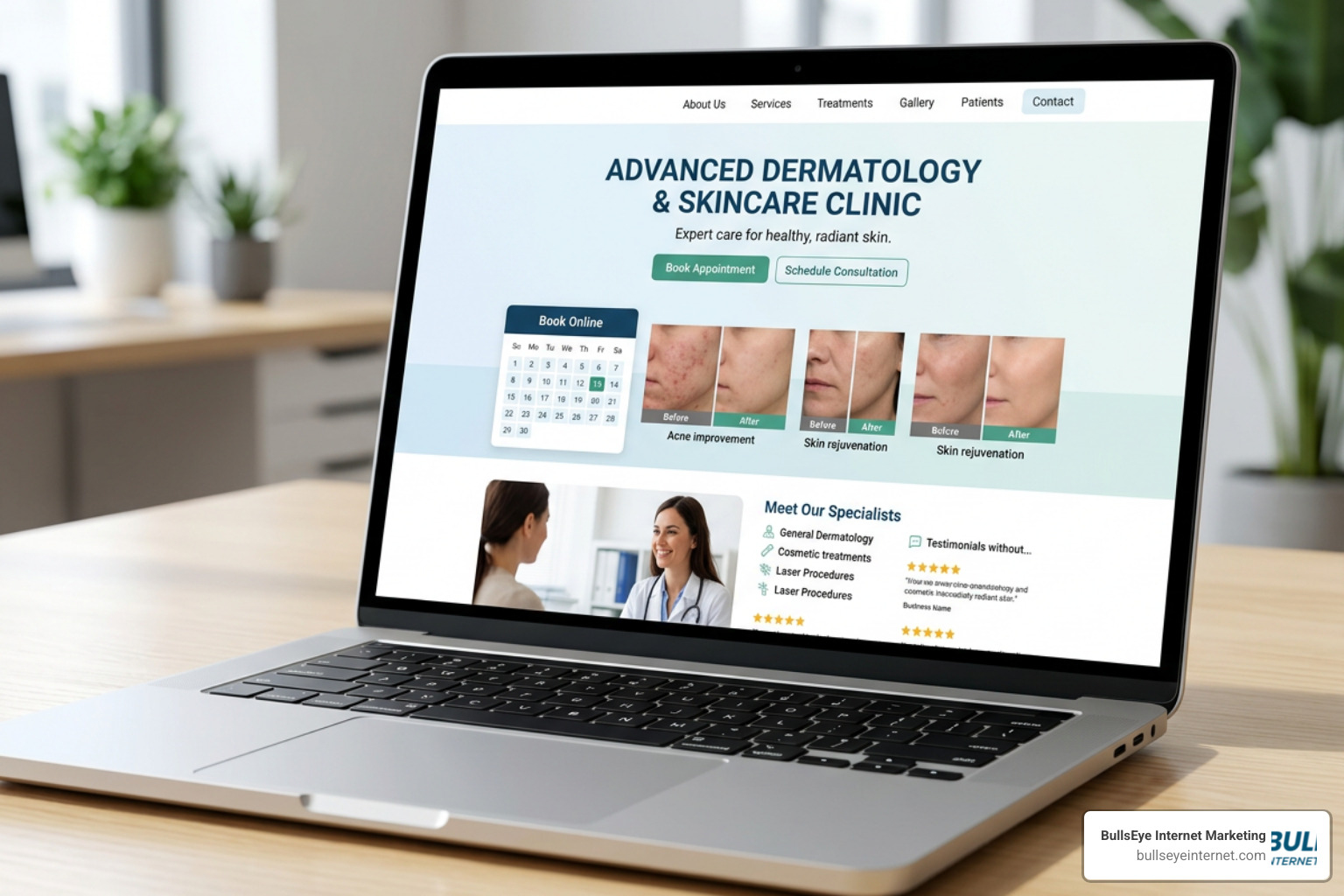
A high-converting website acts as your digital front desk. To maximize your return on investment (ROI), ensure your site includes:
- Frictionless Online Booking: Modern patients expect 24/7 self-scheduling. Implementing automated booking systems can increase bookings by up to 100%.
- Rapid Page Load Times: Website speed is a major ranking and conversion factor. 47% of users expect a website page to load in 2 seconds or less. If your site takes longer than 3 seconds to load, your bounce rate will skyrocket.
- Mobile-First Design: Over 60% of local health searches happen on mobile devices. Your navigation, booking forms, and click-to-call buttons must be flawless on smartphones.
- Prominent Calls to Action: Place a clear “Schedule Appointment” or “Book Consultation” button in the top-right corner of every page and sticky on mobile screens.
Technical and On-Page SEO for High-Intent Local Searches
To rank organically for highly competitive terms in your local market—whether in West Palm Beach, Miami, or Fort Lauderdale—your website needs to meet Google’s strict technical standards. Because dermatology falls under Google’s “Your Money or Your Life” (YMYL) category, search engines apply elevated E-E-A-T (Experience, Expertise, Authoritativeness, Trustworthiness) criteria to your content.
- Service-Specific Pages: Do not group all your treatments onto a single “Services” page. Create dedicated, long-form pages for every condition (e.g., skin cancer screening, acne treatment, Mohs surgery) and procedure (e.g., Botox, microneedling).
- Schema Markup: Implement “MedicalBusiness” and “Physician” schema markup on your backend. This structured data tells search engines exactly what services you offer, your operating hours, accepted insurances, and physical locations.
- Local Keyword Optimization: Naturally integrate geographic modifiers into your title tags, meta descriptions, and H1 headers (e.g., “Board-Certified Dermatologist in Delray Beach, FL”). For deeper insights into keyword selection, read our Beginners Guide to Dermatologist Keyword Ads.
Google Business Profile and Local Map Pack Optimization
When local patients search for a dermatologist, they rarely scroll past the local map pack. Half of the website traffic from all searches goes straight to the three results at the top of the map pack.
To claim your spot in the top three, you must optimize your Google Business Profile (GBP):
- Complete Every Field: Ensure your Name, Address, and Phone number (NAP) are 100% consistent across your website, GBP, and local directories. Add your exact services, accepted insurances, and office hours.
- Review Velocity and Recency: 70% of patients check reviews before choosing a practice. Google values how many reviews you have, but it values “review velocity” (how frequently you get new ones) even more. A steady stream of 8–15 new reviews per month signals to Google that your practice is active and trusted.
- Utilize Local Services Ads: To capture immediate real estate at the very top of Google search results, consider running Google Local Services Ads. These ads feature the “Google Screened” badge, which builds instant trust. Learn more about how to set these up in our guide on Google Local Services Ads for Dermatologists.
Strategic Budget Allocation and Online Marketing for Dermatologists
A common mistake is spreading a small marketing budget too thin across too many channels. For most growing dermatology practices, we recommend investing 5% to 10% of gross revenue back into marketing.
When starting out, allocate your budget based on immediate intent. 65% of searches with high intent (e.g., ‘dermatologist near me’) result in users clicking on a paid ad. This makes paid search the fastest way to generate near-term patient volume while your organic SEO compounds over time.
To prevent wasted ad spend, read our strategic guide on Local Ads for Dermatologists: How to Reduce Wasted Leads and Save Budget.
Paid Search vs. Social Media in Online Marketing for Dermatologists
Google Ads and Meta Ads (Facebook/Instagram) are both powerful, but they target patients at completely different stages of the funnel.
- Google Ads (PPC) is for Demand Capture: When someone searches “skin cancer screening West Palm Beach,” they have immediate, high-intent demand. Google Ads allows you to capture that patient at the exact moment they need you.
- Meta Ads is for Demand Generation: Nobody goes to Instagram to find an urgent mole check. However, 41% of consumers rely on social media to help them decide which healthcare providers to choose. Meta Ads are highly visual, making them perfect for showing off before-and-after transformations of cosmetic procedures like dermal fillers or chemical peels to users who weren’t actively searching but are open to aesthetic treatments.
For a step-by-step breakdown of how to build these campaigns, check out Local Ads for Dermatologists: How to Attract More Patients with Google Ads.
Differentiating from Med Spas with Physician-Led Content
Cosmetic dermatologists face fierce competition from local med spas that often run aggressive, price-cut promotions on social media. Do not try to out-volume med spas on flashy social media trends. Instead, out-position them using your medical credentials.
Med spas are rarely led by board-certified dermatologists. Your greatest competitive advantage is your clinical expertise. Highlight this by building a physician-led content library:
- Short-Form Video FAQs: Film simple, 60-to-90-second smartphone videos of the dermatologist answering common questions directly to the camera (e.g., “What is the difference between a medical-grade peel and an over-the-counter exfoliant?”).
- De-bunking Skincare Myths: Address trending skincare advice on TikTok or Instagram from an authoritative, medical perspective. This establishes you as the safe, scientific alternative to unqualified aesthetic injectors.
- Leverage Dermatology-Native Platforms: Tools like Penster for Dermatology can help streamline compliant, high-quality content creation without adding heavy administrative work to your clinical staff.
Compliance, Ethics, and Reputation Management
Marketing a medical practice requires strict adherence to federal and state regulations. A single compliance mistake can lead to heavy fines, legal issues, or damage to your professional reputation.
HIPAA Compliance in the Digital Space
The Health Insurance Portability and Accountability Act (HIPAA) applies to everything you do online.
- Patient Reviews: Never respond to a review—even a negative one—by confirming that the reviewer is a patient at your practice. A compliant response should be generic and take the conversation offline: “We take patient privacy and satisfaction very seriously. Please contact our office manager directly at [phone number] so we can address your concerns.”
- Contact Forms: Ensure all contact forms, online booking systems, and live chats on your website are fully encrypted and HIPAA-compliant.
FTC Guidelines and Before-and-After Galleries
Before-and-after photos are your most powerful conversion tool, but they must comply with Federal Trade Commission (FTC) guidelines:
- No Alterations: Photos must be completely unedited, taken under consistent lighting, with identical angles and background settings.
- Clear Disclosures: You must include prominent disclaimers stating that individual results may vary.
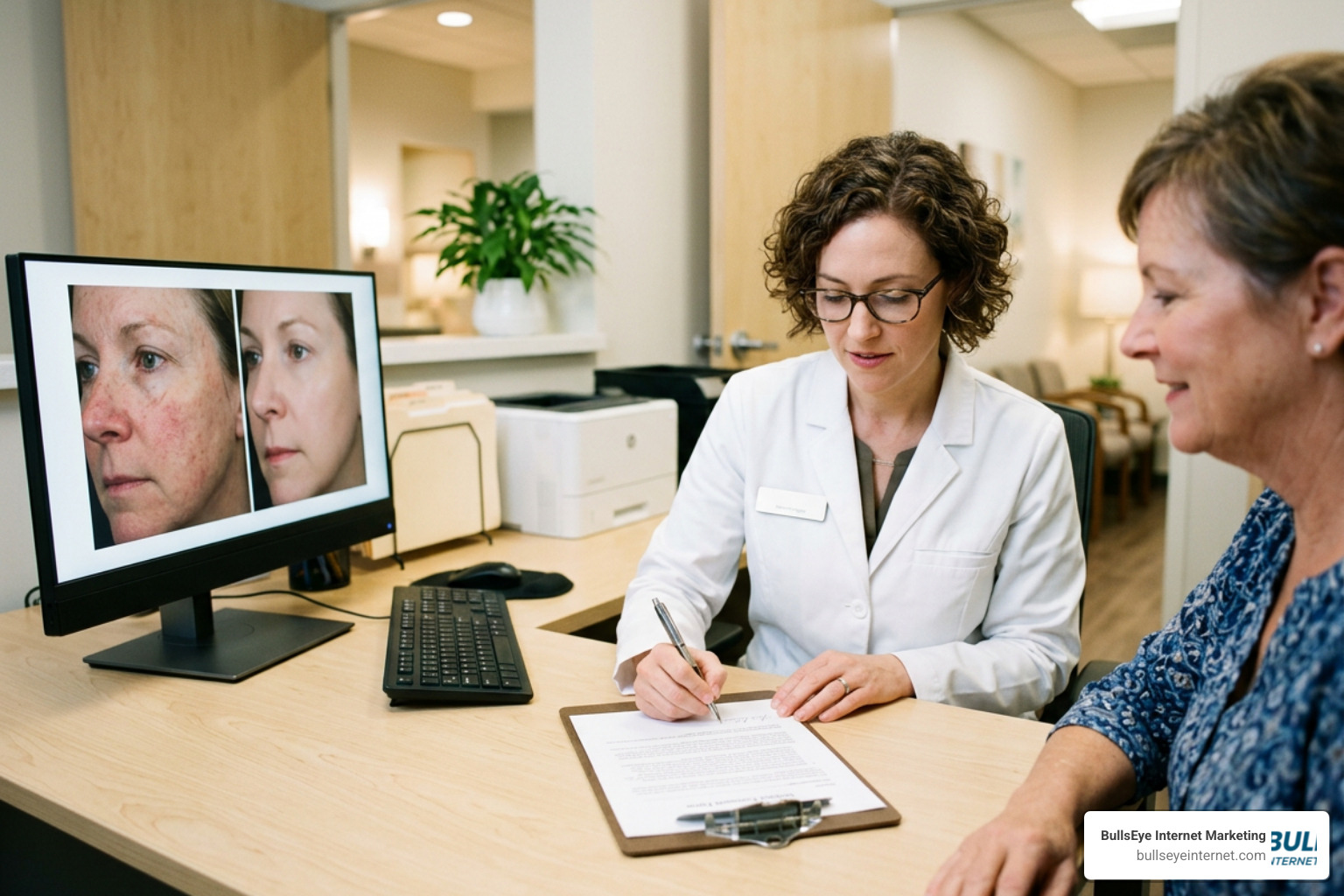
- Signed Consent: Never publish a patient’s photo, testimonial, or case study without a signed, written HIPAA marketing consent form on file.
Patient Retention, Automation, and ROI Measurement
Acquiring a new patient costs five to seven times more than retaining an existing one. Yet, many dermatology practices focus entirely on top-of-funnel acquisition while losing patients out the back door.
By integrating automated patient engagement software like Demandforce, practices can systematically bring patients back for recurring treatments. Practices using these systems routinely see:
- 100% increases in online bookings
- 94% more online reviews
- 51% more appointment confirmations
Recall Campaigns and Automated Reminders
Set up automated workflows based on clinical milestones:
- Annual Skin Cancer Screenings: Automatically email and text patients 11 months after their last screening to prompt them to book their next annual check.
- Cosmetic Maintenance: Send automated reminders to Botox patients at the 12-to-16-week mark, or chemical peel patients at the 4-week mark, inviting them to maintain their results.
- Post-Visit Care & Surveys: Send automated follow-up texts within two hours of an appointment to check on their recovery and request a Google review.
Measuring What Matters: Commercial Metrics Over Vanity Metrics
Do not let marketing agencies distract you with “vanity metrics” like impressions, clicks, or social media likes. These do not pay the light bill. To measure true marketing ROI, you must track hard commercial metrics:
- Cost Per Acquisition (CPA): How much do you spend in marketing to get one new booked patient?
- Patient Lifetime Value (LTV): What is the average revenue a patient generates over their lifetime with your practice? (A skin cancer screening patient may turn into an annual checkup patient and eventually cross-sell into high-margin cosmetic services).
- Return on Ad Spend (ROAS): For every dollar spent on paid ads, how many dollars of clinical revenue are generated?
- Conversion Rate: What percentage of website visitors actually complete a booking form or call your office?
Frequently Asked Questions about Dermatology Marketing
What is the most effective channel for online marketing for dermatologists?
For consistent, long-term patient acquisition, Local SEO and Google Business Profile optimization deliver the highest compounding ROI. It captures local patients at the exact moment they have high-intent search queries. However, for immediate patient volume, Google Ads (PPC) is the fastest-acting channel.
How do I balance medical and cosmetic services in online marketing for dermatologists?
You must isolate your campaigns and budgets. Run condition-based search campaigns for medical services (acne, eczema, screenings) on Google, and run visual, procedure-based campaigns for cosmetic services (Botox, fillers, body contouring) on Meta platforms. Never mix these budgets, or Google’s bidding algorithm will favor the easier medical conversions and starve your high-margin cosmetic campaigns.
How can a dermatology practice maintain HIPAA compliance with online reviews?
When responding to reviews, never acknowledge clinical details, appointment dates, or even confirm that the reviewer is a patient. Keep responses completely standardized, professional, and invite them to discuss any concerns privately over the phone.
Partner with BullsEye Internet Marketing for Predictable Growth
Navigating the complexities of online marketing for dermatologists can feel like a full-time job. At BullsEye Internet Marketing, we handle the heavy lifting so you can focus on what you do best: providing exceptional patient care.
We are a specialized digital marketing agency focused on generating real phone calls and booked appointments through Pay Per Lead, Google Business Profile Optimization, SEO, PPC, and conversion optimization.
Our unique service model gives your practice a massive competitive advantage:
- No Long-Term Contracts: We earn your business month after month based on performance, not legal lock-ins.
- Strict Geographic Exclusivity: We work with only one client per industry per geographic area. When you partner with us in your local Florida market—whether in Delray Beach, West Palm Beach, Miami, or Fort Lauderdale—we will never work with your local competitors.
Ready to dominate your local market and fill your schedule? Contact us today to request a free digital audit of your practice’s online presence.
