
Why Estate Planning SEO Matters More Than Ever
Estate planning SEO is the process of optimizing your law firm’s website to rank higher when potential clients search for your services on Google. Here’s what you need to know:
The 5 Core Components of Estate Planning SEO:
- Local Search Dominance – Optimize your Google Business Profile to appear in “near me” searches and the map pack.
- Strategic Keyword Research – Target long-tail keywords that reflect real client questions like “how to avoid probate in [city].”
- Trust-Building Content – Create authoritative blog posts and guides that demonstrate your expertise.
- Website Optimization – Ensure your site is fast, mobile-friendly, and structured for users and search engines.
- Performance Tracking – Monitor key metrics like organic traffic and conversions to refine your strategy.
The stakes are high. Nearly 70% of online experiences begin with a search engine, and estate planning searches surged by 53.89% in 2024 alone, signaling a massive shift in how people find legal services.
If your firm isn’t visible when someone searches for “estate planning attorney near me,” you’re handing clients to your competitors. Traditional referrals aren’t enough; the digital landscape has fundamentally changed how clients choose their lawyer.
This guide breaks down estate planning SEO into five simple, actionable steps. I’m Ronnie Katz, and since 2006, my team at BullsEye Internet Marketing has helped law firms dominate their local markets with proven estate planning SEO strategies that generate qualified leads and measurable ROI. We can transform a struggling firm into the go-to choice in their community—without long-term contracts or hidden fees.
Let’s walk through how to make that happen for your firm.

Step 1: Dominate Local Search and Be the Go-To Firm in Your Area
When a potential client in Miami Gardens or Boynton Beach needs an estate planner, their first move is often searching “estate planning attorney near me.” This is where local SEO becomes critical. Estate planning is inherently local; clients want a lawyer they can meet who understands local laws. Google prioritizes local businesses for these searches, which have increased by 200% in two years. Our goal is to put your firm front and center for these local searches, making you the answer to “How to increase your law firm’s online presence with local SEO” in South Florida.
Optimizing Your Google Business Profile for Estate Planning SEO
Your Google Business Profile (GBP) is your digital storefront and a critical component of local estate planning SEO, accounting for up to 30% of your local ranking. Getting it right is non-negotiable.
Here’s how we turn your GBP into a lead-generating machine:
- Complete and Accurate Information: We ensure every field is filled out, including your exact Name, Address, and Phone number (NAP) for consistency across all platforms. We also list your hours, website, and a detailed service description.
- Correct Categories: We select specific categories like “Estate Planning Attorney,” “Probate Lawyer,” and “Elder Law Attorney” to tell Google exactly what you do.
- Services List: We go beyond categories to list specific services like “Wills & Trusts,” “Probate Administration,” “Guardianships,” and “Asset Protection.”
- Photos and Posts: We regularly upload high-quality photos and use the “Posts” feature to share updates and legal news. This signals activity to Google and keeps your profile fresh.
- Responding to Reviews: Actively managing and responding to reviews directly impacts your GBP’s effectiveness and builds trust.
By optimizing your GBP, we help your firm appear prominently in the Google Map Pack, making it easy for potential clients in Miami or Fort Lauderdale to find you. We leverage Google Business Profile Insights to track visibility and engagement, ensuring peak performance.
The Power of Citations and Client Reviews
Beyond your GBP, consistent Name, Address, Phone Number (NAP) information across online directories (like Justia, Avvo, Yelp) is vital. These “citations” validate your firm’s location to Google. Inconsistent information can hurt your local ranking.
In law, trust is everything, and client reviews build it fast. Since 87% of people read reviews before making contact, they are a massive opportunity. Positive reviews improve your local estate planning SEO rankings and provide social proof that influences prospective clients. We encourage satisfied clients to leave reviews and help you respond to every single one—positive or negative—promptly and professionally. This engagement signals to both Google and potential clients that you’re a reputable expert.
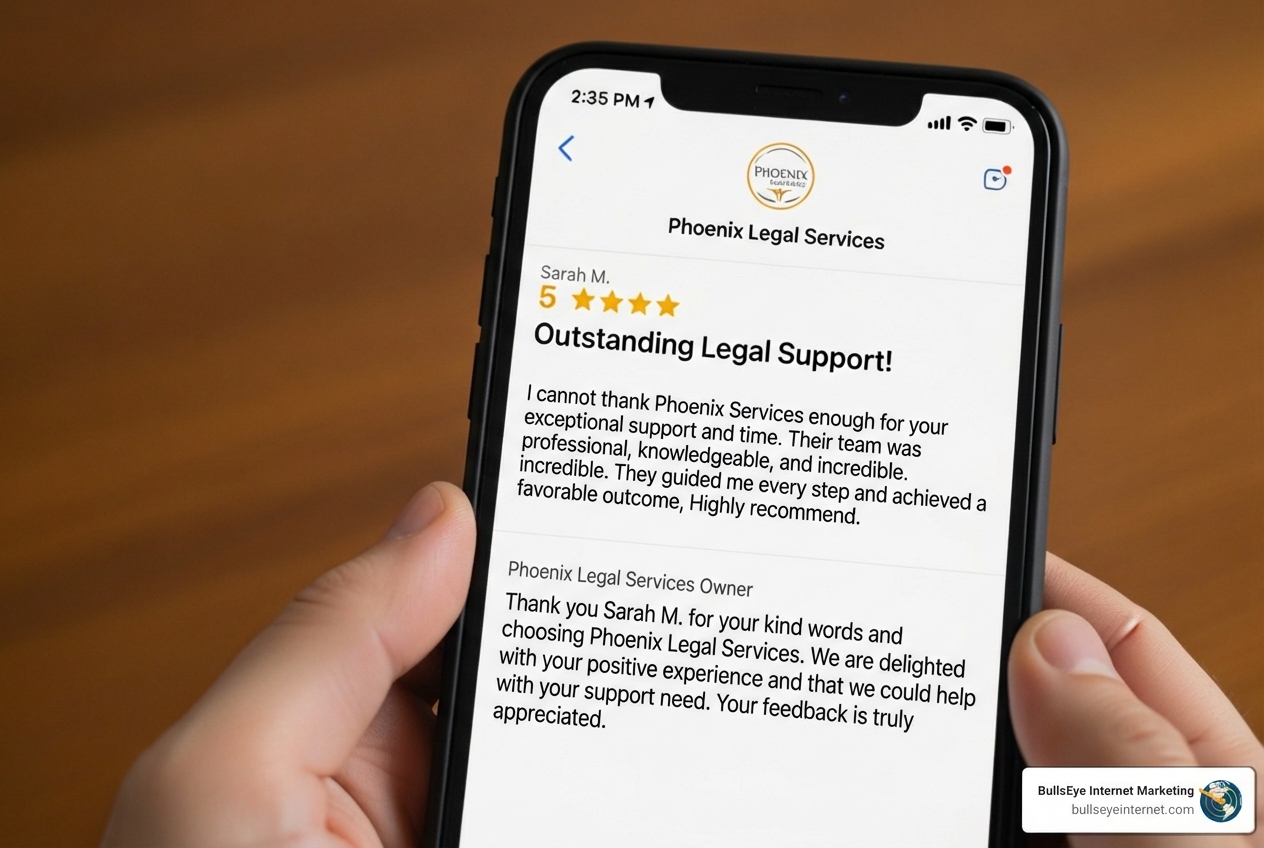
This proactive approach to managing your online reputation is a cornerstone of our strategy at BullsEye Internet Marketing. For more insights, check out our Estate Planning Resources.
Step 2: Uncover What Your Ideal Clients Are Searching For
Imagine someone in Kendall, Florida, typing “how to create a living trust in Florida” into Google. This isn’t a casual search; it’s a “buyer in pain” moment from someone actively seeking a solution. Understanding what your ideal clients are searching for is the bedrock of effective estate planning SEO. It’s how we attract high-intent leads who are ready to take action, leading to higher conversion rates.

Targeting Long-Tail Keywords
While broad terms like “estate planning” are competitive, we focus on “long-tail keywords”—specific, multi-word phrases that reflect real client questions. Think “How to avoid probate in Florida” or “Do I need a trust or a will in Broward County?” These phrases have lower competition, higher conversion potential, and signal a clear intent to hire an attorney. By targeting these queries, we position your firm as the go-to resource for specific solutions. Our guide on SEO Keywords for Estate Planners digs deeper into this strategy.
Understanding Search Volume Trends
The demand for estate planning services is surging, with search volume growing 13.5% in 2022, 16.22% in 2023, and a staggering 53.89% in 2024. This represents a massive opportunity for law firms. More people than ever are turning to Google and AI engines for legal guidance. If your firm isn’t visible, you’re missing out on this expanding market.
We use tools like Google Keyword Planner to analyze these trends and identify high-intent search terms. This data-driven approach allows us to craft an estate planning SEO strategy that capitalizes on current demand and positions your firm for future growth in areas like Miami Dade or Palm Beach County.
Step 3: Build Unshakeable Trust with Authoritative Content
In the sensitive world of estate planning, trust is the foundation of every client relationship. Authoritative content is your firm’s most powerful asset for building that trust. Our content strategy establishes your firm as a leading authority by demonstrating Experience, Expertise, Authoritativeness, and Trustworthiness (E-E-A-T)—Google’s criteria for high-quality content. We build trust by providing valuable, insightful content long before a client ever calls, a core part of our Digital Marketing for Law Complete Guide.
Crafting High-Converting Content for Estate Planning SEO
High-converting content for estate law clients balances:
- Straightforward Language: We translate complex legal jargon into plain, understandable English.
- Empathetic Tone: Our content acknowledges the emotional nature of estate planning, conveying compassion and understanding.
- Actionable Advice: We empower clients with clear next steps, like scheduling a consultation.
- Comprehensive Coverage: We create detailed service pages for Wills, Trusts, Probate, and more, rich with relevant keywords.
- Informative Blog Posts: We address real client questions with posts like:
- “What Happens If Someone Dies Without a Will in Florida?”
- “Understanding the Probate Process in Miami Dade County: A Step-by-Step Guide”
- “Do I Need a Living Trust in Palm Beach County?”
- “Estate Planning for Blended Families in Broward County”
- “The Importance of a Durable Power of Attorney in Florida”
This approach positions your firm as a knowledgeable and compassionate resource.
The Role of Video and Link Building
Video is a game-changer for building trust and enhancing your estate planning SEO. Users stay on pages with video 88% longer, a strong quality signal to Google. We leverage video to humanize your firm with short explainers, increase on-site engagement, and answer common questions visually.
Link building is like gaining “votes of confidence” from other reputable websites. These “backlinks” are a critical ranking factor. We employ strategies like guest blogging on relevant industry sites, securing listings in high-authority legal directories like Justia and Avvo, and forming strategic partnerships with professionals in South Florida. Consistently building high-quality backlinks improves your firm’s online authority and search rankings.
Step 4: Optimize Your Website for Search Engines and Users
Even the best content won’t matter if your website is slow, confusing, or broken on mobile. We optimize your website for both search engines (so they can find your content) and users (so they have a seamless experience). This dual focus is essential for visibility and conversions, which is also why we emphasize it in our PPC Advertising for Lawyers Complete Guide.
Best Practices for On-Page SEO
On-page SEO involves optimizing individual pages to improve rankings and user experience. It’s about signaling to Google what each page is about.
- Optimized Title Tags: We craft compelling, keyword-rich title tags (the clickable headlines in search results) to entice users to click.
- Compelling Meta Descriptions: We write the short text snippets under the title to summarize the page’s value and encourage clicks.
- Header Tag Structure (H1, H2, H3): We use headers to organize content logically, making it scannable for users and understandable for search engines.
- Internal Linking Strategy: We strategically link related pages within your site to guide users and help Google find more of your content.
- Natural Keyword Placement: We integrate keywords naturally into content, headings, and image alt-text, always writing for humans first.
Essential Technical SEO Elements
Technical SEO ensures your site’s foundation is solid so search engines can crawl, index, and rank it effectively.
- Mobile-Friendliness: With over 60% of legal searches on mobile, this is non-negotiable. Google uses “mobile-first indexing,” so we ensure your site is fully responsive.
- Site Speed: 53% of mobile users will bounce if a site takes longer than 3 seconds to load. We optimize your site for speed, aiming for that 3-second-or-less benchmark.
- Website Security (HTTPS): An SSL certificate (HTTPS) encrypts data, signaling security to users and Google. It’s crucial for building client confidence.
- Clean Navigation: An intuitive navigation structure helps both users find information easily and search engines understand your site’s hierarchy.
By implementing these best practices, we ensure your firm’s website is a high-performing asset that attracts, engages, and converts potential clients.
Step 5: Measure Your Success and Refine Your Estate Planning SEO Strategy
SEO is an ongoing process of analysis and refinement, not a “set it and forget it” task. At BullsEye Internet Marketing, we make data-driven decisions, continuously monitoring your estate planning SEO performance to maximize visibility and lead generation. We use tools like Google Analytics, Google Search Console, and Google Business Profile Insights to gather comprehensive performance data.
Key Performance Indicators (KPIs) to Track
To measure the impact of our SEO efforts, we focus on key performance indicators (KPIs):
- Organic Traffic: Visitors from search engines, indicating visibility.
- Keyword Rankings: Your position for target keywords like “probate lawyer Fort Lauderdale.”
- Conversion Rates: The percentage of visitors who contact you, which translates directly to leads.
- Consultation Requests: The number of inquiries from high-intent leads.
- Bounce Rate: The percentage of visitors who leave after viewing only one page.
- Backlink Quality: Auditing links to ensure they boost your domain authority.
By tracking these KPIs, we get a clear picture of what’s working and where we can improve.
Using Analytics to Improve Your Strategy
Analytics turns raw data into actionable insights, allowing us to refine your strategy:
- Analyzing Page Performance: We identify high-performing pages to create more related content and revise underperforming pages to improve their ranking.
- Refining Keyword Targeting: We find which keywords drive the most conversions, like “living trust lawyer Palm Beach County,” and double down on those terms.
- Updating Underperforming Content: We refresh blog posts that aren’t attracting visitors with new information and better keyword optimization.
- Doubling Down on What Works: We identify and replicate successful strategies, whether it’s a specific content type or keyword cluster.
This iterative process ensures your estate planning SEO strategy is always improving, leading to more visibility and clients. This approach is more sustainable than relying solely on paid advertising. For more on lead generation, check out our insights on Pay-per-lead for Lawyers.
Frequently Asked Questions about Estate Planning SEO
Why is SEO essential for my estate planning firm?
Estate planning SEO is essential because most clients now find legal services online. Ranking high on Google builds trust, positions you as an authority, and attracts high-intent clients actively seeking your services. Compared to traditional ads, SEO is a more sustainable and cost-effective way to generate qualified leads. If you’re not visible online, you’re missing out on potential clients in your local area, from Miami to Jupiter.
How long does it take to see results from SEO?
SEO is a long-term strategy. While initial improvements may appear in 3 months, it typically takes 6 to 12 months to see significant, sustainable results in traffic and leads. The timeline depends on market competition, your website’s current state, and the resources invested. Consistency and a well-executed strategy are key.
Can I do SEO myself, or should I hire an agency?
DIY SEO is possible but requires significant time, learning, and specialized tools, which is difficult for a busy attorney. Hiring a specialized agency like BullsEye Internet Marketing is often the most efficient path. We bring expert knowledge and a proven track record, allowing you to focus on your clients while we handle your online growth. Our exclusive one-client-per-area policy also gives you a unique competitive advantage.
Track and Improve Estate Planning SEO with BullsEye Internet Marketing
We’ve journeyed through the five essential steps to mastering estate planning SEO, from dominating local search and uncovering client intent to building trust with authoritative content, optimizing your website, and continuously measuring your success. The digital landscape for legal services is evolving rapidly, with a massive surge in online searches for estate planning—a 53.89% increase in 2024 alone! This presents an unprecedented opportunity for firms like yours in South Florida to connect with high-intent clients who are actively seeking your expertise.
At BullsEye Internet Marketing, we understand the unique challenges and opportunities within the estate planning niche. Our proven strategies are designed not just to get you noticed, but to build your authority, generate qualified leads, and ultimately, grow your firm. We’re committed to providing transparent, effective solutions with no long-term contracts, and our exclusive one-client-per-area approach ensures you always have a competitive advantage.
Don’t let your firm get lost in the digital noise. Seize this opportunity to become the go-to estate planning firm in your community. Let’s make sure your next potential client in Coconut Creek, Doral, or Wellington finds your firm first.
Ready to attract more clients and achieve sustainable growth? Learn how Google Local Services Ads can complement your SEO efforts and drive immediate leads and experience the BullsEye difference.
