
Why Internet Marketing for Contractors Matters Now
Internet Marketing for Contractors is the system of helping nearby customers find your business online, trust your work, and contact you when they are ready to hire. It should not mean spending more on ads and hoping the phone rings. It should mean tracking which channels produce qualified leads, booked estimates, and profitable jobs.
For a quick answer, focus on these priorities:
- Be visible when local buyers search through Google Business Profile, local SEO, and service-area pages.
- Make it easy to contact you with a fast mobile website, tap-to-call buttons, clear proof, and simple quote forms.
- Use paid ads carefully for high-intent searches, urgent work, and services with margins that support the cost.
- Respond and follow up fast with a CRM, missed-call texts, estimate reminders, and lead-source tracking.
- Measure booked jobs, not cheap leads by monitoring cost per lead, close rate, customer acquisition cost, and revenue by channel.
Referrals still matter, but they are not a predictable growth plan by themselves. Homeowners now compare contractors on Google, Maps, reviews, project photos, and response speed – often outside normal business hours. With roughly 1.7 million monthly U.S. searches for independent contractors, a weak online presence can hand ready-to-buy prospects to competitors.
I am Ronnie Katz, founder and Principal CEO of BullsEye Internet Marketing, with more than 20 years of experience helping businesses improve online visibility, traffic, and conversions. In this guide to Internet Marketing for Contractors, I will show how to connect the channels, tracking, and follow-up systems that can turn marketing spend into accountable opportunities.
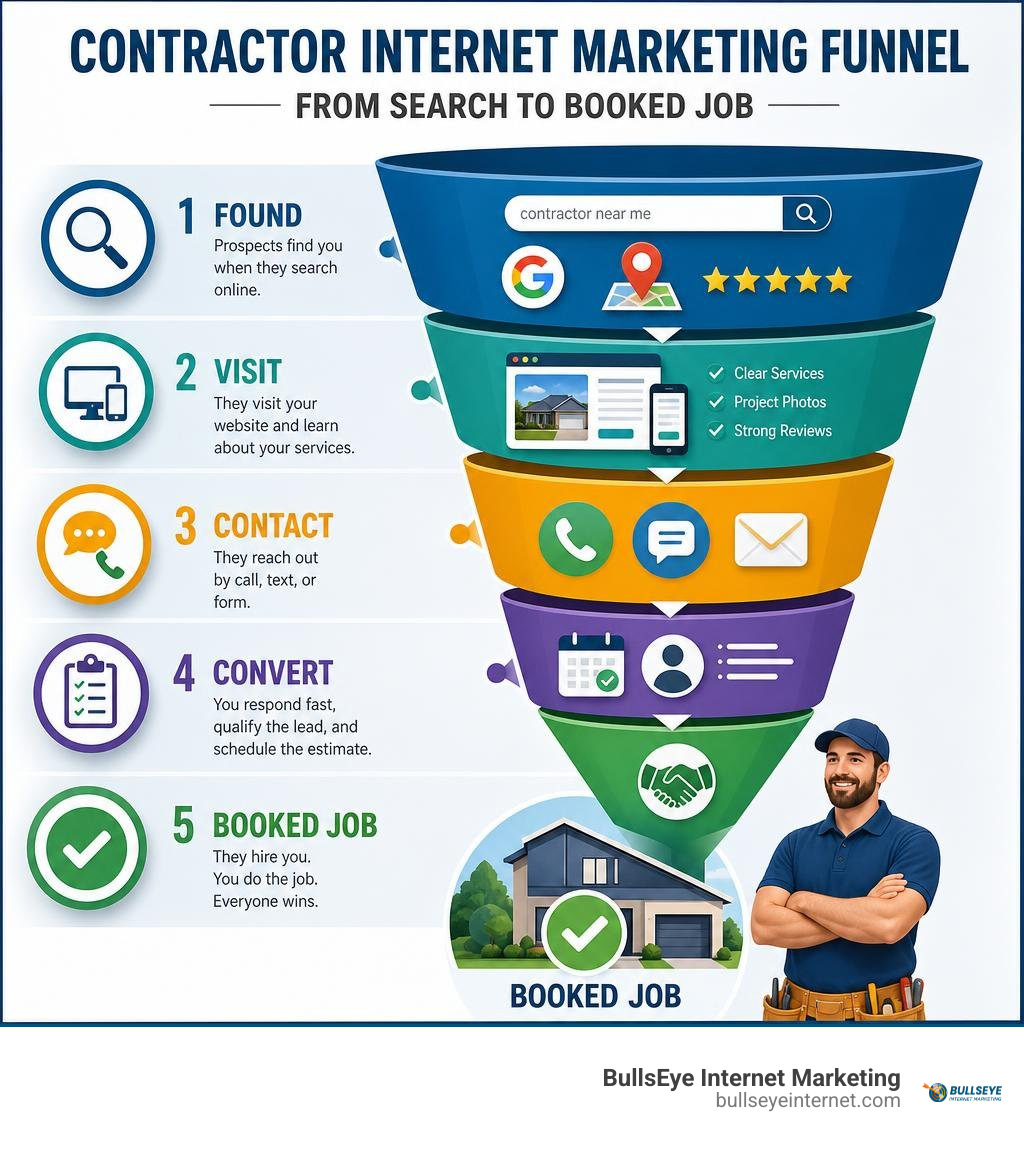
Essential Internet Marketing for Contractors terms:
Core Foundations of Internet Marketing for Contractors
Building a sustainable digital marketing presence is much like laying a structural foundation on a job site. If you skimp on the footings, the entire building shifts under pressure. Many trade professionals rush straight into paid advertising without setting up an infrastructure that can handle incoming demand.
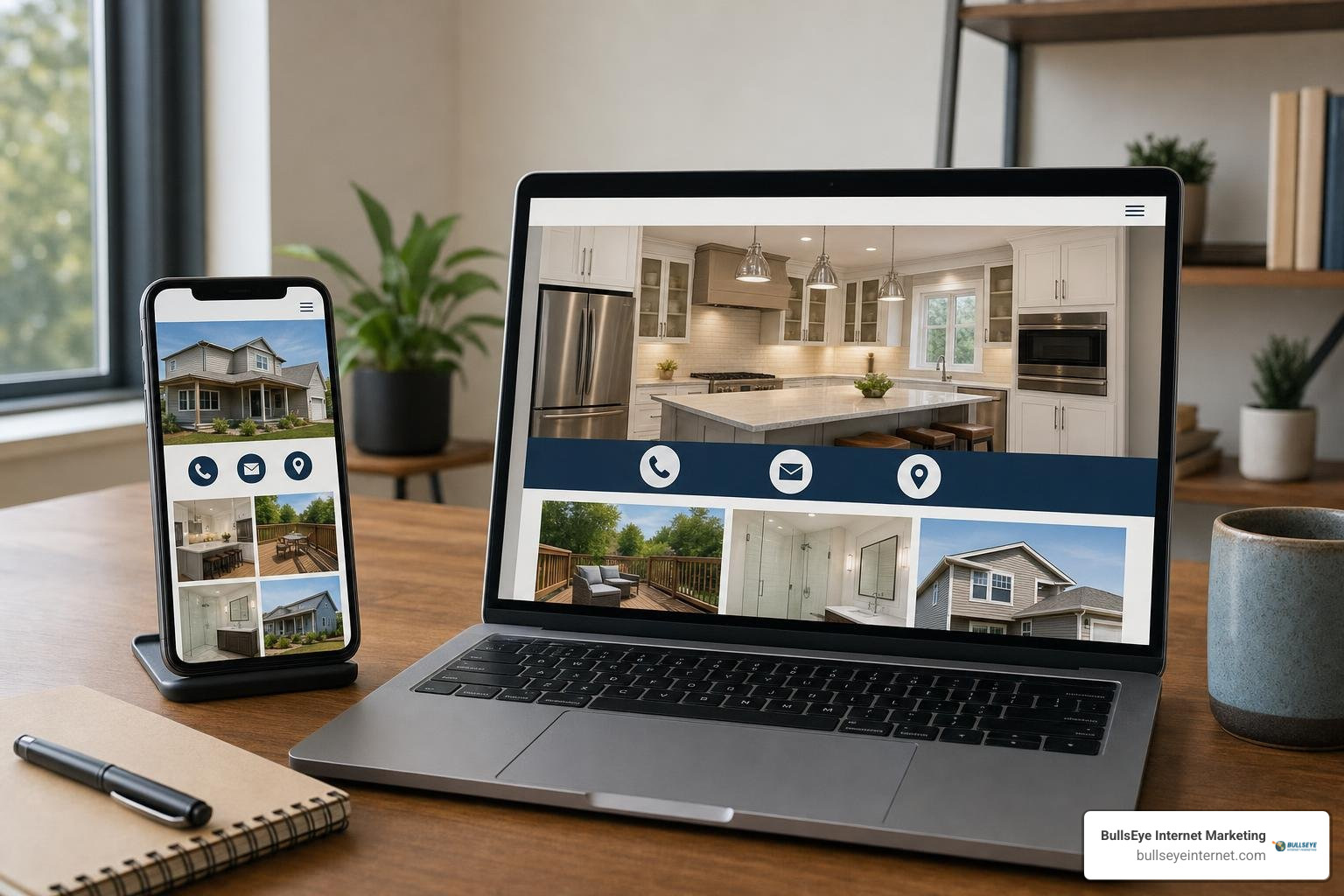
To establish an Essential Digital Marketing Strategy, you must first understand who your ideal buyer is and what keeps them up at night. Residential homeowners care about timeliness, clean job sites, fair pricing, and trustworthy crews. Commercial developers and property managers prioritize budget predictability, pre-construction guidance, safety records, and strict adherence to project timelines.
A single generic landing page trying to appeal to everyone usually ends up persuading no one. Instead, an effective foundation relies on clear audience segmentation, localized page structures, and clear technical proof.
Optimizing Your Website for High-Intent Conversions
Your website is your 24/7 digital showroom. It needs to do far more than look pretty; it must actively convert casual visitors into qualified leads. When a prospective client searches for a local remodeler or roofing expert at 8:30 p.m., they are looking for immediate reassurance and easy communication.
- Mobile-First Experience: Over 60% of local service inquiries happen on mobile devices. If a homeowner has to pinch and zoom to find your contact info, they will bounce straight to a competitor.
- Click-to-Call Buttons: Place prominent, sticky tap-to-call buttons at the top and bottom of every mobile view.
- Dedicated Service-Area Pages: Rather than listing every city on one page, create individual landing pages for each core suburb or county you serve.
- Cost Transparency & Guidance: Including general project starting costs or budget ranges helps pre-qualify leads, filtering out budget seekers before your team spends hours writing custom estimates.
- Call Tracking Integration: Use dynamic call tracking numbers across your pages so you can attribute incoming phone inquiries directly to specific organic pages or ad placements.
Leveraging Local SEO and Google Business Profile
Local search engine optimization determines whether your contracting company appears when nearby property owners type in “contractor near me” or “emergency roof repair.” To dominate local search results, your Google Business Profile (GBP) must be actively managed rather than treated as a set-it-and-forget-it listing.
For detailed steps on maximizing your local map placement, consult our A Practical Guide to GMB Optimization.
- Consistent NAP Alignment: Ensure your Name, Address, and Phone number are identical across Google, Apple Maps, Bing Places, and trade directories.
- Weekly Profile Activity: Upload fresh, high-resolution job site photos every week. Geotagged images of active jobs signal to search engines that your business is active and operational in specific neighborhoods.
- Review Acquisition Systems: Implement an automated post-project text message system that sends a direct review link to clients immediately upon project completion.
- Detailed Service Categories: Select precise primary and secondary categories (e.g., “General Contractor,” “Kitchen Remodeling Contractor,” “Deck Builder”) to capture long-tail local search intent.
High-Intent Paid Ad Channels: LSAs vs. Google Search Ads
When you need predictable lead volume immediately, paid advertising provides direct access to property owners who are ready to hire. However, picking the wrong ad platform or bidding on broad, unqualified terms can quickly drain your monthly budget. In the home services sector, the two powerhouses are Google Local Services Ads (LSAs) and standard Google Search Ads.
| Marketing Feature | Google Local Services Ads (LSAs) | Google Search Ads (PPC) |
|---|---|---|
| Placement | Top of Google search results (Above traditional ads) | directly below LSAs and above organic map packs |
| Payment Model | Pay Per Valid Lead (Calls/Messages) | Pay Per Click (PPC) |
| Trust Verification | Displays “Google Guaranteed” or “Google Verified” badge | Uses ad extensions, star ratings, and site links |
| Targeting Basis | Service categories and specific zip codes | Specific user keywords, search intent, and geographic radius |
| Lead Protection | Direct dispute system for invalid or spam leads | Negative keyword lists and click fraud monitoring required |
When running paid campaigns, contractors must also ensure their messaging adheres to local legal standards and county regulations, such as local licensing display rules outlined in county Advertising Guidelines.
Dominating Search Results with Local Services Ads
Google Local Services Ads sit at the top of the search engine results page. Because you only pay when a prospective customer calls or messages you directly through the ad, LSAs offer exceptional cost accountability.
Reviewing a complete Google Local Services Ads Strategy reveals why this channel is critical for residential service providers. Passing the Google background check and licensing verification grants your profile a trust badge that immediately alleviates homeowner anxiety.
To maintain top positioning in LSAs, maintain high review ratings, maintain fast response times to incoming phone calls, and aggressively dispute invalid leads (such as wrong numbers or out-of-service territory calls) through the platform’s dashboard. For additional tactics on ad selection, explore Why Contractors Should Invest in Google Local Service Ads and our overview on Everything You Need to Know About Local Ads for Contractors.
Maximizing ROI on Search Advertising for Internet Marketing for Contractors
Standard Google Search Ads allow you to target precise search queries that indicate urgent or high-value projects. While LSAs target broad service categories, Search Ads let you bid on hyper-specific phrases like “commercial tenant buildout cost” or “emergency slab leak repair.”
Mastering Google Search Ads Optimization requires filtering out wasted click spend. Build comprehensive negative keyword lists to exclude bargain hunters searching for “cheap,” “DIY,” or “free tools.”
Always incorporate call extensions, location extensions, and dedicated landing pages tailored to specific keyword groups. For a deeper breakdown of paid campaign tactics, view our resources on specialized Contractor Advertising Solutions and The Definitive Guide to Advertising for Home Services Companies.
Multi-Channel Growth: Content, Social, and Partnerships
While search engines capture buyers actively looking for a solution today, content marketing, social media proof, and professional networks build long-term brand equity. According to recent industry research, content marketing generates 54% more leads than traditional outbound methods for contractors.
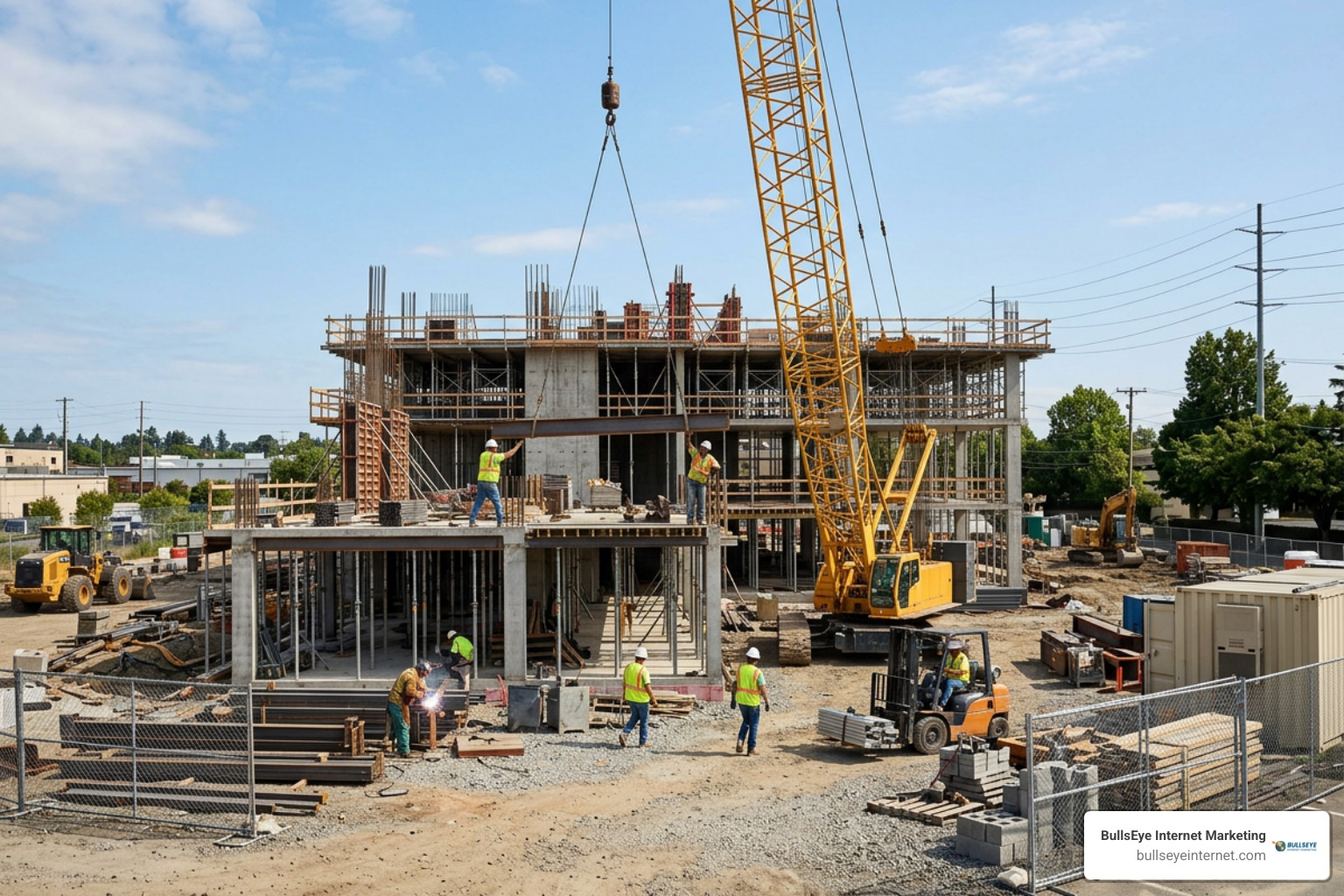
Combining organic search strategies with real-world job site activity creates an omnipresent local footprint. Strategic insights detailed in this comprehensive Marketing for General Contractors: A 2026 Playbook emphasize treating your job site operations as your primary content creation factory.
Shortening Sales Cycles with Strategic Content
Most homeowners experience anxiety before hiring a contractor. They worry about cost overruns, poor craftsmanship, and prolonged project timelines. You can dismantle these objections before your first sales call by publishing detailed, trust-building content.
- Case Studies & Project Showcases: Instead of posting standard before-and-after photos, write mini case studies detailing the client’s initial challenge, how your engineering or design team solved it, and the final outcome.
- Video Walkthroughs: Have your project manager record a 60-second video explaining daily site cleanup procedures or structural framing techniques.
- Narrative Problem Solving: Share stories on platforms like Facebook and Instagram about unexpected structural issues encountered during a job and how your team corrected them transparently.
- Pre-Construction Planning Guides: Provide downloadable PDFs or blog posts outlining project timelines, permit requirements, and budget expectations.
Developing Referral Networks and Trade Partnerships
Digital marketing should extend and amplify your real-world relationships. Developing formal cross-referral channels with complementary businesses creates a steady stream of highly qualified, low-cost leads.
Partner with non-competing trades—such as a roofing contractor partnering with a gutter installation company, or a kitchen remodeler connecting with local interior designers and real estate agents. Furthermore, physical on-site branding remains wildly effective. Place high-visibility yard signs on active project lawns and ensure your fleet of service vehicles features clean, high-impact branding.
When neighbors see your branded trucks outside a home for three weeks straight, local trust in your brand spikes automatically.
Systems and Automation: Converting Leads into Signed Contracts
Generating incoming calls and web forms is only half the battle. A major reason contractor marketing campaigns underperform is broken intake infrastructure. If a high-intent lead submits an inquiry on Tuesday night and does not receive a response until Thursday afternoon, that lead has likely already booked an appointment with a competitor.
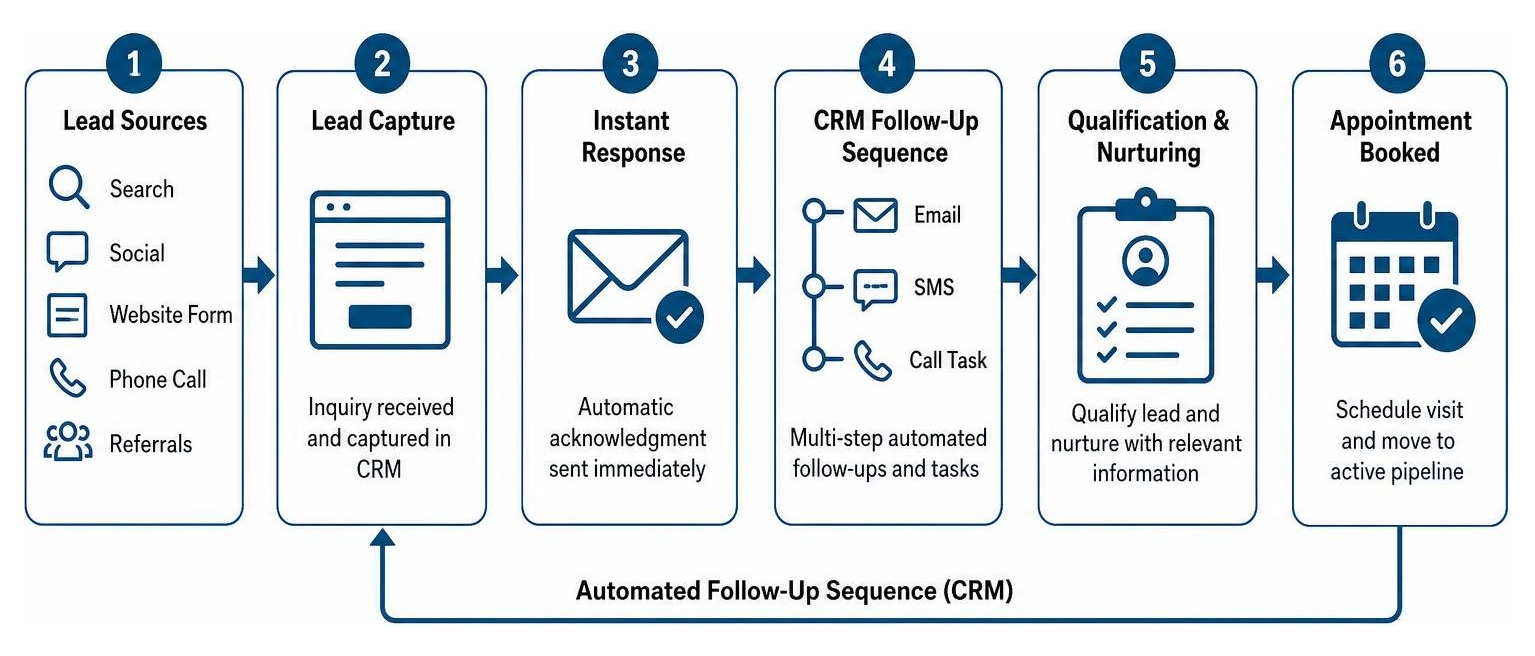
Implementing a systematic follow-up strategy, as outlined in this Contractor Lead Generation Playbook, ensures no prospective job slips through the cracks. In fact, trade businesses that adopt integrated CRM and automation tools achieve up to a 2x increase in lead qualification efficiency.
Implementing CRM Workflows and Speed-to-Contact
Speed-to-contact is often the single biggest factor determining who wins a contract. Homeowners frequently award the job to the first qualified contractor who answers their questions and provides a professional bid.
- Automated Missed-Call Text-Back: If a customer calls your office while your team is on a job site or away from the desk, set up an instant text automation that sends: “Hi! Thanks for calling [Company Name]. We’re currently helping a client. How can we help you today?”
- Instant Lead Notification: Route all web forms, ad inquiries, and directory leads into a centralized Customer Relationship Management (CRM) pipeline.
- Automated Appointment Reminders: Send automated text and email confirmations to homeowners 24 hours and 1 hour before an estimate appointment to virtually eliminate no-shows.
- Rapid Photo Estimating Tools: Utilize modern mobile estimating workflows to generate itemized preliminary quotes within hours of inspecting a site.
Key Metrics for Internet Marketing for Contractors
To prevent burning cash on ineffective marketing tactics, track your pipeline metrics on a unified dashboard. For insights into how strategic oversight protects your ad budgets, read about How We Guarantee Quality Leads for Home Service Contractors.
Monitor these essential performance indicators every month:
- Cost Per Lead (CPL): Total marketing spend divided by the total number of inquiries generated.
- Lead-to-Customer Conversion Rate: The percentage of total leads that sign a binding contract.
- Customer Acquisition Cost (CAC): Total ad and marketing expenses divided by the number of paying clients acquired.
- Average Project Margin: Ensuring the lifetime value of the job far exceeds the acquisition cost.
Frequently Asked Questions About Internet Marketing for Contractors
Why are word-of-mouth referrals no longer enough for contractors in 2026?
While word-of-mouth referrals provide high trust, they offer zero predictability or scale. Modern property owners do not rely solely on a neighbor’s recommendation; they cross-check referred contractors on Google, reading recent reviews and inspecting online project portfolios before calling.
Relying strictly on word-of-mouth creates an unpredictable “feast-or-famine” cycle where your schedule fluctuates wildly throughout the year.
What is the fastest digital marketing channel for immediate contractor leads?
Google Local Services Ads (LSAs) and targeted Google Search Ads are the fastest channels for generating immediate, high-intent leads.
Because paid search targets users actively typing in high-intent keywords like “emergency electrician near me” or “roof replacement quote,” campaigns can start delivering direct phone inquiries within 24 to 48 hours of launch.
How do contractors measure and lower their Customer Acquisition Cost (CAC)?
Contractors measure CAC by taking their total marketing spend over a given timeframe and dividing it by the number of signed, paying clients acquired during that period.
To lower your CAC, focus on optimizing your website for higher conversion rates, setting tight negative keyword lists in paid ad accounts, automating rapid follow-up workflows to close more estimates, and maintaining a strong Google Business Profile to generate free organic phone leads.
Conclusion: Turn Your Marketing into a Scalable Revenue System
Digital marketing for trade professionals is not about collecting vanity likes on social media or paying for clicks that never turn into revenue. It is about building a predictable, accountable pipeline that generates high-margin jobs consistently month after month.
When you align local search visibility, high-converting website pages, targeted paid search campaigns, and automated intake CRM workflows, marketing shifts from an unpredictable expense to a powerful investment engine.
At BullsEye Internet Marketing, we help contractors dominate their local markets with custom campaigns backed by our signature promise: no long-term contracts and strict geographic exclusivity—meaning we only work with one contractor per industry per geographic area, giving you a distinct competitive advantage over your rivals.
To stop wasting ad spend and build a high-performing lead generation engine, review our comprehensive Contractor Lead Blueprint and learn how to Scale Your Business with Professional Service Ads. Contact us today to secure your local territory and take full control of your growth.
