
Why Most Law Firms Struggle to Find Clients Online (And What Actually Works)
Lawyer advertising solutions have changed dramatically — and firms that stick to old playbooks are losing cases to competitors who don’t.
Here’s a quick look at the most effective options available right now:
| Solution | Best For | Speed to Results | Cost Level |
|---|---|---|---|
| SEO & Content Marketing | Long-term organic growth | Slow (3-6+ months) | Low-Medium |
| Pay-Per-Click (PPC) | Immediate high-intent leads | Fast (days) | High |
| Local Service Ads (LSAs) | Verified local phone leads | Fast (days-weeks) | Medium |
| Social Media Ads | Brand awareness & retargeting | Medium | Medium |
| Targeted Display Ads | Reach in-market legal shoppers | Medium | Medium |
| Website Design & SEO | Conversion & trust foundation | Medium | Medium |
| Generative Engine Optimization (GEO) | AI search visibility | Medium-Long | Low-Medium |
The legal market is brutally competitive online. There are 100 billion Google searches every month, and 75% of users never scroll past the first page of results. If your firm isn’t visible at the top — in organic results, paid ads, or local listings — potential clients are hiring someone else.
The challenge isn’t just getting seen. It’s getting seen by the right people, at the right moment, on the right device — and then converting that attention into a signed case.
I’m Ronnie Katz, founder and Principal CEO of BullsEye Internet Marketing, and since 2006 I’ve helped law firms across North America cut through the noise with data-driven lawyer advertising solutions that actually move the needle. In this guide, I’ll walk you through every major channel, what it costs, and how to build a mix that fits your firm’s goals and market.
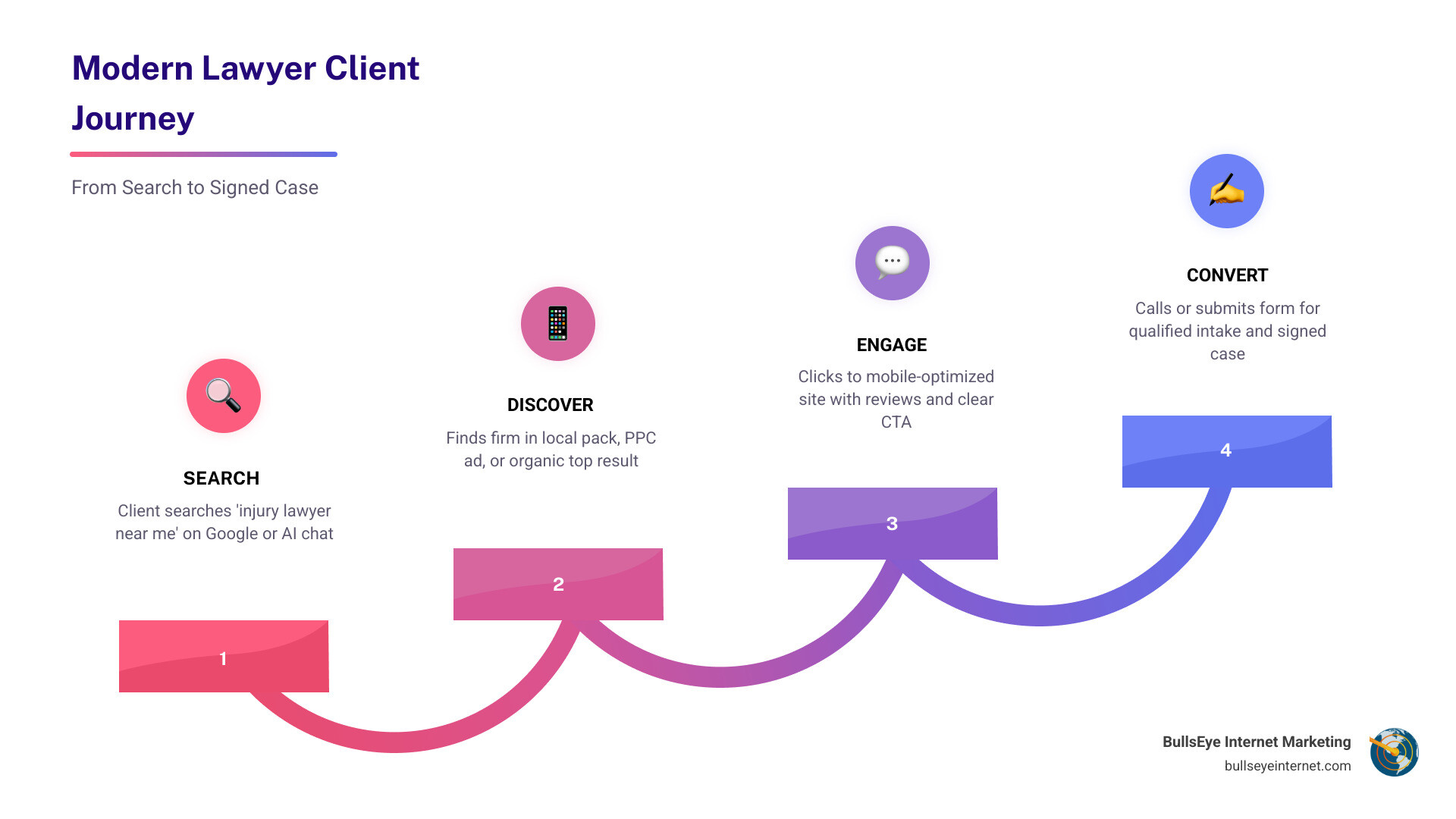
The Best Lawyer Advertising Solutions for Modern Law Firms
The best strategy is rarely one channel. For most firms in Florida and across the U.S., the strongest mix combines:
- SEO for long-term visibility
- PPC for immediate demand capture
- LSAs for local phone leads
- Google Business Profile optimization for map visibility
- A conversion-focused website to turn traffic into consultations
- Retargeting to bring back visitors who were not ready the first time
- Review generation to improve trust and local conversions
Here is the practical comparison:
| Channel | Speed | Typical Cost Pressure | Lead Intent | Best Use |
|---|---|---|---|---|
| SEO | Slower | Medium | High | Build durable case volume |
| PPC | Fast | High | Very high | Capture urgent searches now |
| LSAs | Fast | Medium | High | Drive screened local calls |
| Display | Medium | Medium | Medium | Reach and nurture in-market audiences |
| Social Ads | Medium | Medium | Medium | Awareness, retargeting, brand lift |
A good rule: do not spend heavily on traffic until your intake and website can convert it. Sending paid clicks to a weak site is like pouring premium gas into a shopping cart.
SEO and content marketing as long-term lawyer advertising solutions
SEO remains one of the most effective lawyer advertising solutions because it captures people already searching for help. Research consistently shows that around 70% of users click organic results, and most never go past page one.
For law firms, SEO usually includes:
- Practice area pages
- Location pages for target cities and counties
- FAQ pages answering common legal questions
- Blog content tied to real search intent
- Internal linking between related services
- Technical fixes for speed, indexing, and mobile usability
- Schema markup to help search engines and AI systems understand the site
This is especially important for firms targeting local searches in places like Miami, West Palm Beach, Coral Gables, Boca-adjacent South Florida markets, and other competitive service areas. People do not just search “lawyer.” They search things like:
- car accident lawyer miami
- divorce attorney west palm beach
- personal injury attorney near me
- child custody lawyer broward county
The firms that win usually build topical authority. That means creating a strong core page for each practice area, then supporting it with subpages, FAQs, and educational content. We cover this broader strategy in How To Market A Law Practice Like A Pro.
Content marketing also feeds local SEO, Google Business Profile visibility, and AI search visibility. A plain-language article that clearly answers client questions can rank in search, appear in featured answers, and support conversion after the click.
PPC and Local Service Ads as fast-track lawyer advertising solutions
PPC and LSAs are the fastest lawyer advertising solutions when a firm needs leads now, not six months from now.
PPC works because it places your firm in front of people with immediate intent. Search ads show up when someone types a high-value query, and that often means they need legal help right away. The tradeoff is cost. Legal clicks can be expensive, especially in personal injury and other competitive practice areas. That is why campaign structure matters.
A strong PPC setup includes:
- Tight ad groups by practice area and location
- Negative keywords to block junk traffic
- Call extensions and lead forms
- Landing pages matched to ad intent
- Dayparting and geo targeting
- Ongoing bid and quality score optimization
Negative keywords deserve special attention. Without them, you may pay for searches related to free help, jobs, legal aid, or irrelevant case types. That is budget leakage, and it adds up fast.
If you want a deeper breakdown, see our Detailed Guide To Google Ads For Lawyers and Google Local Services Ads For Lawyers.
LSAs are different from traditional PPC. They usually appear at the very top of search results, often above standard ads, and they are designed to drive calls. Firms only pay for leads rather than clicks, which can make them very efficient when set up correctly. The verification and screening elements also add trust.
Social media, display ads, and retargeting for visibility
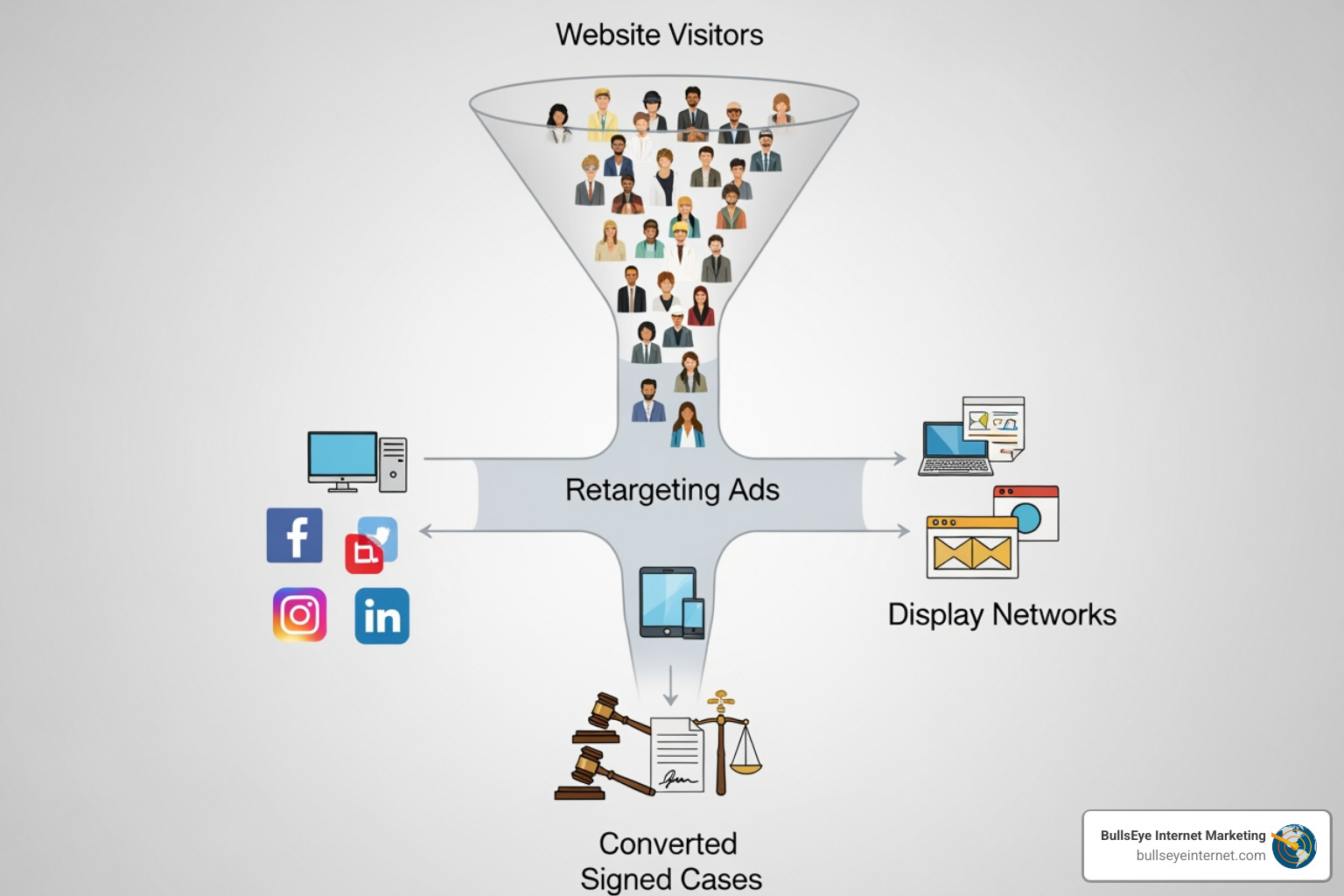
Not every future client converts on first visit. That is where social, display, and retargeting help.
Social media ads on platforms like Meta, YouTube, and LinkedIn can:
- Increase brand familiarity
- Promote educational content
- Retarget site visitors
- Reach niche audiences by demographics and interests
Display ads expand reach across websites and apps. Some networks can place ads on thousands of premium websites, which helps firms stay visible outside search. This is useful for high-consideration legal matters where people compare firms before contacting one.
Behavioral retargeting is especially valuable. If someone visited your personal injury page but did not call, retargeting lets you stay top-of-mind as they continue researching.
Why SEO, AI, and Website Performance Drive More Signed Cases
Traffic matters, but signed cases matter more. That is why website quality, mobile speed, and trust elements are central to modern legal marketing.
If a mobile user cannot find what they need immediately, 61% will leave for another site. That is a painful stat, but it explains why some firms buy traffic and still feel disappointed.
A high-performing law firm website should have:
- Fast load times, ideally under three seconds
- Mobile-first design
- Clear click-to-call buttons
- Short, simple contact forms
- Strong attorney bios and credibility signals
- Prominent reviews and trust badges
- Clear practice area navigation
- Secure HTTPS setup
- Local office and service area information
How SEO and content marketing help law firms attract clients
SEO helps firms attract clients by matching the right page to the right search intent.
There are three common intent buckets:
- Informational: “what to do after a car accident”
- Commercial: “best personal injury lawyer near me”
- Navigational: a search for your firm name
Informational content brings prospects in earlier. Commercial pages convert those ready to hire. Both matter.
Local SEO adds another layer. Optimizing your Google Business Profile, maintaining consistent name-address-phone data, collecting reviews, and building local relevance can improve map pack visibility. That matters because many legal searches have strong local intent, especially on mobile.
For a broader view, see An Essential Guide To Advertising For Lawyers and, for a niche example, Seo For Family Law Attorneys.
The role of AI and Generative Engine Optimization in legal marketing
AI is no longer a side topic. It is reshaping how people discover law firms.
Generative Engine Optimization, or GEO, is the practice of making your content easier for AI-driven systems like ChatGPT and Gemini to understand, summarize, and surface. It builds on traditional SEO, not replaces it.
Good GEO habits include:
- Writing clear, direct answers
- Using question-based headings
- Structuring content in plain language
- Adding schema markup
- Reinforcing entity signals like practice areas, attorneys, cities, and services
- Keeping facts consistent across your website and profiles
Think of GEO as making your content “citation-ready.” If your page is vague, bloated, or confusing, AI systems are less likely to rely on it. If it is clear, factual, and well-structured, you improve your odds of appearing in conversational search experiences through 2026 and beyond.
Why professional law firm website design and management matter
A law firm website is not an online brochure. It is the hub that supports every other channel.
Professional design and management improve:
- Conversion rates from paid and organic traffic
- Trust through consistent branding and messaging
- Technical performance and SEO health
- Intake routing, call tracking, and lead attribution
- Content freshness and compliance review
This matters because even the best ad campaign fails if the landing page is slow, cluttered, or confusing. We often tell firms that their homepage should answer three questions fast:
- What do you handle?
- Where do you help clients?
- How can someone contact you right now?
If those answers are hidden, the phone stays quiet.
Paid Advertising Options That Deliver Measurable ROI
Paid media is attractive because it is measurable. You can track calls, forms, cost per lead, and even cost per signed case if your intake and CRM are connected properly.
The strongest paid strategies align ads, landing pages, intake, and reporting into one system. That means:
- Tracking every call source
- Recording form submissions by campaign
- Reviewing lead quality, not just volume
- Measuring signed cases and revenue where possible
What role PPC advertising plays in legal marketing
PPC is the most direct way to capture urgent demand. It is ideal when people need fast help, such as after an arrest, accident, or sudden family law issue.
Its main roles in legal marketing are:
- Capturing bottom-of-funnel searches
- Defending branded searches from competitors
- Testing new markets or practice areas quickly
- Filling lead gaps while SEO builds
But legal PPC is not cheap. In many markets, top keywords can cost hundreds of dollars per click. That is why campaign quality is everything. A smart setup can still be highly profitable when the intake team answers quickly and the landing page is built to convert.
For deeper reading, visit Ppc Advertising For Lawyers Complete Guide and Pay Per Click Advertising For Lawyers Guide.
Why Local Service Ads are beneficial for law firms
LSAs are beneficial because they combine visibility, trust, and pay-per-lead economics.
Key advantages include:
- Top-of-page placement
- Local targeting by service area
- Verified profile elements that boost credibility
- Lead dispute options in some situations
- Strong phone-call intent
For many firms, LSAs produce better-quality local calls than broad PPC campaigns because the format is built around direct contact. They are especially helpful for firms serving defined counties or metro areas.
To learn more, see How Local Ads For Lawyers Improve Visibility In High Competition Cities and Advanced Tips To Boost Conversions From Lawyer Google Local Ads.
How targeted display ads and retargeting work for client acquisition
Targeted display ads work by placing your message in front of selected audience segments rather than waiting for a search. Retargeting narrows that even further by focusing on people who already interacted with your firm.
Common tactics include:
- In-market audience targeting
- Geographic targeting by city, county, or radius
- Frequency caps to avoid ad fatigue
- Creative sequencing to tell a story over time
- Cross-device reach so your brand follows the research journey
This supports client acquisition in two ways:
- It creates awareness among likely prospects before they search again.
- It brings back undecided visitors who left without contacting you.
Budgeting, Agency Selection, and Campaign Measurement
A realistic budget depends on practice area, geography, competition, and case value. A criminal defense firm in a dense urban market will not budget like an estate planning solo in a smaller county.
Still, a few principles hold true.
How much law firms should budget for digital advertising solutions
Budgeting should reflect both your goals and your market.
A practical framework:
- Starter SEO budgets should allow for technical work, local optimization, and ongoing content
- PPC budgets need enough spend to generate meaningful data, not just a few scattered clicks
- LSA budgets should be high enough to remain visible in your selected service area
- Reserve budget should be kept for testing new ads, pages, and audience segments
Multi-location firms usually need more than solo firms because they require more location pages, map optimization, and paid coverage. Competitive metros also demand higher investment.
The key is not just “how much can we spend?” but “how much can we spend and still maintain quality intake and follow-up?”
What to look for when choosing a legal marketing agency
Not every agency understands legal marketing. When choosing a partner, look for:
- Experience with law firm lead generation
- Knowledge of attorney advertising ethics
- Transparent reporting
- Clear ownership of strategy
- Strong conversion and intake focus
- No long-term contract traps
- Local market understanding
- Real communication, not mystery dashboards
Our view is simple: firms should know where leads come from, what they cost, and whether they become signed cases. We also believe exclusivity matters. At BullsEye Internet Marketing, we work with only one client per industry per geographic area, which helps avoid obvious conflicts and protects competitive advantage. We also do not require long-term contracts.
If you are comparing options, our Detailed Reviews Of The Top 10 Law Firm Marketing Agencies Miami can help frame the questions to ask.
How to measure success and ROI from lawyer advertising campaigns
The most important legal marketing metrics are not vanity metrics.
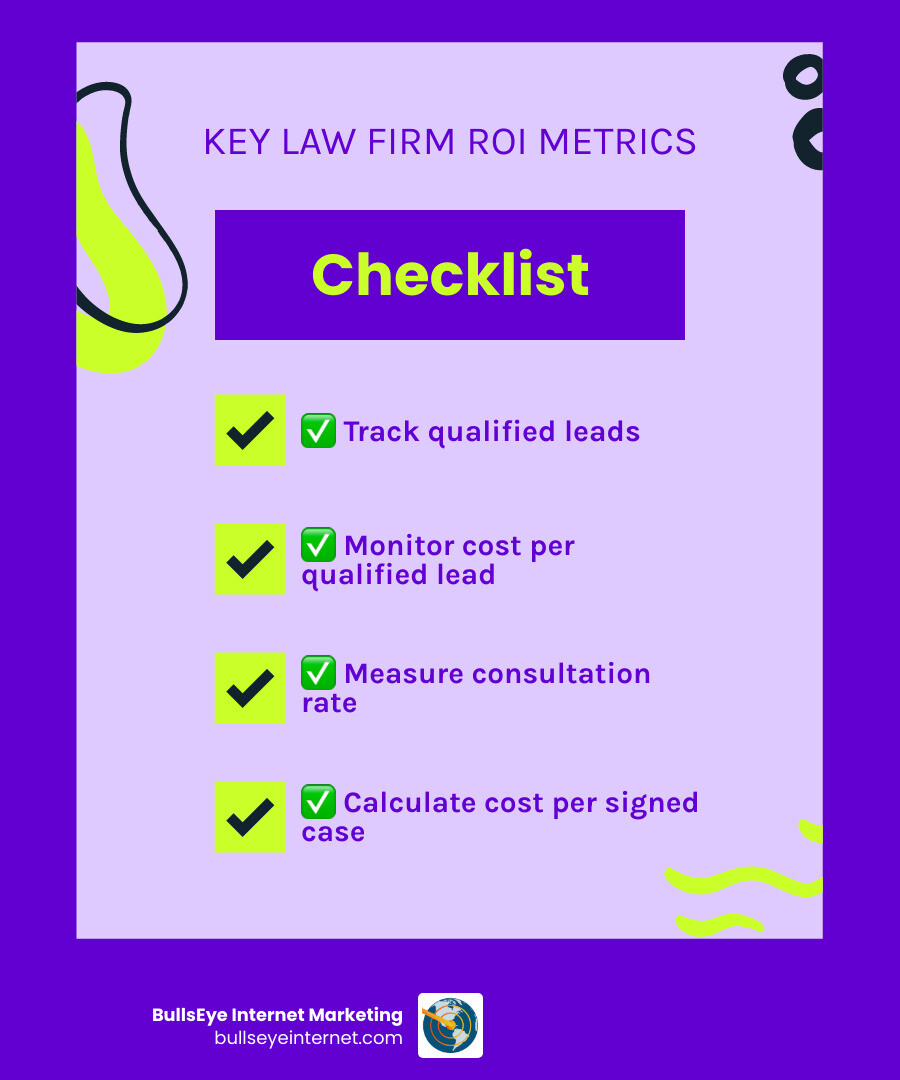
Track these instead:
- Qualified leads
- Cost per qualified lead
- Consultation rate
- Signed cases
- Cost per signed case
- Revenue by source where possible
- Call answer rate and missed-call rate
- Landing page conversion rate
A clean measurement setup often includes call tracking, form tracking, CRM attribution, and regular lead-quality reviews. If intake is weak, campaign performance will look worse than it really is. If tracking is weak, you may kill good campaigns by mistake.
For firms that want tighter accountability, Pay Per Lead For Lawyers is worth reviewing.
Compliance, Common Pitfalls, and Real-World Results
Legal advertising is not just about performance. It also has to comply with ethics rules.
Ethical and regulatory considerations in lawyer advertising
Law firms should review applicable bar rules before launching campaigns. Requirements vary, but common issues include:
- Misleading claims
- Unverifiable superlatives
- Improper specialization language
- Testimonials and past results disclosures
- Trade name restrictions
- Dramatizations and disclaimers
- Solicitation rules
- Recordkeeping obligations
Two useful resources are Links to Attorney Advertising Rules by State and Local Advertising ethics guidance.
This is one reason legal-specific strategy matters. The ad that gets clicks is not always the ad that passes review.
Common challenges in legal advertising and how to overcome them
The most common issues we see are:
- High CPCs from poor keyword targeting
- Wasted spend due to weak negatives
- Slow websites
- Landing pages that do not match ad intent
- Weak intake response times
- Too few reviews
- Broad targeting that attracts junk leads
- Tracking gaps between lead and signed case
How to fix them:
- Tighten targeting and negatives
- Improve page speed and mobile UX
- Use dedicated landing pages by service
- Train intake to answer fast and consistently
- Ask for reviews at the right moments
- Connect reporting to actual outcomes
Real-world results and trends shaping 2025 and beyond
Across the industry, strong legal campaigns have produced meaningful gains in leads, traffic, and form submissions. Research also shows that AI optimization can reduce ad waste, with some platforms reporting savings around 27% through in-platform optimization.
Other important trends for 2025 and beyond include:
- More AI-assisted search and answer engines
- Greater emphasis on structured content and schema
- Continued growth of local-intent search
- Omnichannel campaigns that combine search, display, video, and retargeting
- More attention to first-party data and intake integration
- Better use of CTV and awareness channels for larger firms
The direction is clear: firms that combine local dominance, strong SEO, measurable paid media, and fast intake will keep pulling ahead.
Frequently Asked Questions About Lawyer Advertising Solutions
Which lawyer advertising solution works fastest for new firms?
Usually LSAs and PPC. They can launch quickly and generate calls within days if the account, verification, and targeting are set up correctly.
What is the best long-term lawyer advertising solution for sustainable growth?
SEO and content marketing. They build authority, improve organic visibility, and create compounding returns over time.
Can a law firm use multiple advertising solutions without wasting budget?
Yes, if channels are coordinated. SEO, PPC, LSAs, social, and retargeting work best when tracking is unified and each channel has a clear job.
Solving Legal Client Acquisition Hurdles: BullsEye Internet Marketing
The best lawyer advertising solutions are not about chasing every shiny tactic. They are about building the right mix for your firm: visibility in search, trust on the page, fast lead capture, and clear reporting on what actually produces signed cases.
At BullsEye Internet Marketing, we help law firms across Florida and the U.S. do exactly that through SEO, PPC, Google Business Profile optimization, conversion strategy, and pay-per-lead programs. We keep it straightforward: no long-term contracts, one client per industry per market, and a focus on calls and cases rather than fluff.
If you want the next step, start with our An Essential Guide To Advertising For Lawyers.
