
Why Mastering LLM SEO Is No Longer Optional
LLM SEO best practices are reshaping how businesses get found online. Instead of just ranking on Google, your content must now be the source that AI tools like ChatGPT, Perplexity, and Google’s AI Overviews cite when answering user questions.
Quick Answer: Core LLM SEO Best Practices
| Practice | Why It Matters |
|---|---|
| Answer questions directly | LLMs extract clear, concise answers from well-structured content |
| Focus on original content | AI-generated text creates a feedback loop; human expertise gets cited |
| Implement schema markup | Structured data helps LLMs understand your content context |
| Build brand mentions | Citations across the web strengthen your authority signals |
| Optimize for local intent | Local queries need consistent NAP data and localized content |
| Track new metrics | Monitor AI referral traffic and brand mentions, not just rankings |
The numbers tell the story: Gartner predicts traditional search volume will drop 25% by 2026. Meanwhile, businesses are seeing LLM traffic convert at rates up to 30%—compared to just 5% for traditional SEO. That’s a 6x difference in conversion performance.
When someone asks ChatGPT a question, they get a synthesized answer drawn from sources the AI trusts, not a list of links. If your content isn’t structured to be understood and cited by these systems, you’re invisible when buyers are making decisions.
This isn’t about abandoning traditional SEO but expanding your strategy to meet buyers in conversational AI interfaces that often skip the SERP.
I’m Ronnie Katz of BullsEye Internet Marketing. Since 2006, I’ve helped businesses steer online marketing shifts. Now, I focus on helping clients master LLM SEO best practices to maintain visibility in the new AI search landscape.

Important LLM SEO best practices terms:
Content & Structural Optimization for LLMs (Practices 1-5)
Keyword stuffing is obsolete. LLMs demand content that is accurate, easy to understand, semantically relevant, and user-centric. Your content strategy must shift from satisfying algorithms to genuinely helping users, which means focusing on Natural Language Processing (NLP)-friendly structures and high quality.
1. Write ‘NLP-Friendly’ Content That Answers Questions Directly
LLMs are designed to provide direct answers. If your content buries the lead, an LLM might skip it. Lead with the answer, then provide supporting details.
- Direct Answers: Start sections with a concise answer to the question in the heading. Content with direct answers is more extractable and preferred by LLMs. State your key insight immediately, then provide context.
- Short Paragraphs & Bullet Points: LLMs prefer content that’s easy to chunk and digest. Use short sentences (under 20 words) and lists. Pages cited by ChatGPT have an average of almost 14 list sections, far more than average Google SERP results.
- Q&A Format: Structuring content with clear questions and direct answers mimics conversational search, making it highly compatible with LLMs. FAQ sections are particularly effective.
- Clear Headings (H1, H2, H3): A logical heading hierarchy helps LLMs understand your content’s structure. ChatGPT cites content with a sequential heading structure (e.g., H1 > H2 > H3) nearly three times more often.
- Stylistic Improvements: Research shows that improving fluency and readability can result in a 15-30% visibility boost for content in AI-generated responses. One study confirmed this boost for content with better fluency and readability.
2. Shift from Keyword Research to Prompt & Intent Research
While traditional keyword research has value, LLMs push us toward “prompt research.” Users ask LLMs longer, conversational queries (averaging 15-23 words), so content must address the intent behind these prompts.
- Prompt Research: Understand the full questions users present to LLMs. Use tools like chat.com‘s autocomplete feature in an incognito window to find what people are asking about your topic. Use these relevant questions as headings on your web page.
- User Intent: LLMs prioritize content that matches the context and meaning of queries, not just keywords. Understand the “why” behind a search.
- Mid-Funnel & Hyper-Specific Content: LLMs excel at summarizing and comparing. This makes mid-funnel content like comparison guides (“Tool A vs. Tool B”) or hyper-specific pages (“CRM for Fort Lauderdale law firms”) very effective for answering precise buyer questions.
- Conversational Queries: Write content that naturally answers complex, conversational questions by providing context and anticipating follow-ups.
- Long-Tail Keywords: The emphasis on longer queries reinforces the importance of optimizing for long-tail keywords.
3. Prioritize Originality and E-A-T Over AI-Generated Content
While AI is a useful assistant, BullsEye Internet Marketing strongly advises against using it to generate core content. LLMs are trained on existing data; feeding them AI-generated content creates a negative feedback loop of regurgitated information.
- Avoid AI-Generated Content: LLMs crave new information. AI-generated content often lacks originality and unique perspectives, leading to a poor user experience.
- Human Expertise: LLMs value content backed by genuine expertise. Showcasing authors with real-world experience, like our team serving businesses across Florida, builds credibility.
- E-A-T Signals: Expertise, Authoritativeness, and Trustworthiness (E-A-T) are more critical than ever.
- Authoritativeness: This comes from being cited by other reputable sources.
- Original Research: Publishing original studies or surveys (e.g., “Florida Small Business Marketing Trends 2025”) makes your content highly citable.
- Expert Quotes: Incorporate insights from recognized experts.
- Case Studies: Detailed case studies with specific results (e.g., “How a Miami-Dade Law Firm Increased Leads by 30%”) provide invaluable, unique content. Case studies influence 73% of purchases.
- Information Gain: Content with quotes, statistics, and links to credible data is mentioned 30-40% more often in LLMs. Provide unique value that AI cannot generate on its own.
4. Maintain Content Freshness and Update Regularly
LLMs strive to provide current information, so stale content is less likely to be cited. Keep your content fresh, especially for evolving topics.
- Content Freshness: Regularly review and update existing content to signal to LLMs that your information is current.
- Publish Dates: Make sure publish and last-updated dates are visible to help LLMs and users gauge recency.
- Regular Updates: Plan to update evergreen content every 3-6 months with new statistics, examples, or refined explanations.
- Republishing Content: A major overhaul with significant new insights may justify republishing an article with a new date.
- Latest Statistics & Industry Trends: Always incorporate the most up-to-date information, such as data reflecting the current economic climate in South Florida.
5. Leverage User-Generated Content (UGC)
LLMs are influenced by user-generated content (UGC) from platforms like Reddit and Quora. Fostering UGC is a powerful LLM SEO best practice.
- UGC: Customer reviews, testimonials, and case studies are powerful forms of UGC that help LLMs learn about your brand.
- Customer Reviews: Encourage clients in Broward County, Palm Beach County, and beyond to leave detailed reviews. The language helps AI understand your services and location.
- Forum Discussions: Authentic participation in relevant online forums (like Reddit and Quora) can lead to brand mentions and citations by LLMs, which value community content.
- Q&A Sites: Engaging on Q&A platforms can position your brand as an expert, making your answers citable.
- Building Trust: UGC builds social proof and trust, which LLMs factor into their assessment of a source’s credibility.
Technical & Authority Signals for LLM SEO BullsEye Internet Marketing
Strong content needs a solid technical foundation and authority signals. LLMs rely on these signals to understand, process, and trust your content. This section covers how to build a brand presence that LLMs can’t ignore.
6. Implement Structured Data and Schema Markup Correctly
Schema markup is a critical tool for helping LLMs understand the context and entities within your content. However, poorly executed schema can negatively impact your site’s appearance in LLMs.
- Schema Markup & Structured Data: This code provides explicit information to search engines and LLMs about your content, such as author, products, and business details.
- JSON-LD: This is the recommended format for implementing schema.
- FAQ Schema: Essential for Q&A content, feeding LLMs ready-to-use information.
- How-to Schema: Great for step-by-step guides, making your process easily digestible for AI.
- LocalBusiness Schema: Crucial for local clients in Miami, Fort Lauderdale, or West Palm Beach. It clearly defines your business type, location, and contact info. Find a useful source for local business schema here.
- Tools for Generation: Use a tool like TechnicalSEO’s Schema Markup Generator to create your structured data.
- Cautious Implementation: If unsure, it’s better to omit schema or work with an experienced developer to avoid potential harm.
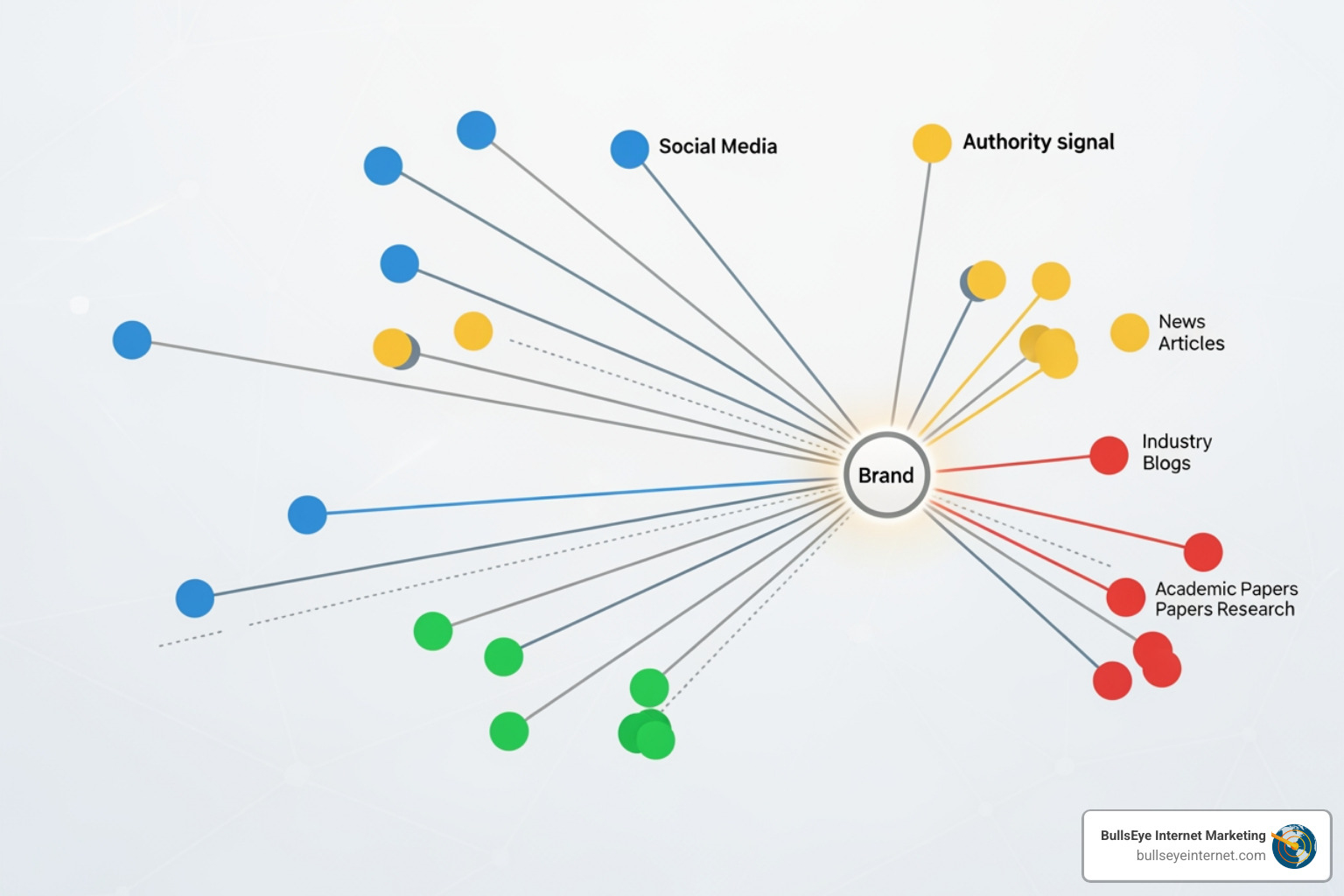
7. Build Authority Through Widespread Mentions and Citations
LLMs learn about brands by analyzing patterns across the web. Consistent mentions on authoritative sites help AI systems associate your brand with expertise.
- Brand Mentions: Every online mention, even without a link, contributes to your brand’s authority. Brands are 6.5 times more likely to be cited through third-party sources than their own domains in AI search.
- Digital PR: Actively seek features in industry publications, news outlets, and reputable blogs. For Florida clients, this could mean mentions in local business journals.
- Third-Party Sources: LLMs rely heavily on third-party sources like industry directories and review platforms. The more your brand is cited in these places, the stronger your authority signal.
- Industry Publications & News Outlets: Features in these outlets build significant credibility.
- Unlinked Mentions: Even mentions without a hyperlink are valuable, as LLMs can connect them to your brand.
- Building an Omnipresent Brand: Maintain a consistent, optimized presence across all relevant online channels—your website, social media, and industry platforms.
8. Grow Your Branded Search Volume
When people search for your brand by name, it signals recognition and trust. LLMs factor branded search volume into their understanding of your entity.
- Branded Search: An increase in searches for “BullsEye Internet Marketing” signals to LLMs that your brand is important.
- Brand Recognition: The more your brand is recognized, the more likely LLMs are to consider it a credible source. A recent study by Kevin Indig reveals a correlation between brand mentions in LLMs and branded search volume.
- Entity Optimization: Ensure your brand’s name, services, and key personnel are consistently represented across all online properties to help LLMs build a clear “entity” for your business.
- Consistent Brand Messaging: Use the same brand elements across your website, social channels, and PR efforts to help LLMs correctly identify your brand.
9. Leverage Platform-Specific Source Preferences
Different LLMs prefer different sources. Understanding these biases is a key LLM SEO best practice.
- LLM Platforms and Their Preferred Sources:
- ChatGPT: Relies on Wikipedia (~50% of citations) and Reddit (~11%). It uses Bing’s index.
- Google AI Overviews: Draws from community content like Reddit (21%), YouTube (19%), and Quora (14%).
- Perplexity: Shows strong Reddit dominance (47%) with YouTube as a secondary source.
- Wikipedia Dominance: Wikipedia is a dominant source across LLMs. If your brand is notable, creating or updating a Wikipedia entry is a high-leverage play. Be sure to follow the Wikipedia guidelines.
- Reddit & Quora: For platforms that favor community content, authentic participation is key. Engage in discussions and answer questions to build a reputation as a helpful expert.
- YouTube: Video content, especially tutorials and explainers, is a significant source for LLMs like Google AI Overviews.
- Authentic Participation: On community platforms, you must genuinely participate and contribute value to be cited.
Local LLM SEO & Performance Tracking (Practices 10-12)
For businesses serving specific geographic areas like Miami-Dade, Broward, and Palm Beach counties, local LLM SEO is paramount. As LLMs change how people find local businesses, we must adapt our strategies and tracking methods.
10. Master One of the Top LLM SEO best practices: Optimizing for Local Intent
LLMs process local intent differently than traditional search. They infer meaning from language and structured signals, not just proximity, so your content must explicitly reflect local expertise.
- Local Queries: Users ask LLMs questions like “Where can I find a reliable plumber in Coral Springs?” Your content needs to clearly answer these.
- NAP Consistency: Ensure your Name, Address, and Phone number (NAP) are identical across all online platforms. Inconsistent information reduces an LLM’s confidence in citing your business.
- Bing Places & Google Business Profile: These are fundamental. ChatGPT uses Bing’s index, making Bing Places a priority. Google Business Profile remains crucial for Google AI Overviews.
- Localized E-E-A-T: Demonstrate expertise, authoritativeness, and trustworthiness specific to your area. A Miami law firm should showcase experience with Florida regulations and local case studies.
- Neighborhood-Specific Content: Create content for city- or neighborhood-specific questions (e.g., “best AC repair in Doral for extreme heat”). Content reflecting local climate and regulations is highly valued by LLMs.
- LocalBusiness Schema: Implementing LocalBusiness schema is vital for clearly defining your business’s identity and location to LLMs.
11. Use Bing Webmaster Tools for ChatGPT Visibility
Since ChatGPT uses Bing’s index, Bing Webmaster Tools is a powerful asset for LLM SEO.
- Bing Webmaster Tools: This platform provides insights into how Bing (and by extension, ChatGPT) crawls and indexes your site, offering a direct line to improving visibility.
- Sitemap Submission: Submitting your sitemap to Bing ensures its index is aware of all your important pages.
- Bing’s Index: Optimizing for Bing is a direct path to improving your chances of being cited by ChatGPT.
- Microsoft’s AI Investment: Microsoft’s deep integration with OpenAI makes Bing a critical part of the AI search ecosystem.
- Set Up Now: If you haven’t already, set up the free Bing Webmaster Tools here by verifying your site and submitting your sitemap. This is a critical step for LLM visibility.
- Indexing Status: Regularly check your site’s indexing status in Bing Webmaster Tools to ensure your content is findable.
12. Track Performance Beyond Traditional Metrics
The rise of LLMs requires new ways to measure visibility beyond traditional metrics like rankings and clicks.
- Tracking LLM Traffic: This is tricky, as AI platforms often don’t pass referral headers, causing traffic to appear as “direct” or “organic.” However, new tools are emerging to help.
- GA4 Reports: Set up custom reports in Google Analytics 4 (GA4) to filter traffic by referrer sources like
chatgpt.com,perplexity.ai, andgemini.google.com. - Direct Traffic Spikes: Monitor unexplained spikes in direct traffic. This can indicate users finding your brand via an AI and then navigating directly to your site.
- AI Citation Trackers: Emerging tools like Peec AI or Profound act as an “SEMrush for LLMs,” monitoring brand mentions inside various AI platforms.
- Conversion Tracking: Track conversions diligently. We’re seeing LLM traffic convert at 30% versus 5% for traditional SEO, so this is a key indicator of success.
- Qualitative Feedback: Ask customers how they heard about you. Listen for mentions of ChatGPT, Perplexity, or “I asked AI.”
Frequently Asked Questions about LLM SEO
What is the difference between LLM SEO and traditional SEO?
Traditional SEO focuses on ranking in search results (SERPs) to earn clicks and website traffic.
LLM SEO (also called LLMO or GEO) focuses on optimizing content to be cited or summarized within an AI’s generated answer. The goal is to become the authoritative source for the AI, even in zero-click scenarios.
While both share principles like quality content and technical health, LLM SEO adds a distinct emphasis on conversational context, structured data, and entity recognition to ensure content is understood and trusted by AI.
Why is it crucial to avoid using AI-generated content for LLM SEO?
Avoid using AI-generated content for LLM SEO best practices because LLMs are trained on existing information. Using AI to create content leads to a negative feedback loop of unoriginal, repetitive, and potentially inaccurate information. This results in a poor user experience and reduces the chances of your content being seen as authoritative.
Human expertise, original research, and unique data (like case studies from our Fort Lauderdale or Miami clients) are key differentiators that make your content a citable source for LLMs.
How can I track traffic and performance from LLMs?
Tracking LLM performance is challenging because they often don’t pass clear referral data. Use a multi-pronged approach:
- Google Analytics 4 (GA4) Custom Reports: Create reports in GA4 to filter for referrer domains like
chatgpt.com,perplexity.ai, orgemini.google.com. This traffic often appears as “Direct” or “Organic.” - Monitor Direct/Homepage Traffic Spikes: Sudden increases in direct traffic can indicate users finding your brand via an LLM and navigating directly to your site.
- AI Citation Trackers: Use specialized tools like Peec AI to monitor if and how your brand is mentioned inside various LLMs.
- Conversion Tracking: Closely monitor conversion rates. Businesses report significantly higher conversion rates from LLM traffic (up to 30%!), making this a crucial metric.
- Qualitative Feedback: Ask customers how they heard about you. If they mention asking an AI, log it to gather invaluable qualitative data.
Conclusion: Future-Proofing Your SEO Strategy
The rise of LLMs is a significant shift in the digital landscape. For businesses in Florida and across the U.S., adapting to these changes is essential for future visibility and growth.
Key Takeaways for LLM SEO Best Practices:
- Content is King, but Context is Crown: Focus on clear, direct, NLP-friendly content that answers specific questions and demonstrates deep expertise.
- Originality Wins: Prioritize human-generated, authoritative content over generic AI output. Your unique insights are your superpower.
- Technical Foundations Matter: Proper schema markup and a well-structured website are non-negotiable for LLM comprehension.
- Build an Omnipresent Brand: Consistent messaging and widespread mentions across credible third-party platforms are crucial for building LLM trust.
- Accept Local Nuance: For local businesses, infuse your content with specific, hyper-local details that LLMs can use to serve your community.
- Track Smart, Not Just Hard: Expand your analytics beyond traditional metrics to include AI citations and conversion rates from LLM-driven traffic.
BullsEye Internet Marketing takes a holistic approach, combining timeless SEO principles with cutting-edge LLM SEO best practices. We ensure your brand is recognized as an authority by both humans and AI. Our expertise in Pay Per Lead, Google Business Profile Optimization, SEO, PPC, and conversion optimization delivers calls and sales. We offer no long-term contracts and exclusive geographic representation.
The future of search is conversational, and your strategy needs to be too. We’re here to help you steer this new frontier.
Learn more about our Answer Engine Optimization services and how we can help your business thrive in the AI era.
