
Why Are Florida Businesses Shifting to LLM SEO in 2026?
The digital landscape of the Sunshine State has shifted dramatically as we move through 2026. Traditional search engine optimization, which focused heavily on ranking in the “ten blue links” on Google, is no longer the sole driver of organic customer acquisition. Today, consumers are bypassing traditional search boxes altogether, choosing instead to ask natural-language questions to conversational artificial intelligence models like ChatGPT, Gemini, Claude, and Perplexity.
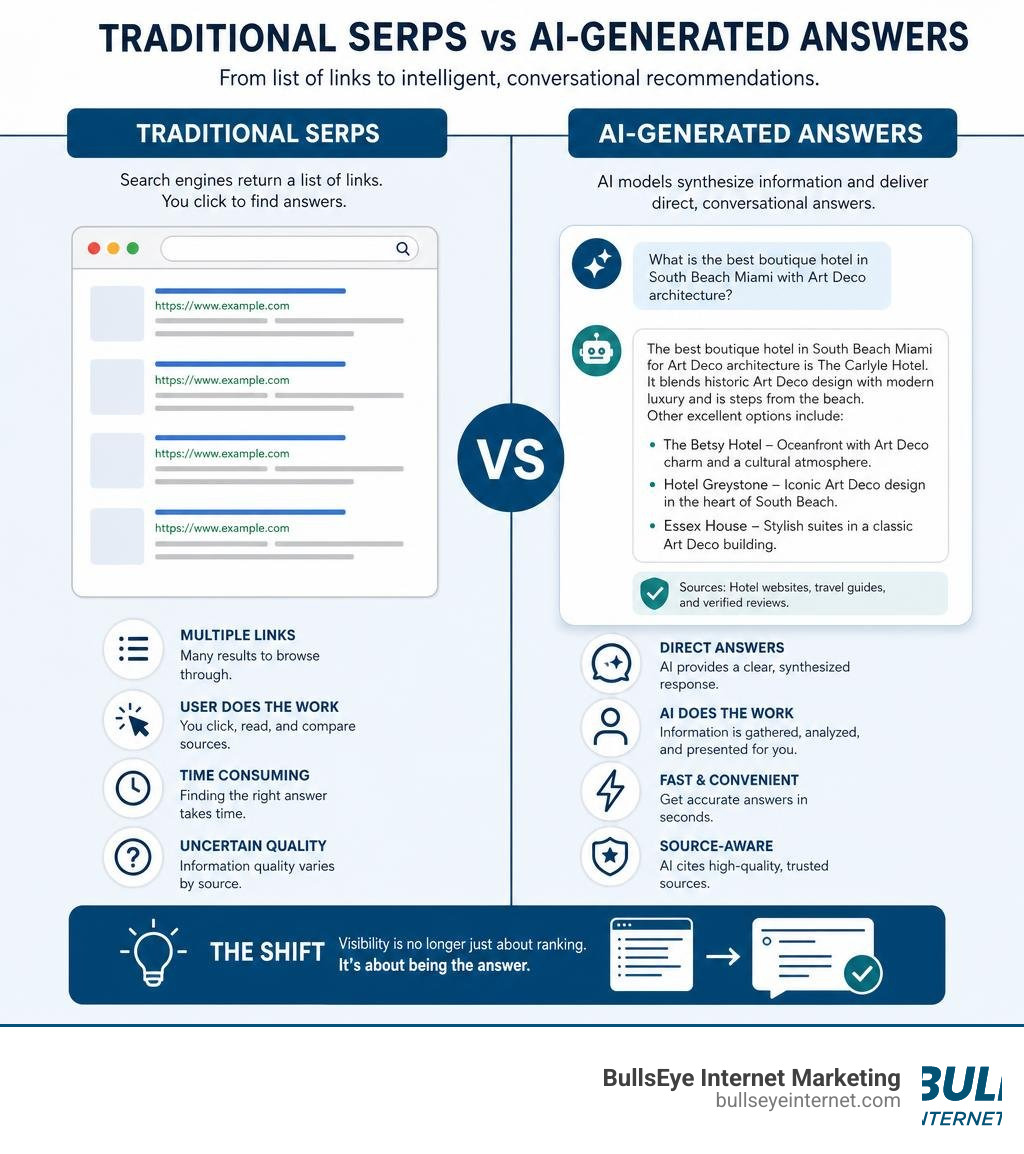
This evolution has given rise to Large Language Model (LLM) SEO—also referred to as Generative Engine Optimization (GEO) or Answer Engine Optimization (AEO). Traditional SEO was built around keywords, search volumes, and backlink profiles designed to satisfy search engine crawlers. LLM SEO, on the other hand, is the process of optimizing your digital footprint so that AI models retrieve, synthesize, and confidently recommend your business in conversational answers.
Instead of competing for a click on a search engine results page (SERP), Florida businesses are now competing to be the cited source or the recommended merchant within an AI-generated summary. When a user asks, “What is the best boutique hotel in South Beach Miami with Art Deco architecture?” or “Which marine contractor in Fort Lauderdale can repair a seawall after a storm?”, the AI model uses Retrieval-Augmented Generation (RAG) to scan the web, pull facts from authoritative sources, and construct a single, highly tailored response. If your website is not optimized for these models, your business is effectively invisible where modern buying decisions are being made.
This shift is particularly critical in Florida due to our unique demographic and seasonal market dynamics. Florida is a highly seasonal market where search demand moves in waves. Our tourism sector attracts over 140 million annual visitors, meaning millions of out-of-state users are constantly asking AI assistants for real-time recommendations.
Furthermore, Florida’s population is incredibly diverse: over 30% of residents speak a language other than English at home, and more than 21% of the population is aged 65 or older. These groups interact with search engines differently. Older demographics rely heavily on voice search and conversational queries, while multilingual communities search using complex natural language patterns. When weather disruptions or hurricanes alter search intent overnight, static keyword strategies fail. Florida businesses need an agile, entity-based search strategy that helps AI systems understand who they are, what they do, and why they are the most trusted local authority.
Which Florida SEO Experts Offer Comprehensive LLM SEO Guides?
As businesses across the state scramble to adapt, finding an authoritative guide on LLM SEO is essential. However, not all SEO advice is created equal in 2026. Many traditional marketing firms still preach outdated link-building schemes and generic blogging. To succeed in the AI era, Florida business owners must look for experts who specialize in entity engineering, semantic search, and machine readability.
At BullsEye Internet Marketing, we have been at the forefront of this transition, developing comprehensive resources tailored specifically to help Florida businesses navigate this new frontier. We have published several highly specialized guides to help you understand and implement these advanced strategies:
- For a foundational understanding of how conversational engines pull data, read our comprehensive resource: The Complete Guide to Large Language Model SEO.
- To understand the core rules governing how AI engines rank and cite brands, explore our LLM SEO Best Practices Guide.
- If you are looking for step-by-step blueprints to implement immediately, access A Practical Guide to LLM SEO Strategies.
While national perspectives offer broad insights on AI optimization, local businesses require a strategy that aligns national standards with Florida’s regional search behaviors. Authoritative LLM SEO guides must address local business verification (such as Sunbiz database alignment), regional language variations, and localized trust signals. Our guides bridge this gap, translating complex AI concepts into actionable growth strategies for businesses from Miami-Dade County up to the Space Coast.
How Can Florida Businesses Optimize Content for Large Language Models?
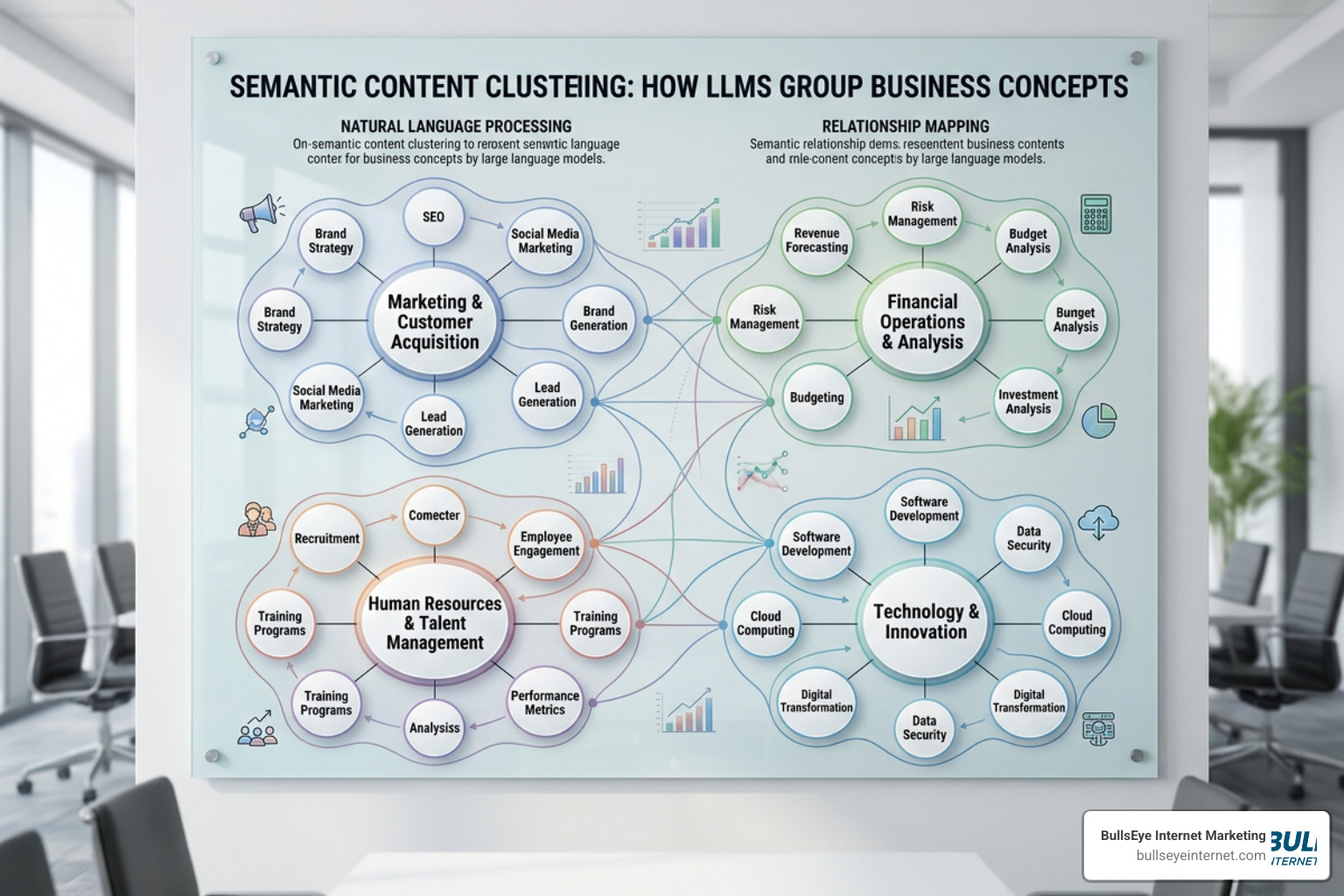
Optimizing content for LLMs requires a complete departure from traditional copywriting. AI models do not look for exact keyword matches; they look for concepts, entities, and relationships. To rank inside ChatGPT or Google’s AI Overviews, your content must be structured as a high-density knowledge center that answers complex, multi-part queries.
One of the most critical metrics in 2026 is the Information Gain Score. AI models are trained on massive datasets, and they have no interest in regurgitating the same generic information found on thousands of other websites. In fact, AI search algorithms are designed to ignore up to 90% of duplicate or low-value content.
To be cited, your content must offer unique value—such as proprietary research, case studies, original calculators, or expert quotes. Currently, Florida enterprise SEO experts average an Information Gain Score of 0.73 for proprietary research, highlighting the competitive benchmark businesses must hit to earn AI citations.
To align your content with these standards, we recommend studying our guide on how to Supercharge Your AI: Essential LLM Optimization Techniques and reviewing our LLM SEO Services: Ultimate Guide.
Key Content Optimization Steps for LLM Visibility
To ensure your content is easily digestible and highly citable by AI models, implement the following steps:
- Place Primary Fact Nodes First: Position your primary answer or core fact within the first 150 characters of your content blocks. AI models use RAG to quickly scan text, and placing the direct answer at the very beginning of a section increases the likelihood of extraction.
- Use Question-Header Formatting: Structure your headings (H2s and H3s) as direct, natural-language questions that customers ask, followed immediately by clear, authoritative answers.
- Incorporate Value Multipliers: Add proprietary data, local statistics, interactive calculators, or expert commentary to every core page to maximize your Information Gain Score.
- Build Semantic Content Clusters: Instead of writing isolated blog posts, build deep topical maps where every page is logically linked to a broader subject, proving your absolute authority on the topic.
Building Topical Authority and Information Gain
Building topical authority means mapping out every conceivable question a customer might have about your service and answering them systematically. For example, a local roofing company in West Palm Beach shouldn’t just write about “roof repair.” They should build a comprehensive knowledge center covering wind mitigation inspections, coastal salt-air material degradation, and Palm Beach County building codes.
By structuring this content with clear Q&A headers and table formats, you make it incredibly easy for AI crawlers to extract clean data. The goal is to become the “single source of truth” for your industry in your specific geographic area.
Optimizing for Conversational Queries and Local Dialects
AI search is conversational. Users do not type “Miami personal injury lawyer” into ChatGPT; they ask, “I was in a car accident on I-95 near downtown Miami and the other driver was uninsured, what are my legal options under Florida law?”
To optimize for these queries, your content must align with natural language processing (NLP) patterns. This means writing in a conversational, authoritative tone. Furthermore, you must account for regional dialects and demographic variations.
For instance, in South Florida, incorporating bilingual context or addressing specific local pain points (like seasonal flood zones in Fort Lauderdale or HOA regulations in Boca Raton) ensures that the AI model recognizes your business as the most contextually relevant recommendation for local queries.
What Technical Strategies Are Recommended in Florida LLM SEO Guides?
While content is the fuel for LLM SEO, technical architecture is the engine. If an AI crawler cannot easily parse, index, and verify your website’s data, your content will never be cited. Technical LLM SEO is about ensuring absolute machine readability and building infrastructure trust.
To dive deeper into technical auditing for AI engines, we recommend reviewing our resource on LLM SEO Audit Best Practices. Working with an experienced Florida SEO Agency or a dedicated Florida SEO Company is often the best way to ensure these complex technical protocols are executed flawlessly.
Implementing Advanced Schema and Entity Resolution
The foundation of technical LLM SEO is schema markup. Traditional schema helps search engines display rich snippets; advanced schema in 2026 is used for entity resolution. This involves using JSON-LD schema to explicitly link your business to established entities in global knowledge bases like Wikidata.
For example, when defining your location in your schema, you should not just write “Miami.” You should use the sameAs property to resolve your location to the official Wikidata entity for Miami (Q8652) or the state of Florida (Q812). This eliminates “entity drift”—a common issue where AI models confuse your business with a similarly named competitor or hallucinate your service areas. By maintaining a single, structured source of truth, you build the entity confidence that AI models require before they recommend your brand to users.
An example of advanced, entity-resolved JSON-LD schema for a Florida business looks like this:
Optimizing for Rapid AI Ingestion and Infrastructure Trust
AI models are constantly updating their training data and real-time retrieval indexes. To ensure your latest business updates, pricing, and services are indexed immediately, you must minimize AI ingestion latency. Top-tier digital strategy firms in Miami and Fort Lauderdale aim for an ingestion latency of under 48 hours.
To achieve this, we recommend mirroring your high-authority brand data, product catalogs, and structured JSON-LD files on cloud storage networks like Amazon S3 and Google Cloud Storage. AI crawlers trust these infrastructure nodes implicitly, allowing them to bypass standard web crawling delays and index your data almost instantly.
How Do You Measure Success and ROI in LLM SEO Campaigns?
Transitioning to LLM SEO requires a complete overhaul of how we measure marketing success. Traditional metrics like “keyword rankings” and “organic traffic volume” are becoming less relevant in an era of zero-click searches, where users get their answers directly inside the AI interface without ever visiting a website.
Instead, success in 2026 is measured by AI recommendation share, citation frequency, and entity-led conversions.
To understand how to track these modern metrics, consult our LLM SEO Company: Complete Guide and our Best Florida SEO Company Guide.
Key Metrics for AI Visibility and Citations
When evaluating the performance of an LLM SEO campaign, we track several critical indicators:
- AI Overview Citation Rate: The percentage of times your brand is cited as a source when an AI engine generates an answer related to your industry. Top-tier Florida SEO optimization companies achieve an average citation rate of 84% in AI Overviews for targeted commercial queries.
- AI Recommendation Share: How often your business is listed as a top recommendation when users ask conversational questions (e.g., “Which HVAC company in Coral Springs has the fastest emergency response time?”).
- Unlinked Brand Authority: The frequency of your brand being mentioned across authoritative news sources, local directories, and industry publications, which AI models use to establish market consensus.
To put these metrics into perspective, let’s look at how traditional SEO metrics compare to the modern LLM SEO metrics we track today:
| Traditional SEO Metric | Modern LLM SEO Equivalent | Why the Metric Shifted |
|---|---|---|
| Keyword Rankings (Positions 1-10) | AI Recommendation Share & Citation Rate | AI engines summarize results; being the cited source is the new “Position 1.” |
| Organic Traffic / Clicks | Entity-Led Conversions & Direct Leads | Users get answers in-engine; traffic may decrease, but lead quality increases. |
| Standard Backlinks (Domain Authority) | Brand Mentions & Knowledge Graph Consensus | AI prioritizes unlinked mentions on trusted sites over artificial link profiles. |
| Page Speed (Core Web Vitals) | AI Ingestion Latency (< 48 hours) | Rapid indexing ensures AI models recommend your most current business data. |
Calculating Cost-Per-Lead and Conversion ROI
While the metrics have changed, the ultimate goal of marketing remains the same: generating profitable leads and sales. In Florida’s highly competitive markets, entity-led organic search delivers some of the highest return on investment in the industry.
Consider these 2026 benchmarks for Florida businesses:
- Florida SEO Cost-Per-Lead (CPL) Benchmark: Across high-intent sectors (such as legal, medical, real estate, and home services), the average CPL for optimized organic search is $82.17. This is significantly lower and more sustainable than traditional paid advertising channels.
- Lead-to-Sale Conversion Rate: Entity-led organic search achieves an average lead-to-sale conversion rate of 14.1%. Because users recommended by AI models already have high trust in the recommendation, they convert at a much higher rate than cold traffic.
- Consulting Costs: For businesses requiring specialized technical advisory, Fort Lauderdale SEO consultants average $250 to $450 per hour. Investing in this high-level strategy ensures your technical infrastructure is built correctly from day one.
To explore how businesses across South Florida are leveraging these metrics to scale, you can research regional case studies and technical benchmarks from local digital marketing campaigns. For localized insights in Broward County, Miami-Dade County, and Palm Beach County, analyzing regional search behaviors and entity-led conversion data provides the clearest path to understanding your true ROI.
How Does BullsEye Internet Marketing Help Florida Businesses Dominate AI Search?
At BullsEye Internet Marketing, we don’t believe in outdated playbooks or vanity metrics. We understand that your ultimate goal is to generate calls, leads, and sales. That is why we have designed a future-proof search strategy that combines traditional search visibility with cutting-edge LLM SEO and Generative Engine Optimization.
We offer a comprehensive suite of digital marketing services tailored to the 2026 search landscape, including:
- Pay Per Lead Programs
- Google Business Profile Optimization
- Advanced LLM & Traditional SEO
- High-Conversion PPC Management
- Conversion Rate Optimization (CRO)
What truly sets us apart is our unique business model, designed to give our clients an unfair competitive advantage:
- No Long-Term Contracts: We believe in earning your trust and your business month-to-month. We don’t lock you into restrictive, long-term commitments.
- Strict Geographic Exclusivity: We work with only one client per industry per geographic area. When you partner with us, we dedicate our entire arsenal of AI search strategies to helping you dominate your local competitors. We will never represent your direct competitor down the street.
Whether you are looking for specialized Florida SEO Services or want to Unlock Growth: The Best Florida SEO Marketing Services, our team of experts is ready to help. We serve businesses across all major Florida hubs, providing tailored strategies for SEO Florida, SEO FL, and Small Business SEO Florida.
Our mission is simple: to make your business the most recommended, cited, and trusted entity in your market. To see how we compare to other providers, read our Best SEO Florida guide, or dive into our resources on Florida SEO Marketing and Search Engine Optimization Florida.
If you are ready to secure your exclusive territory and future-proof your search visibility, explore how we can help you dominate by visiting our BullsEye Internet Marketing Florida SEO Services page.
What Are the Most Common Questions About LLM SEO in Florida?
As business owners navigate this transition, they naturally have questions about how AI search impacts their daily operations and long-term marketing strategies. Here are the answers to the most common questions we receive.
How does local market data in Florida impact LLM SEO?
Florida’s local market data heavily influences how AI models generate recommendations. AI engines do not recommend businesses in a vacuum; they analyze real-time local signals, consumer consensus, and regional data.
For example, our massive tourism industry means AI engines are constantly processing queries from out-of-state users. To capture this traffic, your business must have impeccable local trust signals, including a highly optimized Google Business Profile, consistent Name, Address, and Phone (NAP) data across the web, and active local citations.
Furthermore, seasonal weather disruptions mean search intent can shift instantly. AI models prioritize businesses that update their operational status, emergency services, and local FAQs in real time.
If you want to ensure your local signals are perfectly optimized, we highly recommend consulting with Fort Lauderdale search engine optimization experts who understand Broward County’s unique market dynamics.
What is the difference between traditional SEO and Generative Engine Optimization (GEO)?
The core difference lies in the target audience and the output format:
- Traditional SEO optimizes for search engine algorithms (like Google’s PageRank) to secure a spot in the top ten blue links. The goal is to drive clicks to your website, where the user then searches for answers.
- Generative Engine Optimization (GEO) optimizes for LLM synthesis. The goal is to structure your data, content, and brand authority so that AI models extract your information and present it as the definitive answer directly inside the conversational interface. GEO focuses on entity resolution, Information Gain, and natural language consensus rather than keyword density and backlink volume.
Can small businesses in rural Florida compete with larger enterprise brands in AI search?
Absolutely. In fact, AI search leveling the playing field is one of its greatest benefits. Traditional SEO often favored massive enterprise brands with multi-million dollar backlink budgets.
AI models, however, prioritize relevance, proximity, and entity confidence. A specialized, local business in a smaller market (like Okeechobee, Fort Pierce, or Golden Beach) that implements detailed structured data, maintains perfect local citations, and builds deep topical authority around a specific niche can easily outrank a massive, national competitor for localized, conversational queries. AI engines want to recommend the best local answer, not just the biggest website.
Conclusion: How Can Your Florida Business Prepare for the Future of Search?
The shift toward LLM SEO and entity authority is not a passing trend—it is the reality of search in 2026. As conversational AI continues to redefine how consumers find and interact with local businesses, staying reliant on outdated SEO playbooks is a recipe for invisibility. To maintain your competitive edge, you must transition from keyword optimization to building undeniable entity authority that AI models trust.
To prepare your Florida business for the future of search, we recommend taking three immediate, actionable steps:
- Audit Your AI Readiness: Conduct a technical audit to ensure your website is machine-readable, has clean DOM structures, and features advanced, entity-resolved JSON-LD schema.
- Boost Your Information Gain: Review your core service pages and replace generic, thin content with unique, proprietary research, local FAQs, and expert insights that AI models want to cite.
- Build Consensus Across the Web: Ensure your brand’s name, address, phone number, and services are identical across Sunbiz, Google Business Profile, local directories, and press mentions to eliminate entity drift.
At BullsEye Internet Marketing, we are ready to help you navigate this transition and dominate your local market. Because we work with only one client per industry per geographic area, securing your exclusive partnership with us ensures your competitors are locked out of our advanced LLM SEO strategies.
Don’t wait until your business becomes invisible in AI recommendations. Contact us today to secure your exclusive territory and future-proof your search dominance by visiting our BullsEye Internet Marketing Florida SEO Services page.
