
Why Finding the Right Expert SEO Local Partner Is the Most Important Marketing Decision You’ll Make
Quick answer: What does a local SEO expert do?
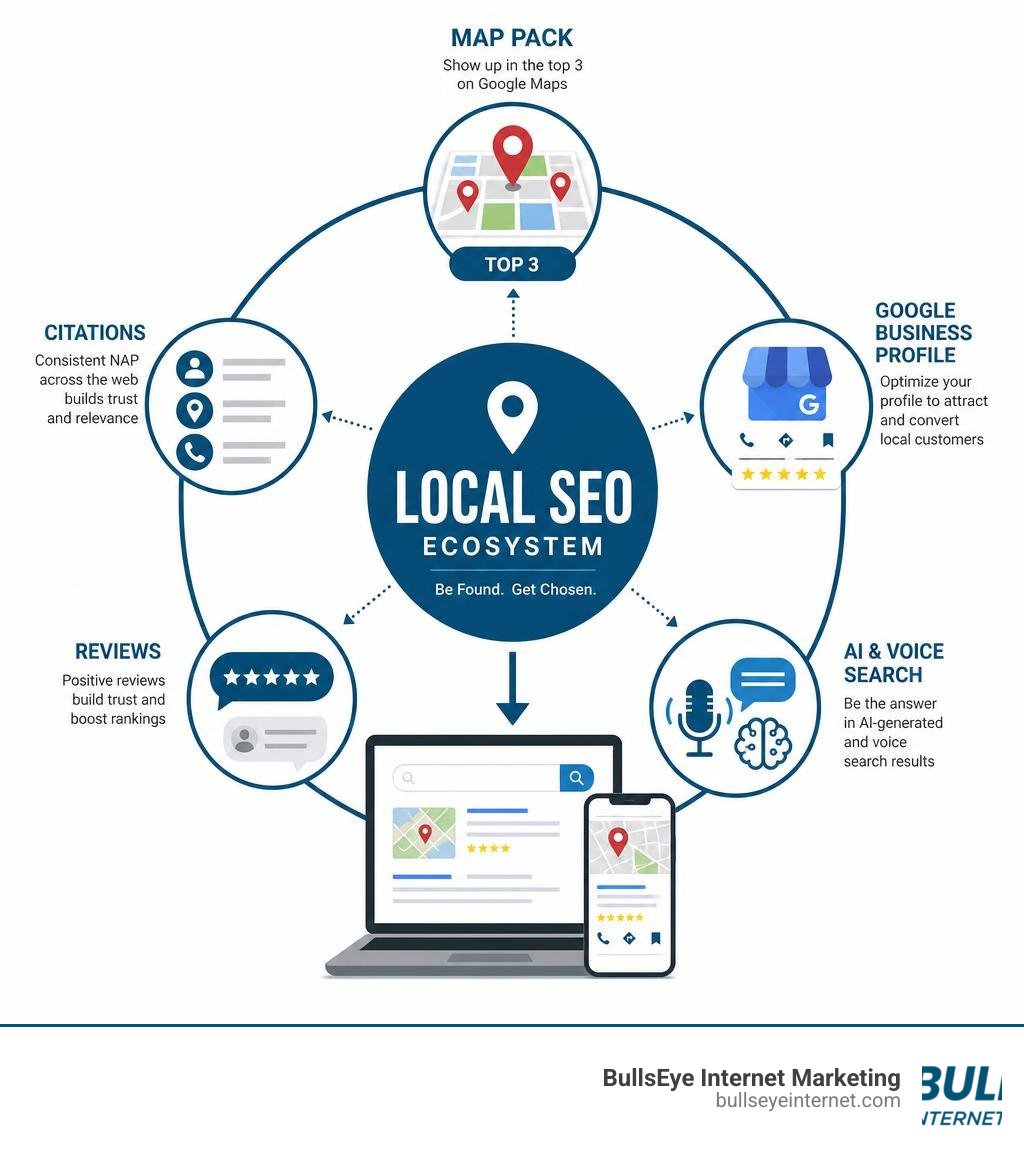
A local SEO expert helps your business show up when nearby customers search for what you offer. Here’s what they typically handle:
- Google Business Profile optimization – Getting you into the top 3 on Google Maps
- Citation building and cleanup – Making sure your name, address, and phone number are consistent everywhere online
- On-page and technical SEO – Optimizing your website for local search queries
- Review management – Building trust signals that influence your Map Pack rankings
- AI and voice search visibility – Ensuring you’re recommended by tools like ChatGPT and Gemini
Every minute your business isn’t in the top 3 of Google’s Map Pack, a competitor is getting that call instead of you. That’s not a scare tactic — it’s just how local search works in 2026.
The problem? The local SEO space is crowded with people who sound like experts. Slick websites, vague promises, and “guaranteed page-one rankings” are everywhere. Yet real results — more calls, more leads, lower acquisition costs — are far rarer than the sales pitches suggest.
Finding a genuine expert SEO local consultant isn’t just about comparing prices. It’s about knowing what questions to ask, what red flags to watch for, and what good work actually looks like when it’s done right.
I’m Ronnie Katz, founder of BullsEye Internet Marketing, and since 2006 I’ve helped hundreds of local businesses navigate exactly this challenge — separating the tactics that move the needle from the ones that just burn your budget. In this guide, I’ll share everything I’ve learned about finding, vetting, and working with a local SEO expert who delivers measurable results.
Key expert seo local vocabulary:
Why Your Business Needs an Expert SEO Local Strategy
When a local customer needs a service immediately — whether their air conditioner breaks down in the middle of a humid July afternoon or they need an emergency plumber — they don’t browse social media. They grab their phone, type a quick geographic search query into Google, and click on the first credible-looking business they see.
This high-urgency, zero-shopping-around behavior is why a tailored Local SEO Service is the single most important digital infrastructure you can build. Unlike broad national campaigns, local optimization connects you directly with high-intent buyers in your immediate neighborhood. If you are operating in South Florida, capturing this local traffic is the lifeblood of your business. Working with a dedicated Local SEO FL specialist ensures your business is visible exactly when and where these high-intent searches happen.
When optimized correctly, the results of a local campaign compound dramatically over time. For example, local search experts have helped contractors scale from a flatlined 233 clicks to 2,800 organic clicks in just 3 months — a stunning 12x growth in clicks and a 32x increase in impressions. Another client achieved an additional 135 clicks in a single 24-hour window, boosting their click-through rate (CTR) from 1.5% to 2.4% while moving their average ranking position from 5.5 to 4.8.
By prioritizing local visibility, you establish a permanent stream of inbound calls and qualified leads, systematically reducing your dependency on expensive, linear pay-per-click advertising.
Google Business Profile and Map Pack Domination
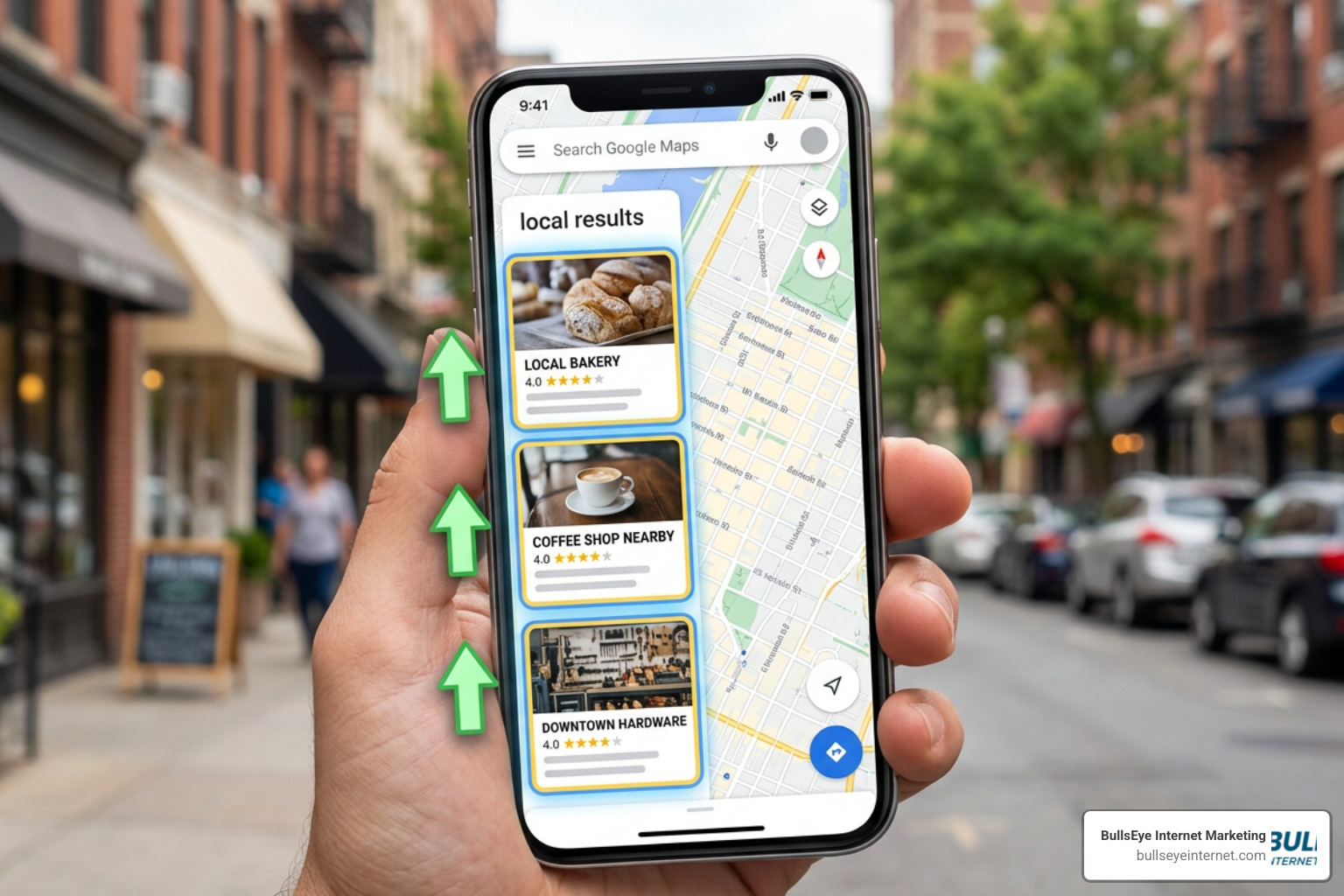
The ultimate prize in local search is the Google Map Pack — the top three local business listings featured prominently alongside a map at the very top of Google’s search results. Securing one of these three spots is critical because over 80% of all high-intent local clicks and phone calls occur right here. If you are not in the top 3, you are effectively invisible to the vast majority of mobile searchers.
To help you get there, we recommend studying our Local Pack Optimization Ultimate Guide. Map Pack domination requires a precise, ongoing optimization of your Google Business Profile (GBP). This goes far beyond just filling out your basic contact information. A true local expert optimizes your primary and secondary categories, uploads high-quality geo-tagged images, regularly publishes localized posts, and ensures your service area boundaries are perfectly defined.
Additionally, search engines look closely at your review velocity (how frequently and consistently you receive new reviews) and the consistency of your Name, Address, and Phone number (NAP) across the web. To learn more about how agencies structure these foundational steps, you can explore the Best Local SEO Companies in United States 2026 directory.
The Power of Local Reviews and Citations
Online reviews and citations are the primary trust signals Google’s local algorithm uses to determine your credibility and ranking position. Every directory listing on sites like Yelp, Bing Places, and Apple Maps acts as a digital vote of confidence for your business. However, having “messy” or inconsistent NAP data across these platforms confuses search engine crawlers and actively damages your ranking authority.
This is why a rigorous citation cleanup process is crucial. It is unglamorous, highly detailed work, but fixing duplicate listings and correcting outdated phone numbers is often what finally unlocks trapped Map Pack rankings.
Similarly, Google relies heavily on advanced pattern-recognition algorithms to combat review spam. If your review acquisition looks unnatural — such as a sudden spike of 50 reviews in one day after months of silence — Google’s automated spam filters will flag and filter them out. To successfully build trust and prevent disappearances, you must implement a steady, compliant review-generation strategy. For a deeper look into how these signals interact, read our guide on Local Search Domination Google Maps SEO Secrets Revealed.
The 4-Layer Search Framework: Traditional, Local, AEO, and GEO
As search engines evolve, a single-track approach to SEO is no longer enough to keep your phone ringing. In 2026, modern search optimization requires a comprehensive, multi-layered framework that captures traditional searchers, local map users, voice assistant queries, and users of generative AI search engines.
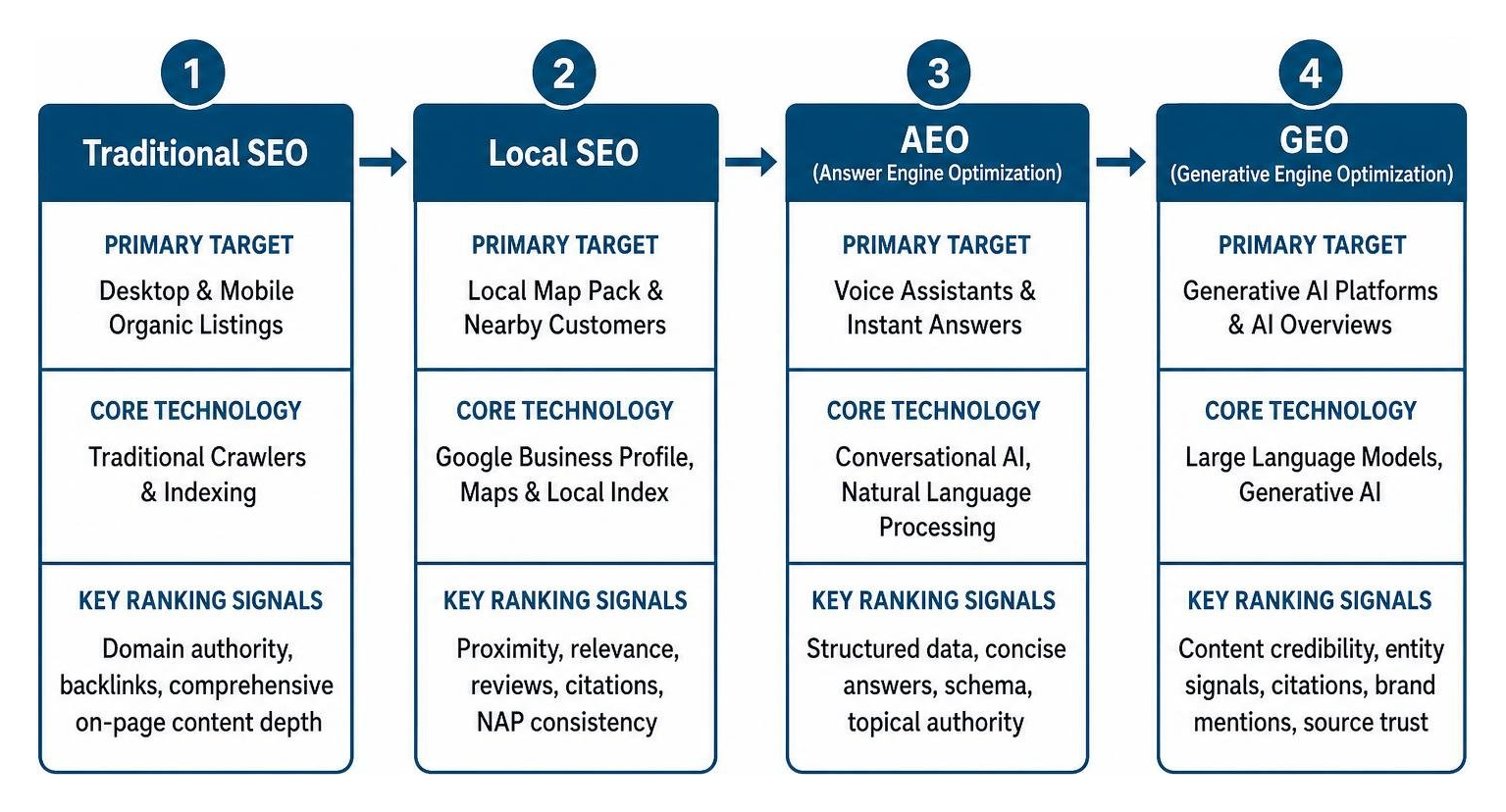
To help you visualize how these layers work in tandem, we have outlined their key differences below:
| Optimization Layer | Primary Target | Core Technology | Key Ranking Signals |
|---|---|---|---|
| Traditional SEO | Desktop & Mobile Organic Listings | Traditional Crawlers & Indexing | Domain authority, backlinks, comprehensive on-page content depth |
| Local SEO | Google Map Pack & Localized Searches | Proximity & Location Algorithms | GBP optimization, NAP consistency, local reviews, citations |
| AEO (Answer Engine) | Voice Search & Featured Snippets | Natural Language Processing (NLP) | Structured schema markup, direct Q&A content formatting |
| GEO (Generative Engine) | AI Search Engines (ChatGPT, Gemini, Perplexity) | Large Language Models (LLMs) | Entity relationships, brand mentions, unstructured digital footprints |
Traditional vs. Local Search Optimization
While traditional SEO and local SEO share several foundational principles, they target completely different user intents. Traditional SEO is designed to build broad, non-geographic domain authority. It answers informational queries (such as “how to repair a leaky pipe”) and targets national or global keywords.
Local SEO, on the other hand, is entirely focused on geographic intent. It targets immediate, transaction-ready queries (like “plumber in Coral Gables” or “emergency AC repair near me”). The ranking signals for local search are highly sensitive to user proximity, local review sentiment, and localized on-page content.
If you want to understand how to align your business with these distinct search behaviors, our Local Search Marketing Expert Guide offers an in-depth breakdown of localized keyword research and geo-targeted landing pages.
Integrating AI and GEO with an Expert SEO Local Framework
The search landscape of 2026 has been fundamentally reshaped by AI. Millions of consumers now bypass traditional search engines entirely, using AI assistants like ChatGPT, Gemini, and Perplexity to find local service recommendations. To remain visible in this new era, your local digital footprint must be optimized for Generative Engine Optimization (GEO) and Answer Engine Optimization (AEO).
This means formatting your website content to be easily digested by Large Language Models (LLMs). An expert local strategist achieves this by:
- Implementing highly detailed LocalBusiness schema and structured data.
- Structuring service pages with direct, natural-language Q&A formats to win featured snippets.
- Building a strong, unstructured web presence (such as digital PR and local media mentions) so LLMs recognize your business as a trusted regional entity.
By integrating GEO and AEO with your traditional local map strategy, you future-proof your lead generation and ensure your business is recommended whether a customer uses Google Maps or ChatGPT.
How to Choose a Credible Local SEO Expert and Avoid the Duds
Choosing an SEO partner can feel like a minefield. The marketplace is saturated with self-proclaimed gurus offering cheap, automated packages. To find a partner who will actually grow your business, you need to look past flashy sales pitches and evaluate their operational transparency and proof of performance.
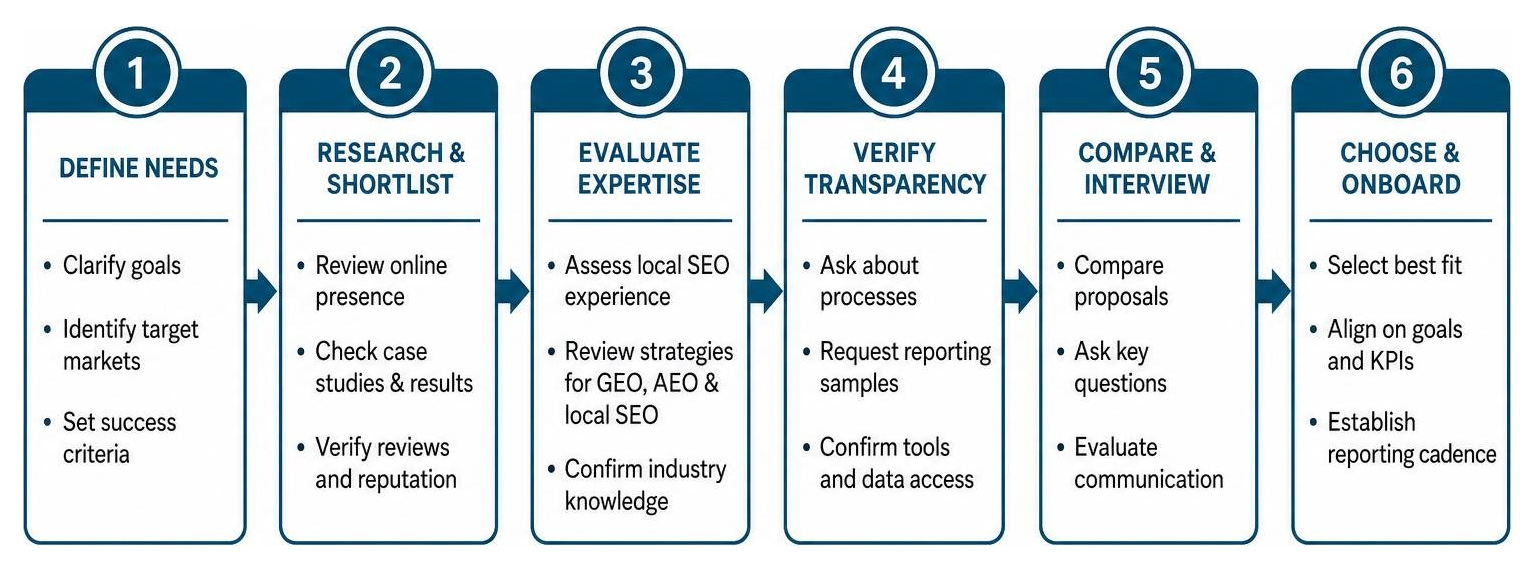
A great place to start your search is by looking at how well an agency ranks in its own target markets and evaluating their case studies. Seasoned professionals will always have a clear, documented process for structuring their services and demonstrating real-world results.
Red Flags When Interviewing an Expert SEO Local Consultant
When vetting potential consultants or agencies, keep a sharp eye out for these common warning signs:
- Guaranteed Rankings: This is the biggest red flag in the industry. Because search engines constantly update their proprietary algorithms, no ethical professional can guarantee a #1 spot or page-one ranking.
- Farmed-Out or Outsourced Work: Many agencies sell you on their expertise but quietly outsource all execution to low-cost, white-label providers overseas. Always ask, “Is the actual work done in-house by your team, or is it farmed out?”
- Automated, “Set-it-and-Forget-it” Reporting: If an agency only sends you automated PDFs filled with confusing technical jargon (like raw impressions or keyword movements) without explaining how those metrics translate into actual phone calls and booked jobs, they are hiding a lack of real results.
- Lack of Communication: True optimization is an active, compounding process. If your agency doesn’t offer regular, transparent communication or strategy reviews, your campaign will quickly flatline.
Key Questions to Ask Before Signing a Contract
Before committing to a local search campaign, protect your investment by asking these critical questions:
- What is your contract structure? Many agencies lock you into restrictive, 12-month agreements because they know their initial results won’t justify the cost. Look for partners who earn your business month-to-month.
- Do you offer geographic and industry exclusivity? It is a massive conflict of interest when an agency optimizes multiple competing businesses in the same local neighborhood. Ensure your partner works with only one business per niche in your specific geographic area to give you a true competitive advantage.
- How do you measure campaign success? Make sure they are tracking conversion-focused metrics — like inbound phone calls, form submissions, and direction requests — rather than just vanity metrics.
- What is included in your pricing? Ensure there are no hidden fees for citation cleanups or technical website audits. For a clear understanding of standard industry pricing structures, review our Local SEO Pricing Plans.
Frequently Asked Questions About Local SEO
How long does it take to see results from local SEO?
Local search optimization is a compounding, long-term strategy rather than an overnight fix. While you may see early keyword movement, initial citation listings, and minor GBP improvements within the first 30 days, a realistic timeline for meaningful growth looks like this:
- Months 1-2 (Foundation & Fixes): This phase is dedicated to technical website audits, resolving domain health issues, optimizing your GBP, and initiating deep citation cleanups to fix inconsistent NAP data.
- Months 2-3 (Visibility Builds): Your optimized profile and cleaned-up citations begin indexing. You will typically start seeing noticeable ranking improvements on Google Maps and localized search terms during this window.
- Months 4-6 (Consistent Traffic & Authority): Your business begins establishing full ranking authority. By this point, most local service companies in moderately competitive markets achieve consistent Top 3 Map Pack placements, resulting in a steady, measurable increase in inbound phone calls and leads.
- Months 6+ (Market Dominance): Compounding authority allows you to expand your reach into adjacent neighborhoods and maintain your rankings against active competitors.
Why do Google Business Profile suspensions and review disappearances happen?
Google uses highly sensitive, automated AI scripts to maintain the integrity of its local directory. Suspensions and review removals are almost always triggered algorithmically by behaviors that mimic spam:
- GBP Suspensions: These are frequently triggered by making sudden, unverified changes to high-risk fields (like your business name or physical address), utilizing a P.O. Box or UPS Store address instead of a legitimate physical location, or having suspicious manager account activity.
- Review Disappearances: Google’s automated spam filters actively track user engagement patterns. If a customer leaves a review without prior location signals or brand search history, or if you acquire reviews too quickly, Google’s algorithm may flag and filter them out.
- Prevention & Resolution: To prevent these issues, always manage your GBP using an email address hosted on your corporate domain rather than a generic Gmail account, and space out your review campaigns. If you do face a suspension, resolve it by filing a formal reinstatement appeal backed by solid proof of your legal business registration and physical utility bills.
How much does local SEO typically cost?
The cost of local SEO varies based on your industry’s competitiveness, the number of physical business locations you operate, and the overall scope of work required.
- Micro-Packages ($300 to $500/month): These are typically offered by freelance specialists on platforms like Upwork (which hosts over 7,600 local SEO projects) or Fiverr (where basic US-based GBP setups start around €159). These packages are usually limited to basic, one-time citation building or simple profile setups.
- Mid-Range Campaigns ($500 to $1,200/month): This is the standard pricing range for comprehensive local SEO. It includes ongoing GBP management, monthly citation building and cleanup, localized content creation, and basic on-page technical optimization.
- High-Competition / Multi-Location Campaigns ($1,200 to $2,000+/month): Designed for highly competitive niches (such as legal or emergency home services) in major metropolitan areas, or businesses managing multiple physical storefronts. This tier involves aggressive local link building, advanced schema implementation, and dedicated geo-targeted landing page strategies.
Conclusion
Navigating the local search landscape doesn’t have to be a guessing game. By focusing on transparent operations, strict NAP consistency, compounding GBP optimization, and future-ready GEO strategies, you can easily separate the true industry pros from the duds.
At BullsEye Internet Marketing, we have spent two decades refining a local search framework designed specifically to generate high-quality calls and sales for businesses across South Florida — including Broward County, Miami-Dade County, Palm Beach County, Martin County, St. Lucie County, and Indian River County.
We do digital marketing differently. To give our clients a true competitive advantage, we offer:
- No Long-Term Contracts: We earn your business month-to-month based on real, measurable results.
- Strict Market Exclusivity: We work with only one client per industry per geographic area. We will never optimize your direct competitors.
- A Comprehensive Lead-Generation Focus: We combine Pay Per Lead, GBP Optimization, SEO, PPC, and conversion rate optimization to keep your phone ringing.
If you are ready to stop chasing vanity metrics and start dominating your local market, let us build a custom game plan for your business. Contact us today to explore our Local SEO Agency services and claim your free, honest organic search audit.
