
Why Your Business Needs a Local SEO Blueprint
A local seo strategy template is your roadmap to dominating local search results. It involves optimizing your Google Business Profile, building consistent citations (NAP), creating location-specific content, earning local backlinks, and tracking key performance metrics like Local Pack rankings and customer actions.
Quick Template Overview:
- Audit & Setup – Analyze current visibility, fix NAP inconsistencies, set up tracking
- Google Business Profile – Complete optimization with photos, posts, categories, Q&A
- Citations & Links – Build presence on directories, earn local backlinks
- On-Page SEO – Create location pages, optimize for local keywords, add schema markup
- Track & Report – Monitor rankings, traffic, calls, and conversions
Here’s the reality: 76% of people who conduct a local search on their smartphone visit a business within 24 hours. That’s not just a statistic—it’s your opportunity. When someone searches “plumber near me” or “best coffee shop in Miami,” you need to show up. Not on page two. Not below your competitors. Right there, in the Local Pack, where decisions get made.
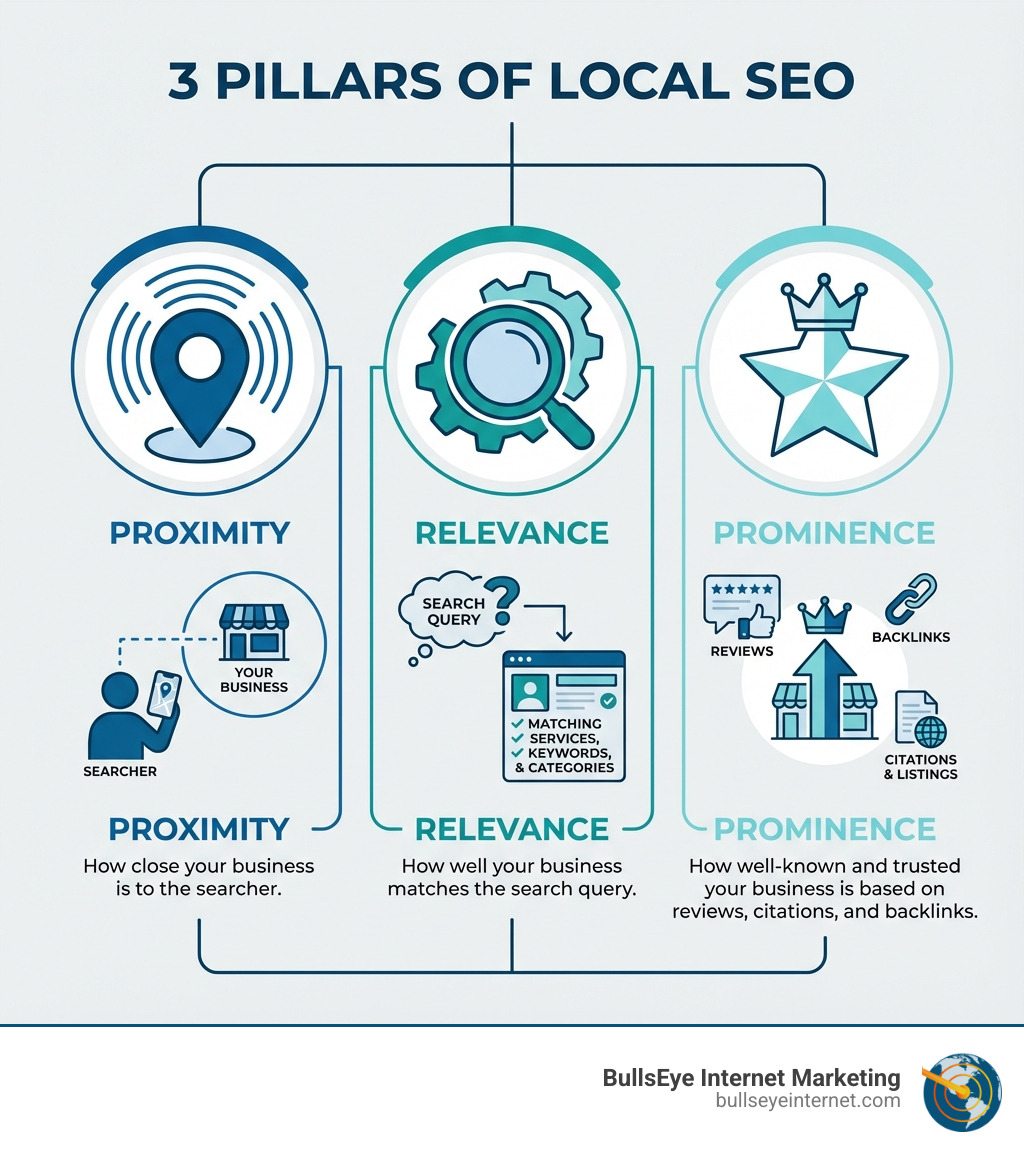
Local SEO is different from general SEO. It’s not about ranking nationwide for broad keywords. It’s about proximity, relevance, and prominence in your specific market. Google’s algorithm rewards businesses that prove they’re nearby, relevant to the search, and trusted by the community. Miss any of these three pillars, and you’re invisible to the customers actively looking for you right now.
The problem? Most business owners know local SEO matters but lack a clear system. They might update their Google Business Profile once, ignore citation errors, or create generic content that could apply to any city. Then they wonder why their phone isn’t ringing.
You need a blueprint—a proven template that removes the guesswork. Whether you run a brick-and-mortar store, a service-area business, or multiple locations, this guide gives you the exact framework to get finded by local customers and turn searches into sales.
I’m Ronnie Katz, founder of BullsEye Internet Marketing, and I’ve spent over 20 years helping businesses dominate their local markets through transparent, results-driven strategies. I’ve built and refined this local seo strategy template to deliver what matters most: more calls, more customers, and measurable ROI.
The Core Components of a Winning Local SEO Strategy
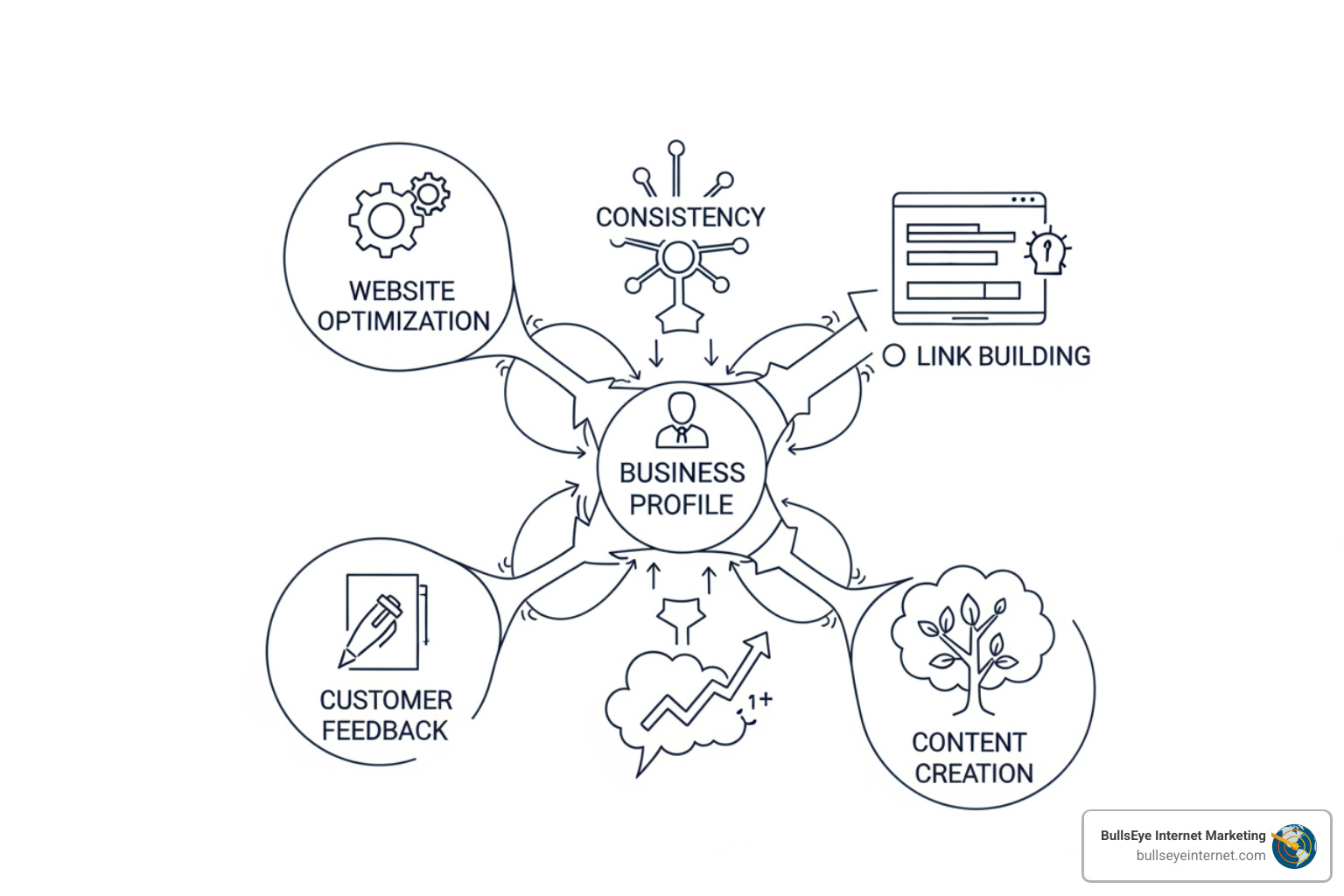
Think of a successful local SEO strategy like a well-oiled machine, where each part works in harmony to drive results. For us, these core components are:
- Google Business Profile (GBP) Optimization: Your business’s primary online identity for local search. It’s where customers find essential information and engage directly with you.
- Citations and NAP Consistency: Ensuring your Name, Address, and Phone Number (NAP) are identical across all online platforms. This builds trust with search engines and customers.
- On-Page SEO: Optimizing your website’s content and structure to clearly signal your location and services to search engines.
- Local Link Building: Earning reputable backlinks from other local websites to boost your domain authority and local relevance.
- Online Reviews: Generating, monitoring, and responding to customer feedback, which significantly impacts your prominence and trustworthiness.
- Local Content Creation: Developing valuable content that resonates with your local audience, addressing their specific needs and interests.
Let’s dive deeper into each of these critical elements.
Google Business Profile (GBP): Your Digital Front Door
Your Google Business Profile (GBP) is arguably the most effective—and free—local marketing tool. It’s your digital storefront, giving searchers key information at a glance. Many users find businesses directly through Google’s Local Pack or on Google Maps.
Optimizing your GBP is paramount. Here’s what we focus on:
- Claim and Verify: The absolute first step is to claim and verify your business on Google. You can find directions on Google’s website on how to claim your local listing.
- Business Categories: Choose your primary category carefully, as it’s the most important for signaling your main service. Then, add relevant secondary categories. For example, a coffee shop in Miami that also serves brunch might list “Coffee shop” as primary, then “Cafe” and “Brunch restaurant” as secondary categories.
- Complete Information: Fill out every section of your profile completely and accurately, including business hours, website, services, products, and a compelling business description. In 2023, the Local Business Findy and Trust Report found that 62% of consumers would avoid using a business if they found incorrect information online.
- Photos and Videos: High-quality photos and videos showcase your business, products, and services. Businesses with photos receive more clicks, inquiries, and requests for directions. Keep your GBP active and fresh with new content; this conveys an image of a thriving business.
- Google Posts: Use Google Posts to share updates, special offers, events, and news directly on your GBP. This keeps your profile dynamic and engages potential customers.
- Q&A Section: Proactively answer common questions in the Q&A section. This not only helps customers but also allows you to incorporate relevant keywords. Monitor this section for new questions from users.
- Services and Products: Clearly list your services and products with descriptions and pricing. Google may automatically add services, so verifying and updating this information yourself is crucial.
- Booking Features: Integrate booking links or call-to-action buttons directly into your GBP to make it easy for customers to schedule appointments or make reservations.
- Social Media Links: Add links to your social media profiles to strengthen your brand entity and provide more avenues for customer engagement.
Citations and NAP Consistency: The Foundation of Trust
Imagine telling a joke, and every time you tell it, you change a few words. Eventually, no one gets the punchline. That’s what inconsistent citations do to search engines.
What is NAP? It stands for Name, Address, and Phone Number. These three pieces of information are fundamental to local SEO. A “citation” is any mention of your business’s NAP (and sometimes website, NAP+W) online, even without a direct link.
Importance of Consistency: This is non-negotiable. Your NAP details must be exact and identical across your website, GBP, and all online directories. Inconsistencies confuse search engines, hinder rankings, and frustrate customers—62% of whom would avoid a business with incorrect online information.
Local Directories: These are websites that list businesses by category and location. Key directories include Yelp, Yellow Pages, and industry-specific sites relevant to your business (e.g., a plumber in Broward County might be listed on a local home services directory).
Data Aggregators: These are companies that collect business data and distribute it to a vast network of online directories, search engines, and mapping services. Ensuring your information is correct with these aggregators helps maintain widespread consistency.
Citation Building: This involves actively submitting or ensuring your business information is present and accurate on relevant local directories. We build citations on prominent and relevant directories, including industry-specific ones.
Citation Audit: Regularly auditing your existing citations is crucial. This helps us:
- Identify any incorrect or outdated NAP information.
- Find duplicate listings that can dilute your SEO efforts.
- Find new citation opportunities by analyzing competitor listings.
If your business operates in a service area (e.g., a mobile auto repair in Miami-Dade County) and doesn’t have a physical storefront, you can hide your street address on your GBP while still showing the areas you serve. However, for maximum SEO benefit, a physical address is usually best.
On-Page SEO: Optimizing Your Website for Local Search
While your Google Business Profile gets you on the map, your website is where customers convert. On-page SEO involves optimizing the content and HTML source code of your web pages to rank higher in local search results and drive relevant traffic. This is where we tell Google and our customers exactly what we do and where we do it.
- Location Pages: For businesses with multiple physical locations (e.g., a chain of salons across South Florida), dedicated location pages are essential. Each page should have unique content, local keywords, and specific NAP details for that branch. If you have only one location, your homepage can serve as your primary location page.
- City Pages: For service-area businesses that serve a broader region like Broward County, but want to target specific cities within it (e.g., Fort Lauderdale, Coral Springs, Hollywood), creating optimized city pages can be highly effective. These pages should offer unique content custom to the specific city, highlighting services relevant to that area, and avoiding duplicate content across pages.
- Local Keyword Integration: We conduct thorough local keyword research to identify what terms our potential customers are searching for (e.g., “HVAC repair Davie,” “dentist Coconut Creek,” “emergency plumber Miami Beach”). These geo-targeted keywords are then naturally integrated into your website’s content, headings, and metadata.
- Title Tags and Meta Descriptions: These are critical HTML elements. Your title tags should be unique, keyword-optimized, location-specific, and enticing, typically including your primary keyword and location (e.g., “Best Italian Restaurant in Coral Gables”). Meta descriptions should be accurate previews of your page content, encouraging clicks.
- Local Business Schema: Schema markup (also known as structured data) is code that helps search engines better understand your business information, such as your NAP, operating hours, reviews, and services. Implementing Local Business schema helps Google display richer results, like direct contact information, in search.
- Mobile-Friendliness: With 88% of smartphone users visiting a business within a week of a local search, your website must be mobile-friendly. Google uses mobile-first indexing, meaning the mobile version of your site is primary for ranking. A responsive design ensures your site looks great and functions perfectly on any device. 61% of mobile searchers are more likely to contact a local business if they have a mobile-friendly site.
- Page Speed: Users expect websites to load quickly; 83% expect three seconds or less. Slow loading times frustrate users and can negatively impact your search rankings. We use tools like Google PageSpeed Insights to identify and fix issues that slow down your site, ensuring a smooth user experience.
Your Actionable Local SEO Strategy Template

Now that we understand the core components, let’s put it all together into an actionable local seo strategy template. This step-by-step process is designed to guide you through building and refining your local SEO efforts, ensuring you get finded by the right customers.
Step 1: Foundational Setup and Audit
Before we build, we assess. This initial phase sets the stage for everything that follows.
- Local SEO Audit: We start by analyzing your current online presence. This includes checking your existing GBP, website, citations, and review profiles for accuracy, completeness, and consistency. An audit provides an objective, data-led view of your current performance.
- Competitor Analysis: We identify your top local competitors and analyze their local SEO strategies. What keywords are they ranking for? How optimized are their GBPs? What kind of content are they producing? This intel helps us pinpoint opportunities and differentiate your strategy.
- Goal Setting: What do you want to achieve? More phone calls? More foot traffic? Increased online bookings? We define specific, measurable, achievable, relevant, and time-bound (SMART) goals.
- Defining Service Areas: Clearly outline the specific cities, neighborhoods, or counties where you operate and want to attract customers. For example, if you’re a service business, defining your service areas within Miami-Dade County is crucial.
- Setting Up Analytics: We ensure proper tracking is in place. This includes setting up Google Search Console to monitor your website’s performance in search results, Bing Webmaster Tools for Bing’s search engine, and Google Analytics 4 (GA4) to understand website traffic sources and user engagement.
Step 2: Master Your Google Business Profile
Your GBP is your most powerful local SEO asset. Mastering it is non-negotiable.
- Complete Profile Setup: Fill out every single field in your GBP. This includes business hours (and holiday hours!), contact information, website URL, and a detailed description of your business.
- Selecting Primary and Secondary Categories: Choose the most accurate primary category that describes your core business. Then, add all relevant secondary categories to broaden your reach.
- Uploading High-Quality Photos and Videos: Showcase your business, team, products, and services with compelling visuals. Regularly add new photos to keep your profile fresh.
- Creating Initial Google Posts: Start publishing Google Posts to announce specials, events, or news. This signals to Google that your business is active and engaged.
- Seeding the Q&A Section: Proactively add and answer frequently asked questions in your GBP’s Q&A section. This helps customers and allows you to naturally integrate more keywords.
Step 3: Build Citations and Local Links
This step is about establishing your business’s presence and authority across the local digital landscape.
- Identifying Top Local Directories: We research and identify the most relevant local and industry-specific directories for your business in your operating areas (e.g., Florida, UK, Canada). These include general directories like Yelp and Yellow Pages, as well as niche platforms.
- Manual Citation Building: We systematically build new citations on these identified directories, ensuring your NAP information is exact and consistent across every single one.
- Cleaning Up Inconsistent NAP: Through our audit, we’ll identify any existing inconsistent or incorrect NAP details. We then work to correct these across all platforms, including addressing duplicate listings that can confuse search engines.
- Strategies for Local Link Building: Earning local backlinks signals authority to Google. We use strategies like:
- Partnering with Local Businesses: Collaborating with complementary local businesses (e.g., a bakery and a coffee shop) for cross-promotion and links.
- Sponsoring Local Events or Charities: Supporting community initiatives can earn you mentions and links from event websites or local news outlets.
- Local Press and Media: Engaging with local newspapers, blogs, or online publications can lead to valuable coverage and backlinks.
- Testimonials: Providing testimonials for local businesses or tools you use can sometimes earn you a link back to your site.
- Unlinked Mentions: Tracking mentions of your business online that don’t include a link and reaching out to request one.
Step 4: Execute a Local Content and On-Page SEO Plan
Your website needs to speak Google’s language while delighting local customers.
- Creating Location-Specific Service Pages: For multi-location or service-area businesses, we create dedicated pages for each location or service area. These pages are rich with unique content, local keywords, testimonials from that area, and embedded maps. For example, a plumbing service covering all of Broward County might have specific pages for “Plumbing Services Fort Lauderdale” and “Plumbing Services Coral Springs.”
- Writing Blog Posts on Local Topics: Develop content that addresses local issues, events, or interests. For instance, a pest control specialist in South Florida might write about “Seasonal Pest Control Tips for Miami-Dade County” or “Dealing with Mosquitoes in the Everglades.” This content attracts local searchers and builds local relevance.
- Optimizing Title Tags with Location Modifiers: Ensure your page titles incorporate your target keywords and specific locations (e.g., “Best Coffee Shop in Biscayne Gardens”).
- Implementing Local Business Schema Markup: Add structured data to your website to clearly define your business type, NAP, operating hours, and location to search engines. This helps Google display your information more accurately in local search results.
- Mobile-Friendliness and Page Speed: Continuously monitor and improve your website’s mobile experience and loading speed. We use tools like Google PageSpeed Insights to ensure your site is fast and responsive for all users, especially those on mobile devices searching for local businesses.
Measuring Success: KPIs for Your Local SEO Strategy Template
Implementing a local seo strategy template is only half the battle; measuring its effectiveness is the other crucial half. Without tracking, you’re flying blind. We use data-driven decisions to connect every SEO effort to tangible business goals.
Key Performance Indicators to Monitor
Here are the key performance indicators (KPIs) we relentlessly track for our local SEO campaigns:
- Local Pack Rankings: Your position in the coveted “Local Pack” (the map results at the top of local searches). Higher rankings here directly correlate with increased visibility.
- Organic Traffic from Local Queries: The number of visitors coming to your website specifically from local searches (e.g., “dentist near me” or “florist Hollywood”).
- Google Business Profile (GBP) Insights:
- Views: How many times your GBP listing was viewed.
- Clicks: Clicks to your website, requests for directions, and direct calls from your GBP.
- Direction Requests: How many users asked for directions to your physical location.
- Phone Calls: The total number of phone calls generated from your local SEO efforts, especially those directly from your GBP.
- Form Submissions: Leads generated through contact forms on your website that can be attributed to local search.
- Conversion Rate: The percentage of local search visitors who complete a desired action (e.g., call, form submission, booking).
- Customer Reviews: The quantity, quality, and recency of your online reviews. We also track your average star rating.
These KPIs provide a holistic view of your local search performance, covering visibility, engagement, and conversion.
Creating a Simple Performance Report
Regular reporting is vital to understand what’s working and where to adjust your strategy. We aim for clear, actionable insights.
- Google Analytics (GA4): This is our go-to for website traffic data. We use it to see where your traffic is coming from, how users are engaging with your site, and which pages are performing best for local queries.
- Google Search Console: This tool provides invaluable data on how your website performs in Google Search, including keyword rankings, indexing status, and any technical issues.
- Google Business Profile Insights: Directly from your GBP dashboard, these insights offer a wealth of information on how customers are interacting with your listing.
- Tracking Keyword Movement: We monitor changes in your local keyword rankings over time, identifying opportunities and areas needing improvement.
- Reporting on Business Outcomes: Local SEO is about driving business. Our reports clearly show the connection between your SEO efforts and real-world results like leads generated, calls received, and sales made. We focus on ROI, not just rankings.
Frequently Asked Questions about Local SEO
We get a lot of great questions about local SEO. Here are some of the most common ones:
What is the difference between local SEO and general SEO?
This question gets to the heart of why a local seo strategy template is so specialized.
- Geographic Focus: The primary difference is the intent and target audience. General SEO aims to rank your website nationally or globally for broad keywords. Local SEO, on the other hand, focuses on ranking your business in specific geographic areas. It’s about attracting customers who are physically near your business or searching for services in a particular location (e.g., “pizza Doral” vs. “pizza recipes”).
- Local Ranking Factors: Google’s local search algorithm uses a unique set of ranking factors:
- Proximity: How close your business is to the searcher or the location specified in their query.
- Relevance: How well your business matches what the searcher is looking for.
- Prominence: How well-known and trusted your business is, based on factors like reviews, citations, and your website’s authority.
- Local Pack vs. Traditional Organic Results: Local SEO often aims for placement in the “Local Pack” (the map results with 3 businesses shown at the top of local searches) and on Google Maps, which is distinct from the traditional organic search results below it. While general SEO focuses on your website appearing in the organic list, local SEO wants your business to appear on the map.
How long does it take to see results from local SEO?
Patience, young padawan! Local SEO is a marathon, not a sprint. While quick wins are possible, sustainable results take time.
- Factors Influencing Timeline: The exact timeframe can vary greatly depending on:
- Competitive Landscape: How many other businesses are vying for the same local customers?
- Current Online Presence: If your business is starting from scratch or has significant clean-up work, it will take longer.
- Budget and Resources: More investment often translates to faster, more aggressive implementation.
- Consistency: The key is consistent effort. sporadic updates yield sporadic results.
- Typical Timeframe: Generally, we advise clients to expect to see noticeable improvements within 3 to 6 months. More substantial dominance and higher ROI often develop over 6 to 12 months, and beyond. We believe in building long-term, sustainable growth, not just chasing fleeting trends.
What are common challenges in implementing a local SEO strategy?
Even with a solid local seo strategy template, challenges can arise. We’ve faced them all and have solutions.
- NAP Inconsistency: This is a big one. As discussed, having different versions of your Name, Address, or Phone Number across various platforms can confuse search engines and customers. It requires diligent auditing and correction.
- Managing Negative Reviews: No business loves a bad review, but how you handle it matters. Ignoring negative feedback or responding poorly can damage your reputation. Our strategy includes prompt, professional responses, often taking the conversation offline to resolve issues. 89% of consumers would use a business that responds to all of its reviews, compared to 44% who said they’d use a business that doesn’t respond to any reviews at all.
- Earning Local Backlinks: Building high-quality backlinks from local, relevant websites can be challenging. It requires outreach, community involvement, and creating valuable content that others want to link to.
- Tracking Offline Conversions: For many local businesses, the ultimate goal is a phone call or a walk-in. Attributing these offline actions to online SEO efforts requires careful setup of call tracking, GBP insights, and sometimes even unique offers.
- Keeping Up with Google’s Updates: Google’s algorithm is constantly evolving. What works today might need adjustments tomorrow. This requires continuous monitoring, learning, and adapting our strategies.
- Spam in Local Search: Competitors sometimes resort to spammy tactics, like keyword-stuffing their business names in GBP. Identifying and reporting such instances to Google is part of maintaining a fair local search environment.
Conclusion: Dominate Your Local Market
A comprehensive local seo strategy template isn’t just about search rankings; it’s about connecting with your community, building trust, and driving business growth. We’ve laid out the blueprint, from optimizing your Google Business Profile to nurturing local links and reviews, to make your business the go-to choice in your area.
Local SEO is a consistent, long-term approach. It requires dedication, but the rewards—increased visibility, more qualified leads, and a key competitive advantage—are immense.
At BullsEye Internet Marketing, we understand the unique challenges and opportunities local businesses face. Our expertise lies in helping companies like yours achieve local dominance, generating those crucial calls and sales. And because we believe in results, not retention schemes, we offer no long-term contracts. We also work with only one client per industry per geographic area, ensuring your competitive advantage is truly yours.
Ready to stop guessing and start dominating? Let us help you get finded, grow your customer base, and achieve measurable ROI.
