
Why Businesses That Improve Local Search Rankings Win More Customers
Want to improve your local search rankings fast? Here’s what works:
- Optimize your Google Business Profile — complete every field, choose the right primary category, and post updates regularly
- Build review velocity — get 6-15 new reviews every month and respond to all of them within 24 hours
- Keep your NAP consistent — same Name, Address, and Phone number across every directory
- Add local content and schema markup — location pages, LocalBusiness structured data, and localized title tags
- Earn local backlinks — sponsorships, chamber memberships, and community partnerships
Think about the last time you pulled out your phone to find a nearby restaurant, plumber, or gym. You probably clicked one of the first three results — and never scrolled further.
That’s the reality your customers live in every day.
46% of all internet searches have local intent. And 50% of smartphone users visit a business within a day of doing a local search. If your business isn’t showing up in those top results, you’re handing customers directly to your competitors — for free.
The good news? Local search rankings aren’t a mystery. Google uses three core signals — relevance, distance, and prominence — to decide who shows up. And in 2026, a second layer has emerged: AI-powered search through platforms like ChatGPT, Google AI Overviews, and Perplexity, which now handle an estimated 30–40% of all searches.
That means the rules have shifted. Businesses that understand both systems — traditional Google Maps rankings and AI-driven recommendations — have a serious edge.
I’m Ronnie Katz, founder of BullsEye Internet Marketing, and since 2006 I’ve spent over 20 years helping businesses improve local search rankings through proven SEO strategies, Google Business Profile optimization, and reputation management. In this guide, I’ll show you exactly what moves the needle in 2026 — no fluff, no outdated tactics.
Improve local search rankings terms explained:
Understanding How Google Determines Local Search Rankings
To improve local search rankings, you first need to understand how search engines evaluate your business. When someone in Fort Lauderdale or Miami searches for “AC repair near me” or “best dentist in Boca Raton,” Google runs an instant evaluation behind the scenes.
Google doesn’t just treat local queries like standard web searches. Instead, it triggers the Google Local Pack (the map and top three business listings at the top of the search page) alongside organic web results. Understanding how this ecosystem works is crucial for any business owner looking to capture high-intent leads. To explore why this matters so much for your bottom line, learn the benefits of local SEO for small business.
Official documentation from Google reinforces that local ranking operates on three primary factors. You can review Google’s official advice on how to proceed in their guide on Tips to improve your local ranking on Google.
Relevance, Distance, and Prominence Explained
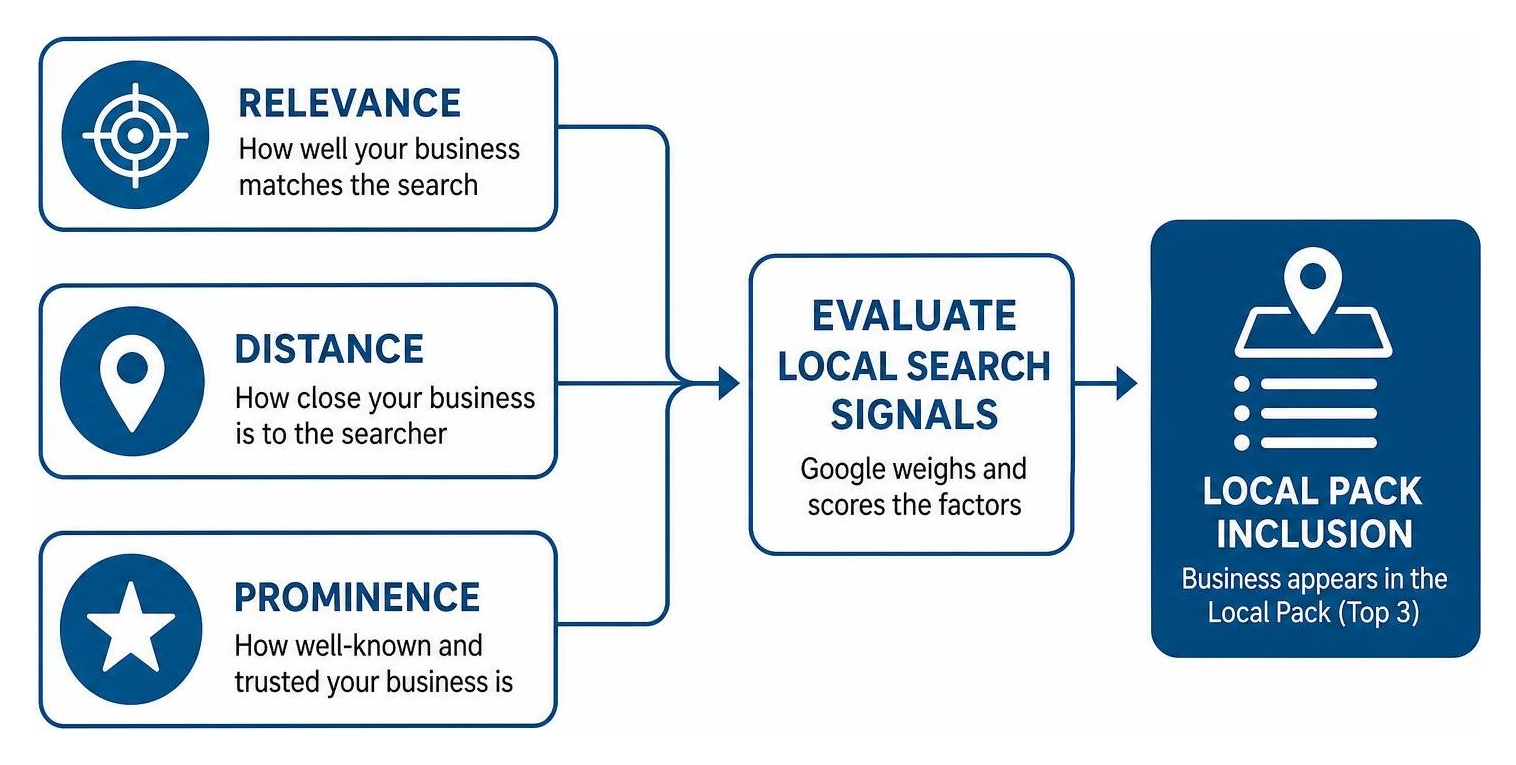
Google bases local rankings on three main pillars:
- Relevance: How well your business profile and website match what the user is searching for. If someone searches for “emergency plumbing repair,” a general hardware store won’t rank as high as a specialized local plumber whose profile explicitly lists emergency repairs.
- Distance: How close your physical location (or defined service area) is to the person searching or the geographical location specified in the search query. Distance is a heavy factor, but it is heavily balanced by relevance and prominence.
- Prominence: How well-known, established, and trusted your business is both online and offline. Prominence is built through customer reviews, active citations, high-quality local backlinks, and overall brand engagement across the web.
Modern AI Search and Google AI Overviews
The local search landscape changed dramatically heading into 2026. Today, searchers don’t only rely on typing keywords into a search box. Between 30% and 40% of queries now occur inside generative AI engines such as ChatGPT, Perplexity, Google AI Overviews, and Gemini.
Instead of displaying a simple list of links, AI engines synthesize information across multiple sources to provide direct recommendations. They evaluate:
- Entity Coherence: How clearly machine-readable your business details are across the web (using exact NAP consistency and JSON-LD structured data).
- Sentiment & Review Context: The qualitative details hidden in your customer reviews (e.g., “They fixed my leaky pipe on a Sunday night within 30 minutes”).
- Generative Engine Optimization (GEO): Formatting your website’s content into clear, factual, semantic passages that AI assistants can easily summarize and cite as verified answers.
Businesses with fully optimized Google Business Profiles and structured entity data receive up to 2.7x more visibility across both traditional search and AI Overviews.
Proven Strategies to Improve Local Search Rankings in 2026
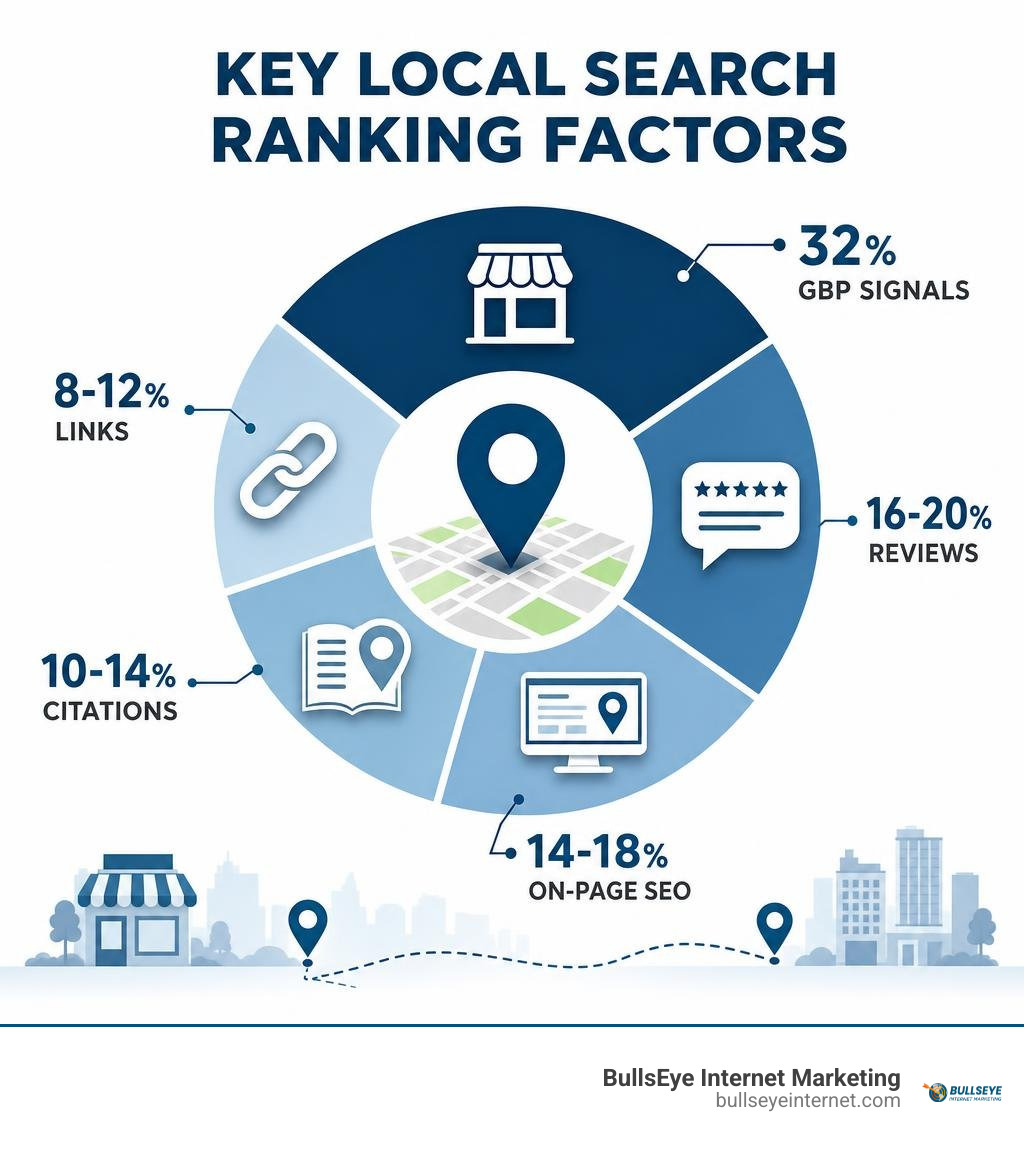
To rank #1 in your city, you need a balanced, systematic approach. Google Business Profile (GBP) signals carry roughly 32% of the weight in Google Maps rankings, followed closely by review velocity and on-page signals. If you want to dive deeper into map optimization, explore the Local Pack Optimization Ultimate Guide.
Optimizing Google Business Profile to Improve Local Search Rankings
Your Google Business Profile is your single most important digital marketing asset. It serves as your primary digital storefront and the core data source for Google Maps and AI Overviews.
Here is how to optimize your GBP for maximum ranking impact:
- Select Precise Primary & Secondary Categories: Your primary category is the single heaviest ranking factor in local SEO. Choose the most hyper-specific category available (e.g., select Air Conditioning Repair Service instead of just HVAC Contractor). Add 6–10 relevant secondary categories to expand query coverage without diluting core relevance.
- Complete 100% of Profile Fields: Fill out business hours, special holiday hours, primary phone number, physical address, website link, and service menus. Profiles with complete information receive 70% more location visits and direct direction requests.
- Upload High-Resolution Photos Regularly: Profiles with over 100 photos receive up to 520% more phone calls and 2.7x more direct discovery than static profiles. Maintain a steady cadence by uploading 4 to 8 high-quality photos weekly—showcasing your team, equipment, completed work, and office building.
- Publish Weekly Google Posts: Keep your profile active by publishing weekly Google Posts with clear calls-to-action (CTAs). Announce special offers, highlight recent projects, or share helpful local tips.
- Optimize the Business Description: Write a clear 750-character business description. State clearly what you do, who you serve, and your primary service cities without violating Google’s guidelines by keyword-stuffing your business name.
- Populate GBP Q&A: Seed 10 to 20 frequently asked questions and official answers in your profile’s Q&A section covering pricing, warranties, service areas, and emergency availability.
For a complete breakdown on maximizing your profile’s power, read our Google Business SEO Complete Guide.
Leveraging Customer Reviews to Improve Local Search Rankings
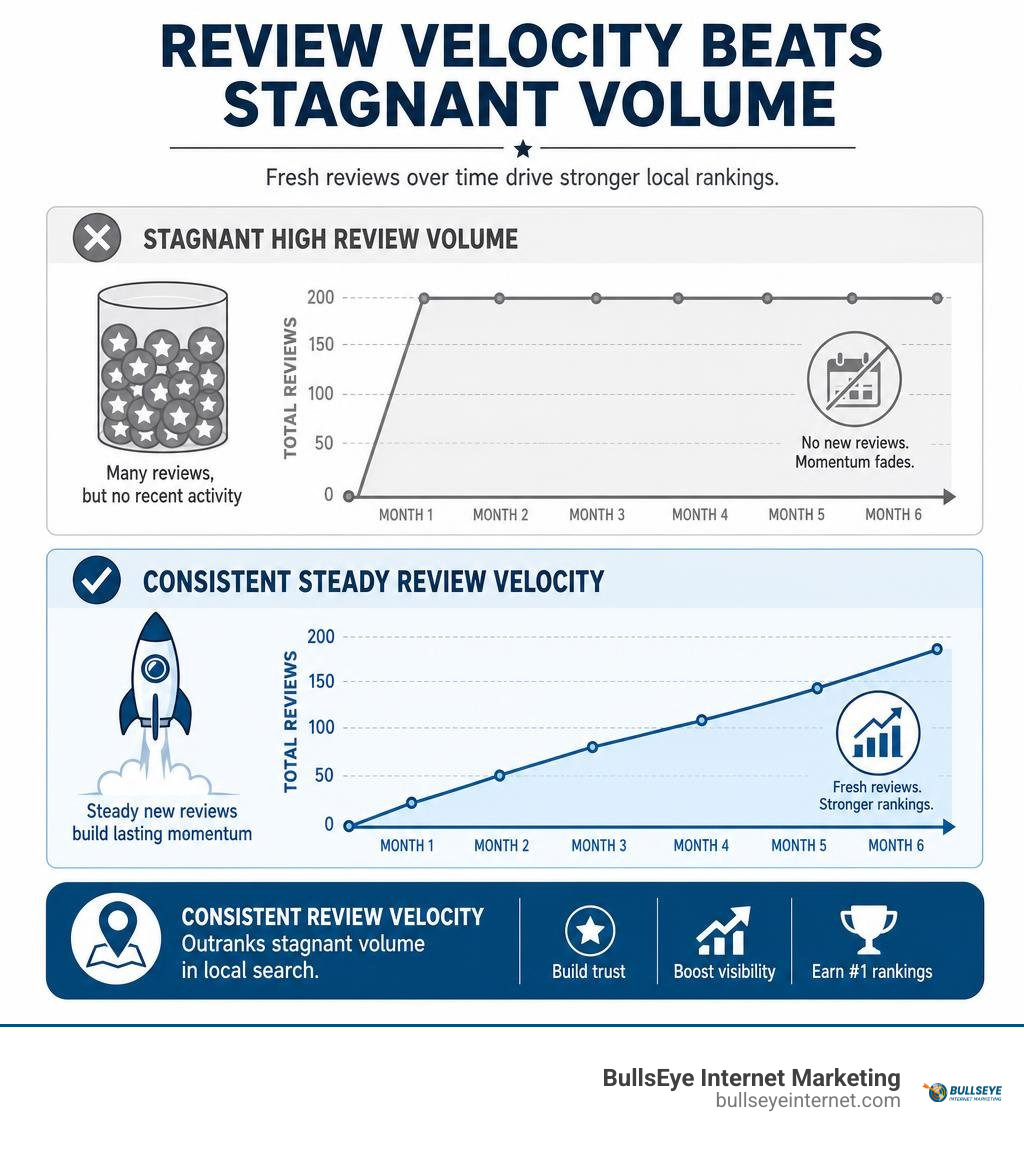
Reviews account for 16% to 20% of your local ranking weight. However, many business owners misunderstand how reviews work in 2026: review velocity matters far more than total review volume.
A business with 50 total reviews that receives 8 to 12 fresh reviews every month will consistently outrank a competitor with 200 old reviews that hasn’t received a new evaluation in six months.
Follow these best practices to build an active review generation system:
- Ask Immediately at the Point of Service: Send direct review link requests via SMS or email right after completing a job while the positive experience is fresh.
- Make Reviewing Frictionless: Provide a direct short URL or QR code that opens the review submission window in one click.
- Respond to 100% of Reviews Within 24 Hours: Replying promptly signals active operational management to both Google and potential customers.
- Incorporate Contextual Keywords Naturally: When responding, naturally mention the service provided and neighborhood (e.g., “Thanks for choosing us for your emergency AC repair in Coral Springs, John!”).
On-Page Optimization, Citations, and Local Backlinks
While your Google Business Profile powers Map Pack inclusion, your website provides the underlying authority foundation that supports your entire local SEO footprint.

On-Page SEO and Technical Foundation
Google cross-references your Google Business Profile against your website landing pages to verify authority and context.
- Localized Title Tags & H1s: Ensure your primary service and primary city are clearly included in page title tags and main headings (H1). For instance:
. - Mobile Speed & Core Web Vitals: Up to 60% of local smartphone searchers contact businesses directly from search results. Your website must load under 3 seconds on mobile devices with optimal Largest Contentful Paint (LCP < 2.5s) and Interaction to Next Paint (INP < 200ms).
- LocalBusiness Schema Markup: Implement structured JSON-LD data on your homepage and location pages. Schema acts as a direct translation key for search engines and AI assistants, providing explicit details about your exact business name, geo-coordinates, business hours, price range, and accepted payment methods.
Building Online Citations and Local Backlinks
Local citations (mentions of your Name, Address, and Phone number on business directories) and local backlinks establish prominence and domain authority. To discover practical ways to integrate these assets into your growth plan, review How to Leverage Local SEO for Small Businesses.
- Directory Citations: Focus on quality and absolute NAP consistency across major directories like Apple Maps, Bing Places, Yelp, Facebook, YellowPages, and industry-specific hubs. Clean data on major data aggregators (Data Axle, Localeze, Foursquare) prevents authority fragmentation.
- Local Backlinks: Five relevant local backlinks from community organizations or nearby businesses carry significantly more local weight than dozens of non-relevant directory links. Earn high-value local backlinks by:
- Sponsoring local youth sports teams, community events, or charity drives.
- Joining local Chambers of Commerce and business networking chapters in your county.
- Partnering with complementary non-competing businesses (e.g., a home inspector linking to a trusted roofing contractor).
- Securing coverage in local community newspapers or regional blogs.
Managing Multi-Location Businesses and Common Pitfalls
Managing local visibility across multiple cities or service areas requires a structured operational blueprint. Avoiding common mistakes keeps your listings clean and compliant.
| Local SEO Mistake | Why It Harms Your Ranking | Actionable Solution |
|---|---|---|
| Keyword Stuffing Profile Name | Triggers automated suspension or profile removal by Google. | Use your official, legal business name strictly without adding extra city or service keywords. |
| Review Bursts (Spikes & Stops) | Triggers Google’s spam filters and indicates unnatural manipulation. | Build an automated, continuous review outreach system targeting 6–15 reviews monthly. |
| Duplicate GBP Listings | Dilutes review equity and confuses ranking algorithms. | Merge duplicate profiles or mark legacy locations as permanently closed via Google Support. |
| Inconsistent NAP Data | Sends mixed signals to search engines, eroding local trust. | Audit and standardize Name, Address, and Phone formatting across all major platforms. |
| Website & GBP Category Mismatch | Creates conflicting relevance signals between profile and landing page. | Align your website’s primary heading and Schema @type directly with your primary GBP category. |
Best Practices for Multi-Location Businesses
If your enterprise operates across multiple physical locations or service areas (e.g., across Broward, Miami-Dade, and Palm Beach counties):
- Create Dedicated Location Landing Pages: Avoid pointing every location profile to your main homepage. Build dedicated, unique location pages for each branch (e.g., bullseyeinternet.com/locations/miami/).
- Publish Unique Localized Content: Include unique location-specific photos, local staff bios, driving directions, embedded Google Maps, customer reviews, and specific project histories on each location page. Avoid pasting identical boilerplate text across multiple pages.
- Maintain Separate Verified Profiles: Ensure each physical storefront has its own verified Google Business Profile linked directly to its corresponding unique location page URL.
Common Local SEO Mistakes to Avoid
The most frequent error businesses make is neglecting their Google Business Profile once initial setup is complete. Local SEO is an ongoing operational discipline, not a one-time project. Leaving holiday hours unupdated, ignoring reviews, or letting user-suggested edits go unmonitored can quickly cause your rankings to drop below active competitors.
Measuring Local SEO Results and Timelines
Tracking local search performance requires looking beyond vanity metrics to evaluate actual lead volume, phone calls, and revenue growth. To evaluate the true return on investment for your campaign, check out Is Local SEO Worth It Understanding the ROI.

Key performance indicators (KPIs) to track include:
- GBP Insights: Direct calls, direction requests, website clicks, and photo views.
- Map Pack Rankings: Tracking geographic grid rankings across targeted zip codes and neighborhoods.
- Local Organic Traffic: Monitoring location page traffic inside Google Analytics and Google Search Console.
- Conversion Tracking: Measuring form submissions, online booking confirmations, and phone call volume generated via local search.
How Long Does Local SEO Take?
Local SEO results vary based on market competition, historical domain authority, and execution speed:
- 0–30 Days (Foundation Phase): Profile verification, technical audits, NAP cleanup, primary category optimization, and schema installation.
- 30–60 Days (Initial Traction): First increases in map impressions, photo views, and local discovery searches as fresh review velocity begins to build.
- 60–90 Days (Ranking Momentum): Top 3 Map Pack rankings start appearing for targeted secondary terms; inbound call volumes increase noticeably in low-to-medium competition markets.
- 90–180+ Days (Market Dominance): Dominating primary competitive keywords across core service areas, capturing high-intent leads consistently across both Google Maps and AI Overviews.
Frequently Asked Questions About Local SEO
What is the most important local search ranking factor?
Your Google Business Profile primary category is widely recognized as the single most powerful individual ranking signal for Google Maps. Beyond primary category selection, overall Google Business Profile completeness, recent review velocity, and on-page relevance alignment form the foundation for top 3 Map Pack inclusion.
Can a business pay Google for higher local search rankings?
No, you cannot pay Google to directly boost or purchase organic local search or Google Maps rankings. Organic local rankings are determined strictly by Google’s automated algorithm evaluating relevance, distance, and prominence. However, businesses can run paid search campaigns through Google Ads or participate in Google Local Services Ads (Google Guaranteed) to display sponsored listings above organic Map Pack results.
How has AI search impacted local SEO?
AI search engines (such as ChatGPT, Perplexity, and Google AI Overviews) rely on entity coherence and structured semantic passages. Instead of simply matching keywords, AI systems summarize multi-source data to directly recommend top businesses. Maintaining flawless NAP data, robust structured schema markup, positive review sentiment, and detailed factual content ensures your business gets cited in AI-generated answers.
Driving Local Search Growth with BullsEye Internet Marketing
Mastering local search rankings in 2026 isn’t about finding shortcuts or beating the algorithm with tricks. It comes down to executing core digital marketing principles with consistency: optimizing your Google Business Profile, generating steady monthly reviews, maintaining exact NAP consistency, building local authority, and organizing your content for modern AI search engines.
At BullsEye Internet Marketing, we help local businesses dominate their market and transform local search rankings into steady phone calls and sales. We stand firmly behind our work: we offer no long-term contracts and maintain an exclusive policy of working with only one client per industry per geographic area, providing you with a true competitive advantage.
Ready to outrank your competitors and claim the top position on Google Maps? Optimize Your Business Listings with BullsEye Internet Marketing today and let our expert team elevate your local search presence!
