
Why Paid Search Analysis Is the Difference Between Wasted Budget and Real ROI
Paid search analysis is the process of collecting and reviewing data from your pay-per-click (PPC) campaigns to understand what’s working, what’s wasting money, and what to do next.
Here’s a quick answer if that’s all you need:
What is paid search analysis?
- What it is: Reviewing PPC campaign data across keywords, ads, and landing pages to guide spend decisions
- Why it matters: It links your ad spend to real business outcomes like revenue, leads, and customer value
- Key metrics tracked: CTR, CPC, CPA, ROAS, Quality Score, conversion rate, impression share
- Core steps: Audit conversion tracking → analyze keywords → review ad copy → evaluate landing pages → benchmark competitors
- How often: Weekly for anomalies, monthly for segments, quarterly for full structural reviews
Now, here’s the uncomfortable truth most platforms won’t tell you.
You could be running campaigns that look profitable inside Google Ads — decent CTR, reasonable CPC — and still be hemorrhaging budget on search terms that never convert. One study found that $147,000 was spent on non-converting search terms over just 90 days in a single account. That’s not an edge case. It’s shockingly common.
In June 2026, the stakes are even higher. Cost-per-click prices have risen sharply across Google Ads and Microsoft Advertising, driven by AI-generated ad variants, broader match types, and intensifying competition. Finance teams are asking tougher questions about customer acquisition cost and payback periods. And the platforms themselves are incentivized to optimize toward their metrics — not yours.
Without a disciplined analysis process, you’re essentially playing darts blindfolded. You might hit the board occasionally. But you’re far more likely to miss entirely and not even know it.
I’m Ronnie Katz, founder of BullsEye Internet Marketing, and I’ve been helping businesses cut wasted ad spend and drive measurable results through paid search analysis since 2006. In this guide, I’ll walk you through exactly how to turn raw PPC data into decisions that grow your bottom line.
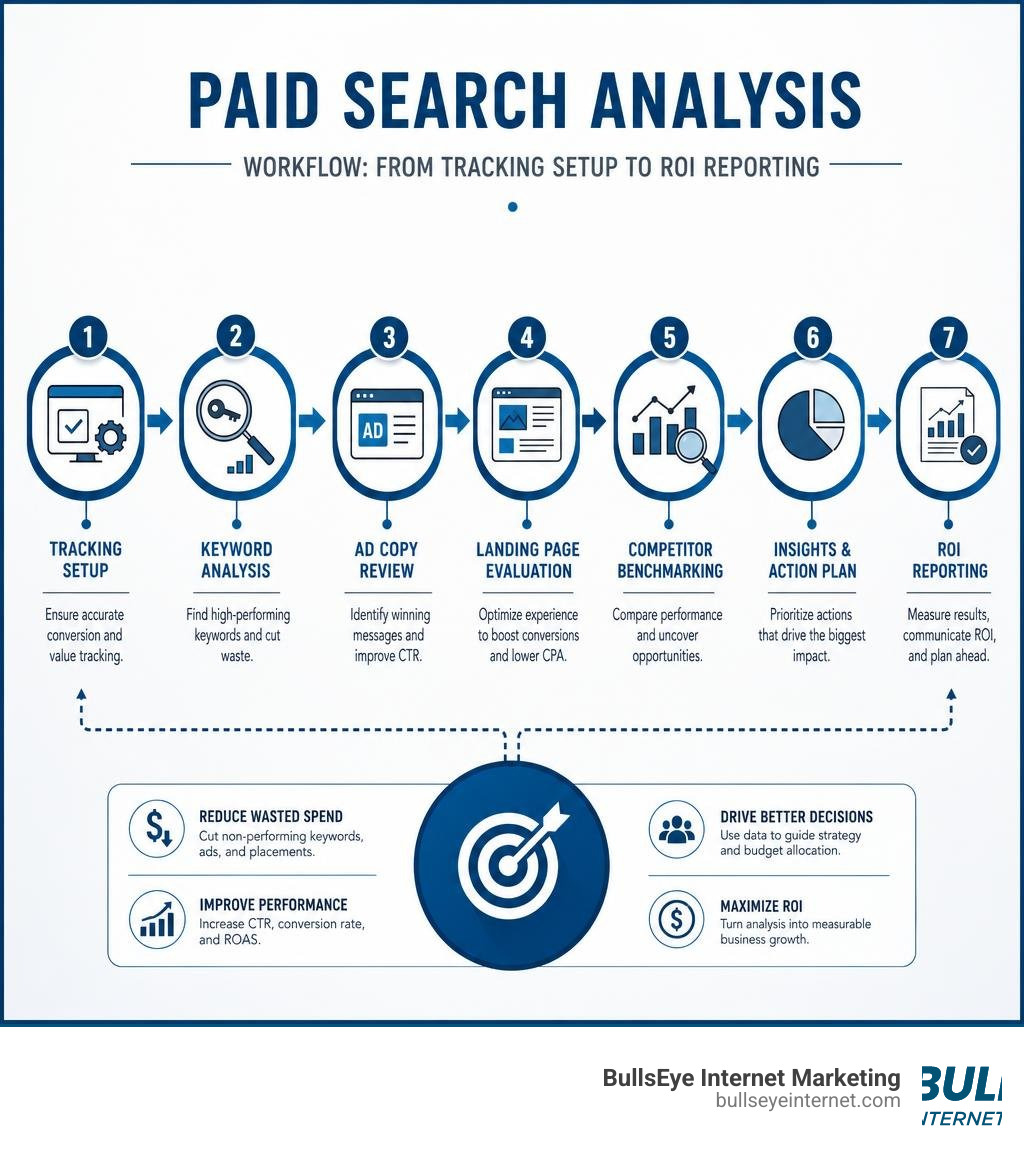
Basic Paid search analysis terms:
What is Paid Search Analysis and Why is it Critical for ROI?
At its core, paid search analysis is about removing the guesswork from your digital advertising. When you run search ads, you participate in a dynamic, real-time auction. To win this auction efficiently, you cannot rely solely on bidding the highest amount. Instead, search engines use a formula called Ad Rank to determine where your ad appears and how much you pay per click.
Because Quality Score is a diagnostic rating (on a scale of 1 to 10) based on ad relevance, expected click-through rate (CTR), and landing page experience, a comprehensive analysis is the only way to diagnose why your costs might be rising. If your landing page experience is poor, your Quality Score drops, forcing you to bid significantly more just to maintain your ad position.
We must analyze these moving parts systematically. As outlined in the Paid Search Analysis: How To Do It Right – Brafton guide, platforms are designed to make money when users click, but they only profit long-term when those clicks are highly relevant.
By performing regular audits, we align our campaigns with the platform’s auction mechanics while securing our own financial return. Failing to do this means you are optimizing for the platform’s revenue goals rather than your own business outcomes. For a complete look at how to manage these mechanics, explore our Ultimate Google PPC Management Guide.
Paid Search vs. SEO vs. General PPC Analysis
It is easy to lump all search engine marketing (SEM) and pay-per-click (PPC) terms into one bucket. However, to optimize your campaigns effectively, you must understand how paid search analysis differs from search engine optimization (SEO) and general PPC analysis.
| Feature | Paid Search (Search Ads) | Search Engine Optimization (SEO) | General PPC (Display/Social) |
|---|---|---|---|
| Placement | Top/bottom of search engine results pages (SERPs) | Organic search results listings | Third-party websites, apps, social feeds |
| Cost Model | Pay-per-click (PPC) / Cost-per-tap (CPT) | No direct click cost (sweat equity/agency fees) | Pay-per-click (PPC) or Cost-per-thousand impressions (CPM) |
| User Intent | Extremely high (active searchers) | High to informational | Passive (interest or demographic targeting) |
| Timeline | Immediate visibility | Long-term compounding growth | Immediate visibility |
| Primary Metric | Cost Per Acquisition (CPA) & ROAS | Organic traffic volume & Keyword rankings | Impressions, Frequency, View-through conversions |
Paid search analysis focuses heavily on user intent. Because paid visitors are 2 times more likely to make a purchase than organic visitors, we look closely at the exact queries users type into search engines.
In contrast, SEO analysis focuses on building authority, technical site health, and content depth to capture organic traffic over time. General PPC analysis (such as analyzing Display or Social media campaigns) prioritizes audience demographics, visual creative performance, and top-of-funnel brand awareness.
For businesses in competitive regions like Florida, balancing these channels is critical. If you are running campaigns in South Florida, you can benefit from local insights like those found in Pay Per Click Advertising – Florida – Sprout Digital or through specialized South Florida Adwords Pay Per Click Management and PPC Services. For a deeper dive into search campaign mechanics, see our Google Ads Complete Guide.
Key Metrics to Track in Your Paid Search Audits
To move from data drudgery to PPC hero, you must look past basic vanity metrics. Getting millions of impressions means nothing if those impressions do not turn into profitable conversions.
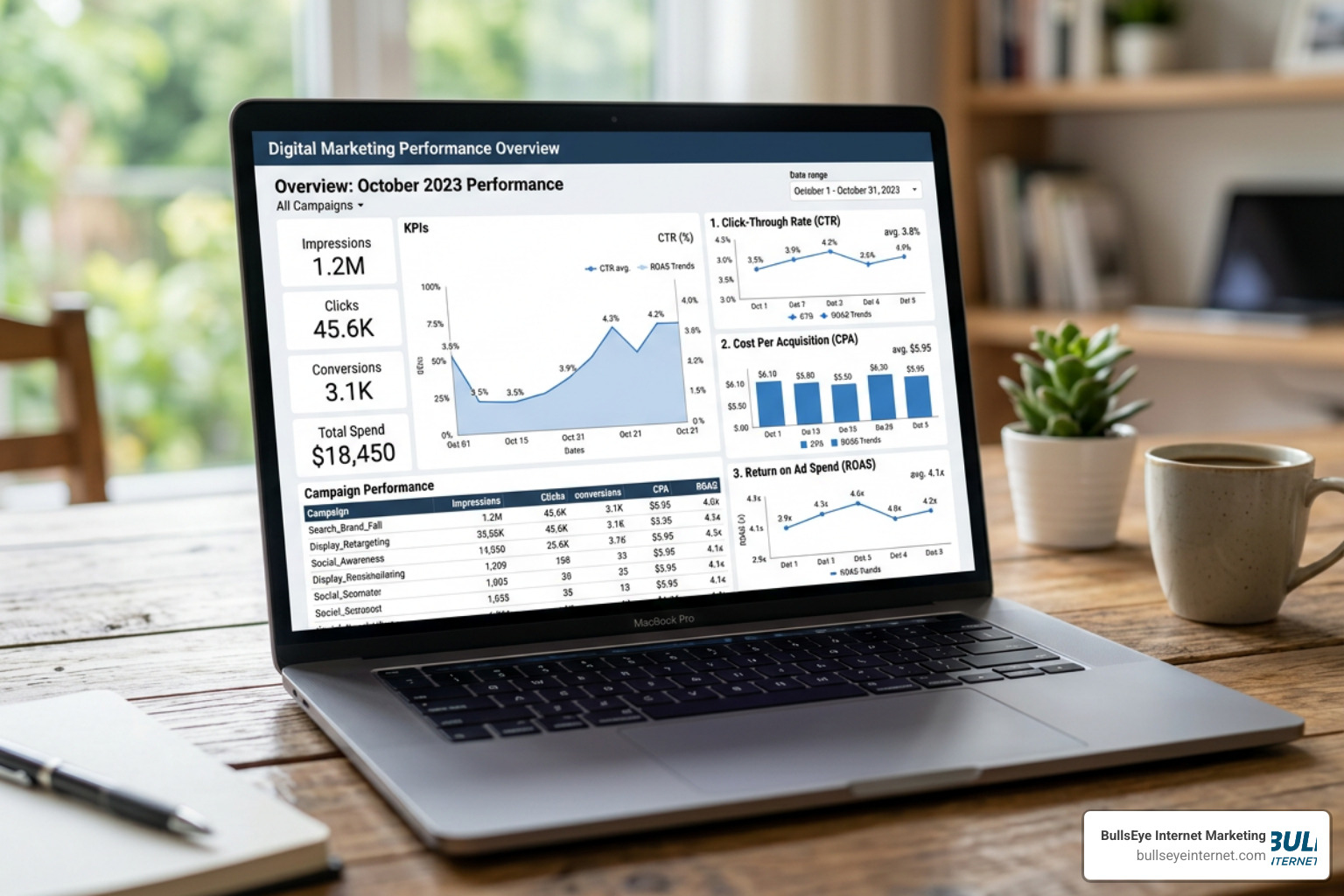
When conducting a comprehensive Performance Marketing Audit: Your Roadmap to Smarter Ad Spend, we group our metrics into two distinct categories: core financial metrics and relevance/quality metrics.
Core Financial Metrics for Paid Search Analysis
These metrics tell you if your campaigns are actually making money:
- Cost Per Acquisition (CPA): How much it costs to acquire a lead or sale. If you run a local service business in Miami-Dade County, a reasonable CPA might look very different than if you are running a low-ticket e-commerce store.
- Return on Ad Spend (ROAS): Calculated as
Total Revenue / Total Ad Spend. Our recent analysis of industry trends in June 2026 shows that accounts utilizing smart bidding strategies focused on value consistently outperform those optimized strictly for conversion volume. - Conversion Rate (CVR): The percentage of clicks that result in a completed goal. While the median landing page conversion rate across industries hovers around 6.6%, high-performing dedicated landing pages can easily surpass 10% to 15%.
- Budget Pacing: Ensuring your daily and monthly spend is distributed evenly to avoid running out of budget before peak buying hours.
According to the Analysis of Google’s advertising campaigns in Q1 2026 – CPA.RIP, search advertising spend has increased by 14% year-on-year, making efficient budget pacing and financial tracking more critical than ever to protect your margins.
Relevance and Quality Metrics
These metrics tell you how well your campaigns align with search engine algorithms and user expectations:
- Quality Score: Google’s 1-10 rating of your ad and landing page relevance. Improving your Quality Score directly lowers your CPC.
- Click-Through Rate (CTR): The percentage of people who see your ad and click it. A low CTR indicates a disconnect between the user’s search query and your ad copy.
- Impression Share: The percentage of impressions your ads receive compared to the total number of impressions your ads were eligible to get. A low impression share due to budget or rank indicates room for growth.
To understand how to leverage these metrics for your brand, check out our Pay Per Click Management Expert Guide.
A Step-by-Step Framework for Conducting Paid Search Analysis
Now that we know what to track, let us walk through a practical, repeatable framework for auditing your accounts. This step-by-step process is designed to find quick wins and eliminate budget waste immediately. For an in-depth companion guide, refer to our Step-by-Step Guide to Performing a PPC Audit.
Step 1: Audit Your Conversion Tracking and Account Structure
Before you make any bidding or keyword decisions, you must confirm your data is accurate. Industry data reveals that only 29% of Google Ads accounts track conversions accurately. Common issues like duplicate conversion events in Google Analytics 4 (GA4) can inflate conversion counts by up to 40%, leading to poor automated bidding decisions.
- Verify Conversion Sources: Ensure your GA4 tags, Google Ads conversion tracking, and third-party call tracking tools (like CallRail) are firing only on true success pages (e.g., a “Thank You” page rather than a cart page).
- Integrate Offline Conversions: If you run a lead-generation business, set up an offline conversion feedback loop. Pushing CRM data back into Google Ads allows the algorithm to optimize for closed sales rather than just raw form fills.
- Review Campaign Hierarchy: Ensure your campaigns are organized logically. Keep brand, non-brand, and competitor targeting in separate campaigns. This prevents inflated brand ROAS from masking underperforming generic campaigns.
For businesses operating in South Florida, localized campaign tracking is essential. If you are running campaigns in Broward County, utilizing resources like Digital Marketing in Broward County | UltraWeb Labs can help you structure local targeting, while those in neighboring areas can review options like Marketing & Advertising – Miami-Dade County. You can also streamline this process using the strategies in our guide on From Manual to Magical: Top Tools for a Flawless PPC Audit.
Step 2: Identify Underperforming Keywords and Search Terms
A primary source of wasted ad spend is “query drift,” which occurs when broad match keywords trigger your ads for irrelevant, low-intent searches.
- Pull the Search Terms Report: Go to your search terms report and filter for terms that have generated significant impressions or clicks but zero conversions over the last 90 days.
- Build Your Negative Keyword List: Add irrelevant queries to your negative keyword lists immediately. For example, if you are an emergency plumbing service in Fort Lauderdale, you should exclude terms like “plumbing school” or “free plumbing advice.”
- Analyze Match Type Performance: Do not rely blindly on broad match. While Google’s automated systems favor broad match, our analysis of 2026 data shows that exact match and phrase match remain the workhorses for efficiency. Phrase match consistently overperforms on conversion rates in lead generation accounts.
To master this balance, see our guide on how to Master Keyword Research and Strategy with PPC Management Services.
Step 3: Evaluate Ad Copy and Landing Page Performance
Your ad copy gets the click, but your landing page secures the conversion. The gap between the ad click and the landing page is where most paid search budgets leak.

When analyzing this post-click experience, focus on:
- Message Match: Ensure the headline on your landing page matches the promise made in your ad copy. If your ad promises a “Free 14-Day Trial,” the landing page should not hide that offer behind a generic homepage.
- Page Speed: According to Google, 53% of mobile visits are abandoned if a page takes longer than 3 seconds to load. There is a 7% conversion drop for every second of delay on mobile landing pages.
- Friction Reduction: Remove unnecessary navigation menus and keep lead forms as short as possible.
Advanced Optimization: Bidding, Budgets, and Competitors
Once your foundation is solid, you can graduate to advanced optimization strategies to squeeze more value out of every dollar. You can compare our approach to other top services by reading The 5 Best PPC Audit Services Compared.
Leveraging Competitor Insights for Paid Search Analysis
Competitor analysis is not about copying what your rivals are doing; it is about finding their blind spots.
- Use Auction Insights: Run Google’s Auction Insights report to see who is bidding on your keywords, their impression share, and how often they outrank you.
- Identify Operational Gaps: Look for patterns in when your competitors bid. If they pause campaigns on weekends or evenings, you can capture high-intent searchers at a much lower CPC.
- Benchmark with Third-Party Tools: Use tools like Semrush or SpyFu to analyze your competitors’ ad copy, estimated budgets, and landing page designs.
If you are looking for external specialized support to run these advanced comparisons, check out our guide on The 7 Best PPC Audit Companies Compared.
Aligning Paid Search with Organic SEO Synergies
One of the most advanced strategies we use at BullsEye Internet Marketing is identifying keyword synergies between paid search and organic SEO.
If you rank highly in organic search results for a specific, high-intent keyword, you may be able to reduce your paid search bids on that term to avoid keyword cannibalization. Conversely, you can use paid search to capture immediate visibility for highly competitive keywords while your organic SEO campaigns build authority.
For businesses in Palm Beach Gardens, working with local experts like Best Palm Beach Gardens Marketing Agency | Riley Summers or utilizing regional resources like Martin County Digital Marketing Services | Biz Jetpack can help coordinate these multi-channel strategies. To find the right partner for this level of integration, consult our Buyers Guide: Best PPC Audit Agencies for 2026.
Frequently Asked Questions about Paid Search Analysis
What is the difference between paid search analysis and a general PPC audit?
A general PPC audit looks at your entire pay-per-click ecosystem, including social media ads (like Meta) and programmatic display networks. A paid search analysis focuses specifically on search engine results pages (like Google and Bing) where user search intent is the primary driver of performance.
How often should businesses conduct a paid search analysis?
We recommend a tiered approach:
- Weekly: Check for spend anomalies, broken landing pages, and campaign budget pacing.
- Monthly: Run a deep search term report analysis, review device performance, and adjust bid modifiers.
- Quarterly: Perform a full structural review, benchmark against competitors, and align paid search insights with your organic SEO strategy.
How does landing page experience affect paid search costs?
Landing page experience is a major component of your Quality Score. A poor, slow, or irrelevant landing page drops your Quality Score, which lowers your Ad Rank. To compensate and maintain your ad position, Google will charge you a higher Cost Per Click (CPC). Improving your landing page directly lowers your advertising costs.
Conclusion: Partner with South Florida’s PPC Experts
Doing your own paid search analysis can feel like a full-time job. It is easy to get lost in the data drudgery of keyword reports, conversion tracking setups, and bidding algorithms when you should be focused on running your business.
At BullsEye Internet Marketing, we do things differently. We are a South Florida digital marketing agency specializing in generating high-quality calls and sales for businesses across Broward, Miami-Dade, Palm Beach, Martin, St. Lucie, and Indian River counties.
Our unique selling proposition is simple but powerful:
- No Long-Term Contracts: We earn your business month after month based on real, measurable results.
- Exclusive Geographic Targeting: We work with only one client per industry per geographic area, giving you a massive competitive advantage.
- Full-Funnel Optimization: From high-intent keyword selection to landing page conversion rate optimization, we handle it all.
Stop letting your ad budget leak into Google’s pockets. If you want to maximize your ROI and turn your paid campaigns into a predictable lead-generation machine, we are here to help.
Ready to dominate your local market? Explore our PPC Services in Palm Beach County and let’s discuss how we can scale your business today!
