
Why Law Firms Are Turning to Pay-Per-Lead Models
Pay per lead for lawyers is a marketing model where law firms pay a set fee only when they receive a qualified potential client inquiry, rather than paying for advertising clicks or impressions that may never convert. Here’s what you need to know:
- What you pay for: Actual contact information and case details from prospects actively seeking legal representation
- Cost range: $50-$1,500 per lead depending on practice area (Personal Injury: $150-$500+, Family Law: $50-$200, Mass Torts: $300-$1,000+)
- Key benefit: Predictable budgeting with no payment for unqualified clicks or website visitors
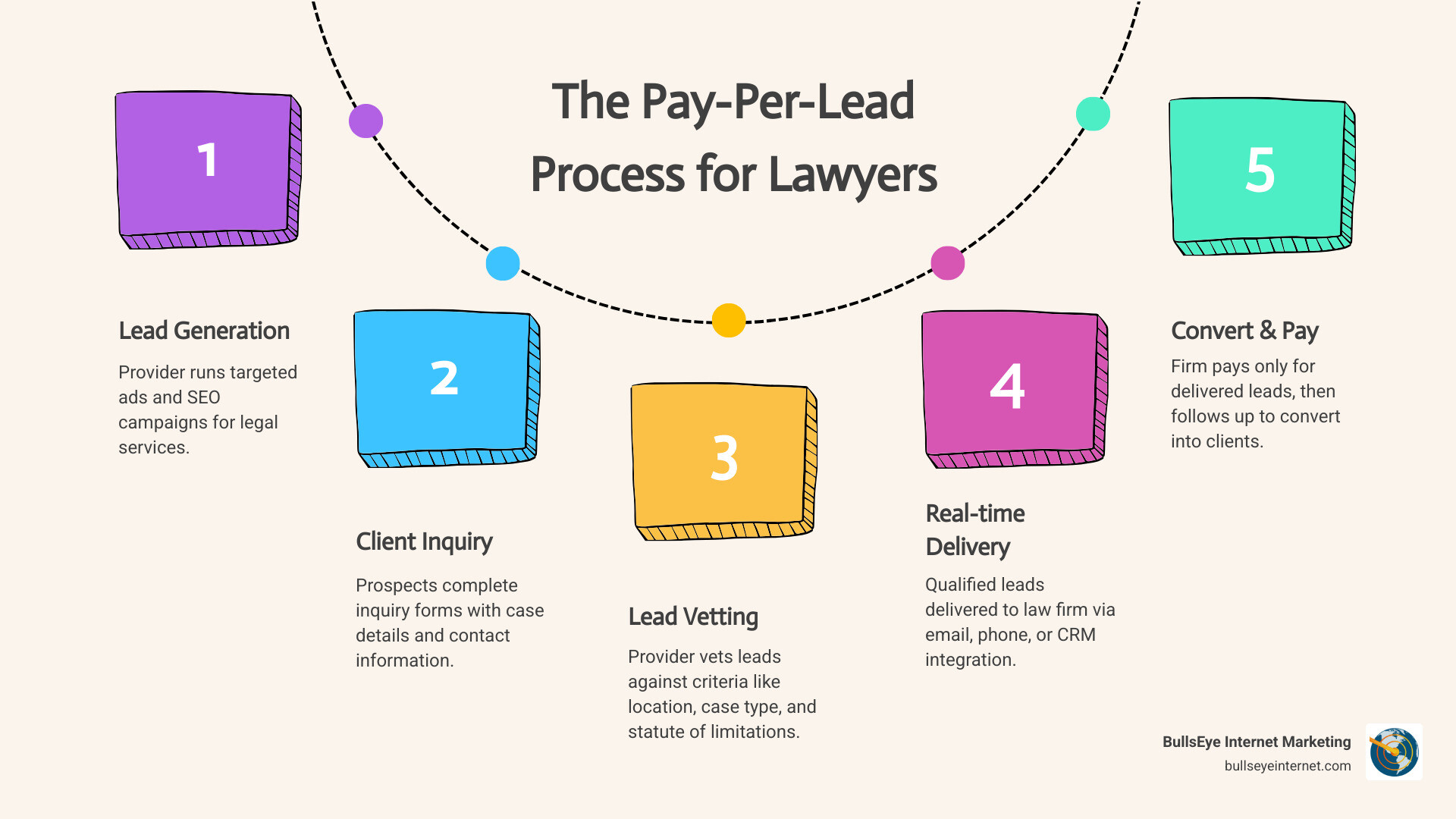
- How it works: Providers generate leads through advertising and SEO, vet prospects, then deliver qualified leads to your firm in real-time
- Lead types: Exclusive (sold to one firm) or shared (sold to multiple firms at lower cost)
With over 1.3 million licensed attorneys competing for clients in the U.S., the challenge isn’t just being a great lawyer—it’s getting your phone to ring with the right cases. Traditional marketing like pay-per-click can burn through a budget on clicks that never become clients, while SEO takes months to produce results. Pay-per-lead services offer a middle ground, where you pay only for actual prospects who have expressed interest in your specific legal services.
The appeal is straightforward. Instead of guessing how many clicks will convert, pay-per-lead gives you direct access to people who need a lawyer now. For competitive practice areas, it’s often the fastest way to fill your pipeline while maintaining budget control.
I’m Ronnie Katz, founder of BullsEye Internet Marketing. With nearly two decades in legal digital marketing, I’ve helped countless firms implement effective pay per lead for lawyers strategies. This guide will break down the costs, benefits, and key considerations to help you decide if this model is right for your practice.
What Is Pay-Per-Lead and How Does It Work?
A pay-per-lead company generates and delivers qualified leads matched to your firm’s practice areas and geographic locations, such as Broward or Miami-Dade County. A typical lead includes essential contact information and a description of the potential client’s case.

We generate leads using a mix of online advertising, search engine optimization (SEO), and web content to capture individuals actively seeking legal help. Once a prospect shows interest, our vetting process begins. This is where the value lies. We implement rigorous verification procedures, evaluating leads against specific criteria and often cross-referencing national databases. If a lead doesn’t meet your pre-defined quality standards, it isn’t delivered. This ensures the leads you receive are high-quality with a strong likelihood of converting.
Once vetted, qualified leads are sent in real-time to your email, phone, or CRM system. Immediate delivery is crucial, as rapid follow-up significantly increases conversion chances.
To dive deeper into this model, check out our Pay Per Lead Agency Complete Guide.
The Typical Onboarding Process
Getting started with a pay per lead for lawyers provider is straightforward:
- Initial Consultation: We discuss your firm’s needs, goals, and ideal cases.
- Defining Your Ideal Client: We pinpoint the demographics and legal problems of your target clients.
- Geographic Targeting: You define specific counties (like Broward, Miami-Dade, Palm Beach) and cities to ensure local relevance.
- Practice Area Selection: You choose the exact legal categories for your leads, from personal injury to family law.
- Budget Setting: We help establish a flexible budget. You can often stop or start the service at any time.
- Receiving Your First Leads: You start receiving real-time, vetted leads directly to your preferred channels.
The Core Benefits of Pay Per Lead for Lawyers
The advantages of a pay per lead for lawyers model are substantial:
- Predictable Budgeting: Know your exact cost per lead, eliminating the guesswork of PPC campaigns where costs fluctuate.
- Paying for Prospects, Not Clicks: Invest in actual potential clients who have expressed a need for legal services, not random website visitors.
- Access to Qualified Leads: Our vetting process filters out casual browsers, delivering individuals ready to hire a law firm.
- Scalability: Easily scale your lead volume up or down to match your firm’s capacity and growth goals.
- Saves Time and Resources: We handle lead generation, allowing your team to focus on practicing law and serving clients.
Exclusive vs. Shared Leads
Understanding the two primary lead types is crucial for making an informed decision.
- Exclusive Leads: An exclusive lead is sold to only one law firm. They cost more but offer significantly higher conversion rates due to the lack of immediate competition.
- Shared Leads: These are distributed to a small handful of firms (e.g., 2-4). They are more affordable but require an exceptionally fast and compelling follow-up to beat competitors.
While exclusive leads have a higher conversion potential, shared leads can be a cost-effective option for firms with a rapid and efficient intake process. The best choice depends on your budget, capacity, and competitive strategy.
The Financials of Pay-Per-Lead for Lawyers: Costs, ROI, and Key Metrics
Understanding the financials of pay per lead for lawyers is about more than the price per lead; it’s about achieving a strong return on investment (ROI) for your firm.

Several factors influence the cost of PPL services:
- Practice Area: High-value cases like personal injury or mass torts naturally command higher lead prices.
- Lead Quality: The more thoroughly vetted a lead is, the higher its cost and value.
- Exclusivity: Exclusive leads are more expensive than shared leads due to the lack of direct competition.
- Geographic Location: Competitive markets like Miami-Dade or Palm Beach County may have higher lead costs.
- Competition: The more competitive your practice area and location, the higher the cost per lead.
Lead generation fees are an investment. Our goal at BullsEye Internet Marketing is to help you maximize your return on investment (ROI) by delivering high-quality leads that convert.
Average Cost Per Lead by Practice Area
Here’s a general benchmark for average costs per lead across various practice areas in the U.S.:
- Personal Injury Leads: $150 – $500+ per lead.
- Mass Torts Leads: $300 – $1,000+ per lead.
- Medical Malpractice Leads: $200 – $800 per lead.
- Criminal Defense Leads: $50 – $250 per lead.
- Family Law Leads: $50 – $200 per lead.
- Bankruptcy Law Leads: $75 – $300 per lead.
- Employment Law Leads: $100 – $400 per lead.
- Estate Planning Leads: $40 – $250 per lead.
The potential case value directly correlates with the lead cost.
How to Maximize Your ROI
Buying leads isn’t enough; you need a robust strategy to convert them. Here’s how:
- Rapid Lead Follow-Up: This is non-negotiable. Contacting leads within 5 minutes can dramatically increase conversion. Your intake team must be fast.
- Efficient Intake Process: A structured system for contact, qualification, and scheduling consultations is crucial for converting leads.
- CRM Integration: Use a Customer Relationship Management (CRM) system to track leads, automate follow-ups, and ensure no opportunity is missed.
- Lead Nurturing Sequences: Use email or SMS to stay top-of-mind with prospects who aren’t ready to hire immediately.
- A/B Testing Intake Scripts: Continuously refine your communication by implementing A/B testing with different scripts and messages to optimize results.
For more on optimizing lead conversion, explore our conversion optimization services.
Key Metrics to Track
To ensure a positive ROI, you must track the right metrics:
- Cost Per Lead (CPL): The total spend on leads divided by the number of leads received.
- Cost Per Client Acquisition (CPA): The total marketing spend divided by the number of actual clients acquired. This is your true cost to get a signed case.
- Lead-to-Client Conversion Rate: The percentage of leads that become paying clients.
- Case Value: The average revenue generated from clients acquired through PPL.
- Overall Campaign ROI: Calculated as (Total Revenue – Total Investment) / Total Investment, this is the ultimate measure of profitability.
PPL vs. Other Marketing Models: Making the Right Choice
Choosing a marketing strategy can be complex. Let’s see how pay per lead for lawyers compares to Pay-Per-Click (PPC) and Search Engine Optimization (SEO), as a combined approach is often most effective.
| Feature | Pay-Per-Lead (PPL) | Pay-Per-Click (PPC) | Search Engine Optimization (SEO) |
|---|---|---|---|
| Cost Structure | Pay only for qualified lead/contact | Pay per click (CPC) on ads, regardless of conversion | Ongoing investment in content, links, technical SEO |
| Time to Results | Immediate lead flow upon setup | Immediate visibility, but leads require conversion | 6-12 months for significant results, compounds over time |
| Lead Quality | Pre-vetted, high-intent prospects | Varies; clicks may be researchers, low-intent | High-quality, organic traffic, builds trust |
| Budget Control | Highly predictable, pay for outcome | Can be unpredictable, depends on click volume and CPC | Predictable monthly spend, results build long-term value |
| Effort Required | Minimal; provider handles generation & vetting | Requires continuous management, optimization, bidding | Significant ongoing effort for content creation & technicals |
| Long-Term Value | Leads stop when spending stops | Leads stop when spending stops | Builds evergreen asset, generates leads for years |
Pay-Per-Lead vs. Pay-Per-Click (PPC)
With PPC, you pay for every click, whether it converts or not. This can be expensive and unpredictable. PPL is different: you only pay for a qualified contact, not a click. This makes your budget more predictable and your spend more efficient, as the vetting process filters out casual browsers.
A great example of a PPL model within the PPC landscape is Google Local Service Ads. With these ads, you only pay if a qualified lead contacts you through the ad. Learn more in our Pay Per Click Advertising for Lawyers Guide and about Google Local Services Ads for Lawyers.
Pay-Per-Lead vs. SEO
PPL provides immediate leads for rapid growth, while SEO is a long-term strategy that builds a sustainable asset. SEO can take 6-12 months to show results but generates organic leads for years after the initial investment. In contrast, PPL leads stop when you stop paying.
For most law firms, the best approach is a hybrid one. PPL provides a consistent, immediate stream of clients while your long-term SEO efforts, like those in How to Increase Your Law Firm’s Online Presence with Local SEO, build a sustainable pipeline. This allows for both immediate client acquisition and future-proofing your firm.
When PPL Is (and Isn’t) the Right Fit
While powerful, PPL isn’t a one-size-fits-all solution.
PPL is an excellent fit for law firms that:
- Are in high-value practice areas like personal injury or mass torts.
- Have a solid, rapid intake process to convert leads into clients.
- Seek rapid growth and a scalable client pipeline.
- Want predictable budget control over client acquisition costs.
PPL might NOT be the right choice if your law firm:
- Lacks a fast and effective follow-up system.
- Operates in very low-margin practice areas where lead costs are unsustainable.
- Is solely focused on building a 100% organic pipeline over the long term.
Ensuring Quality and Compliance in Your PPL Strategy
A successful pay per lead for lawyers strategy requires two things: high-quality leads and strict ethical compliance. Without them, your investment can be wasted or lead to professional complications.
Lead quality is paramount. A high-quality lead is an actively seeking potential client whose case fits your practice area and location. Our rigorous vetting process ensures this quality. For example, an auto accident lead is checked for injury, statute of limitations, and prior representation before being sent to you. Provider transparency is also crucial; you should know how leads are generated and that the marketing sources comply with bar regulations.
Common Risks with Pay Per Lead for Lawyers
Be aware of these potential pitfalls when engaging in pay per lead for lawyers:
- Low-Quality or Unvetted Leads: Some providers prioritize quantity over quality, wasting your time and money.
- Shared Leads with Too Many Competitors: If a shared lead is sold to too many firms, your conversion chances drop dramatically.
- Lack of a Refund Policy for Bad Leads: A reputable provider must have a clear policy for crediting or refunding invalid leads (e.g., spam, wrong practice area).
- High Costs with No Conversion Guarantee: Without an optimized internal intake process, you can spend a lot on leads without signing new clients.
Ethical Considerations for Lawyers
Marketing for lawyers is governed by strict ethical guidelines. It’s imperative to remain compliant:
- ABA Rule 7.2 on Advertising: This rule permits lawyers to pay for advertising and lead generation services.
- Avoiding Fee-Splitting with Non-Lawyers: A critical distinction under Rule 7.2 is that you must pay for the marketing service itself, not a percentage of legal fees from a resulting case. This avoids improper fee-splitting.
- State Bar Regulations: You must ensure your PPL provider complies with your state’s specific rules on lawyer advertising, such as those from the Florida Bar.
- Ensuring Provider Compliance: Work only with reputable providers who understand and adhere to all legal marketing standards.
How to Vet a Pay-Per-Lead Provider
Choosing the right PPL partner is critical. Ask these questions:
- Transparency in Lead Sources: Where do their leads come from? Are they transparent about their methods?
- Lead Verification Process: How do they qualify leads? Ask about their specific criteria.
- Refund/Credit Policy for Invalid Leads: Do they have a clear and fair policy for bad leads?
- Client Reviews and Testimonials: What has been the experience of other law firms with their service?
- Ability to Define Strict Criteria: Can you precisely define your ideal practice areas and geographic targets?
Frequently Asked Questions about Pay Per Lead for Lawyers
How much should a law firm budget for pay-per-lead?
Your budget for pay per lead for lawyers depends on your growth goals and practice area. While many businesses allocate 7-8% of revenue to marketing, we recommend starting with a test budget. This allows you to evaluate lead quality and your conversion rates before scaling up. Once you understand your ROI, you can confidently adjust your budget to meet acquisition targets. Lead costs vary significantly by practice area, location, and exclusivity.
Is it better to buy leads or generate them organically?
A hybrid strategy is often best. Buying leads offers immediate speed and volume, which is excellent for rapid growth. Generating leads organically through SEO builds a long-term, cost-effective asset but requires a consistent effort over 6-12 months to gain momentum. Combining both PPL for immediate impact and SEO for long-term stability often yields the best results, especially in competitive markets.
How can I ensure the leads I receive are high quality?
Ensuring high-quality leads is key to a successful PPL strategy. Here’s how:
- Work with a Reputable Provider: Partner with a provider that has a proven track record, transparent vetting process, and positive testimonials.
- Define Strict Lead Criteria: Clearly articulate your firm’s specified practice areas (e.g., personal injury, family law) and serviceable geographic locations (e.g., Broward County, Palm Beach County).
- Have a Clear Refund Policy for Bad Leads: A trustworthy provider will offer a refund or credit for leads that are genuinely invalid or don’t meet the agreed-upon criteria.
- Track Lead Performance Carefully: Continuously monitor the leads you receive. Tracking conversion rates and case quality allows for ongoing optimization of your campaigns.
Conclusion: Is Pay-Per-Lead a Smart Investment for Your Firm?
For law firms navigating the increasingly competitive legal landscape in Florida and across the U.S., pay per lead for lawyers presents a compelling solution for client acquisition. It offers a powerful blend of predictable costs, access to qualified prospects, and scalability—all crucial for sustainable growth.
When managed correctly, PPL is more than just a marketing expense; it’s a strategic investment. It empowers your firm to pay for actual opportunities, not just impressions or clicks, allowing you to focus your valuable time and resources on practicing law. The key to open uping its full potential lies in a robust, rapid, and professional intake process that can convert those vetted leads into loyal clients.
At BullsEye Internet Marketing, we pride ourselves on being the right partner, ensuring not only the quality and compliance of every lead but also a collaborative approach to help your firm thrive. If you’re ready to transform your lead generation strategy and fill your pipeline with high-intent prospects, we’re here to help. Explore how we can help you with Pay Per Lead Marketing and start acquiring the clients you deserve.
