
Stop Wasting Money, Start Winning
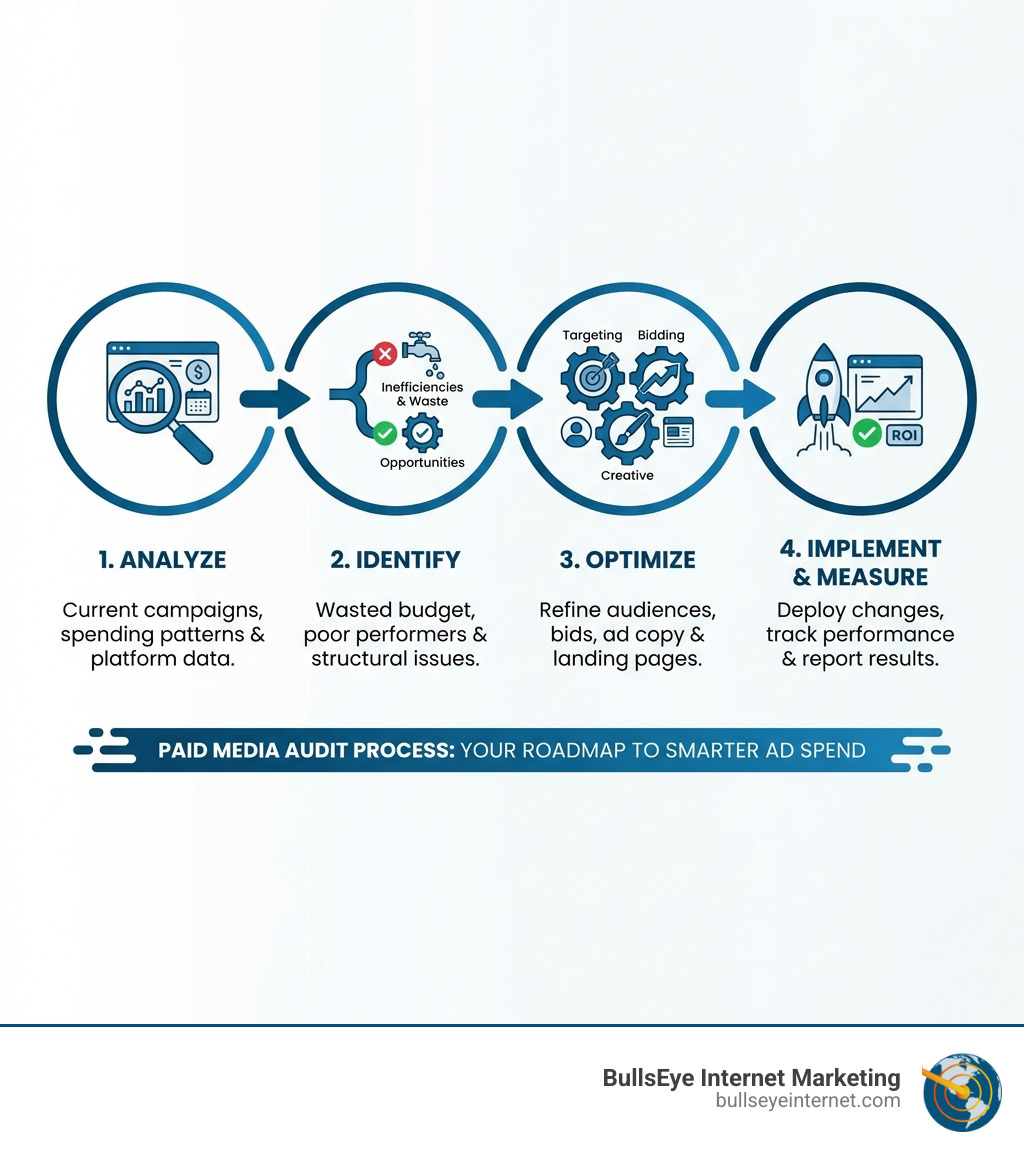
A Paid media audit is a systematic review of your digital advertising campaigns across platforms like Google Ads, Meta, LinkedIn, and others to evaluate performance, uncover inefficiencies, and provide actionable recommendations to maximize ROI.
What a Paid Media Audit Covers:
- Account Structure – Campaign organization and setup
- Targeting & Audiences – Who sees your ads and when
- Ad Creative & Copy – Message relevance and performance
- Bidding & Budget – How money is spent and allocated
- Tracking & Attribution – Accuracy of conversion data
- Competitive Benchmarking – How you stack up against competitors
- Actionable Recommendations – Prioritized roadmap for improvement
You know something’s off with your ads. Your gut tells you that you’re wasting money, even if your campaigns are technically profitable. Maybe you’re spending $90,000 a month but barely breaking even. Maybe your cost-per-lead is too high, or your conversion rate is stuck at 1%. That nagging feeling? It’s usually right.
The hard truth: A 90-day analysis of one paid search account revealed $147,000 spent on search terms that didn’t convert. That’s almost $50,000 per month down the drain. And this isn’t rare—audits routinely uncover 10-25% of budget being wasted on the wrong audiences, broken tracking, or campaigns that don’t align with actual business goals.
But here’s the good news: An audit gives you a clear roadmap to plug those leaks. It shows you exactly where your money is going, what’s working, what’s not, and how to fix it—without increasing your total spend. Research shows that audits can free up budget you didn’t know you had, letting you reallocate it to high-return tactics that actually drive calls and sales.
Default platform settings prioritize spending your budget quickly, not efficiently. Tracking issues can trick automated bidding into burning money on low-quality clicks. Campaigns focused on brand awareness when you need leads right now are a misuse of funds. And if you inherited an account from someone else—or set it up years ago and haven’t touched it since—the market has changed. Best practices have evolved. You’re falling behind.
A paid media audit isn’t a sales pitch. It’s a diagnostic. It tells you the truth about what’s happening in your account, cuts through the noise, and gives you a prioritized action plan you can implement yourself or hand to your team. Think of it as a health checkup for your ad spend—one that can save us tens of thousands of dollars every month.
I’m Ronnie Katz, and I’ve been running paid media campaigns and auditing accounts since 2006 as the founder and Principal CEO of BullsEye Internet Marketing. A Paid media audit is one of the most valuable services we provide—it’s where we help businesses stop the bleeding and start winning. Let’s walk through exactly how it works.
Foundations: What is a Paid Media Audit and Why is it Crucial?
In today’s digital landscape, where advertising platforms constantly evolve and competition intensifies, it’s easy to lose sight of which campaign elements are truly driving business growth. This is precisely why a paid media audit is not just beneficial, but crucial for any business investing in digital advertising, whether you’re generating leads in South Florida or driving sales across the US.
A paid media audit is a deep-dive investigation into your advertising efforts across all platforms. Its primary goal is to assess the effectiveness of your current campaigns, identify any inefficiencies or missed opportunities, and provide data-driven recommendations for improvements. Even if your ads are performing to standards, there’s likely still room for improvement, as the market and best practices for PPC ads are always changing. If you haven’t optimized your ads in the last 6 months, you’re likely falling behind.
The importance of regular audits cannot be overstated. They are key to maximizing ROI, improving ad relevance, enhancing campaign performance, and optimizing budget allocation. Without a systematic review, you risk missing out on valuable insights and wasting budget on ineffective strategies.

What a Comprehensive Paid Media Audit Covers
A truly comprehensive paid media audit leaves no stone unturned. We carefully examine every facet of your campaigns to ensure they’re firing on all cylinders:
- Account Structure: This involves looking at how your campaigns, ad groups, and keywords are organized. A robust and holistic campaign structure is critical for every advertising program to scale and provide insights. We check for logical segmentation, clear naming conventions, and alignment with your business objectives.
- Campaign Settings: We dive into the nitty-gritty of your campaign configurations, including geographic targeting (essential for our clients in Florida counties), demographic settings, ad scheduling, and device targeting. Default settings often prioritize spending quickly, not efficiently, so correct preferences are vital.
- Audience Targeting: Are you speaking to the right audience? We analyze your audience and keyword coverage across search and social platforms to ensure your message reaches the intended people. This helps identify untapped segments or flag keywords that may be overly broad, shifting ads to the right people at the right purchase path phase.
- Keyword Management: For search campaigns, we scrutinize your keywords, search terms, and negative keyword lists. Wasted spend can often be found here; for instance, a 90-day analysis once revealed $147,000 spent on non-converting search terms.
- Ad Creative and Copy: How do your ads look and what do they say? A good paid media audit assesses ad relevance to the audience, potential improvements for Quality Score, and opportunities for versioning to generate learnings. We look at message consistency, compelling calls-to-action, and how your ads resonate with your target market.
- Bidding Strategies: We evaluate your chosen bidding strategies (manual, automated, Smart Bidding, Maximize Conversions, Target ROAS) and their alignment with your campaign goals. We ensure your bid management technology is working as intended and not just on autopilot.
- Budget Allocation: Is your money being spent the right way? We examine how your budget is distributed across channels, campaigns, and even specific ad groups. This helps optimize budget allocation by ensuring investment in the right channels, ad formats, and audiences for maximum impact.
- Conversion Tracking: This is a big one. We perform an attribution check to ensure tracking is working accurately, preventing issues like unrecorded or overcounted conversions that can mislead automated bidding systems and exhaust budgets on falsely performing elements.
- Landing Page Experience: The journey doesn’t end with the click. We assess the relevance and effectiveness of your landing pages, as a poor landing page can negate even the best ad performance. Conversion rate optimization recommendations are often part of our findings.
How an Audit Directly Boosts Your ROI
A paid media audit isn’t just about finding problems; it’s about open uping growth and maximizing your return on investment (ROI). Here’s how:
- Eliminating Wasted Spend: By identifying mis-targeted audiences, irrelevant keywords, incorrect settings, or underperforming ads, we can cut out the fat. This can free up 10-25% of your budget that can be reallocated to higher-return tactics, funding growth without raising total spend.
- Reallocating Budget to High-Performers: The audit helps us spot trends, test new strategies, and improve targeting to boost performance across campaigns. We identify which campaigns are generating real impact and optimize budget segmentation and distribution.
- Improving Quality Score: Better ad relevance, compelling creative, and optimized landing pages contribute to higher Quality Scores, which can lead to lower costs and better ad positions.
- Lowering Cost Per Acquisition (CPA): By refining targeting, improving ad effectiveness, and ensuring accurate tracking, we can drive down the cost of acquiring a customer or lead, making your campaigns more profitable.
- Increasing Conversion Rates: Through recommendations for ad copy, creative, and landing page optimization, we help improve the percentage of users who complete a desired action, directly boosting your bottom line.
- Data from cases like Ebay in 2014 and Airbnb in 2021 show how budget optimization can increase profitability. These examples illustrate that sometimes, reducing investment in paid search doesn’t mean a drop in sales, but rather a shift towards more profitable media, leading to overall better performance and profit. It’s not about spending more, but spending smarter.
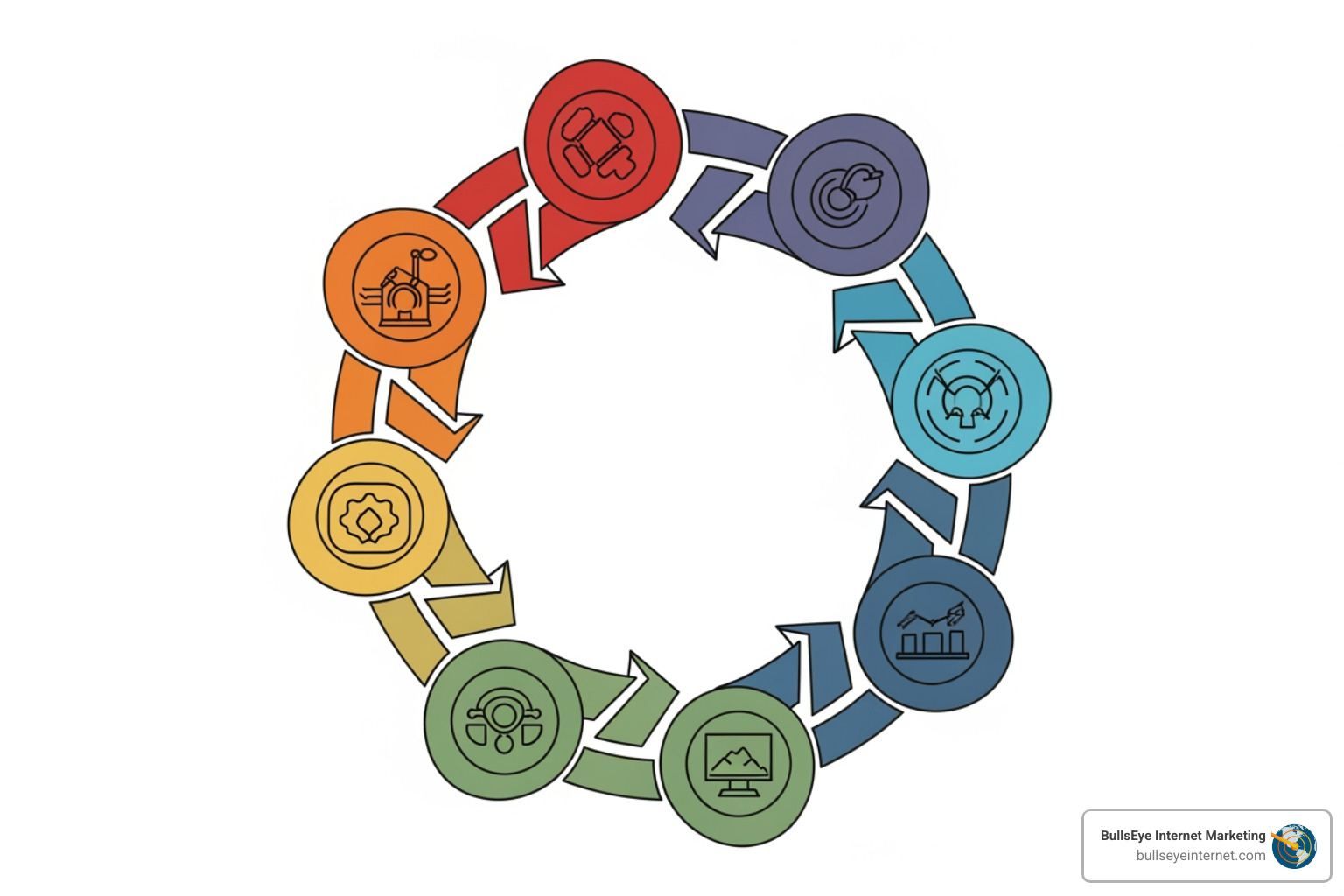
The 7-Step Paid Media Audit Process
Conducting a thorough paid media audit is a systematic process that helps us peel back the layers of your campaigns to reveal their true performance. Our approach is designed to be comprehensive, ensuring no opportunity for optimization is missed.
Step 1: Define Goals and Establish Benchmarks
Before we even look at a single ad, we start by understanding your business objectives. Are you primarily focused on lead generation, driving direct sales, or building brand awareness in Miami-Dade County? Knowing your goals helps us align the audit with what truly matters to your business.
We then establish Key Performance Indicators (KPIs) and set realistic targets. This includes defining ideal Return on Ad Spend (ROAS) targets, acceptable Cost Per Acquisition (CPA) goals, and comparing them against industry standards. This provides a baseline against which we can measure current performance and future improvements.
Step 2: Analyze Account and Campaign Structure
A well-organized account is the backbone of successful paid media. We scrutinize your campaign naming conventions, ad group organization, and overall campaign taxonomy. We look for logical segmentation—separating campaigns by objective (e.g., Performance vs. Branding) and funnel stage (Awareness, Consideration, Conversion). A clear structure is essential for scalability and for generating concrete insights, avoiding guesswork. We ensure your campaigns aren’t just a collection of individual efforts, but a coherent, unified strategy.
Step 3: Evaluate Audience and Targeting Precision
Are your ads reaching the right people in the right places, like potential customers in Broward County or across the entire United States? We perform a deep dive into your audience targeting settings, including demographics, geographic locations, interests, and behavioral data. We also examine your use of custom audiences, lookalike audiences, and, crucially, negative audiences. This step helps identify untapped audience segments or flag overly broad targeting that leads to wasted impressions. We ensure your targeting is specific to the market segment most likely to convert, rather than just casting a wide net.
Step 4: Assess Ad Creative and Messaging
Ad creative and copy are your first impression. We evaluate the relevance of your ad copy to your target audience and keywords, and the overall performance of your creative assets (images, videos, headlines, descriptions). We look for opportunities for A/B testing, ensure message consistency across your campaigns, and assess the effectiveness of your Call-to-Action (CTA). A key concept here is “ad scent”—the consistency in design, benefits, and offer between your ad and the landing page. If the ad promises a rose garden but the landing page shows a desert, users will bounce.
Step 5: Review Bidding Strategies and Budget Allocation
This step is all about ensuring your money is working as hard as possible. We examine your chosen bidding strategies—whether you’re using automated systems (like Maximize Conversions or Target ROAS) or manual bidding—and evaluate their effectiveness. We check budget pacing to ensure you’re not overspending early in the month or underspending overall. We also analyze channel distribution, dayparting (showing ads at specific times), and geo-modifiers (adjusting bids for specific locations) to optimize spend. This is where we often uncover significant wasted spend on non-converting terms or bids that are simply too high for the value they deliver. Default settings on major advertising platforms often prioritize spending budget quickly, not efficiently.
Step 6: Verify Tracking and Attribution Accuracy
Accurate tracking is the bedrock of any successful paid media campaign. We carefully check your conversion tracking setup, pixel health, and the implementation of UTM parameters. This is critical because tracking issues, such as unrecorded or overcounted conversions, can lead automated bidding systems to exhaust budgets on falsely performing keywords or ads. We also evaluate your attribution models to ensure you’re giving credit where credit is due across the customer journey, rather than relying solely on last-click data. Understanding data processing purposes is also part of ensuring compliance and data integrity.
Step 7: Analyze Competitor Landscape
To stay competitive, you need to know what your rivals are doing. We incorporate competitor benchmarking into our paid media audit to provide insights into competing brands and how your business stacks up in your industry. We analyze their ad strategies, estimate their share of voice, compare their offers, and identify their unique selling propositions. This helps us uncover market gaps and strategic advantages you can leverage to stand out in places like Palm Beach County or across all 50 USA States.
From Insights to Action: Implementing Your Audit Findings
A paid media audit is only as valuable as the actions it inspires. Once we’ve carefully analyzed your campaigns and uncovered key insights, the next crucial phase is translating those findings into a concrete, actionable plan.
We don’t just hand you a report and walk away. Our goal is to provide a clear roadmap that allows you to prioritize fixes, capitalize on quick wins, and build a robust long-term strategy for continuous improvement. This approach ensures your ad spend becomes smarter, more efficient, and ultimately, more profitable.
What are the Deliverables of a Paid Media Audit?
When we conduct a paid media audit for your business, you can expect a comprehensive package of deliverables designed for clarity and action:
- Executive Summary: A high-level overview of the audit’s most critical findings, key opportunities, and a summary of recommended actions, perfect for busy decision-makers.
- Detailed Findings Report: A deep-dive document outlining every area reviewed, complete with specific observations, data-backed evidence, and explanations of why certain elements are underperforming or present opportunities. This report covers the paid media competitive landscape within your vertical, account structure, settings, keyword management, ad copy, offers, bid management, performance metrics, landing page alignment, mobile ads, ROAS, Quality Score, remarketing, Shopping/PLA campaigns, ad extensions, tracking, and analytics integration.
- Prioritized Action Plan: This is the heart of the audit. We provide a clear, step-by-step list of recommended optimizations, ranked by potential impact and ease of implementation. This helps you know exactly where to focus your efforts first to achieve the quickest and most significant results.
- 30-60-90 Day Roadmap: A strategic plan outlining short-term, mid-term, and long-term actions. This roadmap helps you implement changes systematically and track progress over time. For example, the findings of our paid media audit will guide a 90-day plan to increase ROAS and be more efficient with ad spend.
- Performance Forecasts: Where applicable, we provide projections of potential improvements in key metrics (like CPA, ROAS, conversion rates) based on implementing the recommended changes.
How Quickly Can You See Results?
One of the most exciting aspects of a paid media audit is the potential for rapid improvement. While significant improvements are realized over several weeks to months, initial improvements can often be implemented immediately.
- Immediate Improvements: Often, an audit uncovers “low-hanging fruit” – quick fixes like pausing wasted spend on irrelevant search terms, correcting misconfigured geographic targeting, or fixing broken conversion tracking. These can yield noticeable results within days or weeks.
- Short-term Gains (weeks): Optimizations to ad copy, creative, and bidding strategies can start impacting performance within a few weeks, leading to better Quality Scores, lower CPCs, and improved conversion rates.
- Long-term Growth (months): Strategic adjustments to account structure, audience segmentation, and comprehensive testing require more time to fully mature but deliver sustainable, long-term growth and efficiency.
The speed at which you see results depends on the severity of the issues uncovered and how quickly recommendations are implemented.
Independent Implementation vs. Ongoing Support
After receiving your audit report and roadmap, you have options for implementation.
- DIY Implementation: Our audit provides clear, actionable steps that you can apply directly with your in-house team. We aim for transparency and education, empowering you with the knowledge to make smarter decisions.
- Actionable Steps: The recommendations are designed to be practical and easy to understand, whether you’re a seasoned marketer or new to paid media.
- When to Seek Expert Help: For many businesses, particularly those with complex accounts or limited internal resources, ongoing support from experts like us at BullsEye Internet Marketing can be invaluable. We can assist in implementing all the changes outlined in your audit, ensuring they are executed correctly and optimized continuously.
- The Value of Ongoing Optimization: Paid media isn’t a “set it and forget it” endeavor. The market changes, competitors evolve, and user behavior shifts. Ongoing optimization and regular check-ins ensure your campaigns remain effective and efficient, consistently adapting to new trends and opportunities. Our PPC management services are designed to provide this continuous support, freeing you up to focus on your core business.
Frequently Asked Questions about Performance Audits
We get a lot of questions about paid media audits, and for good reason! It’s a critical tool for any business serious about maximizing their advertising dollars. Here are some of the most common inquiries we receive:
How is an audit different from a standard campaign check-up?
Think of it this way: a standard campaign check-up is like a quick glance at your car’s dashboard—you see the speed, fuel level, and maybe a warning light. It reviews surface-level metrics like Click-Through Rate (CTR), Cost Per Click (CPC), or daily spend. It tells you what is happening at a basic level.
A paid media audit, on the other hand, is a full diagnostic from a seasoned mechanic. It’s a deep-dive into strategic alignment, structural integrity, and technical setup. It uncovers why things are happening, identifying systemic issues, missed opportunities, and potential leaks. It goes beyond surface metrics to map spend, audiences, and creative performance, highlighting paid media overlap and untapped growth opportunities you’d miss in a routine check.
What are the most common mistakes an audit uncovers?
We’ve seen it all, and some patterns emerge regularly. The most common pitfalls that a paid media audit helps us uncover include:
- Incorrect Conversion Tracking: This is perhaps the most damaging. If conversions are unrecorded or overcounted, automated bidding systems get bad data, leading to wasted budget on non-converting keywords or ads.
- Poor Account Structure: Disorganized campaigns, ad groups, and keywords make it impossible to gather meaningful insights or scale effectively. Accounts that are just a collection of individual campaigns, rather than a coherent strategy, are ripe for audit.
- Misaligned Targeting: Ads being served to irrelevant geographic locations (like 25% of clicks coming from an irrelevant country 4,000 miles out of market) or demographics, resulting in wasted impressions and clicks.
- Wasted Spend on Irrelevant Keywords: Bidding on search terms that don’t convert, or broad match keywords that pull in unrelated queries, can quickly drain budgets. A 90-day analysis once revealed $147,000 spent on search terms that did not convert.
- Inconsistent Messaging Between Ads and Landing Pages: The “ad scent” issue. If your ad promises one thing and your landing page delivers another, users will bounce, wasting your ad spend.
- Ad Campaigns Not Aligned with Business Goals: Spending money on ads that don’t align with business goals (e.g., focusing on brand awareness when lead generation is needed) is a misuse of funds.
How often should you conduct a paid media audit?
Regularly conducting a paid media audit is essential to staying competitive and achieving business goals. We generally recommend:
- At least annually: This ensures you catch any significant shifts in performance, market trends, or platform changes.
- Quarterly for high-spend accounts: For businesses investing heavily in paid media, more frequent audits (every 3-6 months) can help maintain optimal efficiency and quickly adapt to changes.
- Before scaling budget: Always audit before significantly increasing your ad spend. You can’t fix an unprofitable campaign by spending more money; you’ll just waste more. An audit ensures you’re scaling a healthy, efficient program.
- When performance declines without a clear reason: If you notice a sudden drop in ROI, conversion rates, or an increase in CPA, an audit can diagnose the underlying issues.
- When inheriting a new account: If you’ve taken over management of an existing paid media account, a comprehensive audit is the first step to understanding its history, structure, and performance.
Conclusion: Build a More Profitable Future for Your Paid Media
In the dynamic world of digital advertising, simply running campaigns isn’t enough. To truly succeed and maximize your investment, a proactive, data-driven approach is essential. A paid media audit serves as your ultimate diagnostic tool, changing guesswork into strategic action. It helps you identify which campaigns are generating real impact, optimize budget segmentation and distribution, detect investment leaks in unprofitable media, and improve creative strategy and ad relevance.
By systematically evaluating every aspect of your paid media efforts, we empower you to eliminate wasted spend, reallocate resources to high-performing tactics, and align your advertising with your core business objectives. This leads to smarter ad spend, improved profitability, and continuous growth for your business.
At BullsEye Internet Marketing, we provide expert analysis and actionable roadmaps, ensuring every dollar you invest is working as hard as possible for you. We’re committed to helping businesses like yours across the United States, including our home turf in Florida, achieve competitive advantage and superior results.
Ready to take the guesswork out of your media spend and build a more profitable future? Take the first step towards maximizing your ROI with our complete guide to PPC management.
