
Powering Your Business with Electrician Pay-Per-Lead
The world of digital marketing can feel like a maze, especially when you’re trying to keep your electrical business humming. A powerful strategy gaining traction is electrician pay per lead. But what does it really cost, and is it worth it?
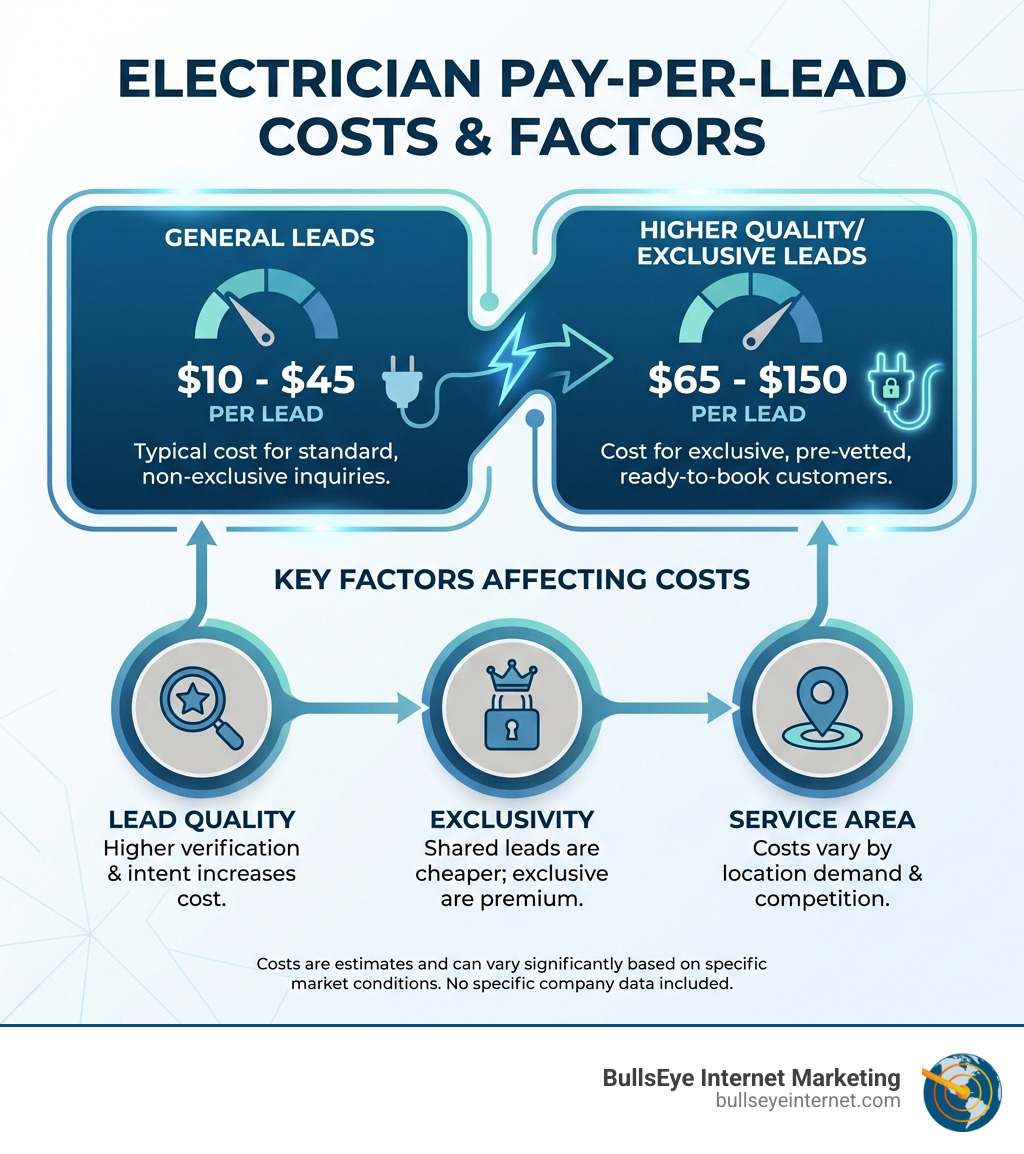
Here’s a quick look at typical costs for electrician leads:
- Average Electrician Leads (General): $10-$45 per lead
- Higher Quality/Exclusive Electrician Leads: $65-$150 per lead
Note: These costs can vary a lot. Factors like lead quality, exclusivity, and your exact service area play a big role.
The U.S. electrician market is huge, raking in over $170 billion every year. With more than 70,000 electrical contracting firms and over 650,000 skilled electricians, competition for customers is intense. Pay-per-lead services connect you directly with customers ready for electrical work. It’s a way to get your phone ringing without the heavy lifting of traditional advertising.
Some electricians see amazing results. One reported their very first lead covered the cost for the next 50 leads! Others have seen ROI as high as 1000% or even 20X. However, understanding the costs and how to make the most of these services is key. This guide will help you light up your business using pay-per-lead.
I’m Ronnie Katz, Principal CEO of BullsEye Internet Marketing. Since 2006, I’ve helped businesses like yours make money online by mastering strategies like electrician pay per lead. My mission is to get your phone ringing and show you clear results.
Electrician pay per lead terms to know:
What Are Pay-Per-Lead Services and How Do They Work?
Imagine a potential customer in Miami, Florida, needs an electrician to fix a flickering light. They go online, search for “electrician Miami,” and click on a link that connects them directly to your business. With electrician pay per lead services, you only pay when that connection happens – when you receive a qualified lead. It’s a pay-for-performance model, meaning you’re investing in actual opportunities, not just clicks or impressions.
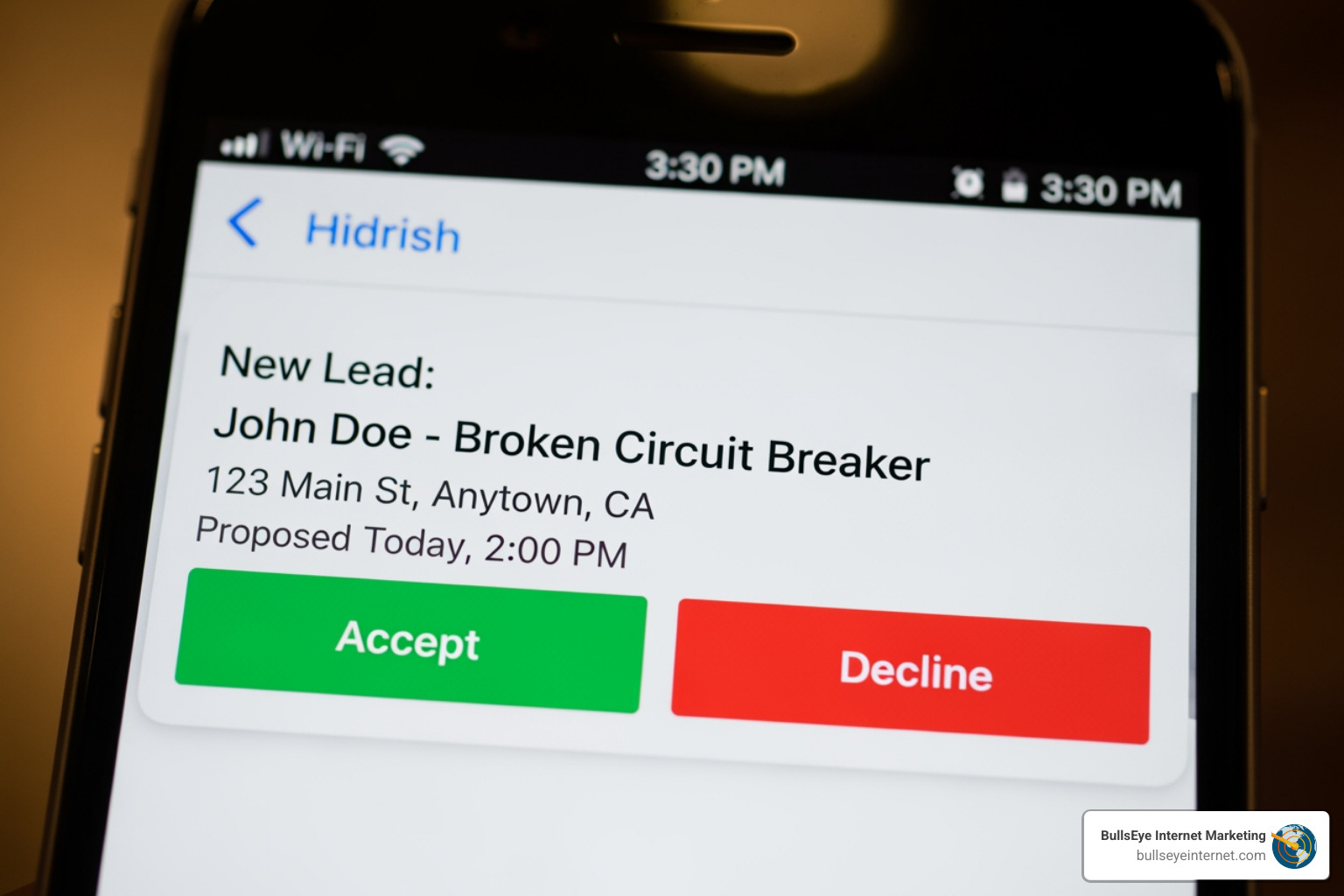
Lead generation companies, like us at BullsEye Internet Marketing, use various marketing channels – from search engine ads to specialized directories – to find people actively looking for electrical services. When a potential customer expresses interest (for example, by calling a tracked phone number or filling out a contact form), that’s a lead, and it’s delivered to you in real-time. This can be a game-changer for electricians looking to grow their business without becoming marketing experts themselves.
The Pros and Cons of electrician pay per lead
Like any tool in your business arsenal, electrician pay per lead comes with its own set of advantages and disadvantages. It’s crucial to weigh these carefully to decide if it’s the right fit for your electrical business in South Florida.
Pros:
- Predictable Costs: You know exactly what you’re paying per lead, making budgeting for customer acquisition much clearer. This model gives you full cost control.
- Immediate Lead Flow: Unlike SEO, which takes time, PPL can deliver leads quickly, helping to fill your schedule almost immediately. We’ve seen clients receive 18 calls in their first week!
- Scalability: Need more work? You can often adjust your budget or cost-per-lead (CPL) to increase lead volume, allowing you to scale your business up or down as needed.
- Pay for Results: You’re paying for actual potential customers, not just advertising exposure. Some services only charge for billable leads, ensuring you don’t pay for unqualified calls.
- Less Marketing Effort: Lead generation companies handle the complex marketing campaigns, freeing you up to focus on what you do best – electrical work.
Cons:
- Variable Lead Quality: Not all leads are created equal. Some can be “tire-kickers” or customers simply looking for ballpark pricing over the phone. One electrician reported getting charged $125 for a “new service upgrade” lead when the customer just needed a receptacle replaced.
- Competition on Shared Leads: If you’re using a service that provides shared leads (sent to multiple electricians), it becomes a race to respond first, which can be frustrating.
- Potential for Disputes: The term “qualified lead” can sometimes be vague. We’ve heard stories of lead gen companies coming up with excuses to justify not crediting for bad leads. It’s essential to partner with an honest company that credits bogus leads.
Lead Types: Phone Calls vs. Form Fills
When diving into electrician pay per lead, you’ll typically encounter two main types of leads: phone calls and form fills. Understanding the difference is key to optimizing your strategy.
- Phone Calls (Pay-Per-Call): These are live phone calls from potential customers delivered directly to your business. They offer real-time, immediate connection. Many of our clients rave about pay-per-call. As one put it, “I love the ability to be able to listen to the conversation between prospective clients and myself.” Phone leads generally indicate higher intent; someone calling usually needs a service now. While often more expensive per lead, they tend to have higher conversion rates because the customer is ready to talk. If you’re diligent about answering the phone and confident in your sales pitch, phone leads can offer an excellent return on investment.
- Form Fills: These leads are generated when a customer fills out an online form with their project details and contact information. Form leads provide valuable information about the customer’s specific needs, allowing for custom solutions. However, unlike phone leads, the onus is on you to reach out to the potential customer. This requires a fast and efficient follow-up process, as the customer might be submitting forms to multiple providers.
Exclusive vs. Shared Leads: What’s the Difference?
This distinction is crucial for your competitive edge, especially in a busy market like Broward County or Palm Beach County.
- Exclusive Leads: These leads are sent only to your business. You won’t be competing directly with other electricians for that specific job. This often means a higher cost per lead, but it significantly increases your chances of closing the deal. Many electricians find the higher close rate and reduced competition make exclusive leads well worth the investment. As one happy client shared, “They are honest and credit bogus leads. They are also exclusive leads!”
- Shared Leads: These leads are sold to multiple electricians (often 2-4). While they are typically lower in cost, you’re now in a race against your competitors to contact the customer first and provide the best quote. This can lead to price shopping and a lower closing rate, as customers might have a “price point in their head before they even call you,” turning them into price shoppers.
We at BullsEye Internet Marketing believe in giving our clients a competitive advantage. That’s why we work with only one client per industry per geographic area, ensuring you receive exclusive leads and don’t have to battle it out with your direct competitors.
Understanding the Costs of Electrician Pay Per Lead
We’ve touched on the average costs, but let’s dig a little deeper. While general contractor leads might range from $10 to $50, electrician leads often fall into a slightly different bracket. Based on industry data, electrician contractor leads typically cost between $10-$45 per lead. However, for higher quality, exclusive leads, you can expect to pay anywhere from $65-$150 each. Some premium leads can even go up to $150.
It’s tempting to chase the cheapest leads, but our experience shows that focusing on the lowest cost per lead (CPL) isn’t always the smartest move. As we always say, “The most important factor… is not who has the cheapest electrician leads, but rather the return on investment per dollar spent.” A lead that costs more but converts at a much higher rate is far more valuable than a cheap lead that never turns into a job. Some of our clients have reported closing up to 1 in 5 leads, or even 70-80% of good quality leads.
Key Factors That Influence Lead Price
So, what makes a lead cost what it costs? Several factors play a significant role:
- Geographic Location: The cost of leads can vary dramatically depending on where your electrical business operates. Leads in major metropolitan areas like Miami-Dade County, Broward County, or Palm Beach County will generally be more expensive due to higher competition and population density compared to less populated areas. For example, in early 2023, the average CPL for electricians in Los Angeles was $36, while in Sacramento, it was $70, illustrating how local market dynamics impact pricing.
- Job Type: The nature of the electrical work requested also influences the price. Leads for high-urgency services like emergency repairs or power outages often command a higher price because the customer has an immediate, critical need. Leads for larger projects like panel upgrades, whole-house rewiring, or EV charger installations might also be more expensive due to their higher potential value. Conversely, leads for smaller, routine jobs might be less costly.
- Lead Exclusivity: As discussed, exclusive leads (sent only to you) are almost always more expensive than shared leads (sent to multiple contractors). This premium reflects the higher probability of conversion and the absence of direct competition.
- Vetted Lead Quality: Leads that have been pre-screened or qualified to ensure they meet certain criteria (e.g., within your service area, specific job type, ready to book) will typically cost more. Reputable services vet both their leads and themselves, meaning your leads are real and of higher intent.
Calculating Your Return on Investment (ROI)
The true measure of success for electrician pay per lead isn’t just the cost of each lead, but the return you get on that investment. You need to know if the money you’re spending on leads is coming back to you with profit.
The basic ROI formula is:
ROI = (Revenue from Leads – Cost of Leads) / Cost of Leads
Let’s say you spend $1,000 on leads. If those leads generate $5,000 in revenue, your calculation would be: ($5,000 – $1,000) / $1,000 = 4. This means for every dollar you spent, you got $4 back, or a 400% ROI. Some clients have reported astounding results, like a 1000% ROI or even a 20X return on investment!
To accurately calculate ROI, you need to:
- Track Job Value: Understand the average revenue generated from different types of electrical jobs. Our Electrician Pricing Guide 2026 can help you set profitable rates for services like outlet installations ($145-$225), home wiring ($500-$900), or smart home installations ($500-$1,500).
- Monitor Conversion Rates: How many leads turn into appointments, and how many appointments turn into paying jobs? One client reported booking over 75% of calls into appointments, and 90% of those turned into jobs. Another boasts turning 90% of leads into appointments and 75% of those into actual jobs.
- Consider Customer Lifetime Value (CLV): A lead for a small repair might seem modest, but if that customer becomes a loyal client for years, their long-term value is much higher. “Once we acquire them and give them good service, they come back to us to do business in the future,” noted one electrician.
We provide tools and insights to help you track your ROI transparently, ensuring every dollar spent on leads is a smart investment.
PPL vs. Other Lead Generation: Finding the Right Mix
While electrician pay per lead can be a powerful tool, it’s just one piece of the digital marketing puzzle. Many electricians find the most success by combining PPL with other strategies like Pay-Per-Click (PPC) and Search Engine Optimization (SEO). Let’s compare them:
| Metric | Pay-Per-Lead (PPL) | Pay-Per-Click (PPC) | Search Engine Optimization (SEO) |
|---|---|---|---|
| Speed to Results | Immediate leads, fills schedule quickly | Immediate visibility, quick traffic generation | Takes months to build, long-term organic traffic |
| Cost Structure | Pay per qualified lead (e.g., $10-$150) | Pay per click (e.g., $1-$50+ per click) | Time & effort (in-house) or monthly retainer (agency) |
| Level of Control | Less control over lead source/messaging | Full control over ads, keywords, targeting, landing pages | Full control over content & website, less over ranking |
| Long-Term Value | Transactional, fills immediate needs | Can build brand awareness, but traffic stops with budget | Builds lasting brand authority, sustainable traffic |
Pay-Per-Click (PPC) Advertising
PPC involves bidding on keywords so your ads appear at the top of search results (like Google Ads) when potential customers search for terms like “emergency electrician Fort Lauderdale” or “panel upgrade West Palm Beach.”
- Immediate Visibility: Your ads can appear instantly, putting your business at the very top of search results right when people are looking for your services.
- Full Brand Control: You control the ad copy, the landing page, and the targeting. This allows you to craft specific messages for high-intent searchers.
- Pay Per Click, Not Lead: You pay each time someone clicks your ad, regardless of whether they become a lead. However, with careful optimization, PPC can deliver hot leads.
- Requires Campaign Management: Effective PPC requires ongoing management, keyword research (using tools like Google’s Keyword Planner), and optimization to ensure your budget is spent efficiently. The data—click-through rate, cost per lead, conversion rate—is measurable in real time. We’ve found that some lower-cost platforms, like Bing Ads, can be around 33.5% cheaper than Google Ads while still delivering good results.
Search Engine Optimization (SEO)
SEO is about optimizing your website and online presence to rank higher in organic (unpaid) search results.
- Long-Term Asset: A strong SEO presence builds a valuable, long-term asset for your business.
- Builds Brand Authority: Ranking high organically establishes your business as a trusted authority in your service area, whether that’s Doral or Boynton Beach.
- “Free” Organic Traffic: Once you rank, the traffic you receive is essentially “free,” though it requires ongoing effort and expertise to maintain.
- Requires Time and Expertise: SEO is a long-game strategy. It can take months to build traction, but the results are sustainable. Optimizing your Google Business Profile is one of the most powerful and free tools for attracting local leads.
Creating a Hybrid Marketing Strategy
For optimal results, we often recommend a hybrid approach.
- Using PPL for Immediate Leads: PPL can quickly fill gaps in your schedule and provide a consistent flow of new customers, especially when you need to keep your crews busy.
- Investing in SEO for Long-Term Growth: Simultaneously building your SEO ensures you’re developing a sustainable source of organic traffic and strengthening your online presence over time.
- Using PPC for Targeted Campaigns: Leverage PPC for specific, high-value services (e.g., “EV charger installation Kendall”) or during peak seasons to capture immediate demand.
This diversified approach minimizes risk and maximizes your reach, ensuring your electrical business in South Florida is always visible to potential customers.
How to Maximize Your Success with PPL Services
Getting leads is one thing; converting them into loyal customers and profitable jobs is another. Here’s how we help our clients optimize their approach to electrician pay per lead to maximize success.

Common Pitfalls to Avoid with electrician pay per lead
Even with a great service, some common mistakes can short-circuit your success:
- Slow Response Times: When a lead comes in, especially a phone call, speed is crucial. If you don’t answer or call back quickly, that potential customer will simply move on to the next electrician. We’ve seen that multiple electricians often get the same lead from marketplaces, making fast follow-up critical.
- Not Tracking ROI: If you’re not measuring which leads turn into jobs and how much revenue they generate, you won’t know if your investment is paying off. “Not tracking ROI per channel” is a common mistake.
- Chasing Cheap Leads Over Quality: As we mentioned, a low CPL isn’t always a good deal if the leads are “tire-kickers” or unqualified. Focus on the value of the lead, not just the price.
- Ignoring Credit Policies for Bad Leads: Reputable providers should have clear policies for crediting you for invalid leads (wrong numbers, calls outside your service area, solicitors). If they “come up with excuses to justify not crediting for bad leads,” that’s a red flag.
- Not Clarifying Lead Qualification Terms: Make sure you understand what constitutes a “qualified lead” according to your provider. The term “qualified leads” is not quantifiable and can lead to misunderstandings.
How to Evaluate and Choose the Right PPL Partner
Choosing the right partner for electrician pay per lead is like choosing the right circuit breaker – it needs to be reliable and protect your business. Here’s what to look for:
- Transparency in Pricing: A good partner will be upfront about costs, what you’re paying for, and how leads are generated.
- No Long-Term Contracts: We believe in earning your business every month. That’s why we don’t lock you into long-term contracts. You should be able to try a service and see results without commitment.
- Exclusive Service Areas: To give you a true competitive advantage, we work with only one client per industry per geographic area. This means if you’re our electrician client in Cooper City, we won’t be sending leads to your direct competitor there.
- ROI Tracking Tools: Look for partners who provide dashboards or tools that help you track the progress and conversion of your leads, showing you your return on investment.
- Industry Specialization: A partner who understands the electrical trade can better target and qualify leads for your specific services, whether it’s residential, commercial, or specialized work in areas like Miami Gardens or Plantation.
- Positive Testimonials & Reputation: Look for real-world proof of success. We’re proud of our clients’ feedback. As one electrician put it, “Finally, an honest lead gen company. After getting burned by other marketers, it’s refreshing to work with a partner who delivers quality, exclusive leads.”
Best Practices for Converting More Leads into Jobs
Once you have a steady stream of leads, the real work begins. Here’s how to turn those prospects into paying customers:
- Answer the Phone Quickly: For phone leads, this is non-negotiable. “Speed is crucial in responding to ‘near me’ searches.” Don’t let that lead go cold!
- Professional Phone Etiquette: Be friendly, knowledgeable, and ready to schedule. As one client shared, “I close around 70-80%. Good Quality leads!!!” This comes from a great sales process.
- Streamlined Quoting Process: Be ready to provide estimates efficiently. If the customer is looking for a quote for a light fixture installation ($100-$675) or a panel upgrade ($1,200-$2,000), having a clear process in place is key.
- Follow-Up Consistently: If you receive a form lead, call or email immediately. If you leave a voicemail for a phone lead, follow up with a text or email. Persistence often pays off.
- Ask Converted Customers for Reviews: Positive reviews are gold for future lead generation. After a job well done in Delray Beach or Coral Springs, politely ask your happy customers to share their experience online.
Frequently Asked Questions
What kind of ROI can I expect from pay-per-lead?
The ROI from electrician pay per lead can be incredibly varied, but when managed effectively, it can be very high. Many businesses report significant returns. For example, some clients have experienced an astounding 1000% ROI, while others have seen up to a 20X return on investment. One even said their very first lead covered the cost for the next 50 leads!
Your actual ROI will depend on several factors: your close rate (how many leads you convert into paying jobs), your average job value, and the cost of the leads themselves. A good quality lead, even if it costs more, often leads to a higher-value job and a much better return. We work with our clients to optimize these factors to maximize their profitability.
What types of electrical jobs benefit most from PPL?
Electrician pay per lead can be effective for a wide range of electrical jobs, but some types tend to see particularly strong results:
- High-Urgency Jobs: Emergency repairs, power outages, flickering lights, or circuit breaker issues often generate high-intent leads that need immediate service. Homeowners in places like Parkland or Margate searching for “emergency electrician near me” are ready to hire.
- Common Residential Services: Routine jobs like outlet and switch replacements, ceiling fan installations, or light fixture upgrades are frequently sought after through lead generation platforms.
- Larger Projects: While less frequent, leads for higher-value projects such as electrical panel upgrades, whole-house rewiring, or new EV charger installations can also be very profitable. The leads coming in are often described as “high-quality, high-price point type of leads.”
- New Construction/Renovation: Electricians specializing in new builds or major renovations can also find valuable leads, though these might come through different channels within a PPL service.
PPL can benefit almost any electrical business looking to grow its customer base.
How are “bad” or unqualified leads handled?
This is a critical question and a key differentiator between reputable and less scrupulous lead generation providers. At BullsEye Internet Marketing, we believe in transparency and fairness.
Reputable providers will have a clear credit policy for leads that are genuinely unqualified. This typically includes:
- Wrong Numbers: If the phone number is disconnected or belongs to someone not seeking electrical services.
- Solicitors/Spam: Calls from telemarketers or non-customers.
- Outside Service Area: If the customer is located outside your predefined service area (e.g., outside Miami-Dade or Palm Beach County).
- Duplicate Leads: If you receive the exact same lead within a short timeframe.
- Unrelated Service Requests: If the customer is looking for a service you don’t provide.
It’s absolutely essential to review the provider’s credit policy before signing up. We pride ourselves on being an honest lead gen company that credits bogus leads, ensuring you only pay for valid opportunities. We also offer features that allow you to listen to call recordings, giving you full visibility into the quality of each lead.
Conclusion: Is Pay-Per-Lead the Right Circuit for Your Business?
For electricians in Florida looking to grow their business, electrician pay per lead offers a compelling pathway to consistent customer acquisition. It provides immediate leads, predictable costs, and the scalability needed to keep your crews busy and your business thriving. When done right, it can deliver impressive ROI, allowing you to focus on your craft while we handle the heavy lifting of marketing.
However, success hinges on choosing the right partner. At BullsEye Internet Marketing, we understand the competitive landscape. Our approach is designed to give you a distinct advantage: we offer no long-term contracts, and we work with only one client per industry per geographic area. This means you get exclusive leads, ensuring you’re not in a bidding war with your direct competitors in places like Davie, Hialeah, or West Palm Beach.
Ready to power up your business with a steady flow of high-quality leads? Let us help you plug into success.
Learn more about our Google Local Services Ads management for home services
