
Why PPC Ad Campaign Management Is Your Key to Immediate Digital Growth
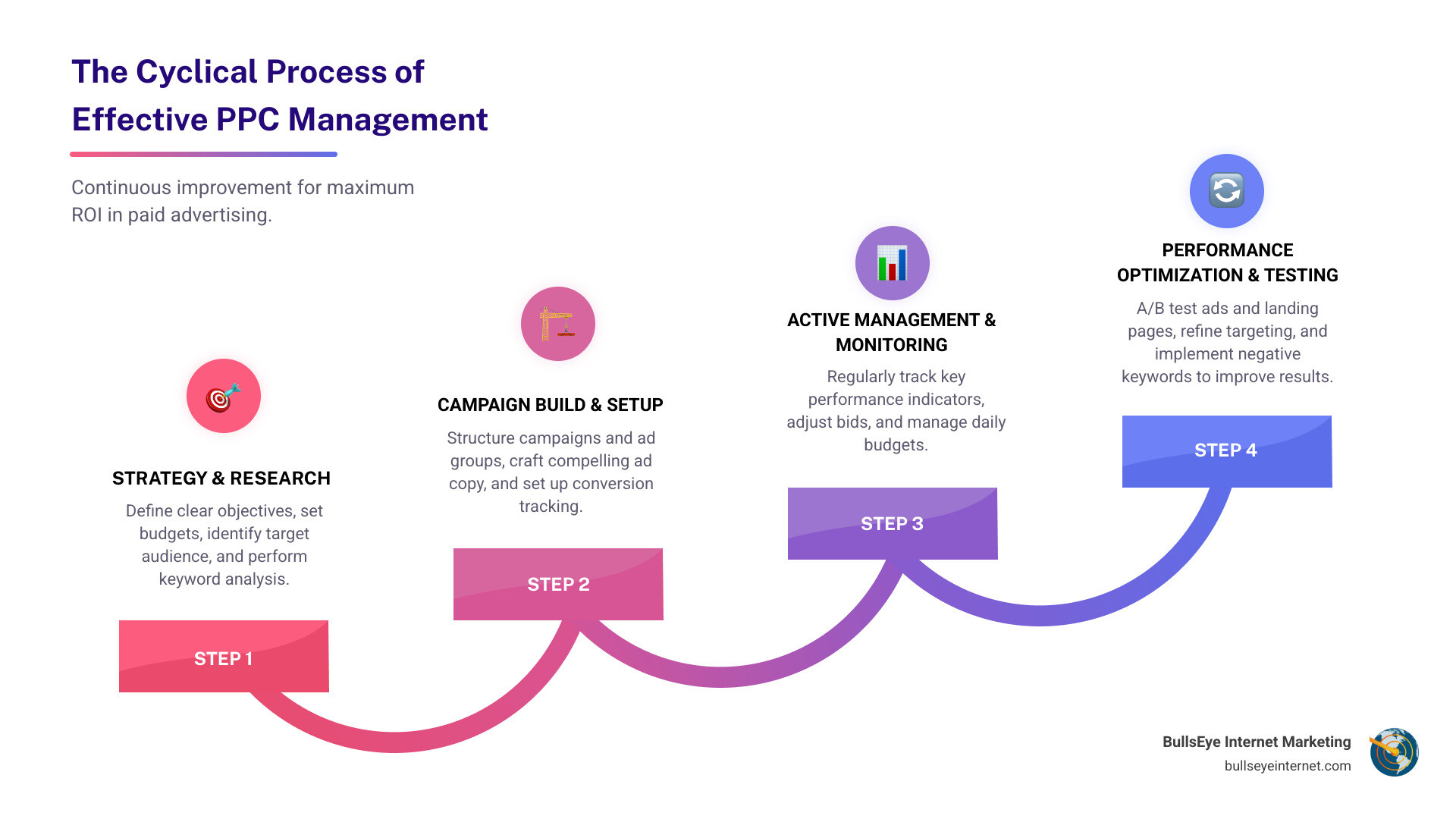
PPC ad campaign management is the strategic process of overseeing, optimizing, and scaling your pay-per-click advertising campaigns to maximize return on investment. Here’s what effective PPC management involves:
Core Elements of PPC Ad Campaign Management:
- Strategic Planning – Setting clear goals, budgets, and targeting parameters
- Campaign Structure – Organizing campaigns, ad groups, and keywords logically
- Ad Creation – Writing compelling copy and designing engaging creatives
- Bid Management – Adjusting how much you pay per click to maximize ROI
- Performance Monitoring – Tracking metrics like CTR, CPC, and conversion rate
- Continuous Optimization – Testing, refining, and improving based on data
- Reporting & Analysis – Measuring results and calculating return on ad spend
Frustrated by slow organic growth? PPC offers immediate visibility, unlike SEO, which can take months to show results. PPC campaigns can drive targeted traffic within 24 hours, and businesses average $2 in revenue for every $1 spent on well-optimized Google Ads.
But effective PPC isn’t just about spending money. It’s a specialized discipline requiring constant attention and technical expertise. Every element, from keyword research to landing page testing, must work in concert to turn clicks into customers.
The challenge is that PPC management is difficult. Each platform is complex; Google Ads alone has dozens of campaign types and bidding strategies. Managing multiple platforms like Facebook, Instagram, and LinkedIn means small mistakes can waste thousands.
That’s why smart businesses don’t “set and forget” their campaigns. They treat PPC as an evolving discipline where success requires daily monitoring, competitor analysis, A/B testing, and bid adjustments based on performance data.
I’m Ronnie Katz, founder and CEO of BullsEye Internet Marketing, where I’ve spent nearly two decades helping businesses master PPC ad campaign management to drive measurable growth. Through thousands of campaigns across industries, I’ve learned that effective PPC management transforms advertising spend from a cost center into a profit engine.
Understanding the Foundations of PPC
At its heart, Pay-Per-Click (PPC) advertising is a model where advertisers pay a fee each time their ad is clicked. It’s a way of buying visits to your site, rather than attempting to “earn” those visits organically. While the concept is simple, the execution of successful PPC ad campaign management is an art form.
Key Platforms and Ad Types
The digital landscape offers a diverse array of platforms for PPC advertising, each with unique strengths. Choosing the right platform is crucial for connecting with your target customers.
The most dominant player is Google Ads. In 2023, 77.8% of Google’s revenue came from advertising on Google properties and YouTube. But beyond Google, other platforms offer significant reach:
- Google Ads (Search Network): These text ads appear on search engine results pages (SERPs). They are excellent for capturing high-intent users actively seeking your products or services.
- Google Ads (Display Network): This network places visual banner ads across millions of websites, apps, and videos. It’s great for brand awareness and retargeting past website visitors.
- Google Ads (YouTube): As the second-largest search engine, YouTube reaches over 2.4 billion monthly users. Video ads are highly engaging and effective for brand building.
- Microsoft Advertising (formerly Bing Ads): This platform reaches an audience Google might miss, often with a lower average cost per click than Google.
- Social Media Advertising: Platforms like Facebook, Instagram, and LinkedIn offer robust targeting capabilities based on user data.
- Facebook & Instagram Ads: These platforms are powerful for brand awareness, lead generation, and sales through visual ads.
- LinkedIn Ads: Ideal for B2B, LinkedIn allows targeting by job title, industry, and company size.
- X (formerly Twitter) Ads: X is a good platform for brand content and real-time interaction, with vertical video ads being particularly effective.
When it comes to ad types, we primarily work with:
- Search Ads: Text-based ads on search results pages.
- Display Ads: Visual ads (banners, images) on websites and apps.
- Video Ads: Ads played before, during, or after video content.
- Shopping Ads: Product-specific ads with images, prices, and merchant names.
Core Components of PPC Ad Campaign Management
Effective PPC ad campaign management is built upon several foundational components that drive success.
- Keywords: We identify relevant, high-performing keywords your audience uses, including long-tail and local terms like “PPC Miami.” Tools like Google Keyword Planner help us analyze search volume and competition.
- Ad Copy: Compelling ad copy includes keywords, a strong unique selling proposition (USP), urgency, and a clear call-to-action (CTA) to resonate with search intent.
- Landing Pages: A relevant, fast, and persuasive landing page is critical for converting clicks. Even the best ads fail with a bad landing page.
- Bidding Strategies: We use manual bidding to set bids ourselves or automated strategies where the platform’s AI optimizes for goals like clicks or conversions. A hybrid approach, starting manual and then moving to automated, often works best.
- Campaign Structure: This is the hierarchical organization of your account, typically flowing from account > campaigns > ad groups > keywords/ads.
- Ad Groups: These are subdivisions within campaigns that group together closely related keywords and ads, ensuring relevance.
- Targeting Options: Beyond keywords, we can target audiences by location (crucial for local businesses in Miami Dade County or Palm Beach, Florida), demographics, devices, time of day, and remarketing lists.
PPC vs. SEO: A Strategic Comparison
While both PPC and SEO are vital, they play different roles in your digital marketing strategy.
| Feature | PPC (Pay-Per-Click) | SEO (Search Engine Optimization) |
|---|---|---|
| Speed of Results | Immediate (traffic within 24 hours of launch) | Long-term (can take 6-12 months for significant impact) |
| Cost Model | Pay per click (CPC), direct advertising spend | Indirect (content creation, technical SEO, link building costs) |
| Targeting | Precise (keywords, demographics, location, interests) | Organic (ranking for relevant keywords) |
| Control | High (budgets, bids, ad copy, pause/start anytime) | Limited (Google’s algorithm dictates rankings) |
| Longevity | Active only while budget is spent | Sustainable, traffic continues once ranked |
| Value | Short-term, immediate traffic & conversions | Long-term, brand authority & organic growth |
PPC and SEO are not rivals but powerful allies. PPC provides immediate data that informs SEO strategy, helping gain visibility on competitive keywords. Strong SEO can reduce PPC spend, freeing up the budget. Running both creates synergy, with combined results outperforming either channel alone.
The Essential Steps of Effective PPC Ad Campaign Management
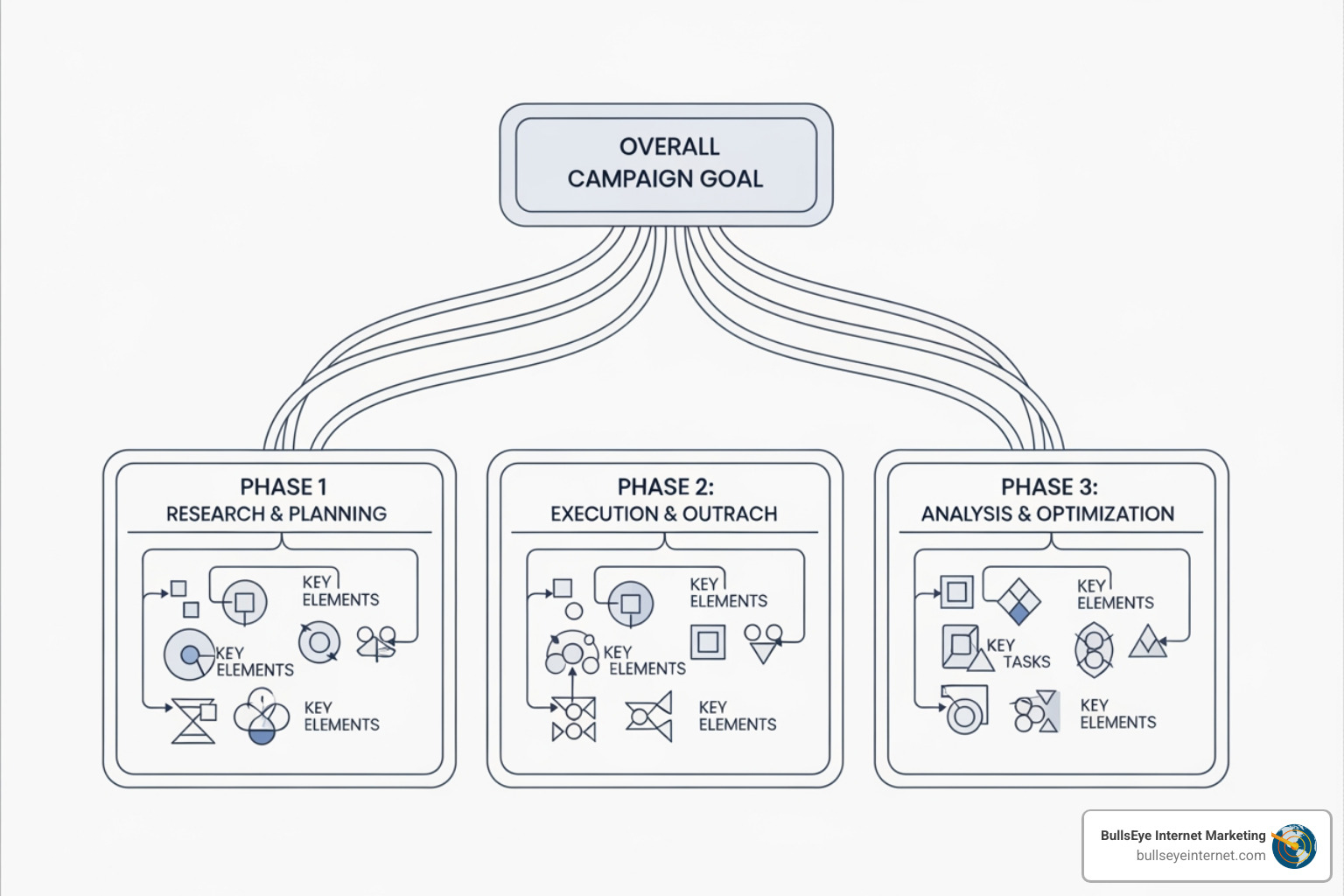
Effective PPC ad campaign management isn’t a one-time setup; it’s a continuous cycle of planning, execution, monitoring, and optimization. Let’s break down the core steps we follow to drive success for our clients.
Step 1: Strategy, Research, and Goal Setting
Before we place an ad, we lay the groundwork. This initial phase is critical for aligning campaigns with your business objectives.
- Defining Objectives: What do you want to achieve? More calls? Online sales? Clear, measurable goals (e.g., “Increase leads by 20% in 3 months”) guide all decisions.
- Budgeting: We help you set a realistic budget, typically starting at $1,000-$5,000 monthly for small businesses, ensuring enough funds for data gathering.
- Competitor Analysis: We analyze competitors’ ad copy, keywords, and landing pages to identify opportunities and gaps in the market.
- Keyword Research: Using tools like Google Keyword Planner, we find high-intent, long-tail, and local keywords (e.g., “HVAC repair Miami”). Understanding user intent—whether informational or transactional—is key.
- Audience Targeting: We analyze demographics, interests, behaviors, and locations to define precise audience segments for targeting.
Step 2: Campaign Setup and Execution
Once our strategy is locked in, we build the campaigns with meticulous organization.
- Account Structure: We build a logical hierarchy: account > campaigns > ad groups. Campaigns are organized by product or service (e.g., “Emergency Plumbing”), each with its own goals and budget.
- Campaign Naming Conventions: Clear names (e.g., “Search – Emergency Plumbing – Miami”) ensure easy management as accounts grow.
- Location and Device Targeting: We precisely define ad locations, vital for our Florida clients from Miami to Palm Beach, targeting by city, ZIP code, or radius. We also optimize bids by device (mobile, desktop, tablet) based on performance. With over 60% of searches on mobile, mobile optimization is essential.
- Ad Scheduling: We schedule ads to run on specific days and times to maximize budget during peak conversion hours.
- Creating Themed Ad Groups: Within each campaign, we create tightly themed ad groups containing a small cluster of highly related keywords and corresponding ad copy for maximum relevance.
- Selecting Keyword Match Types: We use exact match, phrase match, and broad match modifiers to control how closely a user’s search must match our keywords, which helps avoid wasted spend.
Step 3: Crafting High-Converting Ads and Landing Pages
This is where creativity meets conversion science to bridge the gap between a click and a customer.
- Writing Compelling Ad Copy: We write ad copy that includes keywords, highlights benefits, and creates urgency, using headlines like “24/7 Professional Home Monitoring” for a security company.
- Highlighting a unique selling proposition (USP): We ensure your USP, like our “only one client per industry per geographic area” policy, shines through in your ad copy.
- Strong Call-to-Action (CTA): Every ad needs a clear instruction: “Call Now,” “Get a Free Quote,” or “Shop Deals.”
- Landing Page Relevance: The landing page must directly match the ad’s message. An ad for “Emergency Plumbing in Miami” must lead to a page about that specific service.
- Mobile Optimization: With most searches on mobile, your landing pages must be perfectly optimized for smaller screens. Each second of delay can reduce conversions by up to 7%.
- Fast Page Speed: Slow pages kill conversions. We ensure landing pages are fast to keep visitors engaged.
Optimizing for Peak Performance and ROI
The initial setup is just the beginning. True PPC ad campaign management is about continuous refinement and data-driven decisions to maximize your budget’s performance.
Continuous Monitoring and A/B Testing
PPC is dynamic, so constant vigilance and testing are non-negotiable.
- Performance Review: We conduct weekly or bi-weekly reviews, monitoring search term reports to find new keywords and add irrelevant queries as negative keywords to prevent wasted spend.
- Bid Adjustments: We adjust bids for keywords, locations, devices, and times of day based on performance data, increasing bids on high-converting terms and lowering them on costly ones.
- Pausing Underperforming Keywords: Keywords that don’t convert, have a high cost, or a low quality score are paused or adjusted.
- Ad Copy Testing: We use A/B testing to find which headlines, descriptions, and CTAs resonate best with your audience. Platforms like Google have built-in split-testing features in the form of experiments.
- Leveraging Campaign Automation: We use automated rules and scripts to manage repetitive tasks like adjusting bids or pausing ads, ensuring 24/7 optimization.
Measuring Success in Your PPC Ad Campaign Management
We know if our PPC ad campaign management is working by tracking Key Performance Indicators (KPIs).
- Key Performance Indicators (KPIs): We focus on metrics that relate directly to your business goals.
- Click-Through Rate (CTR): The percentage of impressions that result in a click. A high CTR indicates relevant ads.
- Cost Per Click (CPC): The price paid for each click. Average CPC varies from $1-$2 to over $50 in competitive sectors. We aim for a low CPC while maintaining quality.
- Conversion Rate: The percentage of clicks that result in a desired action (a conversion). This is a critical ROI metric.
- Cost Per Acquisition (CPA): The total cost to acquire one customer. This is often more important than CPC for measuring profitability.
- Return On Ad Spend (ROAS): The revenue generated per dollar of ad spend. An average of $2 in revenue for every $1 spent is common, and we aim to optimize this ratio.
- Using Google Analytics: We integrate Google Ads with Google Analytics for deeper insights into post-click user behavior, helping us understand the full customer journey.
Leveraging Essential PPC Management Tools
Modern PPC requires powerful tools to streamline and automate tasks. We use a suite of tools to improve our PPC ad campaign management.
Here are some categories of tools we find indispensable:
- Research Tools: These help uncover insights into keywords, trends, and competitors.
- Google Keyword Planner: Essential for identifying keywords, estimating search volume, and assessing competition.
- Optimization and Automation Tools: These tools help manage bids, create ads, and automate tasks.
- Google Ads tools: The native tools within Google Ads allow us to optimize bids and create automated rules.
- Google Ads Editor: A desktop app that allows for bulk changes to Google Ads accounts, saving significant time.
- Reporting Dashboards: These consolidate data into clear reports, which is crucial for demonstrating ROI.
- Click Fraud Protection: These tools detect and prevent invalid clicks, protecting your ad budget.
Common Pitfalls and How to Avoid Them
In PPC ad campaign management, avoiding common pitfalls is as important as implementing best practices.
Targeting and Keyword Mishaps
These errors often lead to wasted ad spend and irrelevant traffic.
- Overly Broad Keywords: Generic terms like “shoes” attract irrelevant clicks. We focus on specific, high-intent keywords to attract qualified customers.
- Ignoring Search Intent: A search for “what is PPC” has different intent than “PPC management services Miami.” We align ads and landing pages with user intent.
- Forgetting to use negative keywords: A huge budget saver, negative keywords prevent ads from showing for irrelevant searches (e.g., adding “used” for a new car dealer). We constantly update negative keyword lists.
- Inaccurate Location Settings: For local businesses in places like Biscayne Park or Hollywood, Florida, showing ads to users in another state is a waste of money. We ensure precise geographic targeting.
Budget and Bidding Blunders
Mismanaging your budget and bidding can quickly deplete funds without results.
- Setting and Forgetting Campaigns: PPC is not a “set it and forget it” channel. Markets change, so campaigns need regular monitoring and weekly adjustments.
- Inefficient Budget Allocation: Too little budget starves a campaign of data, while too much on poor performers is wasteful. We allocate spend strategically based on performance.
- Relying on Automated Bidding Without Enough Data: Automated bidding needs sufficient data (e.g., 30+ conversions in 30 days) to be effective. We often start with manual bidding to gather this data before switching.
Ignoring Ad Relevance and User Experience
These errors directly impact your ad’s effectiveness and Quality Score.
- Poor Ad Copy to Keyword Alignment: If your ad and landing page messages don’t match, users will bounce. We ensure “message match” between the keyword, ad, and landing page.
- Weak Landing Page Experience: A slow, confusing, or irrelevant landing page will destroy conversion rates. A 1-second delay can reduce conversions by 7%.
- Low quality score: Google’s Quality Score (1-10) assesses the relevance of your keywords, ads, and landing pages. A low score means higher costs and lower ad positions. We continuously work to improve it.
- Slow Mobile Page Speed: With over 60% of searches on mobile, a slow mobile site is a conversion killer. We prioritize fast, mobile-responsive landing pages.
Frequently Asked Questions about PPC Management
We often hear similar questions from businesses looking to dive into PPC ad campaign management. Here are some of the most common ones.
How much does PPC advertising cost?
This is the most common question, and the answer is, “it depends!” The cost varies. Average cost-per-click (CPC) can range from $1-$2 to over $50 in competitive sectors like law or insurance. Most small businesses in the United States and Canada start with a $1,000 to $5,000 monthly budget.
However, the focus should be on Cost Per Acquisition (CPA)—the cost to get a new customer. A $50 click that leads to a $500 sale is a great investment. We prioritize maximizing your ROI.
How long does it take to see results from PPC?
One of PPC’s biggest advantages is speed. Unlike SEO, which can take months, PPC campaigns can generate traffic within 24 hours.
However, achieving optimal performance takes about 2-4 weeks. This initial “learning phase” allows platform algorithms to collect data on user interactions, keyword performance, and bidding strategies to optimize results.
For a true assessment of ROI, we recommend running campaigns for at least 30-60 days. This allows enough time for optimization and for us to gather statistically significant data.
Can I manage my own PPC campaigns?
Technically, yes. But the real question is, should you?
While possible, managing PPC effectively is a full-time job requiring:
- Significant Time: It demands constant monitoring, not a “set and forget” approach.
- Specialized Expertise: Deep knowledge of bidding, Quality Score, and platform nuances is essential.
- Advanced Tools: Professional management benefits from specialized software for analysis and automation.
For new advertisers, or those with limited time or in-house teams, hiring a professional PPC ad campaign management company is the most cost-effective way to maximize ROI. We bring the experience and tools to get the best results, letting you focus on your business.
Conclusion: Take Control of Your PPC Success
PPC ad campaign management is an indispensable tool for any business looking to generate immediate, targeted traffic and drive measurable results online. We’ve seen how it can transform advertising spend into a powerful engine for growth, especially for businesses in competitive markets across the United States, Canada, and the UK, including our home turf in Florida.
PPC is a marathon, not a sprint. It demands continuous attention, meticulous research, strategic execution, and relentless optimization. From crafting compelling ad copy and optimizing landing pages to managing bids and analyzing performance data, every step is crucial.
By understanding the core components, following essential setup and optimization steps, and avoiding common pitfalls, you can open up the immense potential of paid advertising. And when the complexities seem overwhelming, know that expert help is available.
At BullsEye Internet Marketing, our unique approach means we work with only one client per industry per geographic area, ensuring your competitive advantage. We don’t believe in long-term contracts; our results speak for themselves. We’re here to help you steer the changing landscape of digital advertising and turn clicks into loyal customers.
Unlock your advertising potential with professional PPC management.
