
Why Smart Businesses Choose Professional PPC Management

PPC advertising management companies specialize in creating, optimizing, and managing pay-per-click campaigns that drive qualified traffic to your website while maximizing your return on ad spend. Here’s what you need to know:
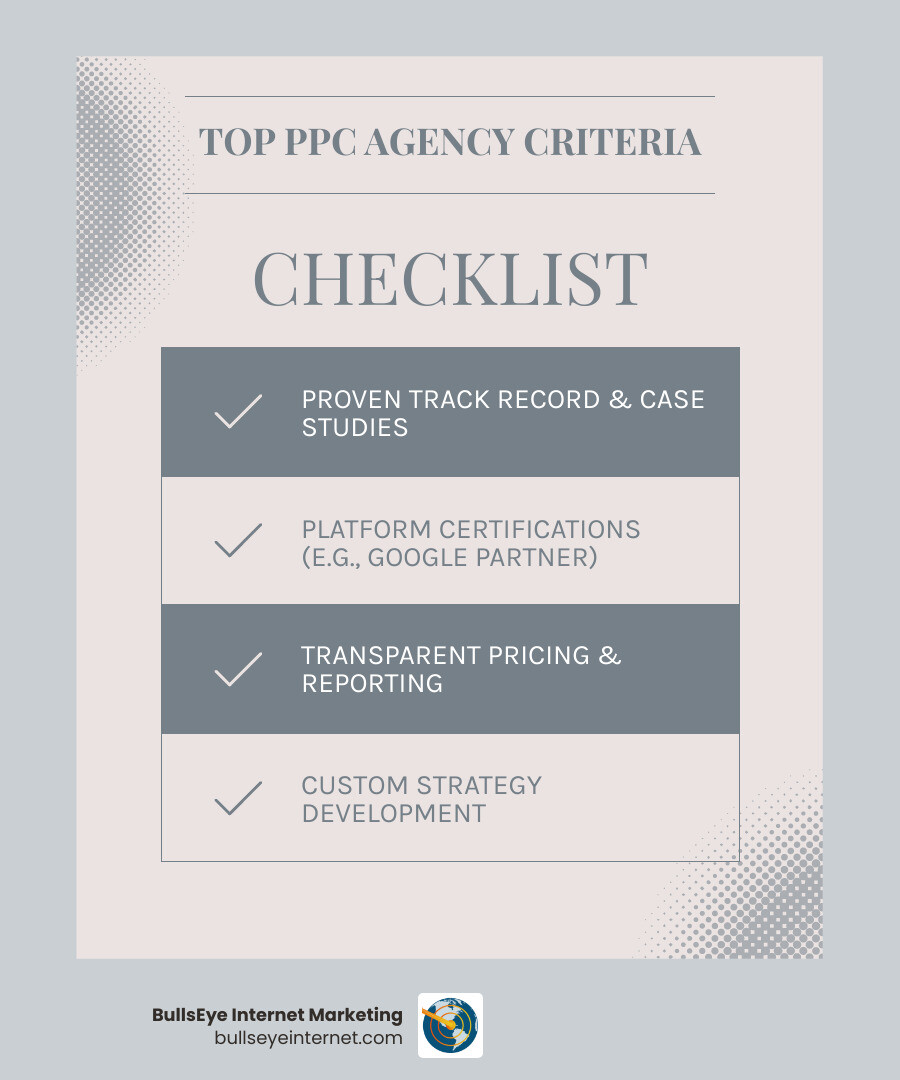
Top 10 Criteria for Selecting a PPC Management Company:
- Proven Track Record – Verifiable results with industry-relevant case studies
- Platform Certifications – Google Premier Partner or Meta Business Partner status
- Transparent Pricing – Clear cost structure (percentage of spend, flat fee, or hourly)
- Custom Strategy Development – No cookie-cutter approaches
- Advanced Tools & Technology – Proprietary platforms for optimization
- Transparent Reporting – Real-time dashboards and regular performance updates
- Industry Expertise – Experience in your specific business sector
- Full-Service Capabilities – Integration with SEO, CRO, and other channels
- Communication & Support – Responsive account management
- Flexible Contracts – No long-term lock-ins required
Pay-per-click advertising has become one of the most powerful tools for businesses seeking immediate, measurable results. Unlike SEO, which can take months to show results, PPC campaigns can start driving qualified traffic to your website within hours of launch. Research shows that businesses make an average of $8 in revenue for every $1 spent on Google Ads, but only when campaigns are managed effectively.
The challenge? Most businesses waste up to 76% of their marketing budgets on poorly optimized campaigns. Without expert management, your PPC ads can quickly drain resources while delivering minimal returns. You pay for every click, whether it converts or not—and without the right targeting, ad copy, landing pages, and bid strategies, those clicks rarely turn into customers.
That’s where professional PPC management comes in. The best agencies combine human expertise with AI-powered tools to optimize every aspect of your campaigns—from keyword selection and audience targeting to ad creative and conversion tracking. They monitor performance in real-time, adjust bids automatically, and continuously test new approaches to improve your results.
But how do you choose the right partner? With thousands of agencies claiming to be experts, it’s easy to make a costly mistake. Some agencies lock you into long-term contracts with little accountability. Others use one-size-fits-all strategies that ignore your unique business goals and industry dynamics.
This guide breaks down exactly what to look for in a PPC advertising management company, from certifications and pricing models to strategic approach and reporting transparency. We’ll explore the core services these agencies provide, how they tailor strategies for different industries, and the latest trends shaping PPC in 2025—including AI automation, predictive analytics, and machine learning bidding strategies that are revolutionizing campaign performance.
As the founder of BullsEye Internet Marketing, I’ve been helping businesses maximize their PPC advertising management companies’ potential since 2006, cutting through the noise to deliver transparent, measurable results without long-term contracts. My team and I have seen what separates effective PPC advertising management companies from those that simply burn through budgets with little to show for it.
Ppc advertising management companies vocabulary:
Understanding PPC Advertising and Its Role in Business Growth
What is PPC and Why Is It Important?
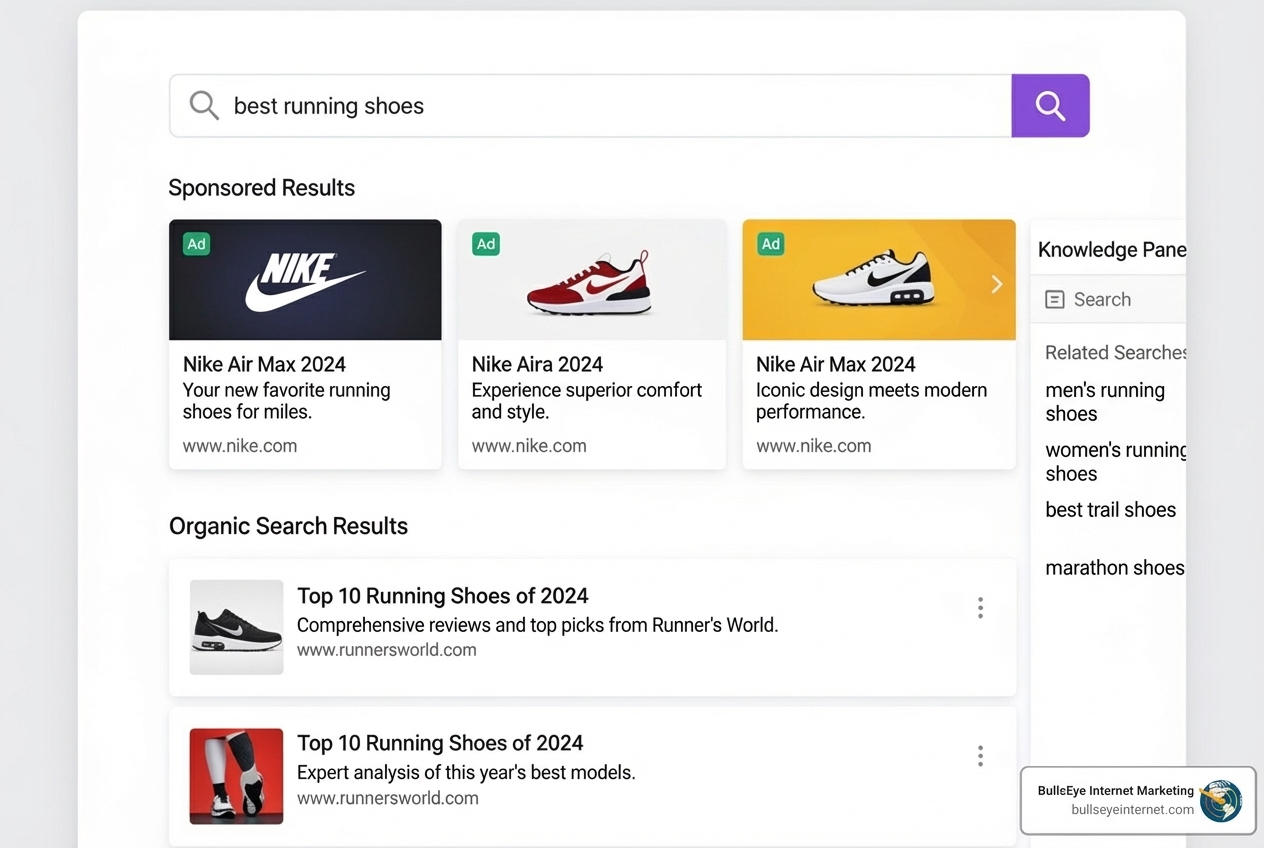
PPC, or Pay-Per-Click, is a digital advertising model where advertisers pay a fee each time a user clicks on one of their ads. It’s a method of buying visits to your site, rather than attempting to “earn” those visits organically. While often synonymous with Google Ads (formerly Google AdWords), PPC extends to many other platforms, including social media giants like Facebook, Instagram, and YouTube.
The beauty of PPC lies in its ability to drive targeted traffic to a website or landing page. Your ads typically appear at the top or bottom of search engine results pages (SERPs) when a user searches for a specific keyword or phrase. Advertisers bid on keywords, and their ads are displayed based on factors like bid amount, ad relevance, and ad quality.
Why is PPC so important for businesses, especially those in competitive markets like South Florida?
- Immediate Impact: Unlike SEO, which can take months to yield results, PPC campaigns can generate traffic as soon as they go live. Once your ads are approved, qualified visitors can start arriving at your website almost immediately. This makes it an ideal strategy for businesses looking for quick wins or to capitalize on seasonal demand.
- Precision Targeting: PPC allows for hyper-targeted advertising. You can reach your ideal customers based on keywords they search, their demographics (location, age, gender, device), interests, behavior, and even past interactions with your brand (remarketing). This ensures your ad spend is focused on those most likely to convert. For our clients in Miami-Dade County or Palm Beach County, this means targeting users specifically searching for their services in their local area.
- Budget Control: With PPC, you have complete control over your budget. You only pay when someone clicks your ad, and you can set daily or monthly spending limits. This cost-effectiveness is a huge advantage, as it prevents overspending and allows for flexible budget allocation.
- Measurable ROI: Every aspect of a PPC campaign is trackable. We can monitor clicks, impressions, conversions, cost-per-click (CPC), cost-per-acquisition (CPA), and return on ad spend (ROAS). This data-driven approach allows for continuous optimization to maximize your return. Businesses make an average of $8 in revenue for every $1 spent on Google Ads, but only with proper management.
- Scalability: PPC is highly scalable. Whether you’re a local business in Fort Lauderdale or a multi-location firm across Florida, you can adjust your campaigns to meet your growth objectives. Small businesses can set modest daily budgets and target niche audiences, while larger enterprises can expand their reach.
PPC advertising management companies like ours are built for businesses that demand measurable, sustainable growth. We believe every click is a chance to win a new customer, and our goal is to turn those clicks into actual customers.
If you’re looking to turn your ad spend into qualified leads, explore our PPC Management Services That Turn Ad Spend into Qualified Leads.
PPC vs. SEO: Which Strategy Is Right for You?
The debate between PPC and SEO is a tale as old as digital marketing itself, but we see them as complementary forces rather than rivals. Both aim to increase visibility and drive traffic, but they operate on different principles and deliver different results.
- Speed of Results: PPC provides immediate results. As soon as your campaign is live, your ads can appear at the top of search results. In contrast, SEO is a long-term strategy. It can take months, or even years, to rank organically for competitive keywords. However, once achieved, organic rankings can provide sustained traffic without ongoing click costs.
- Cost Comparison: With PPC, you pay for every click. This means continuous spending to maintain visibility. While it can be highly cost-effective due to its targeting capabilities, the costs can add up. SEO, on the other hand, doesn’t incur direct costs per click. Once your site is optimized and ranking, the traffic is “free.” However, achieving those rankings requires significant upfront and ongoing investment in content, technical optimization, and link building.
- Sustainability: Organic rankings, once established, tend to be more stable and sustainable. They can continue to drive traffic even if you reduce your SEO efforts (though continuous effort is always best). PPC stops delivering traffic the moment your budget runs out.
- Control & Flexibility: PPC offers immense control. You can quickly turn campaigns on or off, adjust budgets, change targeting, and test ad copy in real-time. SEO offers less direct control over rankings; Google’s algorithm dictates where you appear.
- Credibility: Many users perceive organic search results as more credible than paid ads. However, the top three paid ads still garner a significant portion of clicks—on average, 41% of clicks go to the top three paid ads on SERPs.
When to use PPC:
- Immediate visibility: Launching a new product or service, promoting a special offer, or reacting to market trends.
- Targeted campaigns: Reaching very specific audiences or locations (e.g., customers in Broward County searching for “emergency plumbing”).
- Testing: Quickly testing keywords, offers, or landing pages before investing in long-term SEO.
- Competitive niches: Gaining visibility in highly competitive industries where organic ranking is difficult.
- Driving conversions: For businesses focused on direct sales or lead generation, PPC is a powerful tool.
When to focus on SEO:
- Long-term authority: Building brand trust and establishing your business as an industry leader.
- Sustainable traffic: Generating consistent, high-quality traffic without ongoing click costs.
- Cost efficiency (long-term): While it requires upfront investment, SEO can be more cost-efficient in the long run.
- Complementing PPC: Strong organic rankings can improve your PPC Quality Score, leading to lower CPCs.
The best strategy often involves an integrated approach. We believe in mapping out an integrated plan so PPC and SEO work together for compounding gains, ensuring your brand is visible across all touchpoints in the customer journey.
Core Services and Benefits of Hiring a PPC Agency
Hiring a PPC advertising management company isn’t just about outsourcing tasks; it’s about gaining a strategic partner dedicated to your growth. While managing campaigns in-house might seem cost-effective initially, the complexities of the digital advertising landscape often lead to wasted spend and missed opportunities.
The viability and ROI of professional PPC services completely depend on the experience, skills, and capabilities of the PPC agency. Without expert handling, campaigns can quickly become costly and ineffective. 76% of marketing budgets are wasted on poorly optimized campaigns. The right agency transforms this by bringing specialized expertise, efficiency, and advanced tools to the table, ensuring every dollar works harder for you.
Key Services Offered by PPC Management Companies
PPC advertising management companies offer a comprehensive suite of services designed to maximize your ad spend and deliver measurable results. These services go far beyond simply setting up ads:
- Campaign Strategy and Planning: This is where it all begins. An agency will audit your existing campaigns (if any), listen to your growth targets, and map out a strategy custom to your unique market and business goals. This includes defining target audiences, setting campaign objectives, and choosing the right platforms.
- Keyword Research and Targeting: This is the bedrock of search PPC. We dig deep to find hidden gems—long-tail, intent-driven phrases that bring in ready-to-buy traffic. This also involves identifying negative keywords to prevent wasted spend on irrelevant searches. For our Florida clients, this means hyper-local keyword research for specific cities like West Palm Beach or Coral Springs.
- Ad Creation and Optimization: Crafting compelling ad copy is an art and a science. Agencies write, design, and continuously test ad variations that grab attention, highlight your value, and drive action. This includes developing bold images, striking copy, and interactive elements for display and social ads.
- Bid Management and Budget Allocation: This is where the money magic happens. Agencies set bid strategies that balance cost and value, automatically adjusting bids based on performance, and allocating your budget to the highest-performing channels and keywords. This prevents overpaying for traffic that won’t convert and ensures efficient budget allocation.
- Landing Page Development and Optimization: A great ad is only half the battle. Agencies ensure that the landing page a user goes to after clicking your ad is clean, compelling, and optimized for conversions. This often involves A/B testing different designs and calls to action.
- Performance Tracking and Reporting: Transparency is key. Agencies set up robust conversion tracking and provide regular, understandable reports with actionable insights. These reports cover everything from impressions and clicks to conversions, ROI, and spend, explaining what’s working, what needs improvement, and what steps will be taken next.
- Continuous Optimization: PPC is never a “set and forget” strategy. Agencies constantly monitor campaigns, tweaking bids, keywords, targeting, and ad creatives to lower cost per acquisition and soar ROI. They experiment, learn, and win in real-time, adapting to changing market conditions and algorithm updates.
- Competitor Analysis: Understanding your rivals is crucial. Agencies use specialized tools to gain insights into competitor PPC traffic, including keywords they bid on, ad copy, and platforms they use, helping you stay ahead.
Here’s a list of common PPC platforms where these services are applied:
- Google Ads (Search, Display, Shopping, YouTube)
- Microsoft Ads (formerly Bing Ads)
- Meta Ads (Facebook, Instagram)
- LinkedIn Ads
- TikTok Ads
- Amazon Ads
How Agencies Tailor Strategies for Different Industries
One-size-fits-all doesn’t work in PPC. The best PPC advertising management companies understand that each industry has unique challenges, customer journeys, and success metrics. We tailor our strategies to fit your specific needs, whether you’re a B2B powerhouse in Miami, an eCommerce brand shipping nationwide, or a local service provider in Broward County.
- B2B Strategies: For businesses with long sales cycles and high-value deals, precision targeting is paramount. We focus on platforms like Google Ads, Microsoft Ads, and LinkedIn, which are crucial for B2B outreach. Campaigns are designed to attract the exact audience you’re after—decision-makers and key influencers. We prioritize lead quality over quantity, ensuring that ad spend generates qualified leads that nurture through the pipeline.
- eCommerce Campaigns: Turning browsers into buyers is the name of the game here. Strategies focus on high-converting ad funnels, product-specific shopping ads, dynamic remarketing to recover abandoned carts, and continuous A/B testing of product pages. We track metrics like customer lifetime value and repeat purchases, crafting strategies that drive purchases while also building loyalty and trust.
- Local Business Targeting: For businesses serving a specific geographic area, like a landscaping company in Wellington or a dental practice in Coral Gables, geo-targeted PPC is essential. We use local keywords, adjust bids for specific locations, and fine-tune campaigns to put your brand in front of the right people at exactly the right time. This often involves Google Business Profile optimization and call tracking for paid channels to demonstrate lead generation results.
- Regulated Industries (e.g., Legal, Healthcare, Finance): These industries require high-compliance PPC strategies. Agencies must steer industry-specific advertising restrictions and ensure strict ad policy adherence. This involves meticulous keyword selection, careful ad copy, and often working closely with legal teams to ensure all campaigns meet regulatory standards.
10 PPC Selection Criteria You Need – BullsEye Internet Marketing
Choosing the right PPC advertising management company is one of the most important decisions you’ll make for your marketing budget. It’s not just about finding someone to run your ads; it’s about finding a strategic partner who understands your business, shares your goals, and can deliver measurable results. With so many agencies out there, a thorough vetting process is crucial. Here are the top criteria we recommend using:
1. Proven Track Record and Relevant Case Studies
This is non-negotiable. A top-tier PPC advertising management company should have a demonstrable history of success. Look for:
- Verifiable Results: They should be able to show you real numbers—increased traffic, more leads, higher conversion rates, and improved ROI for their clients. For example, one multi-location restoration and reconstruction firm saw a +146% increase in leads, an 89% boost in conversion rate, and a 63% lower cost-per-conversion through a PPC campaign.
- Industry Experience: Does the agency have experience with businesses similar to yours? An agency that understands your industry’s unique challenges, customer journey, and competitive landscape will be far more effective.
- Client Testimonials and Reviews: Look for authentic feedback. Websites like Clutch often provide unbiased reviews. We’re proud that our clients frequently praise our transparency, communication, and results.
2. Certifications and Platform Partnerships
Certifications are a strong indicator of an agency’s expertise and commitment to staying current with the latest ad platform developments.
- Google Premier Partner: This is a significant credential. Google Premier Partners are recognized for meeting Google’s highest standards for performance, expertise, and client growth. This status often grants agencies access to advanced tools, training, and direct support from Google.
- Meta Business Partner: For social media advertising, this indicates expertise in Facebook and Instagram ad platforms.
- Certified Professionals: Ensure the team members managing your campaigns are individually certified in Google Ads, Microsoft Ads, etc.
3. Transparent Cost Structure and Reporting
The cost of professional PPC services varies significantly. A reputable PPC advertising management company will be upfront about its pricing model. Common structures include:
- Percentage of Ad Spend: The agency charges a percentage of your monthly ad budget (e.g., 10-20%). This aligns their success with yours, as they benefit from increasing your spend only if it’s profitable.
- Flat Retainer Fees: A fixed monthly fee, often preferred for smaller budgets or predictable scopes of work.
- Hourly Rates: Less common for ongoing management but sometimes used for audits or specific projects.
- Custom Pricing: Custom plans based on the complexity and scope of your campaigns.
Beyond pricing, demand crystal-clear reporting. You should have access to real-time dashboards and receive regular, easy-to-understand reports that explain what’s working, what’s not, and what adjustments are being made. This includes metrics like impressions, clicks, conversions, and ROI.
4. A Deep Dive into Their Strategic Approach
Avoid agencies that offer “cookie-cutter” solutions. Your business is unique, and your PPC strategy should be too.
- Customized Strategies: The agency should take the time to understand your specific business goals, target audience, and competitive landscape. They should then develop a personalized strategy that aligns with your objectives.
- Full-Funnel Marketing: A truly strategic partner will look beyond just clicks. They’ll consider how PPC integrates with your overall marketing strategy, including SEO, content marketing, and conversion rate optimization (CRO).
- Data-Driven Decisions: Ask how they use data to inform their decisions. Do they leverage predictive analytics, machine learning bidding, and continuous A/B testing? The best agencies use data to identify trends, spot new opportunities, and make proactive adjustments.
5. Other Key Evaluation Criteria
- Team Expertise: Look for a team with diverse skillsets—strategists, copywriters, data analysts, and designers. A strong agency will have senior-level PPC experts overseeing your campaigns, not just junior staff.
- Tools and Technology: Do they use advanced, proprietary tools or industry-leading platforms for automation, monitoring, and optimization? These tools can provide a significant edge in campaign performance. For example, some agencies leverage AI-driven campaign monitoring with real-time performance fluctuation alerts.
- Communication and Support: How often will you communicate with your account manager? How quickly do they respond to queries? A responsive and transparent agency will keep you in the loop and proactive about your campaign performance.
- Client Reviews and Reputation: Beyond testimonials, check independent review sites and industry forums for their reputation. A consistent track record of positive client experiences is a good sign.
- Contract Flexibility: This is a crucial one for us. We believe in earning your business every month. Be wary of agencies that demand long-term contracts. A confident agency will offer month-to-month or flexible agreements, proving their value through results, not lock-ins. Our model at BullsEye Internet Marketing is built on this principle: no long-term contracts. We believe our results should speak for themselves.
- Industry Specialization: While not always mandatory, an agency with specific experience in your niche (e.g., B2B, eCommerce, local services) can often hit the ground running faster and avoid common industry pitfalls.
Measuring Success and Staying Ahead of PPC Trends
The true value of any PPC advertising management company lies in its ability to deliver measurable success. For us, success isn’t just about clicks; it’s about calls, sales, and sustainable growth for your business.
How to Measure the ROI of Your PPC Campaigns
Measuring the Return on Investment (ROI) of your PPC campaigns is fundamental to understanding their effectiveness and optimizing for future growth.
- Key Performance Indicators (KPIs): We focus on several critical KPIs:
- Conversion Rate: The percentage of clicks that result in a desired action (e.g., a sale, a lead form submission, a phone call).
- Cost Per Acquisition (CPA): The average cost to acquire one customer or lead. This helps determine if your campaigns are profitable.
- Return on Ad Spend (ROAS): The revenue generated for every dollar spent on advertising. Businesses make an average of $8 in revenue for every $1 spent on Google Ads, but top agencies aim for even higher.
- Click-Through Rate (CTR): The percentage of people who see your ad and click on it. While not a direct ROI metric, a higher CTR often indicates ad relevance and can improve Quality Score, leading to lower CPCs.
- Conversion Tracking Setup: Accurate tracking is paramount. This involves correctly setting up conversion pixels or tags on your website to monitor specific actions (e.g., purchases, form fills, phone calls). Without this, you’re flying blind.
- Attributing Sales to Ad Spend: Advanced analytics and attribution models help determine which touchpoints in the customer journey contributed to a conversion. This is crucial for understanding the true impact of your PPC efforts.
- Using Analytics Platforms: Platforms like Google Analytics, combined with insights from Google Ads, provide a holistic view of user behavior and campaign performance. We use these tools to track success, identify trends, and make data-backed decisions. You can learn more about tracking success with Google Ads.
- Customer Lifetime Value (CLV): For long-term strategies, understanding the CLV of customers acquired through PPC helps justify higher CPAs and focus on acquiring truly valuable customers.
Latest Trends Shaping the PPC Landscape in 2024/2025
The PPC landscape is constantly evolving, driven by technological advancements and shifting consumer behavior. The best PPC advertising management companies are not just keeping up; they’re leading the charge.
- AI in PPC: This is the game-changer. PPC advertising in 2025 relies heavily on AI automation, predictive analytics, and machine learning bidding. AI-powered tools can analyze vast amounts of data, identify patterns, and make real-time adjustments to bids, targeting, and ad creatives faster and more accurately than humans alone.
- Machine Learning Bidding: Smart bidding strategies leverage AI to optimize for conversions or conversion value in real-time, taking into account factors like device, location, time of day, and audience signals. This leads to more efficient budget allocation and higher ROI.
- AI Search Optimization: With the rise of AI-driven search environments (like Google’s AI Overviews) and large language models (LLMs) such as ChatGPT and Gemini, agencies are adapting strategies to gain visibility in these new search paradigms. This involves crafting ads and content that align with intent patterns and ranking behaviors in AI-driven results.
- Voice Search Advertising: The increasing use of voice assistants means PPC strategies need to consider conversational keywords and how ads might appear (or be read aloud) in voice search results.
- Video and OTT Ads: Beyond traditional search and display, video advertising on platforms like YouTube and Over-The-Top (OTT) streaming campaigns are gaining traction. These offer new opportunities for engaging audiences with visually rich content.
- First-Party Data Integration: With increased privacy regulations, leveraging first-party data (data collected directly from your customers) for targeting and personalization is becoming more critical for effective PPC campaigns.
How Top PPC Advertising Management Companies Analyze Competitors
In a competitive market like Florida, understanding your rivals’ strategies is paramount. Top PPC advertising management companies don’t just guess; they use sophisticated tools and techniques to dissect competitor activity:
- Competitor Analysis Tools: Specialized software allows us to see which keywords your competitors are bidding on, their ad copy, landing page strategies, and even their estimated monthly ad spend.
- Keyword Gap Analysis: We identify keywords your competitors are ranking for in paid search where you are not, revealing untapped opportunities.
- Ad Copy Monitoring: By observing their ad creatives, we can gain insights into their messaging, unique selling propositions, and calls to action. This helps us craft more compelling ads for your business.
- Landing Page Strategies: Analyzing competitor landing pages helps us understand their conversion funnels and identify best practices or areas for improvement in your own.
- Auction Insights: Google Ads’ Auction Insights report provides valuable data on how you stack up against competitors in the ad auction, including impression share, overlap rate, and outranking share.
By proactively analyzing competitor strategies, we can identify opportunities to gain a competitive advantage, whether it’s by targeting underserved keywords, crafting superior ad copy, or optimizing landing pages for better conversions. For our clients in cities like Miami and Fort Lauderdale, this competitive intelligence is crucial for staying ahead.
Frequently Asked Questions about PPC Management
How much do PPC services cost?
The cost of PPC advertising management companies services varies significantly, depending on several factors including the agency’s experience, the scope of services, and your monthly ad spend.
- Typical Cost Structures: As mentioned earlier, agencies often charge a percentage of your ad spend (e.g., 10-20%), a flat monthly retainer, or hourly rates. For small-to-midsized businesses, average monthly ad spend can range from $9,000 to $10,000, with an average cost-per-click (CPC) of $1 to $2.
- Factors Influencing Price: More complex campaigns requiring extensive keyword research, multiple platforms (Google Ads, social media), advanced targeting, and frequent optimization will naturally cost more. Agencies with proprietary tools or specialized industry expertise may also command higher fees.
- Ad Spend vs. Management Fees: It’s important to differentiate between your ad budget (what you pay to Google, Facebook, etc.) and the agency’s management fee. Both are crucial components of your total PPC investment.
- Small Business Budgets: PPC is scalable. Even with a modest ad spend, small businesses in Florida can achieve measurable ROI by focusing on highly targeted, local campaigns. Some agencies offer plans starting at a few hundred dollars per month for management, alongside your ad budget.
How long does it take to see results from PPC?
One of the biggest advantages of PPC is its speed.
- Immediate Traffic: You can start seeing traffic to your website as soon as your campaigns go live. This can happen within hours or days of launch.
- Optimization Period: While traffic comes quickly, optimizing for cost efficiency and conversion rates typically requires several weeks of data collection and refinement. This “learning phase” allows the agency to gather enough data to make informed adjustments.
- Typical Timeline for ROI: Most businesses can expect to see initial positive ROI within the first 1-3 months of a well-managed campaign. Continuous optimization, however, leads to better long-term results and sustained growth. Agencies like ours can help clients rapidly increase visibility and often deliver measurable revenue growth within the first 90 days of engagement.
Is PPC suitable for all small businesses?
Yes, PPC is highly suitable for most small businesses, especially those operating in specific geographic areas like our clients in Florida.
- Scalability of PPC: PPC allows small businesses to set daily budgets, target specific geographic areas (e.g., Miami, Orlando, Tampa), and reach niche audiences. This means you don’t need a huge budget to get started.
- Targeting Niche Audiences: If your business serves a very specific customer base, PPC allows you to reach them directly, minimizing wasted impressions on irrelevant audiences.
- Local Targeting Benefits: For local businesses, geo-targeted PPC is incredibly powerful. You can ensure your ads are only shown to potential customers within your service area, driving local foot traffic or inquiries.
- When PPC is a Good Fit: PPC is a great fit if you’re looking for immediate visibility, want to generate leads or sales quickly, need to test new products or services, or operate in a competitive market where organic rankings are challenging to achieve quickly.
Conclusion: Finding Your Ideal PPC Partner for Measurable Growth
The world of digital advertising, especially PPC, is complex, dynamic, and incredibly rewarding when managed correctly. Choosing the right PPC advertising management company is not a decision to be taken lightly. It’s about finding a partner who not only understands the intricacies of ad platforms but also truly ‘gets’ your business and is committed to your success.
We’ve explored the critical criteria for selection, from a proven track record and platform certifications to transparent pricing and a custom strategic approach. We’ve highlighted the essential services these companies provide, how they tailor strategies for different industries, and the cutting-edge trends like AI automation and machine learning that are shaping the future of PPC.
For us at BullsEye Internet Marketing, our approach is straightforward and client-centric. We focus on delivering transparent, measurable results, ensuring you’re never locked into long-term contracts. We believe in earning your business every single month through performance, not paperwork. Furthermore, we offer a unique competitive advantage by working with only one client per industry per geographic area, ensuring your business stands out without direct local PPC competition from our other clients. This means if you’re a plumber in Miami, we won’t take on another plumbing client in Miami.
If you’re ready to transform your ad spend into qualified leads and sustainable growth, we’re here to help. Let’s discuss how our expertise in paid ad management can align with your business goals.
Ready to see how a dedicated, results-oriented PPC advertising management company can make a difference for your business in Florida? Get a custom PPC management plan designed specifically for your unique needs.
