
Why Understanding PPC Management Matters for Your Business
PPC management is the strategic process of overseeing, optimizing, and scaling pay-per-click advertising campaigns to maximize return on investment. It goes far beyond simply running ads—it involves continuous monitoring, data analysis, bid adjustments, keyword refinement, and testing to ensure every dollar spent drives meaningful business results.
What PPC Management Includes:
- Keyword Research & Optimization – Finding and targeting the right search terms
- Campaign Strategy & Structure – Building organized, goal-focused campaigns
- Bid & Budget Management – Controlling costs while maximizing visibility
- Ad Copy & Creative Development – Crafting compelling messages that convert
- Performance Tracking & Reporting – Measuring results against clear KPIs
- Continuous Testing & Refinement – A/B testing ads, landing pages, and strategies
The difference between running PPC ads and managing them is stark. Businesses that invest in proper management see measurable improvements: TerraFIRMA experienced a 169% increase in leads with a 72% decrease in cost per acquisition, while Romtec achieved a 420.78% rise in conversion rate alongside a 69.4% decrease in cost per acquisition. These aren’t random outcomes—they’re the result of strategic, ongoing optimization.
Unlike SEO, which can take up to a year to show impact, PPC can generate results fast. Google still controls nearly 90% of the global search engine market, and with the right management approach, businesses typically see $2 in revenue for every $1 spent on Google Ads alone.
I’m Ronnie Katz, founder and Principal CEO of BullsEye Internet Marketing since 2006. For nearly two decades, I’ve specialized in PPC management and online visibility strategies that help businesses increase their traffic, conversions, and revenue without wasting ad spend.
Ppc management glossary:
What is PPC Management and Why Is It Crucial?
PPC management is a dynamic, ongoing process that demands strategic optimization. The distinction between simply running PPC ads and truly managing them is vast. Without diligent management, ads are like a ship without a rudder—they won’t reach their destination efficiently. Effective PPC management involves a deep dive into data, continuous refinement of targeting, bids, and ad creatives, and a keen eye on return on investment (ROI). It’s about turning clicks into conversions and, ultimately, revenue.
One of the most compelling reasons businesses in Florida and across the U.S. turn to PPC is its speed. Unlike SEO, which can take months to show results, PPC can generate attention and sales on the very first day. This fast turnaround is invaluable for new product launches, seasonal promotions, or when you need to quickly boost leads in Miami, Fort Lauderdale, or West Palm Beach.
The measurability of PPC is another huge advantage. We can track nearly everything: who saw your ad, who clicked it, how much it cost, and what actions they took on your website. This granular data allows us to precisely calculate ROI, making it clear how your marketing dollars are performing. For example, businesses on average make $2 for every $1 they spend on Google Ads.
Effective PPC management also allows for incredibly precise audience targeting. We can reach potential customers actively searching for your products or services, whether they’re looking for “roof replacement in Broward County” or “best family lawyer in Miami.” Beyond search intent, we can refine targeting by demographics, geographic location (down to specific neighborhoods like Coral Gables or Boca Raton), device, and even time of day. This precision ensures your ads are seen by the right people at the right moment, maximizing the chances of conversion and driving quality leads to your business.

The Core Components of Effective PPC Management
Effective PPC management is a multifaceted discipline that combines several critical components into a cohesive strategy. It includes keyword analysis, bidding strategies, budget management, ad copywriting, landing page optimization, performance tracking, A/B testing, and conversion rate optimization (CRO). Without attention to each area, campaigns can suffer from wasted ad spend and poor conversion rates.
Strategic Keyword Research and Audience Targeting
The foundation of any successful PPC campaign is strategic keyword research. This isn’t just about guessing what people might search for; it’s about understanding search intent—what users are truly looking for when they type a query into Google or Microsoft Ads. We use powerful tools like Google Keyword Planner to find relevant, high-performing keywords, analyze search volume, and assess competition.
Keyword research also involves identifying long-tail keywords, which are longer, more specific phrases. These often have lower search volume but higher commercial intent, leading to lower costs per click and higher conversion rates. Think “emergency plumber Fort Lauderdale” instead of just “plumber.”
Crucially, we also employ negative keywords. These are terms we explicitly tell the ad platform not to show our ads for. For instance, if you sell hiking boots, adding “cheap” as a negative keyword prevents your ad from showing for “cheap hiking boots,” ensuring your budget isn’t wasted on users unlikely to convert. This precision is vital for optimizing ad spend in places like Miami, Palm Beach, or across Florida.
Beyond keywords, audience analysis and targeting ensure we reach the right people. This involves understanding demographics (age, gender, income), geographic location (targeting specific areas like Miami-Dade County or Palm Beach County), and device targeting (optimizing for mobile users in South Florida). For a local restaurant, we might limit ads to users within close proximity to their location in Coral Gables or Doral.
Building High-Performing Campaigns and Ads
Once we understand our keywords and audience, the next step is building a robust campaign structure. A well-organized account consists of campaigns, ad groups, keywords, and ads. This hierarchical structure allows for maximum relevance. Google recommends having at least 3 ads and 5-20 keywords per ad group to ensure tight thematic relevance.
Ad copy best practices are paramount. Your ads need to be clear, compelling, and directly address the user’s search intent. Strong calls-to-action (CTAs) are essential, guiding users on what to do next, whether it’s “Call Now,” “Get a Free Quote,” or “Shop Latest Styles.” We ensure ad copy is engaging and incorporates relevant keywords to improve click-through rates.
However, a great ad is only half the battle. The user must land on a page that continues the conversation. We drive PPC visitors to dedicated landing pages with clear messaging that matches the ad copy and a streamlined path to conversion, avoiding generic homepages that don’t convert.
Continuous improvement is key, which is why we rely on A/B testing. This involves creating multiple versions of ads or landing pages to see which performs better. Platforms like Google Ads have built-in split-testing features in the form of experiments, allowing us to systematically test headlines, descriptions, and CTAs to optimize performance and boost ROI.
Mastering Bidding, Budgeting, and Performance Measurement
Bidding strategies dictate how much we’re willing to pay for a click or conversion. We choose between manual bidding and automated strategies like Target CPA, Target ROAS, or Maximize Conversions. While automated strategies are powerful for mature campaigns, we often start with manual bidding on new campaigns to gather data and maintain control before letting AI take over.
Budget management is about allocating your ad spend wisely. We set daily or lifetime budgets to ensure you never spend more than you’re comfortable with. The cost of PPC for an average small to medium-sized business on Google Ads in the U.S. typically ranges from $500 to $10,000 per month, depending on industry and competition in areas like Miami or Orlando. Our goal is to maximize value within that budget.
Measuring performance is paramount. We focus on Key Performance Indicators (KPIs) that align with your business objectives. Common KPIs include:
- Cost Per Click (CPC): The average cost for each click on your ad.
- Click-Through Rate (CTR): The percentage of people who see your ad and click it.
- Cost Per Acquisition (CPA): The total cost to acquire a customer or lead.
- Return On Ad Spend (ROAS): The revenue generated for every dollar spent on ads.
Crucially, accurate conversion tracking setup is essential. This tells us what actions users take after clicking your ad—a purchase, a phone call, a form submission. Without it, we’re flying blind. We ensure robust tracking is in place to provide clear insights into your campaign’s effectiveness.
Exploring PPC Platforms and Channels
A truly effective PPC management strategy often involves a multi-channel approach. Different platforms cater to different objectives and audiences, allowing us to reach potential customers at various stages of their buying journey. Selecting the right platforms depends heavily on your campaign objectives, whether it’s direct sales, lead generation, brand awareness, or app promotion.
| Platform | Primary Goal | Targeting Method | Key Metric (Example) |
|---|---|---|---|
| Google Ads | Lead Gen, Sales, Website Traffic | Keywords, Demographics, Location, Interests | CPA, ROAS |
| Meta Ads | Brand Awareness, Lead Gen, Sales (DTC) | Demographics, Interests, Behaviors, Custom Audiences | CPM, Lead Cost |
| Amazon PPC | Product Sales (E-commerce) | Product Keywords, ASINs, Categories, Shopper Behaviors | ACoS, Sales Volume |
Search Engine Advertising (Google & Microsoft Ads)
Search engine advertising, primarily through Google Ads and Microsoft Ads (formerly Bing Ads), is ideal for capturing high-intent users—people actively searching for solutions, products, or services.
Google’s market dominance is undeniable; it still controls nearly 90% of the global search engine market in 2025. This makes Google Ads a powerhouse for reaching a massive audience actively looking for what you offer, whether they’re in Jacksonville, Tampa, or Sarasota. We leverage its advanced targeting options, including intent-based targeting and remarketing, to connect with potential customers throughout Florida.
While Google Ads is the heavyweight champion, Microsoft Ads offers a compelling alternative. It can often be less competitive, and the average cost per click (CPC) on Microsoft Ads can be significantly lower than on Google Ads. For some businesses, particularly those targeting a slightly older or more professional demographic, Microsoft Ads can provide an excellent, cost-effective avenue for lead generation in the U.S.
Social Media Advertising (Meta & LinkedIn)
Social media advertising, including Meta Ads (Facebook and Instagram) and LinkedIn Ads, shines when the goal is brand awareness, reaching specific demographics, or generating leads based on interests and professional profiles. Unlike search ads that capture existing demand, social ads create demand by putting your message in front of people who might not be actively searching but fit your ideal customer profile.
Meta Ads, encompassing Facebook and Instagram, connect billions of people to businesses. These platforms are fantastic for building brand awareness and direct-to-consumer (DTC) sales, allowing for granular targeting based on interests, behaviors, and demographics. For businesses in Florida, this means we can target potential customers based on their lifestyle, hobbies, or even recent life events.
LinkedIn Ads, on the other hand, are the go-to for B2B targeting. With its professional network, we can target users by job title, industry, company size, and even specific skills. This makes it incredibly effective for lead generation for services like B2B SaaS, consulting, or specialized training across the United States. Ad formats across these platforms include engaging video ads, carousel ads showcasing multiple products, and visually appealing image ads.
E-commerce Advertising (Amazon PPC)
For businesses selling products online, Amazon PPC is a critical channel. It operates with a strong transactional intent, placing your products directly in front of shoppers who are already on Amazon and ready to buy. Small businesses that advertise on Amazon see a 26% increase in sales—so this isn’t an avenue to ignore!
Amazon offers several ad types:
- Sponsored Products: These are keyword-targeted ads for individual product listings, appearing in search results and on product detail pages. They are the foundation of Amazon PPC and excellent for driving immediate sales.
- Sponsored Brands: Formerly “headline search ads,” these build brand awareness and showcase multiple products. They can include your brand’s logo and a custom tagline, appearing prominently in search results.
- Sponsored Display ads: These ads help retarget customers who have viewed your products but haven’t purchased, reaching them both on and off Amazon.
A key metric for Amazon PPC is Advertising Cost of Sales (ACoS), which tells us how much you’re spending on ads to generate a dollar of sales. Effective PPC management on Amazon focuses on optimizing ACoS to ensure profitability and maximize sales impact.
Professional Services, Tools, and Integrations
Navigating the complexities of PPC can be a full-time job, which is why many businesses decide to outsource to professionals.
When to Hire a Professional for PPC Management
Here are common scenarios where professional PPC management expertise makes a real difference:
- Lack of Time: You’re busy running your business in South Florida and can’t dedicate hours to daily PPC optimization.
- Lack of Expertise: PPC platforms constantly evolve. We stay current on new features, bidding strategies, and algorithmic changes to adapt your campaigns accordingly.
- Plateaued Results: Your campaigns have hit a ceiling or are seeing diminishing returns. A fresh, expert perspective can identify new growth opportunities.
- Scaling the Business: You’re ready to expand into new markets in Florida or across the U.S. Professional management ensures your ad spend scales efficiently.
- Need for Advanced Strategy: An agency can implement sophisticated strategies like cross-channel attribution, advanced audience segmentation, and competitor analysis.
- Desire for a Competitive Edge: In competitive markets like Miami, expert PPC management can be the differentiator that helps you outrank competitors and drive superior ROI.
Understanding PPC Management Pricing Models
The cost of PPC management varies by scope, platforms, and agency expertise. Management fees typically range from 10% to 20% of your monthly ad spend. For an average small to medium-sized business in the U.S., the total monthly cost on Google Ads (ad spend + management fee) can range from $500 to $10,000.
Here are the common pricing models:
- Flat Monthly Fee: A set fee each month, offering predictability.
- Percentage of Ad Spend: The most common model (e.g., 10-20%), aligning the agency’s fee with the scale of your campaigns.
- Hourly Rate: You pay for the actual hours spent, which can lead to unpredictable costs.
- Performance-Based Fees: The fee is tied to specific metrics (e.g., cost per lead), though this can be complex to manage.
- Hybrid Models: A combination, such as a flat fee plus a percentage of ad spend.
- Setup Fees: An initial fee for building new campaigns and conducting audits, ranging from a few hundred to several thousand dollars.
Essential Tools and Integrating with SEO
Effective PPC management relies on a suite of essential tools for competitive analysis, keyword research, and reporting.
- Research Tools: Beyond Google Keyword Planner, we use tools like Semrush to uncover keyword opportunities and analyze trends.
- Competitor Analysis Tools: Tools like Semrush also let us analyze competitors’ ad strategies, including their top keywords and ad copy.
- Optimization Platforms: These platforms help automate bid adjustments and identify performance issues.
- Reporting Dashboards: Customizable dashboards are crucial for visualizing performance data and communicating results clearly.
Integrating PPC management with SEO creates a powerful synergy. They are not separate entities; they complement each other:
- Shared Keyword Data: High-performing PPC keywords can be strong candidates for SEO efforts.
- Remarketing to Organic Traffic: We can target users who visit your site via organic search with specific PPC ads.
- Testing Ad Copy for Meta Descriptions: Successful PPC ad copy can inspire optimized meta descriptions for your organic listings.
PPC provides immediate data that informs your long-term SEO strategy, while a strong organic presence can lower overall advertising costs. Together, they create a robust online presence.

Frequently Asked Questions about PPC
We often hear similar questions from businesses looking to get started or improve their PPC efforts. Let’s address some of the most common ones.
How long does it take to see results from PPC?
One of the biggest advantages of PPC is its speed. Unlike SEO, which can take a long time to build momentum, PPC can generate immediate traffic and visibility. You can see your ads live and attracting clicks almost instantly after launch.
However, “results” often mean more than just clicks; they mean conversions and ROI. While traffic is immediate, it typically takes between two and three months to start generating consistent, optimized results. The first few weeks are a crucial learning phase where we collect data, test different ad creatives, refine targeting, and optimize bids. This initial period allows us to identify what truly resonates with your audience in your specific market, whether it’s in Miami, Orlando, or any other part of Florida. After this initial optimization, campaigns generally stabilize and begin to deliver predictable performance.
What’s the difference between PPC and SEO?
PPC (Pay-Per-Click) and SEO (Search Engine Optimization) are both powerful strategies for visibility in search engine results, but they operate very differently:
- Paid vs. Organic Search: PPC involves paid advertising, where you bid for ad placements at the top or bottom of search engine results pages (SERPs). SEO focuses on earning unpaid, “organic” rankings through content quality, website structure, and authority.
- Speed vs. Longevity: PPC offers immediate results and visibility as soon as your campaign goes live. SEO takes time—often months or even a year—to build authority and rank organically.
- Cost per Click vs. Long-Term Investment: With PPC, you pay for each click or impression. It’s a continuous expense. SEO involves an upfront investment in website optimization and content creation, which can then yield free organic traffic over the long term.
- Control over Placement: PPC gives you direct control over where and when your ads appear, based on your budget and bidding strategy. SEO rankings are determined by search engine algorithms, offering less direct control but potentially more sustainable results.
Many businesses find the most success by integrating both PPC and SEO into a comprehensive digital marketing strategy. They complement each other beautifully, providing both immediate impact and long-term stability.
How much should I spend on PPC?
This is the million-dollar question, and the answer, unfortunately, isn’t one-size-fits-all. Your PPC budget will vary significantly depending on several factors:
- Your Industry: Highly competitive industries (e.g., legal, home services in South Florida) will naturally have higher CPCs than niche markets.
- Your Goals: Are you aiming for brand awareness, leads, or direct sales? Each objective may require different levels of investment.
- Geographic Targeting: Targeting a wide area like all of Florida will require a larger budget than focusing on a single city like Fort Lauderdale or West Palm Beach.
- Competition: The more advertisers bidding on your keywords, the higher the costs.
For an average small to medium-sized business in the U.S., monthly ad spend on Google Ads typically ranges from $500 to $10,000. However, some larger companies spend significantly more.
Our advice is always to focus on ROI, not just the spend itself. We recommend starting with a manageable budget, collecting data, and then scaling up your investment as you see positive returns. We work with you to understand your business goals and recommend a budget that aligns with your objectives and market realities in your specific Florida location. The key is to start small, learn, and then strategically increase your spend where it makes sense for your bottom line.
Conclusion: Taking Control of Your PPC for Maximum ROI
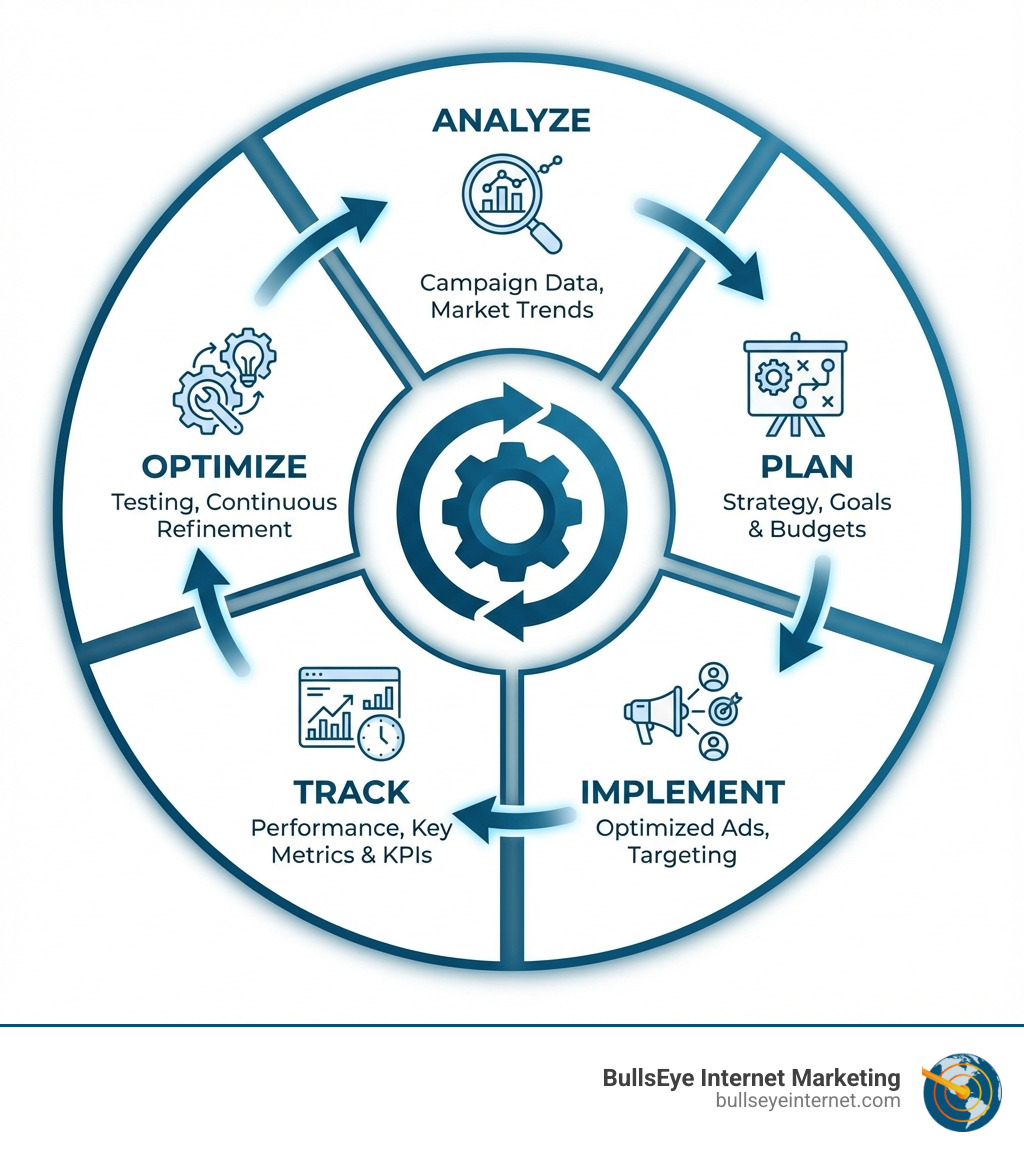
In this guide, we’ve explored the intricate world of PPC management, from its fundamental definition and crucial role in business growth to its core components, diverse platforms, and the strategic decisions involved. We’ve seen that effective PPC management is not merely an expense but a powerful investment, capable of delivering rapid, measurable results and significant ROI, as demonstrated by countless success stories. It’s a continuous process of analysis, planning, implementation, tracking, and optimization—a journey toward perfect efficiency that never truly ends.
Understanding the nuances of keyword research, the art of compelling ad copy, the science of bidding strategies, and the importance of relevant landing pages are all critical. Moreover, knowing when and how to leverage different platforms like Google Ads, Meta Ads, and Amazon PPC can open up new avenues for lead generation and sales.
At BullsEye Internet Marketing, we understand that taking control of your PPC means more than just managing campaigns; it means managing your business’s future. We specialize in generating calls and sales through expert PPC management, Google Business Profile optimization, SEO, and conversion optimization. Our commitment to your success is reflected in our unique approach: we offer no long-term contracts, because we believe our results should speak for themselves, and we work with only one client per industry per geographic area. This exclusivity ensures you have a true competitive advantage in your local market, whether you’re in Miami, Broward County, Palm Beach County, or anywhere else in our service areas across Florida.
Ready to open up the full potential of your online advertising and drive maximum ROI for your business? Let’s chat about how our custom PPC management strategies can help you dominate your market.
