
Why Understanding “PPL for Weight Loss” Matters More Than You Think
PPL for weight loss has two distinct meanings. Understanding both can transform your journey, whether you’re shedding pounds or you’re a business helping others do so.
If you’re searching for a workout method: PPL stands for Push-Pull-Legs, a popular and effective workout split. It organizes training into pushing movements (chest, shoulders, triceps), pulling movements (back, biceps), and leg exercises. This method is excellent for fat loss as it helps preserve muscle while in a calorie deficit.
If you’re a weight loss business owner: PPL means Pay-Per-Lead, a marketing model where you pay only for qualified customer inquiries. This gives you direct access to people actively seeking weight loss services, avoiding wasted ad spend.
Here’s the quick breakdown:
For Individuals (Workout Method):
- Trains each muscle group 2-3 times per week
- Helps preserve muscle while losing fat
- Requires a calorie deficit to work
- Best combined with proper nutrition and optional cardio
For Businesses (Marketing Method):
- Pay only for qualified leads, not clicks or impressions
- Target people actively searching for weight loss help
- Control your customer acquisition costs
- Scale your business predictably
With nearly 3 in 4 U.S. adults having overweight or obesity, many are seeking effective solutions. Whether you’re an individual looking for a workout strategy or a fitness professional trying to reach them, understanding both meanings of PPL provides a significant advantage.
This guide covers both paths. Research shows that strength training with a calorie deficit is highly effective for fat loss while preserving muscle. A well-structured PPL split delivers on this by training each major muscle group with sufficient frequency and volume.
I’m Ronnie Katz of BullsEye Internet Marketing. For over 20 years, I’ve helped weight loss businesses connect with clients via strategic Pay-Per-Lead campaigns, while staying current on fitness trends like PPL for weight loss. Whether you want to transform your body or grow your business, this guide will show you how PPL can work for you.
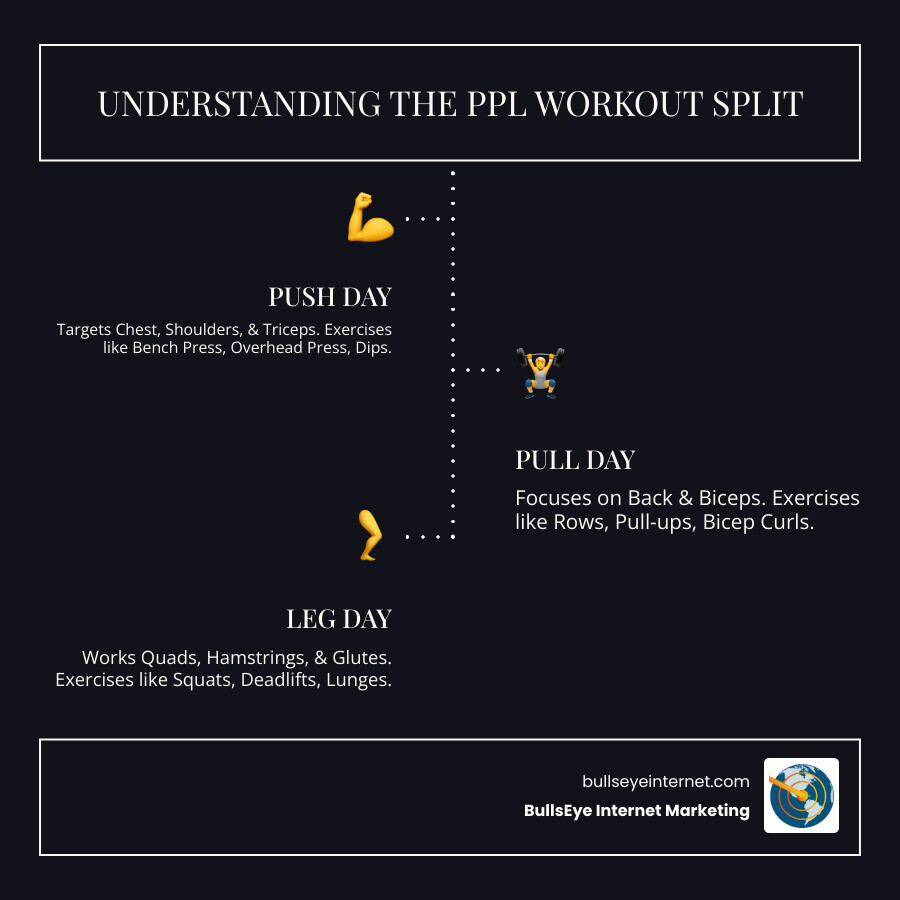
The Push-Pull-Legs (PPL) Method: Your Ultimate Workout for Fat Loss

The Push-Pull-Legs (PPL) workout split is one of the most effective training methodologies available. It’s not just for bodybuilders; it’s a powerful tool for anyone aiming for PPL for weight loss, especially those wanting to shed fat while preserving lean muscle. The PPL approach is highly adaptable to all fitness levels and goals.
What is a Push-Pull-Legs Split?
A PPL split divides your training into three workouts based on movement patterns:
- Push muscles: Chest (pectorals), shoulders (deltoids), and triceps. Exercises include bench presses and overhead presses.
- Pull muscles: Back (lats, traps, rhomboids), biceps, and rear deltoids. Exercises include rows and pull-ups.
- Leg muscles: Quadriceps, hamstrings, glutes, and calves. Exercises include squats and deadlifts.
This logical grouping minimizes muscle overlap, reducing the risk of overuse injuries. By training muscles that work together on the same day, you allow for more efficient workouts and better recovery, which is crucial for progress, especially in a calorie deficit.
Key Benefits of a PPL Split for Fat Loss
Why is a PPL split so effective for PPL for weight loss?
Trains Muscles Multiple Times per Week: A 6-day PPL split hits each muscle group twice weekly, which research shows is optimal for preserving muscle during a fat loss phase. Maintaining muscle keeps your resting metabolism higher, helping you burn more calories.
[Effects of Resistance Training Frequency on Measures of Muscle Hypertrophy: A Systematic Review and Meta-Analysis](https://pubmed.ncbi.nlm.nih.gov/27102172/).High Training Volume: PPL allows for high training volume (sets x reps x weight), which burns more calories and is critical for signaling your body to keep muscle while you lose fat.
[Weekly Training Frequency Effects on Strength Gain: A Meta-Analysis](https://www.ncbi.nlm.nih.gov/pmc/articles/PMC6081873/).Increased Energy Expenditure: Strength training boosts your metabolism post-exercise (a phenomenon known as EPOC). Frequent PPL sessions keep your body in a higher energy-burning state.
Efficient Workouts: Since synergistic muscles are trained together, workouts are highly efficient. You avoid fatiguing a muscle group needed for the next day’s session, allowing for better performance.
Easy to Structure and Progress: The PPL framework is simple, making it easy to plan workouts and apply progressive overload (gradually increasing weight, reps, or sets) to ensure continuous improvement.
Sample PPL Workout Routines for Weight Loss
The PPL split is flexible. You can use a 3-day schedule (training each muscle group once a week) or a 6-day schedule (training each muscle group twice a week). For fat loss, higher frequency is often better. For a 6-day routine, you would perform the Push, Pull, and Leg workouts twice (e.g., Push, Pull, Legs, Push, Pull, Legs, Rest).
Rest periods should be 60-90 seconds between sets. Always warm up properly before your main lifts.
Sample PPL Routine
Push Day
- Barbell Bench Press: 3 sets of 6-8 reps
- Dumbbell Shoulder Press: 3 sets of 8-10 reps
- Incline Dumbbell Flyes: 3 sets of 10-15 reps
- Triceps Pushdowns: 3 sets of 10-15 reps
- Abs (e.g., Crunches): 3 sets to failure
Pull Day
- Barbell Rows: 3 sets of 6-8 reps
- Pull-Ups (or Lat Pulldowns): 3 sets of 8-10 reps
- Face Pulls: 3 sets of 10-15 reps
- Dumbbell Curls: 3 sets of 10-15 reps
Leg Day
- Barbell Squats: 3 sets of 6-8 reps
- Romanian Deadlifts: 3 sets of 6-8 reps
- Leg Press: 3 sets of 8-10 reps
- Leg Curls: 3 sets of 8-10 reps
- Standing Calf Raises: 3 sets of 10-15 reps
Maximizing Results: Nutrition and Cardio with Your PPL Split

A great workout plan isn’t enough for effective PPL for weight loss. To maximize results from your PPL split, you must pair it with smart nutrition and strategic cardio. This holistic approach creates the right environment for your body to shed fat while maintaining muscle.
Essential Nutrition Principles for Fat Loss
Nutrition is paramount. You can’t out-train a poor diet. Focus on these principles:
Calorie Deficit: To lose weight, you must consume fewer calories than you burn. A deficit of around 500 calories per day is a sustainable starting point for losing 1-2 pounds per week, as recommended by the CDC.
[Steps for Losing Weight](https://www.cdc.gov/healthy-weight-growth/losing-weight/index.html).High Protein Intake: To preserve muscle in a deficit, aim for a high protein intake—around 1 gram per pound of body weight. Protein also increases satiety, helping you feel full.
Smart Carbohydrates and Fats: Don’t fear carbs and fats. Fuel your workouts with complex carbohydrates (whole grains, fruits, vegetables) and support hormone function with healthy fats (avocados, nuts, olive oil).
Whole Foods Focus: Prioritize whole, unprocessed foods like lean meats, fish, eggs, and vegetables. They are more nutrient-dense and less calorie-dense than processed options.
Hydration and Sleep: Drink plenty of water to support your metabolism and performance. Aim for 7-9 hours of quality sleep per night for recovery and hormone regulation.
The Role of Cardio in a PPL for Weight Loss Program
While not strictly necessary, cardio is a powerful tool to accelerate fat loss and improve heart health.
Cardio as a Tool for Deficit: Cardio burns extra calories, making it easier to achieve a calorie deficit without cutting food intake too drastically.
Types of Cardio:
- HIIT (High-Intensity Interval Training): Short bursts of all-out effort (e.g., 20 seconds) followed by brief rest (e.g., 10 seconds). It’s time-efficient and boosts metabolism.
- LISS (Low-Intensity Steady State): Sustained, moderate-intensity cardio like a brisk walk or jog for 30-45 minutes. It’s less taxing and great for active recovery.
When to Do Cardio: Performing cardio after your PPL lifting sessions or on rest days is effective. If you’re short on time, always prioritize weight training, as preserving muscle is the primary goal for a healthy, long-term metabolism.
The Other PPL for Weight Loss: A Growth Strategy for Businesses
Let’s switch gears to the other PPL—the one that drives business growth for fitness professionals, gyms, and nutritionists. At BullsEye Internet Marketing, we know that while your clients focus on their change, you focus on growing your business. This is where Pay-Per-Lead (PPL) marketing becomes a game-changer.
What is Pay-Per-Lead (PPL) for the Weight Loss Industry?
Pay-Per-Lead (PPL) is a marketing model where you pay only for a qualified customer inquiry—a lead—instead of for clicks or impressions. For the weight loss industry, this means you get connected directly with people actively searching for your services, such as:
- Personal Trainers: Leads from people searching for “personal trainer for weight loss.”
- Gyms: Leads from individuals looking for “gym memberships for fat loss.”
- Nutrition Coaches: Leads from those seeking “nutrition plans for weight loss.”
We act as the bridge, delivering motivated prospects to your business so you can focus on what you do best: changing lives.
Why PPL is a Game-Changer for Weight Loss Professionals
PPL cuts through advertising noise and offers distinct advantages:
Targeted Client Acquisition: We send you qualified leads—individuals in your area who have expressed clear interest in weight loss services. You talk to people who are ready to become clients.
Controlled Marketing Spend: You know the exact cost per lead, allowing for predictable budgeting. Every marketing dollar is tied to a tangible result.
Scalable Growth: As your business grows, your PPL campaign can scale with it. Need more clients? We can adjust the campaign to generate more leads.
Competitive Advantage: At BullsEye Internet Marketing, we work with only one client per industry per geographic area. This gives you an exclusive advantage, ensuring all high-quality local leads come directly to you.
No Wasted Ad Budget: You only invest when a legitimate lead comes through, eliminating payment for casual browsers. This efficiency is key for connecting clients with the professional guidance they need for successful weight loss.
[Behavioral Approaches to Obesity Management](https://www.ncbi.nlm.nih.gov/books/NBK278952/).
For weight loss professionals in Florida, whether you’re in Cooper City, Delray Beach, or any of our service areas, embracing the PPL marketing model means less time worrying about where your next client will come from and more time doing what you love: helping people achieve their weight loss goals.
Frequently Asked Questions about PPL
We often get a lot of questions about both the PPL workout method and the PPL marketing model. Let’s tackle some of the most common ones to provide clarity.
How does training frequency (3-day vs. 6-day PPL) impact weight loss?
Training frequency significantly impacts fat loss.
6-Day PPL Split: This is generally more effective for aggressive fat loss. Training each muscle group twice a week increases total calorie burn and provides a strong stimulus for muscle preservation while in a calorie deficit.
3-Day PPL Split: This is a great option for beginners or those with limited time. While less optimal for maximizing fat loss due to lower frequency, it’s excellent for building a foundation and managing recovery.
The best frequency depends on your recovery capacity, schedule, and goals.
How can I ensure I maintain muscle while losing fat on a PPL split?
Maintaining muscle while losing fat is key. Here’s how:
- Prioritize Strength Training: Your PPL workouts are non-negotiable. Lifting heavy signals your body to keep muscle.
- Maintain High Protein Intake: Aim for around 1 gram of protein per pound of body weight to provide the building blocks for muscle repair.
- Avoid Excessive Calorie Deficits: A moderate deficit of 300-500 calories is sustainable and reduces the risk of muscle loss.
- Lift with Intensity: Challenge yourself in the 5-15 rep range, which is effective for both strength and muscle growth.
- Get Adequate Sleep: Aim for 7-9 hours of quality sleep per night. Sleep is critical for recovery and hormone regulation.
Is a Pay-Per-Lead (PPL) model effective for a new personal training business?
Absolutely. A PPL model is incredibly effective for a new personal training business for several reasons:
- Immediate Client Inquiries: PPL delivers qualified inquiries right away, unlike traditional advertising that takes time to build brand awareness.
- Reduces Financial Risk: New businesses often have limited marketing budgets. With PPL, you only pay for actual leads, eliminating the risk of a failed ad campaign.
- Allows Focus on Service Delivery: PPL handles client acquisition, freeing you to focus on providing excellent training and building your reputation.
- Scalability: The model adapts to your business needs. As you grow, you can easily scale up your PPL campaign to expand your client base.
At BullsEye Internet Marketing, our no long-term contracts and exclusive geographic area policy make it an ideal partnership for new and established businesses.
Conclusion: Choosing the Right PPL Path for Your Goals
As we’ve explored, PPL for weight loss offers two powerful paths depending on your goals.
For individuals, the Push-Pull-Legs workout split, combined with smart nutrition and cardio, is a proven recipe for shedding fat while preserving muscle. Consistency, discipline, and recovery are the pillars of this change.
For fitness professionals, the Pay-Per-Lead marketing model is an unparalleled opportunity for growth. It connects you with clients actively seeking your expertise, making your marketing efficient and cost-effective. This allows you to focus on what you do best: helping clients achieve their goals.
Whether you’re lifting weights or generating leads, the right PPL strategy open ups significant potential. If you’re ready to grow your weight loss business in Florida, we invite you to explore how our specialized Pay-Per-Lead services can help you connect with more clients.
[Learn more about our Pay-Per-Lead services](https://bullseyeinternet.com/pay-per-lead/)
