
Understanding the SE Ranking AI Visibility Tracker Architecture
The SE Ranking AI Visibility Tracker allows digital agencies to track client brand citations, sentiment, and source domain visibility across generative engines including Google AI Overviews, ChatGPT, Google Gemini, and Perplexity AI. By monitoring answer engine outputs directly, agencies can measure brand prominence, detect citation gaps, and execute Answer Engine Optimization (AEO) strategies.
Using a dedicated AI Search Visibility Tool: Optimize for AI Search allows digital agencies to analyze how large language models (LLMs) perceive and cite client domains. To understand how this fits into your broader growth framework, exploring The Ultimate Guide to Generative Engine Optimization and AI Search Visibility provides valuable context on multi-platform algorithms.
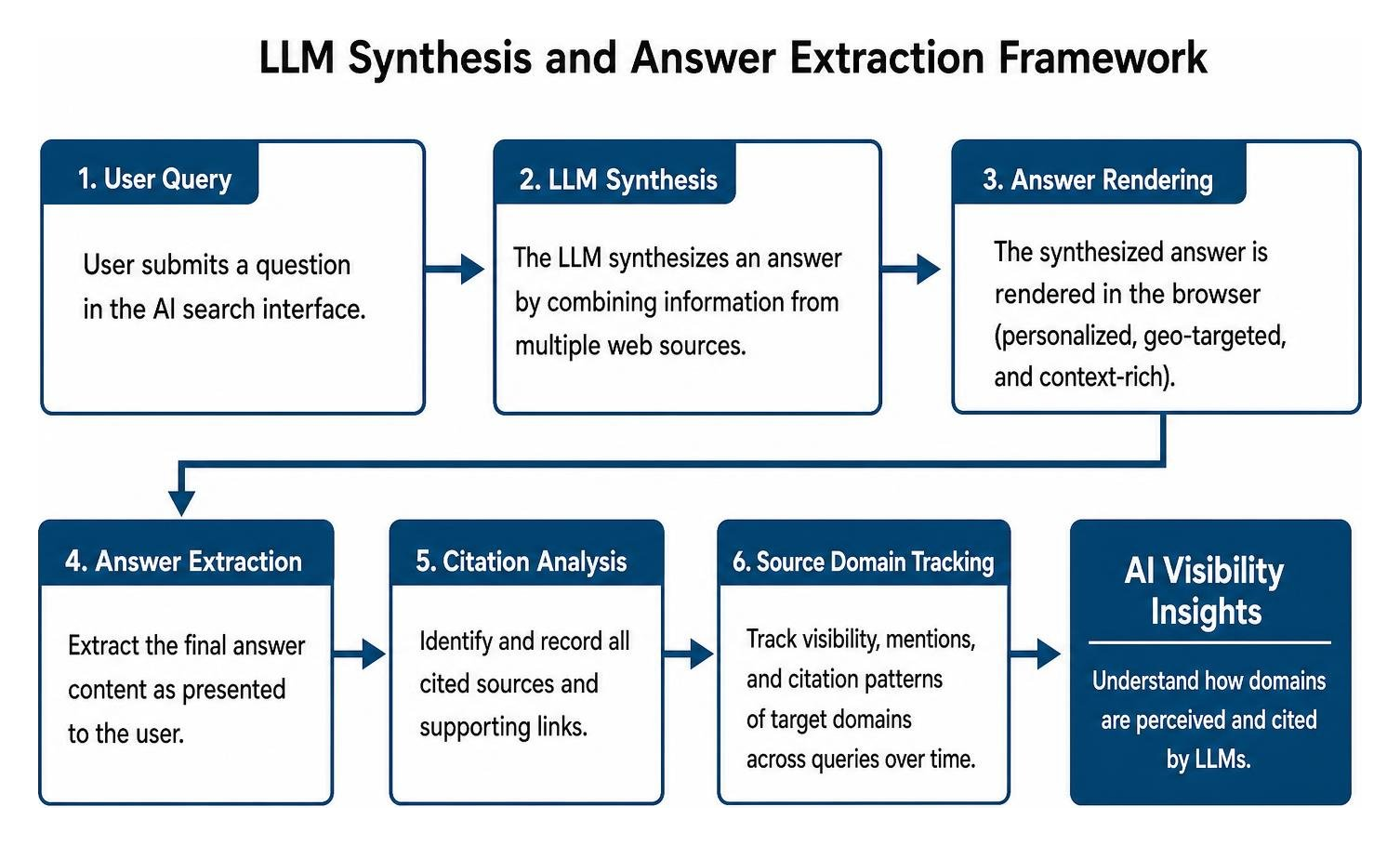
SE Ranking approaches AI tracking by analyzing browser-level answer rendering rather than relying solely on raw API outputs. This distinction is vital because public APIs often return generic responses that differ from the personalized, geo-targeted, and context-rich outputs presented to real users on the web.
In-Suite AI Results Tracker vs. SE Visible Platform
A key operational consideration for agencies is the product separation within the SE Ranking ecosystem. Users must choose between the AI Results Tracker (an integrated add-on within the primary SEO platform) and SE Visible (a dedicated, standalone AI visibility application).
- In-Suite AI Results Tracker: Lives inside the traditional rank-tracking interface. It focuses heavily on Google AI Overviews and Google AI Mode, with select integrations for major conversational engines. It operates on a prompt-credit model tied to your primary subscription tier.
- SE Visible Standalone Platform: A specialized tool designed exclusively for large language model monitoring. It processes prompts across multiple engines daily, offering dedicated sentiment analysis, brand perception scoring, and source domain maps.
| Feature / Metric | In-Suite AI Results Tracker | SE Visible Standalone Platform |
|---|---|---|
| Primary Focus | Google AI Overviews & SERP integration | Broad LLM tracking (ChatGPT, Gemini, etc.) |
| Base Pricing | Starts at $52/mo (requires core plan) | Basic at $99/mo, Core at $189/mo |
| Refresh Frequency | Weekly or on-demand via rank checks | Daily automated browser refreshes |
| Answer Volume | Dependent on assigned keyword credits | 30,000 to 150,000+ monthly answers |
| Ideal For | Existing SE Ranking SEO suite users | Dedicated generative engine optimization |
For organizations evaluating comprehensive brand management across emerging search channels, exploring the dedicated capabilities of SE Visible — An AI Visibility Tool Made to Empower Brands helps clarify which architectural path best fits your client delivery workflow.
Supported Answer Engines and Citation Coverage
Coverage depth varies across both deployment types:
- Google AI Overviews & AI Mode: Deeply analyzed across both platforms, mapping direct URL citations, snippets, and intent classifications. Mastering these mechanisms is covered in our breakdown of Mastering Google SGE: Your Path to AI Search Visibility.
- ChatGPT (OpenAI): Monitored for brand mentions, linked references, and conversational positioning.
- Google Gemini: Evaluated for multi-turn conversational responses and ecosystem cross-citations.
- Perplexity AI: Scanned for source indexing and citation attribution.
- Engine Coverage Gaps: Deep-tier enterprise engines such as standalone Anthropic Claude queries, specialized Grok threads, or open-source DeepSeek models remain partial or on future development roadmaps depending on the package selected.
Core Agency Features and Data Workflows
For modern marketing teams, tracking software must integrate seamlessly into operational workflows. SE Ranking’s infrastructure—drawing from 5.5 billion keywords and 2.2 billion domain profiles across 188 country databases—provides agency-specific features including custom client seats, white-label dashboards, and cross-channel reporting.
Implementing a structured workflow allows agencies to translate raw mentions into actionable growth tasks. For an in-depth strategic blueprint, review our resource on A Comprehensive Guide to AI Visibility SEO & LLM Optimization Strategies.
How the SE Ranking AI Visibility Tracker Measures Citations
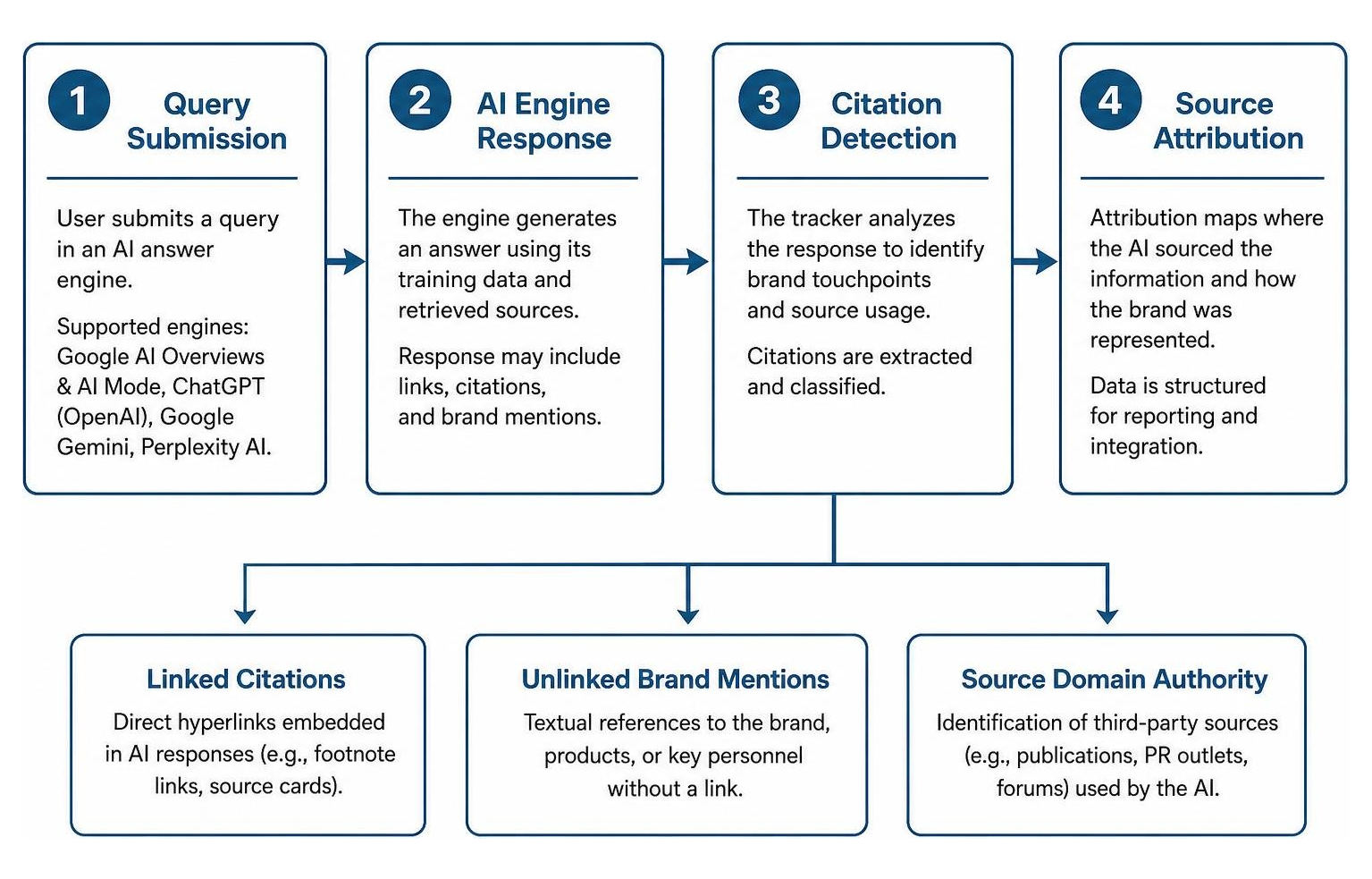
The tool tracks how often a brand is chosen by an AI engine to validate its response. Understanding the underlying AI Search Ranking Factors reveals why generative models select specific domains over others.
The tracker categorizes data across three distinct touchpoints:
- Linked Citations: Direct hyperlinks embedded within AI-generated responses (such as footnote links in Perplexity or source cards in Google AI Overviews).
- Unlinked Brand Mentions: Textual references naming the client’s brand, products, or key personnel without an accompanying link.
- Source Domain Authority: Detailed identification of third-party sources (e.g., industry publications, digital PR outlets, forum threads) that the AI models scrape to generate the answer.
Reporting Integrations, API, and MCP for Agency Dashboards
Agencies managing high client volumes cannot afford manual data exports. The platform addresses scale through multiple data endpoints:
- REST API Integration: Pulls visibility scores, citation lists, and competitor gap metrics directly into custom business intelligence environments like Google Looker Studio or AgencyAnalytics.
- Model Context Protocol (MCP): Connects live SEO and visibility data feeds directly into conversational AI assistants, allowing team members to query client performance metrics using plain language.
- Automation Connectors: Native webhooks and app connectors support Make.com, n8n, and Zapier to trigger automated Slack or email alerts whenever a competitor displaces a client in target generative prompts.
Practical Limitations and Realistic Cost Analysis
While the platform offers strong capabilities, agencies must navigate practical operational limits:
- Prompt Caps: Unlike standard keyword tracking, where a single keyword rank check is straightforward, AI visibility consumes significant computational power. Plans enforce strict caps on custom prompt volume.
- Refresh Frequencies: In-suite configurations often update weekly unless additional credits are applied for on-demand checks, whereas SE Visible provides automated daily tracking.
- Modeled Traffic vs. Direct Analytics: Generative search engines do not pass granular click data directly to webmaster tools. SE Ranking utilizes algorithmic models to estimate AI-driven traffic, which provides directional guidance rather than exact attribution. Combining these insights with our guide on AI Search Optimization Complete Guide ensures realistic expectation management.
Optimizing with the SE Ranking AI Visibility Tracker Despite Prompt Caps
To maximize a finite monthly prompt budget, agencies should prioritize high-intent queries:
- Cluster Prompts by Commercial Intent: Focus tracking credits on prompts that reflect high purchase intent (e.g., “Best commercial HVAC contractors in South Florida” or “Top enterprise payroll platforms”) rather than broad informational phrases.
- Benchmark Against Five Direct Competitors: Measure relative Share of Voice (SoV) across target niches rather than aiming for absolute perfection across thousands of untracked variations.
- Align Content with Proven Signals: Strengthen digital authority using classic optimizations alongside generative signals, as outlined in our breakdown of SEO Ranking Best Practices: Factors, Tips & Tools to Improve Your Positions.
True Monthly Cost and Subscription Breakdown
Evaluating the true agency cost requires looking beyond headline pricing:
- The Entry Tier ($52/month): Covers the base Essential SEO suite, but includes limited AI Overview tracking and strict prompt limits that are quickly consumed by active client accounts.
- Meaningful Agency Coverage ($150 to $240/month): Scaling up to the Pro or Business tiers—or adding dedicated AI tracker add-ons—lands most small-to-midsize agencies in this realistic monthly range to track multiple client profiles effectively.
- SE Visible Standalone ($99 to $189+/month): The dedicated Basic plan starts at $99/month (analyzing roughly 30,000 answers across 200 prompts), while the Core plan sits at $189/month (covering ~67,500 answers across 450 prompts), making it an independent investment for specialized campaigns.
Frequently Asked Questions About AI Visibility Tracking
What constitutes a good AI visibility score for client reporting?
Because LLMs are probabilistic rather than deterministic, there is no universal “100%” score. A strong AI visibility profile is defined by relative Share of Voice (SoV). If your client appears in 60% of relevant generative responses while their top three competitors average 20% to 35%, the campaign is performing exceptionally well.
Can AI visibility tools track real revenue and conversion traffic?
No tool can extract private conversion data directly from third-party LLMs. The platform provides modeled search volume, estimated impressions, and citation share. To track actual conversions, agencies must pair these visibility metrics with direct GA4 UTM referral parameters (monitoring traffic from chatgpt.com, perplexity.ai, or android-app://com.google.android.googlequicksearchbox).
How does AI visibility tracking differ from standard rank tracking?
Traditional rank tracking records a static URL position on a fixed search engine results page. AI visibility tracking monitors probabilistic text output across conversational models, measuring unlinked mentions, linked citations, user sentiment, and source authority.
Conclusion
The shift toward AI-powered search engines requires agencies to broaden their measurement playbooks. Monitoring generative engine citations alongside traditional organic positions ensures brands remain discoverable wherever prospects look for answers.
At BullsEye Internet Marketing, we focus on driving measurable sales calls and qualified pipeline for our partners across the United States. We back our results with a strict standard: offering zero long-term contracts and working with only one client per industry in each geographic market to guarantee an exclusive competitive edge.
To future-proof your digital presence and capture high-intent buyers across both organic search and conversational LLMs, partner with us for comprehensive AI visibility optimization tailored to your target service areas.
