
Why a Local Search Ranking Increase Can Make or Break Your Business
Achieving a local search ranking increase is one of the highest-leverage moves a local business can make in 2026 — and most businesses are leaving serious money on the table by getting it wrong.
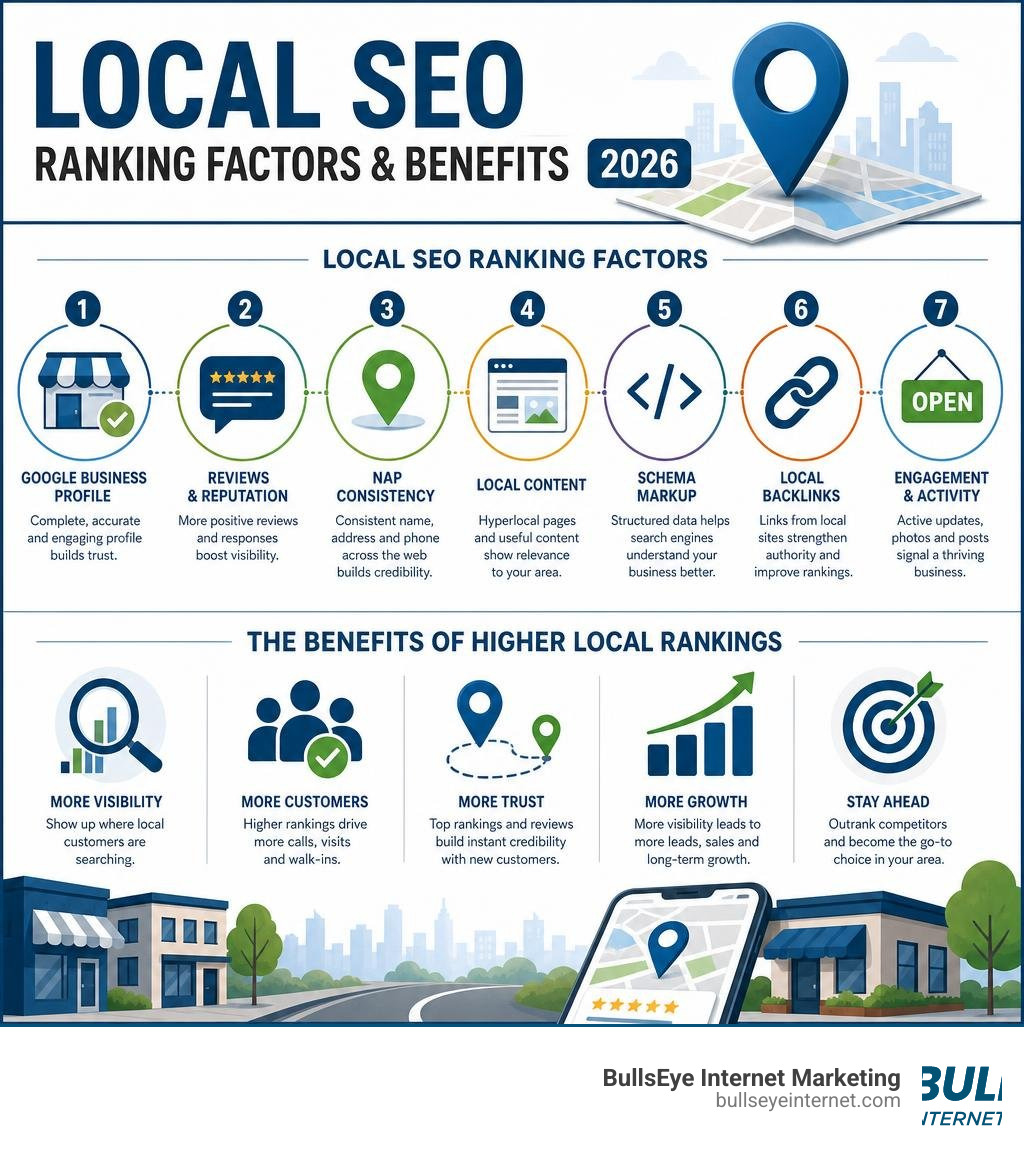
Here’s a quick snapshot of what actually moves the needle:
How to Increase Your Local Search Rankings (Quick Answer)
- Optimize your Google Business Profile — Complete every field, pick the most specific primary category, and add fresh photos weekly
- Build review velocity — Get a steady stream of new reviews (with text) and respond to every single one
- Fix your NAP consistency — Make sure your name, address, and phone match exactly across all directories
- Create hyperlocal website content — Build dedicated pages for each service and city you serve
- Add LocalBusiness schema — Help Google and AI engines understand exactly what you do and where
- Earn local backlinks — Get listed in local directories, sponsor community events, and build real local authority
- Stay active and open — Businesses that appear open and engaged consistently outrank stale profiles
These seven actions map directly to the six signal groups Google weights in its local algorithm — and we’ll break each one down in detail below.
46% of all Google searches have local intent. Yet most local businesses are invisible in those results — not because they haven’t tried, but because they’re optimizing the wrong things. The local search landscape has changed dramatically heading into 2026. Proximity matters less than it used to. Reviews and behavioral signals matter more. And now, AI engines like ChatGPT, Perplexity, and Gemini have opened up entirely new battlegrounds for local visibility.
The businesses that understand these shifts are pulling away from competitors who are still running a 2022 playbook.
I’m Ronnie Katz, founder and Principal CEO of BullsEye Internet Marketing — I’ve been helping local businesses win in search since 2006, and local search ranking increases are at the core of everything we do. Over two decades, I’ve watched this space evolve from basic directory listings to a complex, AI-driven ecosystem — and I’ll walk you through exactly what’s working right now.
Basic Local search ranking increase vocab:
Core Pillars of a Local Search Ranking Increase
To secure a lasting local search ranking increase, we must first understand how Google’s local algorithm works under the hood. It doesn’t rank businesses based on who pays the most or who asks the nicest. Instead, Google relies on three core pillars: relevance, distance, and prominence.
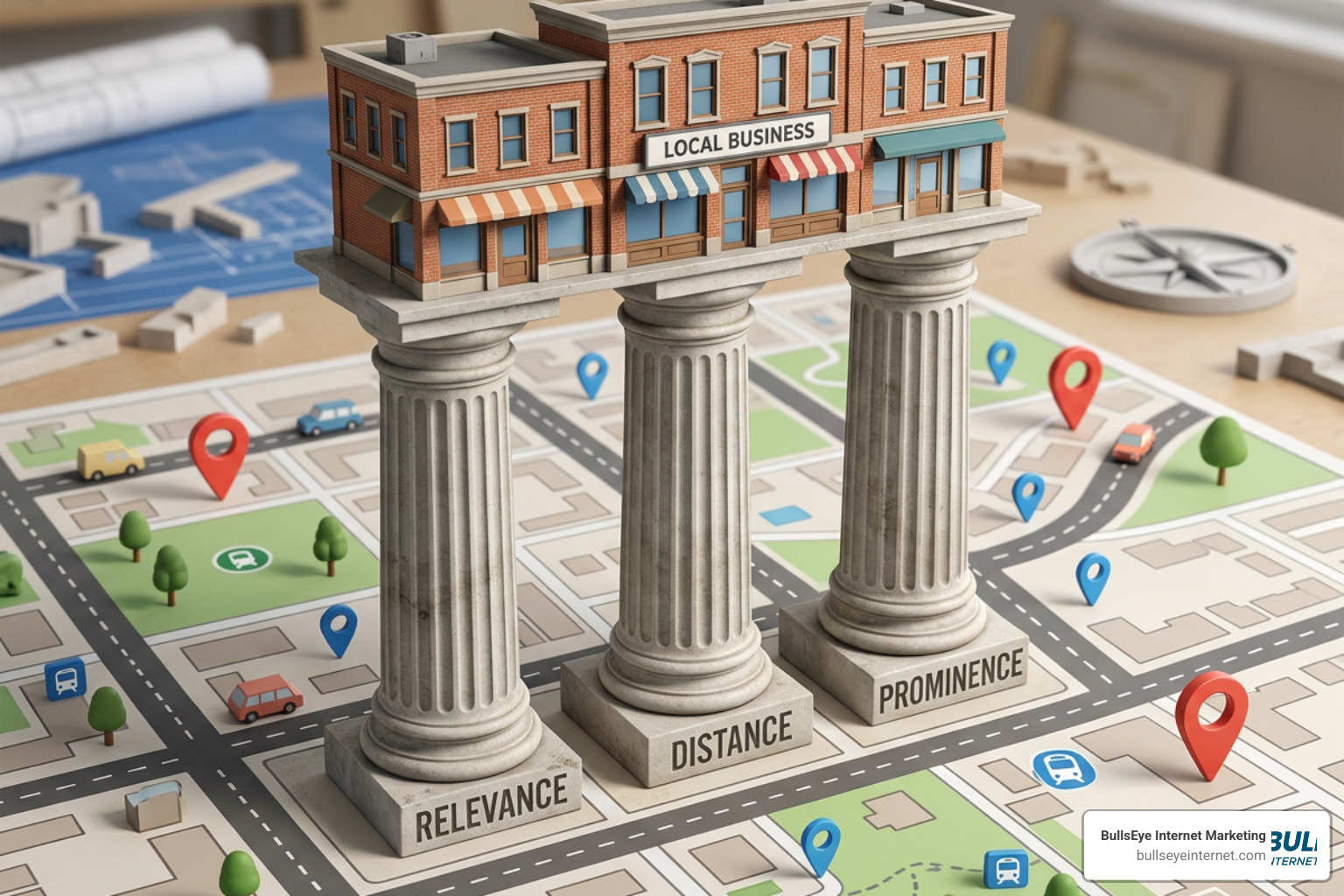
- Relevance: How well does your local business match what the user is searching for? If someone in Fort Lauderdale searches for an “emergency plumber,” Google analyzes your profile and website to see if you actually offer that specific service.
- Distance: How far is your business from the searcher’s physical location or the location specified in their query? While distance is a foundational factor, its absolute grip on rankings has loosened.
- Prominence: How well-known, trusted, and authoritative is your business? This is determined by your reviews, backlinks, on-page SEO, and general digital footprint.
In 2026, the local algorithm underwent a massive structural shift. Proximity weight—which used to dictate roughly 18% of Map Pack rankings—dropped to about 12%. Google realized that just because a business is closer to a searcher doesn’t mean it offers the best experience.
Instead, Google now heavily weights behavioral signals and “liveness.” A business located three miles away with an active profile, stellar reviews, and high user engagement will easily outrank a silent competitor sitting just three blocks away.
To dive deeper into the fundamentals of how these factors interact, check out the official Google documentation on Tips to improve your local ranking on Google as well as our Local SEO Complete Guide.
Optimizing Your Digital Assets for Maximum Visibility
Before we worry about advanced tricks, we must lock down the fundamentals of your digital assets. Think of this as preparing your storefront before the grand opening.
To achieve a local search ranking increase, your business must be 100% complete and verified across the web. Profiles with complete and accurate information are significantly more likely to show up in local search results. This means keeping your business hours up-to-date (including holiday hours) and accurately defining your service areas.
Another critical foundation is Name, Address, and Phone (NAP) consistency. If your business is listed as “BullsEye Digital Marketing” on Google, “BullsEye Marketing LLC” on Yelp, and “BullsEye Internet” on Facebook, search engine algorithms get confused. They struggle to verify that these listings belong to the exact same physical entity.
In fact, industry data shows that businesses with consistent NAP data across major citation sources are 40% more likely to appear in the local pack.
For businesses operating in competitive South Florida hubs, local visibility is the lifeblood of customer acquisition. Whether you are aiming to dominate the local pack in Palm Beach County, Broward County, or Miami-Dade County, your foundational signals must be flawless. Localized strategies must be tailored specifically to our region’s unique market dynamics to ensure your business stands out.
To make sure your digital foundation is solid from the start, we recommend reading through our Local SEO Services Complete Guide. If you operate in specific South Florida cities, you can also check out our dedicated playbooks like Local SEO Fort Lauderdale, Local SEO West Palm Beach, and Local SEO Hollywood: Ultimate Guide.
Google Business Profile Optimization for a Local Search Ranking Increase
Your Google Business Profile (GBP) is the single most important asset for local search success, accounting for 32% of Local Pack/Maps ranking weight. If you only have eight hours to spend on your local SEO this year, spend them here.
First, your primary category is the #1 individual ranking factor for Map Pack visibility. It must precisely match your core business. If you are a personal injury attorney in Miami, do not select the generic “Lawyer” category; choose “Personal Injury Attorney.”
Next, add up to nine secondary categories to cover your full range of services. Studies show that businesses utilizing four additional GBP categories achieve an average map ranking of 5.9, far outperforming those that leave them blank.
Write a compelling business description of at least 700 characters. Place your primary keyword and target city in the very first sentence.
Additionally, upload fresh photos weekly. Profiles that go more than 30 days without a new photo enter a “danger zone” where Google flags them as potentially inactive, causing a measurable decline in visibility. Aim for a mix of high-quality exterior shots, interior views, team photos, and real project images.
For a step-by-step optimization walkthrough, check out The Ultimate Local SEO Playbook: Boost Your Business’s Online Presence.
Leveraging Reviews to Drive a Local Search Ranking Increase
Reviews are no longer just a reputation metric; they are a direct algorithmic ranking factor. In 2026, review signals account for 20% of Local Pack ranking weight, up from 16% in 2023.
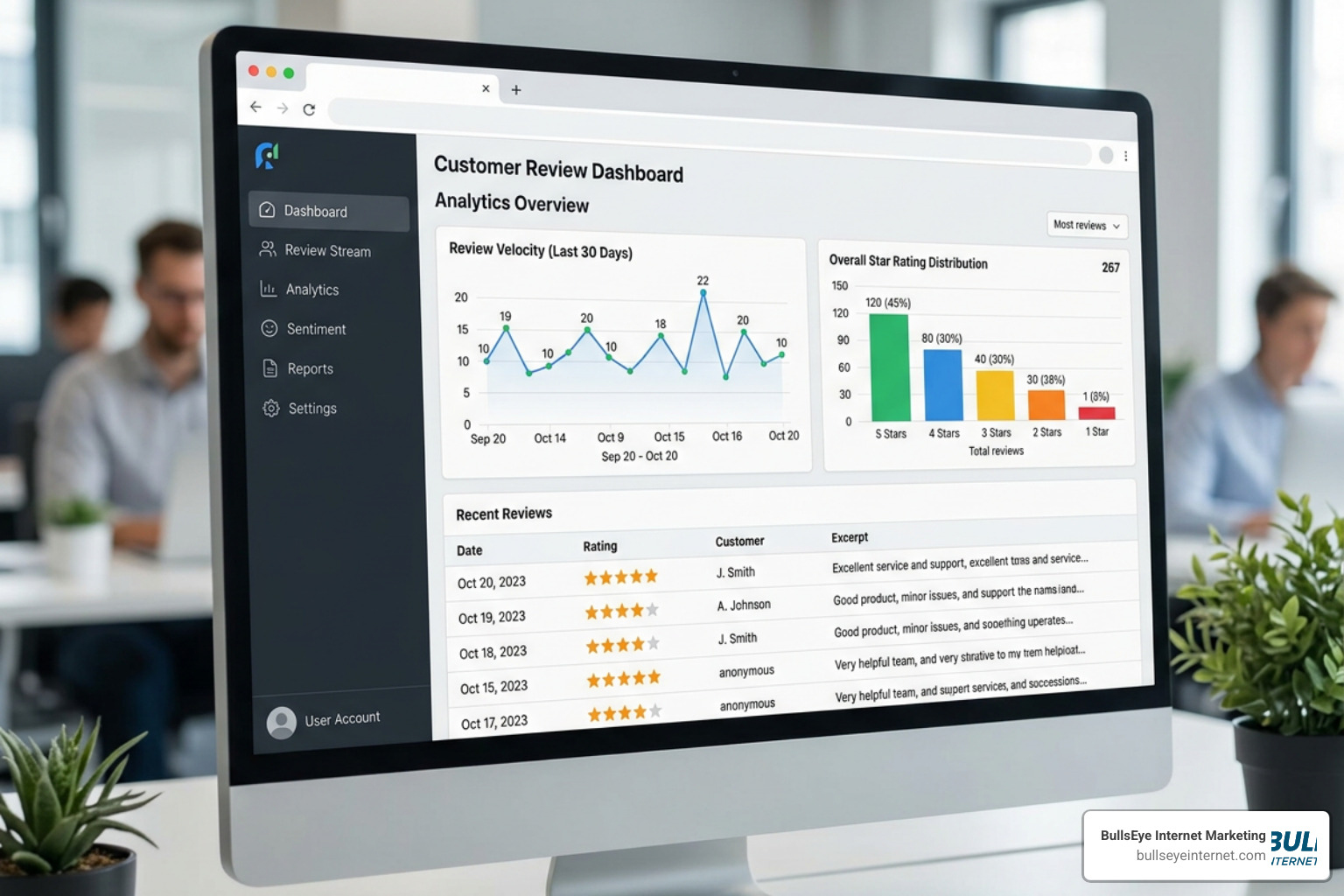
To leverage reviews for a local search ranking increase, you must monitor five distinct elements:
- Review Velocity: How consistently do you get reviews? Google prefers a steady stream of 5 to 10 reviews per month over a sudden burst of 50 reviews in one week followed by months of silence.
- Review Recency: Older reviews carry less weight. In recent updates, review recency received a 2.3x increase in algorithm weight. A profile with 80 reviews (including 12 in the last 90 days) will consistently outrank a competitor with 400 stale reviews.
- Star Rating: While a high numerical rating (4.5 to 4.8 stars) is ideal, a perfect 5.0 rating with hundreds of reviews can look inauthentic to both Google and consumers.
- Keywords in Reviews: Encourage your clients to mention the exact service and location in their feedback. When a customer writes, “They provided the best AC repair in Coral Springs,” it sends a massive relevance signal to Google.
- Response Rate: You must respond to every review—especially negative ones—within 24 hours. Owner responses show Google that your business is active, while naturally reinforcing your brand’s professionalism.
There is also a clear “10-review threshold” in Google’s algorithm. Moving a new profile from 9 to 10 reviews often triggers an immediate, measurable boost in local visibility. To see how these review dynamics stack up against other signals, you can review industry-wide local SEO ranking factor surveys that highlight the growing importance of user engagement.
On-Page SEO, Schema, and Hyperlocal Content
While your Google Business Profile is the star of the show, your website is the engine supporting it. On-page ranking factors account for 33% of local organic ranking weight and 15% of Local Pack ranking weight. Google reads your website to triangulate and confirm the data on your GBP.
To build a strong on-page local foundation, you must implement the following:
- LocalBusiness Schema: This structured data markup sits in your website’s code, telling search engines and AI crawlers exactly what your business is, your coordinates, your NAP, and your services.
- Hyperlocal Content: Avoid thin, duplicate location pages. Instead, build comprehensive “city-pillar pages” that feature unique local testimonials, neighborhood mentions, localized FAQs, and internal links to your specific service pages.
- Optimized Headers and Meta Tags: Ensure your H1s and title tags include the “[Service] in [City]” format (e.g., “Roofing Contractor in Boynton Beach”).
For detailed strategies on structuring your website for local success, refer to our guide on Local SEO Strategies for Small Business Success. If you are looking to optimize for specific cities in Florida, read our guides on Local SEO Orlando and the Local SEO Services West Palm Beach Guide.
Navigating the AI Search Era and Behavioral Signals
The local search landscape is no longer limited to Google and Google Maps. In 2026, 30% to 40% of local discovery searches happen on AI platforms like ChatGPT, Perplexity, and Gemini. Additionally, Google’s own AI Overviews now frequently appear above the traditional Map Pack.
AI search engines prioritize data differently than traditional algorithms. They look for structured data, deep E-E-A-T (Experience, Expertise, Authoritativeness, Trustworthiness) signals, and consistent citations across the web to build a “consensus” about your business.
| Ranking Factor Group | Traditional Local Pack Weight | AI Search Visibility Weight |
|---|---|---|
| Google Business Profile | 32% | 12% |
| On-Page Optimization & Schema | 15% | 24% |
| Reviews & Sentiment | 20% | 18% |
| Behavioral Signals (CTR, Clicks) | 9% | 15% |
| Citations & Third-Party Mentions | 6% | 16% |
| Link Authority (Local Relevance) | 8% | 15% |
To optimize for AI search, you must sync your GBP with Bing Places (which powers much of ChatGPT’s local data), implement detailed schema markup, and cross the “AI recommendation threshold,” which typically requires at least 150 high-quality reviews across major platforms.
Simultaneously, traditional search engines are heavily leaning into behavioral signals. Google tracks real-world user interactions with your profile, such as click-through rates (CTR), dwell time on your GBP, mobile clicks-to-call, and driving direction requests. If searchers frequently request directions to your business, Google views this as the ultimate proof of real-world prominence.
To master these modern search dynamics, explore signal-based frameworks for local search optimization and see how we implement these cutting-edge tactics in our Local SEO Service.
Why Businesses Get Filtered Out of the Local Map Pack
Sometimes, you can do everything right and still find your business invisible on page three of the local results. This is usually due to Google’s local filter.
The most common reasons a business gets filtered out include:
- Shared Office Space Proximity: Google filters out duplicate businesses in the same category within a 200-foot radius. If you share an office building with three other CPA firms, Google may only show the oldest or most prominent profile, filtering the rest out.
- Keyword Stuffing: Shoving extra keywords into your GBP name (e.g., “Miami Plumber – Best Emergency Plumbing Services”) is a direct violation of Google’s guidelines. Following the August 2025 Spam Update, this is the quickest way to get your profile filtered or suspended.
- Inconsistent NAP Data: Conflicting addresses or phone numbers across major directories create “signal stream errors,” causing search engines to lose trust in your business’s physical existence.
- Fake Reviews: Buying reviews or getting a sudden surge of unverified feedback triggers Google’s spam filters, resulting in immediate suppression.
If your business is struggling with visibility in Florida, cleaning up your citations and resolving duplicate listings is your first step. To understand how we tackle these issues, read about our specialized Local SEO FL strategies and learn more about the technical audits we perform in our guide to Local SEO Agency Services You Need to Know About.
Frequently Asked Questions about Local SEO
How long does it take to see a local search ranking increase?
While traditional organic SEO is a long-term marathon, local SEO responds much faster. You can typically see initial Map Pack movement within 30 to 60 days of optimizing your Google Business Profile and starting a review generation campaign. Real, stable ranking shifts usually solidify between 60 to 90 days, with steady, compounding lead growth continuing from month six onward.
Do citations still matter for local SEO in 2026?
Yes, but their role has shifted. While mass directory submissions to hundreds of spammy sites no longer deliver a return, a foundation of 25 to 30 highly authoritative, consistent citations (like Yelp, YellowPages, Apple Maps, and local chambers of commerce) is essential. These citations act as a trust anchor, helping Google and AI engines verify your business’s physical existence and NAP consistency.
How do I optimize my business for AI search engines like ChatGPT?
To rank in AI search results, you must focus on structured data and entity authority. Sync your Google Business Profile with Bing Places, keep your website’s LocalBusiness schema completely error-free, and build a strong footprint of detailed, keyword-rich reviews. AI engines rely on “consensus,” so the more consistent your information is across the web, the more likely an AI assistant will recommend you.
Conclusion
Achieving a local search ranking increase is not about luck; it is about executing a precise, signal-focused strategy. By optimizing your Google Business Profile, building steady review velocity, ensuring NAP consistency, and preparing your site for the AI search era, you can position your business directly in front of high-intent local customers.
At BullsEye Internet Marketing, we take a highly specialized approach to local growth. We offer Pay Per Lead options, require no long-term contracts, and work with only one client per industry per geographic area. This gives our clients an exclusive, unmatched competitive advantage in their local markets.
Ready to stop letting competitors take your local customers? Let us handle the heavy lifting. Explore our BullsEye Internet Marketing Business Listing Optimization services today, and let’s put your business exactly where it belongs: at the top of the map.
