
Why Getting More Local Reviews Is No Longer Optional
If you want to get more local reviews on Google and beyond, here’s the fastest way to do it:
- Ask every happy customer right after the job is done or the service is complete.
- Send a direct Google review link via SMS or email within a few hours.
- Use QR codes on receipts, invoices, or signage to remove all friction.
- Follow up once if you don’t hear back — most people are just busy.
- Respond to every review you receive, positive or negative.
- Do it consistently — a steady flow of new reviews beats a one-time spike every time.
Around 90% of consumers read online reviews before visiting or buying from a local business. And yet, most businesses leave this almost entirely to chance — hoping happy customers will say something without ever being asked.
That’s a costly mistake.
According to BrightLocal’s 2026 Local Consumer Review Survey, star rating and review freshness are now the top two factors consumers use to judge a local business before making contact. Not your website. Not your social media. Your reviews.
The gap between businesses that actively build their review presence and those that don’t is growing fast. A business that moves from a 3.7-star rating with 40 reviews to a 4.6-star rating with 150 reviews can double or triple its inbound calls. That’s not a minor lift — that’s a business transformation.
And it doesn’t require a big budget. It requires a system.
I’m Ronnie Katz, founder of BullsEye Internet Marketing, and since 2006 I’ve helped local businesses across competitive markets use reputation management strategies — including how to get more local reviews — to dramatically increase their visibility, calls, and revenue. In this guide, I’ll walk you through exactly what works in 2026, from the psychology of asking to the tools that make it repeatable.
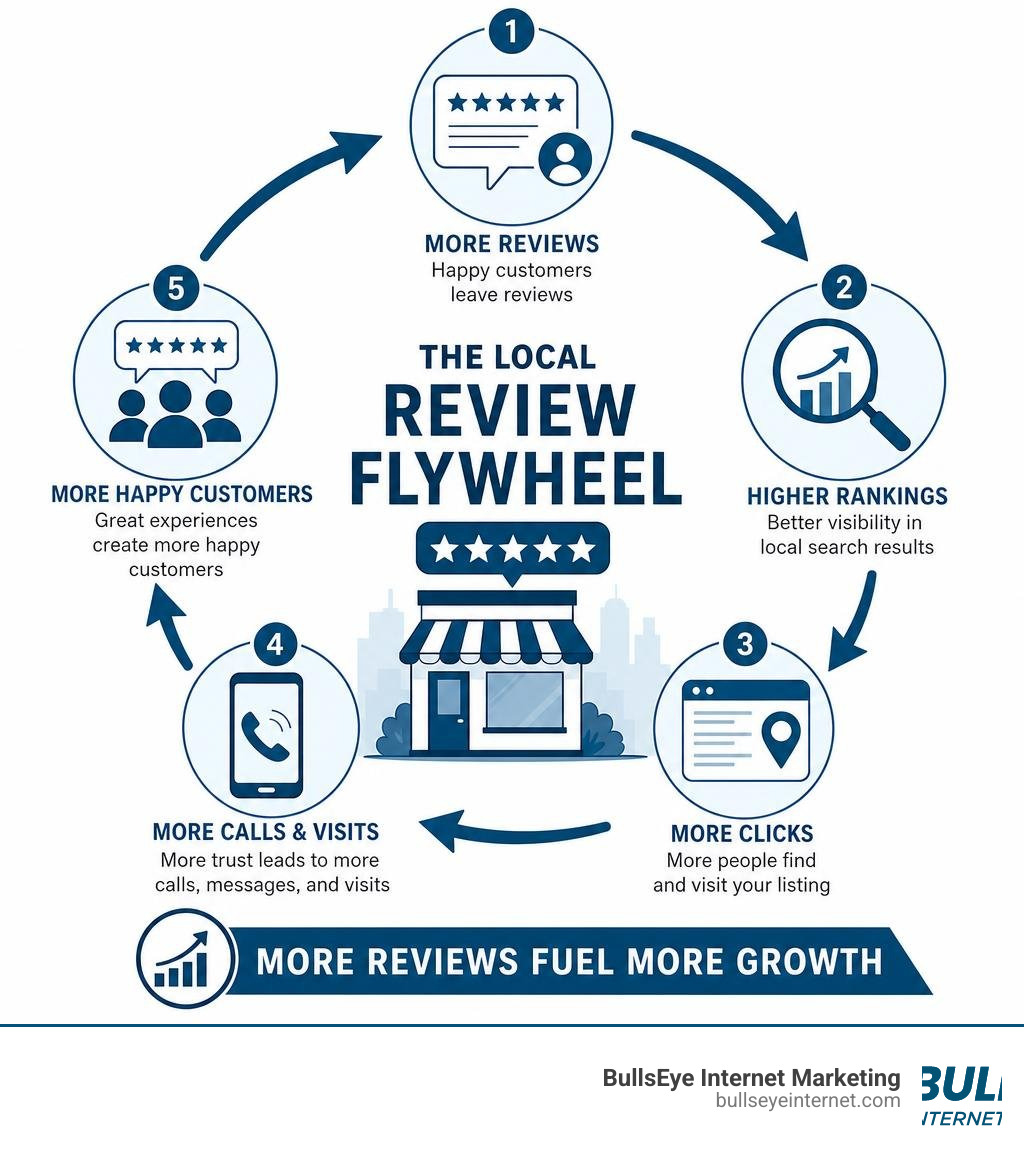
Get more local reviews terms to know:
Why You Need to Get More Local Reviews in 2026
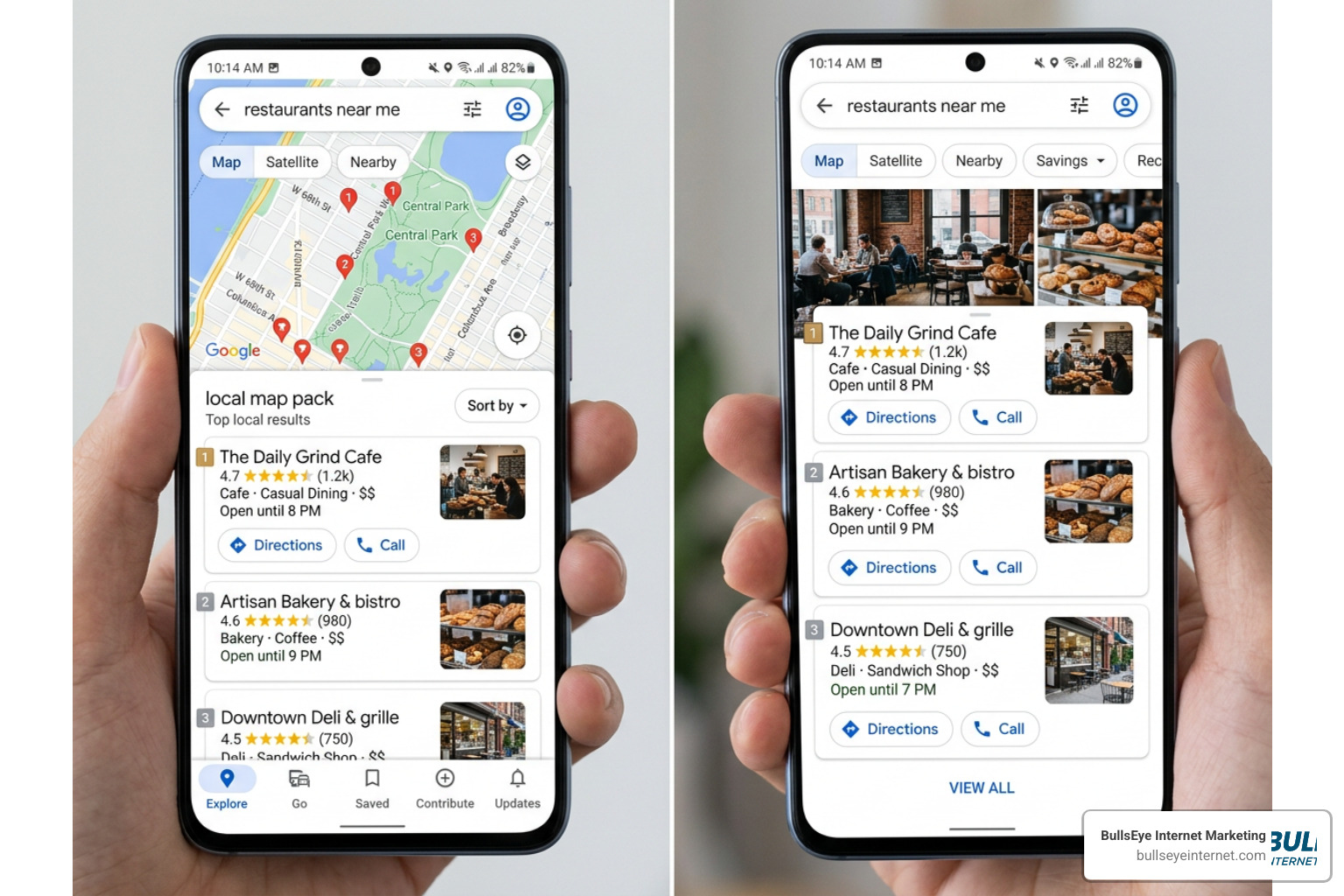
The local search landscape has shifted dramatically over the last few years. Today, having a beautiful website or running expensive ads is only half the battle. If you do not have a robust, active strategy to get more local reviews, you are leaving your most valuable marketing asset on the table.
When a customer in Miami, Fort Lauderdale, or West Palm Beach searches for a service “near me,” they are presented with the Google Map Pack. This prime real estate is where the vast majority of local phone calls and clicks happen. To secure a spot in this coveted three-listing section, you must understand how Google calculates local rankings.
According to Google’s Guide to Improving Your Local Ranking, local search results are determined by three core pillars:
- Relevance: How well your business profile matches what someone is searching for.
- Distance: How far your business is from the searcher’s location.
- Prominence: How well-known or established your business is in the offline and online world.
Reviews directly feed the “prominence” pillar. In fact, review signals (including quantity, velocity, and diversity) account for approximately 15% of local pack ranking factors. But it is not just about having the most reviews anymore. Review freshness has become a critical consumer trust metric: 77% of consumers expect reviews from the last 3 months, and 73% say they only trust reviews that are less than 30 days old. Without a steady stream of new feedback, your business can experience ranking drops within 6 to 8 weeks.
How Review Signals Impact Local Search Rankings
To dominate local search results in competitive markets like Palm Beach County or Broward County, you must treat reviews as a dynamic ranking engine. Google’s algorithm does not just count your stars; it measures three crucial signals:
- Review Quantity: The sheer volume of reviews on your profile. While quality matters, reaching milestones like 50 to 100 reviews provides a baseline of credibility that signals authority to Google Maps.
- Review Diversity: Receiving reviews across multiple platforms. While Google is the undisputed heavyweight, having reviews on Facebook, Yelp, and industry-specific platforms signals a balanced, natural brand presence.
- Review Velocity: The speed and consistency at which you acquire reviews. A sudden spike of 50 reviews followed by six months of silence looks unnatural to search engines and can trigger spam filters. A steady pace of 2 to 3 new reviews per week is far more effective.
Implementing a proactive Online SEO Reputation Management strategy ensures that these ranking signals remain strong, protecting your local visibility from slipping behind competitors who are actively soliciting feedback.
The Shift to AI Search and Entity-Rich Narratives
As we navigate 2026, we are witnessing a massive shift in how search engines process review content. We are no longer optimizing solely for human eyes; we are optimizing for Answer Engine Optimization (AEO). AI models like ChatGPT and Google’s AI Overviews are actively scanning customer reviews to generate direct recommendations.
In fact, research shows that businesses with 10% more reviews see roughly a 2% increase in AI search citations. But the AI does not care about generic “Great service!” reviews. It looks for entity-rich narratives—reviews that tell a full story containing:
- The problem: “Our AC broke down in the middle of a Delray Beach summer…”
- The process: “They arrived within two hours, explained the issue with the compressor, and fixed it immediately…”
- The outcome: “Now our home is perfectly cool, and the price matched the initial estimate.”
These narrative reviews contain high-intent keywords, geographic entities, and objection-resolution language. When a user asks an AI search engine, “Who is the most reliable AC repair company in Delray Beach that offers same-day service?” the AI pulls directly from these detailed customer stories. Encouraging your customers to write descriptive, keyword-rich reviews is the single best way to secure citations in the future of search.
Building a Repeatable System to Consistently Generate Reviews
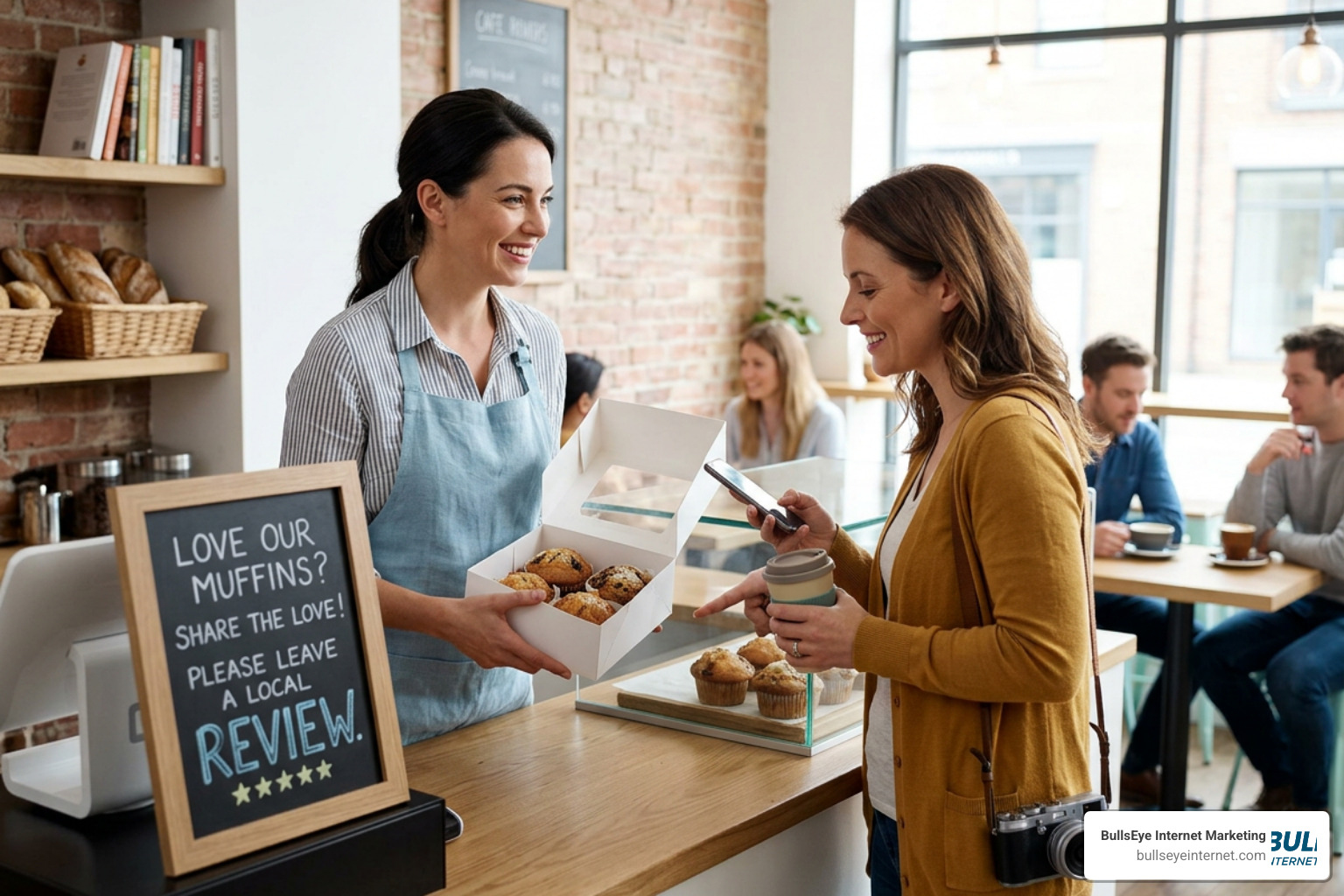
Many small businesses make the mistake of treating review generation as a sporadic marketing campaign. They send out a bulk email once a year, get a handful of reviews, and then forget about it. This approach fails because it ignores the natural rhythm of your business operations.
To get more local reviews consistently, you must build a repeatable system that runs on autopilot. This means integrating review requests directly into your daily customer journey. Whether you run a plumbing business in Fort Lauderdale or a law firm in Coral Gables, the ask should be as standardized as sending an invoice.
According to Google’s Official Guide on How to Get Reviews, reminding customers to leave feedback is fully supported and encouraged, provided you follow their guidelines. The key is to make the process completely frictionless.
Best Practices to Get More Local Reviews via SMS and Email
When asking for reviews digitally, simplicity is your secret weapon. If you make a customer click through three different pages just to find your review form, they will abandon the effort.
Here are the best practices for structuring your SMS and email outreach:
- Keep it short and direct: State the purpose of your message immediately.
- Use a single, direct review link: Generate your short review URL directly from your Google Business Profile dashboard.
- Provide a gentle nudge: People are busy. A single, polite follow-up reminder sent 3 to 5 days after the initial request can double your response rate.
High-Converting SMS Template
“Hi [Name]! Thanks for choosing [Business Name] today. We’d love to hear about your experience. Could you take 30 seconds to share your feedback here? [Direct Link] Thank you!”
High-Converting Email Template
“Subject: We’d love to hear your story, [Name]!
Hi [Name],
Thank you for trusting us with your recent service in [City]. Our local team relies on honest feedback to continually improve and help neighbors find us online.
Would you mind taking two minutes to leave us a quick review on Google?
[Click Here to Leave a Review – Direct Link]
We appreciate your support!
Warmly, The Team at [Business Name]”
Using QR Codes and NFC Tap Cards In-Person
If your business involves face-to-face interactions—such as a retail shop in Coconut Grove or a home services technician visiting a home in Boynton Beach—the “handoff moment” is your golden window. This is the exact moment when the job is completed, the customer is smiling, and their satisfaction is at its peak.
To capture reviews in person, physical touchpoints are incredibly effective:
- QR Code Table Tents and Cards: Print high-quality cards or flyers featuring a QR code that links directly to your Google review form. Hand this to the customer alongside their final receipt or invoice.
- NFC Tap Cards: These are small, plastic cards equipped with Near Field Communication technology. Your staff can carry these in their pockets. At checkout, they simply tap the card against the customer’s smartphone, which instantly opens your Google Business Profile review window.
By utilizing these tools during the checkout or handoff process, you eliminate all search friction, making it incredibly easy for the customer to support your business on the spot.
The Psychology of the Ask: Timing and Policy Compliance
Asking for reviews can feel awkward if you don’t have a structured approach. However, statistics show that 77% of customers are willing to leave a review if they are simply asked. The difference between a high response rate and a flat rejection comes down to two things: timing and framing.
When you frame your request around helping your local business grow and serving your community, customers are highly receptive. In South Florida’s competitive markets, neighbors love helping neighbors.
For home service providers, managing this process carefully is essential. We discuss this in detail in our resource on Managing Google Business Profile Reviews: A Guide for Home Service Businesses.
When is the Best Timing to Ask for a Review?
Timing is everything. If you ask too early, the customer hasn’t fully experienced the value of your service. If you ask too late, the excitement has faded, and your request will feel like homework.
The optimal “peak moment” varies by industry:
- Home Services (Plumbing, HVAC, Electrical): Ask in person immediately after the repair is complete and the technician has demonstrated that everything is working perfectly.
- Professional Services (Legal, Accounting, Consulting): Ask within 24 to 48 hours of achieving a major milestone, such as closing a case or completing a successful tax filing.
- E-commerce and Retail: Deliver the request via email 3 to 7 days after product delivery, giving the customer ample time to use and enjoy their purchase.
By aligning your request with these emotional peaks, you naturally increase your conversion rates and collect more authentic, enthusiastic feedback.
How to Get More Local Reviews Without Violating Google Policies
While building your review volume is important, you must play by the rules. Google and federal regulators have cracked down heavily on deceptive review practices. Violating these guidelines can result in your reviews being permanently deleted, your Google Business Profile being suspended, or even severe financial penalties.
According to the FTC Guidance on Customer Reviews, businesses must adhere to strict transparency standards.
To stay fully compliant, avoid these critical mistakes:
- No Prohibited Incentives: Never offer discounts, free products, gift cards, or cash in exchange for reviews. Google considers this “fake and misleading content” and will remove incentivized reviews.
- No Review Gating: Review gating is the practice of pre-screening customers. For example, sending a survey asking, “Are you happy?” and only sending the Google review link to those who answer “Yes.” You must give all customers an equal opportunity to leave public feedback.
- No In-Store Kiosks: Do not set up an iPad or computer in your physical location for customers to leave reviews. Google tracks IP addresses; if multiple reviews originate from the exact same IP address and location, they will be flagged as spam and filtered out.
Review Management: Responding to Feedback and Handling Negative Reviews
Getting reviews is only the first step. How you manage those reviews publicly determines how much prospective customers trust your brand.
According to research, 88% of consumers would use a business that replies to all of its reviews, compared to just 47% who would use a business that ignores them. Replying to reviews shows that you care about customer satisfaction and actively monitor your business operations.
| Review Type | Core Goal | Best Practice Response Strategy |
|---|---|---|
| Positive Reviews | Build trust & boost SEO | Thank the customer, mention specific services, and reinforce your local brand voice. |
| Negative Reviews | De-escalate & show professionalism | Respond calmly within 24 hours, move the resolution offline, and never argue publicly. |
| Fake / Spam Reviews | Protect brand reputation | Avoid emotional replies, flag the review to Google, and request community removal. |
For a complete breakdown of reputation management best practices, refer to our Google My Business Reputation Management Guide.
Best Practices for Responding to Positive Reviews
When a customer takes the time to leave a glowing 5-star review, don’t just reply with a generic “Thanks!” Use this as an opportunity to reinforce your brand value and inject local search signals. Google reads review responses as freshness signals, and local searchers read them to see how you interact with your clients.
- Personalize the response: Address the reviewer by name.
- Reinforce your services and location: Mention the specific service you performed and the neighborhood you served (e.g., “We loved helping you with your AC repair in Fort Lauderdale!”).
- Keep it short and warm: A professional, friendly tone builds long-term loyalty.
“Hi Sarah! Thank you so much for the 5-star review. We were thrilled to help you with your residential plumbing repair here in West Palm Beach. Our team always strives to arrive on time and leave the workspace spotless. Let us know if you ever need our help again!”
How to Handle Negative, Fake, or Policy-Violating Reviews
Every business will eventually face a negative review. It is a natural part of operating in the real world. In fact, purchase likelihood peaks between 4.0 and 4.7 stars; a perfect 5.0 rating with hundreds of reviews can actually look suspicious to modern consumers.
When handling a legitimate negative review, keep your cool. Your response is not just for the unhappy customer—it is for the next 500 people who read that review.
- Respond quickly (within 24 hours): Shows you take feedback seriously.
- Apologize and empathize: Acknowledge their frustration without accepting blame for things outside your control.
- Take the conversation offline: Provide a direct phone number or email address to resolve the issue privately.
If you suspect a review is fake, malicious, or violates Google’s terms of service (such as a competitor trying to damage your reputation), do not engage in a public argument. Instead, flag the review through your Google Business Profile dashboard and submit a removal request.
To learn more about safeguarding your local brand from malicious online content, read our guide on How Digital Reputation Solutions Can Protect Your Brand from Negative Publicity.
Frequently Asked Questions About Local Reviews
How many reviews does a local business need to rank in the Map Pack?
There is no magic number that guarantees a spot in the Google Map Pack. Instead, your target should be determined by competitor benchmarks. Look at the top three businesses currently ranking for your target keywords in your specific service area (whether that is Miami, Fort Lauderdale, or Martin County).
Your goal should be to match or exceed their average review count while maintaining a higher review freshness. A competitor with 200 reviews from 2021 is highly vulnerable to a business with 60 highly active, recent reviews from the last 3 months.
Can I ask customers to use specific keywords in their reviews?
You should never hand a customer a script—that violates Google’s guidelines regarding authentic feedback. However, you can use “narrative prompts” or keyword coaching to guide them.
When asking for a review, ask leading questions that naturally jog their memory:
- “What service did we perform for you today?”
- “Which neighborhood or city do you live in?”
- “What was your biggest worry before you hired us, and how did we resolve it?”
This gentle prompting encourages customers to write highly detailed, entity-rich stories that search engines love, without making the review sound manufactured.
What are the most common mistakes businesses make when collecting reviews?
The most common mistakes include:
- Review Gating: Pre-screening unhappy customers to prevent them from leaving negative reviews. This is illegal and violates Google’s terms.
- Review Spikes: Getting 30 reviews in one week and then zero reviews for the next four months. This triggers spam filters.
- Ignoring Reviews: Failing to respond to customer feedback. 88% of consumers prefer businesses that actively engage with their reviews.
- Allowing Reviews to Go Stale: Relying on old reputation. Freshness is a major ranking and trust factor in 2026.
Conclusion
Building a powerful local presence does not happen overnight, but implementing a consistent system to get more local reviews is the single fastest, most cost-effective way to move the needle. By making the review process a seamless part of your daily operations, utilizing SMS, email, and in-person touchpoints, and responding professionally to all feedback, you will build a reputation that both search engines and local customers trust.
At BullsEye Internet Marketing, we specialize in helping South Florida businesses dominate local search. We optimize your digital footprint through custom local SEO, Google Ads, and tailored reputation management strategies.
Our unique advantage? We offer no long-term contracts and work with only one client per industry per geographic area, giving you an exclusive competitive edge in your market.
If you are ready to turn your local profile into a call-generating machine, contact us today to explore our BullsEye Internet Marketing GMB Optimization Services and let’s start building your review engine.
