
Why Attorney Local SEO Is the Most Powerful Growth Tool for Law Firms in 2026
Attorney local SEO is the practice of optimizing your law firm’s online presence so it appears when nearby clients search for legal help on Google — in the map results, the Local Pack, and the organic listings below it.
Here’s what you need to know at a glance:
| What It Is | Why It Matters |
|---|---|
| Optimizing for location-based legal searches | 96% of people seeking legal advice start with a search engine |
| Appearing in Google’s Local Pack (top 3 map results) | The Local Pack gets more clicks than standard organic results |
| Building trust through reviews, citations, and local content | 98% of consumers trust online reviews as much as personal recommendations |
| Consistent NAP across all directories and platforms | Inconsistent info kills your local rankings |
| Staying visible in AI search tools like ChatGPT and Perplexity | AI engines now cross-reference your firm across dozens of sources |
The stakes are high. 75% of people never scroll past the first page of Google results. If your firm isn’t showing up at the top for searches like “divorce lawyer near me” or “criminal defense attorney in [your city],” those potential clients are calling your competitors instead.
Local search isn’t just about visibility — it’s about timing. People searching for a lawyer right now are ready to hire. They’re not browsing. They’re choosing.
I’m Ronnie Katz, founder of BullsEye Internet Marketing, and since 2006 I’ve helped law firms across the country improve their attorney local SEO to generate more calls, more leads, and lower client acquisition costs. In this guide, I’ll walk you through exactly what works in 2026 — step by step.
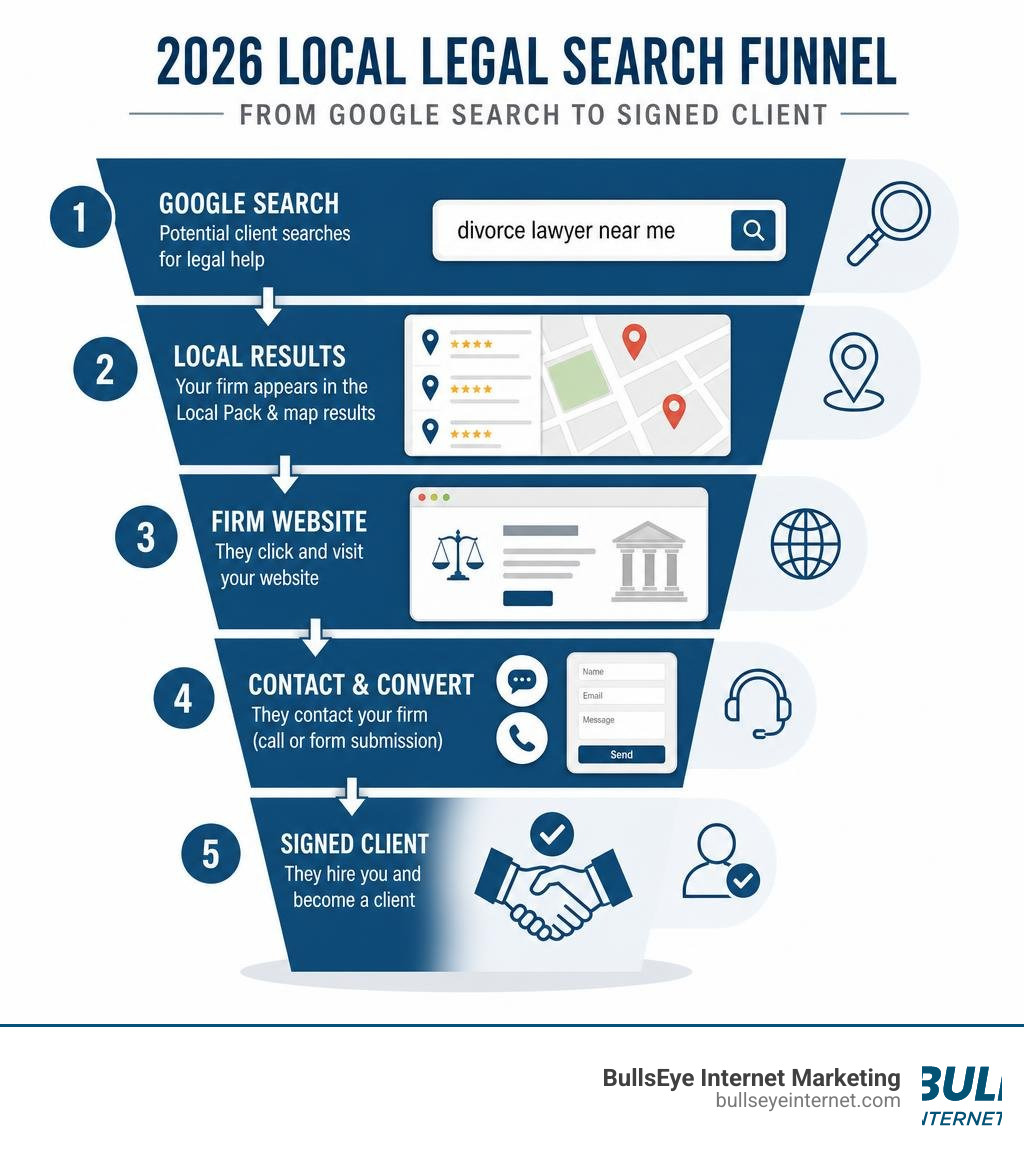
What is Attorney Local SEO and Why Does It Matter?
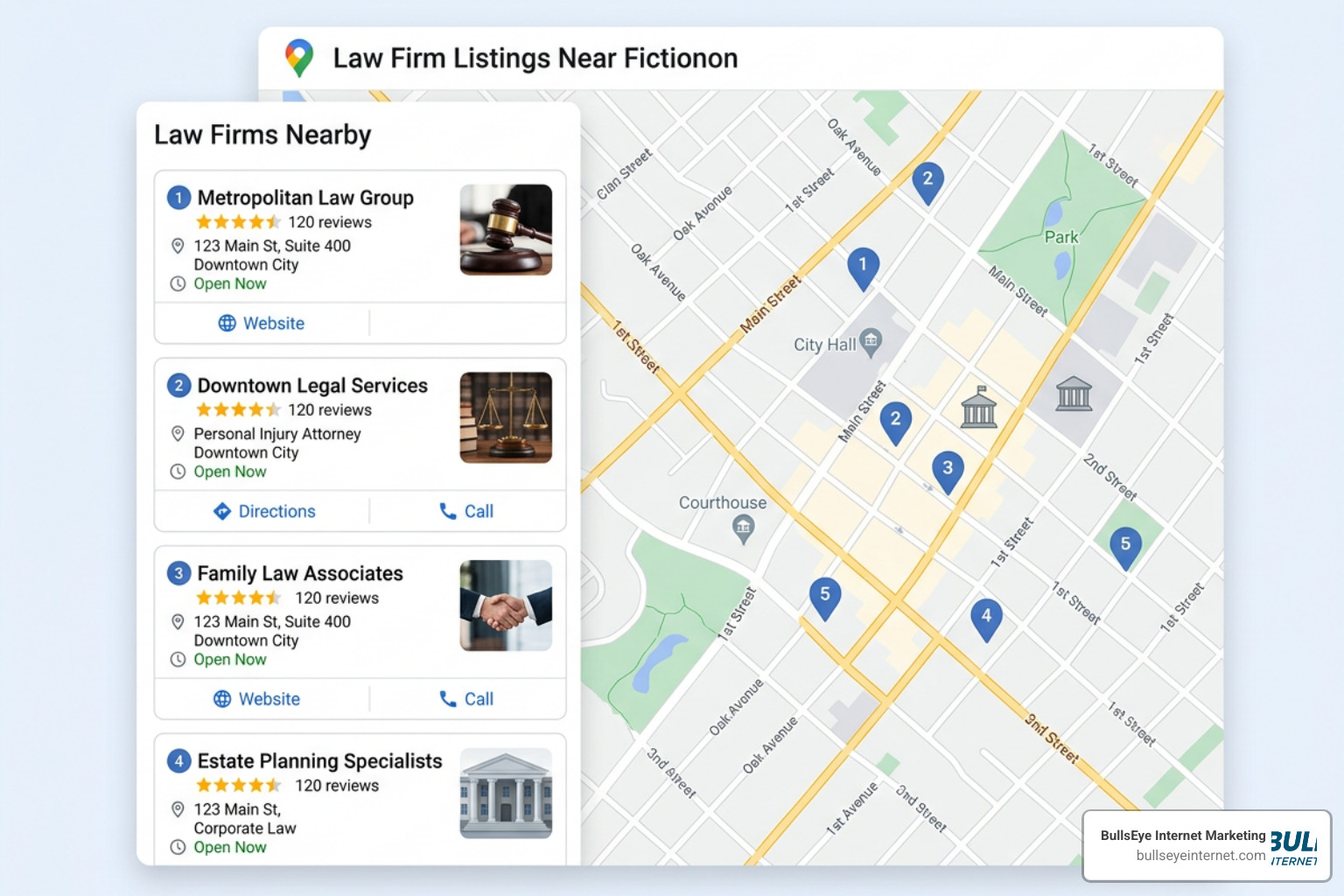
When a resident in West Palm Beach or Boynton Beach faces a sudden legal crisis, they do not dig out a dusty phone book. They pull out their smartphone and type in a high-intent query: “car accident lawyer near me” or “family law attorney in Miami Shores”.
Attorney local SEO is the exact science and art of ensuring your practice is the first one they see when that search happens. Unlike general SEO, which focuses on national or global informational keywords, local SEO targets geographically relevant, high-commercial-intent searches.
Why is this so critical for your firm? Consider these industry-defining statistics:
- 96% of people use search engines when they need legal advice.
- 85% of people use online maps to find local legal services.
- 88% of users will leave a website and never return if they have a bad mobile experience.
If your website isn’t optimized to capture these searches, you are essentially invisible to the local market. By focusing on How to Increase Your Law Firm’s Online Presence with Local SEO, you place your firm directly in front of active, motivated clients at the exact moment they need you. To understand how Google treats these local queries, you can also consult Google’s Official Guide on How to Improve Your Local Ranking.
How Google Decides Which Lawyers Rank Locally
Google’s local search algorithm does not guess who the best attorney is; it relies on three primary pillars to determine rankings:
- Relevance: How well does your law firm’s profile and website content match what the user is searching for? If someone searches for an “immigration lawyer in North Miami”, Google checks if your profile and landing pages explicitly reflect that practice area and location.
- Distance (Proximity): How close is your physical office to the user making the search? While you cannot control where a user stands when they search, you can maximize your reach across your entire target area.
- Prominence: How well-known, trusted, and authoritative is your law firm online? Google measures this by evaluating your reviews, the consistency of your local directories, and the quality of your backlinks.
By aligning your digital presence with these three factors, you can dramatically improve your visibility. For a deeper dive into geographic targeting in our home state, check out The Sunshine State of Search: Boosting Your Florida Law Firm’s Online Visibility.
The Core Components of Attorney Local SEO
To build a sustainable ranking position, your strategy must address several interconnected elements:
- Google Business Profile (GBP): The undisputed anchor of your local map presence.
- Local Citations: Consistent Name, Address, and Phone number (NAP) listings across reputable legal and local directories.
- Review Management: A steady stream of genuine, positive client reviews.
- Localized Content: Website pages tailored to specific South Florida neighborhoods and practice areas.
To help you visualize how local SEO compares to paid alternatives, we have outlined the core differences in the table below:
| Feature | Local SEO | Pay-Per-Click (PPC) |
|---|---|---|
| Cost Structure | Long-term investment; compounds over time | Pay-per-click; costs stop when budget stops |
| Average Cost per Lead | $50 – $100 (once mature) | $150 – $400+ (highly competitive) |
| Trust Signal | High; organic Map Pack listings build natural credibility | Moderate; clearly labeled as sponsored ads |
| Implementation Speed | Takes 3 to 6 months for major traction | Immediate visibility upon launch |
For more perspective on how these strategies interact, you can read about Local SEO for Attorneys & Lawyers – Juris Digital, explore the insights at Local SEO for Lawyers – Consultwebs, or check out Local SEO For Lawyers | Lawyer SEO Services.
Optimizing Your Google Business Profile for Maximum Visibility

Your Google Business Profile (GBP) is the single most important asset for local legal marketing. If your profile is incomplete, outdated, or keyword-stuffed, you risk losing your spot in the Local Pack—or worse, facing a profile suspension. To get started, refer to Search Engine Journal’s Complete Guide to Local SEO.
Here is our step-by-step blueprint to optimize your GBP for maximum local reach:
- Select the Precise Primary Category: Choose the category that matches your primary practice area (e.g., “Personal Injury Attorney”, “Divorce Lawyer”, or “Criminal Defense Attorney”). Do not just settle for the generic “Law Firm” designation if a more specific category applies.
- Define Your Service Areas: Clearly list the specific cities, suburbs, and ZIP codes you serve across South Florida, such as Coral Gables, Hollywood, or Delray Beach.
- Write a Compelling, Natural Description: Draft a business description that details your practice areas and geographic focus. Avoid keyword stuffing (e.g., “Best cheap divorce lawyer Miami free consultation”), which can trigger automatic Google suspensions. Instead, write naturally: “Serving South Florida families with compassionate divorce and custody representation from our Miami Shores office.”
- Add Keyword-Specific Services: Use the “Services” section to add detailed descriptions of specific legal matters you handle, such as car accidents, slip and falls, or medical malpractice.
- Keep Photos and Updates Active: Regularly upload high-resolution photos of your office, your team, and your community involvement. Post weekly updates (Google Posts) featuring legal FAQs, recent case results, or community news to signal to Google that your firm is active and legitimate.
Managing Reviews, Citations, and Backlinks
Once your GBP is optimized, you must feed the prominence algorithm with reviews, citations, and high-authority backlinks.
1. Review Velocity and Sentiment
Online reviews are both a powerful ranking signal and your ultimate conversion tool. 98% of consumers trust online reviews as much as personal recommendations, and 87% of people read them before choosing a local business.
To build a strong reputation:
- Ask at the Right Moment: Request reviews from clients immediately after a successful resolution or meaningful interaction.
- Encourage Specific Language: Ask clients to naturally mention their specific legal issue and location in their review (e.g., “They helped me with my car accident in Boynton Beach…”).
- Respond to Every Review: Write professional, prompt responses to both positive and negative feedback. Never reveal confidential client information in a response.
2. Building Clean Citations
A citation is any online mention of your law firm’s Name, Address, and Phone number (NAP). Inconsistency here (like having “Suite 100” on Yelp but “Ste. 100” on your website) confuses Google and dilutes your ranking power. Focus on claiming and cleaning up your listings in high-value legal directories:
- Avvo
- Justia
- Martindale-Hubbell
- FindLaw
- State and local bar associations
For targeted local optimization, you can check out specialized regional insights like SEO Marketing For Attorneys in Boynton Beach, FL and Law Firm SEO in Miami Shores, FL, or read our core overview of Local SEO.
Creating Localized Content and Navigating Ethical Rules
To rank organically below the Map Pack and signal deep geographic relevance to search engines, your website needs highly localized, practice-specific content. To understand the foundational mechanics of local content optimization, see Moz’s Guide to Local SEO Best Practices.
Instead of creating one generic page for your entire county, we recommend building dedicated practice area pages and neighborhood-level landing pages.
For example, South Florida is not one single legal market; it is a collection of distinct communities with unique demographics and legal needs:
- South Miami: High-value civil litigation and family law.
- North Miami & Biscayne Boulevard Corridor: Trilingual demand (English, Spanish, and Haitian Creole) for immigration and personal injury services.
- Boynton Beach & Delray Beach: Estate planning, probate, and elder law.
When writing these localized pages, do not just swap out the city names on duplicate templates. Write unique, valuable content that references local landmarks, specific municipal courts, county-specific filing processes, and community issues. If you are a personal injury attorney, write about known local traffic hazards or accident hotspots in your service area.
Ethical Considerations in Attorney Local SEO
Legal marketing is not like marketing a local restaurant; you are bound by strict ethical standards. Under the ABA Model Rules of Professional Conduct (particularly Rule 7.1 and 7.2), you must avoid misleading claims and protect client confidentiality.
When implementing your attorney local seo strategy, keep these ethical guardrails in mind:
- Avoid Unverifiable Superlatives: Do not refer to yourself as the “best criminal attorney” or “top personal injury lawyer” unless those claims are backed by verifiable, independent awards. Focus on process-based credibility instead.
- State Jurisdictional Limits clearly: Ensure your website and GBP explicitly list the states and courts where you are licensed to practice law.
- Maintain Client Confidentiality in Reviews: Even if a client leaves a detailed review describing their case, your response must never confirm or reveal confidential case details without explicit consent. Keep responses professional: “Thank you for your feedback. We are pleased we could assist you during this challenging time.”
- Avoid Unjustified Expectations: When publishing case results or testimonials, include clear disclaimers stating that past results do not guarantee future outcomes.
For specialized advice on navigating these rules within family law, you can read our guide on SEO for Family Law Attorneys.
The Future of Local Search: AI Engines and Performance Metrics
The local search landscape is shifting rapidly in 2026. Traditional search engine results pages are now deeply integrated with AI-driven summaries and conversational search assistants like ChatGPT, Gemini, and Perplexity.
This shift has introduced Generative Engine Optimization (GEO). AI engines do not rely solely on your website to answer user queries; they cross-reference information across the web, looking for entity consistency, public mentions, legal directories, and sentiment patterns.
To ensure your law firm is recommended by conversational AI search engines, you must:
- Maintain Absolute Entity Consistency: Ensure your firm’s name, practice areas, attorney bios, and contact details are identical across all platforms.
- Use Structured Schema Markup: Implement LocalBusiness and Attorney schema on your website to make it easy for AI crawlers to parse your data.
- Build Broad Digital Prominence: Secure mentions in local news outlets, legal publications, and community blogs to establish your firm as a trusted authority.
To learn more about how we adapt to these changes, explore our Local SEO Service.
Key Metrics to Measure Local SEO Success
To know if your attorney local seo investment is actually paying off, you must look beyond vanity rankings and track metrics that directly impact your bottom line. We recommend monitoring:
- GBP Insights (Actions): Track how many users click to call your office, request directions, or visit your website directly from your local listing.
- Call Tracking: Use dynamic number insertion (DNI) to trace exactly which phone calls originated from your local search listings.
- Local Share of Voice: Measure how often your firm appears in the top 3 Map Pack spots across your target geographic radius.
- Conversion Rate: Monitor the percentage of local website visitors who complete a consultation form or initiate a live chat session.
If you need a dedicated partner to monitor these metrics and keep your rankings growing, check out our Local SEO Agency page.
Frequently Asked Questions about Local Lawyer SEO
How long does it take to see results from local SEO for law firms?
Generally, you can expect to see initial movement in Map Pack visibility within 3 to 6 months. For highly competitive practice areas (such as personal injury or criminal defense) in dense South Florida markets, achieving dominant, sustainable organic rankings typically takes 6 to 12 months of consistent optimization.
Can a small law firm compete with large firms using local SEO?
Absolutely. In fact, local SEO is the ultimate equalizer. While massive firms can spend tens of thousands of dollars on broad PPC campaigns or highway billboards, Google’s local algorithm heavily prioritizes proximity and relevance. By optimizing your Google Business Profile for your immediate neighborhood and building a strong, local review profile, you can outrank national firms right in your own backyard.
How do Google Local Services Ads interact with local SEO?
Google Local Services Ads (LSAs) are the pay-per-lead ads that appear at the very top of Google search results, even above traditional PPC ads. They feature the “Google Screened” badge. While LSAs are a paid strategy, they pull data directly from your Google Business Profile (including your review rating).
Optimizing your GBP for local SEO directly improves your LSA performance and lowers your cost per lead. To learn more about setting up these ads, read our guide on Google Local Services Ads for Lawyers.
Why Local Attorney SEO Drives Firm Growth: BullsEye Internet Marketing
Building a dominant local presence for your law firm is not a one-time project; it is an ongoing strategy that requires consistent updates, clean data, and high-quality local content.
At BullsEye Internet Marketing, we do digital marketing differently. We specialize in generating actual calls and signed cases through GBP optimization, local SEO, PPC, and conversion optimization.
Our unique competitive advantages include:
- No Long-Term Contracts: We earn your business month after month based on real, measurable results.
- Exclusivity: We work with only one client per industry per geographic area, ensuring your competitors never benefit from the strategies we build for you.
Ready to claim your spot at the top of South Florida’s local search results? Read An Essential Guide to Advertising for Lawyers or contact us today to secure your geographic exclusivity before your competitors do!
