
How to Choose the Right Law Firm SEO Company for Long-Term Growth
Hiring the right law firm seo company helps your practice secure top search engine rankings, attract high-intent legal clients, and lower your cost per signed case.
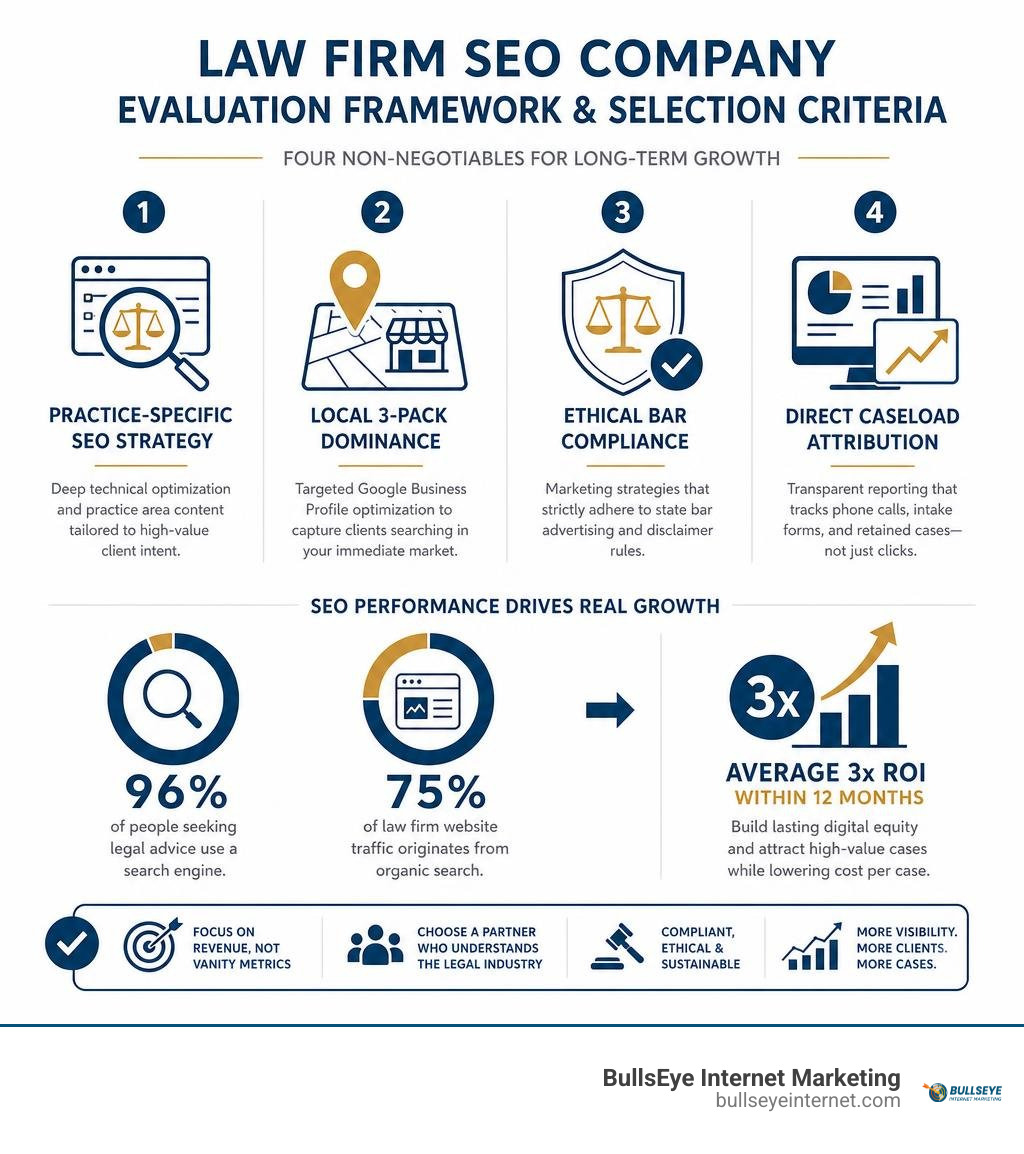
To select a partner that delivers real revenue rather than vanity metrics, focus on four non-negotiables:
- Practice-Specific SEO Strategy: Deep technical optimization and practice area content tailored to high-value client intent.
- Local 3-Pack Dominance: Targeted Google Business Profile optimization to capture clients searching in your immediate geographic market.
- Ethical Bar Compliance: Marketing strategies that strictly adhere to state bar advertising and disclaimer rules.
- Direct Caseload Attribution: Transparent reporting that tracks phone calls, intake forms, and retained cases instead of just clicks.
Search visibility directly dictates legal caseloads. In fact, 96% of people seeking legal advice use a search engine, and 75% of law firm website traffic originates from organic search. While pay-per-click costs continue to rise, a specialized legal SEO campaign builds lasting digital equity, delivering an average 3x ROI within 12 months.
I am Ronnie Katz, founder and Principal CEO of BullsEye Internet Marketing, where I have spent over 20 years guiding attorneys to sustainable growth as an experienced law firm seo company leader. Below, I will break down the exact framework managing partners need to evaluate agencies, eliminate marketing waste, and secure high-value cases.
Law firm seo company terms you need:
1. High-Impact SEO Strategies That Drive Retained Clients

When law partners approach us, they often ask why their existing digital presence yields high traffic numbers without a corresponding bump in signed retainers. The answer lies in the distinction between general web traffic and high-intent commercial discovery. A high-impact legal search strategy is built around practice area silos and rigorous keyword intent mapping.
Instead of writing vague commentary on broad legal topics, an elite agency maps out specific sub-practice silos. For example, a personal injury firm shouldn’t just target “injury lawyer.” They need dedicated silos for commercial trucking collisions, rideshare accidents, catastrophic workplace injuries, and wrongful death claims. We delve deeply into this structured hierarchy in our breakdown of Mastering Search Engine Optimization for Personal Injury Practices.
Content depth also makes an immediate impact on lead volume. Research shows that law firms that blog receive 97% more leads than those that don’t. However, this content must provide actionable answers to the exact questions injured plaintiffs or distressed families ask during a crisis.
Combining high-value educational content with a localized search architecture ensures your firm captures potential clients at the exact moment they need legal representation. For attorneys expanding within competitive markets, implementing our Step-by-Step Guide to Local Attorney SEO is critical for capturing geographic search intent.
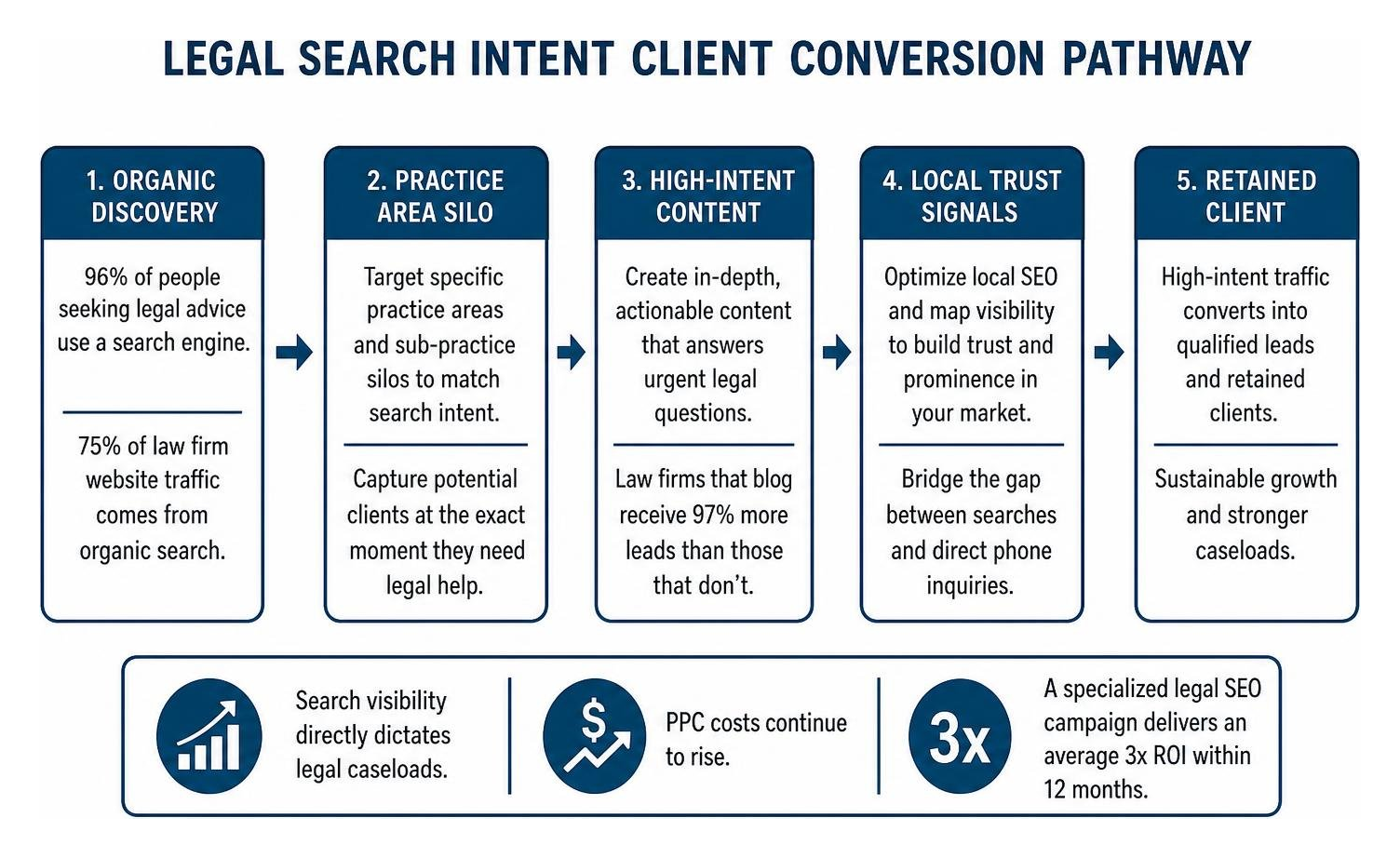
If your local footprint isn’t properly optimized across map services, you leave money on the table. Discovering How to Increase Your Law Firms Online Presence with Local SEO bridges the gap between top-of-funnel searches and direct phone inquiries.
What a Top-Tier Law Firm SEO Company Delivers in Technical Optimization
Behind every prominent digital practice is a clean technical foundation. Search engines index websites using mobile-first evaluation, meaning your desktop design is secondary to your mobile speed, responsiveness, and usability.
Key technical deliverables include:
- Site Architecture and Crawl Budget Optimization: Ensuring search spiders navigate deep sub-practice pages efficiently without hitting dead ends or duplicate content.
- Core Web Vitals: Delivering sub-second Largest Contentful Paint (LCP) and zero Cumulative Layout Shift (CLS), so prospective clients never bounce due to slow load times.
- Legal Schema Markup: Injecting structured data such as
LegalService,Attorney,areaServed, andaggregateRatingto feed search engines explicit contextual signals about your credentials. - Practice Page Hierarchy: Structuring parent and child URLs to ensure clear domain authority inheritance across every practice vertical.
Firms operating in competitive jurisdictions like Florida must pay special attention to geographic relevance signals. We explore these localized dynamics in The Sunshine State of Search Boosting Your Florida Law Firms Online Visibility.
Local Map Pack Dominance and Legal Directory Authority
For immediate caseload growth, ranking in the Google Local 3-Pack is paramount. Local searchers frequently convert on the spot by clicking the direct “Call” button on a Google Business Profile (GBP).
Achieving consistent placement in the Local Pack requires three synchronized elements:
- Name, Address, and Phone (NAP) Consistency: Absolute consistency across all directories, bar registries, and aggregator databases.
- Review Generation Systems: Proactive, compliant review collection workflows that prompt satisfied clients to leave authentic feedback.
- High-Authority Legal Citations: Building placements on respected platforms such as the directory for Best Lawyers in Martin County, FL – Justia to solidify geographic and topical relevance.
Combining this organic citation profile with Google Screened badges establishes immediate credibility before a client even clicks through to your website.
2. Navigating Legal SEO Compliance and Market Challenges

Marketing a law practice carries ethical obligations that general e-commerce agencies simply do not understand. State bar associations enforce rigorous rules regarding legal advertising, specialty claims, and client testimonials.
An unqualified agency might inadvertently use prohibited language—such as guaranteeing case outcomes or labeling an attorney as a “specialist” without official bar board certification. Navigating these guardrails requires a partner versed in Lawyer Advertising Rules Solutions for Modern Firms to ensure every published page satisfies ethics guidelines and includes mandatory disclaimers.
Beyond compliance, attorneys face intense geographic competition. In major metropolitan areas, hundreds of firms compete for a handful of prime search spots. Mastering How Local Ads for Lawyers Improve Visibility in High-Competition Cities illustrates how sophisticated firms blend paid positioning with organic search to capture market share.
Furthermore, search engines frequently update their algorithms to prioritize real legal experience and authoritative sourcing. Agencies must actively guard against keyword cannibalization—where multiple pages on your site compete for the same query—while maintaining spotless backlink profiles that protect your domain from algorithmic penalties.
3. How to Calculate and Track Legal SEO Return on Investment
Law firm partners cannot afford to evaluate marketing campaigns on vague metrics like impressions, keyword positions, or raw traffic. The only metric that truly matters is your Cost Per Signed Case (CPSC) and the resulting revenue generated relative to your investment.
The economics of search make a compelling case for organic optimization over exclusive reliance on paid search. Consider the comparison below:
| Performance Metric | Pay-Per-Click (PPC) Advertising | Organic Law Firm SEO |
|---|---|---|
| Average Benchmark CPC | $6.75 baseline (often $150+ in PI) | $0 per click (fixed campaign investment) |
| Traffic Longevity | Stops immediately when ad budget pauses | Compounds over time, retaining ranking equity |
| Share of Web Traffic | Captures ~15–25% of commercial clicks | Captures 75% of law firm website traffic |
| Average 12-Month ROI | Linear (1x–2x depending on management) | Average 3x return on investment |
| Trust & Authority | Marked as sponsored advertisement | High consumer trust in organic results |
Because the baseline cost per click across general legal keywords sits at $6.75—and regularly surges past $200 for competitive personal injury queries—relying entirely on paid ads leads to escalating acquisition costs. Investing in organic search allows you to build an enduring digital asset.
To accurately track your return on investment:
- Implement Dynamic Call Tracking: Assign unique tracking numbers across organic channels, ensuring intake calls dynamically integrate into your CRM.
- Track Lead Attribution in Practice Management Software: Connect your intake software (such as Clio, Filevine, or Lead Docket) directly to organic acquisition channels.
- Calculate True Lifetime Case Value: Assess not just immediate retainer fees, but long-term case value and referral equity generated by each signed client.
For an in-depth framework on integrating your pipeline with conversion tracking, review our guide on How to Build a Client Acquisition Machine for Your Law Practice.
4. Key Criteria for Choosing the Right Law Firm SEO Company
Selecting an agency is a strategic partnership that can determine your firm’s revenue trajectory for years. Managing partners should evaluate potential vendors using rigorous vetting standards.
Discover Why Hiring a Legal SEO Specialist Is Your Best Growth Strategy rather than settling for a general digital marketing shop.
Red Flags When Interviewing a Law Firm SEO Company
When evaluating proposals, watch for common warning signs that indicate an agency may harm your firm’s reputation or waste your budget:
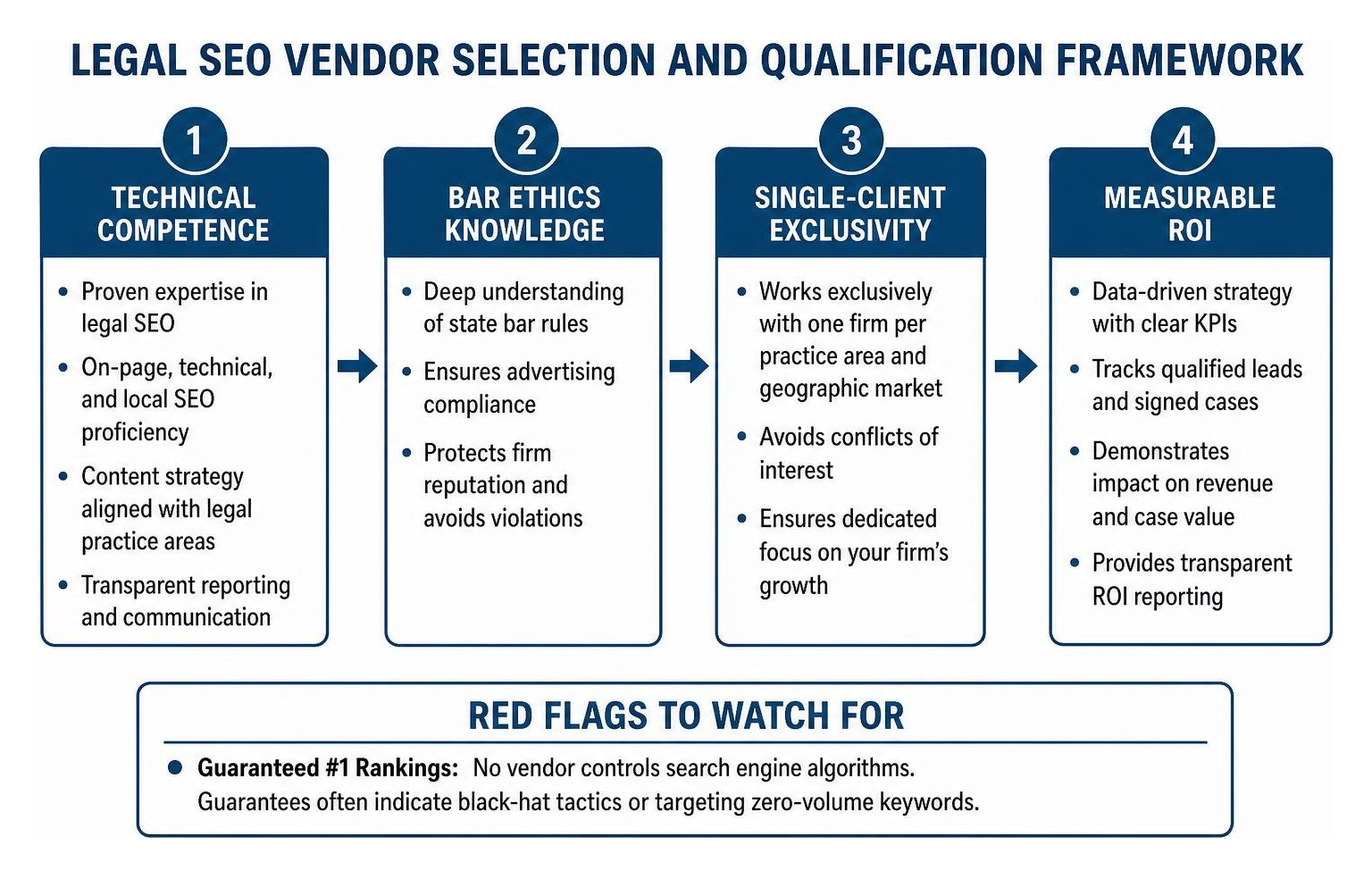
- Guaranteed #1 Rankings: No vendor controls search engine algorithms. Guarantees often indicate black-hat tactics or targeting zero-volume keywords.
- Long-Term Lock-In Contracts: Beware of agencies demanding 12-to-24-month commitments before proving performance. Confidence is reflected in flexible, month-to-month arrangements.
- Proprietary CMS Lock-In: If an agency insists on building your site on their proprietary closed platform, they hold your digital assets hostage if you ever leave.
- Lack of Legal Focus: Generalist agencies often outsource legal writing to inexpensive freelancers who produce legally inaccurate or uninspired copy.
- Hidden Attribution: If the agency provides opaque dashboards that blur the line between organic leads and directory clicks, transparency is missing. Discover genuine Attorney Marketing Solutions How to Stop Chasing Clients and Start Attracting Them that keep data crystal clear.
Essential Questions Managing Partners Must Ask During Vendor Audits
Before signing any agreement, schedule an audit call and ask the following direct questions:
- “Do you provide strict practice area exclusivity within my geographic territory?” (If they represent your direct competitor across the street, their allegiance is divided.)
- “Who writes our practice area content, and what legal training or oversight do they have?”
- “How do you ensure our marketing assets comply with our specific state bar advertising rules?”
- “Do we retain 100% ownership of our website, domain, content, and analytics data if we terminate services?”
- “What is your agency’s average client retention rate?”
For localized agency evaluations, explore our Detailed Reviews of the Top 10 Law Firm Marketing Agencies Miami to understand what separates elite performers from the rest.
Frequently Asked Questions About Legal SEO Partners
How long does it take for a law firm to achieve positive ROI from organic SEO?
While minor technical fixes and Google Business Profile optimizations can generate quick-win calls within 60 to 90 days, significant organic search performance generally matures within 6 to 12 months. This timeline accounts for site crawl cycles, backlink accumulation, and competitive displacement. By month 12, firms executing a consistent strategy typically see an average 3x return on investment as organic case volume compounds.
How does SEO compare to PPC for acquiring high-value legal cases?
PPC offers immediate ad placement, making it a valuable tool for short-term lead flow. However, PPC ceases generating leads the second your ad spend stops. Organic SEO takes longer to ramp up but creates permanent digital assets and captures the 75% of legal searchers who instinctively skip paid ads. We explore strategies for balancing both approaches in Winning the Paid Search Game in Personal Injury Law.
Should a law firm demand geographic exclusivity from an SEO agency?
Yes. It is an inherent conflict of interest for an agency to optimize two competing personal injury or family law practices for the exact same local search terms in the same territory. At BullsEye Internet Marketing, we operate on a strict policy: we work with only one client per industry per geographic area, providing our partners with an exclusive competitive advantage.
Conclusion
Building a dominant legal practice requires an SEO partner that treats search visibility as an engine for case acquisition, not an exercise in vanity metrics. By prioritizing practice-siloed content, meticulous technical health, local map pack dominance, and strict state bar ethics compliance, your firm can capture steady, high-value retainers from organic search.
At BullsEye Internet Marketing, we deliver results without locking you into restrictive long-term contracts. We stand behind our performance month after month, protecting your market dominance through our strict geographic exclusivity guarantee.
To refine your broader client acquisition strategy, explore An Essential Guide to Advertising for Lawyers and take control of your firm’s digital growth.
