
Core Digital Channels for New Patient Marketing
To build a reliable flow of incoming leads, practices must embrace multi-channel acquisition. Relying on a single referral source or a lone billboard leaves your schedule vulnerable to market shifts. Combining local search, paid media, and structured directory management creates a broad net that catches patients at every stage of their decision funnel. For a deeper breakdown of multi-channel frameworks, review the New Patient Lead Generation Strategies guide.
Mastering Local SEO and Google Business Profiles
When someone experiences sudden tooth pain or searches for a nearby specialist, they don’t look at page two of Google. They click on the Google Map Pack—the top three local listings displayed under the search bar.
Dominating this local map pack requires optimizing your Google Business Profile (GBP) and ensuring strict Name, Address, and Phone number (NAP) consistency across every online citation. Only 3% of surveyed doctors prioritize local SEO, creating a massive opportunity for forward-thinking clinics to outrank competitors.
- Claim and Complete Every Field: Fill out services, opening hours, accepted insurance, and business descriptions.
- Upload High-Quality Photos: Profiles with 10+ authentic clinic photos receive 42% more directions requests and 35% more website click-throughs than those relying on stock photography.
- Maintain Citation Consistency: Ensure your NAP data matches exactly on directories like Yelp, Healthgrades, Vitals, and RateMDs.
For a step-by-step diagnostic on fixing your search engine optimization, read our guide: Is Your Website Sick? The Cure is Medical SEO.
Leveraging Paid Search and Google Local Services Ads
While organic SEO provides long-term authority, Pay-Per-Click (PPC) advertising and Google Local Services Ads (LSAs) generate instant high-intent traffic. With Google processing over 6.75 million health searches every day, running targeted ads puts your practice right in front of prospective patients who are ready to schedule today.
LSAs operate on a pay-per-lead model rather than pay-per-click, meaning you only pay when a patient calls or messages you directly through the ad. Combining search ads targeting high-intent procedural keywords (e.g., “emergency dentist near me”) with LSAs builds immediate search prominence.
- Learn more about setting up LSA campaigns via Google Local Services Ads for Health Care Services and specialized tips for dental clinics at Dentist Google Local Ads Proven Tips to Convert More Clicks into Patients.
- Explore advanced LSA execution strategies in Why Healthcare Google Local Ads Are a Game-Changer for Clinics.
- For specialty coverage, check out Google Local Services Ads for Dentists, Dermatologist Google Local Ads Strategies to Outrank Competitors, and Google Local Services Ads for Wellness Services.
- Master general paid media strategies using The Ultimate Guide to Medical Practice Advertising and PPC.
Harnessing Social Media and Content Marketing
With 70% of the US population active on social media and 80% of internet users looking for health information on social networks, these platforms are vital for trust-building. In fact, 41% of patients report that social media content influences their choice of healthcare provider.
Publishing educational blogs (targeting word counts between 400 and 1,000+ words) and publishing short-form video clips humanizes your clinical team. Address practical patient concerns—such as recovery times, treatment risks, or home-care tips—to demonstrate expertise. Avoid posting clinical or graphic surgical images; focus instead on warm team introductions, patient testimonials (with explicit consent), and clear preventive care guidance.
Optimizing Your Website as a High-Converting Digital Front Door
Your practice website functions as your digital front door. If it is slow, clunky, or missing basic information, prospective patients will hit the back button and visit a competitor.
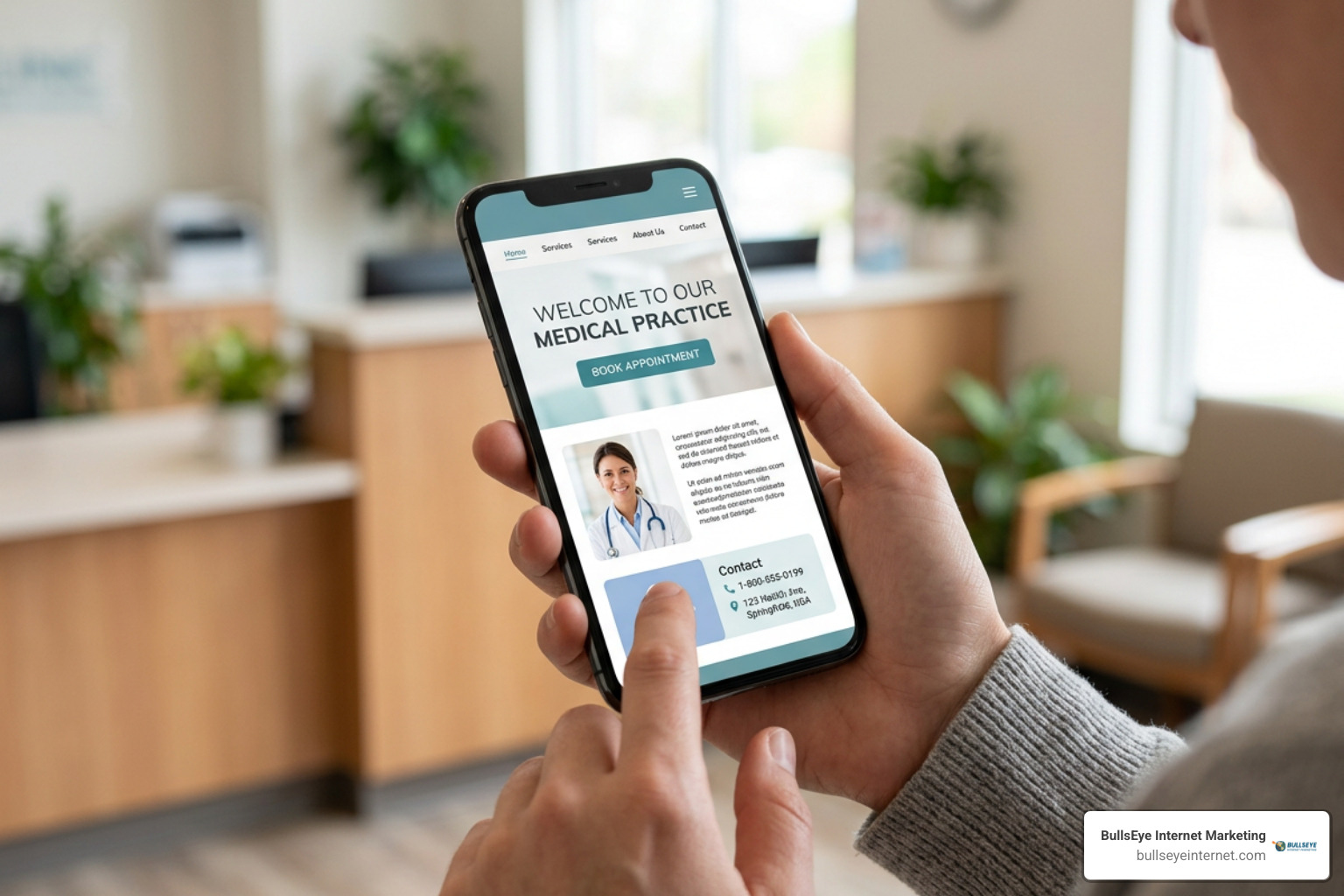
A direct-response healthcare website must feature clear contact details, accepted insurance lists, provider credentials, and responsive design. Since over half of all health searches occur on smartphones, pages must load in under 3 seconds with thumb-friendly scheduling paths and single-click call options.
Streamlining Online Booking and Inquiry Response Speed
Removing booking friction is the fastest way to boost conversion rates. Integrating real-time online scheduling systems allows patients to self-select appointments without waiting for business hours—a feature preferred by over 50% of healthcare consumers.
Response speed to web form inquiries is equally vital. Research demonstrates that responding to a web lead within 5 minutes increases conversion likelihood by 21 times compared to waiting an hour. Conversely, waiting 24 hours can cut lead conversion rates in half. Implementing automated SMS confirmation tools, setting up web chat options (preferred by 62% of mobile users), and training staff to answer calls promptly eliminates leakage from your booking funnel.
Tailoring High-Intent Landing Pages for Specialized Care
Broad homepages rarely convert paid traffic efficiently. When running ad campaigns for specialized treatments, direct users to procedure-specific landing pages that directly address their search intent.
Ensure these pages include prominent phone numbers above the fold, trust badges, verified reviews, transparent payment or financing details, and unambiguous call-to-action buttons. For niche medical strategies, see our detailed breakdowns on Cosmetic Dermatology Marketing and Aesthetic Clinic Marketing.
Building Trust Through Online Reviews and Patient Referral Programs
Reputation drives revenue in modern healthcare. Over 86% of consumers read reviews for local businesses, and 50% trust online reviews as much as personal recommendations from friends or family.
| Acquisition Channel | Average Patient Acquisition Cost (PAC) | Relative Conversion Efficiency | Primary Strengths |
|---|---|---|---|
| Google Local SEO / GBP | Low | Very High | Captures high-intent local searches with zero ad spend |
| Google Ads (PPC) | Medium to High | High | Instant visibility; precise keyword and geo-targeting |
| Patient / Physician Referrals | Low | Extremely High | Exceptional conversion rate and high patient retention |
| Social Media Ads | Medium | Moderate | Effective for visual, elective, and aesthetic treatments |
| Direct Mail & Community Events | High | Moderate | Strong local brand awareness among older demographics |
Driving Five-Star Reviews to Maximize Conversion
Despite 22% of doctors viewing patient reviews as their single most effective growth driver, 39% never actively ask for them. However, 68% of patients will leave a review if directly asked.
To systematically build your review count:
- Automate Requests: Send direct text or email links within 2 hours of checkout while the positive experience is fresh.
- Reach Market Dominance: Aim for 100+ reviews with a minimum 4.7-star rating to stand out in local map search listings.
- Respond Responsibly: Acknowledge all positive and negative feedback within 48 hours. Never reveal protected health information (PHI) or acknowledge clinical visits in public review replies to maintain strict HIPAA compliance.
For academic insights into patient behavior and digital trust, see the published research on Digital Marketing for Private Practice Research.
Designing an Effective Referral Program for New Patient Marketing
While 42% of doctors rank word-of-mouth referrals as their top acquisition method, only 38% have a structured referral program in place. A dual-pronged referral strategy targets both current patients and professional peers:
- Patient Referral Networks: Encourage existing patients to recommend friends by offering compliant tokens of appreciation, like entry into seasonal wellness raffles or care packages.
- Physician-to-Physician Networks: Specialists should map the top 20–30 primary care clinics within a 15-mile radius. Establish introductory lunch-and-learns and send specialist consultation notes back to referring doctors within 48 hours. Fast communication reassures referring physicians that their patients are in good hands.
Integrating Traditional Marketing with Modern Acquisition Strategies
While digital media yields high conversion efficiency, combining offline channels creates local brand authority that reinforces digital ad campaigns.
Community Engagement, Events, and Direct Mail
Traditional outreach continues to perform exceptionally well when targeting specific demographics, such as older adults and young families:
- Health Fairs and School Sponsorships: Participating in local wellness events, sponsoring youth sports leagues, or volunteering for school boards positions your practice as a trusted community pillar.
- Targeted Direct Mailers: Sending postcard mailers to newly moved residents within your 5-to-15-mile primary service area introduces your clinic right when families are actively looking for local healthcare providers.
Balancing PPC and Organic SEO for Cost-Effective New Patient Marketing
Achieving sustained growth requires balancing immediate paid acquisition with long-term organic search equity.
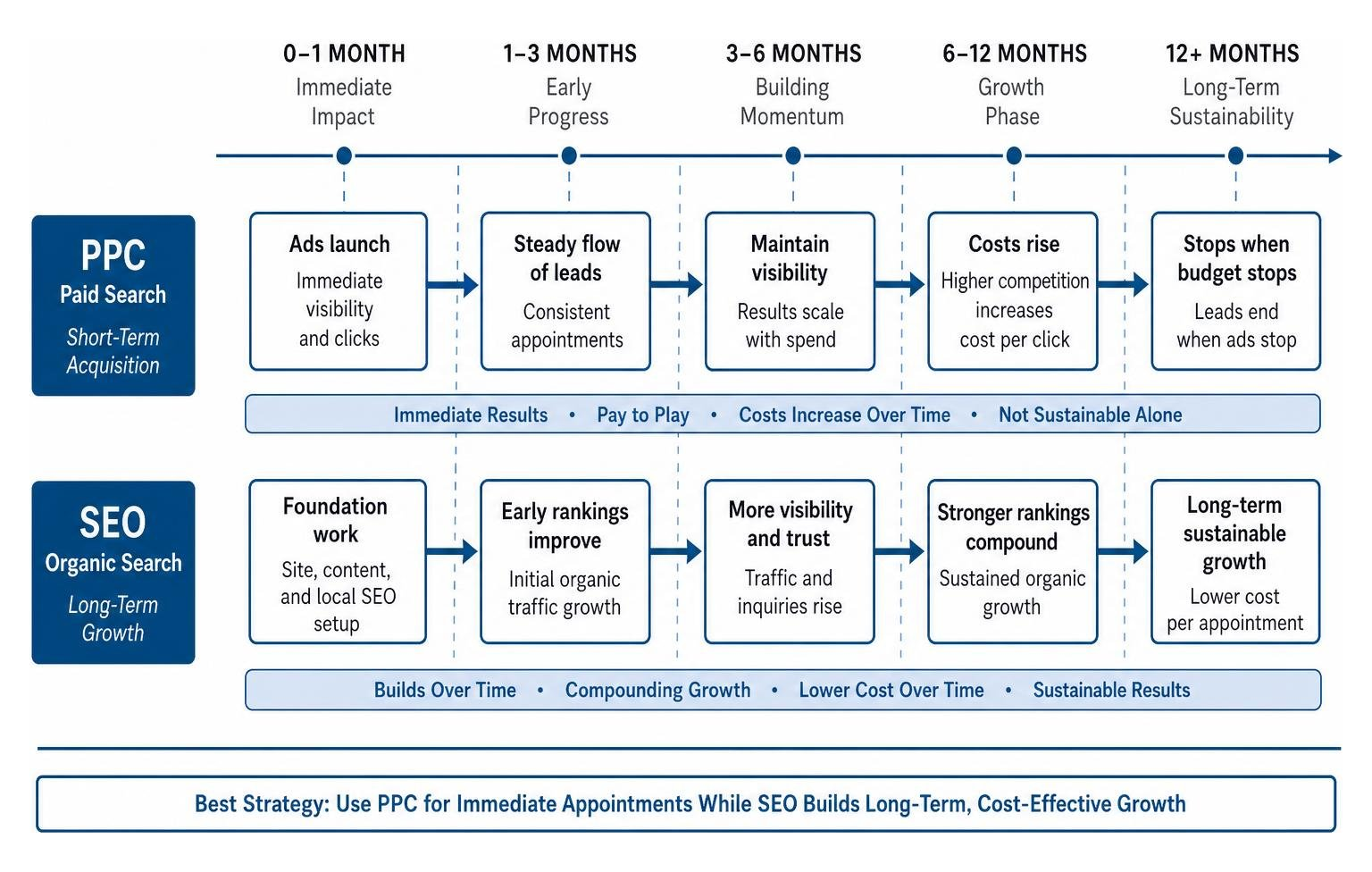
Paid search ads act like a faucet—providing instant booked appointments while your organic search presence builds momentum. Over time, as your local SEO and review counts mature, organic appointments cost significantly less per booking, balancing your overall Patient Acquisition Cost (PAC).
Maintain a healthy target PAC-to-LTV (Lifetime Value) ratio below 20% across all channels. For step-by-step guidance on structuring budgets, consult the Patient Acquisition Playbook for Medical Practices. For practices in their initial launch year, review How to Market a New Medical Practice (The Year One Playbook).
Key Metrics: Measuring and Tracking Patient Acquisition ROI
If you don’t measure your acquisition pipeline, you can’t optimize it. Healthcare practices must look beyond vanity metrics like website clicks or ad impressions and focus directly on booked appointments and revenue.

Essential KPIs Every Medical Practice Must Audit
To maintain profitable growth, track these fundamental metrics monthly:
- Patient Acquisition Cost (PAC): Divide total marketing spend (agency fees, software, ad costs) by total new patients acquired over a rolling 90-day period.
- Lifetime Value (LTV): The net revenue generated by a patient panel throughout their care tenure (ranging from $1,500–$3,500 for primary care up to $15,000+ for surgical specialties).
- Front Desk Booking Conversion Rate: The percentage of incoming calls converted into scheduled appointments. Studies show 42% of calls to medical practices go unanswered, and 59% of qualified callers fail to book due to poor call scripting.
- Lead Response Velocity: Tracking how quickly staff follow up on web form submissions and chat inquiries.
Frequently Asked Questions About New Patient Marketing
What is a reasonable Patient Acquisition Cost (PAC) for a private practice?
A reasonable PAC varies by medical specialty but should always stay under 20% of the patient’s Lifetime Value (LTV). Primary care practices typically aim for a PAC between $100 and $250, while specialized medical or aesthetic practices can comfortably spend $300 to $800+ per patient given higher overall treatment values.
How long does it take for local SEO to bring in new patients?
Initial results from local SEO optimizations—such as Google Business Profile updates, citation cleanup, and review acquisition—typically emerge within 60 to 90 days. Achieving consistent top-3 Map Pack placement in competitive metropolitan markets generally requires 6 to 12 months of sustained optimization and review momentum.
How can front desk performance impact new patient acquisition rates?
Your front desk is your chief conversion engine. Unanswered calls, long hold times, or untrained staff who struggle to answer basic insurance or scheduling questions can waste thousands of dollars in ad spend. Auditing call recordings, implementing call tracking, and training staff on appointment scheduling scripts often doubles booking conversion rates without spending an extra dollar on ads.
Conclusion
Building a successful new patient marketing strategy isn’t about relying on luck or waiting for word-of-mouth referrals. It requires a systematic approach: claiming your local search profiles, running high-intent paid campaigns, collecting verified patient reviews, and training your front desk to convert every inquiry into a scheduled visit.
At BullsEye Internet Marketing, we have helped healthcare clinics expand their patient panels since 2006. We operate on a strict model designed to give our clients a true market advantage: no long-term contracts and complete geographic exclusivity—meaning we work with only one practice per specialty in your service area.
Ready to fill your appointment book with steady, predictable patient growth? Boost Your Practice Growth with Professional Service Ads or contact BullsEye Internet Marketing today to claim your market territory!
