
Why Hiring a Google Maps SEO Expert Could Be Your Best Business Decision This Year
Looking to hire a Google Maps SEO expert? Here’s what you need to know fast:
| What you want | What to look for |
|---|---|
| Rank in the Google 3-Pack | Expert GBP optimization + review strategy |
| More local calls and leads | Citation building + proximity targeting |
| Transparent results | Call tracking + revenue attribution |
| No long-term risk | Month-to-month contracts |
| Fast timeline | 90–120 days to top 3 (realistic benchmark) |
If your business isn’t showing up in the top three results on Google Maps, you’re likely invisible to the majority of local customers searching for what you offer. That’s not an exaggeration — over 70% of local searchers never scroll past the Google 3-Pack, and the business ranked #1 captures roughly 94% of map clicks while the one in #3 gets just 11%.
The math is brutal. And it’s happening right now, every time someone searches for your service in your city.
Local search is one of the most high-intent environments in all of digital marketing. 46% of all Google searches have local intent. People searching “plumber near me” or “HVAC repair in Dallas” aren’t browsing — they’re ready to call. And 78% of customers who find a business in the top three Google Maps listings do exactly that.
The problem is that most business owners either don’t know how Google Maps ranking actually works, or they’ve tried generic SEO services that moved the needle nowhere. Google Maps SEO has its own rules, its own signals, and its own algorithm — and it’s getting more complex every year as AI Overviews, entity optimization, and geographic grid targeting reshape the landscape.
I’m Ronnie Katz, founder of BullsEye Internet Marketing, and since 2006 I’ve helped local businesses across competitive industries dominate Google Maps search results as a hands-on Google Maps SEO expert — managing everything from Google Business Profile optimization and citation building to AEO and GEO for AI-powered search. In this guide, I’ll walk you through exactly what it takes to hire the right expert and what a legitimate, results-driven Maps SEO strategy looks like in 2026.
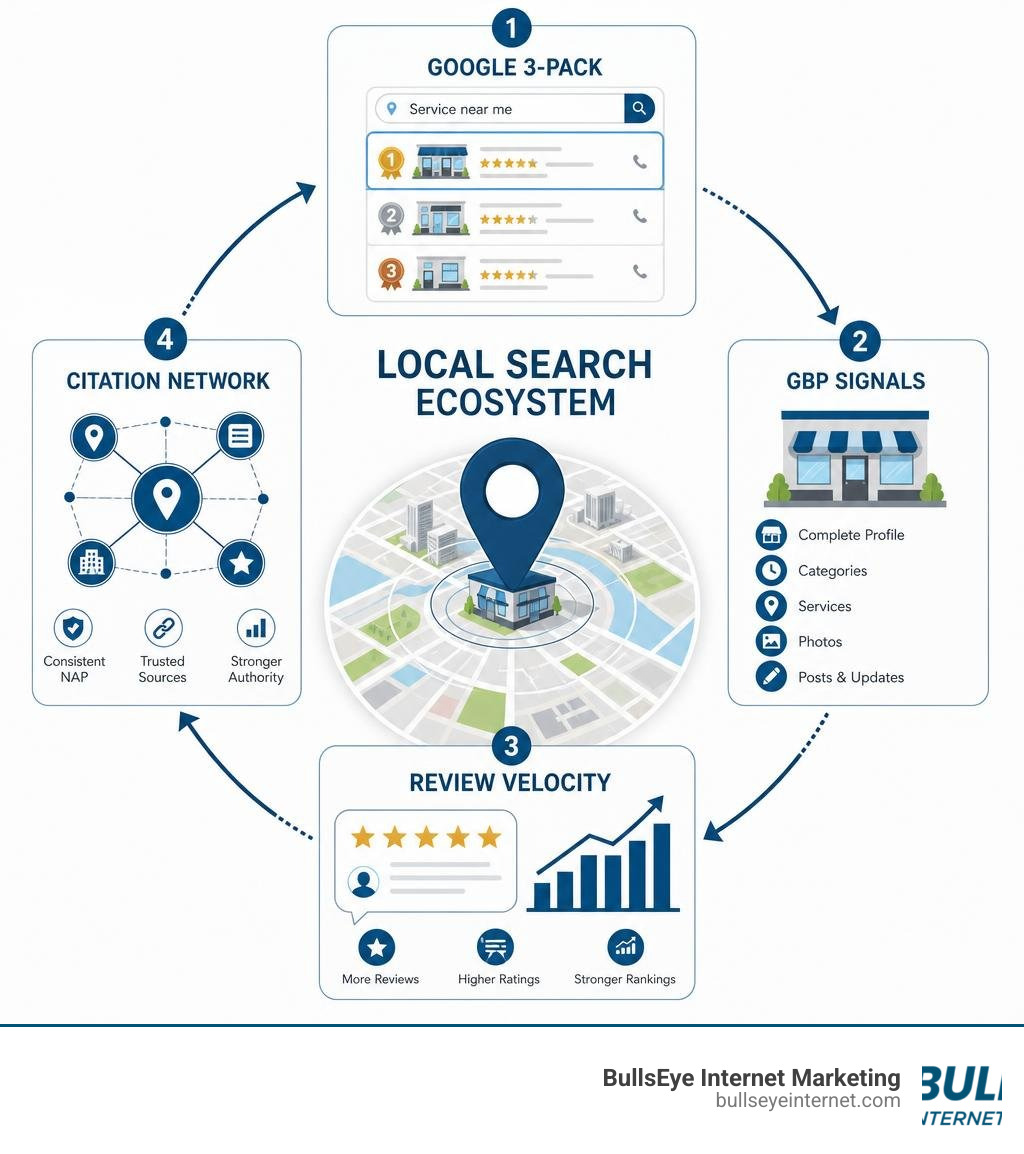
Google Maps SEO expert terms to remember:
What is Google Maps SEO and Why Does It Matter?
Google Maps SEO is the process of optimizing your business’s online presence to rank higher in the local Map Pack (often called the 3-Pack) and inside Google Maps itself. When potential customers perform local search queries, Google uses a distinct set of ranking factors compared to its standard organic search results.
For local businesses, especially service providers and home service professionals operating in South Florida — from West Palm Beach down to Fort Lauderdale and Miami — being visible in these map listings is the single fastest way to drive inbound calls and booked jobs.
Google relies on three core pillars to determine local rankings:
- Relevance: How well your business profile matches the user’s search intent.
- Distance: How close your physical business location is to the searcher or the specified geographic area.
- Prominence: How well-known, trusted, and authoritative your business appears across the web.
Understanding and manipulating these three pillars requires a highly specialized skill set. Learn more about local SEO services to see how these elements combine to build a complete local marketing system.
Google Maps SEO vs. Traditional Organic SEO
While traditional organic SEO focuses on ranking your website pages for informational or transactional keywords globally or nationally, Google Maps SEO is hyper-focused on geographic proximity and user intent.
Traditional organic SEO relies heavily on backlink quantity, domain authority, and deep editorial content. Google Maps SEO, on the other hand, centers around your Google Business Profile (GBP), customer reviews, consistent citation data, and localized behavioral signals.
| Feature | Google Maps SEO | Traditional Organic SEO |
|---|---|---|
| Primary Property | Google Business Profile (GBP) | Business Website |
| Key Ranking Factors | Relevance, Distance, Prominence, Reviews | Backlinks, Content Depth, Domain Authority |
| Primary Search Intent | Immediate Local Action (Calls, Directions) | Information Gathering, E-commerce, Research |
| Visual Real Estate | Dominates mobile screens (Top of SERP) | Located below the Map Pack and paid ads |
| Typical Conversion Rate | High conversion (61% of mobile local searches buy) | Moderate conversion based on funnel depth |
Understanding this distinction is critical because many generalist agencies try to apply standard organic SEO playbooks to local map listings, which yields little to no progress. To rank in the map pack, you need a strategy tailored specifically to local geography.
The Anatomy of the Google 3-Pack
The Google 3-Pack is the highly coveted block of three local business listings that appears at the absolute top of Google’s search results for queries with local intent. On mobile devices, this pack takes up almost 100% of the initial visual real estate, pushing standard organic results far below the fold.
Because mobile users click map results 50% more often than desktop users, missing out on the 3-Pack means you are essentially invisible to a massive portion of your market. In fact, position #1 in the Local Pack captures about 94% of all map clicks, whereas position #3 gets just 11%, and position #4 (which requires clicking “More businesses”) is practically non-existent to consumers.
To bridge this gap and establish a dominant presence, you must optimize your digital footprint. Discover how to master local SEO for Google Maps visibility to understand the technical details of how the 3-Pack functions on both desktop and mobile devices.
Key Ranking Factors in the Local Map Pack
To consistently place your business in the top three positions, a Google Maps SEO expert must optimize for a complex web of algorithm signals. These signals are constantly analyzed by Google to ensure they provide users with the most accurate, reliable, and close-by recommendations.
Relevance and Google Business Profile Optimization
Your Google Business Profile is the absolute foundation of your local SEO strategy. If your profile is incomplete, unverified, or poorly structured, no amount of off-site optimization will save your rankings.
- Primary Category Selection: This is the single most important on-profile ranking factor. Your primary category must precisely match your primary money keyword. For instance, if you are a roofing contractor in Fort Lauderdale, setting your primary category to “Roofer” rather than a generic “Contractor” is essential.
- Secondary Categories: You should add 3 to 5 highly relevant secondary categories to capture broader search terms without diluting your primary focus.
- Business Description: Use your 750-character business description to naturally incorporate buyer-intent keywords alongside geographic terms, highlighting your service areas.
- Services List: Populate your services list with detailed, keyword-rich descriptions of every specific service you offer.
- Attributes: Enable all relevant attributes (such as “locally owned & operated,” “online appointments,” or specific accessibility options) to help Google match your profile with highly specific user queries.
To dive deeper into how these on-profile optimizations influence Google’s algorithm, check out these Google Maps SEO strategies for actionable setup guidelines.
Proximity and S2 Cell Targeting
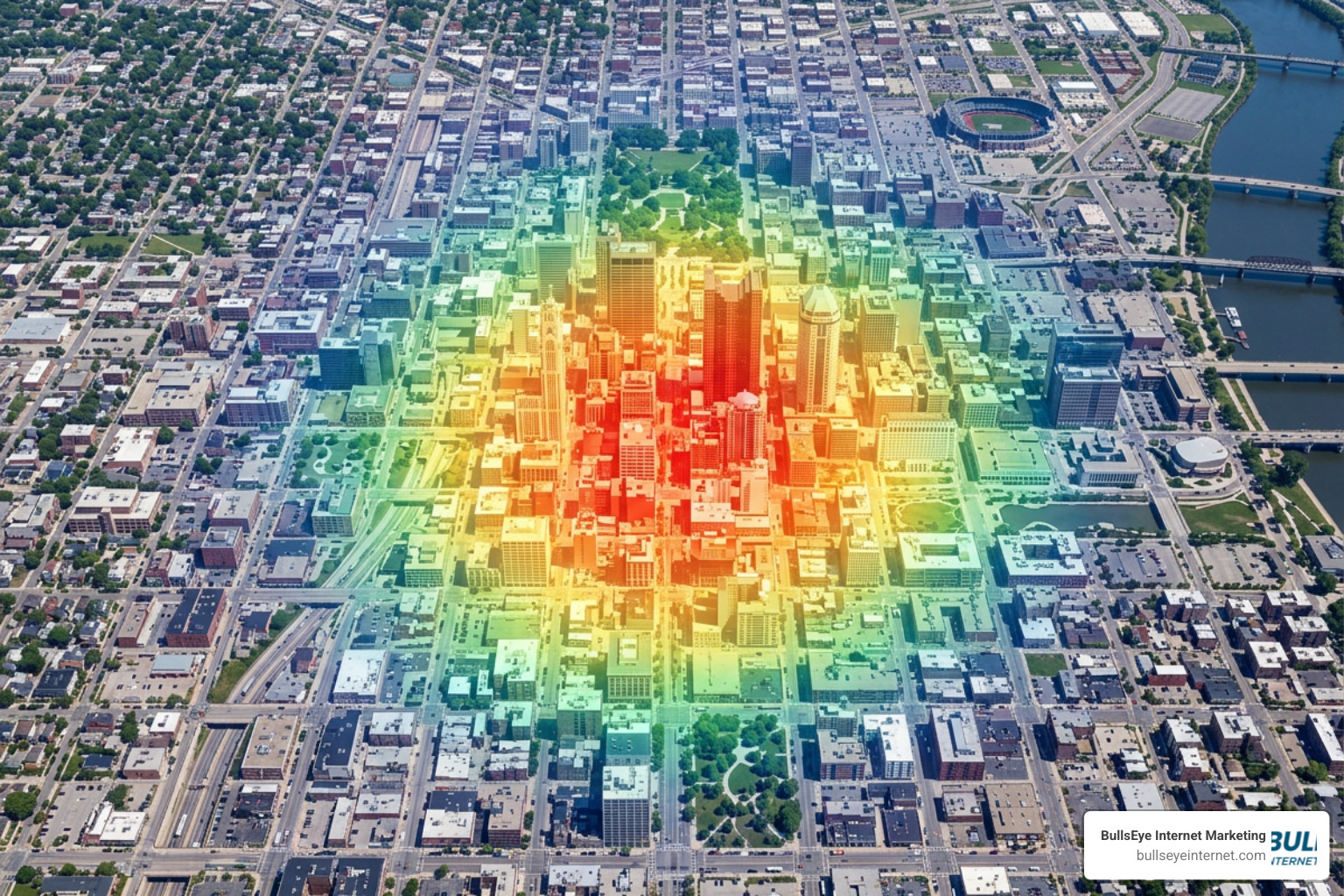
Proximity has always been a key ranking factor, but how Google calculates it is highly technical. Google divides the world into a geographic grid system using S2 cells (typically Levels 10 to 14 for neighborhood-scale local searches).
The algorithm looks at the “occupancy signal” within these S2 cells to determine which businesses have the strongest local authority in a given neighborhood. If your business is physically located in one neighborhood, your rankings will naturally decay as searches occur further away.
To combat this “distance decay,” a Google Maps SEO expert uses advanced proximity tactics:
- Neighborhood Spoke Pages: Creating dedicated service pages on your website for specific neighborhoods and zip codes in your target market.
- Localized Behavioral Signals: Generating real-world directions requests and calls from target S2 cells to signal to Google that your business is relevant to those outer areas.
By expanding your digital authority outward, you can systematically bypass standard proximity limitations. Explore our Google Maps ranking service to see how we help businesses expand their map ranking radius.
Prominence, Reviews, and Citations
Prominence represents your business’s overall authority and trustworthiness in both the digital and physical worlds. Google measures prominence through three main avenues:
- Reviews Strategy: Reviews account for roughly 16% of the local ranking algorithm. Top-3 businesses average 250 reviews. However, it is not just about the volume; Google values review velocity (how consistently you get new reviews), recency (reviews left within the last 30 days), and keyword-rich reviews (customers mentioning your specific services and location in their text).
- NAP Consistency: Your Name, Address, and Phone Number (NAP) must be identical across your website, Google Business Profile, and all third-party directories. Inconsistent data signals potential fraud or inaccuracy to Google, which can suppress your rankings.
- Citations and Local Backlinks: Building citations on authoritative local directories and earning backlinks from trusted local organizations, chambers of commerce, and South Florida community sites establishes your business as a legitimate local entity.
For official details on how Google evaluates these signals, refer to Google’s official guide on local ranking factors.
Why You Need a Google Maps SEO Expert
Many business owners attempt to manage their own local SEO, only to watch their rankings slip as competitors hire specialized help. Google Maps SEO is no longer a “set-it-and-forget-it” task. It requires constant monitoring, technical adjustments, and spam fighting to maintain top positions.
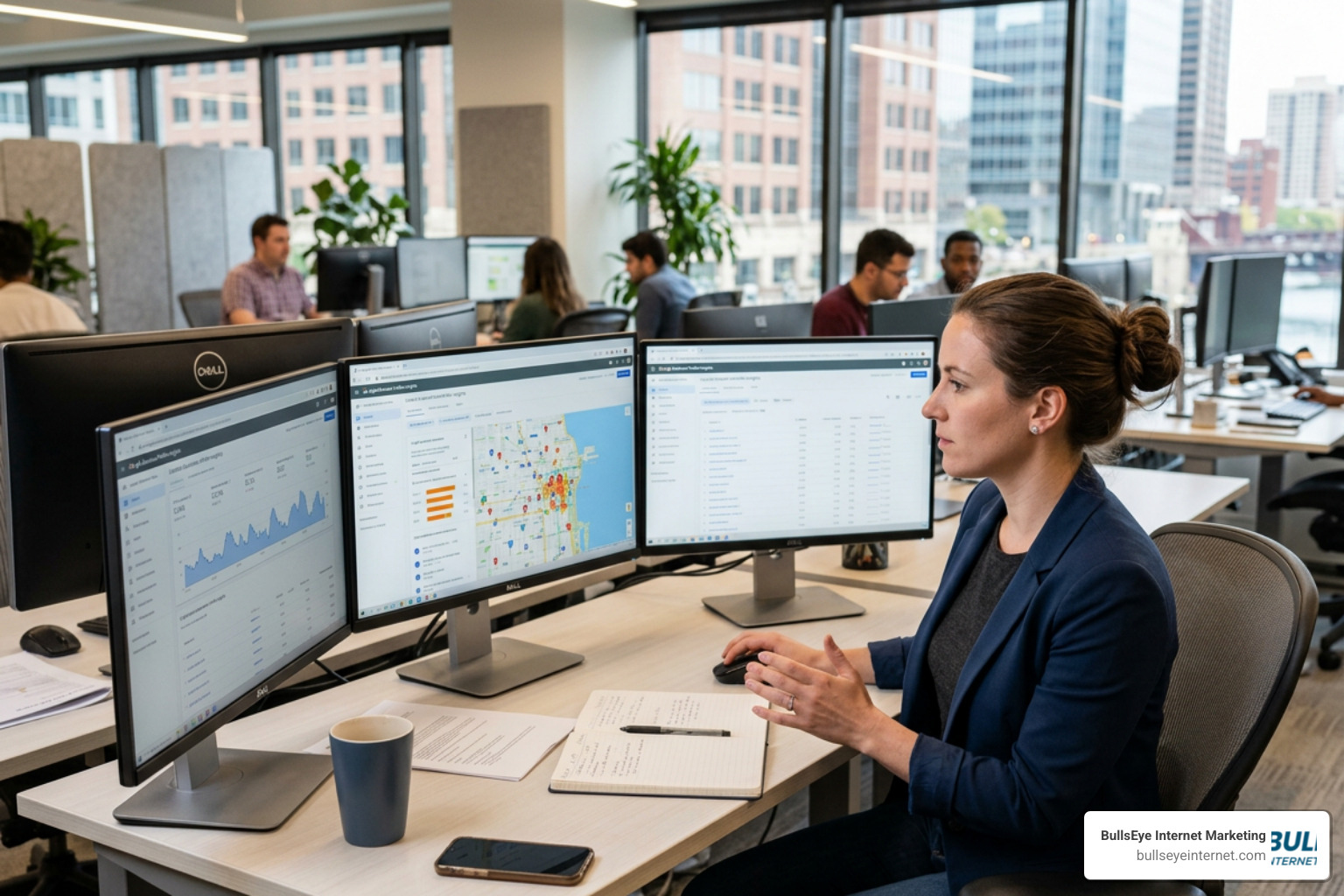
A professional Google Maps SEO expert does far more than just fill out your profile. They actively monitor algorithm updates, audit your competitors for keyword stuffing and fake listings, and implement advanced technical optimizations that generalist digital marketers simply do not know how to execute. If you want to stop losing high-value leads to competitors with mathematically superior profiles, it is time to find a Google 3-Pack expert who can take command of your local market.
Advanced Strategies Used by a Google Maps SEO Expert
When you hire a true specialist, they deploy advanced frameworks designed to maximize your local authority:
- Hub-and-Spoke Content Architecture: Structuring your website with high-authority city hub pages linked directly to hyper-local neighborhood spoke pages. This passes local relevance from your website directly to your GBP.
- Local Business Schema Markup: Implementing structured data on your website’s homepage and location pages. This feeds search engine crawlers exact, machine-readable data about your business’s physical address, operational hours, and service offerings.
- CTR (Click-Through Rate) Optimization: Creating compelling Google Posts, uploading high-quality geo-tagged photos weekly, and seeding your profile with customer Q&As to improve your click-through rates. Google interprets high engagement as a signal of popularity, which boosts rankings.
Navigating AI Overviews and Answer Engine Optimization (AEO)
As of June 2026, the search landscape has evolved dramatically. With the rise of AI Overviews, ChatGPT, and voice assistants, search engines are increasingly acting as “answer engines.”
This shift, known as Generative Engine Optimization (GEO) or Answer Engine Optimization (AEO), means that AI models are pulling data directly from trusted local sources to recommend a single “Position Zero” business to users.
Because AI search tools rely on verified Google Business Profiles and consistent structured data rather than inventing information, having a clean, authoritative local footprint is more critical than ever. Citations are now recognized as a top ranking factor for AI search visibility, making comprehensive local citation building a non-negotiable part of modern local SEO.
How to Choose and Hire the Right Google Maps SEO Expert
Hiring a Google Maps SEO expert is an investment in your business’s long-term growth. To ensure you get the best return on your investment, you must understand how professional agencies price their services, what guarantees are realistic, and how to spot a partner who is truly invested in your success.
At BullsEye Internet Marketing, we do things differently. We believe in earning your business every single month, which is why we offer no long-term contracts. Furthermore, to give our clients an unfair competitive advantage, we work with only one client per industry per geographic area. This means when you partner with us, we are fully committed to helping your business dominate the local map pack — and we won’t work with your direct competitors down the street.
Before you sign any agreement with a local SEO agency, make sure you ask them these critical questions:
- How do you track and attribute phone calls and leads generated specifically from Google Maps?
- What is your strategy for handling proximity decay and expanding our ranking radius?
- Do you offer month-to-month pricing, or do you lock clients into long-term contracts?
- Do you work with our direct competitors in our local target zip codes?
If you are ready to work with a transparent, results-focused team, partner with a local SEO agency that prioritizes your actual revenue over meaningless vanity metrics.
Red Flags to Avoid When Hiring a Google Maps SEO Expert
Unfortunately, the local SEO industry is filled with low-quality providers using outdated or risky tactics. Avoid any agency or consultant that engages in the following practices:
- Using Fake Addresses or Virtual Offices: Google actively suspends profiles associated with PO Boxes, virtual offices, or UPS stores. A legitimate expert will only optimize verified physical addresses.
- Keyword Stuffing the Business Name: Adding extra keywords to your GBP business name (e.g., “Miami Plumber – Best Emergency Plumbing Service”) violates Google’s guidelines and is a fast track to profile suspension.
- Review Gating or Buying Fake Reviews: Incentivizing only positive reviews or purchasing fake 5-star reviews will get your business permanently banned from Google Maps.
- Generic Retainers with No Accountability: Be wary of agencies that charge high monthly retainers but only deliver generic automated reports filled with “green dots” on a grid map, without tying those rankings to actual booked jobs or closed revenue.
Frequently Asked Questions About Google Maps SEO
To help you make an informed decision, we have compiled the most common questions local business owners ask when looking to hire a Google Maps SEO expert.
How long does it take to rank in the Google Map Pack?
The timeline for seeing results depends heavily on the age of your Google Business Profile, its history, and the level of competition in your local market.
- Weeks 1–2 (Setup & Audit): Technical audits, fixing NAP inconsistencies, and aligning primary/secondary categories. No immediate ranking changes occur here.
- Weeks 3–4 (Initial Movement): Optimization of on-profile elements and website schema. You will typically see initial movements of +2 to +5 positions.
- Weeks 5–8 (Reviews & Geo-Content): Deploying localized landing pages and implementing a consistent review generation system. Rankings often jump +3 to +8 positions.
- Weeks 9–12 (Citations & Authority): Citation building begins to compound, showing sustained entry into the top 3 positions for primary keywords.
- Months 4–6 (Dominance & Stabilization): Continued optimization, spam fighting, and authority building solidify your positions and expand your ranking radius.
For a deeper dive into maximizing your speed to the top, read our Google 3-Pack tips guide.
Do I need a physical office to rank on Google Maps?
Yes, Google requires a verified physical address to establish a local entity and display your business on Google Maps. However, if you run a Service Area Business (SAB) — such as a plumber, electrician, or mobile detailer — and operate out of your home, you can hide your physical address from the public while still specifying your service zones.
Google’s algorithm will still use your physical location as the starting point for calculating proximity, but customers will only see your designated service areas. To understand how local search operates in specific Florida hubs, you can learn about local SEO in West Palm Beach and how we structure SAB profiles for maximum regional coverage.
How do you measure the ROI of Google Maps SEO?
At BullsEye Internet Marketing, we believe you shouldn’t pay for “visibility” — you should pay for results. We measure the success of our Google Maps campaigns by tracking metrics that directly impact your bottom line:
- Dedicated Call Tracking: We implement unique tracking phone numbers on your Google Business Profile. This allows us to attribute every single call, text, or booking request directly to your map listing, completely separate from organic website traffic or paid ads.
- UTM Parameter Tracking: We add custom UTM tracking codes to your GBP “Website” button, allowing us to see exactly how many website conversions, form fills, and estimate requests originate from your Google Maps listing in Google Analytics 4 (GA4).
- Revenue Attribution: By cross-referencing tracked calls and forms with your CRM data, we can calculate the exact dollar amount of closed revenue generated by your Google Maps SEO campaign.
To see how we integrate these tracking systems into a comprehensive local growth plan, explore our complete local SEO guide.
Conclusion
Dominating the Google Map Pack is not about finding a temporary hack or chasing short-lived algorithm loopholes. It is about building a highly authoritative, consistent, and trusted local brand that Google confidently recommends to high-intent searchers.
When you partner with BullsEye Internet Marketing, you get a dedicated Google Maps SEO expert focused entirely on driving calls, booked jobs, and measurable revenue for your business. With our no long-term contracts policy and our commitment to working with only one client per industry per geographic area, we give your business the ultimate competitive advantage in your local market.
Stop losing high-value local leads to competitors who are out-optimizing you. Contact us today to claim your exclusive territory and get started with our Google Business Profile optimization services.
