
Why Every Business Owner Should Understand Pay Per Call in 2026
What is pay per call? Here’s the short answer:
Pay per call is a performance-based advertising model where businesses pay only when a potential customer calls them directly — not for clicks, impressions, or form fills. You set the price per call. You only pay for real phone conversations.
At a glance:
| Feature | Pay Per Call |
|---|---|
| What you pay for | Qualified inbound phone calls |
| Who calls you | Consumers actively looking to buy |
| How calls are tracked | Unique phone numbers + call tracking software |
| Common industries | Insurance, legal, home services, healthcare |
| Why it works | Phone calls signal the highest buyer intent of any consumer action |
If you’re tired of paying for clicks that go nowhere, you’re not alone. Many business owners spend thousands on ads and get little to show for it. The problem isn’t always the budget — it’s the quality of leads coming through.
Here’s a simple truth: a person who picks up the phone and calls your business is far more ready to buy than someone who clicks an ad and bounces. In fact, 60% of smartphone users have contacted a business directly through search results — and inbound phone leads cost on average 61% less than outbound leads.
Pay per call flips the traditional advertising model on its head. Instead of paying upfront and hoping for results, you only pay when the phone rings with a qualified prospect.
I’m Ronnie Katz, founder and Principal CEO of BullsEye Internet Marketing, and since 2006 I’ve helped businesses in competitive markets use strategies like what is pay per call to cut acquisition costs and drive real, measurable revenue. In this guide, I’ll walk you through exactly how the model works — so you can decide if it’s the right fit for your business.
Handy what is pay per call terms:
What is Pay Per Call and How Does it Work?
At its core, understanding what is pay per call means understanding the shift from passive browsing to active engagement. It is a lead generation strategy where the “lead” isn’t a row in a spreadsheet or an email in your inbox; it is a live human being on the other end of a telephone line.
This is a performance-based model, meaning the risk shifts from the advertiser to the lead generator. In traditional advertising, you might spend $1,000 on a billboard or a digital banner and pray someone sees it. In a Pay Per Call Services Ultimate Guide scenario, you only pay when a call is successfully connected and meets your specific criteria.
According to How Pay Per Call Works | Ringba Call Tracking Platform, this model has seen a staggering 348% growth, largely attributed to the dominance of mobile devices. When people search for services like a “plumber near me in Fort Lauderdale” or an “accident attorney in Miami,” they aren’t looking to read a 2,000-word blog post. They want to hit a button and talk to a professional immediately.
The Core Mechanics of What is Pay Per Call
To make this work, the system relies on sophisticated technology rather than just “guessing” where a call came from.
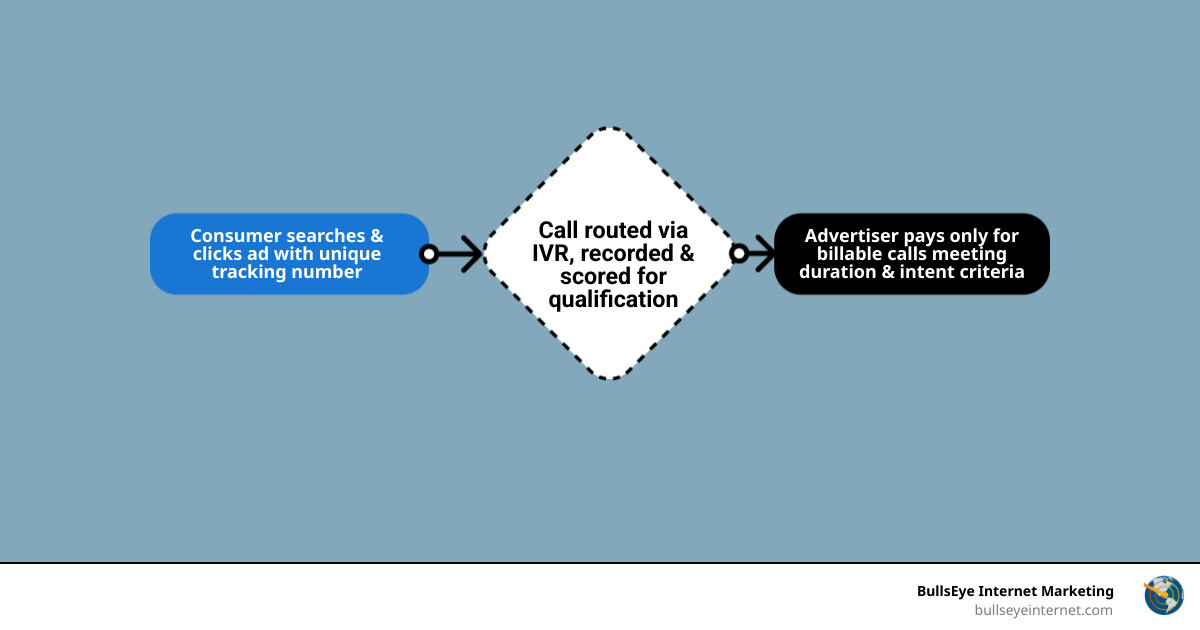
- Unique Tracking Numbers: Every campaign or affiliate is assigned a unique phone number. This allows us to know exactly which ad, website, or marketer generated the call.
- Call Tracking Software: This is the “brain” of the operation. It records the call, identifies the caller’s location, and measures the duration. Check out Call Tracking Services That Turn Every Ring into Revenue to see how this data becomes actionable.
- IVR Systems: You’ve likely interacted with an Interactive Voice Response (IVR) system before. It’s the “Press 1 for Sales” menu. This qualifies the caller before they ever reach your staff, ensuring you don’t pay for a caller looking for a department you don’t have.
- Real-Time Routing: Calls can be routed based on the time of day, the caller’s geographic location (like making sure a Palm Beach County lead goes to a Palm Beach office), or even the current capacity of your team.
- Call Recording and Attribution: Every call is logged. This provides a paper trail for billing and a coaching tool for your sales team.
Pay-Per-Call vs. Pay-Per-Click
Many of our clients in South Florida ask us why they should consider Pay Per Call A Cost Effective Way to Generate Leads over traditional Google Ads (PPC). While both have their place, the differences are significant:
| Metric | Pay-Per-Click (PPC) | Pay-Per-Call (PPCall) |
|---|---|---|
| Action | A click on a link | A phone conversation |
| Intent | Moderate (browsing/researching) | High (ready to book/buy) |
| Fraud Risk | High (bot clicks, accidental clicks) | Low (harder to fake a 2-minute call) |
| Conversion Rate | Lower (requires landing page to convert) | Higher (direct connection to sales) |
| Average Duration | Seconds on a page | 2 to 4 minutes on a call |
The primary advantage of what is pay per call is the elimination of the “leaky bucket” landing page. You don’t have to worry if your website is fast enough or if your contact form is broken. The “click” is the phone call.
Key Players and the Campaign Lifecycle
To understand the ecosystem, we need to look at who is sitting at the table. A typical Pay Per Call Campaigns structure involves four main parties:
- The Advertiser (The Buyer): This is you—the business owner in Miami or West Palm Beach who needs more customers. You set the rules: “I will pay $50 for any call from Broward County that lasts over 60 seconds.”
- The Publisher/Affiliate (The Marketer): These are the experts who run the ads. They might use SEO, YouTube ads, or even radio to get people to dial the tracking number.
- The Network (The Broker): Think of the network as the middleman. They connect advertisers with a fleet of publishers. They take a small margin between what the advertiser pays and what the affiliate earns.
- The Caller (The Customer): The most important person! This is the local resident looking for a service.
Understanding the Flow of What is Pay Per Call
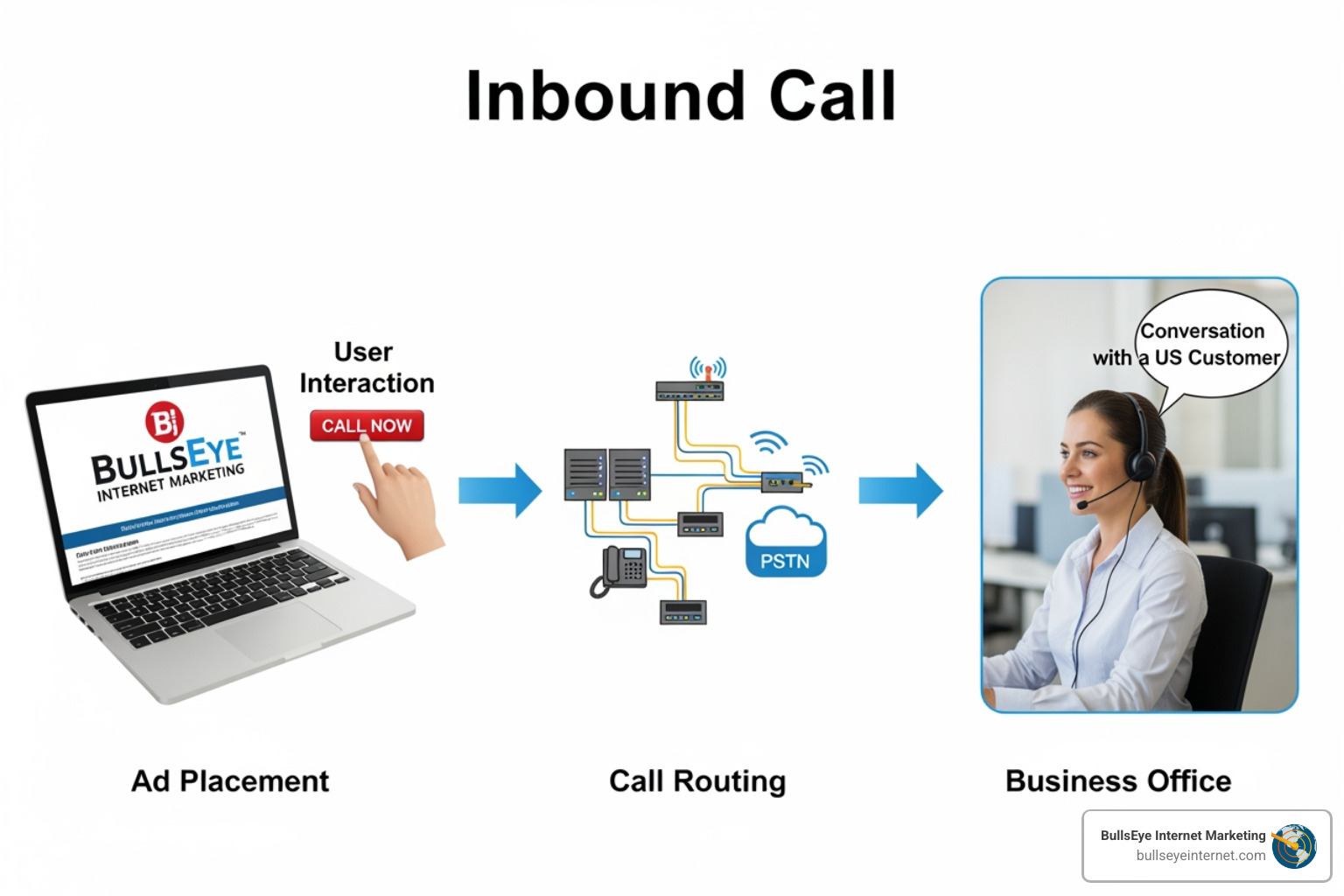
How does a call actually get from a Google search to your desk? Here is the lifecycle as detailed in our Pay Per Call Agency Complete Guide:
- Campaign Creation: We define your target audience, geographic area (e.g., only Miami-Dade and Palm Beach Counties), and what constitutes a “billable” call.
- Ad Placement: The publisher places ads across various channels. A user in Boca Raton sees an ad for “Emergency AC Repair” and clicks the “Call Now” button.
- Routing and Qualification: The call hits the tracking platform. The IVR might ask, “Are you a new or existing customer?” If they are a new customer in your service area, the call is routed to your office.
- The Conversation: Your team answers the phone. The call tracking software starts the clock.
- Lead Scoring and Payout: If the call meets the “billable duration” (usually 60–120 seconds), the lead is considered successful. The advertiser is billed, and the publisher is paid their commission.
Industries That Thrive with Phone Leads
Not every business is a perfect fit for what is pay per call, but for those that are, it’s like pouring gasoline on a fire. Generally, if your business requires a conversation to close a sale, or if you provide an emergency service, this model is for you.
- Home Services: Plumbers, HVAC technicians, roofers, and electricians. When a pipe bursts in a kitchen in Coral Springs, the homeowner isn’t going to fill out a form and wait 24 hours for a reply. They are calling the first number they see.
- Legal Services: Personal injury, bankruptcy, and criminal defense. These are high-emotion, high-ticket leads where a personal connection is vital.
- Insurance: Auto, health, and life insurance. These often require complex quotes that are best handled over the phone.
- Healthcare: Dentists, plastic surgeons, and specialized clinics.
For local businesses, Hyperlocal Hype Maximizing Pay Per Call Leads in Your Area is the key. By targeting specific neighborhoods—from the quiet streets of Wellington to the bustling blocks of Hialeah—you can ensure your staff isn’t wasting time on callers who are outside your service radius.

Compliance and Consumer Protection
In 2026, compliance is more important than ever. We must ensure all campaigns follow strict legal guidelines to protect both the business and the consumer.
- TCPA (Telephone Consumer Protection Act): This federal law regulates how businesses can contact consumers. While pay-per-call is usually inbound (the customer calls you), if you plan on following up via text or outbound calls, you must have express written consent.
- Florida Do Not Call: We always respect the Florida Do Not Call – Florida Department of Agriculture & Consumer Services registry.
- Scam Prevention: Law enforcement agencies, such as the Martin County Sheriff’s Office, often warn residents about scam calls. Using a reputable Pay Per Call Company Guide ensures your business is represented professionally and transparently, avoiding the “scammy” reputation of low-quality lead gen.
- Call Recording Disclosure: In “two-party” states (like Florida), you must inform the caller that the conversation is being recorded. This is usually handled by a quick automated message: “This call may be recorded for quality assurance.”
Advantages and Best Practices for Success
Why are so many businesses moving toward this model? The answer is simple: ROI. Because you are only paying for results, your marketing spend becomes a predictable cost of goods sold rather than a speculative expense.
Key Advantages:
- Higher Conversion Rates: Pay-per-call providers report much higher conversion rates than PPC because the intent is so much higher.
- Predictable Costs: You know exactly what a lead costs. If you pay $40 per call and close 25% of them, your cost per customer is $160. Simple math.
- Scalability: Once you find a winning campaign, you can “turn up the volume” by increasing your payout to attract more publishers.
Optimizing Your Payouts and Commissions
To get the most out of your campaigns, you can’t just “set it and forget it.” Success requires constant optimization, as outlined in The Ultimate Guide to Pay Per Call Companies.
- Refine Your Billable Duration: If your average “junk” call lasts 45 seconds and your average “sale” call lasts 5 minutes, set your billable trigger at 90 seconds. This protects you from paying for wrong numbers or telemarketers.
- Geographic Filters: If you only serve Miami-Dade County, don’t pay for calls from Orlando. Use geo-fencing to restrict your ads.
- Creative Optimization: Publishers should constantly split-test their ad copy. Does “Free Estimate” drive more calls than “Professional Service”? Data will tell you.
- Monitor Your Staff: A lead is only as good as the person answering the phone. Use call recordings to ensure your team is following a script and asking for the sale.
Frequently Asked Questions about Pay-Per-Call
How much does a pay-per-call lead cost?
The cost varies wildly by industry. A local tow truck call might cost $15, while a high-end personal injury lead in a competitive market like Miami could cost several hundred dollars. The key is to look at your Customer Lifetime Value (CLV) to determine what you can afford to pay.
What makes a call “billable” in a campaign?
A call is typically billable if it meets the advertiser’s criteria. Common criteria include:
- Duration: The call lasts longer than a set time (e.g., 60 seconds).
- Location: The caller is within a specific zip code or county.
- New Customer: The caller’s number hasn’t contacted the business in the last 30 days.
- IVR Selection: The caller pressed a specific button indicating they need a service you provide.
Do I need a website to start pay-per-call?
Actually, no! This is one of the biggest myths about what is pay per call. Because the goal is a phone call, ads can run on Google Local Services, Facebook, or even offline media like flyers or radio ads. As long as there is a phone number for the customer to dial, you can generate leads.
Driving Sustainable Growth with BullsEye Internet Marketing
The world of marketing is noisier than ever, but the humble phone call remains the most powerful tool for closing a sale. By understanding what is pay per call, you can stop gambling with your advertising budget and start investing in guaranteed conversations.
At BullsEye Internet Marketing, we don’t believe in “one size fits all” solutions. We specialize in performance-based marketing that drives real revenue for businesses across Florida—from the beaches of Miami to the suburbs of West Palm Beach. Our unique approach includes:
- No Long-Term Contracts: We earn your business every single month.
- Exclusivity: We work with only one client per industry per geographic area. When we drive calls for you, we aren’t driving them for your competitor down the street.
- Performance Focus: Whether it’s through SEO, PPC, or our Pay Per Call Agency for Google Local Services Ads, our goal is the same: your growth.
Ready to see how many calls your business is missing? Let us help you turn every ring into revenue. Reach out to us today to discuss how we can build a custom pay-per-call strategy for your business.
