
Why Website Design Is the Foundation of Your Online Success
Website design is the art and science of creating the visual and functional elements of a website to provide an effective user experience. It blends aesthetics—like color and typography—with usability features such as navigation and mobile responsiveness. The goal is to build a site that looks professional and guides visitors toward a specific action, like making a purchase or calling your business.
Quick Answer: What is Website Design?
- Visual Elements: Colors, fonts, images, and branding that create your site’s look and feel
- Functional Components: Navigation menus, buttons, forms, and page layouts that make your site easy to use
- User Experience (UX): How visitors interact with your site and how easily they can find what they need
- Technical Performance: Site speed, mobile responsiveness, and search engine optimization (SEO)
- Business Goals: Converting visitors into customers through strategic design choices
Why It Matters
Good website design is about getting results. Users form an opinion about your site in just 50 milliseconds. An outdated or unprofessional look will cause them to leave instantly. In contrast, a well-designed site builds trust, establishes credibility, and boosts conversions. For example, an e-commerce site that loads in one second has a conversion rate 2.5 times higher than one taking five seconds.
With over half of all website traffic coming from mobile devices, your site must work flawlessly on every screen. This guide covers everything from core principles to post-launch analytics, helping you build a site that attracts visitors and turns them into customers.
I’m Ronnie Katz, founder and Principal CEO of BullsEye Internet Marketing. Since 2006, I’ve helped businesses succeed online by overseeing website design projects that combine cutting-edge techniques with strategic thinking to generate measurable results: more calls, leads, and sales.
Understanding the Foundations of Website Design
This section defines the core concepts of web design, explaining its critical role in business success and clarifying its relationship with web development.
The Importance of a Strategic Website Design for Business
Your website is often the first interaction a potential customer has with your business, and that first impression is crucial. A professionally designed website instantly signals credibility and builds user trust. For businesses in Florida, the US, Canada, and the UK, a strategic website design is a powerful tool for meeting goals, whether it’s generating leads, increasing sales, or boosting engagement. Design elements directly impact your bottom line—an e-commerce site loading in one second has a conversion rate 2.5 times higher than one taking five seconds.
A well-designed site also keeps visitors engaged, leading to longer visits and lower bounce rates. These positive signals help improve search engine rankings. A strategic website design isn’t an expense; it’s an investment that boosts sales and conversions. Learn more about how a redesign can impact your business with our insights on How a Website Redesign Can Boost Your Sales and Conversions.
Web Design vs. Web Development: What’s the Difference?
Though often used interchangeably, web design and web development are distinct disciplines. Think of an architect (designer) and a construction crew (developer).
Web design focuses on the “look and feel”—the user experience (UX) and user interface (UI). It covers visual aesthetics, layout, navigation, and interactive elements. Our team specializes in creating visually appealing, user-friendly designs.
Web development is the technical backbone, using code like HTML, CSS, and JavaScript to build the site’s functionality. It ensures the site is robust, secure, and performs flawlessly. Understanding this difference is key to a successful project.
| Feature | Web Design | Web Development |
|---|---|---|
| Focus | User Experience (UX), User Interface (UI), Visual Aesthetics | Functionality, Performance, Server-side Logic |
| Goal | Create attractive, user-friendly, and engaging layouts | Build a working, secure, and scalable website |
| Key Aspects | Layout, color, typography, imagery, navigation, branding | Coding (HTML, CSS, JavaScript), databases, servers |
| Tools | Design software, wireframing tools, CMS platforms | Code editors, frameworks, programming languages |
| Output | Visual mockups, interactive prototypes, user flows | Functional website, web applications |
At BullsEye Internet Marketing, our expertise spans both areas. We ensure your Web Design is visually stunning, technically sound, and optimized for performance.
The Core Principles of Effective Web Design
A successful website balances visual appeal with intuitive functionality. This section covers the fundamental design principles that create a seamless user experience.
Structuring Your Site: Layout, Navigation, and Content
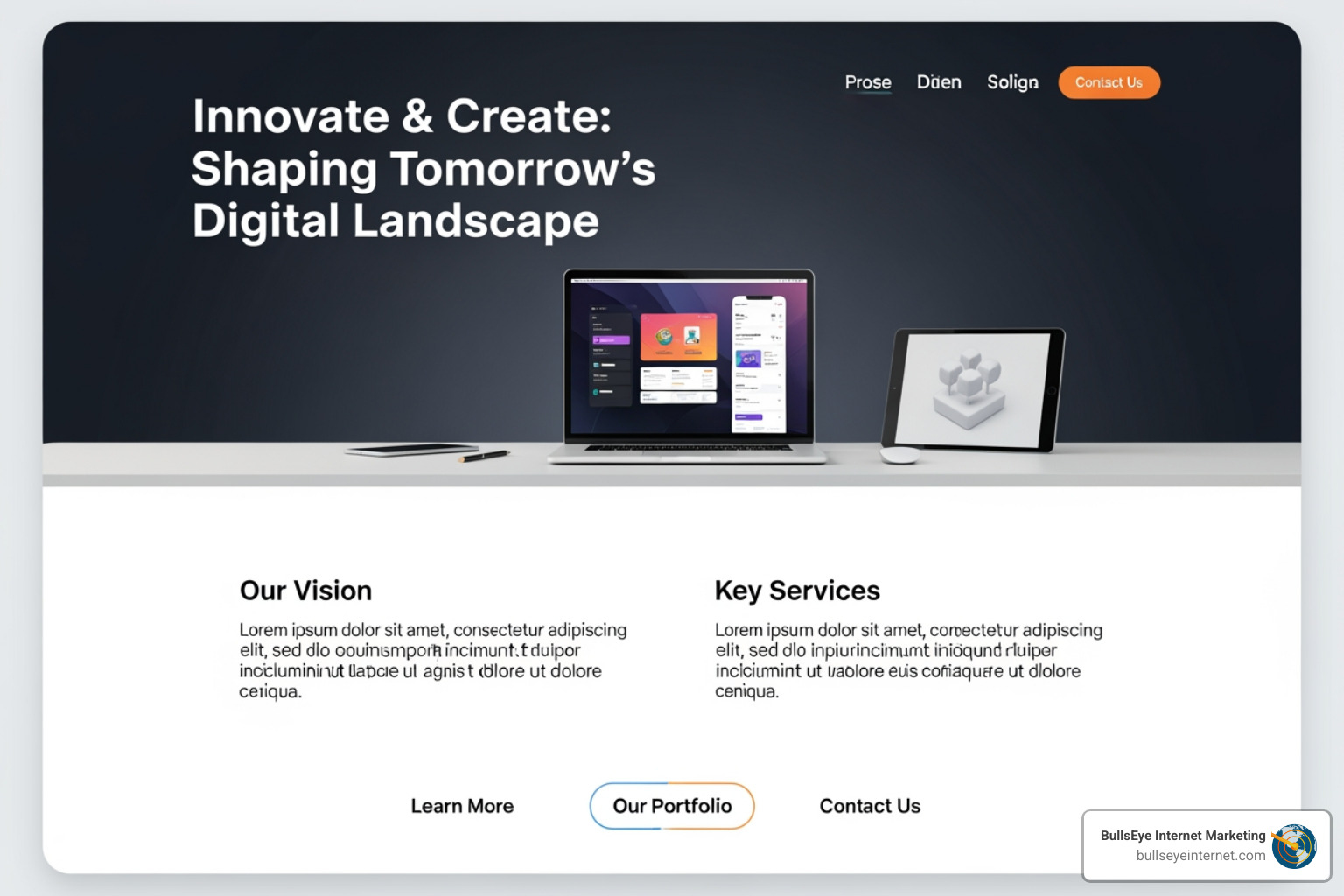
A website’s structure must be strong and logical. This starts with Information Architecture (IA)—organizing content to help users find information intuitively. We create sitemaps to map out page hierarchy, ensuring a clear user flow. Intuitive, consistent navigation menus are paramount, as is the effective placement of Call-to-Action (CTA) elements that guide users toward a page’s goal.
Layout best practices involve creating a clear visual hierarchy so important information stands out. Headers typically contain your logo, primary navigation, and contact info, while footers house secondary links and legal details. A well-structured site is both beautiful and highly functional. For more insights, explore our Website Design Services.
Visual Elements: Branding, Color, and Typography
Visual elements communicate your brand’s personality. This starts with integrating your brand identity through consistent logo placement. Color is a powerful tool, influencing up to 80% of a customer’s purchasing decision. We select palettes based on color psychology and use high-contrast colors for readability.
Typography—the choice of fonts—greatly impacts readability and brand perception. We choose fonts (e.g., traditional serif or modern sans-serif) that represent your brand, using effective pairing and ample white space to improve composition. High-quality, web-optimized imagery and video further strengthen your message and engage visitors. Our Professional Web Design services craft these elements into a cohesive online presence.
Choosing the Right Tools and Platforms
From initial mockups to a fully functional site, the right tools are essential. Here’s a look at the platforms and software that bring a design to life.
Essential Tools for the Design Process
Strategic thinking about information architecture and user journeys comes first. After that, specialized tools help bring the vision to life.
Essential tool categories for the website design process include:
- Wireframing and Prototyping Tools: To create mockups and interactive prototypes that simulate the user experience before coding.
- Graphics and Image Editing Software: For creating and optimizing visual assets like logos, banners, and photos.
- Content Management Systems (CMS): Platforms that allow easy content management without code. We specialize in robust, scalable CMS solutions.
- Website Design and Development Tools: A range of software from visual builders to code editors. Our team uses industry-standard tools to ensure flexibility and performance.
To expand your knowledge, you can explore resources like Learn design basics with tutorials.
How to Choose the Right Website Platform
Selecting the right platform is critical for your site’s functionality, scalability, and success. We guide clients by considering these key factors:
- Technical Skill Level: Do you prefer easy-to-use builders for self-management or a professionally managed solution?
- Budget and Pricing: We help find a solution that aligns with your financial plan without sacrificing key features.
- Scalability for Future Growth: The platform must handle increased traffic and new features as your business grows.
- Customization Flexibility: We balance your need for a unique design with practical, template-driven options.
- SEO Capabilities: The platform must support comprehensive SEO strategies for maximum visibility.
For online stores, understanding Ecommerce Website Design platform needs (e.g., shopping carts, secure checkout) is vital. We help you select the best platform for your business goals, ensuring it supports lead generation and sales in your market.
Functional Excellence: Performance, SEO, and Accessibility
A great design must also perform flawlessly. This section focuses on the technical components that ensure your site is fast, visible on search engines, and usable by everyone.

Optimizing for Speed and User Experience (UX)
Speed is a necessity, as users have no patience for slow websites. A 38% rise in bounce rates occurs when a page’s load time exceeds 3 seconds. Page load time is a critical factor for user experience (UX) and search rankings, as emphasized by Google’s Core Web Vitals. We optimize every element of your website design for speed, using techniques like image compression (reducing file sizes up to 90%) and browser caching.
Our user-centric approach focuses on creating an intuitive and enjoyable experience that keeps visitors engaged and encourages conversions. A positive UX directly improves your conversion rates and helps your business grow. Learn more here: How a Web Design Company Can Improve Your User Experience and Conversion Rates.
Best Practices for Mobile-First Website Design
With more than half of all website traffic coming from mobile devices, a mobile-friendly site is critical. Google’s ‘mobile-first’ indexing policy means the mobile version of your site is primary for ranking. Our website design approach prioritizes mobile-first, designing for small screens first and then scaling up. This responsive design strategy ensures your site adapts seamlessly to any device.
Key best practices include:
- Responsive Layouts: Content automatically adjusts to screen size.
- Touch-Friendly Navigation: Buttons and links are easy to tap.
- Legible Fonts: Text is readable on small screens without zooming.
- Optimized Images: Images load quickly on mobile connections.
- Prioritized Content: Essential information is visible without scrolling.
Implementing these practices ensures a consistent, high-quality experience for all users. Explore our expertise in Mobile Website Design to optimize your site for the mobile era.
SEO and Accessibility: Designing for All Users
A great site is useless if it can’t be found or used by everyone. We integrate Search Engine Optimization (SEO) and accessibility from the start. On-page SEO basics include strategic keyword integration, optimized meta titles and descriptions, and descriptive alt text for images.
Web accessibility, the practice of making sites usable for people with disabilities, is also vital and often a legal requirement. We adhere to Web Content Accessibility Guidelines (WCAG) by ensuring:
- High-Contrast Colors: For text readability.
- Keyboard Navigation: Full site control using only a keyboard.
- Text Alternatives: Descriptions for non-text content.
- Clear Structure: Logical headings and semantic HTML.
Prioritizing SEO and accessibility ensures your site reaches the widest possible audience. For a deeper dive, check out this guide on Web design explained—key elements and best practices.
From Concept to Launch and Beyond
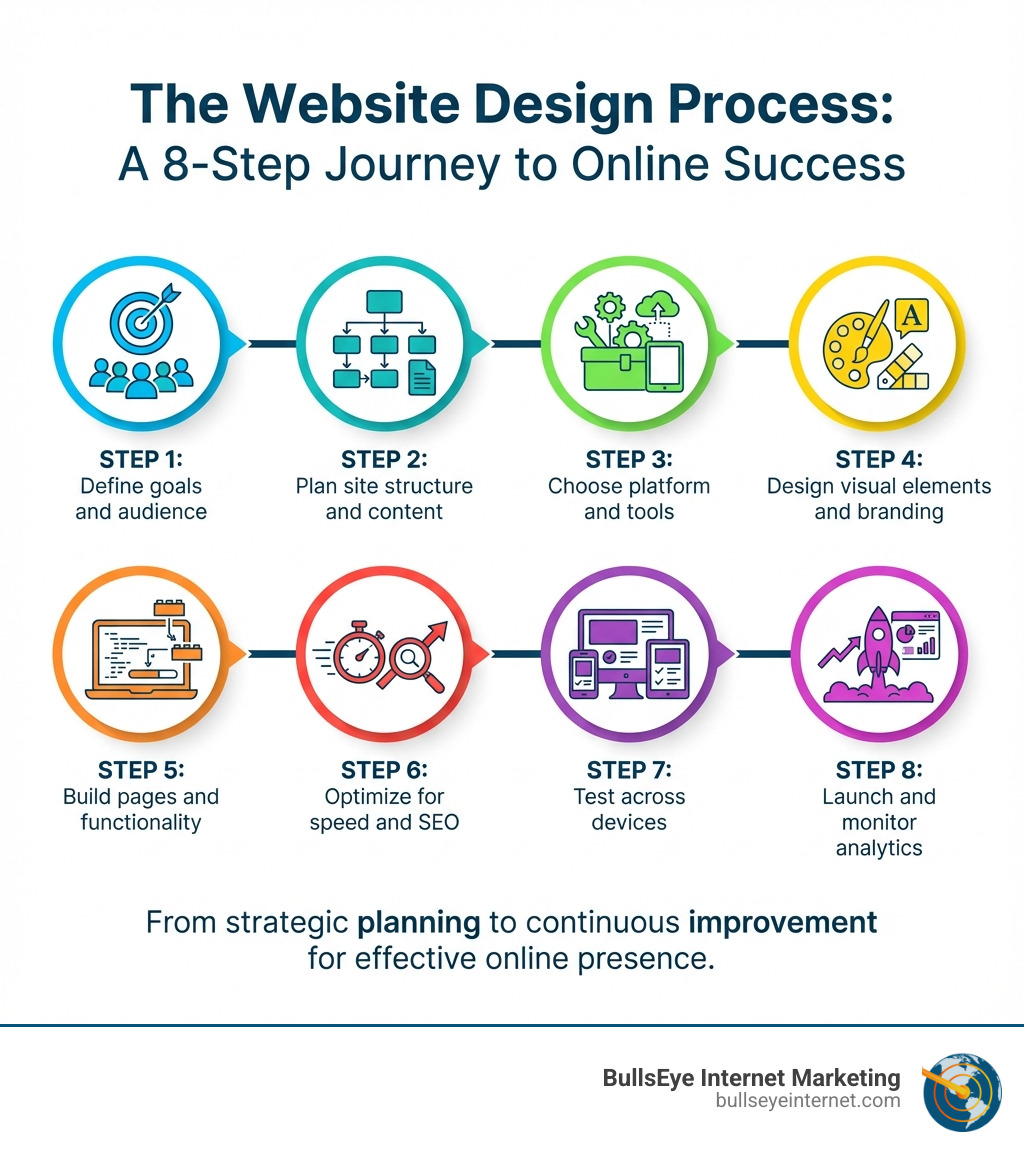
The design process doesn’t end at launch. Proper testing, publishing, and ongoing maintenance are key to long-term success.
The Pre-Launch Checklist: Testing and Publishing
Before going live, a rigorous testing phase ensures a flawless launch. Our comprehensive pre-launch checklist catches any issues and guarantees your site is ready.
Our testing includes:
- Cross-Browser Testing: Verifying your site works on all major browsers (Chrome, Firefox, Safari, Edge).
- Mobile Device Testing: Ensuring perfect performance on various screen sizes and operating systems.
- Proofreading Content: Checking for typos and grammatical errors.
- Checking for Broken Links: Confirming all internal and external links work.
- Form Functionality: Testing all contact forms and checkout processes.
- SEO Check: Confirming meta titles, descriptions, and alt text are in place.
- Performance Review: Running final speed and accessibility checks.
- Domain and Hosting Setup: Finalizing the connection to make your site accessible online.
Only after passing these checks do we publish your website, ensuring a strong first impression.
Post-Launch: Using Analytics for Continuous Improvement
Launching your website is just the beginning. Continuous monitoring and improvement are crucial for optimal performance. We use analytics tools like Google Analytics to track key metrics and gain insights into user behavior.
We monitor:
- Traffic: Where visitors come from (search, social media, etc.).
- Bounce Rates: The percentage of visitors who leave after one page.
- Dwell Time: How long users spend on your pages.
- Conversion Rates: The percentage of visitors who complete a desired action.
- User Flow: The paths users take through your site.
This data, along with user feedback, informs A/B testing for data-driven optimization. Regular maintenance, content refreshes, and security patches are also vital to keep your site secure and performing at its peak. For a performance boost, our Website Redesign Services can continuously improve your online presence.
Frequently Asked Questions about Website Design
How long does it take to design a website?
The timeline for website design varies by project scope and complexity. There’s no one-size-fits-all answer.
- Simple Brochure Site (5 pages): Can take a few weeks, especially if using a template.
- Medium-Sized Business Site (10-20 pages): Typically takes 1 to 3 months, often with custom features.
- Large E-commerce or Custom Site: Can take 3 to 6+ months due to complex functionalities and integrations.
The process involves strategy, design, development, and testing phases. We work with clients to establish realistic timelines based on their specific goals.
Can I design a website myself?
Yes, modern website builders make DIY website design accessible without code. These tools offer templates and drag-and-drop interfaces.
However, the real question is should you?
- Pros of DIY: Cost-effective, quick to launch, full control.
- Cons of DIY: Time-consuming, generic design, limited customization, and weaker SEO implementation.
A DIY approach may work for a personal blog, but for businesses needing to generate calls and sales, a professional design is a strategic investment. An expert team brings knowledge of user experience, conversion optimization, and advanced SEO that is hard to replicate. Learn more about professional partnerships here: The Secret Ingredients to Success: Why Partnering with a Web Design Company Matters.
How much does a website cost?
The cost of a website design varies widely, from a few dollars a month for a DIY builder to tens of thousands for a custom platform. The price depends on your needs.
Key factors influencing the price include:
- Custom vs. Template Design: Custom designs are unique but cost more than templates.
- Number of Pages and Complexity: More pages and complex features increase the cost.
- Special Features: E-commerce, membership areas, or custom integrations add to the price.
- Content Creation: Professional copywriting, photography, or video production are additional investments.
- Ongoing Maintenance: Consider costs for hosting, security, and support.
- SEO and Marketing: Integrated SEO improves a site’s effectiveness and impacts the budget.
Hiring a professional agency like BullsEye Internet Marketing is an investment in a team focused on delivering measurable business results. We provide transparent, custom pricing to ensure you get maximum value.
Why Website Design Drives Conversions – BullsEye Internet Marketing
Website design is more than aesthetics; it’s a strategic business tool. From making a first impression in 50 milliseconds to boosting conversions on fast sites, every design element impacts your bottom line. Balancing visual appeal with intuitive function, prioritizing mobile-first experiences, and integrating SEO and accessibility are all crucial for converting your audience.
The digital landscape is always evolving, with trends like AI-powered design and voice search optimization shaping the future. This emphasizes the need for adaptable, user-centric designs that perform across all devices.
A great website is your most powerful marketing asset. It builds trust and serves as a 24/7 sales and lead generation engine for your business in the United States, Canada, and the UK. For a strategic, performance-driven website that generates calls and sales, partner with the experts at BullsEye Internet Marketing. We build websites that deliver results.
Ready to build a website that delivers results? Contact our web design company today.
