
What a Legal SEO Specialist Does to Solve Technical and Architecture Bottlenecks
Many law firm websites suffer from deep-rooted technical errors that create a ceiling on their organic performance. You might publish incredible articles on personal injury law or family law, but if search engine crawlers struggle to index your pages properly, your target audience will never see them. A specialized legal SEO specialist diagnoses these technical bottlenecks to ensure search engines can seamlessly crawl, index, and evaluate your site architecture.
When managing complex site structures, we frequently resolve issues like index bloat (where hundreds of low-value or duplicate utility pages waste search crawler resources) and crawl budget misallocation. By enforcing precise canonicalization strategies and cleaning up internal link distribution, a specialist makes sure search engines prioritize your primary revenue-generating pages.
Furthermore, meeting Google’s Core Web Vitals standard is mandatory for legal websites. Slow page loading speeds, layout shifts, and unresponsive mobile designs cause immediate bounce rates. Potential clients looking for urgent legal assistance will instantly click back to the search results if your page takes more than a couple of seconds to render. A proper technical setup ensures high-intent visitors remain engaged from the moment they arrive.
To explore how local optimizations tie into technical site architecture, check out our step-by-step guide to local attorney seo.
Core Responsibilities of a Modern Legal SEO Specialist
A modern legal search expert wears many hats, moving far beyond basic keyword stuffing or buying low-quality directory links. Their scope of work directly impacts your law firm’s pipeline:
- Comprehensive Technical Audits: Using advanced tools like Screaming Frog, Google Search Console, and Ahrefs to catch indexation bugs, improper 301 redirects, and broken scripts.
- Legal Schema Markup Implementation: Embedding structured data—such as
LegalService,LocalBusiness,Attorney,FAQPage, andReviewschemas—so search engines clearly understand your practice areas, attorneys, locations, and reputation. - Intent-Driven Keyword Mapping: Mapping specific legal queries to high-converting landing pages, distinguishing between someone seeking fast legal help versus someone researching general statutory definitions.
- Canonicalization and URL Structuring: Ensuring multi-location pages don’t trigger duplicate content penalties across geographic practice pages.
If you browse active listings for legal search marketers across corporate job boards or explore the 1000+ Law Firm Seo jobs in United States, you will see that top firms consistently prioritize candidates who bring deep technical expertise alongside a sharp focus on ROI and lead generation.
Fixing Technical Debt and Structural Drag on Law Firm Websites
Over years of site updates, rebranding campaigns, and agency handoffs, law firm websites accumulate significant technical debt. This structural drag silently suppresses rankings and damages campaign efficiency.
- Duplicate Practice Area Content: Creating near-identical pages for every suburb or surrounding city by swapping out city names causes search engines to filter those pages out entirely.
- Slow Mobile Web Templates: Legal consumers heavily rely on mobile devices when searching for legal aid. Unoptimized images, bulky code, and uncompressed script files lead to lost consultation calls.
- Messy URL Structures: Inconsistent URL hierarchies disrupt internal page authority flow, preventing Google from recognizing your main practice area hubs.
Fixing this technical debt clears the path for your pages to rank and perform at their full potential.
Structuring Legal Content for Traditional Search and AI-Driven Generative Engines (GEO)
Search engine optimization is no longer restricted to traditional keyword rankings. With the rollout of AI Overviews, Gemini, ChatGPT, and Perplexity, potential clients are asking conversational questions directly to AI systems to find legal answers and attorney recommendations.
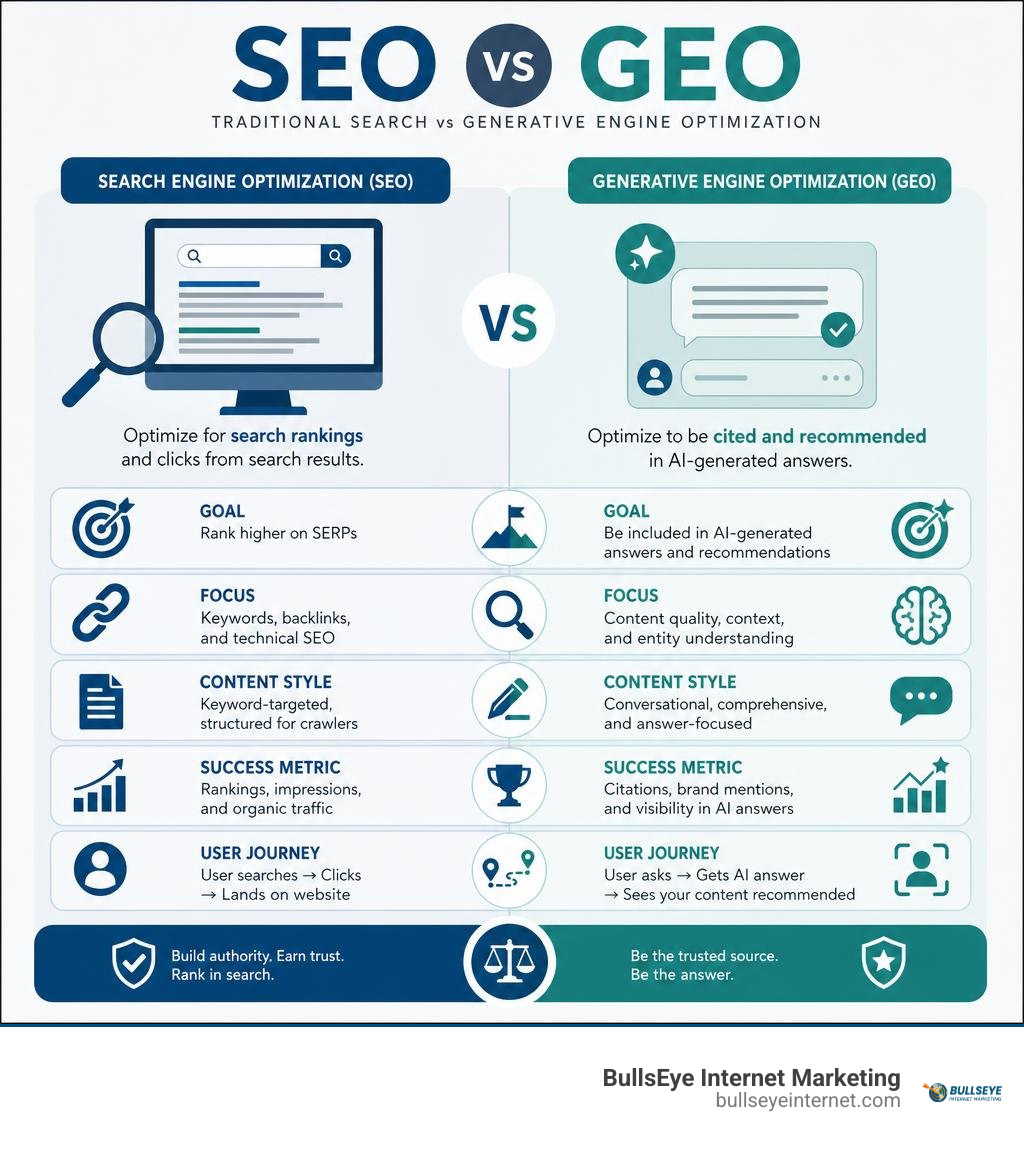
To succeed in this evolving search environment, legal content must be optimized for Generative Engine Optimization (GEO) and Answer Engine Optimization (AEO) while strictly adhering to Google’s E-E-A-T guidelines (Experience, Expertise, Authoritativeness, and Trustworthiness).
Legal advice falls under Google’s strict “Your Money or Your Life” (YMYL) content standards. Because poor legal advice can negatively alter a person’s financial or personal life, search engines rigorously evaluate who wrote the content, whether their credentials are verified, and if the firm complies with state bar standards. Experienced legal marketing professionals, such as legal content strategists like Holland McKinnie, emphasize that combining legal accuracy with AI-aligned content formatting is necessary for visibility in modern search results.
Furthermore, state bar compliance must be factored into every piece of published copy. To learn more about navigating ethical advertising standards online, read our detailed guide on lawyer advertising rules solutions for modern firms.
How a Legal SEO Specialist Adapts Your Site for AI Search
To capture citations in AI Overviews and conversational discovery engines, a specialist restructures your existing copy for Large Language Model (LLM) readability.
- Direct Answer Formatting: Providing clear, concise definitions directly beneath structured header tags to maximize eligibility for featured snippets and AI summaries.
- Comprehensive Topic Clusters: Building interconnected hubs around complex legal issues (such as family law, asset division, or DUI defence strategies) rather than writing isolated, thin blog posts.
- Structured Data and Entities: Linking key legal concepts to established knowledge graph entities so AI search engines accurately connect your firm with specific legal specialties.
Digital strategists like Fleur Gauffeny Almaraz’s portfolio on Twine showcase how building integrated SEO, GEO, and content ecosystems scales organic discovery and turns traffic into measurable business growth.
Building Authority with E-E-A-T, Reviews, and Trust Systems
Prospective legal clients comparison-shop across multiple browser tabs before reaching out to an attorney. Establishing rapid trust on your website is essential to winning those cases.
- Detailed Attorney Author Bios: Highlight courtroom experience, bar admissions, trial history, published law review articles, and professional legal associations on every author profile.
- Review Velocity and Consistency: Regularly earning authentic Google reviews directly strengthens your organic domain authority and local search rankings.
- Visual Trust Badges: Displaying awards, state bar certifications, and industry memberships front and center on practice area landing pages instantly builds confidence.
Whether you run a practice focused on personal injury or need specialized seo for family law attorneys, embedding trust signals across every landing page is critical to driving consistent consult conversions.
Local SEO Strategies for High-Cost, Multi-Location Legal Markets
For most law practices, capturing local intent in the Google Map Pack generates the highest ROI. However, legal keywords in major metropolitan areas are exceptionally competitive. Winning local visibility requires systematic execution rather than occasional profile tweaks.
A dedicated search specialist builds local SEO frameworks designed for sustainable multi-office growth:
- Google Business Profile (GBP) Optimization: Selecting precise primary and secondary practice categories, publishing regular posts, upload photos, and answering localized FAQs.
- Local Citation Consistency: Ensuring your firm’s Name, Address, and Phone Number (NAP) remain 100% uniform across major legal directories (Avvo, Justia, FindLaw) and local business aggregators.
- Multi-Location Page Architecture: Structuring hyper-targeted location pages that feature local attorney bios, local court information, neighborhood directions, and real localized client testimonials.
To explore strategies for expanding your local footprint, read our complete guides on how to increase your law firms online presence with local seo and the criminal defense marketing playbook for modern law firms.
Balancing SEO, PPC, and Conversion Rate Optimization (CRO) for Maximum Case Generation
Search engine optimization should never exist in a silo. To achieve market dominance, top-performing law firms integrate organic SEO with Pay-Per-Click (PPC) advertising and Conversion Rate Optimization (CRO). While SEO builds long-term authority and equity, PPC delivers immediate targeted case volume.

Integrating conversion rate optimization ensures that incoming organic and paid traffic converts into signed clients. Small usability improvements—such as simplifying contact forms, adding instant live chat, and prominent click-to-call buttons—drastically improve consultation booking rates.
Furthermore, streamlining client intake and billing processes enhances long-term revenue. Modern legal payment tech like LawPay allows law firms to accept online payments seamlessly while maintaining ABA and IOLTA compliance. Studies show that firms using LawPay get paid 39% faster, can save up to 468 hours spent on manual invoicing annually, and potentially reclaim up to $140,400 in lost billable revenue each year. Offering flexible payment options right on your website removes friction during client onboarding.
To build a fully integrated marketing strategy, review our resources on:
- legal ppc management 101 turn clicks into cases
- detailed guide to google ads for lawyers
- law firm marketing guide 2026
Key Green Flags to Look For When Hiring a Legal SEO Specialist
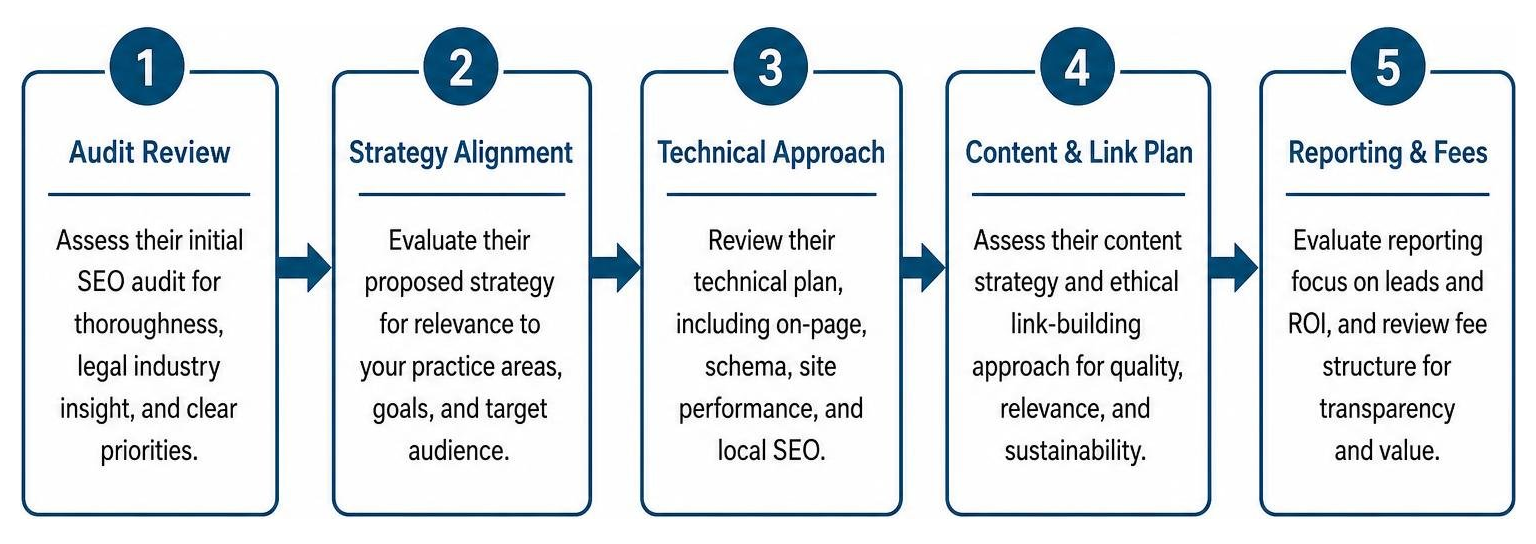
Hiring the right specialist can transform your law firm’s growth curve, while hiring the wrong agency can lead to wasted budget and penalty risks. Look for these clear green flags during your evaluation process:
- Legal Marketing Experience: They understand the unique legal consumer journey, ethical bar advertising rules, and practice area nuances.
- Focus on Lead Tracking over Vanity Metrics: They report on calls, form submissions, and booked consultations rather than celebrating arbitrary keyword rankings for non-converting terms.
- Transparent Technical Processes: They clearly explain what technical modifications, content updates, and schema implementations they plan to execute.
- Customized, Ethical Link-Building Strategies: They build real domain authority through legal citations, localized press releases, and high-value legal content rather than risky, automated link networks.
Avoid agencies offering generic “one-size-fits-all” packages or long-term restrictive contracts with vague deliverables. For additional hiring strategies, read our guides on no objections allowed the complete guide to online marketing for attorneys and how to market a law practice like a pro.
Frequently Asked Questions About Hiring a Legal SEO Specialist
How much does it cost to hire a legal SEO specialist in 2026?
Monthly retainers for a comprehensive legal search strategy generally fall between $2,500 and $7,500+ per month, depending on market competition, location count, and firm size. Hourly consulting rates typically range from $75 to $200+ per hour for seasoned legal search strategists.
How long does it take to see results from legal search optimization?
Initial technical fixes and local Google Business Profile improvements often yield positive ranking and lead movements within 60 to 90 days. However, building dominant organic market positions in high-competition practice areas typically takes 6 to 12 months of consistent execution.
Why is legal SEO different from general website SEO?
Legal SEO deals with high-stakes “Your Money or Your Life” (YMYL) content, strict state bar ethical guidelines, intense multi-location competition, and high customer acquisition costs. Generic SEO strategies rarely account for legal intent, compliance, or trust signals needed to convert legal prospects.
Conclusion
Investing in a specialized legal search strategy is the most effective way to build long-term digital equity and secure a steady flow of high-value cases. As search engines transition into AI-driven discovery models, law firms that adapt their site structure, build authentic E-E-A-T signals, and streamline user conversion paths will continue to dominate their local markets.
At BullsEye Internet Marketing, we deliver customized digital marketing solutions—including SEO, Google Business Profile optimization, legal PPC management, and Pay-Per-Lead growth—backed by no long-term contracts. We also maintain strict exclusivity by working with only one client per industry per geographic area, giving your practice an undeniable competitive advantage.
Ready to dominate your local legal market? Explore our comprehensive resource, An Essential Guide to Advertising for Lawyers, or contact our team today to transform your website into a reliable consultation engine!
