
Core Services Provided by a Specialized Attorney Advertising Agency
Managing a law practice while running complex marketing campaigns is like trying to try a high-stakes court case while simultaneously remodeling the courthouse. It is exhausting, inefficient, and often leads to costly mistakes. Specialized agencies relieve that burden by delivering tailored Attorney Marketing Solutions designed to generate exclusive phone calls, increase caseloads, and maximize overall return on investment.
Instead of relying on generic tactics, a specialized attorney advertising agency focuses on targeted strategies that address the unique needs of legal consumers:
- High-Intent Lead Generation: Capturing individuals who need immediate legal representation, such as car accident victims or individuals facing criminal charges.
- Conversion Optimization: Turning website visitors into inbound phone calls and completed consultation forms through streamlined intake forms and clear call-to-action (CTA) placements.
- Ethical Compliance: Auditing ad creative and website copy to ensure strict adherence to state bar ethics rules and federal trade requirements.
- Sustainable Practice Growth: Building scalable client pipelines that eliminate the unpredictable “feast or famine” cycle common in word-of-mouth marketing.
Paid Search and Google Ads Strategies for Instant Visibility
When someone experiences a legal emergency, they do not wait around. They pull out their smartphone and search for immediate answers. Implementing targeted Pay-Per-Click (PPC) campaigns allows law firms to secure top placement in search results right when prospective clients are actively looking for counsel.
By leveraging Google Search Ads, law firms can bypass years of organic competition and appear directly above traditional search results for high-value phrases like “car accident lawyer near me” or “best divorce attorney.” To master these paid channels, firms often rely on a Detailed Guide to Google Ads for Lawyers and structured Legal PPC Management 101 strategies.
Through precise keyword match types, negative keyword filtering (to eliminate tire-kickers seeking free legal templates), and continuous ad copy testing, paid search delivers instant, measurable visibility for law practices of any size.
How an Attorney Advertising Agency Masters Local SEO and Educational Blogs
While paid search delivers immediate traffic, organic visibility provides a long-term foundation for sustained client acquisition. Mastering local Search Engine Optimization (SEO) ensures that when local residents search for legal help in your geographic footprint, your practice dominates the Google Local Map Pack and organic search listings.
A core pillar of local authority is a robust, well-researched educational blog. Prospective legal clients are frequently intimidated by the legal system and bring a natural trust deficit to their search. Publishing accessible, informative articles breaks down this friction.
By targeting long-tail, informational queries—such as “what to do after a slip and fall in a grocery store”—law firms capture leads early in their decision-making process. Combined with a clear Step-by-Step Guide to Local Attorney SEO, educational blogging improves overall search engine rankings while positioning your attorneys as approachable, trustworthy experts.
Navigating Digital Marketing, Influencers, and Social Campaigns
Modern legal promotion extends far beyond search engines. Digital campaigns across platforms like Meta, LinkedIn, and video networks offer unmatched opportunities to maintain brand awareness across your prospective client base. However, branching into social media, influencer sponsorships, and public promotions brings distinct legal and regulatory hurdles.
Experienced agency teams handle the technical execution and legal coordination required for advanced outreach. This includes drafting robust sponsorship contracts, structuring talent agreements, and securing explicit public clearance.
When conducting digital promotions, agencies align strategies with established Advertising and Marketing Legal Guidance standards. From ensuring explicit Federal Trade Commission (FTC) disclosure tags (#ad or #sponsored) on paid influencer posts to managing programmatic retargeting data agreements, a dedicated agency protects your firm’s brand equity while maximizing audience engagement.
Ensuring Regulatory Compliance and Managing IP in Legal Marketing
Legal advertising is subject to intense regulatory oversight. Unlike traditional consumer brands, law practices must follow state bar rules, rules of professional conduct, and federal false advertising mandates. According to comprehensive US Legal Services Advertising Data, regulatory scrutiny around legal marketing messaging continues to intensify nationwide, making accurate compliance non-negotiable.
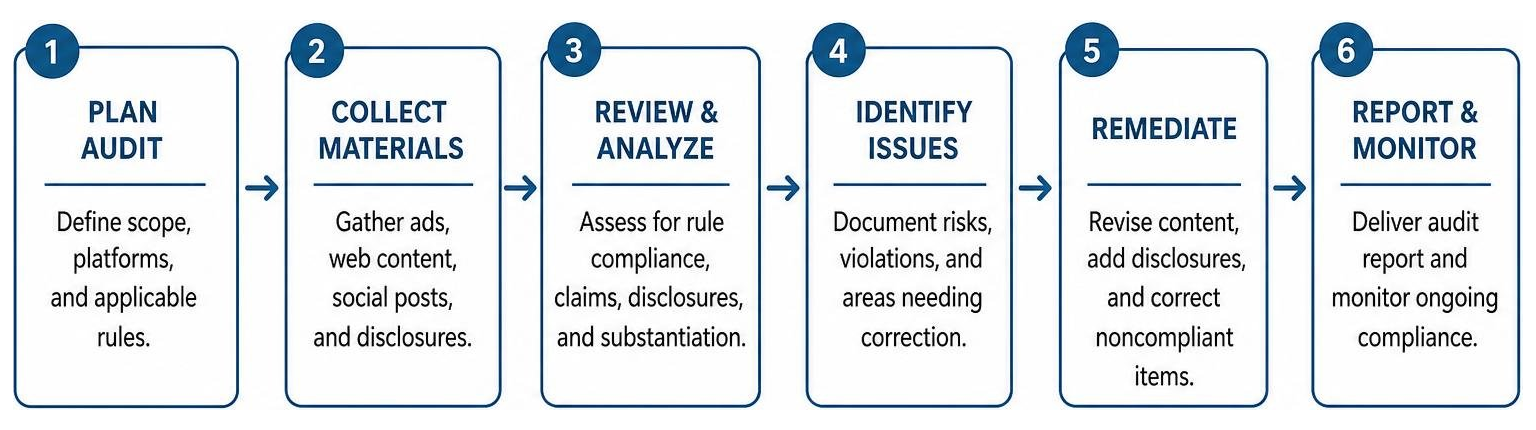
Preventing Common Legal Advertising Pitfalls and False Claims
A single regulatory violation can lead to state bar disciplinary proceedings, heavy fines, or reputational damage. The most common traps in legal marketing include making unjustifiable comparisons, promising specific case outcomes, or misrepresenting past settlements.
To avoid these issues, professional advertising teams enforce rigid editorial standards:
- Clear, Prominent Disclaimers: Adding explicit educational disclaimers to blog posts, videos, and social content stating that viewing the content does not establish an attorney-client relationship.
- Avoiding Absolute Language: Refraining from labeling an attorney as the “best” or “top” lawyer in a jurisdiction unless certified as a specialist through recognized bar programs.
- Accurate Historical Data: Framing past case results with required disclaimers noting that prior success does not guarantee future results.
By adhering to established False Advertising Defense Standards, an agency ensures that every piece of creative copy, landing page content, and display ad passes rigorous scrutiny before public release.

Intellectual Property Protection and Agency Contract Management
Protecting your firm’s intellectual property (IP) is just as critical as respecting the IP of others. When launching new campaigns, an attorney advertising agency coordinates comprehensive trademark reviews and copyright clearances for all media assets, including logo design, campaign slogans, photography, and website content.
Furthermore, managing external marketing operations requires structured legal frameworks. Legal marketing partners rely on comprehensive service agreements, such as those informed by experienced firms like Treasure Coast Legal Services.
Proper agency-of-record agreements clarify ownership of ad accounts, protect custom website code, outline explicit data privacy practices, and establish clear guidelines for third-party media licensing.
Building Trust Through Reputation Management and Web Design
In legal marketing, drive-by web traffic is meaningless if visitors do not convert into actual prospective clients. Overcoming prospective client hesitation requires establishing immediate social proof and delivering an effortless user experience. A comprehensive approach to Internet Marketing for Lawyers integrates reputation management directly into high-performing website design.
Managing Online Reviews and Local Map Pack Rankings
Google reviews are often the single biggest decision factor for prospective legal clients comparing law firms online. Collecting authentic, five-star reviews on your Google Business Profile dramatically lifts local conversion rates and helps push your practice into top map listings.
Effective agencies implement automated post-case review acquisition campaigns. By sending timely, direct review links to satisfied clients immediately after a successful case resolution, firms accumulate positive feedback seamlessly.
When negative reviews occur, experienced teams provide structured response frameworks that address client concerns professionally without violating attorney-client confidentiality or state bar conduct rules. Discovering How to Increase Online Presence with Local SEO relies heavily on maintaining a high volume of recent, highly rated reviews.
Optimizing Web Portals for High Conversions and Client Intake
Your website serves as your firm’s digital front door. An outdated, slow, or difficult-to-navigate site drives high-intent visitors directly to competitor practices. Converting traffic into signed cases requires strategic layout optimization:
| High-Converting Law Firm Web Elements | Outdated / Poorly Optimized Law Firm Sites |
|---|---|
| Sub-2 Second Load Speed: Optimized graphics and clean code keep users engaged instantly. | Slow Load Times: Heavy, uncompressed video assets cause visitors to bounce. |
| Detailed Attorney Bios: High-resolution headshots, credentials, and personal philosophy build immediate trust. | Generic Staff Listings: Text-only profiles lacking photos or relatable personal information. |
| Prominent Intake Options: Click-to-call buttons, text options, and short contact forms on every page. | Hidden Contact Info: Contact details buried on a single, hard-to-find page. |
| Embedded Social Proof: Real client video testimonials and review badges prominently displayed. | Zero Testimonials: Plain text blocks without verified review sources or ratings. |
| Mobile-First Layout: Seamlessly navigable on smartphones with quick thumb-tap actions. | Desktop-Only Design: Cluttered, non-responsive design that breaks on mobile devices. |
Choosing the Right Partner for Law Firm Growth
Selecting an ad agency partner is one of the most consequential business choices a firm principal can make. The right agency operates as an efficient growth engine, while the wrong one wastes precious marketing budget and generates low-quality leads.
Key Selection Criteria for Choosing the Right Attorney Advertising Agency
When evaluating agency candidates, ignore vanity metrics like “impressions” or raw click volume. Instead, focus on real business metrics like cost-per-qualified-lead, intake conversion percentages, and cost-per-signed-case.
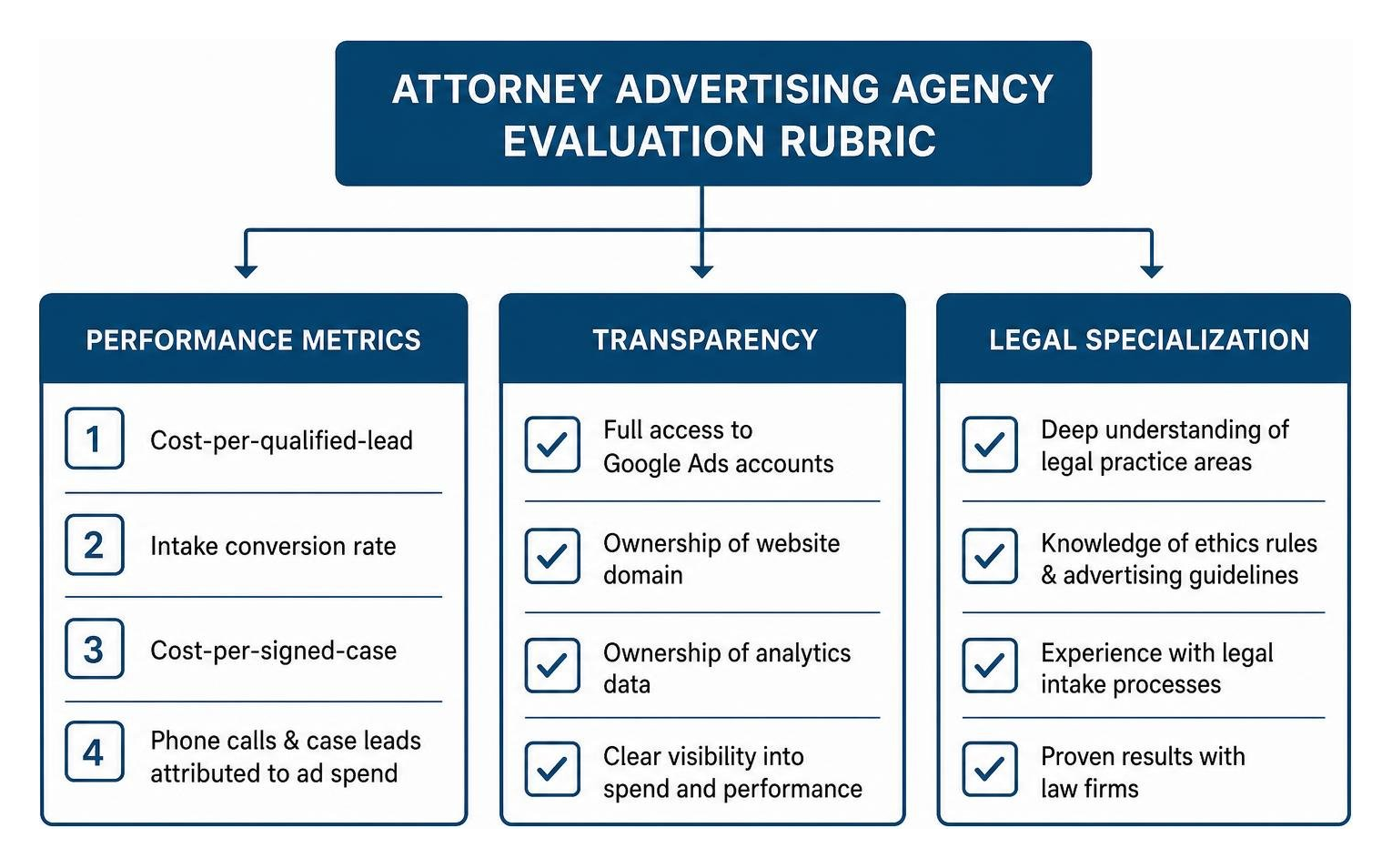
Key evaluation factors include:
- Legal Industry Experience: Does the agency understand specific legal practice nuances, ethics rules, and intake pipelines?
- Transparent Account Access: Will your firm own its Google Ads accounts, website domain, and analytics data outright?
- Detailed Monthly Reporting: Does the agency provide clear, plain-English dashboards tracking phone calls and case leads directly to ad spend?

Market Exclusivity, Contract Flexibility, and Campaign Control
Many traditional agencies sign up dozens of competing law firms within the exact same city, bidding up ad costs against their own clients. At BullsEye Internet Marketing, we operate on a radically different model focused on client advantage.
We partner with only one client per industry per geographic area, providing you with an exclusive competitive advantage in your local market. Additionally, we reject rigid long-term lock-in agreements, offering our clients total flexibility based on performance.
When evaluating potential agency partners, use this checklist during your initial consultation:
- [ ] Will our firm maintain 100% ownership of our ad accounts, call tracking numbers, and digital assets?
- [ ] Do you offer geographic exclusivity so you aren’t running campaigns for our direct local competitors?
- [ ] Are your service contracts month-to-month, or do you force long-term binding lock-ins?
- [ ] How do you handle ad campaign compliance with local and state bar rules?
- [ ] What specific conversion tracking systems do you implement to verify inbound legal leads?
Frequently Asked Questions about Legal Marketing Agencies
What legal services do marketing attorneys provide to law firms?
Marketing and advertising attorneys help law firms draft clear service contracts, review promotional campaigns for state bar compliance, secure trademark protections, structure influencer and talent agreements, and resolve false advertising or unfair competition disputes.
How do law firms avoid state bar ethics violations in ad campaigns?
Law firms avoid ethics violations by ensuring all claims are truthful and non-misleading, using prominent legal disclaimers, avoiding absolute statements like “the best lawyer,” displaying attorney office locations accurately, and having campaigns routinely audited against state bar conduct guidelines.
Why are Google Ads and Local Service Ads essential for legal practices?
Google Ads and Local Service Ads (LSAs) put your law practice directly at the top of search results when prospective clients are actively searching for immediate legal help. Paid search targets high-intent search queries, providing instant online visibility and generating fast, predictable inbound calls.
Conclusion
Building a profitable, dominant legal practice in 2026 requires strategic alignment between target audience messaging, search visibility, and strict regulatory compliance. Trying to handle complex ad campaigns internally takes valuable time away from fighting for your clients and winning cases.
Partnering with a specialized team transforms your digital presence into an active client engine. By establishing clear market exclusivity, maintaining account control, and deploying high-converting search strategies, your firm can stop chasing clients and start attracting them predictably. Explore our comprehensive resource on An Essential Guide to Advertising for Lawyers to learn how we can help scale your practice today.
